Storm Window Installation: Common Questions and Technical Guidance
By Housey · Last reviewed 24th of May 2026
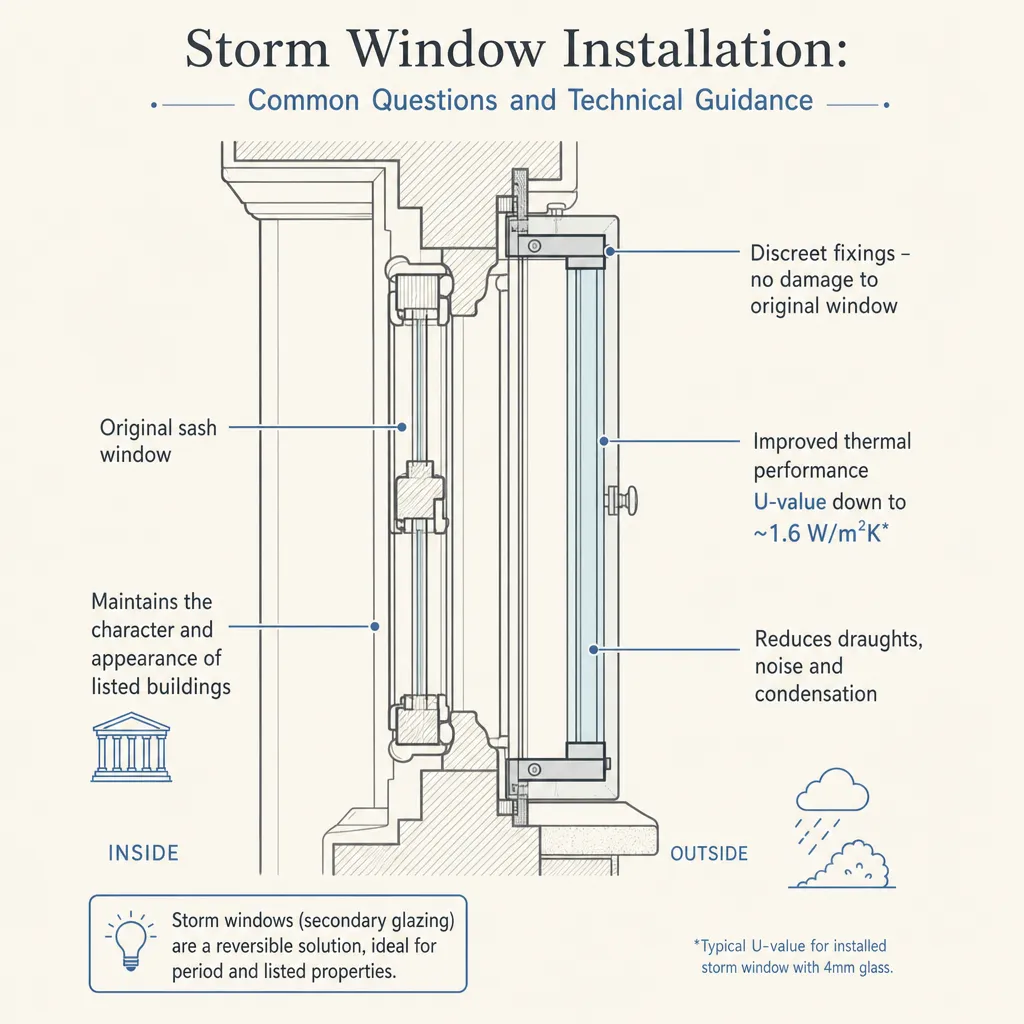
Storm Window Installation: Common Questions and Technical Guidance
Questions about storm window installation in the UK commonly arise when homeowners are tackling heat loss from older single-glazed windows, looking for a glazing upgrade that a conservation officer will accept, or trying to reduce noise in a property near a busy road. The term "storm window" is primarily North American; in the UK trade, the functional equivalent is called secondary glazing — and understanding how it works, what regulations apply, and what installation involves makes it easier to plan the work and brief an installer properly.
Key points
- Secondary glazing (the UK equivalent of storm windows) fitted to standard single glazing can achieve whole-window U-values of approximately 1.8–2.5 W/m²K, compared with around 5.6 W/m²K for unimproved single glazing.
- FENSA and CERTASS registration is required when replacing primary windows; secondary glazing panels fitted inside the existing frame do not replace the primary window and therefore do not require registration.
- Listed buildings and conservation areas often cannot accommodate replacement double glazing without listed building consent; secondary glazing is frequently the approved alternative because it is reversible and does not alter the primary window frame.
- Building Regulations Part L sets a minimum whole-window U-value of 1.4 W/m²K for replacement windows in existing dwellings — this requirement applies to full window replacement, not to secondary glazing additions.
- An air gap of 100mm or more between the primary window and the secondary panel provides significantly better acoustic attenuation than most standard double-glazed units.
What are storm windows, and are they relevant in the UK?
In North America, a storm window is a secondary glazed panel — typically aluminium or timber-framed with glass or polycarbonate — fitted externally or internally to provide additional insulation and weather protection. In the UK, the functional equivalent is secondary glazing: a separately framed glazed unit fitted on the room side of the existing primary window, without removing or altering that primary frame.
The term "storm window" occasionally appears in UK supplier listings, particularly for external secondary panels, but "secondary glazing" is the standard trade term used by UK installers and recognised by planning authorities and conservation officers. When requesting quotes in the UK, use "secondary glazing" for the most relevant results.
Secondary glazing is relevant for:
- Single-glazed properties where planning constraints or budget make full double-glazing replacement impractical.
- Listed buildings and conservation areas where replacing original windows with double glazing requires consent that is often refused or restricted.
- Noise reduction — a 100mm or greater air gap between the primary window and the secondary panel provides better acoustic insulation than most double-glazed units, according to Historic England guidance.
- Landlords and rental properties seeking a reversible, cost-effective draught and heat-loss reduction measure without disturbing the primary window frame.
How secondary glazing installation works
A secondary glazing system typically consists of three elements:
- A sub-frame fixed to the window reveal (the inner wall face surrounding the window) or directly to the primary window frame.
- A glazed insert — fixed, hinged, sliding, or lift-out — held within the sub-frame.
- Draught seals around the perimeter of the insert to prevent air movement between the two glazed surfaces.
An installer measures the reveal accurately, cuts the sub-frame to fit, fixes it mechanically to masonry or timber using appropriate fixings for the substrate, and then fits the glazed insert. Thermal mastic or expanding foam sealant may be applied at the sub-frame perimeter to prevent air infiltration around the edges.
Common questions about secondary glazing installation
Do I need planning permission for secondary glazing?
In most cases, fitting secondary glazing inside an existing window does not require planning permission, as it does not alter the external appearance of the building. However:
- Listed buildings: any internal alteration — including secondary glazing — may require listed building consent. Confirm with your local planning authority or conservation officer before proceeding.
- Conservation areas: internal secondary glazing is generally acceptable; external panels that visibly alter the building's appearance may need planning permission.
- Leasehold flats: your lease may restrict modifications to windows. Check the lease and obtain the freeholder's written consent before installation if required.
Can I install secondary glazing myself?
Many secondary glazing systems are sold as DIY kits with pre-cut sub-frames and magnetic or screw-fixed inserts. DIY installation is practical on standard rectangular openings where the reveal is clean, square, and structurally sound. For openings that are out of square, windows with unusual profiles, or upper-floor windows requiring work above 2m, professional fitting is more appropriate. Work at height above 2m should always follow safe working practices.
What materials are secondary glazing panels made from?
Material | Thermal performance | Weight | Best for |
|---|---|---|---|
4mm float glass | Good | Heavier | Permanent installations, acoustic reduction |
Low-E coated glass | Better | Heavier | Maximum thermal improvement |
6mm polycarbonate | Moderate | Lighter | Budget installations, DIY |
Laminated glass | Good | Heavier | Ground-floor security improvement |
Glass secondary glazing generally outperforms polycarbonate for thermal performance and longevity. Polycarbonate is lighter and more suited to DIY but may yellow with UV exposure after 10 to 15 years.
What U-value will secondary glazing achieve?
Thermal performance depends on the air gap between the primary window and the secondary panel:
- 12mm gap: approximately 2.4 W/m²K whole-window U-value when fitted to standard single glazing.
- 100mm gap or more: approximately 1.6–1.8 W/m²K whole-window U-value, with the added benefit of improved acoustic performance.
Ask any installer to provide a U-value estimate for the specific product and installation in writing before agreeing to proceed.
How much does secondary glazing installation cost?
Indicative UK costs, last reviewed 2026-05-24. Prices vary by frame type, glass specification, opening size, and installer location.
- Single window, fixed panel, professional installation: £150–£400
- Single window, hinged or sliding panel, professional installation: £250–£600
- Whole property (10 windows, average size, professional installation): £2,000–£6,000+
DIY kits from UK suppliers typically cost £50–£150 per opening, excluding fixings and sealants. Obtain at least three quotes before committing.
What to ask a secondary glazing installer
- What U-value will the installed unit achieve, and will you confirm this in writing?
- Is the sub-frame fixing method appropriate for my reveal material — masonry, timber, or plasterboard?
- What draught-sealing method is used around the perimeter and at the insert edges?
- Is the installation reversible — can it be removed without damaging the primary frame?
- Is VAT included in the quoted price?
- What guarantee is provided on the installation, and for how long?
- What happens if the reveal is found to be out of square or shows signs of damp once work begins?
- Can you provide references for similar installations in listed or conservation area properties?
When to get professional help
Consider professional installation when:
- The property is listed or in a conservation area where consent may be required before work begins.
- The window reveal is out of square, shows signs of damp, or has visible cracks — these may indicate structural issues that should be assessed before adding secondary glazing.
- Upper-floor windows require working at height above 2m.
- You want documented U-values as part of a broader energy improvement project or EPC assessment.
How Housey can help
Housey can match you with experienced window and door installers who supply and fit secondary glazing systems across the UK, including for listed buildings and conservation area properties. Submit your job details to receive quotes from local specialists.
Frequently asked questions
Does secondary glazing need to be registered with FENSA?
No. FENSA (Fenestration Self-Assessment Scheme) registration applies when an existing window is replaced and the primary frame removed. Secondary glazing is fitted to the existing reveal without removing the primary frame, so it does not trigger FENSA or CERTASS registration requirements. If the property is listed, check separately whether listed building consent is required before any installation begins.
Will secondary glazing stop condensation on my windows?
Secondary glazing reduces cold air reaching the inner surface of the primary window, which can reduce condensation on the inner pane. However, if condensation forms between the primary window and the secondary panel — interstitial condensation — the air gap may not be adequately sealed. A qualified installer should confirm the draught-sealing approach during the survey to minimise this risk.
Can secondary glazing be fitted to sash windows?
Yes. Secondary glazing systems designed for vertical sash windows are widely available, typically as horizontal sliding units that allow the inner sash to be raised while the secondary panel slides aside. Specialist suppliers familiar with listed sash windows can advise on profiles that satisfy conservation officers, which is particularly important in conservation areas and listed buildings.
How long does secondary glazing last?
A well-installed glass secondary glazing system typically lasts 20 years or more with basic maintenance — keeping seals clean and checking fixings periodically. Polycarbonate inserts may show UV yellowing after 10 to 15 years. Powder-coated aluminium frames are generally durable. Ask your installer what the guarantee covers, particularly the seals and hardware, and for how long.
Sources and further reading
- Energy efficiency for historic and traditional buildings — Historic England
- Secondary glazing advice — Energy Saving Trust
- Approved Document L: conservation of fuel and power in existing dwellings — GOV.UK
- FENSA: when window work requires registration — FENSA
- Planning Portal: listed buildings and conservation areas — Planning Portal
Useful next reads
 Improvement & Build
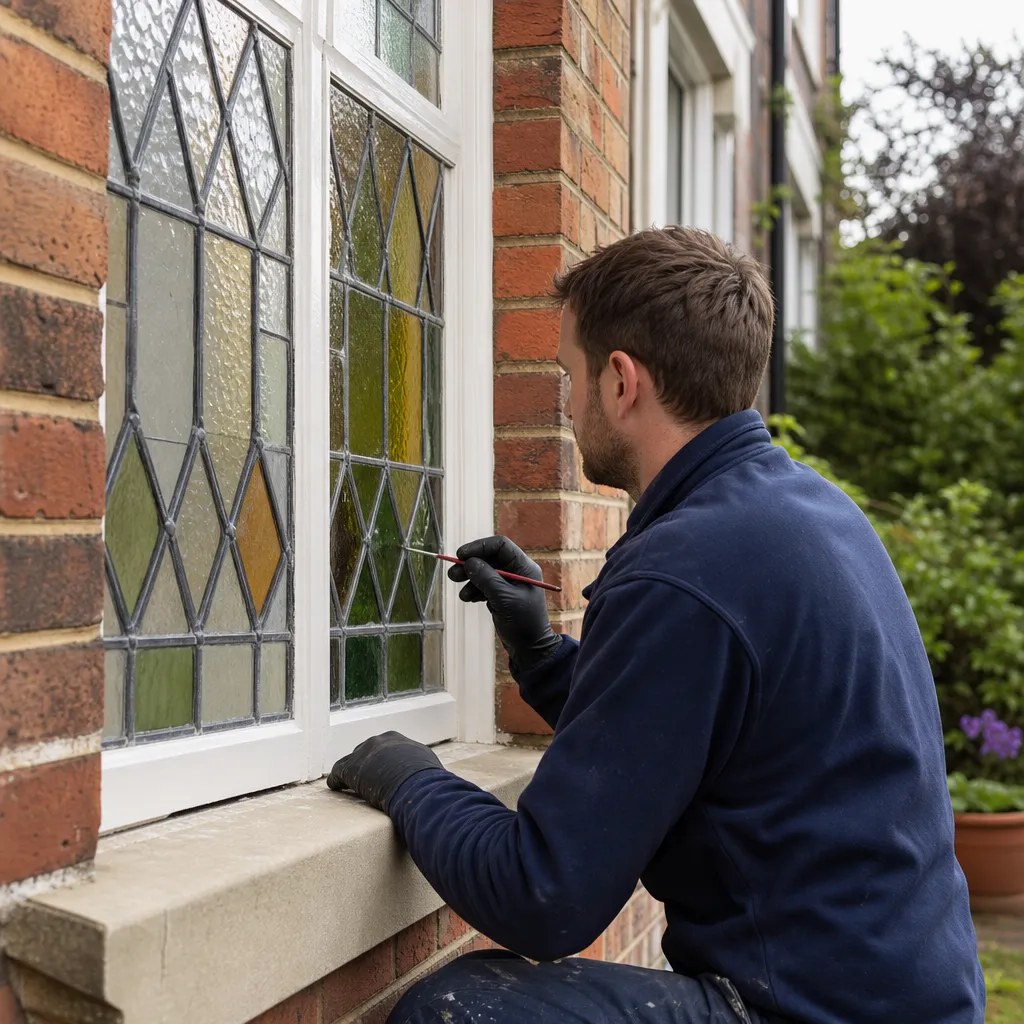
Sealing and Maintaining Historic Leaded Glass Windows: Preservation and Performance
Leaded glass windows are maintained using traditional linseed oil cement — not silicone or modern sealants, which prevent natural movement in the lead came.
 Improvement & Build
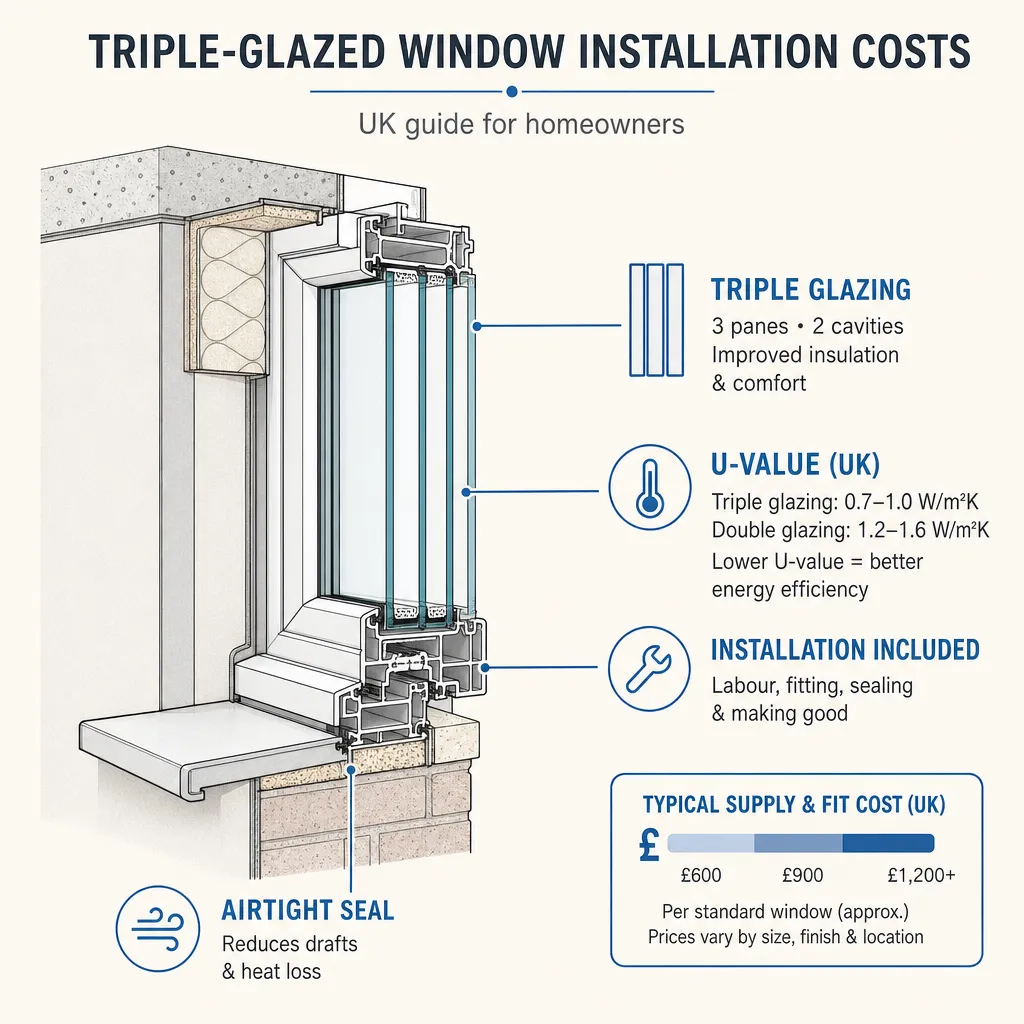
Triple-Glazed Window Installation Costs
Triple-glazed window installation in the UK typically costs £800–£1,800 per window, depending on size, frame material, and glazing specification.
 Improvement & Build
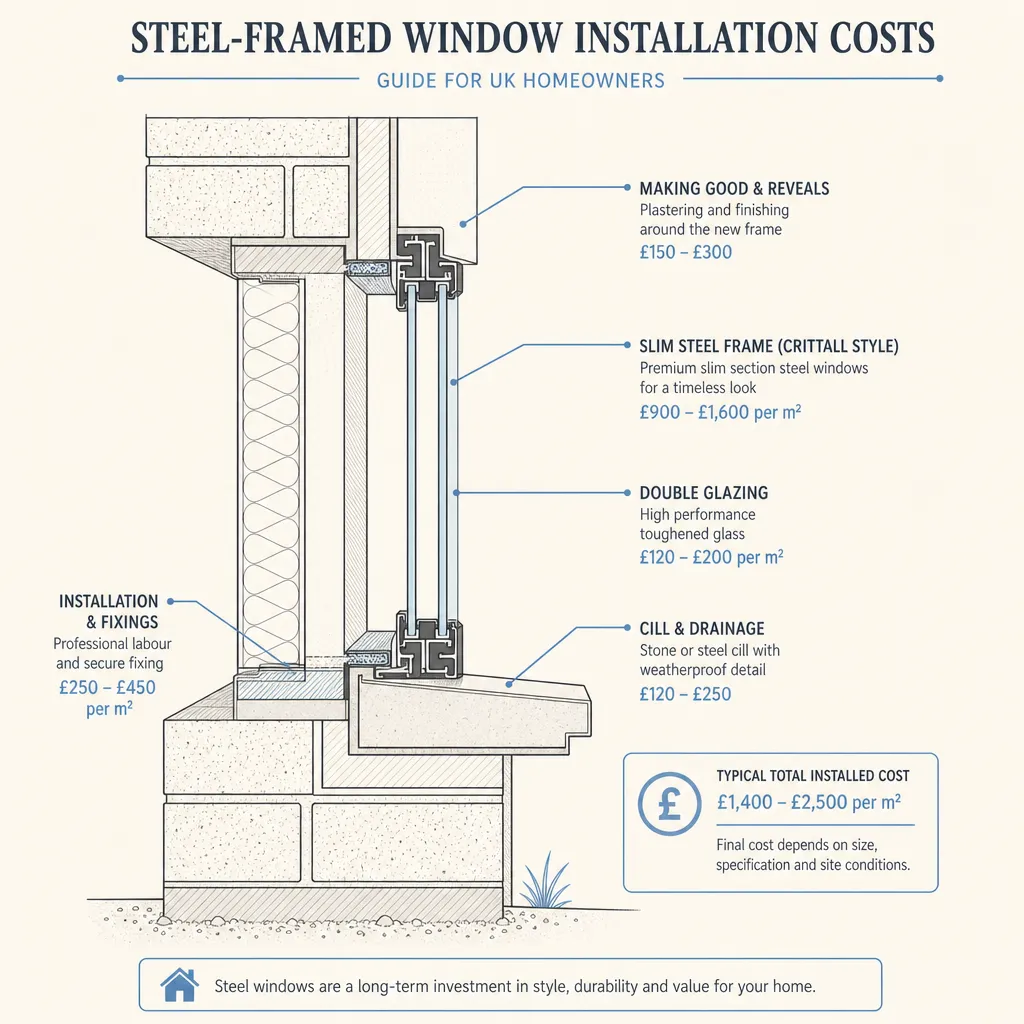
Steel-Framed Window Installation Costs
Steel-framed windows cost between £800 and £3,500 or more per window installed in the UK, depending on size, profile type, glazing specification, and whether old frames need removing.
 Improvement & Build
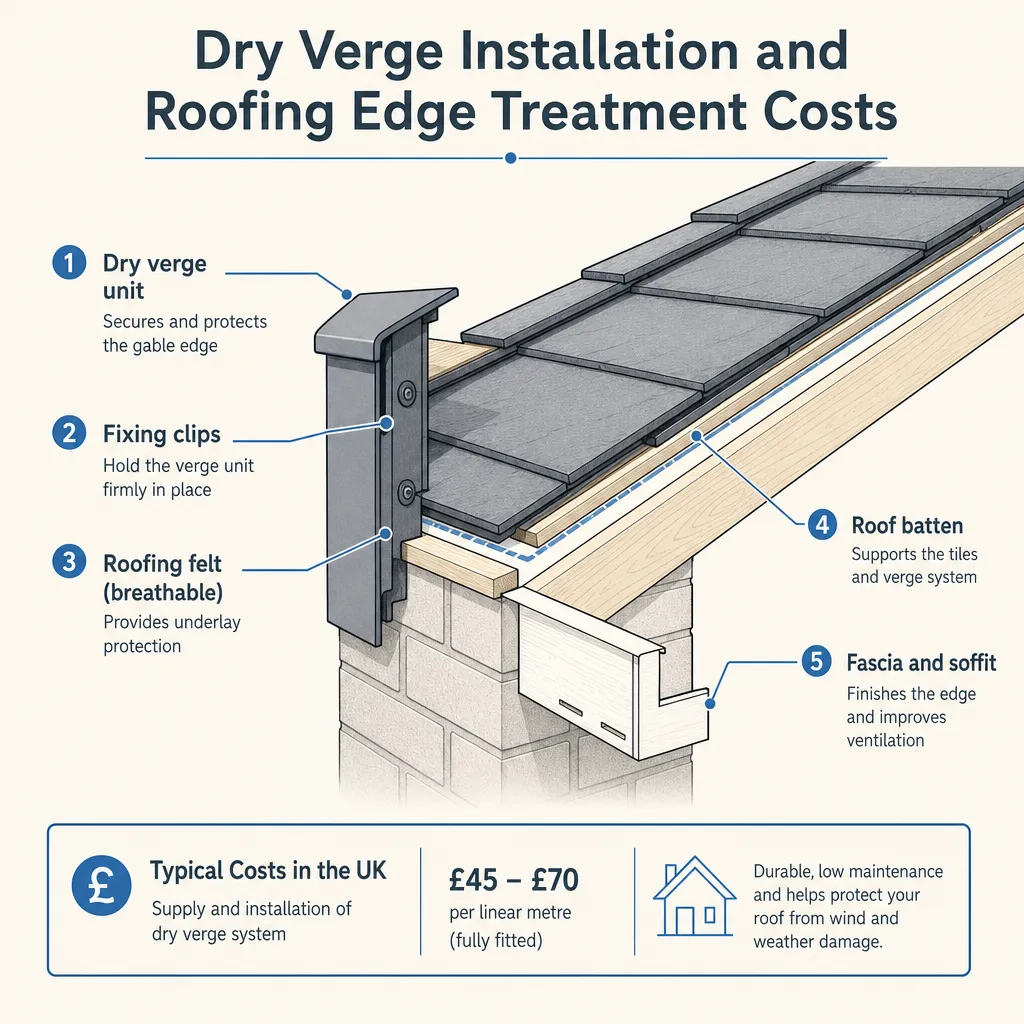
Dry Verge Installation and Roofing Edge Treatment Costs
A dry verge system replaces mortar bedding along the gable edge of a pitched roof with interlocking uPVC or aluminium units.
 Improvement & Build
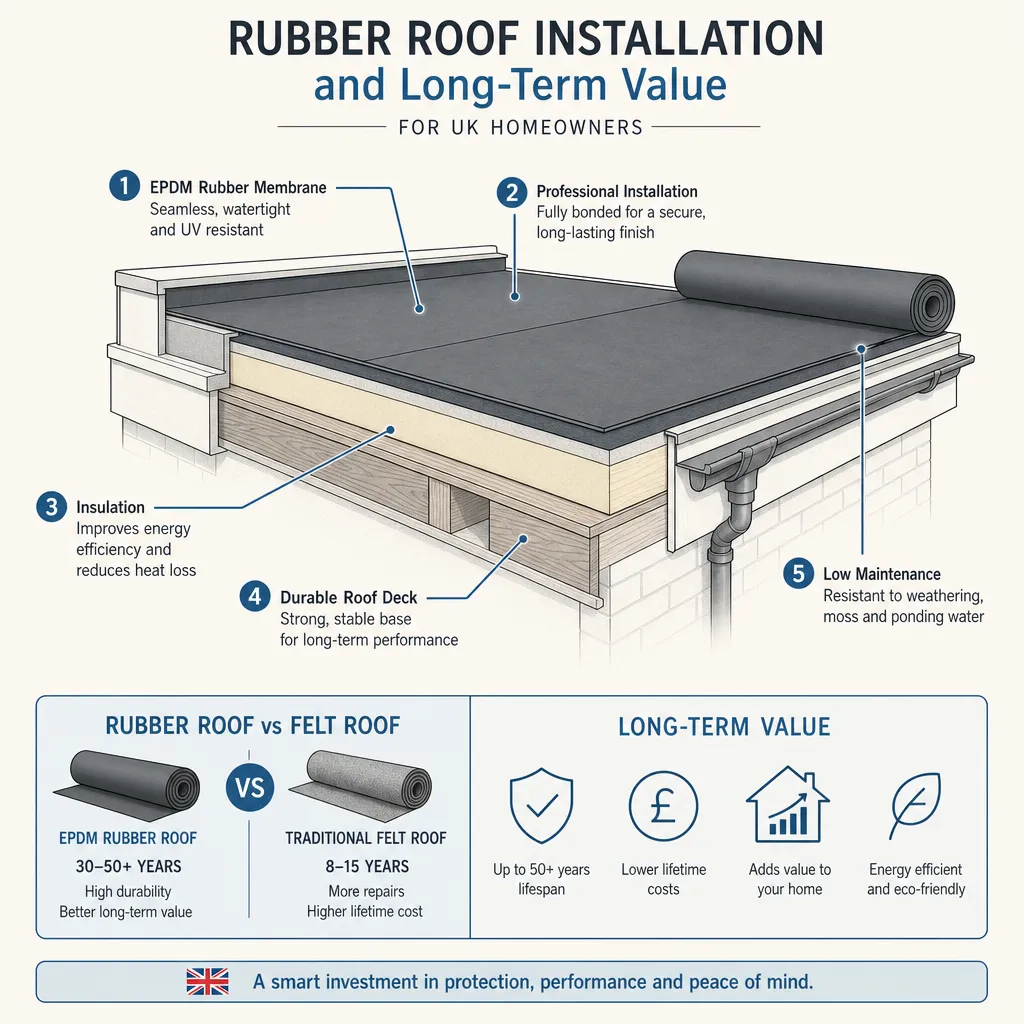
Rubber Roof Installation and Long-Term Value
EPDM rubber roofing is a synthetic membrane for flat and low-pitch roofs that typically lasts 30–50 years with minimal maintenance.