What is window glazing and glazing options explained
By Housey · Last reviewed 31st of May 2026
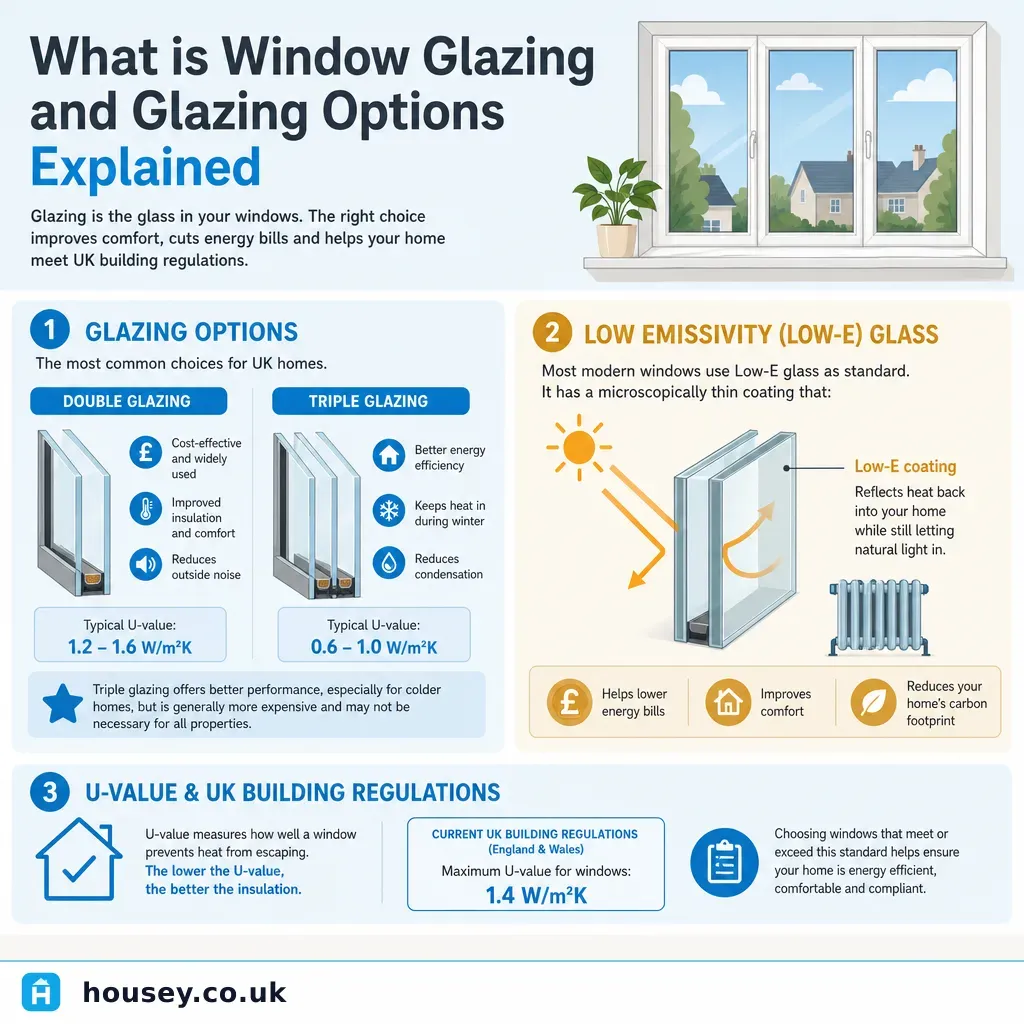
What is window glazing and glazing options explained
Glazing choices affect energy bills, comfort, noise levels, and compliance with Building Regulations — yet the terminology around window units is often confusing for homeowners. Whether you are replacing windows in a 1970s detached house, upgrading a Victorian terrace for an EPC improvement, or specifying new windows on a self-build, understanding what the terms mean helps you compare quotes accurately and avoid choosing the wrong specification.
Key points
- Double glazing comprises two glass panes separated by a gas-filled spacer, sealed as an Insulated Glass Unit (IGU); it is the minimum standard for replacement windows in most situations under Building Regulations Approved Document L.
- The thermal performance of a glazed unit is measured by its U-value (W/m²K) — the lower the number, the better the insulation; the current Part L requirement for replacement windows in England is a maximum whole-window U-value of 1.6 W/m²K.
- Low-emissivity (low-e) coatings on an inner pane surface reduce heat loss by reflecting long-wave infrared radiation back into the room without significantly reducing visible light transmission.
- Argon gas fill (used in most standard double glazing) and krypton gas fill (used in some triple glazing and slim-profile units) improve insulation by reducing convective heat transfer across the cavity compared with air.
- Toughened (tempered) or laminated safety glass is required by Building Regulations Approved Document K in critical locations: within 800mm of floor level, adjacent to doors within 300mm of the frame, and in glazed doors.
What glazing actually means in window terminology
Glazing refers to the glass component fitted within a window frame — specifically the sealed unit installed in the frame's rebate. In modern residential windows, this is almost always a factory-sealed Insulated Glass Unit (IGU), not a single pane. The IGU is manufactured with:
- Two or three panes of glass (double or triple glazing)
- A spacer bar around the perimeter holding the panes apart at a precise gap
- A desiccant inside the spacer to absorb residual moisture during manufacture
- An inert gas fill (typically argon) between the panes
- Sealant around the perimeter to maintain the gas-tight seal throughout the unit's service life
When the edge seal fails — which can happen after 20–25 years or following physical damage — moisture enters the cavity and the unit appears fogged or shows condensation between the panes. This is a failed IGU, not surface condensation, and requires replacing the sealed unit rather than necessarily the whole frame.
Double glazing, triple glazing, and secondary glazing compared
Option | Typical whole-window U-value | Best for | Not ideal for | Approximate cost vs standard double |
|---|---|---|---|---|
Standard double glazing (argon, low-e) | 1.4–1.6 W/m²K | Most UK residential replacements; meets Part L minimum | Very cold or exposed locations seeking maximum performance | Baseline |
High-performance double glazing (warm-edge spacer, enhanced low-e, argon) | 1.0–1.3 W/m²K | EPC improvement projects, energy-conscious upgrades | Very wide glazing areas where additional weight is a concern | +10–20% |
Triple glazing (argon or krypton fill, two low-e coatings) | 0.6–1.0 W/m²K | Passivhaus, high-performance retrofits, exposed northern elevations | South-facing where solar gain is valued; frames unable to carry extra weight | +25–50% |
Secondary glazing (inner pane added to existing window, not a sealed IGU) | Variable | Listed buildings, conservation areas, sash windows where frame cannot be replaced | General energy upgrades where full replacement is feasible | Lower upfront; less thermally efficient |
Indicative UK costs, last reviewed 2026-05-31. Costs vary by window size, frame material, supplier, and region. Always request itemised, like-for-like quotes.
Glass types and coatings
Beyond the number of panes, the glass specification within the IGU affects performance significantly.
Low-emissivity (low-e) glass has a thin metallic oxide coating applied to one inner pane surface. It allows solar energy in but reflects long-wave heat back into the room. Most modern double-glazed units include low-e coating as standard; confirm it is specified in your quote and that the coating position (pane 2 for standard double glazing) is correct for your application.
Toughened (tempered) glass is heat-treated to increase strength and to break into small granular fragments rather than large shards if it does fail. Approved Document K requires toughened or laminated glass in critical locations — confirm your installer has included it wherever required and that it appears in the written specification.
Laminated glass bonds two panes with a polymer interlayer (typically polyvinyl butyral, PVB). If broken, the glass stays bonded to the interlayer rather than falling apart. It is preferred for overhead glazing, roof lights, and security-sensitive applications. Acoustic laminated glass uses a thicker interlayer and provides meaningful noise reduction compared with standard glass of the same thickness.
Acoustic glazing typically uses asymmetric pane thicknesses — for example, a 6mm outer pane and a 4mm inner pane — and a laminated interlayer to disrupt sound transmission. Useful for properties near busy roads, railways, or airports. Note that triple glazing does not automatically improve acoustic performance; acoustic performance is a separate specification from thermal performance.
Self-cleaning glass carries a photocatalytic coating that breaks down organic dirt using ultraviolet light and allows rain to sheet off rather than bead. Most useful on hard-to-access glazing such as roof lights, skylights, and high-level fixed windows.
Which glazing should you choose?
- Choose standard double glazing (argon, low-e) if you are replacing windows in a typical UK home and the primary goal is meeting Part L compliance and reducing draughts.
- Choose high-performance double glazing (warm-edge spacer, enhanced low-e) if you want to improve your EPC rating meaningfully or reduce heating bills beyond the minimum standard.
- Choose triple glazing if you are building or retrofitting to Passivhaus or near-zero-energy standard, or if the property is in a particularly exposed location and U-values below 1.0 W/m²K are specified.
- Choose secondary glazing if you have a listed building, a conservation area sash window, or any situation where the original frame cannot be replaced and appearance must be preserved.
- Specify acoustic laminated glass if the property is within approximately 200m of a busy road, railway, or flight path and noise is a practical concern.
- Confirm toughened or laminated safety glass for all critical locations as defined by Approved Document K — your installer should include this by default, but always verify it appears in the written specification.
- Consult a PAS 2035 retrofit coordinator or low-energy designer if specifying windows as part of a whole-house retrofit — glazing should be integrated with wall insulation and ventilation strategy, not chosen in isolation.
U-values and Building Regulations
Approved Document L (2021 edition, applicable in England) sets a maximum whole-window U-value of 1.6 W/m²K for replacement windows. The centre-pane U-value alone is not sufficient to demonstrate compliance — the whole-window figure accounts for the frame, edge effects, and spacer bar performance.
FENSA and Certass installers are required to meet this standard and issue a Building Regulations compliance certificate on completion. In Scotland, Section 6 of the Technical Handbooks applies; in Wales, Part L is broadly similar to England; in Northern Ireland, Technical Booklet F sets the relevant standards.
A window's energy efficiency can also be shown by its Window Energy Rating (WER), displayed on a scale from G to A++. A rating of C or above is commonly associated with Part L compliance, though the U-value remains the primary compliance metric.
When to get professional help
Glazing specification is usually managed by your window installer, but there are situations where additional advice is worthwhile:
- If you are applying for listed building consent or planning permission in a conservation area, confirm the acceptable glass specification — particularly reflectivity, colour, and visible light transmission — with the local planning authority before ordering.
- For Passivhaus or EPC Band A targets, a low-energy designer or PAS 2035 retrofit coordinator should specify glazing as part of an integrated thermal model.
- If existing frames are being retained and only the IGUs replaced, have the frame condition assessed first — deteriorated frames may not seat a new unit correctly, reducing both thermal and weathertight performance.
How Housey can help
Housey connects you with vetted window and door installers who can specify, supply, and install the right glazing for your property. Request quotes and compare specifications — including U-values, glass types, and safety glass confirmation — before committing to an installer.
Frequently asked questions
What U-value should replacement windows achieve under UK Building Regulations?
In England, Building Regulations Approved Document L (2021) requires replacement windows to achieve a maximum whole-window U-value of 1.6 W/m²K. Most modern double-glazed units with argon fill and low-e coating achieve 1.2–1.4 W/m²K, comfortably meeting this requirement. FENSA-registered installers certify compliance automatically and issue a completion certificate.
Is triple glazing worth it for most UK homes?
For the majority of UK homes — particularly those with cavity walls built from the 1970s onwards — high-performance double glazing offers a good balance of cost and thermal improvement. Triple glazing adds meaningful value in very exposed locations, low-energy retrofit projects targeting EPC Band A, or Passivhaus builds. The additional weight also needs to be supportable by the existing frame.
What is low-e glass and is it standard in double glazing?
Low-emissivity (low-e) glass has a thin metallic oxide coating that reflects heat back into the room while allowing light through. It is included as standard in most modern double-glazed units and is part of what enables them to meet the Part L U-value requirement. Confirm with your installer that low-e glass is specified — it should be, but always check the written specification.
What happens when a double-glazed unit fails?
A failed insulated glass unit shows persistent condensation or fogging between the panes — moisture that has entered through a broken edge seal. The failed unit can usually be replaced without changing the whole frame, which is significantly cheaper than a full window replacement. A registered window installer can measure and order a replacement IGU to fit your existing frame.
Sources and further reading
- Approved Document L: Conservation of fuel and power — HM Government
- Approved Document K: Protection from falling, collision and impact — HM Government
- FENSA: competent person scheme for windows and doors — FENSA
- Glass and Glazing Federation: consumer guidance — Glass and Glazing Federation
- Double glazing guidance — Energy Saving Trust
Useful next reads
 Improvement & Build
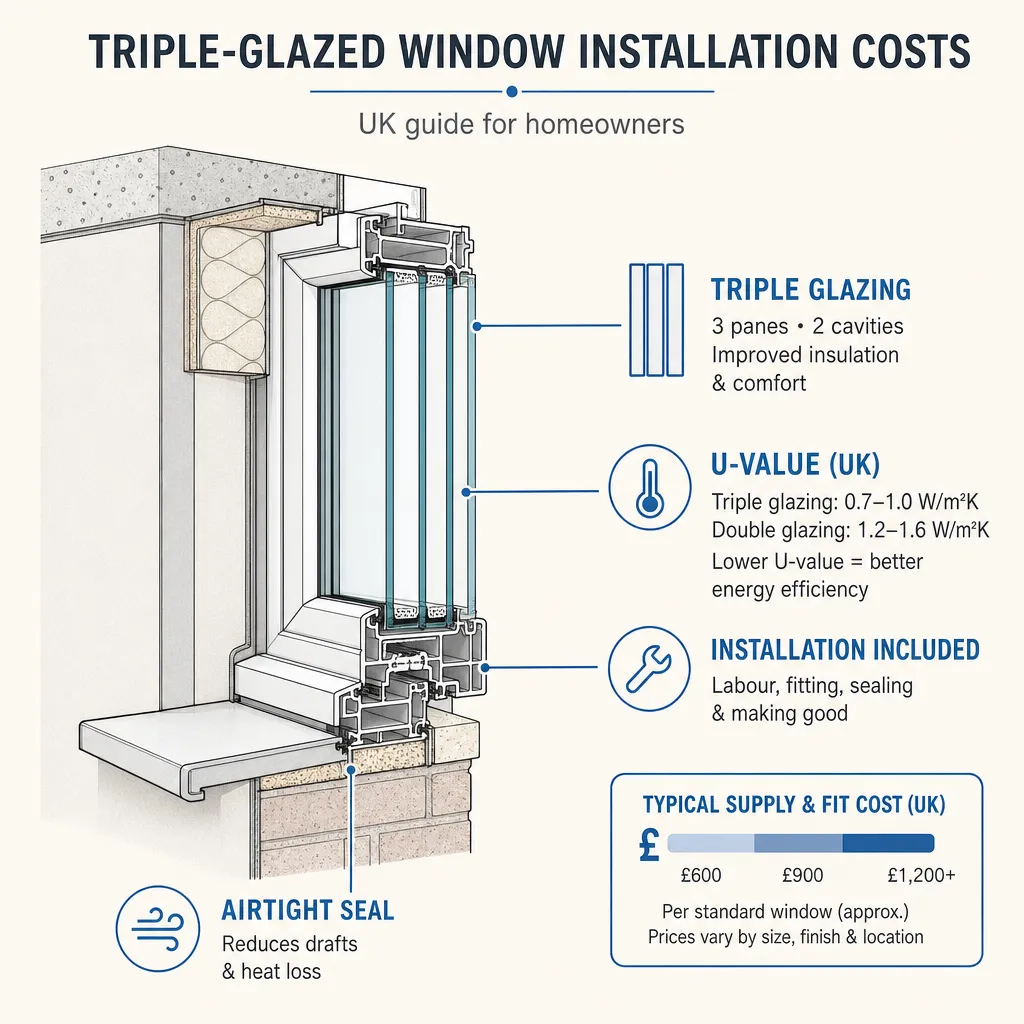
Triple-Glazed Window Installation Costs
Triple-glazed window installation in the UK typically costs £800–£1,800 per window, depending on size, frame material, and glazing specification.
 Improvement & Build
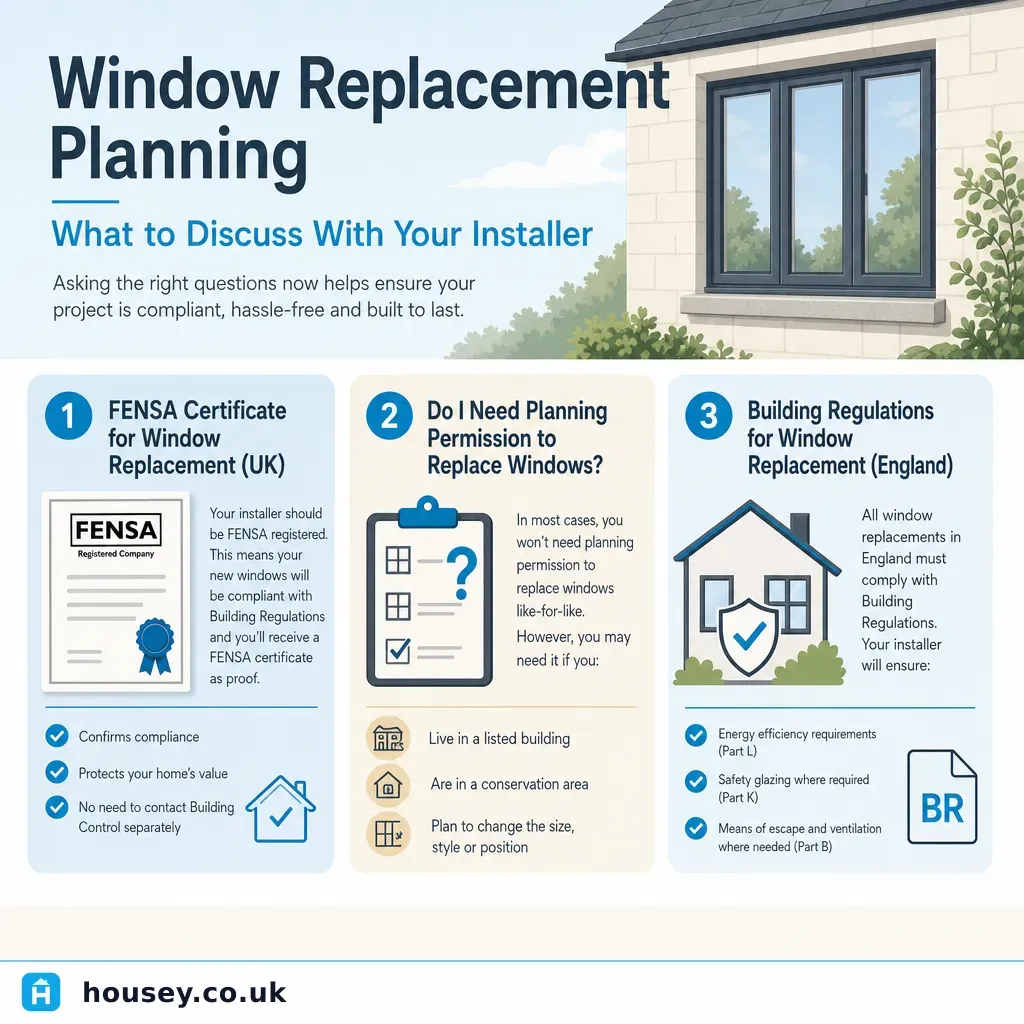
Window Replacement Planning: What to Discuss With Your Installer
Most window replacements in England fall under permitted development rights and do not require planning permission, but they must comply with Building Regulations Part L and Part K.
 Improvement & Build
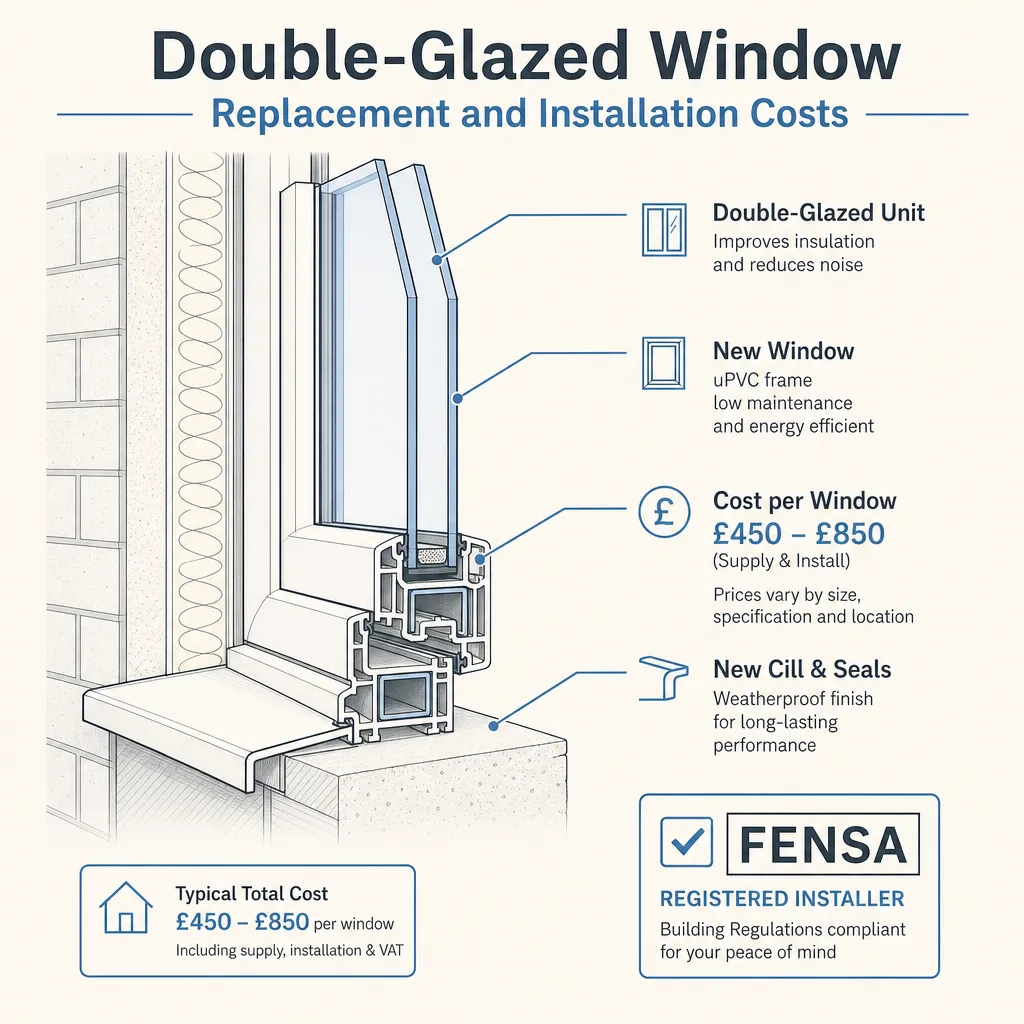
Double-Glazed Window Replacement and Installation Costs
Replacing double-glazed windows in a typical UK home costs roughly £300–£600 per uPVC casement window installed, rising to £500–£1,200 for timber and £400–£800 for aluminium.
 Improvement & Build
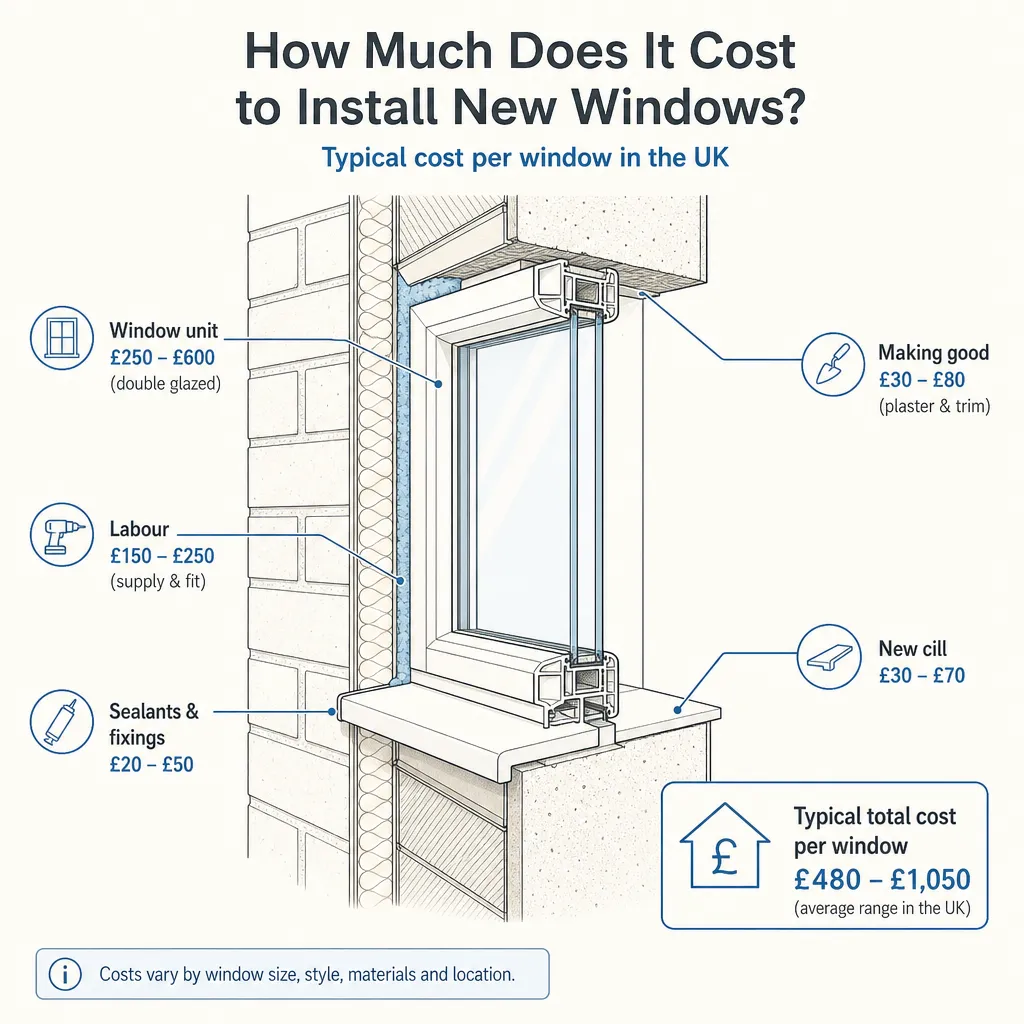
How Much Does It Cost to Install New Windows?
New window installation in the UK typically costs £300–£700 per uPVC double-glazed window (supply and fit), rising to £800–£2,500 for timber or sash windows.
 Improvement & Build
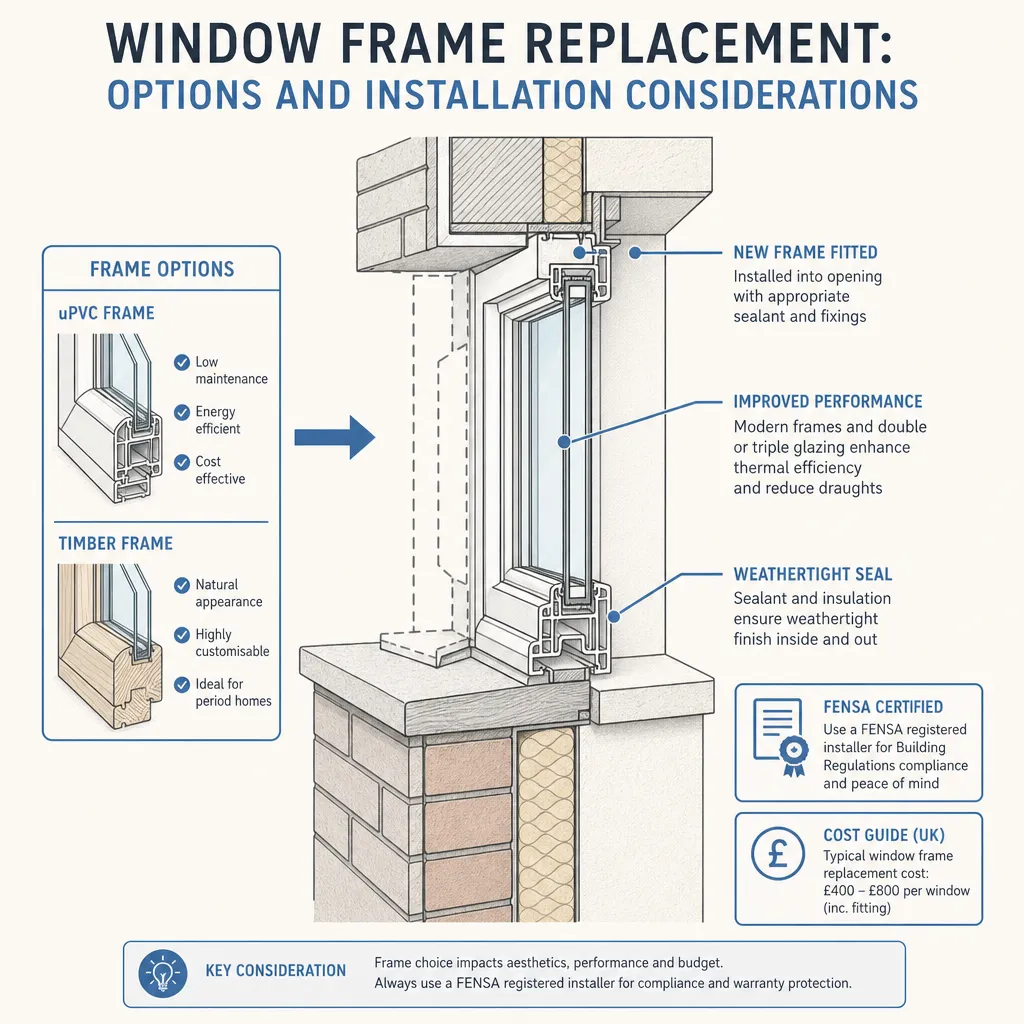
Window Frame Replacement: Options and Installation Considerations
Replacing window frames in the UK requires compliance with Part L of the Building Regulations and, in most cases, a FENSA or Certass certificate.