Structural Engineer versus Architect: Key Differences and When to Engage Each
By Housey · Last reviewed 25th of May 2026
Structural Engineer versus Architect: Key Differences and When to Engage Each
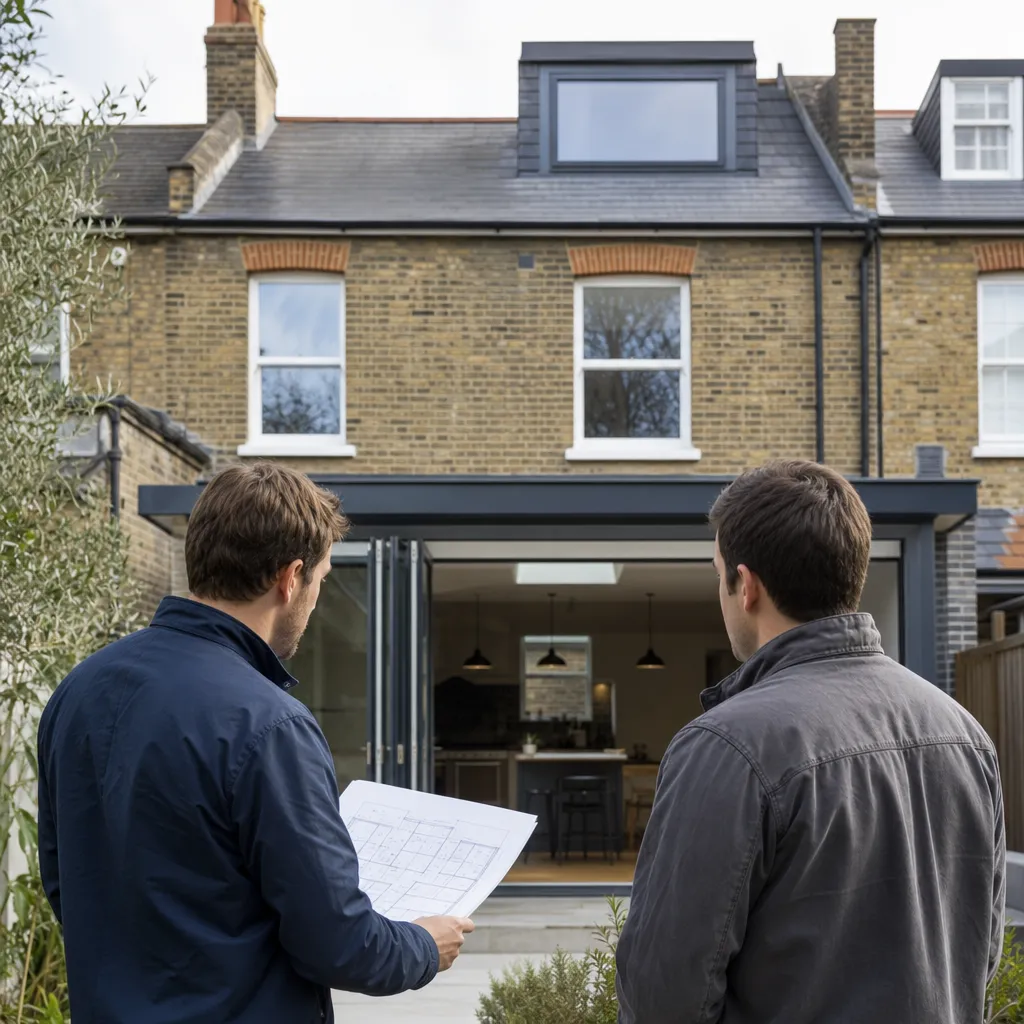
Many homeowners embarking on a renovation, extension, or new build face the same question early on: which professional do they actually need? In the UK, architects and structural engineers serve fundamentally different roles, and engaging the wrong one first — or omitting one entirely — can create gaps in design, building regulations sign-off, or planning consent. Whether you are adding a rear extension to a Victorian terrace or converting the loft of a 1930s semi, understanding each professional's scope helps you plan your project efficiently and avoid costly delays.
Key points
- Only ARB-registered professionals may legally use the title "architect" in the UK under the Architects Act 1997; the Architects Registration Board (ARB) publishes a public register at arb.org.uk.
- Structural engineers provide the calculations required by Building Regulations Approved Document A (Structure) for any work affecting load-bearing elements; these calculations cannot be produced by an architect alone.
- Most residential extensions and loft conversions require both an architect (for design and planning) and a structural engineer (for structural calculations) to achieve both planning permission and building regulations approval.
- The Royal Institute of British Architects (RIBA) Plan of Work sets out eight stages (0–7) from strategic definition through to use; architects typically engage across stages 2–5 on residential projects.
- For single structural alterations such as removing one load-bearing wall, a structural engineer can often manage the building regulations process independently without an architectural appointment.
What architects do
An architect is trained in spatial design, planning policy, building performance, aesthetics, and project management. In the UK, only ARB-registered professionals may use the title "architect". Many also hold RIBA membership (Royal Institute of British Architects), which requires adherence to a professional code of conduct and commitment to continuing professional development. On a typical residential project, an architect will:
- Appraise the site and brief, and advise on feasibility and planning context
- Produce concept and detailed design drawings
- Prepare and submit planning permission applications to the local planning authority
- Produce construction drawings, specifications, and schedules of work
- Manage the tender process and administer building contracts
- Liaise with building control and coordinate the structural engineer's input
Architects lead on how a project looks, how it functions, and how it navigates the planning system.
What structural engineers do
A structural engineer is trained in physics, mechanics, and materials science to ensure buildings stand up safely under their loads. Structural engineers in the UK commonly hold Chartered Engineer (CEng) status with IStructE (Institution of Structural Engineers) or ICE (Institution of Civil Engineers). On residential projects they typically:
- Carry out structural surveys and condition assessments
- Design steel beams, timber floor joists, and other structural elements
- Assess foundations and design underpinning where required
- Produce structural calculations for building regulations approval
- Advise on cracks, movement, settlement, and subsidence
- Issue structural certificates and engineers' opinions for conveyancing or insurance purposes
Structural engineers lead on whether a project is structurally safe and compliant with Building Regulations.
Which professional do you need?
Scenario | Lead professional | Also typically needed | Notes |
|---|---|---|---|
Full rear extension | Architect | Structural engineer | Structural calcs required for building regs |
Loft conversion | Architect or structural engineer | Both on complex schemes | Architect for planning; SE for floor, ridge, and steel |
Single load-bearing wall removal | Structural engineer | Building control | Architect not usually required |
New build house | Architect | Structural engineer | Full design team typically required |
Visible cracking or suspected movement | Structural engineer | None initially | Diagnosis before any design work |
Listed building alteration | Heritage-experienced architect | Structural engineer if structural works involved | Listed building consent required |
Garage conversion | Structural engineer (structural elements) | Architect if complex layout changes | Often SE and building control only |
Subsidence investigation | Structural engineer | Geotechnical engineer if needed | Insurance involvement likely |
Decision tree: which professional should you appoint first?
- Choose an architect first if your project requires planning permission, involves significant spatial redesign, or affects multiple elements of the building envelope.
- Choose a structural engineer first if you have a specific structural concern — cracks, sagging, suspected movement, or a need for beam calculations for a known design.
- Appoint both if you are building an extension, undertaking a loft conversion with planning implications, or making multiple structural changes within a wider renovation.
- Ask a chartered surveyor first if you are unsure whether a defect is structural — a RICS Level 3 Building Survey or specific defect report can clarify the nature and urgency before you commit to specialist fees.
Qualifications to look for
Professional | Core qualification | UK registration or membership |
|---|---|---|
Architect | RIBA Parts 1, 2, and 3 (or equivalent) | ARB registration is legally required to use the title "architect" in the UK |
Structural engineer | MEng or BEng (Hons) in structural or civil engineering + chartership | MIStructE (IStructE) or MICE (ICE); CEng status indicates chartered recognition |
Always verify ARB registration at arb.org.uk and IStructE membership at istructe.org before instructing. For structural engineers, Chartered Engineer (CEng) status is the benchmark for complex residential work.
How architects and structural engineers work together
On most significant residential projects, the two professions collaborate. The architect produces the overall design; the structural engineer confirms it is structurally feasible and provides the calculations for building regulations approval. The architect typically acts as the homeowner's primary contact and coordinates the structural engineer's input into the wider drawing package.
On smaller or more focused projects — a rear wall removal, a single steel beam installation — the structural engineer may manage the building regulations process directly, without a formal architectural appointment.
When to get professional help
Instruct a professional rather than relying on a general contractor's assessment whenever works involve:
- Removing or altering any load-bearing wall, column, or beam
- Changes to foundations or the addition of underpinning
- Visible cracking, settlement, or movement in any structural element
- Loft conversions requiring changes to the roof structure or floor joists
- Extensions or other works requiring planning permission
- Building regulations approval for any structural alteration
If you are unsure whether a wall is load-bearing or a crack is structural, a structural engineer's inspection is the appropriate first step. Do not rely on a contractor's visual opinion for structural matters.
How Housey can help
Housey connects UK homeowners with vetted local professionals across both disciplines. Whether you need structural engineering support for calculations and site assessment, or a qualified professional through our architecture service for design, planning, and project management, you can request quotes, compare credentials, and choose with confidence.
Frequently asked questions
Can an architect produce structural calculations?
Most architects do not produce structural calculations — that work requires a qualified structural engineer. Architects coordinate the structural engineer's input and incorporate it into the drawing package, but the calculations required for building regulations approval must come from a competent structural engineer. Some larger practices employ in-house engineers, but this is not the norm for residential projects.
Do I need both an architect and a structural engineer for a loft conversion?
Usually yes, if the conversion involves planning permission or significant structural changes. The architect handles design and the planning application; the structural engineer handles calculations for floor, ridge, rafters, and any steel elements. For a straightforward permitted development loft conversion on a standard property, some projects proceed with a structural engineer and builder only.
Who is responsible if something goes wrong?
Each professional carries professional indemnity (PI) insurance covering negligent advice or design errors within their scope. The architect, if also acting as contract administrator, may carry broader site responsibility. Each professional is accountable for their own scope. Always confirm PI insurance and agree a clear written scope before instructing either professional.
How much do architects and structural engineers charge?
Fees vary by project size, complexity, and location. Architects on residential projects typically charge a percentage of construction cost, commonly 8–15% for full design and contract administration. Structural engineers often charge fixed fees per element; a single beam calculation typically costs £300–£600 (Indicative UK costs, last reviewed 2026-05-25 — always obtain competitive quotes as fees vary considerably). VAT is charged at the standard rate.
Sources and further reading
- Architects Registration Board (ARB) — ARB: UK architect registration and the Architects Act 1997
- Royal Institute of British Architects (RIBA) — RIBA: professional guidance and the RIBA Plan of Work
- Institution of Structural Engineers (IStructE) — IStructE: structural engineering professional standards and membership
- Institution of Civil Engineers (ICE) — ICE: civil and structural engineering chartered membership
- GOV.UK — Building Regulations Approved Documents — GOV.UK: Approved Document A (Structure)
- Planning Portal — Planning Portal: planning permission guidance for homeowners
Useful next reads
 Planning & Pre-Build
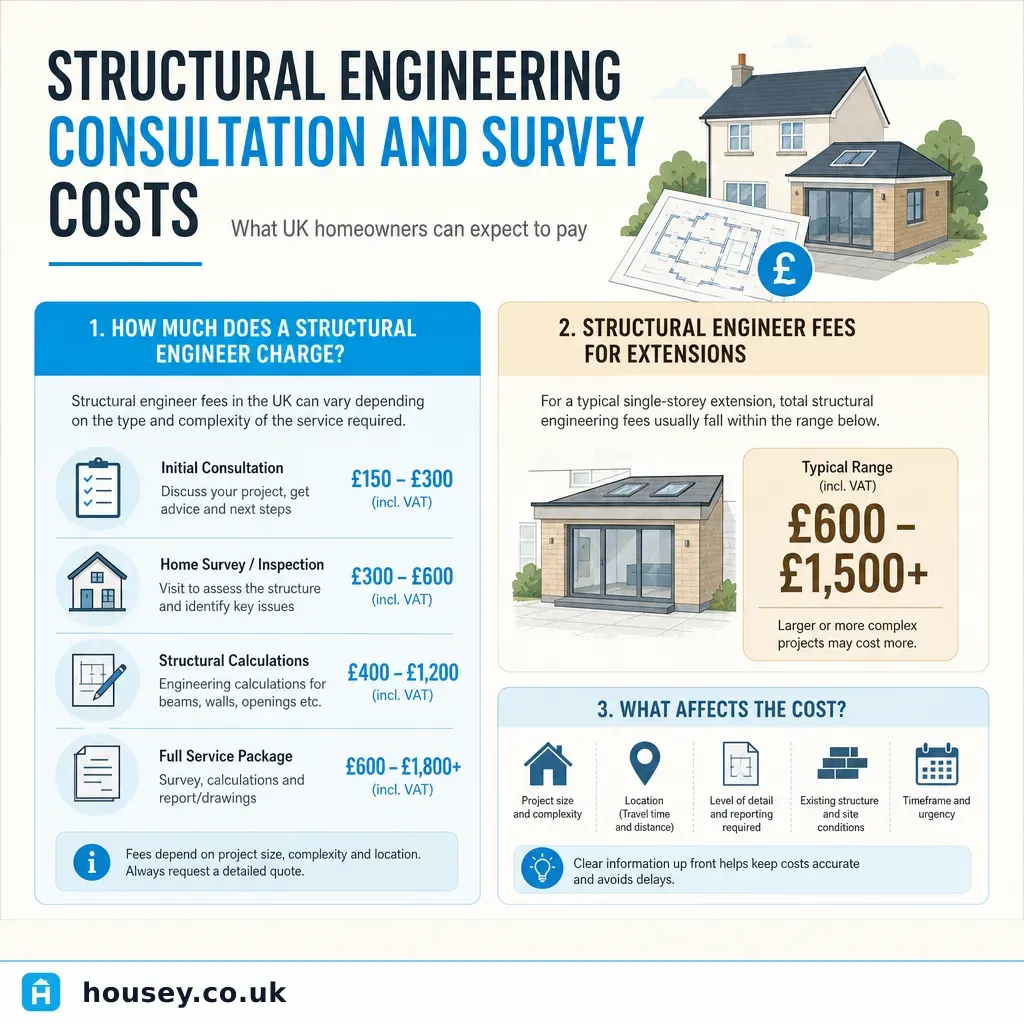
Structural Engineering Consultation and Survey Costs
A structural engineer consultation in the UK typically costs £300–£800 for a specific defect report or pre-purchase assessment.
 Planning & Pre-Build
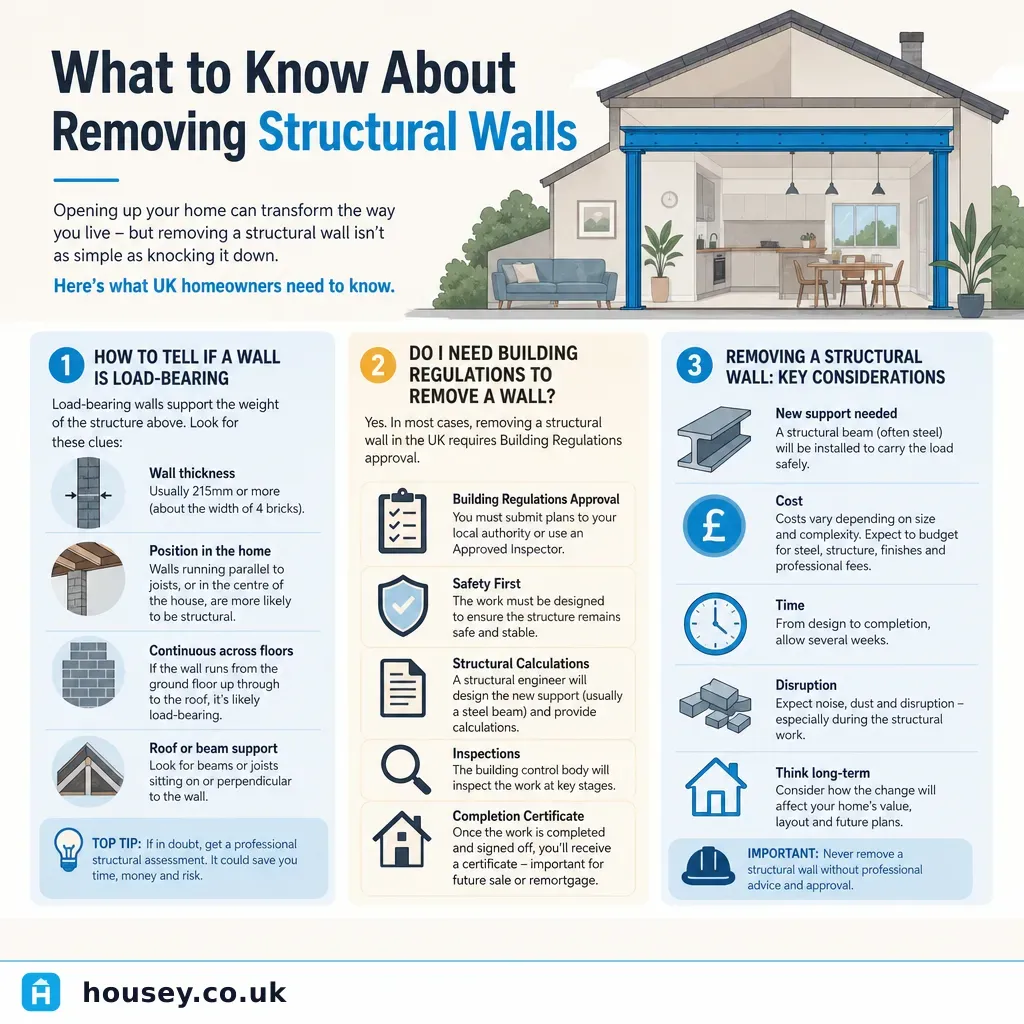
What to Know About Removing Structural Walls
Removing a structural or load-bearing wall in a UK home requires a structural engineer's assessment, a correctly specified steel beam (RSJ), and Building Regulations approval.
 Planning & Pre-Build
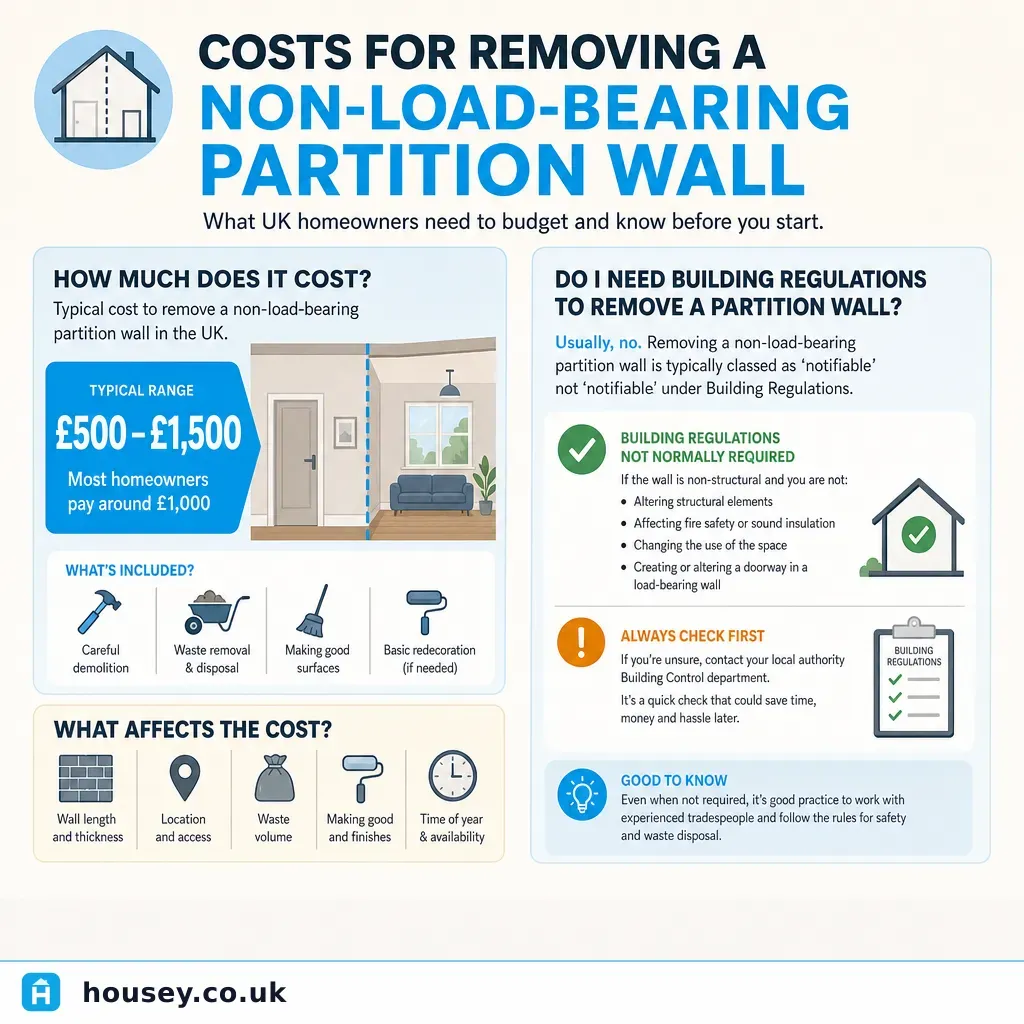
Costs for removing a non-load-bearing partition wall
Removing a non-load-bearing partition wall in a UK home typically costs £300–£1,500 in labour, plus £200–£600 or more for replastering and making good.
 Planning & Pre-Build
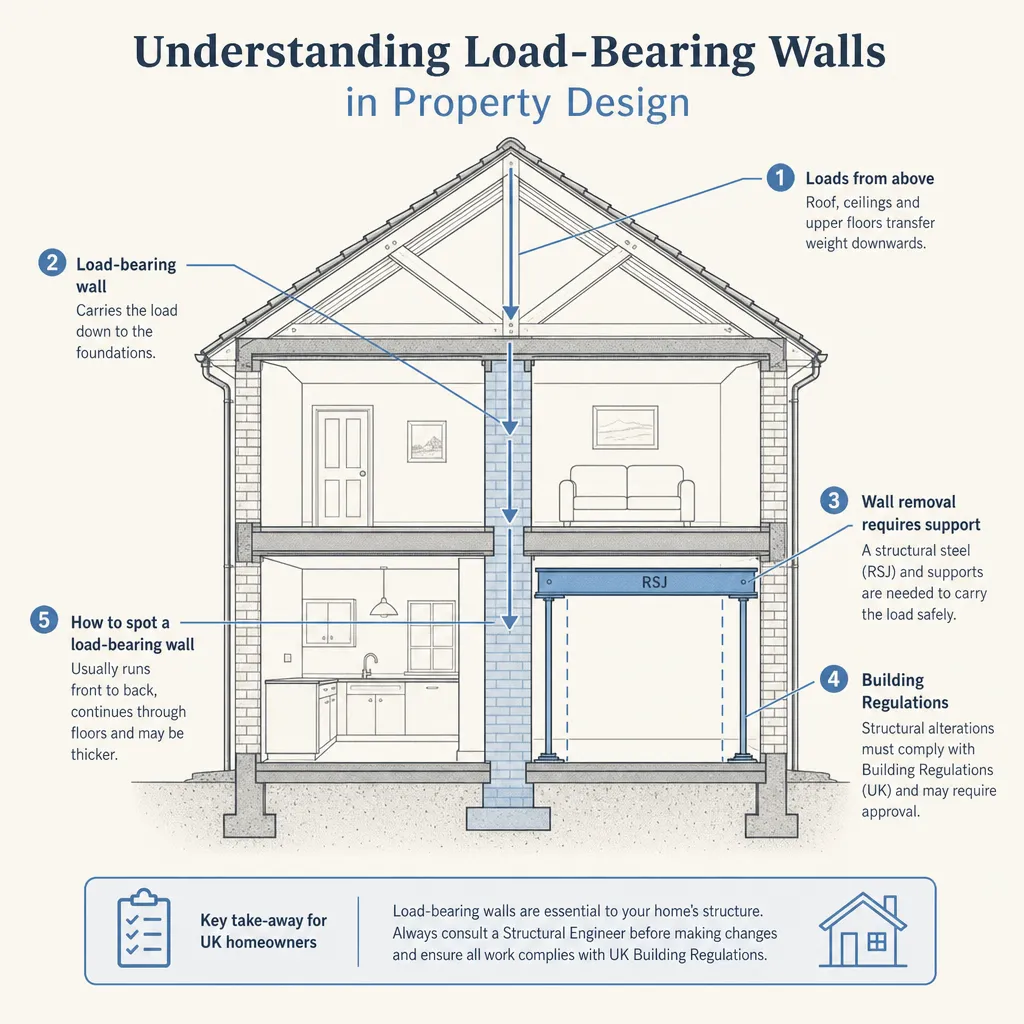
Understanding Load-Bearing Walls in Property Design
A load-bearing wall carries the weight of floors, roofs, or other walls above it down to the foundations.
 Planning & Pre-Build
Building Climate-Resilient Homes: Design and Energy Strategies
A climate-resilient UK home handles hotter summers, wetter winters, and rising energy costs through high-performance insulation, overheating mitigation, flood-resilient construction, low-carbon heating, and good water management.