Structural Glass Wall Installation Costs
By Housey · Last reviewed 11th of May 2026
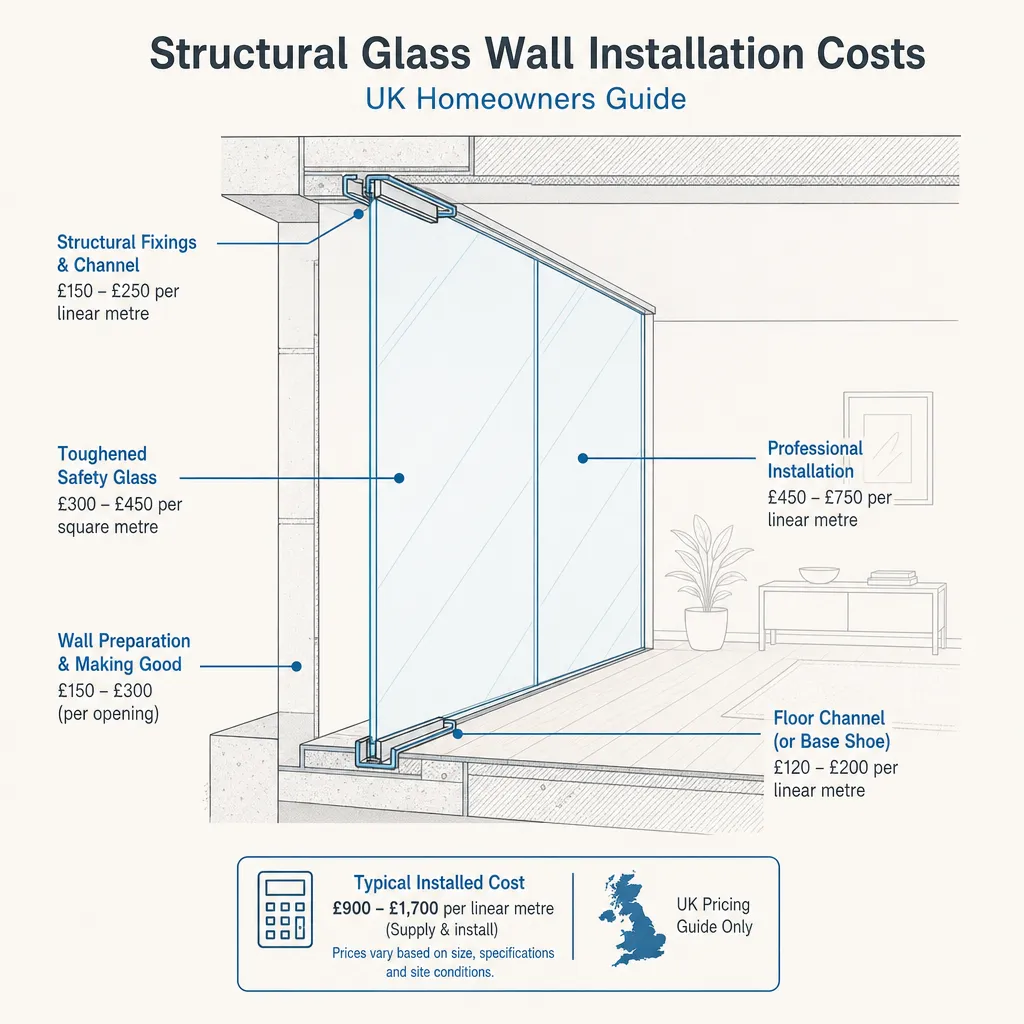
Structural Glass Wall Installation Costs
Structural and frameless glass walls have become a feature of high-end residential extensions, open-plan conversions, and commercial fit-outs across the UK. Homeowners typically start researching costs when planning a kitchen-diner extension, a garage conversion, or a redesigned internal layout — and discover quickly that 'glass wall' covers a wide range of products and specifications with very different price tags. The structural implications, building regulations requirements, and contractor specification can all push costs significantly higher than initial estimates.
Key points
- Structural glazing covers both external glass walls (typically part of an extension or basement lightwell) and internal glass partitions; building control obligations, structural requirements, and installed costs differ significantly between these two applications.
- Building Regulations Part K (Protection from falling, collision and impact) requires toughened or laminated safety glass wherever breakage could cause injury; standard float glass is not acceptable in structural or safety-critical glazing locations.
- Part L (Conservation of Fuel and Power) applies to external structural glazing in new extensions; the glass unit's U-value must be considered as part of the overall energy performance calculation for the extension.
- External structural glass walls forming part of a new extension typically require planning permission confirmation and structural engineering calculations submitted to building control under Part A.
- Fire-rated glass partitions must be tested and certified to BS 476 or EN 13501; incorrect specification in a fire compartment carries life-safety consequences and must be avoided in any commercial, HMO, or multi-occupancy setting.
What does structural glass wall installation cost in the UK?
Indicative UK costs, last reviewed 2026-05-11. All prices include supply and installation. Structural engineering fees, planning confirmation, and building control are additional costs. Always obtain at least three specialist quotes.
Application | Indicative installed cost per m² | Notes |
|---|---|---|
Internal frameless glass partition | £400–£900 | Single-glazed, aluminium or minimal framing, no fire rating |
Internal fire-rated glass partition | £600–£1,500 | Fire-rated glass (30 or 60 min), specialist certified framing |
Structural external glass wall (extension) | £1,200–£2,500 | Thermally broken framing, double or triple glazing, structural calcs required |
Frameless bolt-fixed or spider-glazed wall | £1,500–£3,000 | Minimal visible fixings, specialist contractor required |
Structural glass roof lantern or overhead glazing | £1,800–£4,000 | Complex structural and thermal specification, laminated glass required |
Glass types and systems: what to specify
Framed vs frameless systems
Framed systems use aluminium, steel, or timber frames to carry the structural load. They are less expensive than frameless alternatives, easier to detail for weathertightness and thermal performance, and generally more straightforward for building control approval. Thermally broken aluminium is required for all external applications to avoid cold bridging and condensation on the internal frame face.
Frameless systems — bolt-fixed or structural silicone bonded — use point-fixed glass with minimal visible metalwork. They achieve a near-invisible appearance and are popular for large kitchen-extension glass walls, but require more precise structural engineering, specialist installation, and careful detailing around weatherproofing and movement joints. They are significantly more expensive to supply and install.
Glass specification
Glass type | Typical application | Key requirement |
|---|---|---|
Toughened safety glass | Internal partitions, door panels | Required by Part K in safety-critical locations; breaks into small fragments on failure |
Laminated safety glass | Overhead glazing, structural elements | Holds together on breakage; required for rooflights and overhead applications under Part K |
Double-glazed unit (IGU) | External walls, extensions | Standard for external use; U-value typically 1.0–1.4 W/m²K |
Triple-glazed unit | High-performance external walls | U-value typically 0.5–0.8 W/m²K; increasingly specified to meet Part L |
Fire-rated glass | Partitions in fire compartments | Must be tested and certified to BS 476 or EN 13501; specialist product, not interchangeable with standard safety glass |
What affects the final cost?
Structural support requirements
External structural glass walls must transfer wind loads and self-weight to the surrounding structure. Where the existing structure is inadequate — common in older residential properties, particularly Victorian terraces and 1930s semis — additional steel or reinforced concrete framing is required. This structural intervention can add £5,000–£20,000 or more to the overall project cost and requires a structural engineer's design submitted to building control.
Size and height of panels
Larger and taller glass panels require thicker glass, heavier framing, and more complex installation logistics. Very large single panes — over 3 m × 2 m — may require specialist glazing cranes or vacuum lifting equipment, adding to installation costs and programme time. Bespoke non-standard sizes also carry premium lead times and manufacturing costs.
Thermal and acoustic specification
In residential extensions, Part L requires the extension to meet notional U-value targets as part of the overall energy assessment. A structural glass wall with a high U-value will either need compensation elsewhere in the design or upgraded glass units. Acoustic performance requirements in urban or commercial settings may require laminated or acoustic-interlayer glass, both of which are more expensive than standard toughened units.
Access and site constraints
Installation in tight terraced plots, basement lightwells, or multi-storey commercial buildings adds cost through access equipment requirements, reduced working space, and the difficulty of manoeuvring large glass panels safely into position.
Building regulations and planning for structural glass walls
External glass walls (extensions)
An extension with a structural glass wall will typically require:
- Planning permission — or written confirmation from your local planning authority that permitted development applies. A full glass wall rear extension may qualify under Class A permitted development depending on size, height, and location, but this must be confirmed with the LPA before works begin, particularly in conservation areas.
- Building Regulations approval under Parts A (structure), L (thermal performance), K (safety glazing), and F (ventilation).
- Structural engineer's calculations submitted to building control as part of the application.
- Energy performance calculations (SAP or simplified method) to demonstrate Part L compliance for the extension as a whole.
Internal glass partitions
Internal glass partitions in a private residential property are generally not notifiable under Building Regulations unless they affect a fire compartment boundary. In commercial premises, HMOs, or multi-occupancy buildings, Part B (fire safety) provisions almost certainly apply, and fire-rated glass must be correctly specified, installed, and evidenced with certification.
Decision guide: which glass wall system is right for your project?
- Choose framed aluminium if budget is a priority and you need a weathertight external glass wall for a residential extension.
- Choose frameless bolt-fixed if achieving a minimal aesthetic with large uninterrupted glass spans is the design priority and budget allows.
- Choose fire-rated glass partitions if the installation is in a commercial premises, HMO, or any building where fire compartmentation is required by Part B.
- Ask a structural engineer before instructing any contractor if the existing structure may be inadequate to support the weight and wind loads of a large glass wall.
- Check with your local planning authority before starting if the glass wall forms part of an extension, or if the property is a listed building, in a conservation area, or has prior extensions that may have used permitted development allowances.
What to ask before accepting a quote
- Is the glass toughened, laminated, or fire-rated, and does this specification meet Building Regulations for this specific application?
- What framing system is specified, and is it thermally broken for external use?
- What U-value does the glazed unit achieve, and has this been checked against Part L requirements for the extension?
- Who is responsible for structural engineering calculations and building control submission — is this included or additional?
- Is scaffolding, access equipment, or specialist lifting gear included in the quoted price?
- What warranty is provided on the glass unit and on the installation workmanship?
- Does the installer hold any recognised scheme certification such as FENSA or Certass for external glazing?
- Is VAT included in the quoted price?
Important limitations
This article provides general cost guidance and a summary of building regulations requirements for structural glass walls in the UK. Individual project costs will vary substantially based on glass specification, framing system, site conditions, structural support requirements, and local authority requirements. Structural glazing in external or overhead applications requires assessment by a structural engineer and building control approval; this article should not be used as a substitute for professional advice tailored to your property and project. Planning and permitted development rules vary by property, location, and planning history.
What to ask a qualified professional
Before instructing a structural glazing contractor:
- Do you have experience with this specific application — external glass wall, internal partition, or overhead glazing — and can you provide references?
- Will you provide structural calculations, or do I need to appoint a separate structural engineer?
- Are you able to manage the building control submission, or will that require a separate appointment?
- What glass certification and test data can you provide for fire-rated or structural products?
- What accreditations or scheme memberships do you hold, and are your installers trained to work with the specified system?
When to get professional help
Structural glass installation is not a DIY project. Seek professional input when:
- The glass wall is structural — external, forming part of a roof, or where the glass or frame carries loads from the surrounding building.
- The project is in a listed building or conservation area, where unauthorised works can result in planning enforcement action.
- A structural engineer has not been involved and the existing structure's capacity to support a glass wall is unknown.
- Fire-rated glass is required — incorrect specification in a fire compartment has direct life-safety consequences.
- The installation is in a commercial or multi-occupancy building where building control sign-off is a legal requirement.
How Housey can help
Housey connects homeowners and commercial clients with specialist window and door installation professionals experienced in structural and frameless glass systems. Compare quotes and credentials, and find a contractor who can manage building control requirements on your behalf.
Frequently asked questions
Does a structural glass wall need planning permission?
An internal glass partition does not normally require planning permission. An external glass wall forming part of a house extension may fall under permitted development rights, subject to size and location limits, but this depends on your property's planning history and whether restrictions apply. Always confirm with your local planning authority before starting work, particularly in conservation areas, listed buildings, or where prior extensions may already have used permitted development allowances.
What is the difference between structural glass and a standard glass panel?
Structural glass is engineered to carry loads — wind loads, self-weight, and sometimes imposed loads — as part of a building's structural system. It is manufactured from toughened or laminated safety glass to tested and certified specifications. Standard float or decorative glass is not designed to carry structural loads and is not permitted in safety-critical locations under Building Regulations Part K. Using the wrong glass type can have serious safety consequences.
How long does structural glass wall installation take?
For a straightforward residential project — a single glass wall in an extension or an internal frameless partition — installation typically takes one to three days once the structural frame and builder's work are complete. More complex installations may take one to two weeks. Lead times for bespoke glass units, particularly large triple-glazed or fire-rated panels, can be six to twelve weeks from order.
Is structural glazing covered by permitted development?
The glazing itself is assessed as part of the wider extension or structure, not independently. A rear extension meeting Class A permitted development criteria — correct size, height, and materials — may not need planning permission even with a structural glass wall. However, in conservation areas, listed buildings, or where prior extensions have used permitted development allowances, restrictions may apply. Always check with your local planning authority before starting work.
Sources and further reading
- Planning Portal — extensions and permitted development — Planning Portal
- Building Regulations Approved Document K — Protection from falling, collision and impact — GOV.UK
- Building Regulations Approved Document L — Conservation of fuel and power — GOV.UK
- Building Regulations Approved Document B — Fire safety — GOV.UK
- FENSA — glazing competency scheme — FENSA
Useful next reads
 Improvement & Build
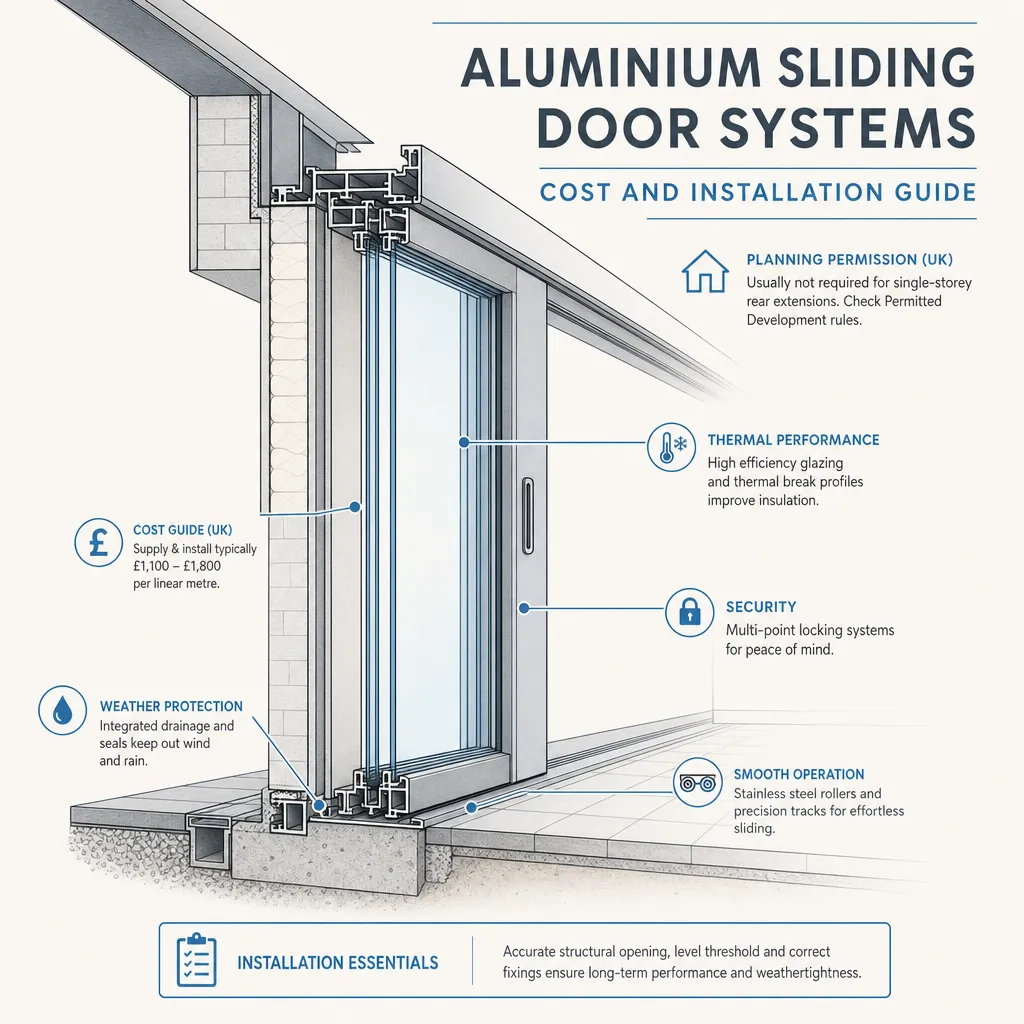
Aluminium Sliding Door Systems: Cost and Installation Guide
Aluminium sliding doors typically cost £2,500–£7,000 supply and fitted for a standard opening.
 Improvement & Build
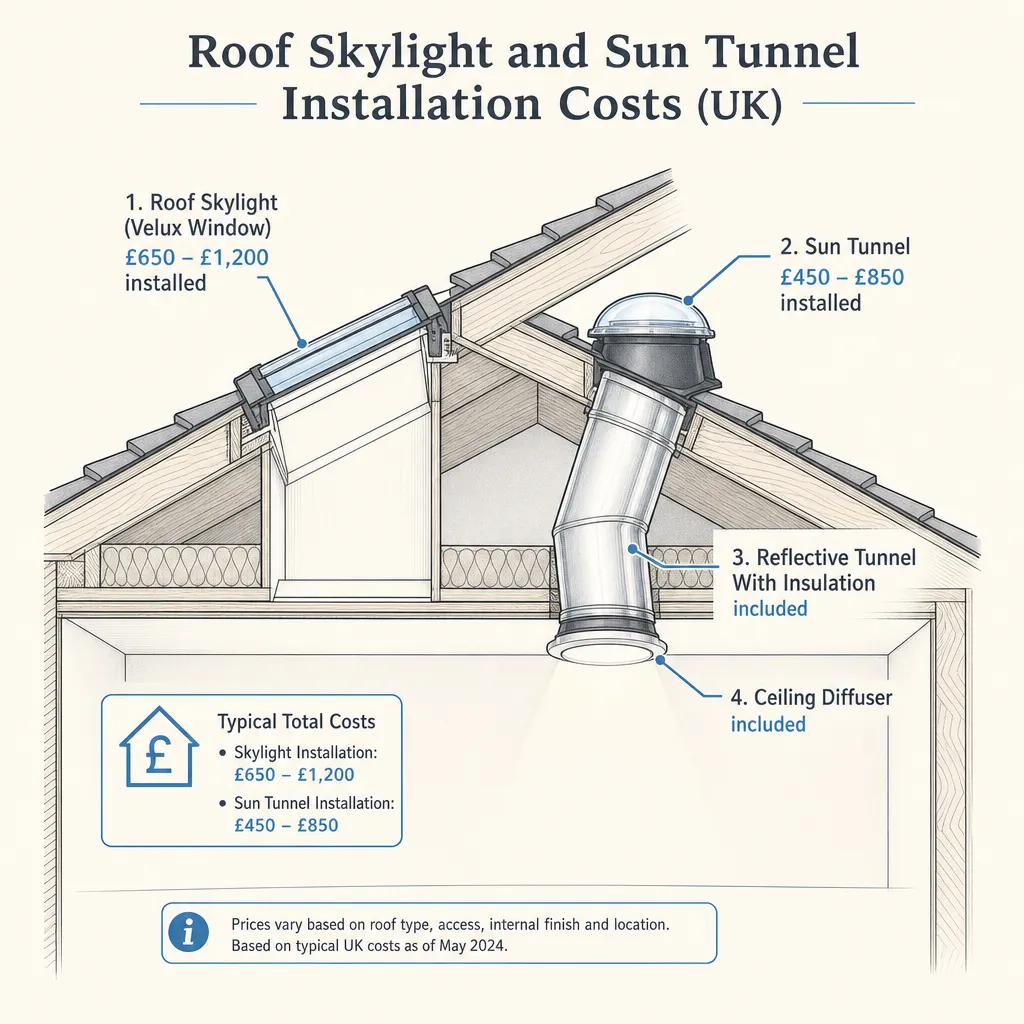
Roof Skylight and Sun Tunnel Installation Costs
A standard pitched-roof skylight costs £800–£3,000 installed in the UK, including flashings and basic making good.
 Improvement & Build
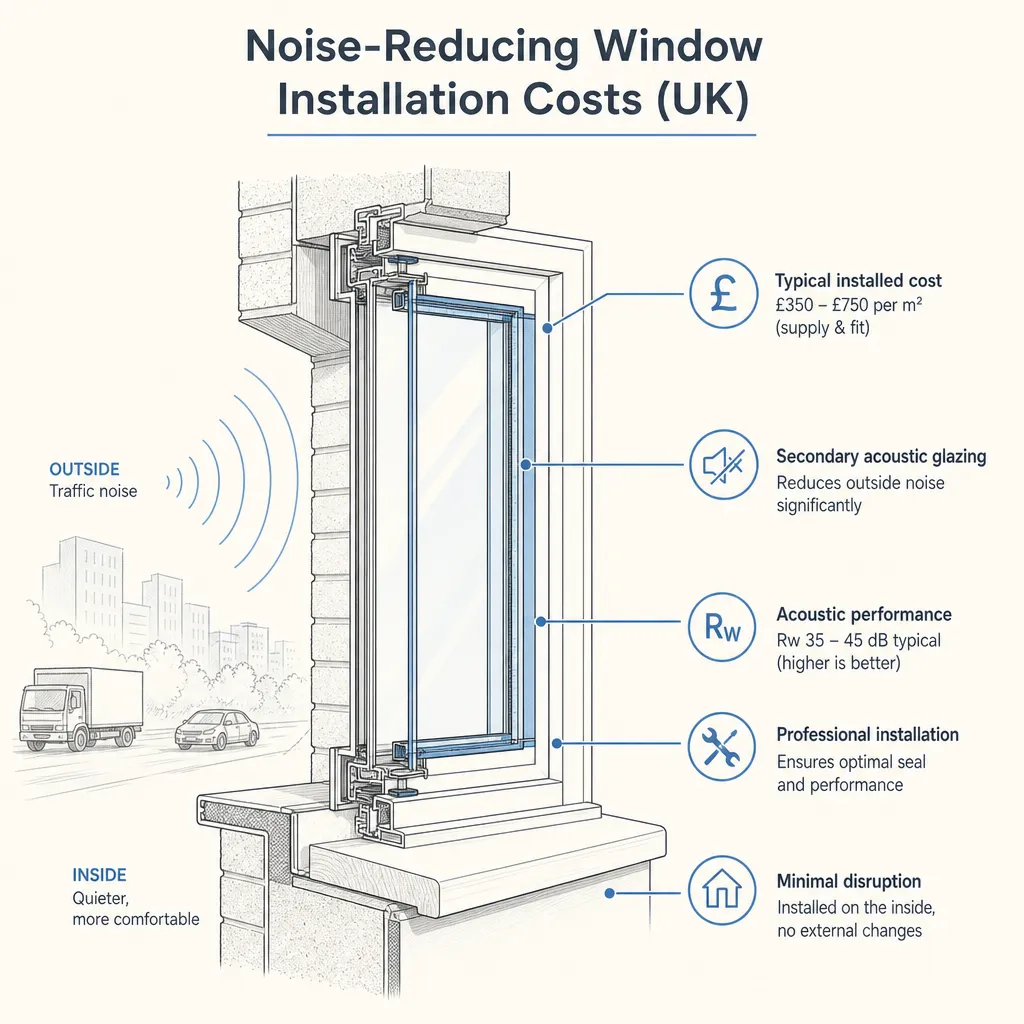
Noise-Reducing Window Installation Costs
Noise-reducing window installation in the UK typically costs £400–£1,500 per window depending on glazing specification, frame material, and property type.
 Improvement & Build
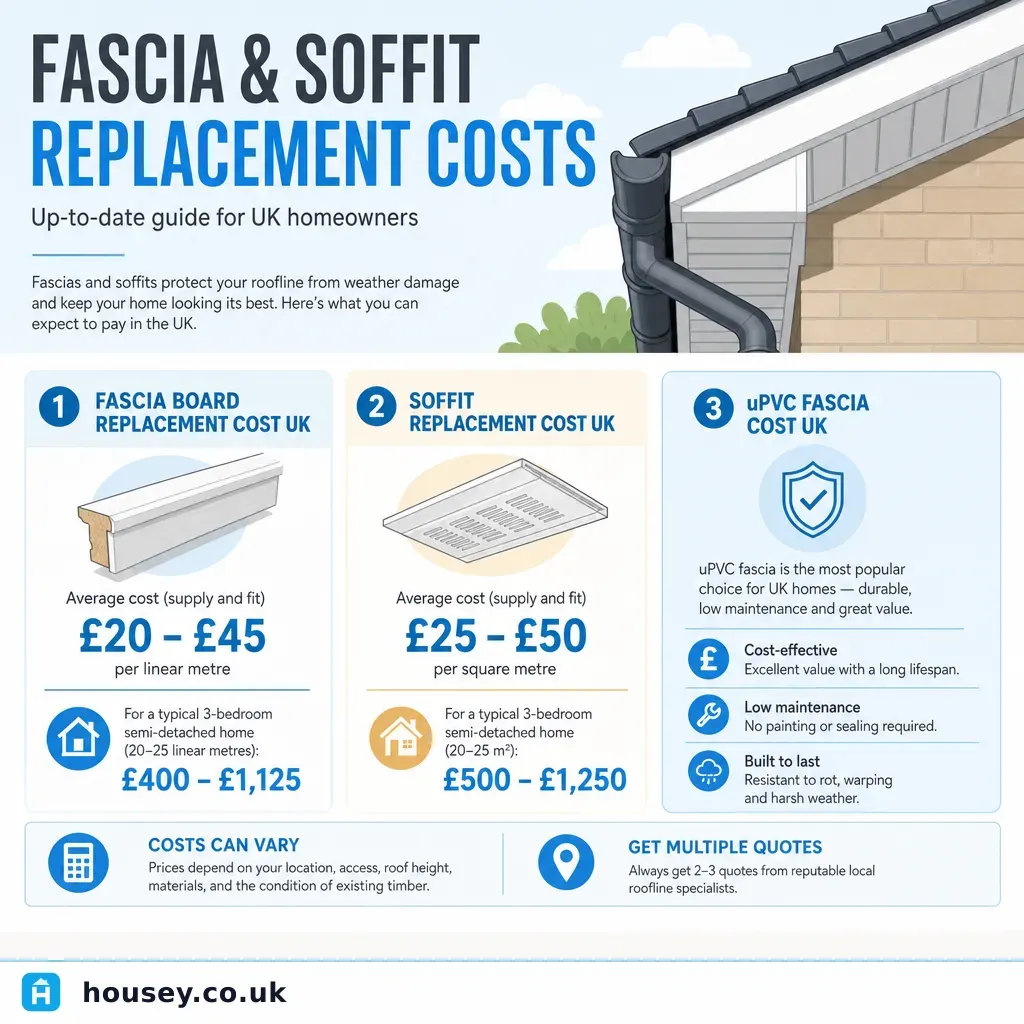
Fascia and Soffit Replacement Costs
Fascia and soffit replacement for a semi-detached house in the UK typically costs £1,800–£4,500 for uPVC boards and new guttering.
 Improvement & Build
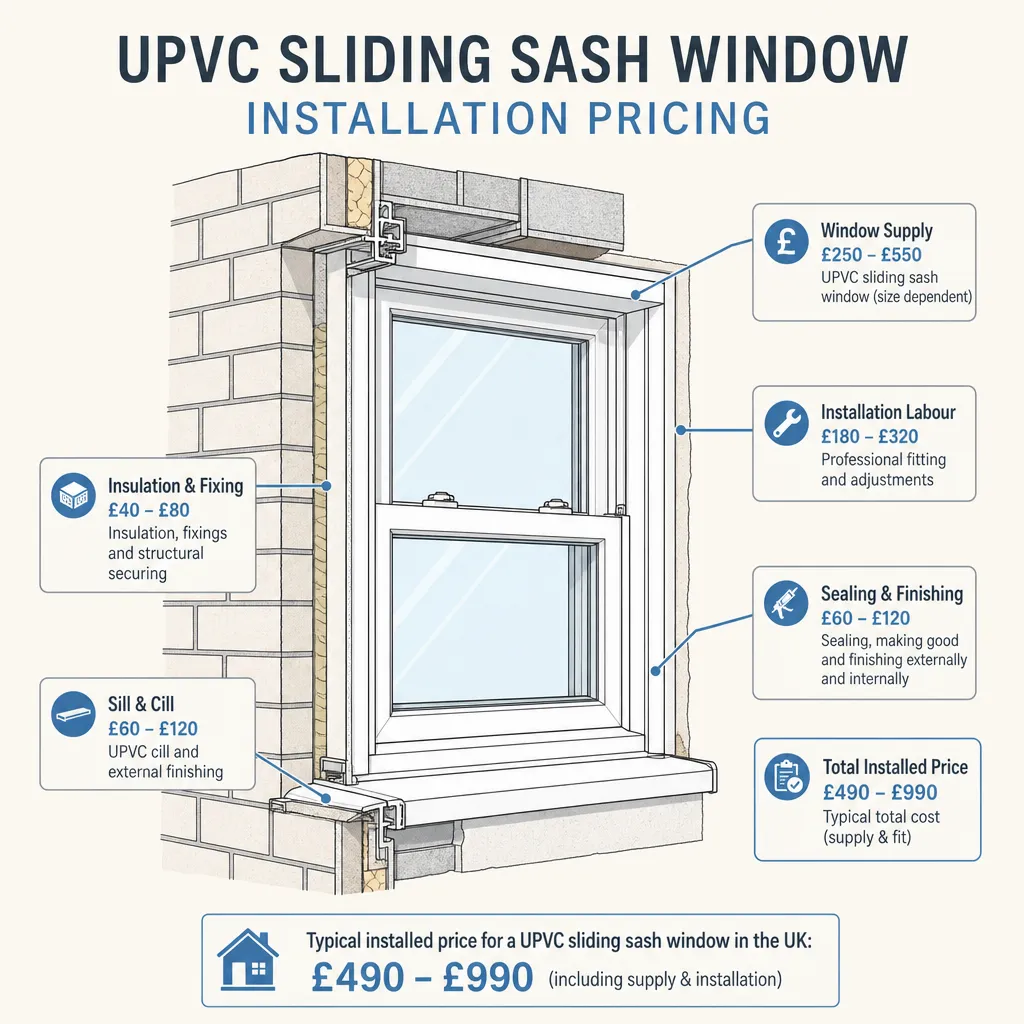
UPVC Sliding Sash Window Installation Pricing
UPVC sliding sash windows are priced by size, glazing specification, balance system, finish, and access requirements.