Studio Flat Design: Space-Maximising Ideas for Open-Plan Living
By Housey · Last reviewed 25th of May 2026
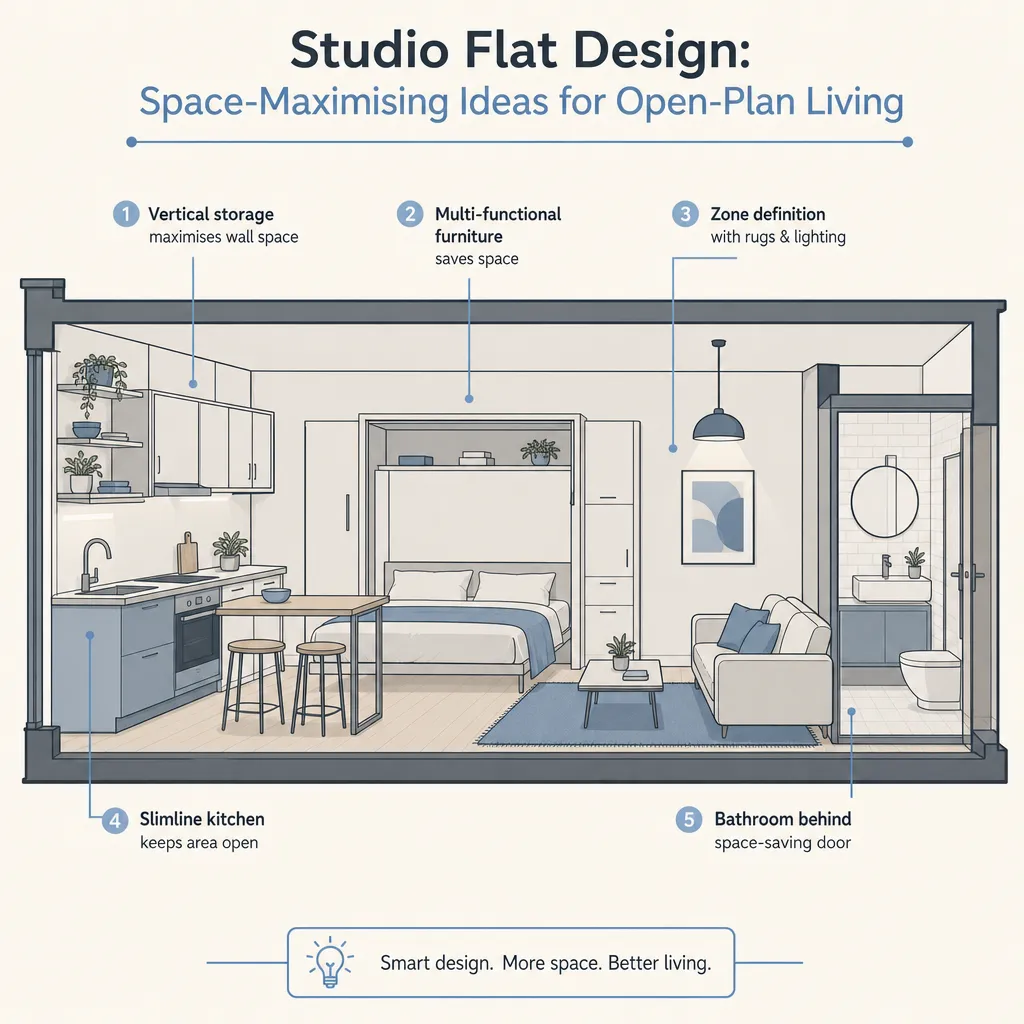
Studio Flat Design: Space-Maximising Ideas for Open-Plan Living
Studio flats present one of the most demanding design challenges in UK residential property: every decision about furniture, storage, and layout must work harder because there is no separate room to absorb what does not quite fit. The question of how to make a studio feel spacious and function well arises for first-time buyers, city renters moving into their own place, landlords wanting to improve rental appeal, and homeowners converting a garage or outbuilding into a self-contained annexe.
Key points
- UK studio flats typically range from 20 to 40 square metres; the nationally described space standard (NDSS) sets a minimum of 37 sq m for a new-build one-person studio in England, though many existing flats fall below this.
- Multifunctional furniture — sofa beds, fold-down wall beds, fold-out desks, extending tables — can recover 3–6 square metres of usable floor area compared with single-function equivalents.
- Zoning sleeping, living, and cooking areas using rugs, half-height furniture, and contrasting materials creates perceived separation without fixed walls, maintaining natural light and avoiding structural work.
- Vertical storage (floor-to-ceiling shelving, wall-mounted cabinets, high-level wardrobe runs) frees floor area and makes use of the space most often wasted in small rooms.
- Natural light is the single most important contributor to how spacious a studio feels — avoid placing tall furniture in front of windows, and use reflective surfaces and pale finishes to distribute light through the space.
Understanding the space you are working with
The first step in designing any studio flat is an accurate measured floor plan. You need to know:
- Total floor area and ceiling height at its lowest and highest points
- The position of windows and doors, and which direction the main window faces
- The location of structural walls and columns — elements you cannot remove without structural work and building control approval
- The position of radiators, electrical sockets, and plumbing connections, which constrain kitchen and bathroom positions
- Any lease restrictions if you are a renter or own leasehold — some leases prohibit structural alterations or require landlord consent
Ceiling height deserves particular attention. A studio with 2.7 m ceilings offers meaningfully different design options from one with 2.4 m. Raised sleeping platforms are generally only comfortable above 2.6 m, and loft beds require at least 2.3 m of clear headroom above the sleeping surface.
Zoning: creating distinct areas without walls
The most transformative design decision in a studio flat is how you define zones. The goal is to give the sleeping, living, and eating or cooking areas a distinct identity and purpose without blocking light or making the flat feel smaller.
Zoning method comparison
Method | Best for | Not ideal for | Effect on light | Reversibility |
|---|---|---|---|---|
Area rug | Defining sitting or sleeping zone; low cost | Very cluttered floor plans | Neutral | Fully reversible |
Half-height shelving | Visual separation with open feel; additional storage | Studios with very low ceilings | Minimal impact | Easy to reverse |
Curtain or folding screen | Sleeping privacy; renters who cannot alter structure | Minimalist open-plan aesthetic | Blocks some natural light | Fully reversible |
Raised sleeping platform | Distinct sleeping zone; under-platform storage | Ceilings below 2.6 m; rented properties | Neutral to positive | Semi-permanent or permanent |
Internal glazed partition | Maximum separation with preserved light | Budget-sensitive projects; renters | High — light passes through | Permanent — requires building work |
A practical approach for most studios combines: an area rug to anchor the sitting zone, a half-height bookshelf or sideboard to visually separate the sleeping area, and pendant or task lighting to give each zone its own character.
Multifunctional furniture: the key decisions
Choosing the right convertible furniture is the greatest single lever for increasing usable space in a small flat. The right choice depends on how you use the space day to day.
Decision tree: which sleeping arrangement is right for you?
- Choose a sofa bed if you have occasional overnight guests and want the main sofa to double as a bed. A good-quality model with a proper mattress can be comfortable for regular use.
- Choose a fold-down wall bed (Murphy bed) if you want a full-sized double or king bed but need the floor area free during the day. Modern units with integrated shelving or a desk are highly functional.
- Choose a loft or high-sleeper bed if ceiling height exceeds 2.5 m and you work from home — the desk beneath the bed effectively creates a separate zone.
- Choose a standard bed if the studio exceeds 35 sq m and can accommodate a bed alongside sofa and desk without the floor plan feeling blocked, or where sleeping comfort cannot be compromised.
- Ask an architectural technologist if you are considering a raised platform, mezzanine, or internal partition — structural, building control, and potentially planning implications should be assessed professionally before any design is committed to.
Other high-impact multifunctional choices:
- Extending or fold-down dining table: scales from two seats to four or six without permanently occupying floor area
- Lift-top coffee table or storage ottoman: replaces a standard coffee table and provides blanket or linen storage
- Wall-mounted fold-out desk: creates a dedicated work area that folds flat when not in use
- Bed with integrated storage drawers: typically provides 0.3–0.5 m³ of storage, equivalent to a medium chest of drawers
Storage: going vertical
In a studio flat, floor area is the scarcest resource. Every item stored at floor level competes with space for living and moving. The solution is to go vertical.
Practical vertical storage strategies:
- Install full-height wardrobes or modular storage systems reaching the ceiling — the space above 1.8 m is commonly wasted but holds seasonal items well
- Use wall-mounted shelving in the kitchen wherever possible rather than freestanding units
- Use the space beneath a raised bed or platform for drawers, shelving, or a home-office nook
- Hang bikes, sports equipment, or tools on wall-mounted hooks or racks to free floor area
Storage planning checklist
Colour, light, and materials
Colour and light choices have an outsized effect on perceived space in a studio:
- Pale warm-neutral walls — soft white, warm grey, stone, or off-white — reflect light and read as more spacious. A single darker accent on one wall or in the kitchen area can define zones without darkening the whole space.
- Consistent flooring throughout (including kitchen and bathroom where possible) makes the floor plan read as larger than if broken by multiple materials.
- Mirrors placed opposite a window, or alongside a dark corner, bounce natural light and increase the apparent depth of the space.
- Sheer curtains or privacy film on windows provide daytime privacy without blocking light, unlike opaque blinds or heavy curtaining.
When to get professional help
Most studio flat design work — furniture selection, paint choices, storage planning — is well within a homeowner or renter's capability. However, professional input is worth considering when:
- You are planning structural changes such as a raised platform, mezzanine, or partition removal
- You are converting a garage, basement, or outbuilding into a studio and need to comply with Building Regulations for habitable space (natural light, ventilation, thermal performance, and fire safety)
- You want a bespoke fitted furniture scheme and would benefit from measured drawings before ordering
- The flat is a rental investment and you want a scheme optimised for tenant appeal and long-term durability
An architectural technologist can produce measured layout drawings, advise on planning and building control requirements for structural changes, and guide the practical design of a studio conversion or refurbishment.
How Housey can help
Whether you are planning a studio conversion or want professional layout design for an existing flat, Housey connects you with an architectural technologist who can provide measured design drawings and planning advice tailored to your property.
Frequently asked questions
What is the minimum size for a habitable studio flat in the UK?
The nationally described space standard (NDSS), which applies to new-build homes in many English local authorities, sets 37 sq m as the minimum for a one-person studio. Many existing studio flats, particularly in London and other cities, are smaller. There is no minimum size regulation for existing residential property in private use, though local authorities can apply the NDSS to permitted development conversions.
Do I need planning permission to partition a studio flat?
Creating a lightweight, non-structural partition within an existing studio flat typically does not require planning permission. However, it usually requires Building Regulations approval to ensure the new layout meets requirements for natural light, ventilation, fire safety, and sound insulation — particularly if creating a new separate room. Always check with your local planning authority and building control before starting work.
What colour makes a small studio feel bigger?
Pale warm neutrals — soft white, warm grey, stone, or off-white — tend to make a space feel larger by reflecting light. Using a consistent tone throughout, including woodwork and ceiling, reduces visual fragmentation. A slightly lighter tone on the ceiling than on walls can increase the perceived sense of height throughout the flat.
Is a sofa bed practical for everyday use in a studio?
A good-quality sofa bed with a proper mattress can be comfortable for regular sleeping, but requires more daily effort than a fixed bed. For a studio used as a primary residence, a fold-down wall bed (Murphy bed) often provides a better sleeping surface and greater daytime floor space. Budget-end sofa beds are generally not suitable for daily use.
Can I add a mezzanine to a studio flat?
Mezzanines are possible in studios with sufficient ceiling height — typically a minimum of 4.2–4.5 m total to achieve comfortable headroom above and below. A mezzanine is a structural alteration requiring Building Regulations approval and, in some cases, planning permission. An architectural technologist or structural engineer should be consulted before proceeding with any design.
Sources and further reading
- Nationally Described Space Standard — Ministry of Housing, Communities & Local Government
- Building Regulations Approved Document B: Fire Safety — GOV.UK
- Planning Portal: Internal works and permitted development — Planning Portal
- RIBA: Housing design guidance — Royal Institute of British Architects
Useful next reads
 Improvement & Build
Installing Peel-And-Stick Wallpaper: Application Techniques
Peel-and-stick wallpaper works best on smooth, emulsion-painted walls cured for at least 30 days, in rooms between 13°C and 30°C.
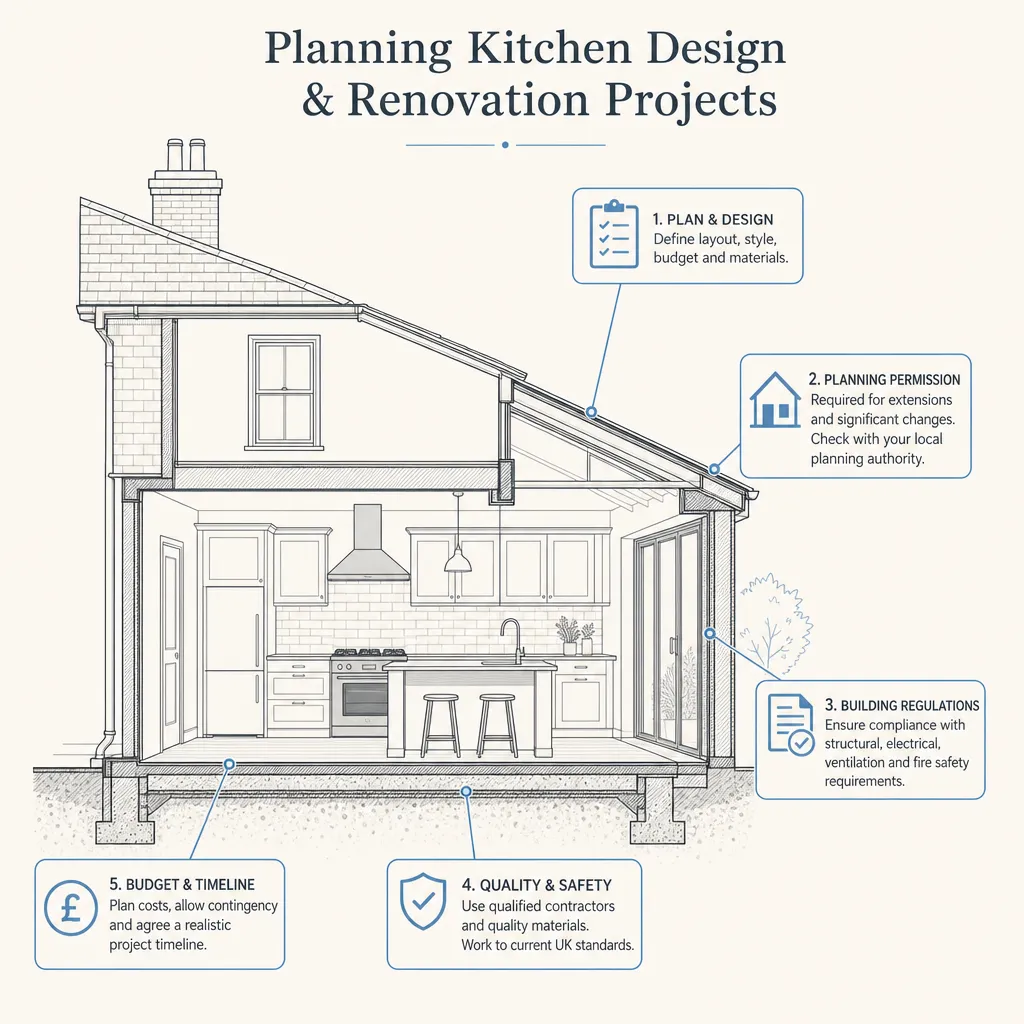 Improvement & Build
Planning kitchen design and renovation projects
Planning a kitchen renovation in the UK typically involves choosing a layout, setting a budget, deciding which contractors you need, and understanding which regulations apply.
 Improvement & Build
Ventless Gas Fireplaces: UK Considerations for Modern Home Heating
In the UK, ventless gas fires are known as flueless gas fires and are permitted only in specific circumstances under Building Regulations Approved Document J and the Gas Safety Regulations 1998.
 Improvement & Build
Creating Your Home Sanctuary: Design and Comfort Principles
Creating a home sanctuary is about balancing sensory comfort, functional layout, and personal aesthetic.
 Improvement & Build
Professional Advice on Home Interior Design and Decoration
In the UK, interior designers typically handle space planning, material specification, and contractor coordination, while decorators focus on surface finishes and styling.