Stump Grinding versus Stump Removal: Methods and Cost Comparison
By Housey · Last reviewed 25th of May 2026
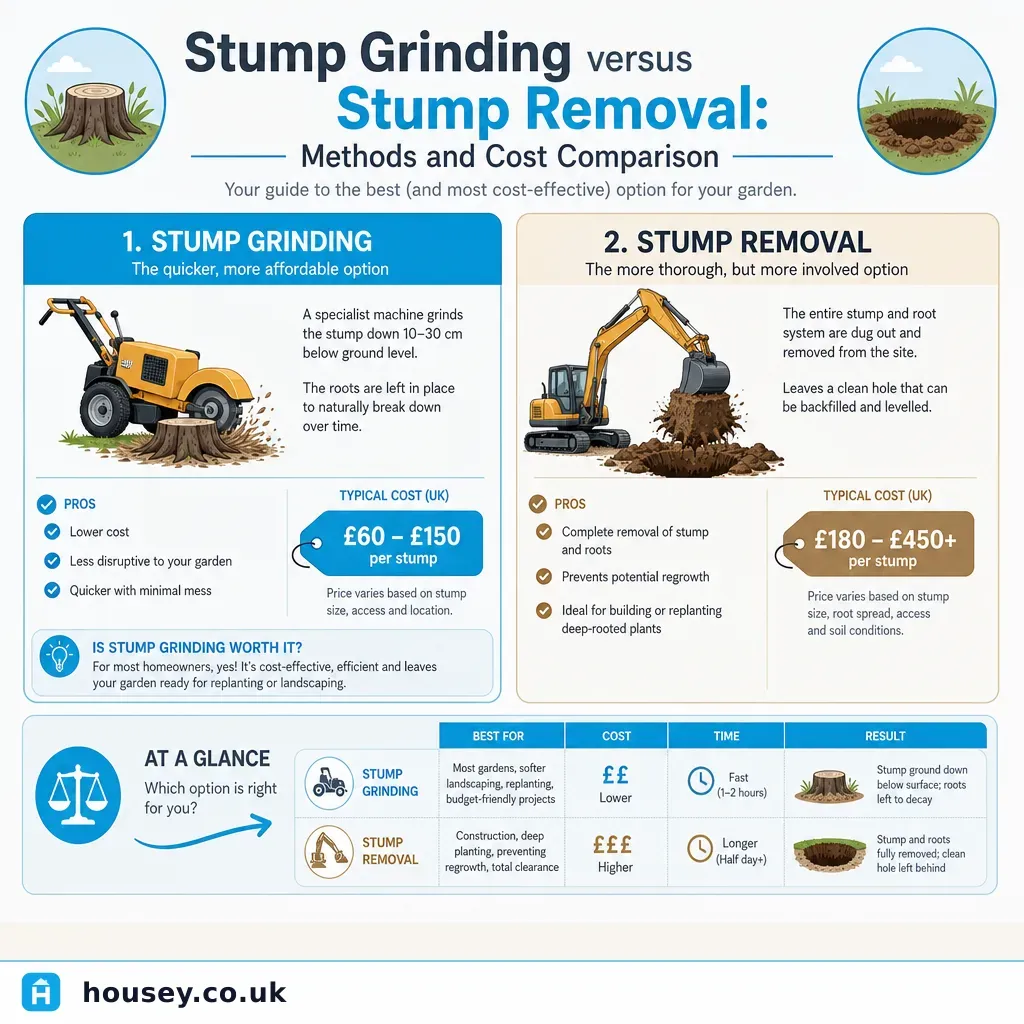
Stump Grinding versus Stump Removal: Methods and Cost Comparison
Once a tree has been felled, the stump is what remains — and what happens next depends on your plans for the ground, your budget, and the size of the root system. Stump grinding and full stump removal are both widely offered by UK tree surgeons, but they work in fundamentally different ways and leave your garden in very different states. Choosing the wrong method can mean paying twice, or discovering too late that a large root plate is interfering with a planned extension or new driveway.
Key points
- Stump grinding chips the stump to 150–300 mm below soil level but leaves the root system in the ground to decay naturally over several years.
- Full stump removal (excavation) extracts the entire root plate, producing a large void that needs backfilling, but leaves the ground completely clear.
- Indicative UK costs for stump grinding: approximately £60–£350 per stump depending on diameter (last reviewed 2026-05-25).
- Full excavation typically costs significantly more — £200–£600 or more per stump — and requires a mini-digger or large machine, plus disposal of the root ball.
- Stump grinding is not suitable for sites where hard landscaping or concrete is planned, as decaying roots underground can cause surface settlement over time.
How stump grinding works
A stump grinder uses a rotating disc fitted with tungsten carbide cutting teeth. The operator moves the cutting head from side to side across the stump face, progressively lowering the cutting depth until the wood is chipped to the required level. The result is a pit of mixed soil and wood chip (the arisings), which is typically raked back to fill the depression.
What remains underground: The lateral roots and root plate stay in the soil. In most species these decay over 5–10 years. During this period they do not actively destabilise the ground, but they take up space and can harbour certain fungi.
What the surface looks like after: A shallow depression filled with wood chip, which settles over a few weeks. The area can generally be turfed or planted within a few months — but it is not suitable for hard landscaping, concrete, or extension footings without further excavation.
How full stump removal works
Full removal means physically extracting the entire root system — the stump butt plus the main lateral roots. This is done using an excavator, a large tracked machine with extraction capability, or (for smaller stumps) manual digging and a reciprocating saw to sever roots.
What remains underground: Nothing significant — only the very finest feeder roots, which are too small to cause problems.
What the surface looks like after: An open void that must be backfilled with compacted clean fill, then topsoil, before any surfacing or construction is laid. The ground disruption is considerably greater than grinding, but the site is genuinely clear for any land use including hard standing, extensions, or deep planting.
Comparison table: grinding versus full removal
Feature | Stump grinding | Full stump removal |
|---|---|---|
Root system | Left to decay in ground (5–10 years) | Fully extracted |
Typical depth achieved | 150–300 mm below soil | Complete to root plate |
Suitable for re-seeding or planting | Yes — after a few months | Yes — once backfilled |
Suitable for paving or concrete | No — roots decay and cause settlement | Yes — once properly compacted and backfilled |
Suitable for extension footings | No | Yes, subject to structural survey |
Equipment required | Stump grinder | Excavator or large extraction grinder |
Indicative UK cost (medium stump) | £100–£250 | £250–£600+ |
Arisings produced | Wood chip — useful as mulch | Large root ball — skip or off-site disposal needed |
Garden disturbance | Low to moderate | Significant |
Time for ground to stabilise | Several months | 2–6 weeks depending on backfill |
Indicative UK costs, last reviewed 2026-05-25. Costs vary by stump diameter, species, location, and contractor. Always obtain at least two itemised quotes.
Decision tree: which method should you choose?
- Choose stump grinding if you plan to re-lawn or replant the area, the stump is not close to any building foundation or proposed structure, you want a lower-cost and lower-disruption outcome, and you are comfortable with the roots decaying in situ over several years.
- Choose full stump removal if you plan to lay hard standing (patio, driveway, or paths), build an extension or outbuilding with footings in the vicinity, or the tree species is known for persistent root growth — willow, poplar, Leylandii, or bamboo.
- Ask a structural engineer or chartered surveyor if the stump is within 3 metres of a building and the tree was a species with aggressive root systems, or if you notice signs of possible root-related subsidence such as cracking walls or sticking doors and windows.
- Check with your Local Planning Authority if the tree was covered by a Tree Preservation Order (TPO) or the property is in a conservation area — consent may be required for stump treatment as well as the original felling.
Chemical stump treatment: a third option
A less disruptive but slower alternative is chemical treatment using a proprietary stump killer product — typically based on glyphosate or potassium nitrate. Drill holes into the stump face, apply the product, and the stump gradually rots over 12–24 months.
This method is not suitable where you need the ground cleared quickly, where regrowth is a concern (willows can re-shoot from treated stumps), or where the stump is close to a watercourse or drainage system. Always follow the product label instructions. Glyphosate-based products are regulated under UK REACH and must be used in accordance with the manufacturer's instructions and any applicable conditions of approval.
Cost drivers: why two quotes may vary widely
- Stump diameter: most arborists price per 100 mm of stump diameter measured at the widest point at ground level.
- Species: hardwoods (oak, beech) are denser and harder to grind than softwoods (pine, birch); this affects time and equipment wear, and therefore cost.
- Access: machines need clear passage to the stump. Poor access through a narrow side gate, over steps, or through a building increases cost significantly.
- Number of stumps: volume discounts are common when multiple stumps are ground in a single visit, since most of the cost is in equipment mobilisation.
- Disposal: grinding contracts often include the wood chip; full extraction always generates a root ball requiring a skip or off-site disposal, which adds to the total.
When to get professional help
For any stump within 3 metres of a building, wall, or drain, obtain a professional assessment before deciding on method. If the tree was a large species with an extensive root system, a qualified tree surgeon can advise on long-term decay risk and whether full extraction is warranted. If you are uncertain about underground services in the area, arrange for a cable avoidance tool (CAT) scan before any mechanical ground-breaking.
How Housey can help
Comparing methods is easiest when you have itemised quotes for both options in front of you. A qualified tree surgeon can assess your specific stump, recommend the right approach, and provide quotes for grinding, full removal, or chemical treatment. Use Housey to find and compare local vetted arborists without obligation.
Frequently asked questions
Will grinding a stump kill the roots?
Grinding removes the structural wood of the stump to below ground level, but the lateral root system remains in the soil. In most species the roots gradually decay without the tree's canopy to sustain them. Some species — particularly willows, poplars, and certain vigorous shrubs — may produce new shoots from lateral roots even after the stump has been ground.
Can honey fungus spread from a ground stump?
There is some risk that honey fungus (Armillaria spp.) present in a decaying stump can spread via root contact to neighbouring plants. If honey fungus is suspected, full extraction is generally the more cautious approach, as it removes the bulk of infected material. An arborist can assess the specific risk and advise on the most appropriate treatment.
How long do roots take to decay after grinding?
Depending on species and soil conditions, most root systems from ground stumps are substantially decayed within 5–10 years. Hardwood species such as oak may take longer; fast-growing softwoods such as birch or pine often decay sooner. Roots continue to occupy space during this period but do not actively destabilise the ground in most cases.
Is stump grinding noisy?
Yes. Stump grinders typically operate at 95–110 dB. Most professional contractors work within reasonable daytime hours. If hiring a machine, check your local council's guidance on construction-related noise, which often restricts noisy work to Monday–Friday 08:00–18:00 and limited hours on Saturdays. Always wear ear defenders rated for at least 25 dB attenuation.
Sources and further reading
- Arboricultural Association — professional guidance on stump management and contractor directory
- GOV.UK: Tree Preservation Orders and trees in conservation areas — consent requirements
- HSE: Safe use of woodworking machinery — stump grinder operator safety
- GOV.UK: UK REACH chemical regulation — relevant to glyphosate-based stump treatment products
Useful next reads
 Improvement & Build
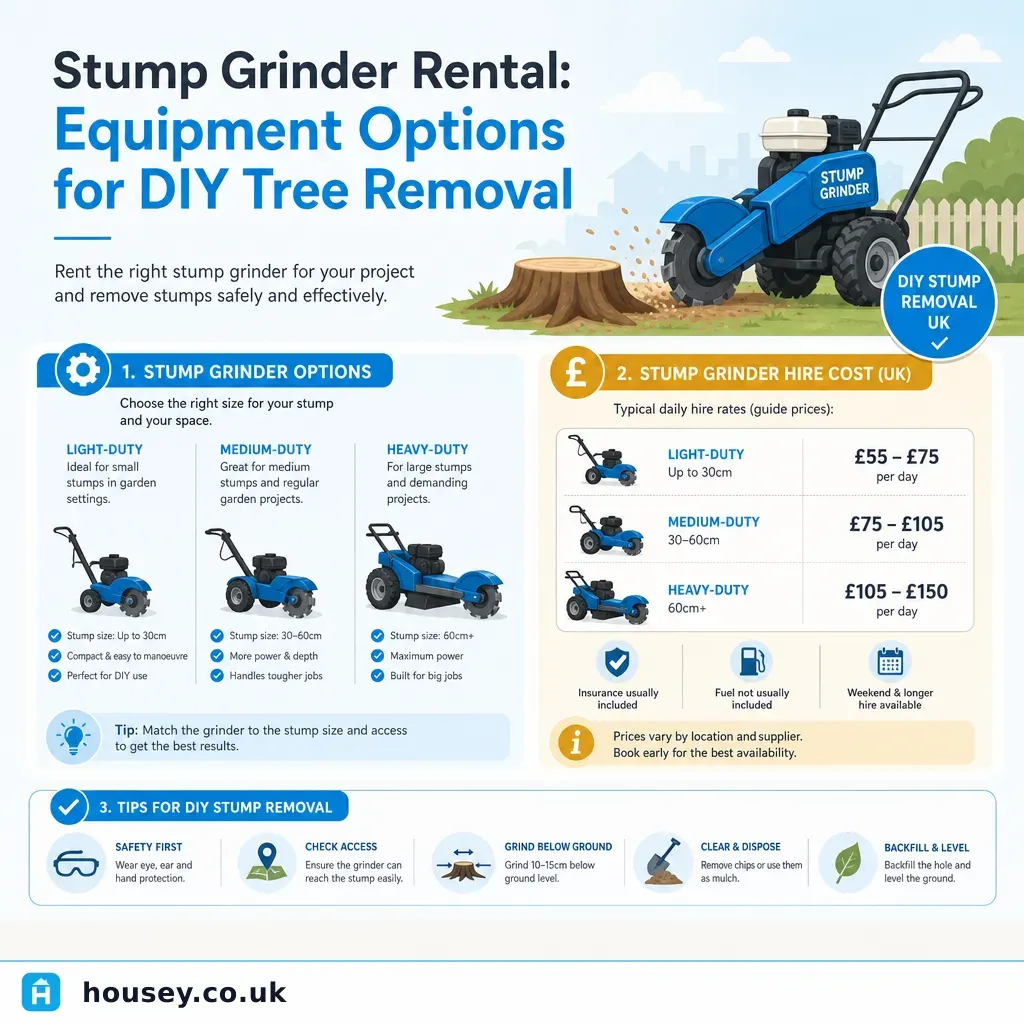
Stump Grinder Rental: Equipment Options for DIY Tree Removal
Stump grinders are available to hire from UK tool hire companies at day rates, typically £100–200 for a walk-behind compact model.
 Improvement & Build
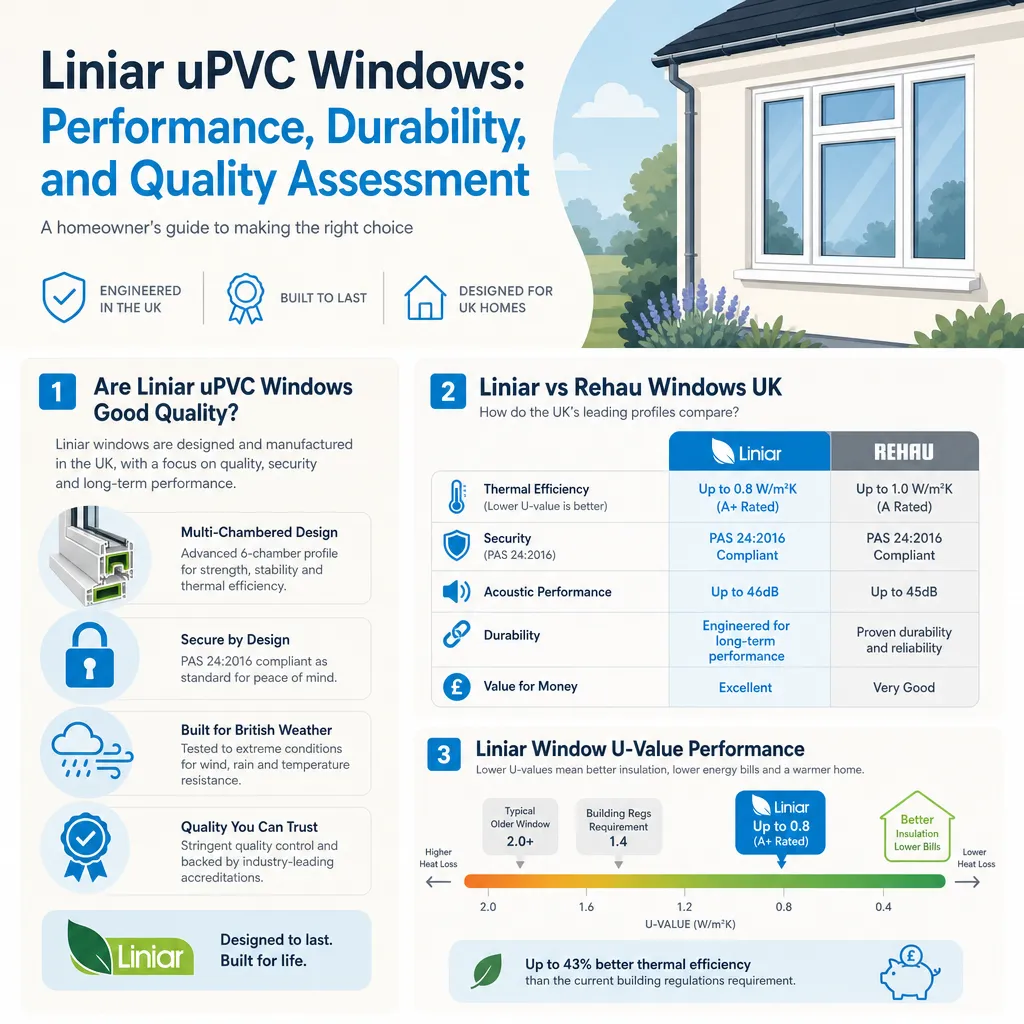
Liniar uPVC Windows: Performance, Durability, and Quality Assessment
Liniar uPVC window profiles are manufactured in the UK using multi-chambered, foamed frames.
 Improvement & Build
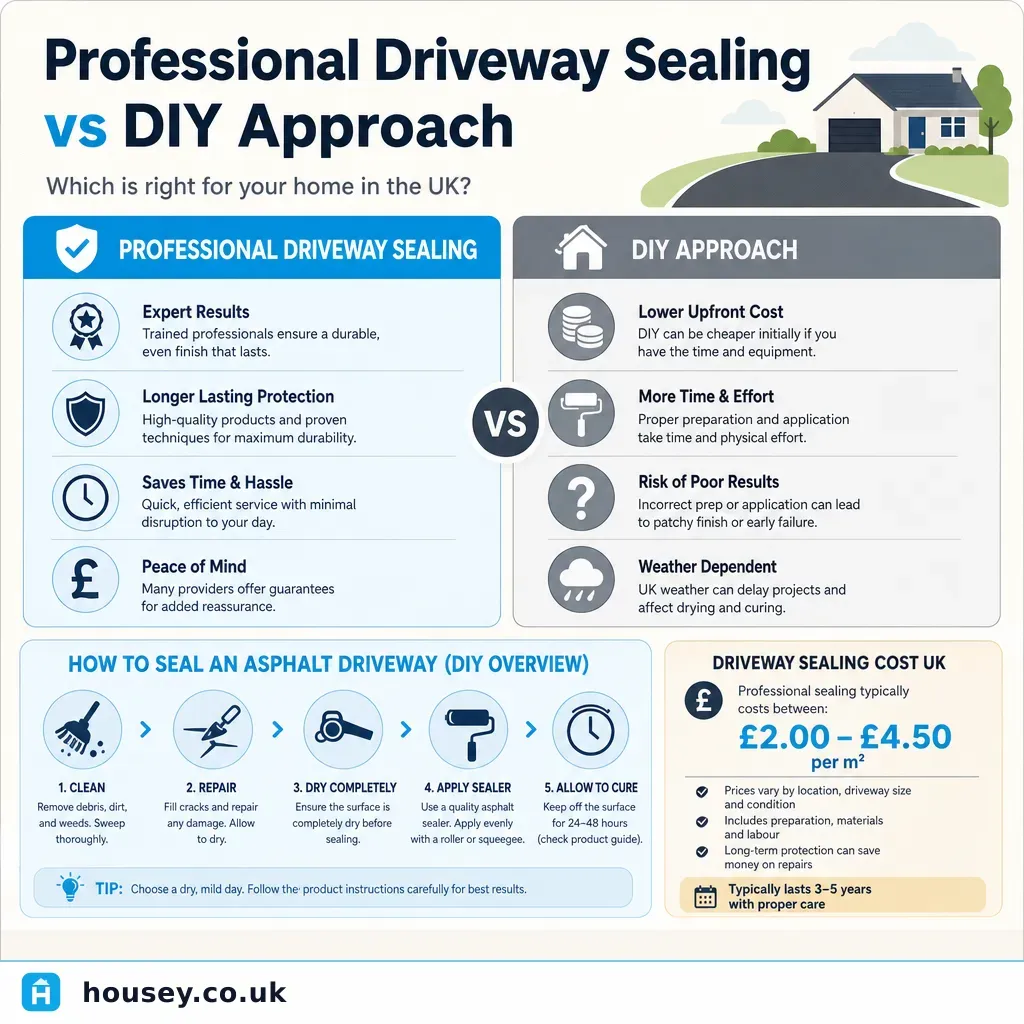
Professional Driveway Sealing vs DIY Approach
Professional driveway sealing offers a more durable, even finish using commercial-grade sealants and specialist equipment, typically costing £150 to £400 for an average drive.
 Improvement & Build
Aluminium and uPVC Doors: Selecting the Right Material for Your Home
uPVC doors are lower-cost and low-maintenance, making them a practical choice for most UK homes.
 Improvement & Build
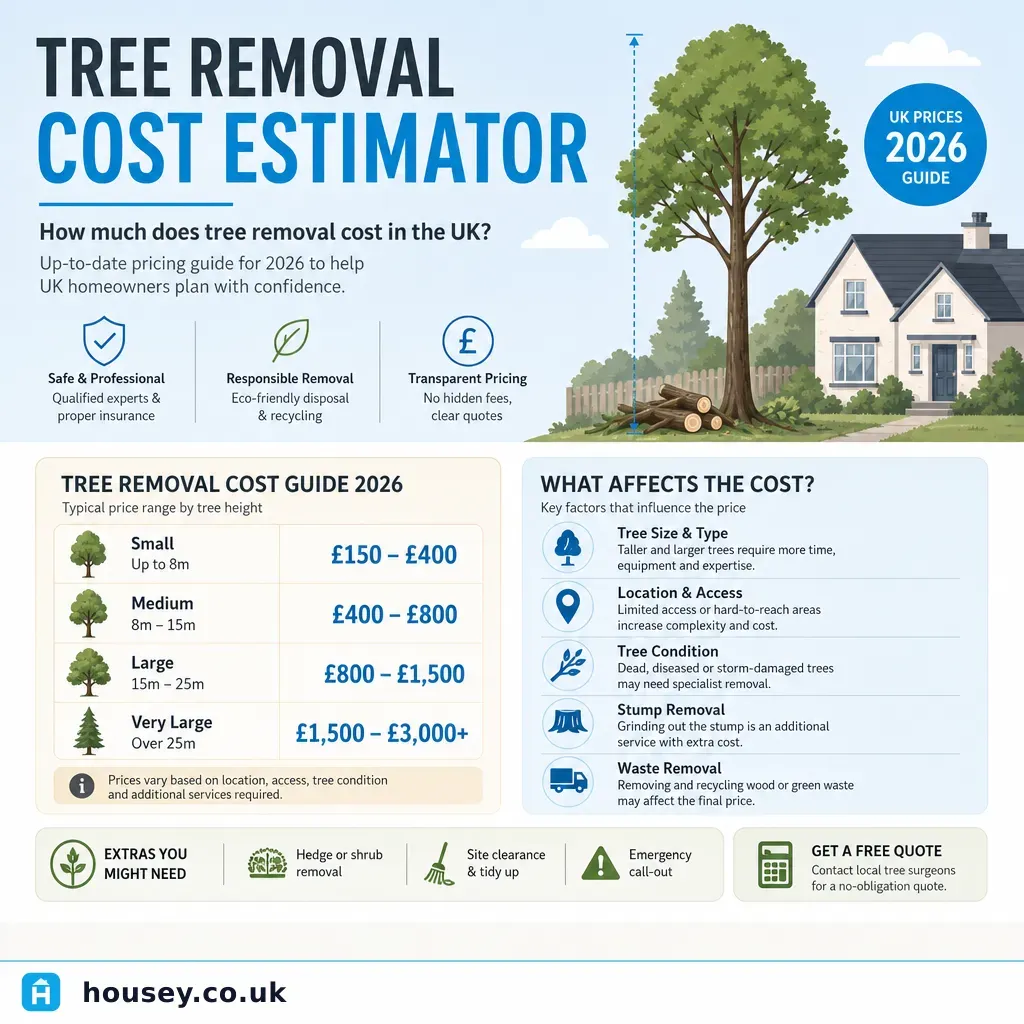
Tree Removal Cost Estimator
Tree removal in the UK costs roughly £150 to £5,000 or more, depending on the tree's height, species, access conditions, and whether stump removal is needed.