Sunroom Window Design: Material Options and Installation Planning
By Housey · Last reviewed 25th of May 2026
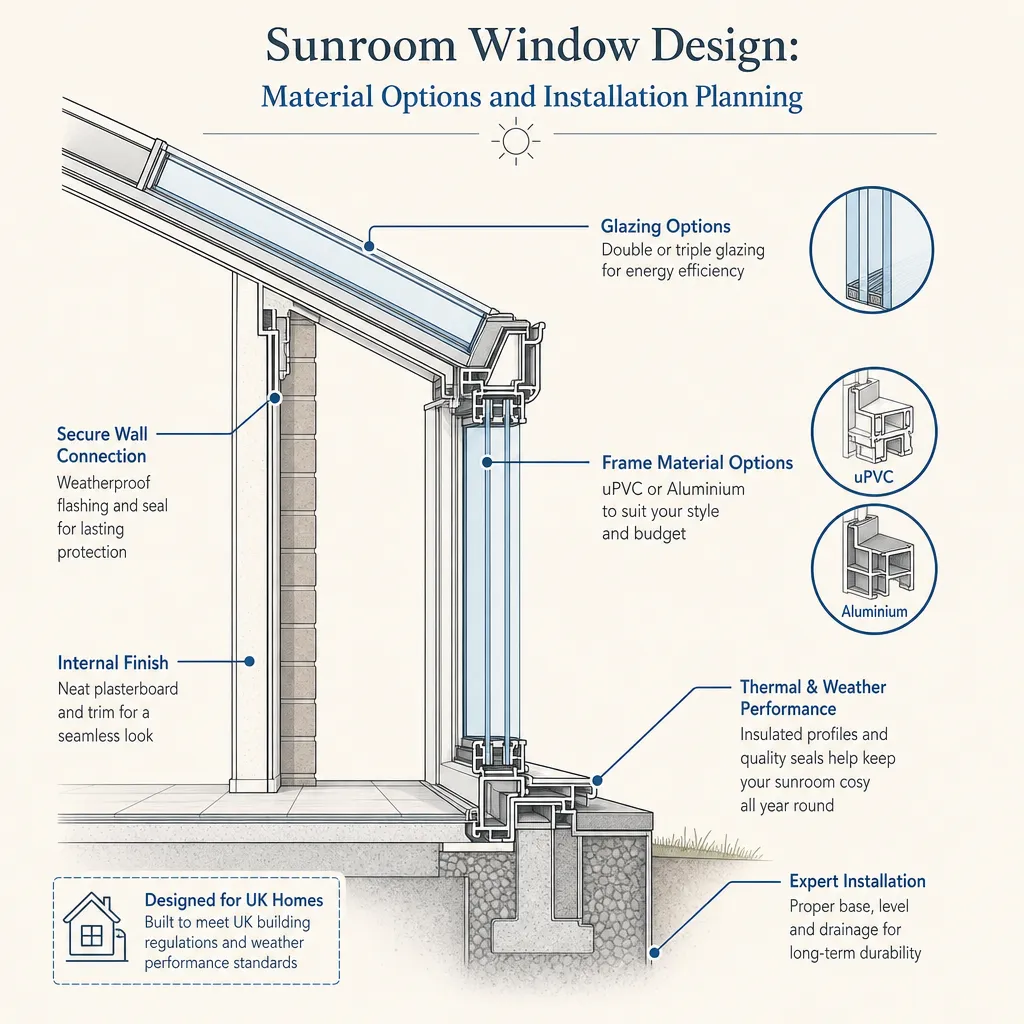
Sunroom Window Design: Material Options and Installation Planning
Whether you're planning a glazed extension on a 1930s semi or adding a full-width sunroom to a Victorian terrace, the windows and glazing are among the most consequential design decisions you will make. The choice of frame material, glass specification, and roof glazing type affects thermal performance, maintenance obligations, planning compliance, and the livability of the finished space throughout the year.
Key points
- Building Regulations Part L (conservation of fuel and power) requires new extensions — including sunrooms — to meet minimum thermal performance standards; replacement windows in existing dwellings must achieve a whole-window U-value of ≤1.4 W/m²K.
- Double glazing with a low-emissivity (low-e) coating and argon fill typically achieves whole-window U-values of 1.2–1.4 W/m²K; triple glazing can reach 0.6–1.0 W/m²K but adds significant weight and cost.
- uPVC frames account for roughly 80% of UK conservatory and sunroom installations; aluminium frames offer sightlines of 25–40mm versus 60–70mm for uPVC and are better suited to contemporary designs.
- Solar-control glass reduces solar heat gain — a useful specification for south-facing or fully glazed roof sections — while maintaining adequate visible light transmission.
- Permitted development rights allow most single-storey rear extensions without a planning application, but the sunroom must not extend more than 3 metres beyond the original rear wall (semi-detached or terraced) or 4 metres (detached), and PD rights do not apply in conservation areas or on listed buildings.
Which glazing type suits a sunroom?
The sealed insulating glass unit (IGU) does most of the thermal and acoustic work in a sunroom window. Most UK sunrooms use double-glazed IGUs for wall sections; triple glazing is an upgrade worth considering for thermally demanding or north-facing rooms.
Double glazing with a warm-edge spacer bar and low-e coating is standard for wall sections. A 4-16-4mm argon-filled unit typically achieves a centre-pane U-value of around 1.1 W/m²K and a whole-window U-value of 1.2–1.4 W/m²K, satisfying Part L for most extension types.
Triple glazing reduces whole-window U-values to 0.8–1.0 W/m²K. It adds approximately 40% more weight than double glazing, which can affect frame and structural specifications. The cost premium is significant and payback periods in most UK climates are long unless the room is to be fully heated year-round.
Solar-control glass incorporates a metallic coating or tint that limits solar heat gain (expressed as the solar heat gain coefficient, or SHGC). A standard low-e unit can transmit 60–70% of incident solar energy; solar-control glass reduces this to 25–40%. It is particularly valuable in south-facing elevations and fully glazed roof sections.
Self-cleaning glass uses a photocatalytic titanium-dioxide coating to break down organic deposits, with a hydrophilic surface that allows rain to sheet off cleanly. It is practical for pitched or flat rooflights and any glazing that would otherwise be difficult to clean safely.
Frame material comparison
Frame material | Best for | Not ideal for | Typical sightline width | Maintenance | Approximate lifespan |
|---|---|---|---|---|---|
uPVC | Budget builds, traditional styling, low maintenance | Very large apertures, slim contemporary aesthetics | 60–70mm | Very low (wipe clean) | 20–35 years |
Aluminium | Contemporary designs, large glazed areas, bi-fold sections | Period properties where slim frames look out of context | 25–40mm | Low (powder-coated finish) | 40+ years |
Timber | Period properties, conservation areas, high-end traditional aesthetic | High-humidity environments without proper finishing; tight maintenance budgets | 50–60mm | High (repaint every 5–10 years) | 50+ years if maintained |
Composite (timber-aluminium) | Period aesthetics with reduced maintenance | Tighter budgets | 40–55mm | Moderate | 40+ years |
Roof glazing: what to specify
Sunroom roofs can be fully glazed (polycarbonate or glass), part-glazed with an insulated roof structure, or substantially insulated with integrated rooflights.
Polycarbonate is the least expensive option but has poor thermal performance — U-values of 1.8–3.0 W/m²K depending on thickness — and does not meet Building Regulations Part L for year-round habitable space. It is also notably noisier in heavy rain.
Solid insulated roof systems with integrated rooflights can achieve overall U-values of 0.18 W/m²K or better, bringing the thermal envelope in line with a standard insulated extension. This changes the character of the space considerably but significantly improves year-round comfort.
Laminated safety glass is required for all overhead glazing under Building Regulations Approved Document N: glazing in buildings. If overhead glass breaks, the laminated interlayer holds fragments together rather than allowing shards to fall.
Planning and Building Regulations: what to check
Most domestic sunrooms are built under Class A permitted development (Town and Country Planning (General Permitted Development) (England) Order 2015). No planning application is needed where the limits are met.
Do I need planning permission?
- Choose permitted development if: the sunroom is single-storey, extends no more than 3m (semi-detached or terraced) or 4m (detached) beyond the original rear wall, is not higher than 4m, and the property is not in a conservation area, World Heritage Site, or subject to an Article 4 direction.
- Apply for planning permission if: you are in a conservation area, the property is listed, the extension exceeds permitted development limits, or PD rights have been removed by a planning condition.
- Consult architectural technologists if: your site has unusual constraints, the original dwelling footprint is unclear, or you want a certificate of lawful development for legal certainty.
- Check with your local planning authority (LPA) if: the sunroom's position may affect a neighbour's amenity, a flood zone, or a protected tree.
Building Regulations apply to virtually all sunrooms as extensions to a dwelling. A building control application — through your local authority or an approved inspector — is normally required to cover Part A (structure), Part L (energy efficiency), Part N (glazing safety), and Part F (ventilation).
What affects installation costs?
(Indicative UK costs, last reviewed 2026-05-25. Quotes vary significantly by region, specification, and contractor; always obtain at least three itemised quotes.)
Key cost drivers include the frame material choice (uPVC is lowest cost; aluminium typically adds 30–80%; timber or composite adds more still), glazing specification (solar-control and triple glazing carry a premium over standard double), roof type (polycarbonate is cheapest; fully glazed or solid insulated roofs are considerably more expensive), the overall size, the number of opening sections such as bi-fold or sliding doors, foundation and structural requirements, and whether building control fees are included in the contract price.
What to ask before accepting a quote
- What frame material and profile are specified, and what are the whole-window U-values for wall and roof sections?
- Is the glass specification compliant with Part L (thermal performance) and Part N (safety glazing for overhead sections)?
- Who submits the building control application, and is the fee included in the quoted price?
- What guarantees or warranties cover the frames, sealed glass units, and roof drainage?
- Is VAT included, and what is the payment schedule?
- What could change the price — for example, unexpected groundwork, drainage, or access requirements?
When to get professional help
Most sunrooms are installed by specialist glazed-extension contractors, but additional professional advice is worth seeking when:
- The sunroom is intended as year-round habitable space with a heating system — building inspectors apply stricter standards, and heat loss calculations may be needed.
- You are in a conservation area, on a listed building, or in an area with known PD restrictions.
- The structural design involves a wide span, heavy glazed roof, or uncertain foundation conditions — structural calculations from a chartered structural engineer may be required.
- You are unsure whether the works fall within permitted development — a certificate of lawful development provides legal certainty if you sell the property.
How Housey can help
Housey connects you with vetted extension builders who specialise in glazed extensions and sunrooms, as well as architectural technologists who can prepare drawings, advise on planning and building control compliance, and manage the application process on your behalf.
Frequently asked questions
Does a sunroom need building regulations approval?
In most cases, yes. Extensions to a dwelling require building control approval covering Part A (structure), Part L (energy efficiency), Part N (glazing safety), and Part F (ventilation). A narrow exemption applies to some conservatories separated from the main house by external-quality doors and meeting specific thermal conditions, but this does not apply to most sunrooms intended as year-round living space. Confirm requirements with your local authority building control before starting work.
Can I use polycarbonate glazing in a sunroom?
Polycarbonate can be used in some roof sections, but its thermal performance is poor — U-values of 1.8–3.0 W/m²K depending on thickness — and it is unlikely to meet Building Regulations Part L for habitable space. Glass roof systems or solid insulated roofs are generally preferable for year-round use. Polycarbonate is also noisier in rain and degrades in UV over time compared with glass.
What is the difference between a conservatory and a sunroom?
In UK building practice, a conservatory traditionally has a predominantly glazed roof and may qualify for a Building Regulations exemption if separated from the main house by an external-quality door and meeting specific thermal conditions. A sunroom typically has a more substantial insulated roof, is treated as a full extension for Building Regulations purposes, and is designed for year-round habitable use. The distinction matters for compliance, heating system design, and energy performance.
How long does a sunroom installation take?
A typical domestic sunroom takes 2–6 weeks to install once materials are on site, depending on size, complexity, and whether groundworks are straightforward. Bespoke aluminium or timber-framed designs, or projects requiring planning permission or building control inspections at multiple stages, can take considerably longer. Discuss the full programme — including lead times for bespoke glazing — with your contractor before signing a contract.
Sources and further reading
- Building Regulations Approved Documents — HM Government
- Permitted development rights for householders: technical guidance — HM Government
- Double glazing advice — Energy Saving Trust
- Glass and Glazing Federation technical resources — Glass and Glazing Federation
Useful next reads
 Planning & Pre-Build
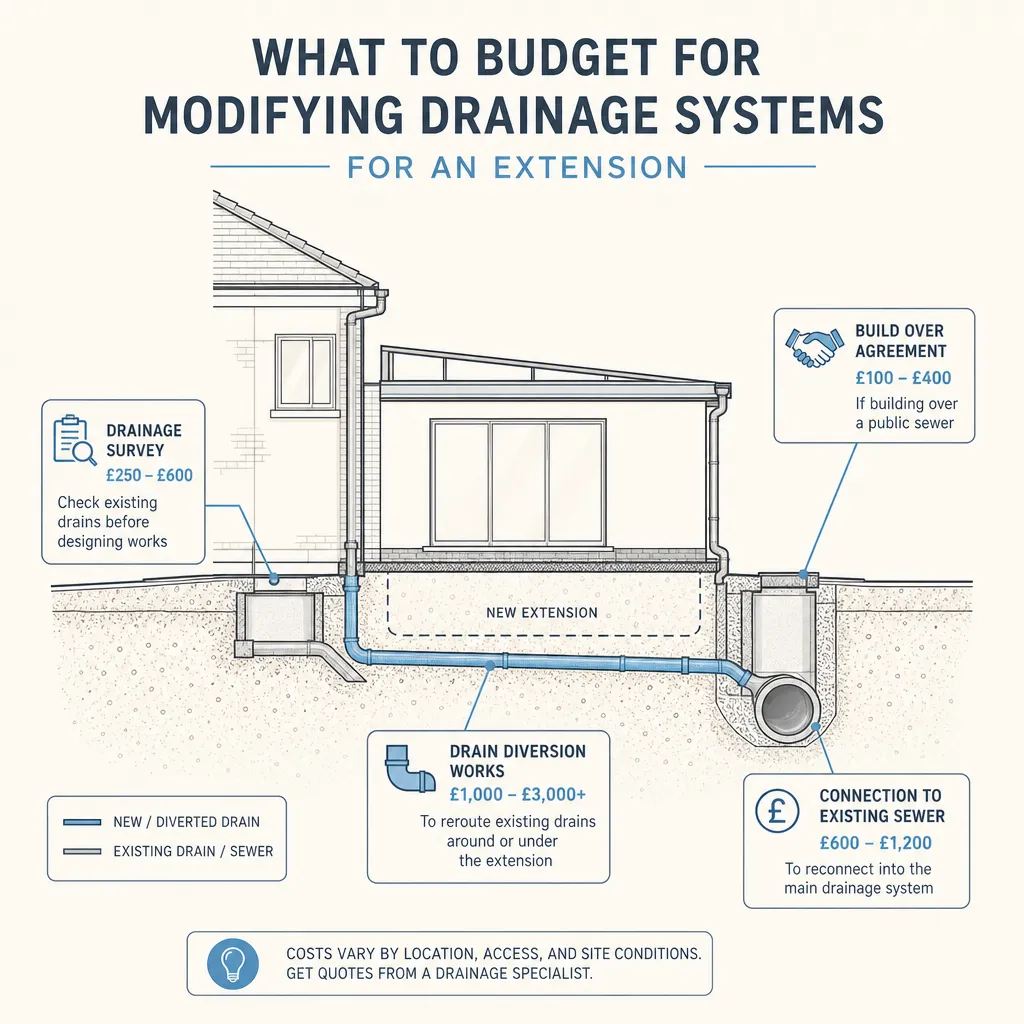
What to budget for modifying drainage systems for an extension
Modifying drainage for a house extension can cost from a few hundred pounds for a Build Over Agreement application to £40,000 or more for diverting a public sewer.
 Planning & Pre-Build
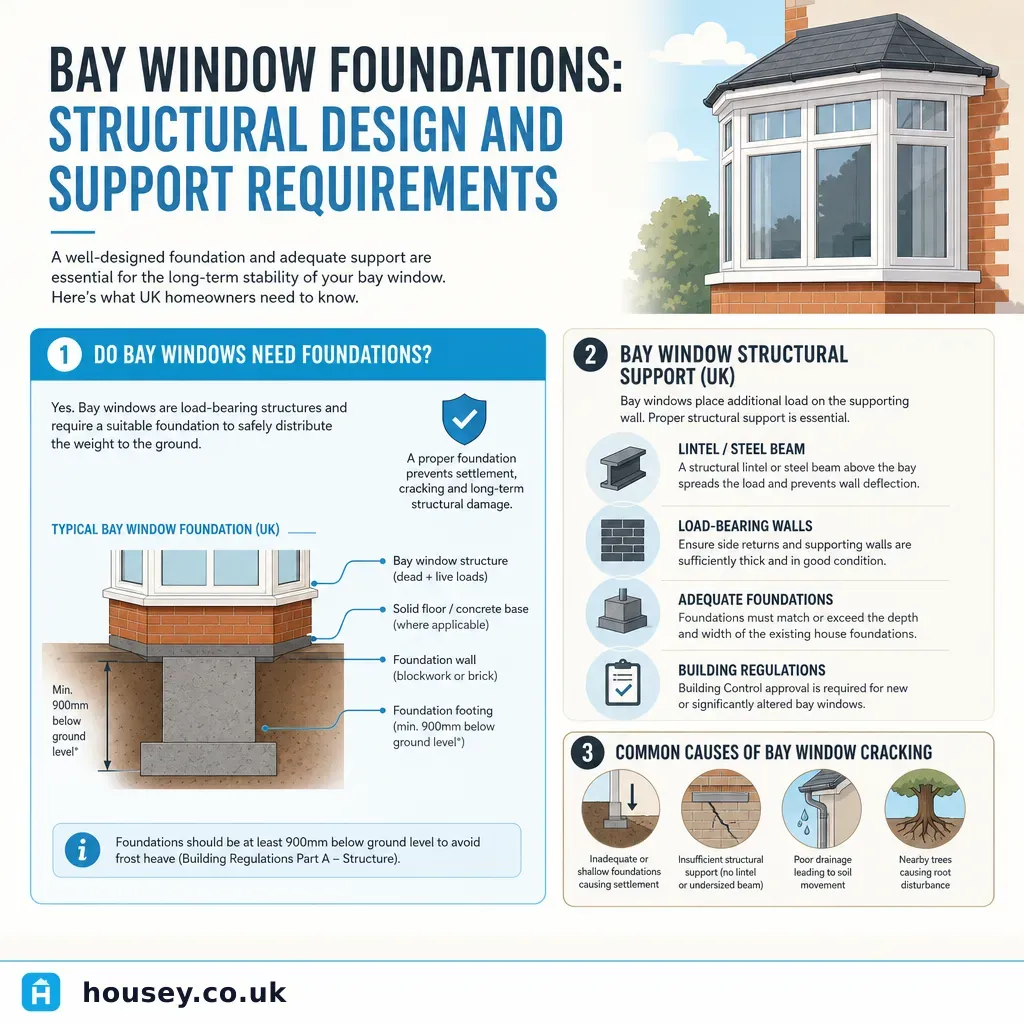
Bay Window Foundations: Structural Design and Support Requirements
Bay window foundations must transfer the bay's structural load to the ground independently of the main wall.
 Planning & Pre-Build
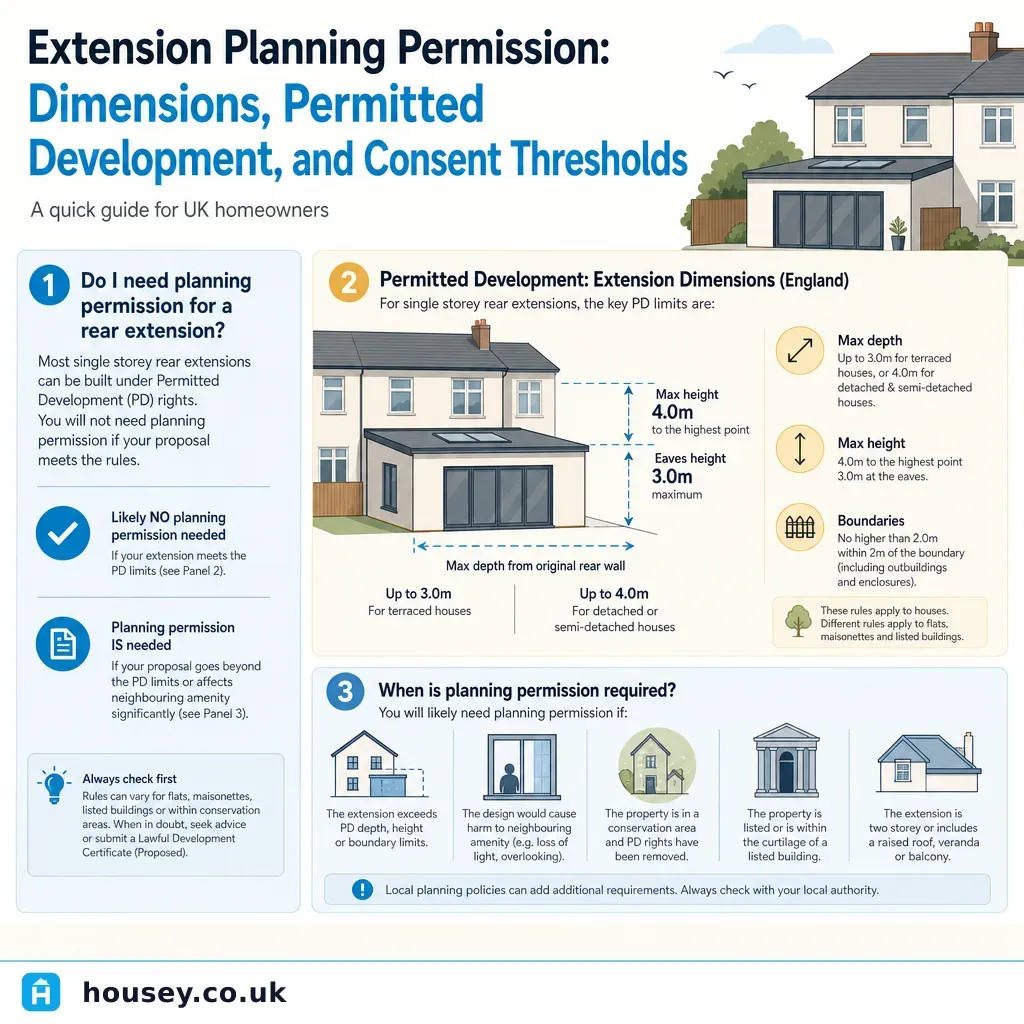
Extension Planning Permission: Dimensions, Permitted Development, and Consent Thresholds
Single-storey rear extensions up to 4m (detached) or 3m (other houses) are usually permitted development in England without planning permission.
 Planning & Pre-Build
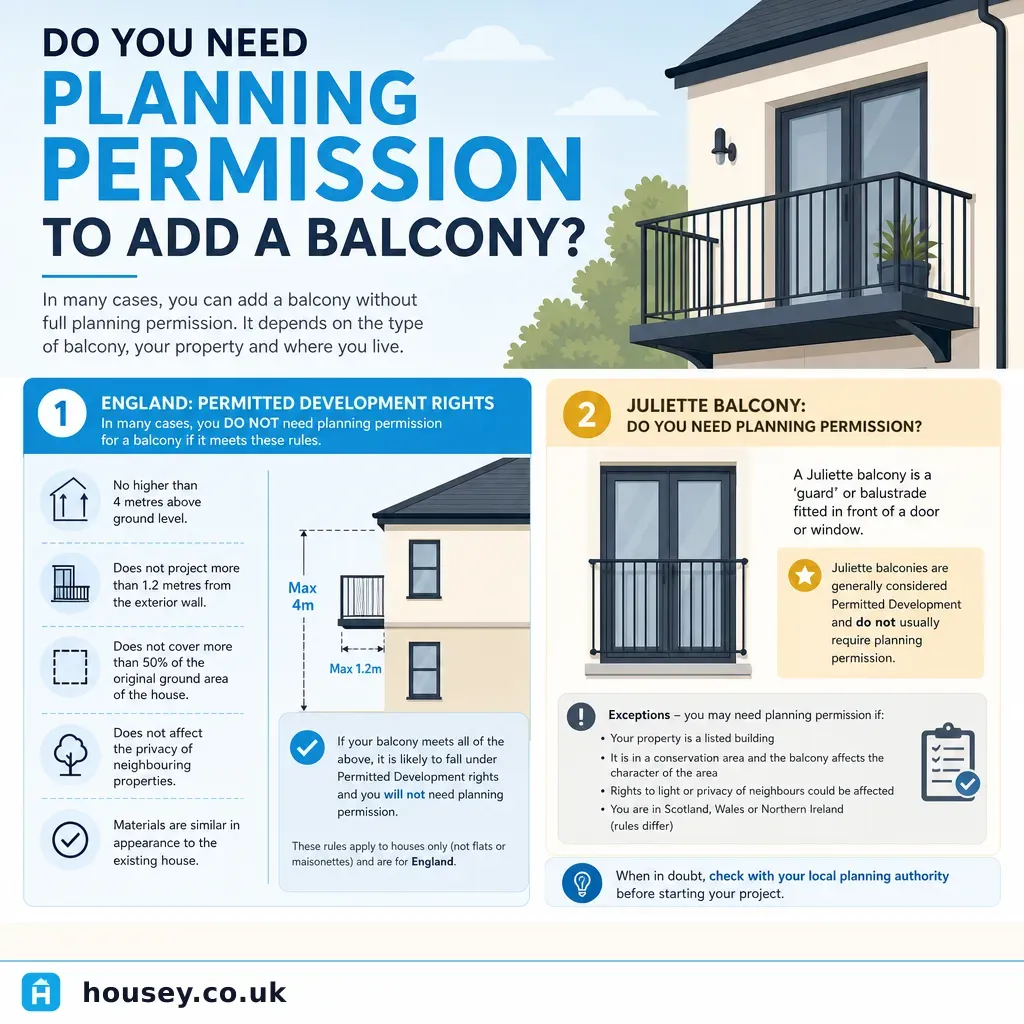
Do you need planning permission to add a balcony?
In England, adding a balcony to a dwellinghouse almost always requires planning permission.
 Planning & Pre-Build
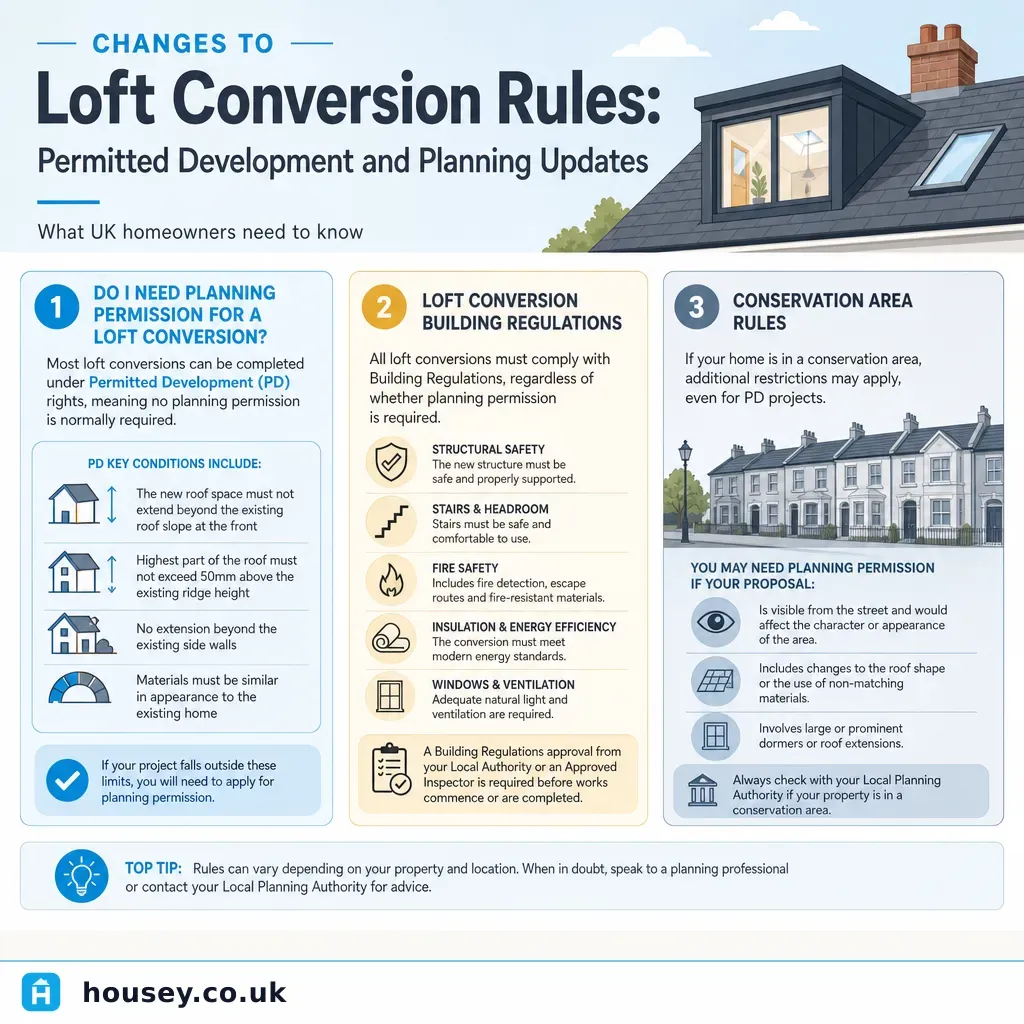
Changes to Loft Conversion Rules: Permitted Development and Planning Updates
In England, most loft conversions on standard houses qualify as Permitted Development under Class B of the GPDO 2015, allowing up to 40 cubic metres (terraced) or 50 cubic metres (detached or semi-detached) without a planning application — if conditions are met.