Surface Water Drainage: Understanding Charges and Rebate Schemes
By Housey · Last reviewed 11th of May 2026
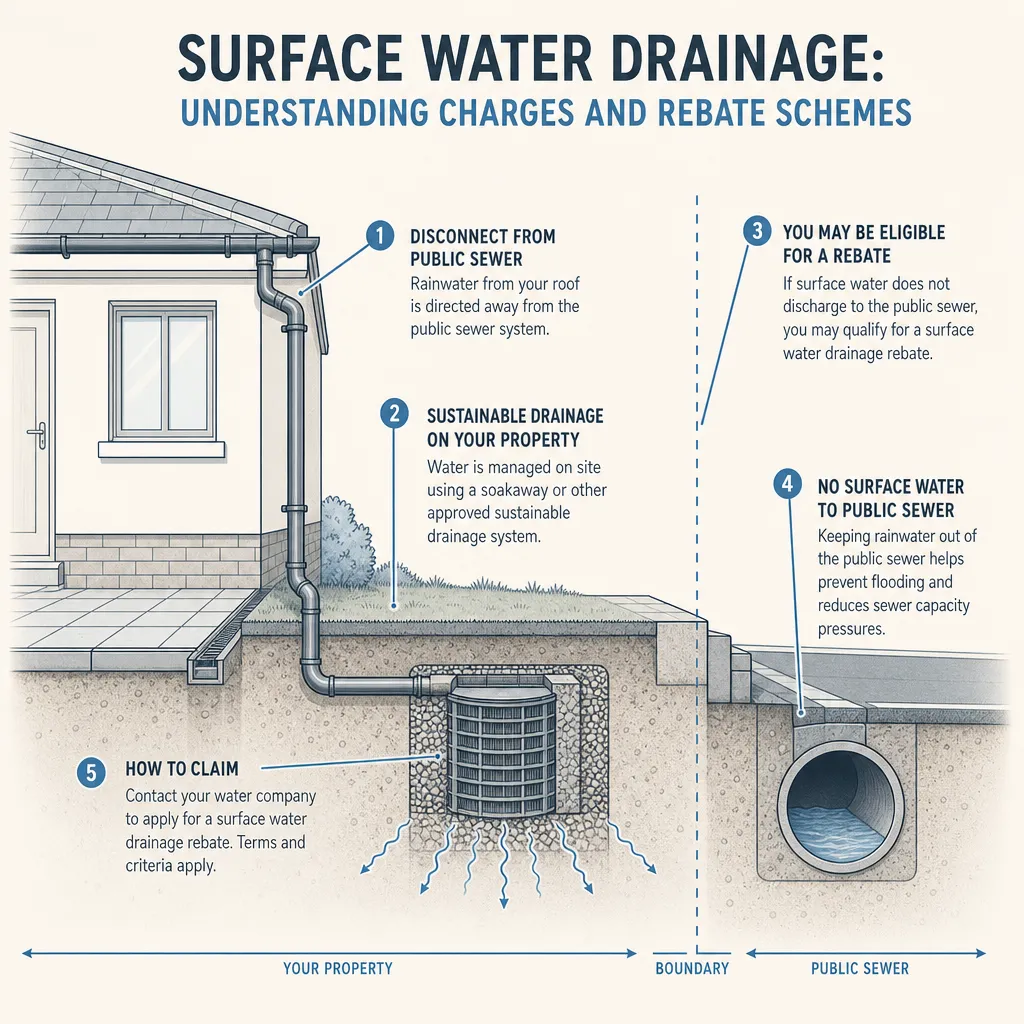
Surface Water Drainage: Understanding Charges and Rebate Schemes
Surface water drainage charges appear as a separate line item on household water bills across the UK, covering the cost of maintaining the public sewer network that manages rainwater run-off from roofs, driveways, and hard surfaces. For many properties the charge is correctly applied — but water company records are sometimes out of date, meaning some homeowners pay for a connection that no longer exists or was never made. Understanding how these charges are structured is the starting point for checking whether your bill reflects your property's actual drainage arrangement.
Key points
- Surface water drainage charges are set by individual water companies and regulated by Ofwat in England and Wales; equivalent charges apply under Scottish Water and NI Water in their respective nations.
- Under the Water Industry Act 1991 (Section 106), connections to public sewers are regulated; not all properties are connected for surface water, and charging for unconnected properties can be formally challenged.
- Most water companies in England and Wales offer a full or partial rebate on the surface water element of the drainage charge where a property can demonstrate it does not discharge surface water to the public sewer.
- Rebate applications typically require evidence such as photographs, a drainage survey certificate, or written confirmation from a drainage contractor of the discharge route.
- Schedule 3 of the Flood and Water Management Act 2010 — in force in Wales since January 2019 and under consideration for England — requires sustainable drainage systems (SuDS) approval for most new construction drainage, potentially influencing future charging arrangements.
How surface water drainage charges work
Water companies recover the cost of maintaining public surface water sewer infrastructure through a charge applied to most connected properties. This is typically calculated using the property's rateable value, a flat rate, or a combination, depending on the company.
The two key drainage line items on a water bill are:
- Foul water drainage: wastewater from toilets, sinks, baths, and appliances — almost all domestic properties in the UK are connected.
- Surface water drainage: rainwater and run-off from roofs, driveways, and hard surfaces — some properties drain this to a soakaway, watercourse, or permeable ground rather than the public sewer.
If your property drains surface water separately from the public sewer network, you are likely paying for a service you do not use.
Do you qualify for a rebate?
Decision tree: checking your eligibility
Step 1 — How does your property drain surface water?
- Drains to a soakaway, watercourse, or permeable surface only → likely eligible for a rebate. Continue to Step 2.
- Drains to a surface water sewer or combined sewer → probably correctly charged. Check whether a partial exemption applies for any parts of the property that drain separately.
- Unsure of your drainage route → you need a drainage investigation. A drainage contractor or CCTV survey can confirm the discharge route; water companies may also hold records.
Step 2 — Can you evidence your drainage arrangement?
- Photographs of soakaway, a drainage plan from the builder or local authority, or a written drainage certificate from a contractor → apply for a rebate with evidence attached.
- No evidence currently available → consider commissioning a drainage survey before applying.
Step 3 — Does your water company have a rebate scheme?
- Most water companies in England and Wales publish a rebate scheme in their annual charging rules (required by Ofwat). Check their website or request the current charging document.
- Contact your water company directly if the published guidance is unclear or does not address your situation.
Water company scheme types
Each water company sets its own charging structure, so rebate availability and evidence requirements vary. The table below outlines the main scheme types you are likely to encounter.
Scheme type | What it covers | Typical evidence needed | Typical saving |
|---|---|---|---|
Full surface water rebate | Property not connected to public surface water sewer | CCTV survey or drainage certificate | 100% of surface water charge removed |
Partial rebate | Part of property drains elsewhere (e.g., rear garden soakaway) | Photographs and drainage plan | Proportional reduction |
SuDS / permeable surface discount | Property retrofitted with permeable paving, rain garden, or other SuDS | Planning documents and area calculation | Varies by company |
Voluntary surface water removal | Homeowner agrees to disconnect and reroute surface water | Full survey plus signed agreement | Rebate applied on completion |
Scheme availability, evidence requirements, and saving amounts vary by water company. Check your company's current annual charging rules on their website or request them directly. Last reviewed 2026-05-11.
How to apply for a surface water drainage rebate
- Identify your water company. Check your bill or use the Water UK supplier finder.
- Review their charging rules. Water companies publish annual charging arrangements; look for the surface water drainage or rebate section.
- Assess your drainage. If you are confident in your discharge route, gather evidence: photographs of the soakaway, drainage plans, or written confirmation from a drainage contractor.
- Submit an application. Most companies provide an online form or written process. Attach your evidence at the point of submission.
- Await assessment. The company may conduct their own check or arrange a site visit before approving.
- Ask about backdating. Some companies will backdate a rebate to the application date or earlier if the disconnection is long-standing — ask specifically when you apply, as this is not always volunteered.
SuDS and future charging developments
The UK government's planning reforms and the Flood and Water Management Act 2010 promote sustainable urban drainage systems (SuDS) for managing surface water at source rather than routing it through public sewers. Schedule 3 of the Act has been in force in Wales since January 2019, requiring SuDS approval for most new construction drainage. England is expected to implement comparable requirements.
If you are installing permeable paving, a rain garden, or a soakaway as part of a home improvement project, inform your water company. Some companies are developing SuDS incentive schemes that may reduce your surface water drainage charge, though provisions vary significantly between suppliers.
When to get professional help
Seek professional advice when:
- You are unsure whether your property is connected to the surface water sewer — a drainage contractor or CCTV survey will confirm this definitively.
- You want to install a soakaway or reroute surface water drainage — this may require building regulations notification and a percolation test to assess ground suitability.
- You are a landlord or developer seeking to challenge incorrect charges across multiple properties.
- Your rebate application has been refused and you believe this is incorrect — the Consumer Council for Water (CCW) can help escalate disputes with your water company at no cost.
How Housey can help
Housey connects homeowners with vetted drainage contractors who can survey your existing drainage arrangement, provide written evidence of your discharge route, and advise on soakaway installation — helping you build the evidence needed for a successful rebate application.
Frequently asked questions
How much could I save with a surface water drainage rebate?
The surface water drainage element varies by company, property size, and charging structure — in many cases it represents 15–30% of the total drainage charge. For an average household this may be £30–£100 per year, though amounts vary significantly between water companies and property types. Check your bill for the breakdown or contact your water company directly. Indicative figures, last reviewed 2026-05-11.
How do I know if my property has a soakaway?
Signs include a covered inspection pit in the garden (typically filled with gravel or rubble), absence of a surface water drain close to downpipes, or a drainage plan from when the property was built. If you are unsure, a drainage contractor can investigate the route and provide written confirmation of how surface water leaves your property.
Can I be charged for surface water drainage if I have no hard surfaces?
If your property has no roof or hard surfaces draining to the public sewer, you may still be charged if the water company's records categorise it as connected — even if those records are incorrect or outdated. You can challenge this categorisation through the rebate or exemption process by providing evidence that no surface water connection exists.
Does a surface water rebate affect foul water charges?
No. Surface water and foul water drainage are charged and administered separately. Qualifying for a surface water rebate or exemption has no effect on your foul water drainage charge, which remains payable if your property is connected to the foul water sewer network.
Sources and further reading
- Charging rules for household water and wastewater services — Ofwat
- Help with your water bill — Consumer Council for Water
- Flood and Water Management Act 2010 — legislation.gov.uk
- Water Industry Act 1991 — legislation.gov.uk
Useful next reads
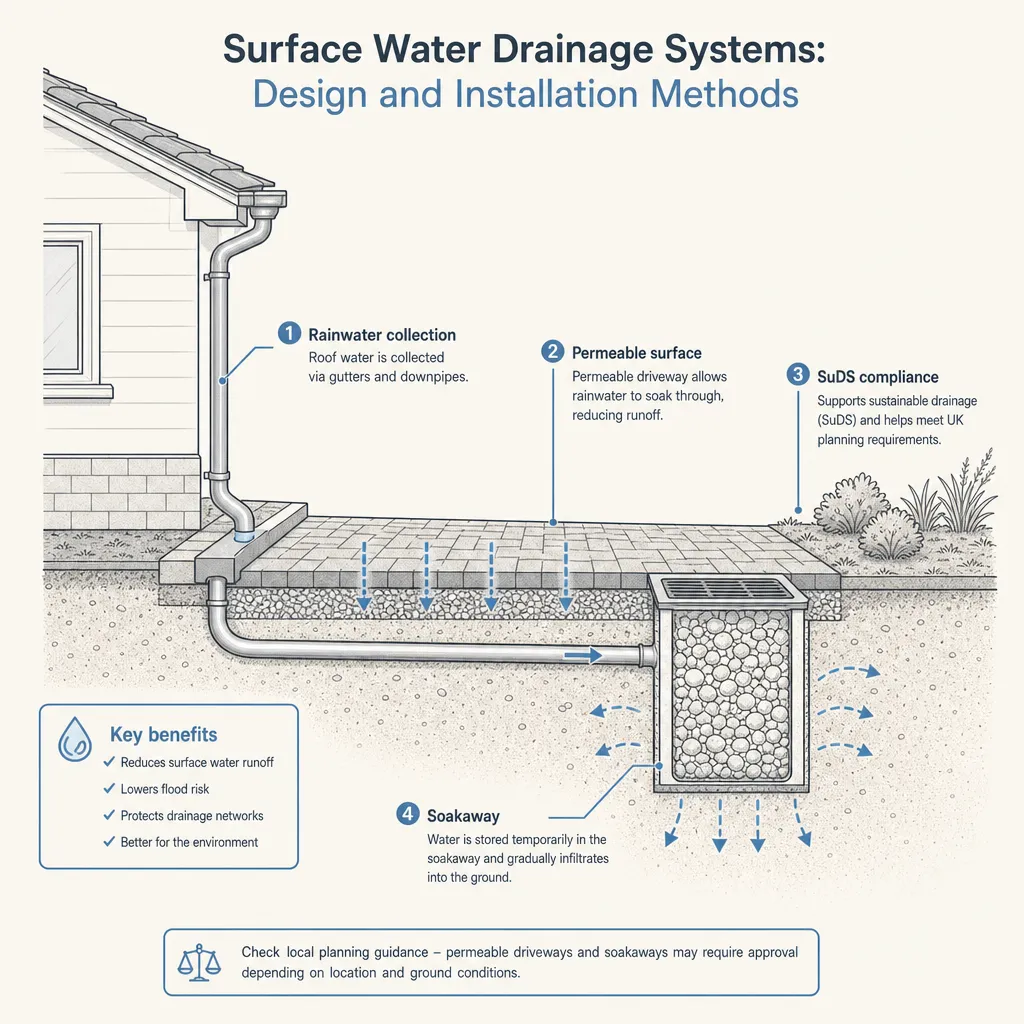 Improvement & Build
Surface Water Drainage Systems: Design and Installation Methods
Surface water drainage manages rainwater run-off from roofs, driveways, and hard standing.
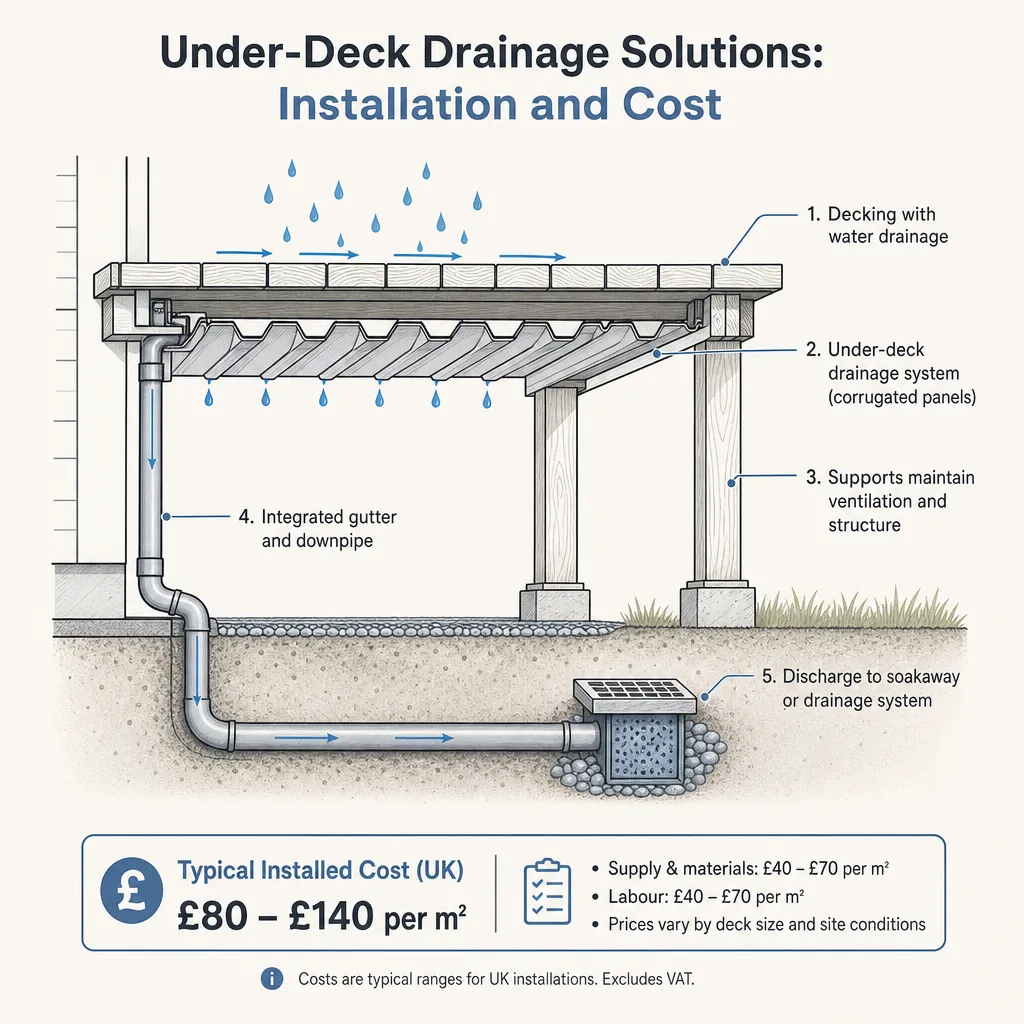 Improvement & Build
Under-Deck Drainage Solutions: Installation and Cost
Under-deck drainage systems channel rainwater falling through or running off a raised deck away from the space beneath it, keeping the under-deck area dry and usable.
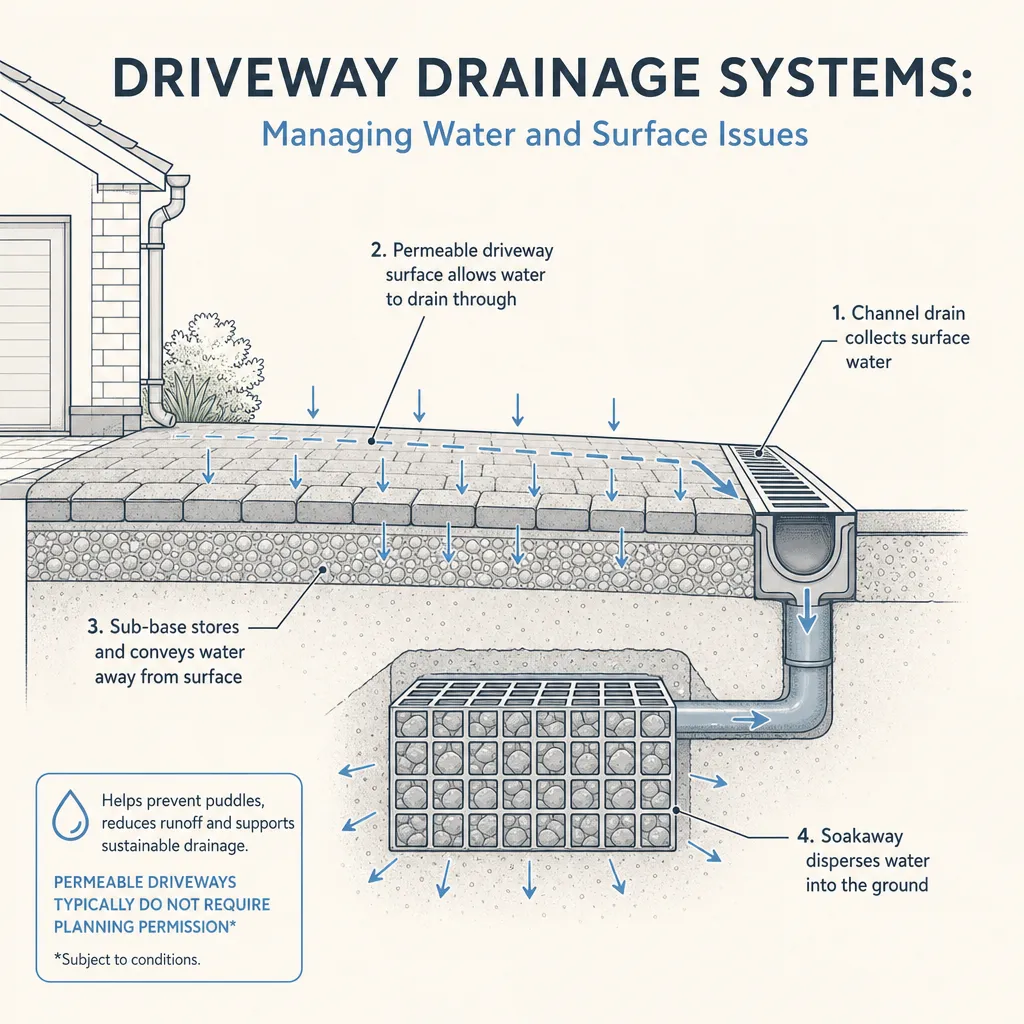 Improvement & Build
Driveway Drainage Systems: Managing Water and Surface Issues
The right driveway drainage system depends on your surface type, soil permeability, and local flood risk.
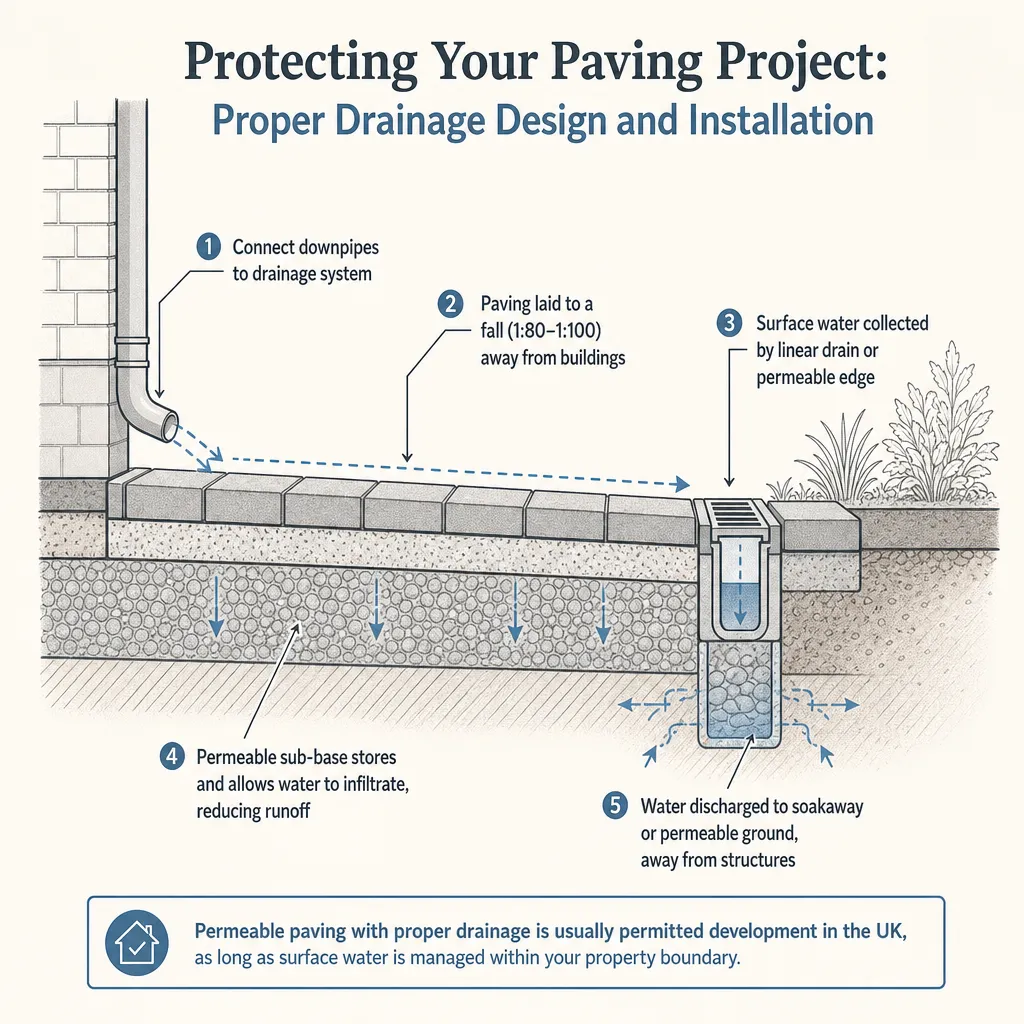 Improvement & Build
Protecting Your Paving Project: Proper Drainage Design and Installation
Good paving drainage starts with a minimum fall of 1:60 to 1:80 away from buildings, a correctly specified sub-base, and a clear outlet for surface water.
 Improvement & Build
Cost vs Value in Home Improvements: What Upgrades Deliver ROI
Not all home improvements deliver the same return when you sell.