Under-Deck Drainage Solutions: Installation and Cost
By Housey · Last reviewed 26th of May 2026
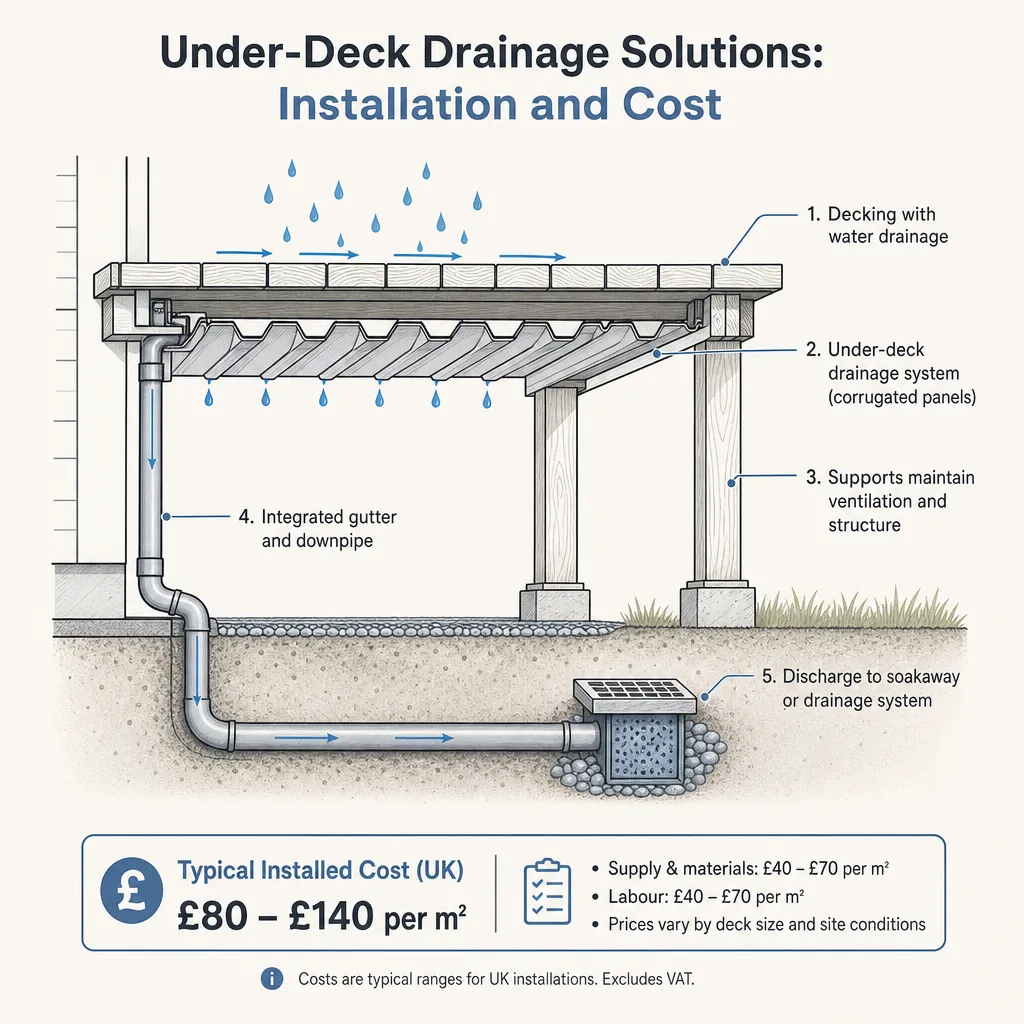
Under-Deck Drainage Solutions: Installation and Cost
A raised deck creates valuable outdoor living space, but without drainage the area beneath it quickly becomes damp and muddy, compromising joists, encouraging rot, and making under-deck storage impractical. Under-deck drainage is increasingly popular in UK garden renovations, particularly as composite decking has made raised structures more common, and as homeowners look to make full use of outdoor areas in a climate that reliably delivers rainfall. Choosing the right system and understanding any regulatory requirements before work starts will save time and money.
Key points
- Under-deck drainage must discharge to a suitable outlet — a soakaway, water butt, or existing surface water drain — and must not connect to a foul sewer without authorisation under the Water Industry Act 1991.
- Building Regulations Approved Document H (Drainage and Waste Disposal) applies where drainage connects to an existing drainage system or where surface water management is required as a planning condition.
- Decked areas over 5 m² forming hard standing in a front garden require either permeable construction or drainage to prevent surface water run-off entering the highway drainage system.
- Timber deck boards should have a minimum fall of 1:60 to 1:40 to shed surface water; composite decking manufacturers specify their own minimum gradients — always check the product technical data sheet.
- Any work connecting to a public sewer requires prior consent from your sewerage undertaker under Section 106 of the Water Industry Act 1991.
What does under-deck drainage do?
A standard deck allows rainwater to fall through the board gaps and accumulate beneath the structure, saturating the ground, potentially undermining footings, and promoting rot in timber joists and posts. An under-deck drainage system intercepts this water and channels it to a controlled outlet. It can also transform the space beneath a raised deck into dry, usable storage.
The two main approaches are:
Membrane systems — a continuous waterproof liner fixed to the underside of the deck joists, collecting water and channelling it to a gutter and downpipe. This creates a weather-resistant ceiling beneath the deck and is particularly effective for creating usable under-deck space.
Channel and gutter systems — narrower profiles fitted between joists to catch through-fall and route it to a single outlet point. Less complete coverage but often simpler and cheaper to retrofit to an existing deck.
Comparison of under-deck drainage options
System type | Best for | Not ideal for | Indicative material cost | Typical installation |
|---|---|---|---|---|
Under-deck membrane liner | Creating dry usable space beneath raised deck; new builds | Very low-clearance decks; awkward joist layouts | £20–£40/m² | Professional or competent DIY |
Aluminium channel/gutter system | Retrofitting to existing deck; simpler drainage requirement | Creating a fully weatherproof under-deck ceiling | £15–£30/m² | Professional or confident DIY |
Rubber membrane sheet | Budget option for simple layouts | Long-term durability; aesthetics | £8–£18/m² | DIY possible on simple layouts |
Integrated composite deck drainage | New composite deck builds | Retrofitting to existing timber decks | Included in composite deck cost | Installed as part of the deck build |
Indicative UK material costs, last reviewed 2026-05-26. Installation labour is additional.
What affects the cost of under-deck drainage?
Several factors drive the final installed cost beyond the material price per square metre:
- Deck size: larger decks benefit from better economies of scale on materials and labour setup costs.
- Deck height: taller decks are easier to work under. Very low-clearance decks may require partial deck removal to install drainage, adding significantly to labour.
- Outlet location: if a suitable outlet (soakaway, surface water drain, or water butt) is nearby, costs are lower. Long runs of pipework to a distant outlet add cost.
- Deck condition: on an existing deck, checking joist condition and addressing any rot adds preparation time and cost.
- Local drainage context: properties on clay soils or in areas of high water table may not support a soakaway and will need connection to existing drainage, which may require Building Regulations notification.
Indicative installed costs (UK, 2026)
Deck size | Membrane system (installed) | Channel system (installed) |
|---|---|---|
Small deck, 10–15 m² | £500–£900 | £350–£650 |
Medium deck, 20–30 m² | £900–£1,600 | £650–£1,100 |
Large deck, 40+ m² | £1,600–£3,000+ | £1,100–£2,200+ |
Indicative UK installed costs including materials and labour, last reviewed 2026-05-26. Costs vary by region, outlet complexity, and specification. Obtain at least three quotes.
Does under-deck drainage need Building Regulations approval?
In many cases, a simple system discharging to a soakaway or water butt does not require Building Regulations notification. However, Approved Document H does apply when:
- The drainage connects to an existing public or private drainage system
- The total impermeable area being managed triggers drainage requirements on a development or extension
- The property is in a flood risk zone and surface water management is required as a planning condition — check using the GOV.UK Flood Map for Planning
Front garden decks over 5 m² are subject to permitted development rules on hard standing. If in doubt, check with your local planning authority before work begins.
What to ask before accepting a quote
- What system type are you recommending, and why is it suited to my deck layout and height?
- Where will the water discharge — soakaway, existing drain, or water butt?
- Does this work require Building Regulations notification, and if so, who handles the application?
- Is the deck joist condition being assessed before work starts?
- What product warranty does the system carry, and is your installation covered?
- Is VAT included in the quote?
- What happens if joist rot or structural issues are found once work has started?
- Will the outlet pipework be installed at an adequate fall (minimum 1:40 for surface water runs)?
Homeowner checklist: before and during installation
When to get professional help
For straightforward membrane systems on accessible raised decks, confident DIYers can often complete the installation. Use a qualified contractor when:
- The deck is over 600 mm off the ground (working at height considerations apply)
- The drainage will connect to an existing drain — a drainage contractor should check capacity and connection method
- Joist rot or structural compromise is suspected, which must be addressed before drainage is installed
- Building Regulations sign-off is required — engage an Approved Inspector or LABC
How Housey can help
Housey connects homeowners with experienced drainage contractors and groundworkers who can survey your deck, recommend the right drainage solution, and handle any connections to existing surface water systems. Submit a request to receive quotes from local professionals.
Frequently asked questions
Can I fit under-deck drainage myself?
For accessible decks under 600 mm in height where the outlet is a water butt or soakaway, a DIY install is feasible with the right product. Follow the manufacturer's installation instructions, ensure adequate falls, and confirm whether any part of the work is notifiable under Building Regulations. At heights above 600 mm, use appropriate access equipment or consider professional installation.
How do I stop water pooling under my deck?
Pooling beneath a deck is usually caused by inadequate fall on the deck surface, no drainage system, or ground that does not drain freely. An under-deck drainage system intercepts water before it reaches the ground. If the ground itself pools, a soakaway or French drain at ground level may also be needed alongside the deck drainage.
Do I need planning permission for a deck in my garden?
Most domestic decks are permitted development, provided they do not exceed 30 cm in height at the edges, do not cover more than 50% of the total garden area, and are not in a conservation area or the curtilage of a listed building. These conditions can vary, so check with your local planning authority before building.
How long does under-deck drainage last?
High-quality aluminium channel systems and membrane products typically carry manufacturer warranties of 15 to 25 years. Longevity depends heavily on installation quality — ensuring all joints are properly sealed and falls are adequate to prevent standing water in the channels. Regular inspection and clearing of debris from outlets will extend system life.
Sources and further reading
- Approved Document H: Drainage and Waste Disposal — GOV.UK
- Flood Map for Planning — Environment Agency via GOV.UK
- Water Industry Act 1991 — legislation.gov.uk
- Permitted development rights for householders: technical guidance — GOV.UK
- CIRIA sustainable drainage guidance — CIRIA
Useful next reads
 Improvement & Build
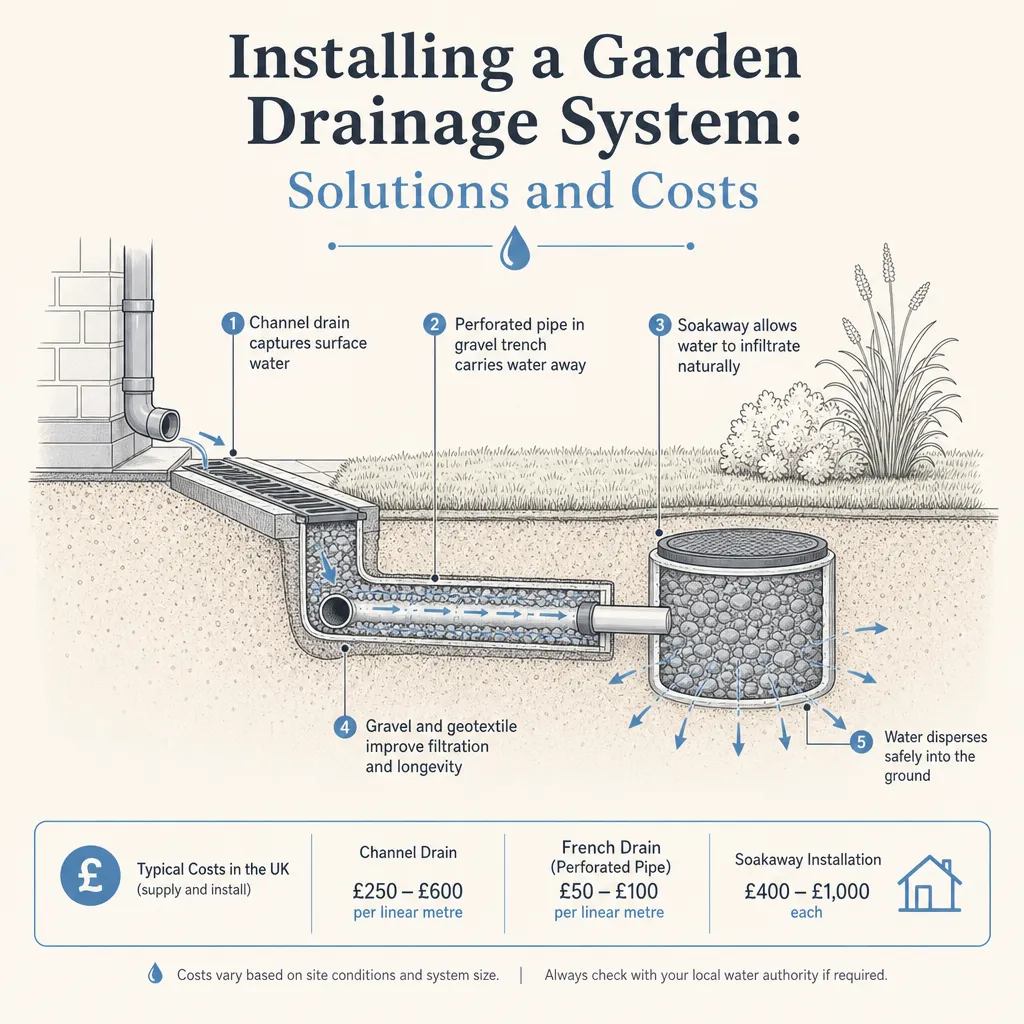
Installing a Garden Drainage System: Solutions and Costs
Garden drainage problems in UK homes usually stem from clay soil, compacted ground, poor gradient, or failed existing pipes.
 Improvement & Build
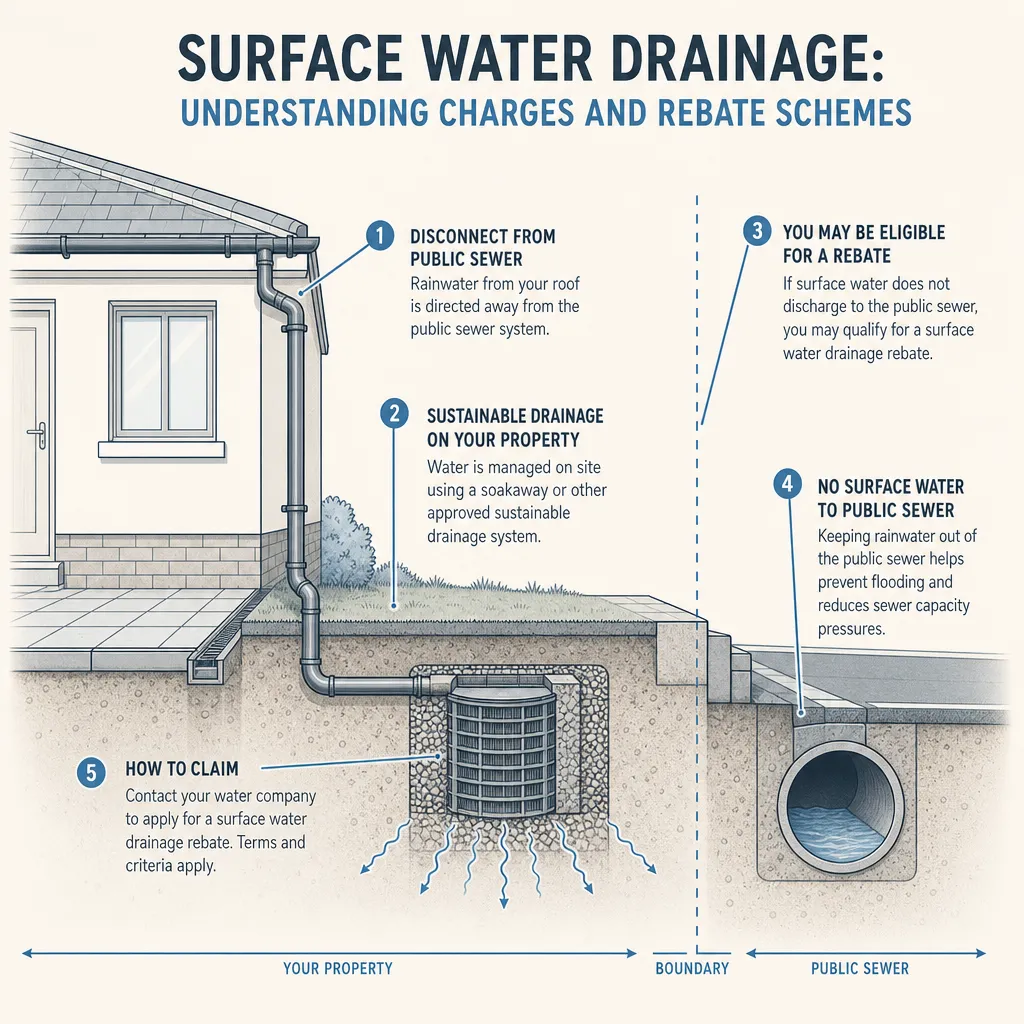
Surface Water Drainage: Understanding Charges and Rebate Schemes
Surface water drainage charges appear on UK household water bills to cover the cost of managing rainwater run-off through the public sewer network.
 Improvement & Build
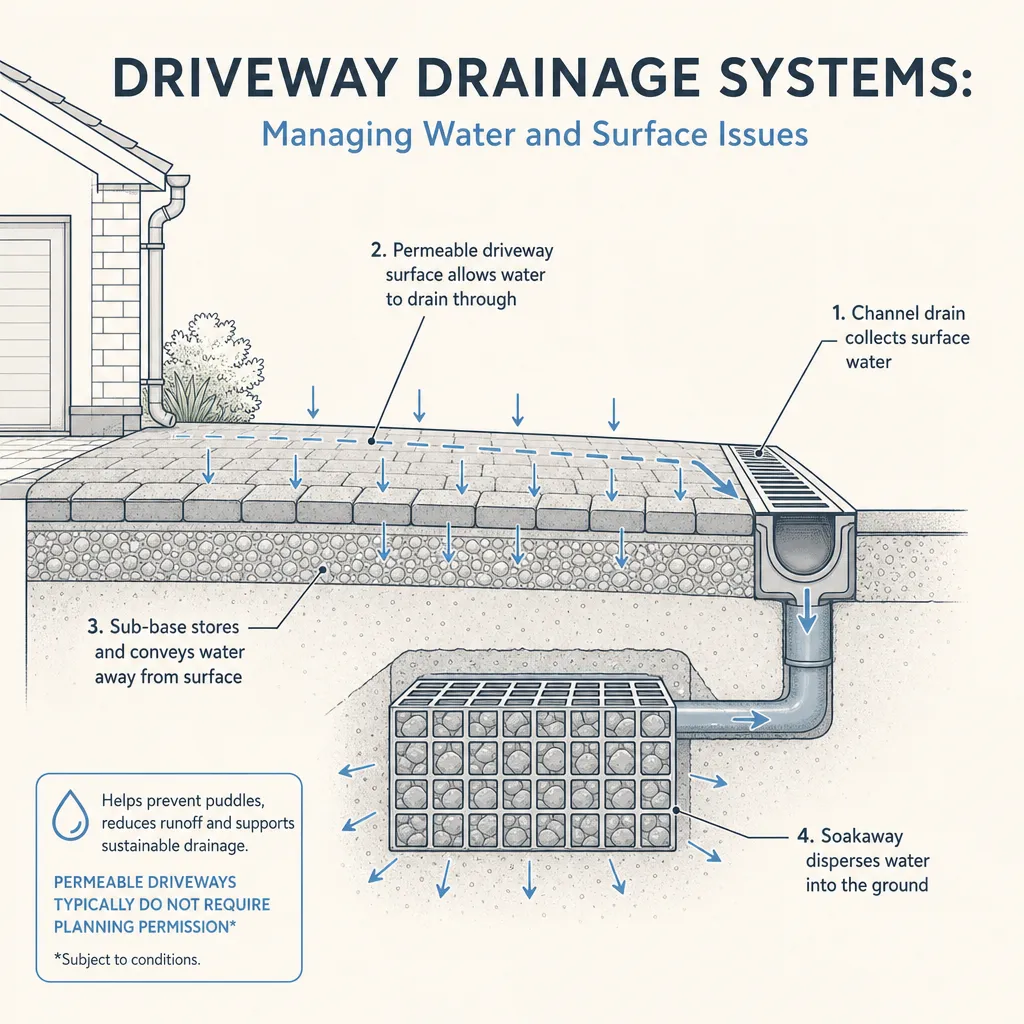
Driveway Drainage Systems: Managing Water and Surface Issues
The right driveway drainage system depends on your surface type, soil permeability, and local flood risk.
 Improvement & Build
Protecting Your Paving Project: Proper Drainage Design and Installation
Good paving drainage starts with a minimum fall of 1:60 to 1:80 away from buildings, a correctly specified sub-base, and a clear outlet for surface water.
 Improvement & Build
Essential Steps for Driveway Installation
Installing a driveway in England requires planning permission only when using an impermeable surface (standard tarmac, concrete, or block paving) on a front garden area over 5 m².