Suspended Ceiling System Installation Costs
By Housey · Last reviewed 11th of May 2026
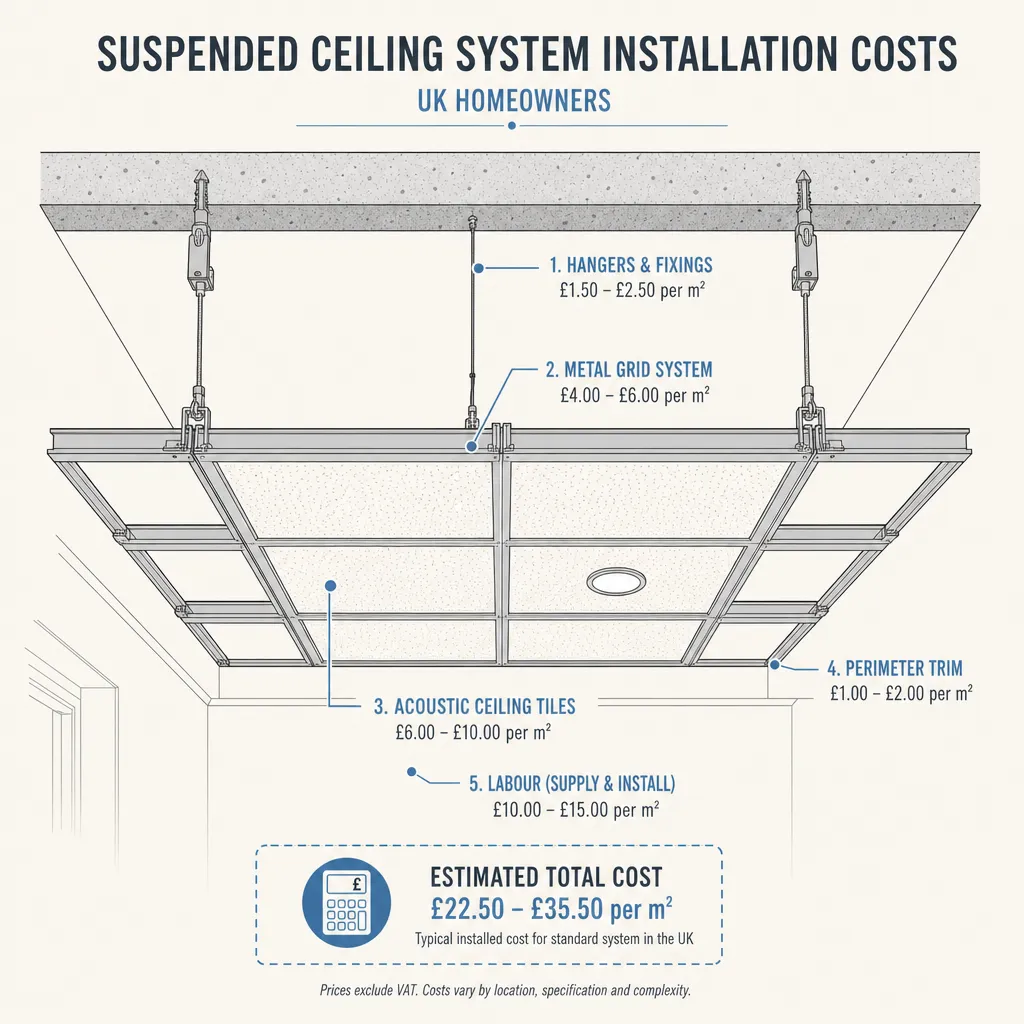
Suspended Ceiling System Installation Costs
Suspended ceilings — also known as drop ceilings or grid ceilings — are a practical solution for hiding pipework, ducting, and cables while also improving acoustic performance in a room. Widely used in offices and commercial premises across the UK, they are increasingly chosen for residential renovations too, particularly in basements, home offices, and converted spaces where services run overhead or the existing ceiling finish is difficult to repair.
Key points
- Suspended ceiling systems use a metal grid framework hung from the existing structure, into which tiles or panels are slotted; in most cases the original ceiling does not need to be removed.
- Indicative UK installation costs range from approximately £15–£40 per sq m for a standard mineral fibre tile system, rising to £50–£120+ per sq m for metal panel, wood slat, or specialist acoustic systems. Indicative UK costs, last reviewed 2026-05-11.
- Acoustic mineral fibre tiles can achieve noise reduction coefficients (NRC) of 0.7–0.95, making suspended ceilings a practical choice for offices and rooms where noise control is a priority.
- Building Regulations Approved Document E (resistance to the passage of sound) applies in residential situations where a suspended ceiling forms part of a separating construction between dwellings.
- Suspended ceilings reduce effective room height — allow at least 2.4 m finished ceiling height in habitable rooms; Approved Document F specifies ventilation volumes that are sensitive to room height.
Types of suspended ceiling system
The right system depends on your primary purpose: acoustic control, aesthetics, ease of access to services above, or a combination of these.
System type | Best for | Not ideal for | Typical material | Indicative installed cost per sq m |
|---|---|---|---|---|
Standard mineral fibre tile (600×600 grid) | Offices, commercial, utility rooms | Period homes, high-spec residential | Mineral fibre | £15–£35 |
Plasterboard on metal frame | Residential, clean painted finish | Frequent access to services | Plasterboard | £25–£50 |
Metal panel (lay-in or clip-in) | Kitchens, bathrooms, cleanrooms | Budget domestic projects | Steel or aluminium | £40–£80 |
Wood slat or baffle | Hospitality, retail, premium residential | Budget installations | Timber or MDF | £60–£120+ |
Specialist acoustic panels | Recording studios, cinema rooms, boardrooms | Low-budget projects | High-NRC mineral fibre or fibreglass | £50–£100+ |
How much does suspended ceiling installation cost?
Costs depend on room size, ceiling height, system specification, and the complexity of working around existing services — pipes, ducts, sprinklers, and recessed lighting.
Indicative UK costs, last reviewed 2026-05-11.
Room size | Materials estimate | Labour estimate | Total indicative range |
|---|---|---|---|
15 sq m (small office or room) | £150–£350 | £250–£400 | £400–£750 |
30 sq m (medium office) | £300–£700 | £450–£700 | £750–£1,400 |
50 sq m (open-plan area) | £500–£1,200 | £700–£1,200 | £1,200–£2,400 |
100 sq m (commercial fit-out) | £1,000–£2,500 | £1,400–£2,500 | £2,400–£5,000 |
Figures are indicative ranges only. Quotes vary by region, contractor, and specification.
What drives the cost?
- Room area — grid and tile quantities scale directly with floor area; larger rooms benefit from economies of scale on labour.
- Ceiling height and access — rooms above 3.5 m or with restricted access require additional working platforms, adding time and cost.
- Services integration — cutting around pipes, ducts, and sprinkler heads adds time; recessed downlighters require fire-rated covers and Part P-compliant electrical work.
- Tile or panel specification — basic 600×600 mineral fibre tiles cost from approximately £5–£12 per tile; specialist acoustic or decorative tiles can reach £30+ per tile.
- Edge conditions and perimeter — shadow-gap details, bespoke trims, or reveals for integrated lighting tracks add design and installation cost.
- Access panels — each hinged access panel costs approximately £30–£100 for the panel itself, plus installation time.
Which type of suspended ceiling should you choose?
- Choose a standard mineral fibre tile system if: you need low cost, easy access to services above the ceiling, and acoustic performance is a useful benefit.
- Choose a plasterboard-on-frame system if: you want a seamless painted finish that integrates with a residential interior and do not need regular access to the void above.
- Choose metal or specialist acoustic panels if: the room has high acoustic requirements (home studio, cinema room, boardroom) or hygiene requirements (commercial kitchen, cleanroom).
- Choose wood slat or baffle systems if: aesthetics are the primary driver and budget is flexible.
- Ask a specialist if: the installation involves a fire-rated ceiling between floors in a converted flat or above a stairwell, or must comply with BS EN 13501 fire classification requirements.
What to ask before accepting a quote
- What system specification and tile or panel product is included?
- Is the grid type exposed (visible tee-bar) or concealed?
- Is cutting around existing services included in the price, or charged separately?
- What happens if structural fixings cannot be made at the required centres?
- Are recessed downlighters, access panels, and fire-rated covers included?
- What will the finished ceiling height be, and how does this compare to regulatory minimums?
- Is VAT included in the quoted price?
- Will the installer provide a method statement if the existing ceiling structure may contain older materials requiring asbestos investigation before drilling?
When to get professional help
Suspended ceiling installation is specialist dry-lining and ceiling trade work — always use a professional. Specific situations requiring particular care:
- Fire-rated ceilings — between dwellings or above stairwells, incorrect installation can invalidate fire resistance certification. A qualified specialist and building control sign-off are essential.
- Potential asbestos — older ceilings, artex finishes, insulation board, and some ceiling tiles pre-2000 may contain asbestos-containing materials (ACMs). Do not drill or disturb without a survey by a licensed asbestos surveyor. HSE guidance sets out the legal duty to manage asbestos in buildings.
- Electrical circuits — recessed lighting and any new circuits fall under Part P of Building Regulations and must be carried out by a competent person or notified to building control.
- Licensed HMOs — houses in multiple occupation have additional fire separation and sound requirements; use a contractor familiar with HMO licensing conditions.
How Housey can help
Housey is growing its network of interior finish and specialist trades professionals. If you are planning a suspended ceiling alongside a broader renovation, office conversion, or commercial fit-out, Housey can help you find and compare vetted tradespeople for connected elements of the project, including electrical, drylining, and fit-out work.
Frequently asked questions
How long does it take to install a suspended ceiling?
A small room of 15–20 sq m with a standard grid system typically takes 1–2 days for an experienced installer. A larger open-plan space of 100 sq m may take 3–5 days, including setting out, hanging the grid, and fitting tiles. The timeline extends if recessed lighting, access panels, or complex service routes are involved.
Can I install a suspended ceiling in a residential property?
Yes. Suspended ceilings are used in home offices, basements, utility rooms, and converted commercial spaces. The main considerations are ensuring the finished ceiling height remains at least 2.4 m, checking for asbestos in older ceilings before drilling, and obtaining Building Regulations approval if the ceiling forms part of a fire-rated or sound-separating floor between dwellings.
Do suspended ceilings require planning permission?
In almost all cases, no. Internal alterations that do not affect the external appearance or structural integrity of a building do not require planning permission. If the property is listed, listed building consent may be required for internal alterations — always check with your local planning authority before proceeding.
What is the difference between a grid ceiling and a plasterboard suspended ceiling?
A grid (or lay-in) ceiling uses a metal tee-bar framework into which tiles or panels drop; tiles can be removed individually to access services above. A plasterboard suspended ceiling uses a metal studwork frame with plasterboard screwed on and skimmed — giving a seamless painted finish, but removing easy access to the void without cutting.
How much clearance do I need above a suspended ceiling?
Typically 150–400 mm, depending on services above and the grid system. The finished ceiling height in habitable rooms should generally not fall below 2.4 m, in line with Approved Document F ventilation guidance and habitability standards. Always confirm the drop height with your contractor before committing to a design, particularly in rooms with lower existing ceilings.
Sources and further reading
- Approved Document E: Resistance to the passage of sound — UK Government
- Approved Document F: Ventilation — UK Government
- HSE guidance on asbestos in buildings — Health and Safety Executive
- Electrical Safety First — Part P of the Building Regulations — Electrical Safety First
Useful next reads
 Improvement & Build
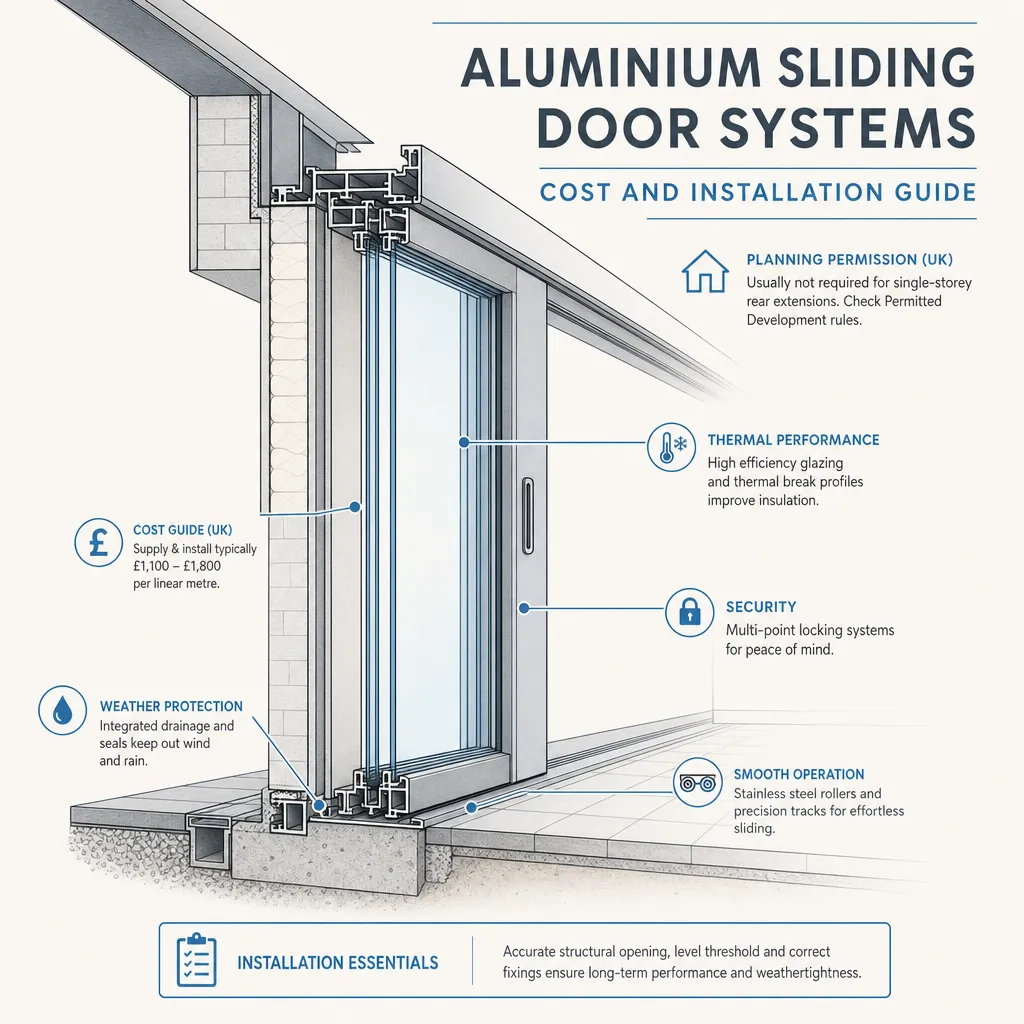
Aluminium Sliding Door Systems: Cost and Installation Guide
Aluminium sliding doors typically cost £2,500–£7,000 supply and fitted for a standard opening.
 Improvement & Build
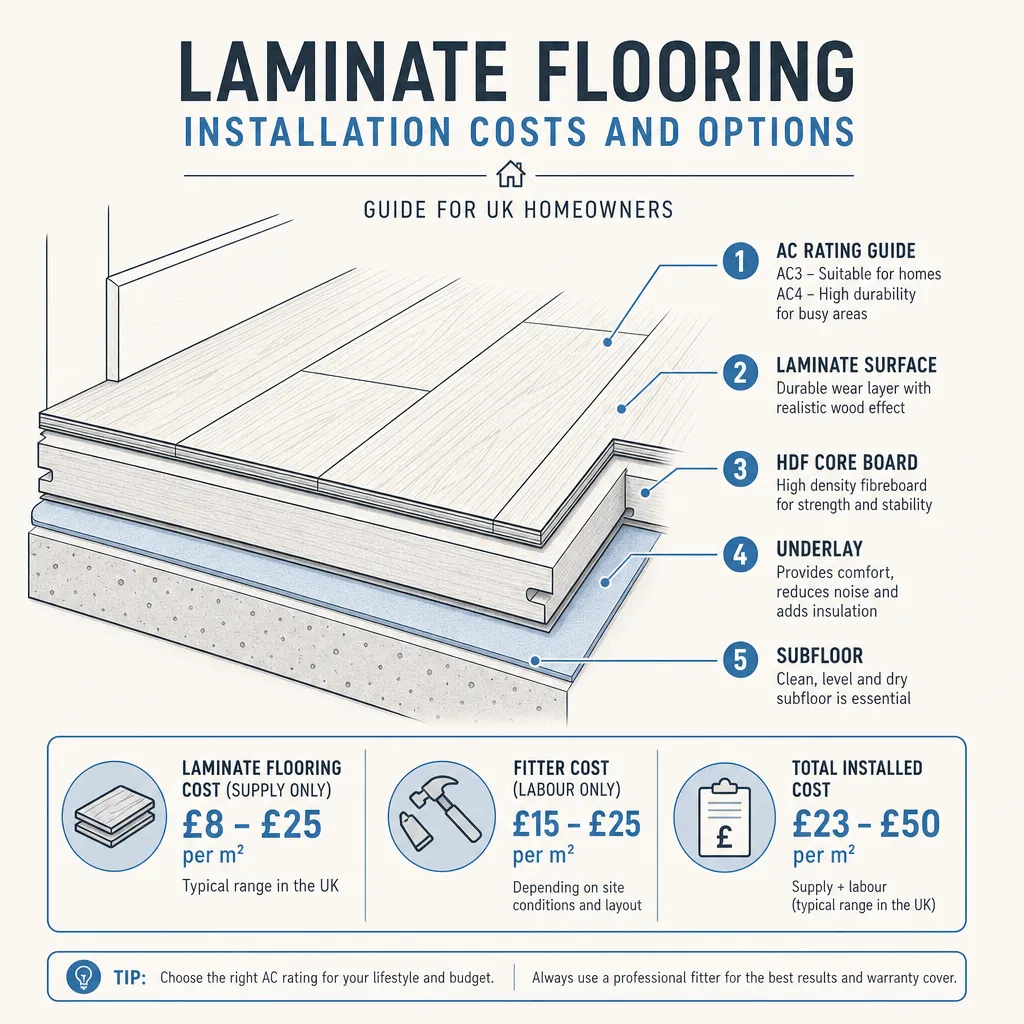
Laminate Flooring Installation Costs and Options
Laminate flooring typically costs £20–55 per square metre fully installed in the UK, including materials, underlay, and professional fitting.
 Improvement & Build
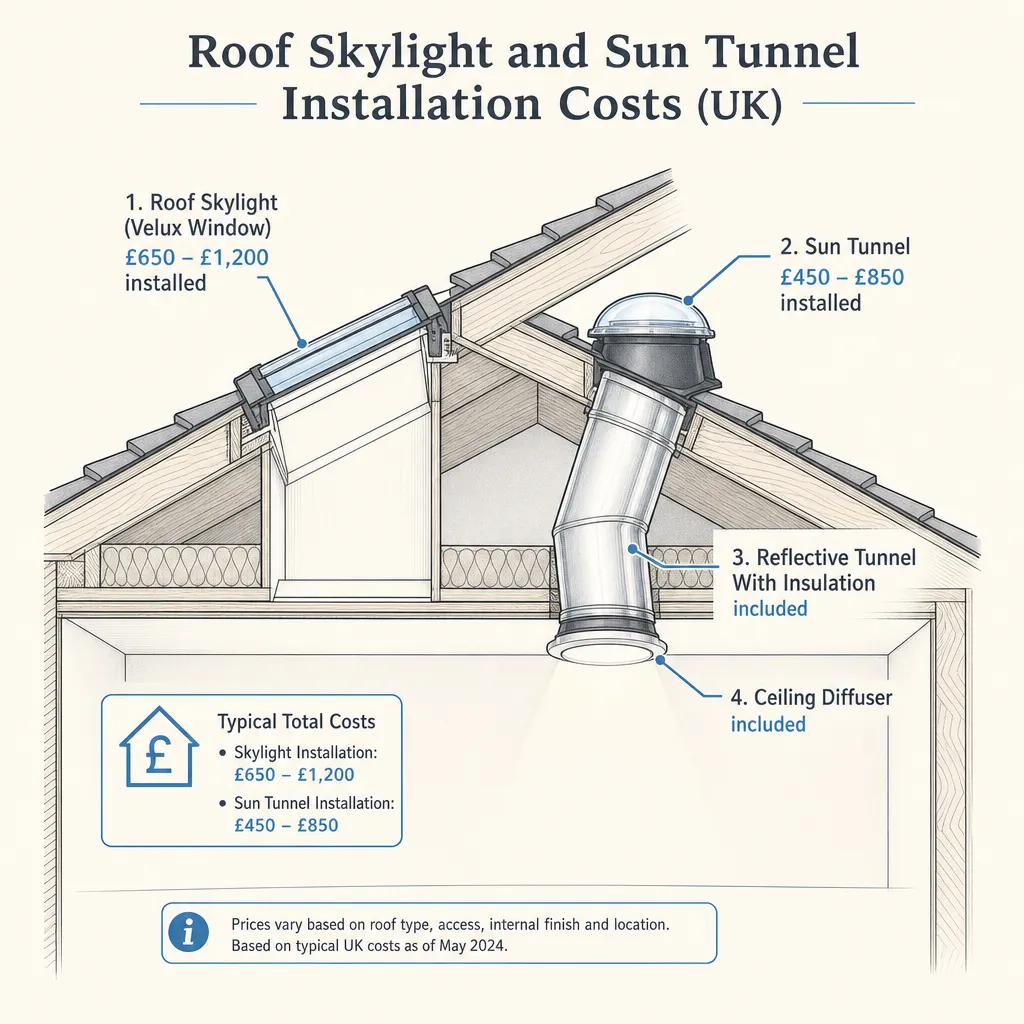
Roof Skylight and Sun Tunnel Installation Costs
A standard pitched-roof skylight costs £800–£3,000 installed in the UK, including flashings and basic making good.
 Improvement & Build
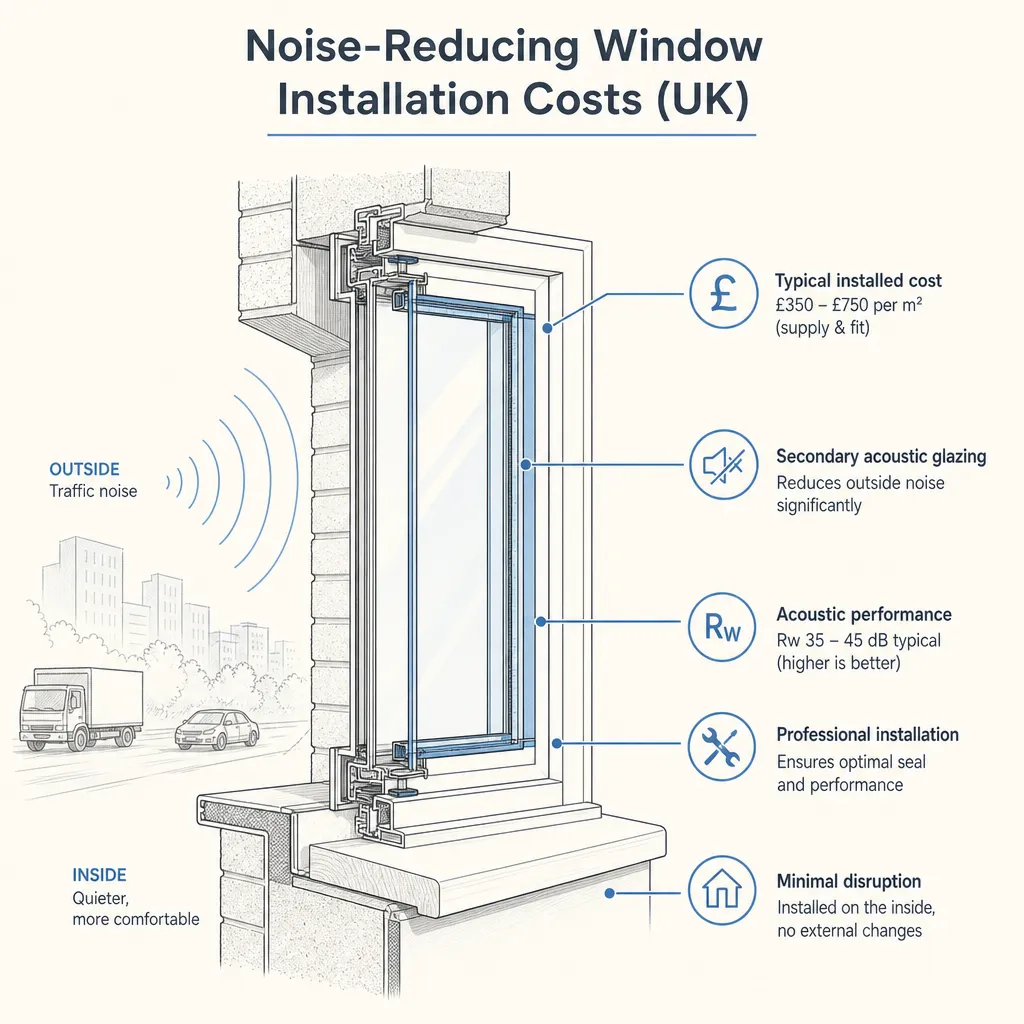
Noise-Reducing Window Installation Costs
Noise-reducing window installation in the UK typically costs £400–£1,500 per window depending on glazing specification, frame material, and property type.
 Improvement & Build
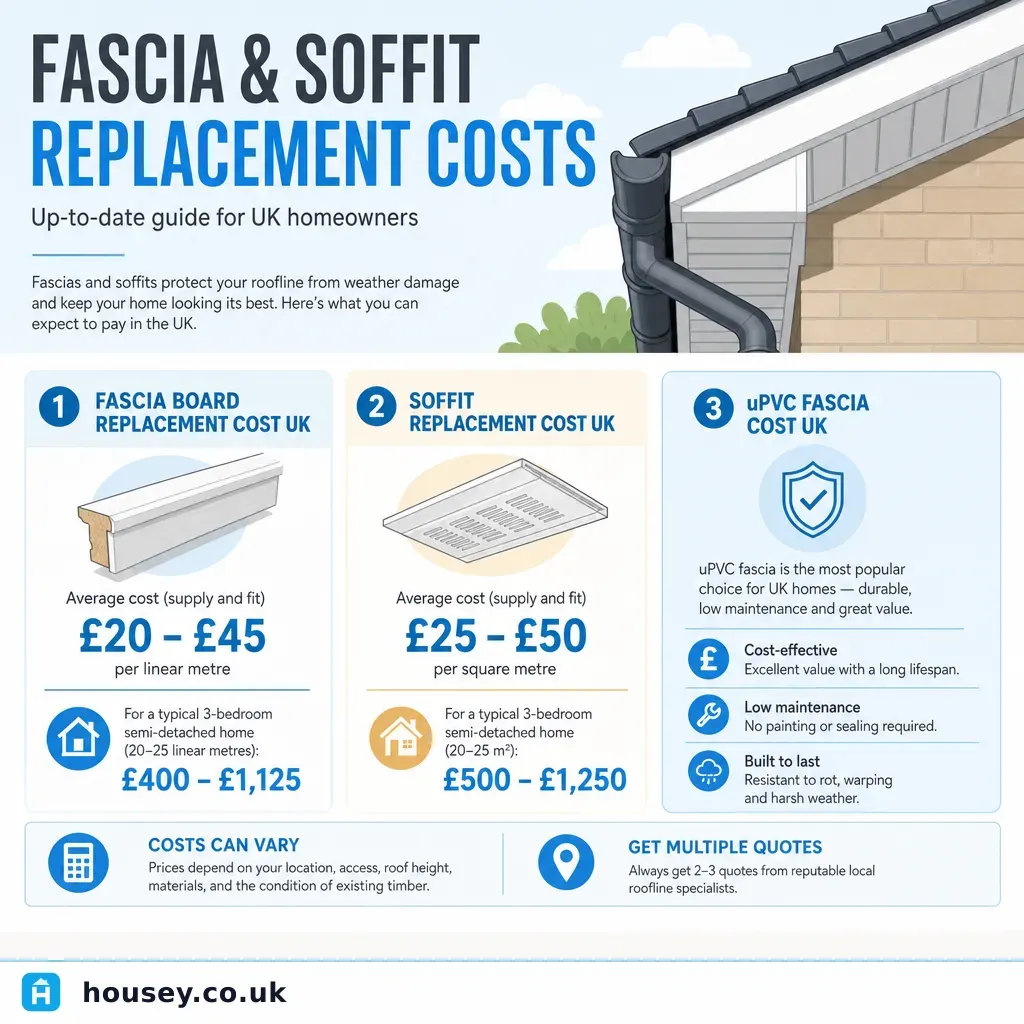
Fascia and Soffit Replacement Costs
Fascia and soffit replacement for a semi-detached house in the UK typically costs £1,800–£4,500 for uPVC boards and new guttering.