Sustainable Home Improvements: Eco-Friendly Upgrades and Green Living
By Housey · Last reviewed 30th of May 2026
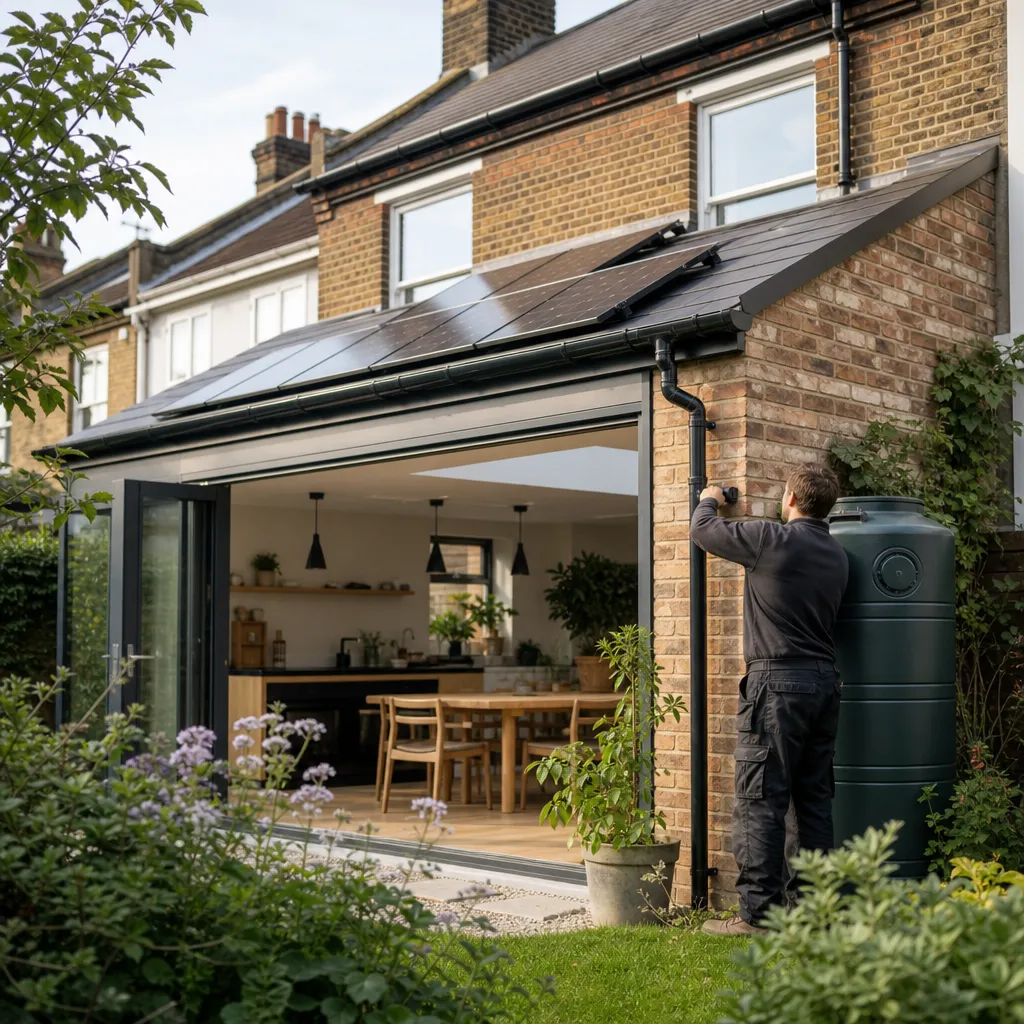
Sustainable Home Improvements: Eco-Friendly Upgrades and Green Living
Rising energy bills, tightening minimum energy-efficiency standards for rental properties, and the UK Government's net-zero commitments have pushed eco home improvements up the agenda for homeowners across England, Scotland, Wales, and Northern Ireland. Whether you own a solid-wall Victorian terrace or a 1990s estate house, the improvements available to you — and the funding you can access — depend on your property's current Energy Performance Certificate (EPC) rating, construction type, and tenure.
Key points
- The UK Government's ECO4 scheme (Energy Company Obligation, fourth phase) provides grant funding for insulation and heating upgrades for lower-income households and properties with an EPC rating of D or below; check eligibility via GOV.UK or your energy supplier.
- The Boiler Upgrade Scheme (BUS) offers grants of £7,500 towards an air source or ground source heat pump installation (as of 2026); applications are made through an MCS-accredited installer on your behalf.
- PAS 2035 is the UK standard framework for domestic retrofit; publicly grant-funded projects must follow this standard, which requires a Retrofit Coordinator for medium and large projects.
- Solar photovoltaic (PV) systems must be installed by an MCS-accredited contractor for the householder to qualify for the Smart Export Guarantee (SEG), which pays for surplus electricity exported to the grid.
- Loft insulation (topped up to 270 mm), cavity wall insulation, and draught-proofing are typically the most cost-effective first steps; solid wall insulation costs more but delivers significant gains for pre-1920s properties.
Which eco upgrades deliver the best return?
The most impactful sustainable improvements follow a broadly agreed priority order, sometimes called the "fabric first" approach, because reducing heat loss before upgrading heating systems prevents oversizing equipment and maximises its efficiency.
Upgrade | Indicative annual saving | Best for | Key considerations |
|---|---|---|---|
Loft insulation (top-up to 270 mm) | £150–£300 | Most UK house types with accessible loft | Fast payback; often funded through ECO4 |
Cavity wall insulation | £200–£400 | Post-1920s properties with suitable cavity | Survey required first; not appropriate for all wall types |
Solid wall insulation (internal or external) | £300–£600 | Pre-1920s solid-wall terraces and semis | Higher upfront cost; external type may need planning consent |
Air source heat pump | £500–£1,500 | Well-insulated homes with suitable outdoor space | Requires MCS installer; Boiler Upgrade Scheme grant available |
Solar PV (4 kWp system) | £500–£800 | South-facing roofs with minimal shading | SEG export payments; check roof condition before installation |
EV home charger (7 kW) | Fuel cost saving vs public charging | Homeowners with off-street parking | OZEV-approved installer required for eligible grant schemes |
Smart heating controls | £100–£200 | Any home with central heating | Low cost, fast to install, immediate behaviour change |
Indicative UK savings, last reviewed 2026-05-30. Savings vary significantly by property size, occupancy, energy tariff, and baseline consumption. Obtain quotes for your specific property.
Insulation: the foundation of a greener home
Insulation is where most professional advice and most grant funding starts. The Energy Saving Trust estimates that a typical semi-detached home with an uninsulated loft and cavity walls loses around a third of its heat through the walls and a quarter through the roof.
Loft insulation is the easiest and lowest-cost intervention for most UK homes with an accessible pitched roof. The recommended depth is 270 mm of mineral wool; many UK homes have older, thinner insulation that can simply be topped up without full removal.
Cavity wall insulation suits most properties built between approximately 1920 and 1990 with standard brick-and-block construction. A survey by an approved installer is required before installation to confirm the cavity is clear, dry, and suitable. Cavity fill is not appropriate for properties with exposed, wet, or defective external walls — a common issue in some coastal and high-rainfall regions of the UK.
Solid wall insulation addresses the estimated 8 million solid-wall homes in the UK, the majority of which are Victorian, Edwardian, or inter-war terraces and semis. Internal insulation reduces room dimensions slightly; external insulation changes the appearance of the building and may require planning permission in a conservation area or for a listed building.
Floor insulation is often overlooked. Suspended timber ground floors can be insulated from below with mineral wool or rigid board, significantly reducing draughts and heat loss — a practical improvement for older terraced and semi-detached properties across the country.
Low-carbon heating: heat pumps and what to know before committing
A heat pump extracts heat from the outside air (air source) or the ground (ground source) and concentrates it for space heating and hot water. Under UK conditions, a well-installed air source heat pump typically achieves a Seasonal Coefficient of Performance (SCOP) of 2.5–3.5, meaning it delivers 2.5 to 3.5 kWh of heat for every 1 kWh of electricity consumed.
Heat pumps perform best in well-insulated properties with larger-surface-area emitters — underfloor heating or oversized radiators. Sizing a heat pump correctly for the building's heat demand requires a heat loss calculation carried out by a qualified engineer; CIBSE guidance applies, and you should not accept a system sized simply from the property's floor area.
The Boiler Upgrade Scheme (BUS) provides a £7,500 grant towards installation of an air source or ground source heat pump through an MCS-accredited installer. Check the current scheme status and eligibility criteria on GOV.UK before commissioning any work, as scheme rules may be updated.
Solar panels, EV chargers, and smart controls
Solar photovoltaic (PV) panels generate electricity from daylight. A typical domestic installation of 4 kilowatt-peak (kWp) on a south-facing roof in southern England generates roughly 3,400–3,800 kWh per year; output is lower in Scotland and northern England but still worthwhile for most households. The Smart Export Guarantee (SEG) requires licensed electricity suppliers with over 150,000 customers to offer a tariff for surplus electricity exported to the grid; rates vary by supplier, so compare before accepting a default offer.
Before installing solar panels, check the roof condition. A solar system has a design life of 25 years or more and should not be installed on a roof that will need re-roofing within a decade. A structural check is advisable for older or non-standard roofs.
EV home chargers allow overnight charging at 7 kW (Mode 3), far faster than a standard three-pin socket. The Office for Zero Emission Vehicles (OZEV) administers grant schemes for eligible installations; qualifying criteria are updated periodically, so check GOV.UK for the current position before commissioning work.
Smart heating controls — programmable thermostats and thermostatic radiator valves — are among the most cost-effective upgrades for any home, usually achievable without altering the heating system itself and with minimal disruption.
Available grants and funding: a homeowner checklist
Grant schemes and eligibility criteria change; always verify the current position on GOV.UK before applying or commissioning work.
When to get professional help
Most eco home improvements require a qualified, accredited professional regardless of scope. Specific situations where professional involvement is essential:
- Heat pump sizing always requires a heat loss calculation by a qualified engineer — never accept a system sized by floor area alone
- Retrofit projects funded through public grants must follow PAS 2035; a Retrofit Coordinator is required for medium and large projects
- Solar panel installation must be carried out by an MCS-accredited installer for SEG eligibility and building warranty compliance
- EV charger installation requires a qualified electrician; OZEV-approved installers are specified for some grant schemes
- Listed buildings and conservation areas — consult your local planning authority before any external changes to walls, windows, or roof slopes
- Suspected damp or condensation linked to a previous insulation installation — seek a building pathologist or retrofit assessor before adding further measures, as adding insulation to a compromised building fabric can worsen moisture problems
How Housey can help
Housey connects UK homeowners with vetted professionals across the full range of sustainable improvements. Whether you are starting with a retrofit assessment to understand your property's priorities, arranging an insulation assessment to confirm suitability and access grant routes, booking solar surveys, finding accredited EV charger installers, or seeking independent advice on your options, our energy-efficiency consultants can help you prioritise upgrades that work for your property type and budget.
Frequently asked questions
What grants are available for eco home improvements in the UK in 2026?
The main schemes include ECO4 for lower-income households and low-EPC properties, the Boiler Upgrade Scheme (£7,500 towards a heat pump), the Warm Homes Local Grant administered via local councils, and the Home Upgrade Grant (HUG2) for off-gas-grid homes. Eligibility and availability change regularly; always verify the current position on GOV.UK and speak with an MCS-accredited installer about grant applications.
Do eco home improvements add value to my property?
Evidence from UK property data suggests higher EPC ratings correlate with higher sale prices and quicker transactions. Research from Rightmove and the Energy Saving Trust has indicated that moving from EPC band D to C can add measurable value, particularly in energy-cost-conscious markets. The relationship varies by property type and location — treat added value as a secondary benefit rather than the primary financial justification for investment.
Can I make eco improvements to a listed building or in a conservation area?
Yes, with care. External measures such as external wall insulation, solar panels on a front-facing roof slope, or replacement windows may require listed building consent or planning permission in a conservation area. Internal measures — loft insulation, smart heating controls, secondary glazing — are generally more straightforward. Always consult your local planning authority before committing to external work on a listed or conservation-area property.
Sources and further reading
- GOV.UK: Boiler Upgrade Scheme — Department for Energy Security and Net Zero
- GOV.UK: ECO4 scheme — Department for Energy Security and Net Zero
- Energy Saving Trust: Home energy efficiency — Energy Saving Trust
- MCS: Find an accredited installer — Microgeneration Certification Scheme
- GOV.UK: Smart Export Guarantee — Ofgem
- PAS 2035 retrofit standard — BSI Group
Useful next reads
 Energy & Retrofit
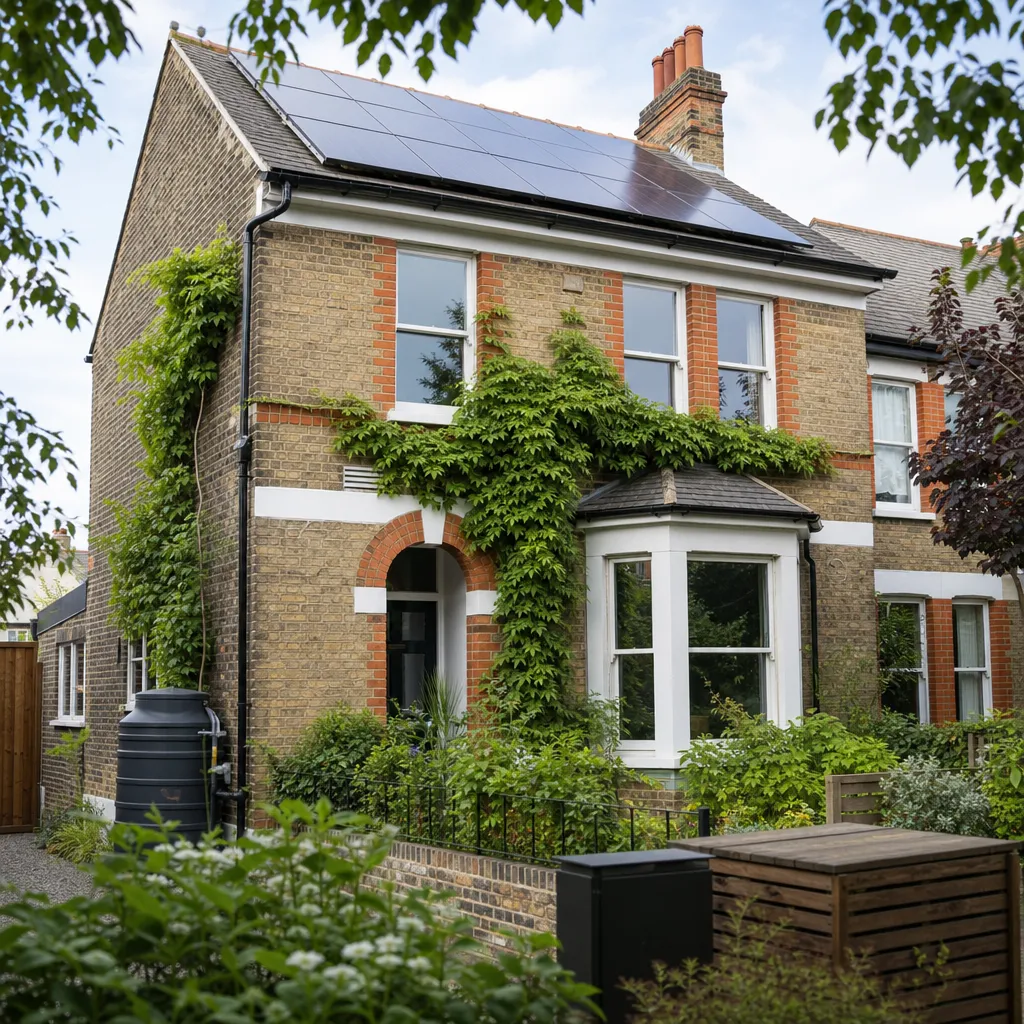
Sustainable Homes: Features That Reduce Environmental Impact
Sustainable homes reduce environmental impact through high levels of insulation, airtight construction, low-carbon heating such as heat pumps, solar energy generation, efficient water use, and responsibly sourced materials.
 Energy & Retrofit
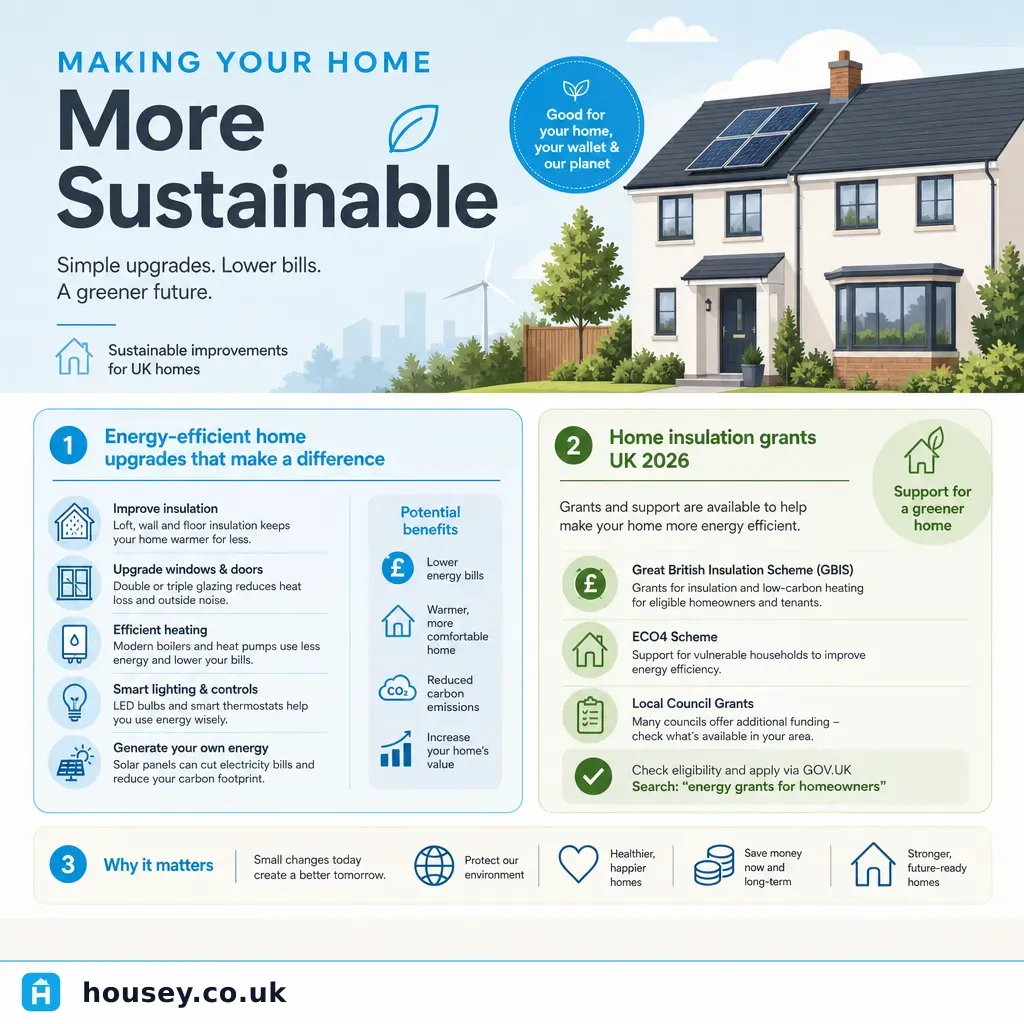
Making your home more sustainable
Making a UK home more sustainable usually starts with fabric-first improvements such as insulation, draught-proofing, and efficient glazing before adding renewable energy systems like solar panels or a heat pump.
 Energy & Retrofit
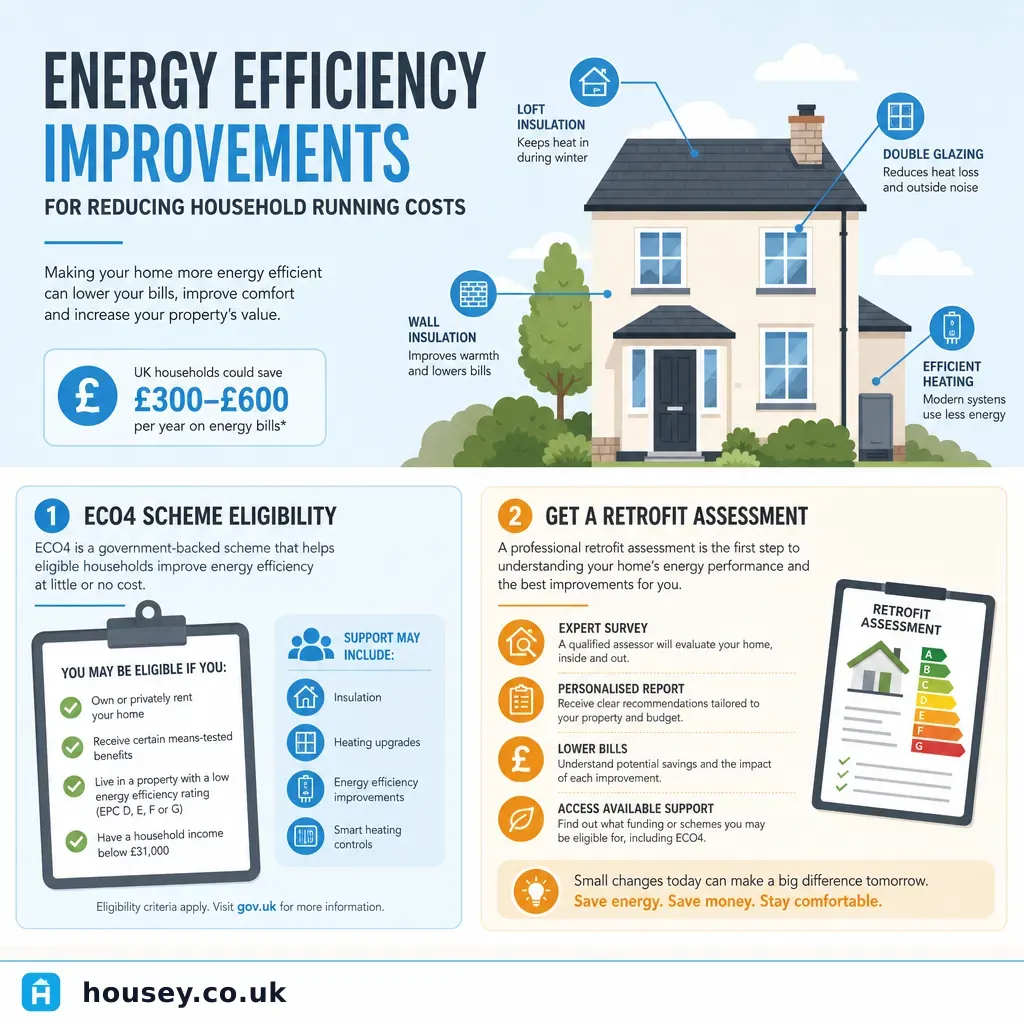
Energy Efficiency Improvements for Reducing Household Running Costs
Reducing household running costs usually starts with draught-proofing and loft insulation — the measures with the best savings-to-cost ratio.
 Energy & Retrofit
Building an Environmentally Conscious Home: A Practical Guide
Making your home more environmentally conscious works best when you follow a logical sequence: reduce energy demand through insulation and draught-proofing first, then upgrade heating controls, then switch to a low-carbon heat source, then generate your own energy with solar PV.
 Energy & Retrofit
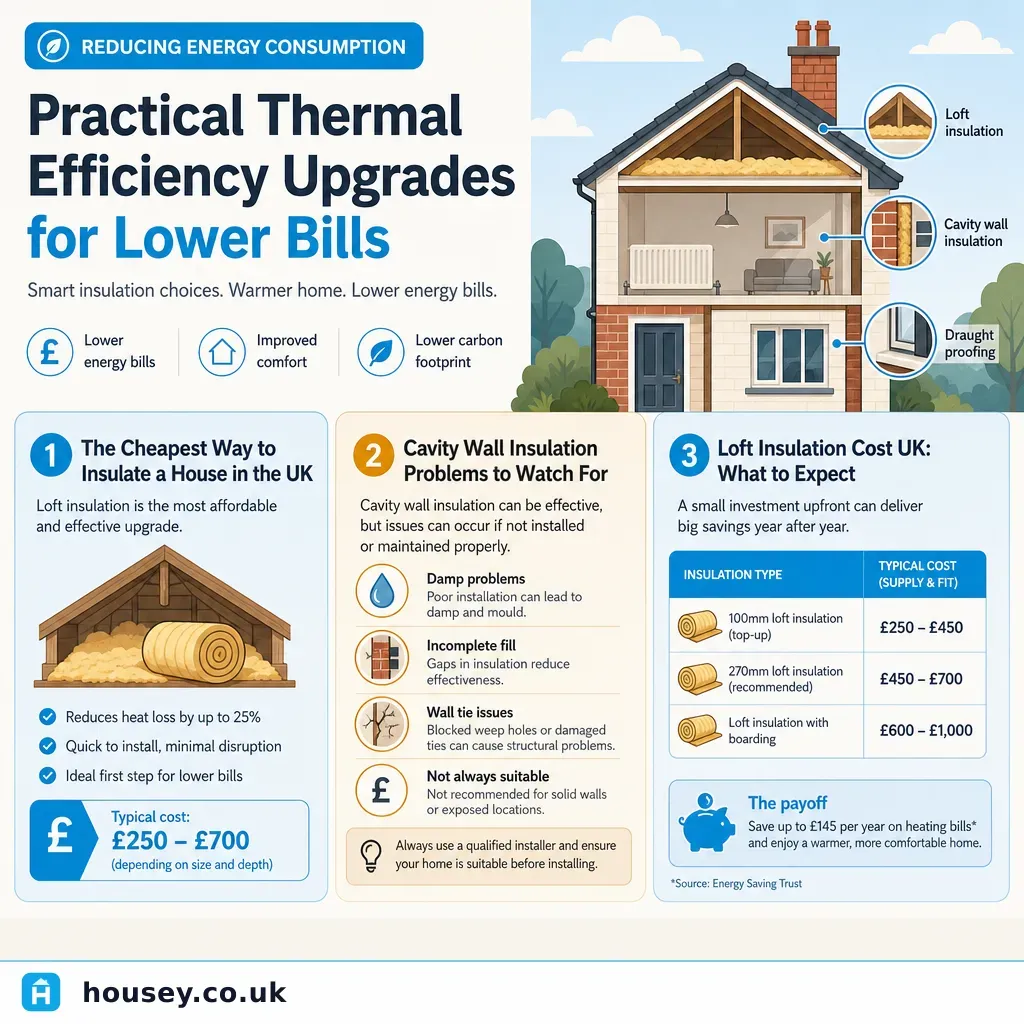
Reducing Energy Consumption: Practical Thermal Efficiency Upgrades for Lower Bills
Improving your home's thermal performance typically starts with the cheapest, fastest-payback measures: draught-proofing gaps at doors, windows, and floors, then loft insulation to 270 mm.