Swim Spa Installation: Compact Swimming and Leisure Pool Solutions
By Housey · Last reviewed 25th of May 2026
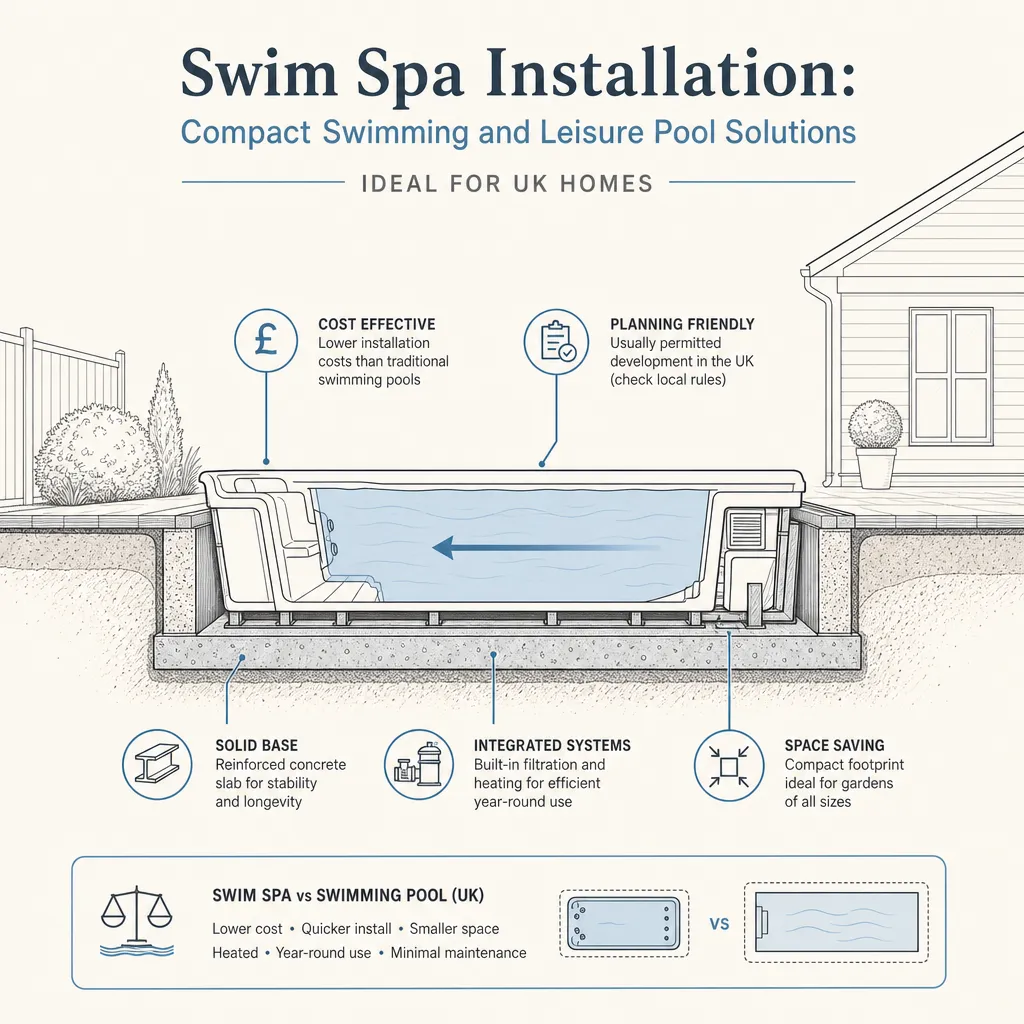
Swim Spa Installation: Compact Swimming and Leisure Pool Solutions
Installing a swim spa is an increasingly popular choice for UK homeowners who want the exercise and relaxation benefits of a pool without the footprint or cost of a full in-ground installation. Whether you are considering an above-ground unit for a suburban back garden or an in-ground model for a larger property, a number of practical decisions need to be made before the unit arrives — including site preparation, planning permission, electrical supply, and a clear understanding of likely running costs.
Key points
- Swim spas typically range from 3.5 m to 6 m in length, making them suitable for UK gardens where a full-length pool would not fit.
- Most above-ground swim spa installations do not require planning permission, but in-ground models, listed buildings, conservation areas, and new-build plots with conditions are common exceptions.
- A filled swim spa can weigh between 5,000 kg and 15,000 kg; a reinforced concrete base of 150–200 mm thickness is the standard foundation requirement.
- All electrical work must be carried out by an NICEIC or NAPIT-registered electrician under Part P of the Building Regulations; a dedicated 32A or 63A circuit is typically required.
- Running costs for a swim spa in the UK typically range from £100 to £300 per month depending on usage, model insulation quality, and local electricity tariffs. Indicative UK costs, last reviewed 2026-05-25.
What is a swim spa and how does it differ from a standard pool?
A swim spa combines a swimming area — where a jet current system allows you to swim in place — with a hydrotherapy section for relaxation and recovery. Unlike traditional pools, swim spas arrive as pre-built shells or modular units and are considerably smaller than a standard 25 m pool. They can be installed outdoors in a garden, inside an outbuilding, or indoors.
Feature | Swim spa | Hot tub / spa | Full in-ground pool |
|---|---|---|---|
Typical length | 3.5–6 m | 1.5–2.5 m | 8–25 m |
Swimming against current | Yes | No | Yes (lanes) |
Planning permission usually required | No (above-ground, standard garden) | No | Sometimes (in-ground) |
Typical installed cost (indicative, UK 2026) | £15,000–£60,000+ | £3,000–£20,000 | £30,000–£100,000+ |
Year-round outdoor use | Yes (heated) | Yes (heated) | Rarely practical (unheated) |
Electrical supply requirement | 32A–63A dedicated circuit | 13A–32A | 32A–100A+ |
Indicative UK costs, last reviewed 2026-05-25. Costs vary significantly by specification, site conditions, and installer. Always obtain multiple quotes.
Does swim spa installation need planning permission?
For most UK homeowners, installing an above-ground swim spa in the rear or side garden does not require planning permission — it is generally treated as a garden structure within the householder permitted development rights. Planning permission is more likely to be needed when:
- The swim spa is to be installed in-ground — it may then be treated as a swimming pool under the GOV.UK householder permitted development technical guidance.
- The property is a listed building or in a conservation area.
- The swim spa will be housed in a new outbuilding that itself requires planning permission.
- The plot is a new-build property where permitted development rights have been removed by a planning condition.
The GOV.UK planning portal has a permitted development checker, and your local planning authority (LPA) can confirm whether consent is needed. Contact the LPA before installation if there is any doubt — enforcement notices can be costly to resolve.
Site preparation and groundwork
Preparing the site is typically the most significant element of a swim spa installation. Key requirements:
- Concrete base: a reinforced concrete slab, typically 150–200 mm thick, is the standard foundation. The slab must be level and capable of bearing the static load of the filled unit, which can exceed 10,000 kg for larger models.
- Access: swim spas are large — delivery often requires a crane or specialist pallet equipment if the garden is not directly accessible by vehicle. Access routes must be measured and confirmed before ordering.
- Drainage: a drainage channel or soakaway connection should be planned for emptying the unit and managing backwash cycles.
- Surrounds: hardstanding, decking, or paving around the unit is typically needed for safety and practicality.
On sloping sites, or where the bearing capacity of the ground is uncertain, a structural engineer or specialist groundworker should assess conditions before a concrete slab is laid.
Electrical requirements
All swim spas require a dedicated electrical supply. The specific requirements depend on the unit's specification, but the typical baseline is:
- A dedicated 32A or 63A circuit run from the consumer unit to the swim spa location.
- A Residual Current Device (RCD) and isolator switch installed within the correct zone distances from the water, in compliance with BS 7671 (IET Wiring Regulations, 18th Edition).
- All electrical work carried out by a competent electrician registered with an approved Part P scheme — NICEIC or NAPIT — with the work notified to building control.
Do not connect a swim spa to a standard domestic socket; this presents a serious fire and electrocution risk and will invalidate most product warranties.
What to ask before accepting a swim spa installation quote
Before committing to an installer, ask:
- What is the exact specification of the model — current strength, pump power, insulation rating, and warranty coverage?
- Is site preparation (concrete base, groundworks) included in the quote, and who is responsible for carrying it out?
- Who will carry out the electrical installation, and are they NICEIC or NAPIT registered?
- Will an electrical completion certificate be provided on completion of the works?
- What is the estimated monthly running cost based on this model and my typical usage pattern?
- What servicing schedule is recommended, and what does annual servicing cost?
- Is delivery and craning-in included in the quoted price?
- What warranties apply to the shell, equipment, and labour separately?
- Is VAT included in the quoted figure?
- What could cause the price to change if ground conditions require additional work?
Homeowner checklist: before your swim spa is delivered
When to get professional help
Ground preparation, electrical installation, and — where required — planning permission should always involve qualified professionals. Specifically:
- Engage a groundworker for site preparation if the garden is sloped, has poor drainage, or the ground-bearing capacity is unknown.
- Use only NICEIC or NAPIT-registered electricians for the dedicated supply circuit and RCD installation.
- Consult your local planning authority before proceeding if there is any doubt about permitted development rights.
- Consider a structural engineer for in-ground installations or where ground conditions are uncertain.
How Housey can help
Housey can connect you with specialist groundworkers who can prepare your site, lay the concrete base, and advise on drainage — ensuring your swim spa installation starts on solid foundations.
Frequently asked questions
How long does swim spa installation take in total?
Timeline depends primarily on site preparation. If a concrete base needs to be laid, allow 2–4 weeks for groundworks plus 28 days curing time before the unit can be delivered. Electrical connection usually takes one day. From groundworks start to first use, most projects take 6–10 weeks in total, though delays in delivery or ground conditions can extend this.
Can I install a swim spa indoors?
Yes — swim spas can be installed inside an existing outbuilding, a purpose-built pool house, or a conservatory, subject to structural capacity and adequate ventilation. High humidity from an indoor swim spa can cause condensation and moisture damage if ventilation is not properly designed. A structural engineer and ventilation specialist should be consulted before proceeding with an indoor installation.
Do swim spas retain heat well in UK winters?
Quality varies significantly by model. Look for full-foam insulation — preferable to peripheral-only insulation — and a well-fitting insulating cover. A well-insulated swim spa should maintain temperature in UK winter conditions without excessive energy use, though heating costs typically rise 20–40% versus summer. Ask for manufacturer energy consumption data before buying.
What is the expected lifespan of a swim spa?
A well-maintained swim spa from a reputable manufacturer typically lasts 15–25 years. Shell warranties of 10 years and equipment warranties of 2–5 years are common. Regular servicing — checking water chemistry, cleaning filters, and inspecting jets and pumps — is essential to achieving the full lifespan and avoiding costly early repairs.
Sources and further reading
- Permitted development rights for householders: technical guidance — GOV.UK
- Part P: electrical safety in the home — GOV.UK
- NICEIC — find a registered electrician — NICEIC
- Swimming Pool and Allied Trades Association (SPATA) — SPATA
- BS 7671 IET Wiring Regulations 18th Edition — Institution of Engineering and Technology
Useful next reads
 Improvement & Build
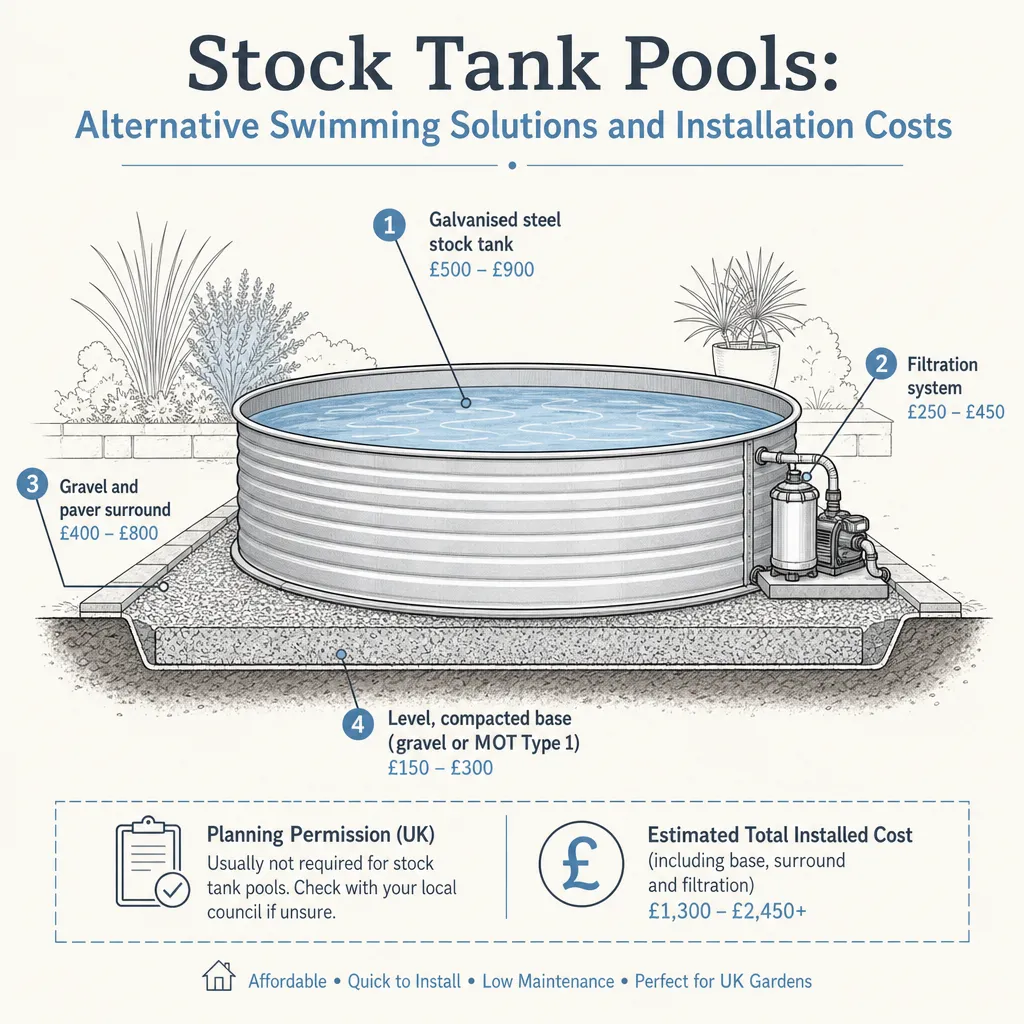
Stock Tank Pools: Alternative Swimming Solutions and Installation Costs
A stock tank pool is a galvanised steel agricultural trough repurposed as a garden plunge or swimming pool.
 Improvement & Build
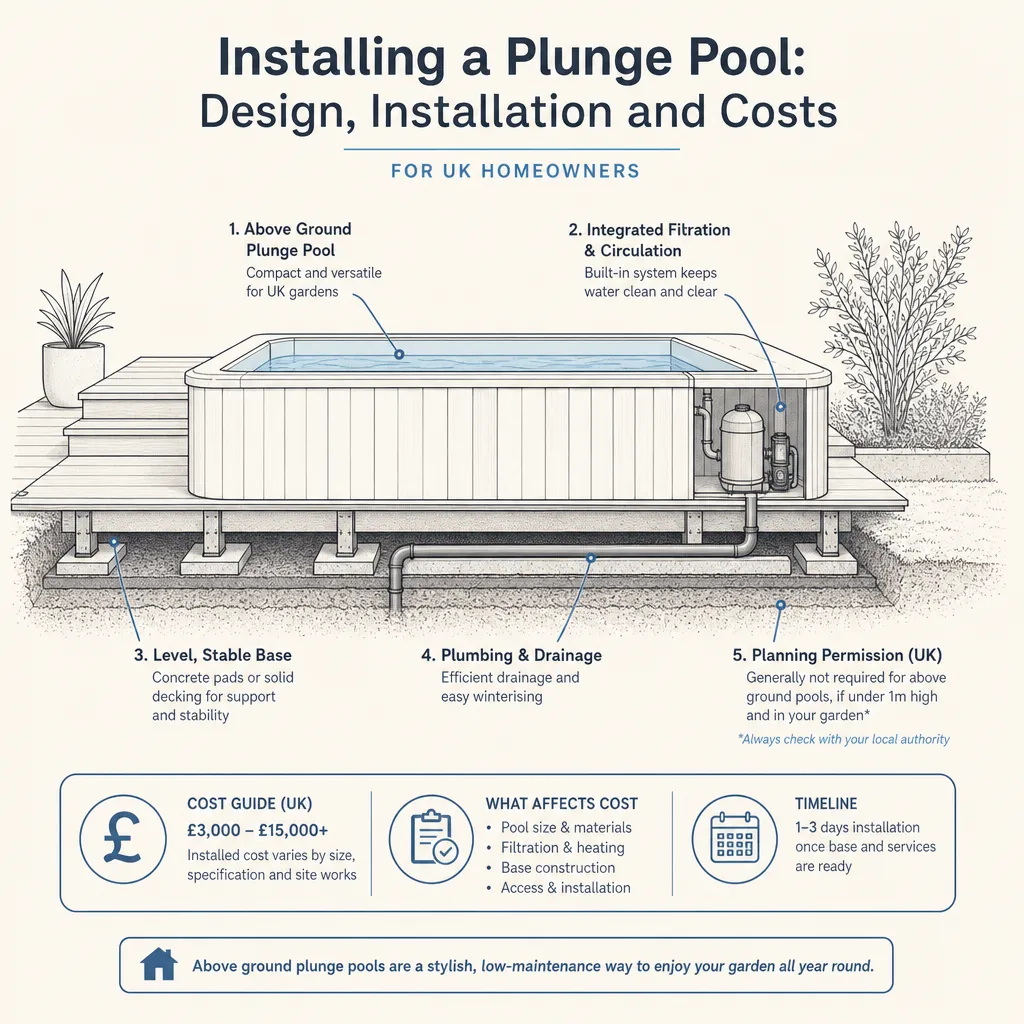
Installing a Plunge Pool: Design, Installation and Costs
Installing a plunge pool in the UK typically costs £8,000–£35,000 depending on type, size, and specification.
 Improvement & Build
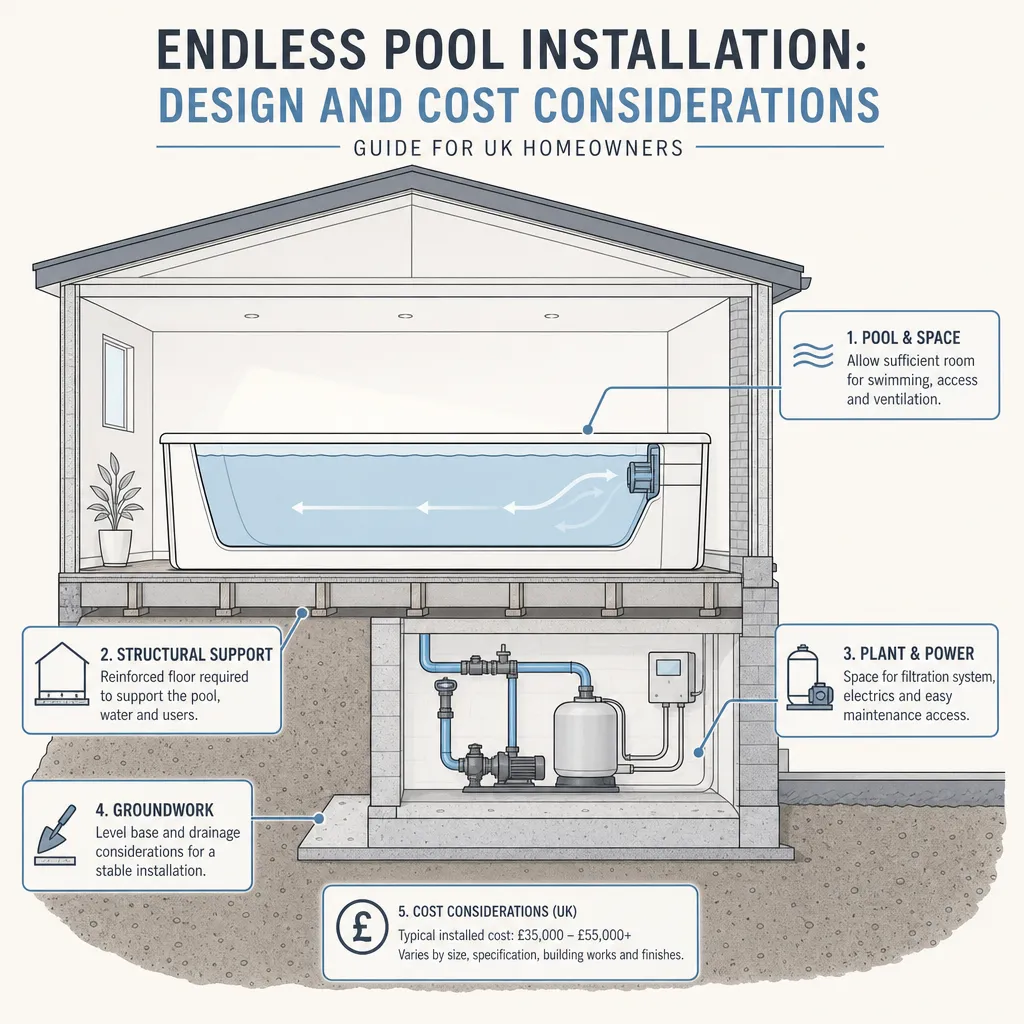
Endless Pool Installation: Design and Cost Considerations
An endless pool (or swim spa) creates a propulsion current for swimming in place in a compact tank, typically 3.
 Improvement & Build
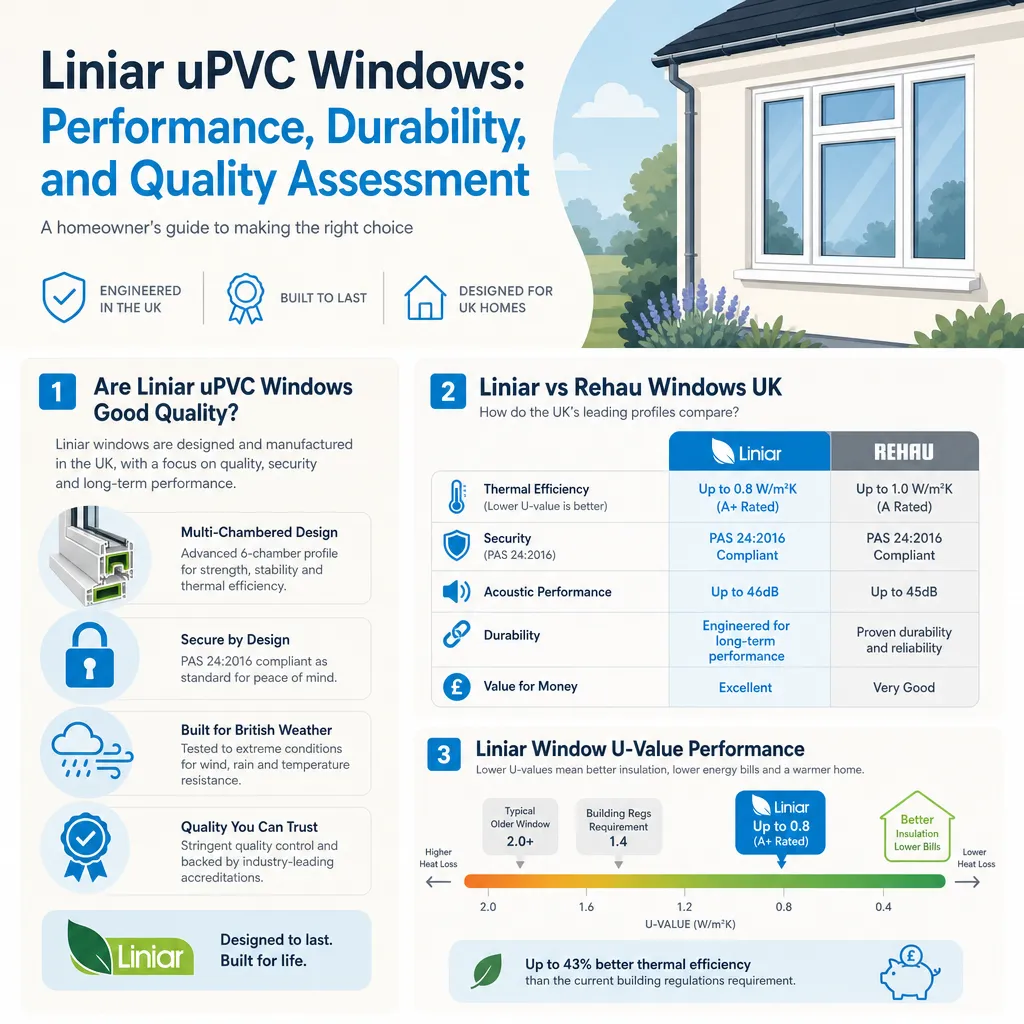
Liniar uPVC Windows: Performance, Durability, and Quality Assessment
Liniar uPVC window profiles are manufactured in the UK using multi-chambered, foamed frames.
 Improvement & Build
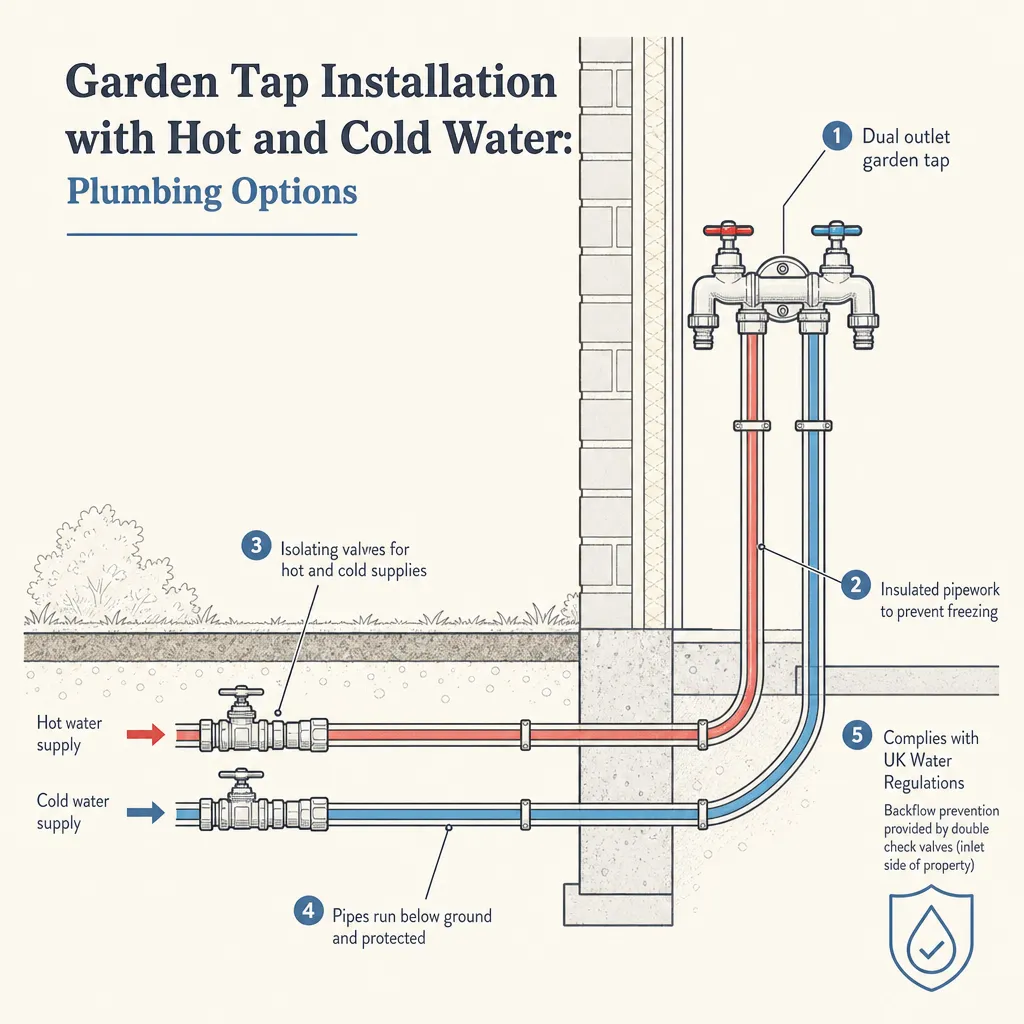
Garden Tap Installation with Hot and Cold Water: Plumbing Options
Adding a cold garden tap is a common DIY project, but routing hot water outdoors requires a plumber to connect to your domestic hot water system and comply with the Water Supply (Water Fittings) Regulations 1999.