Swimming Pool Resurfacing: Cost, Options and Maintenance
By Housey · Last reviewed 1st of June 2026
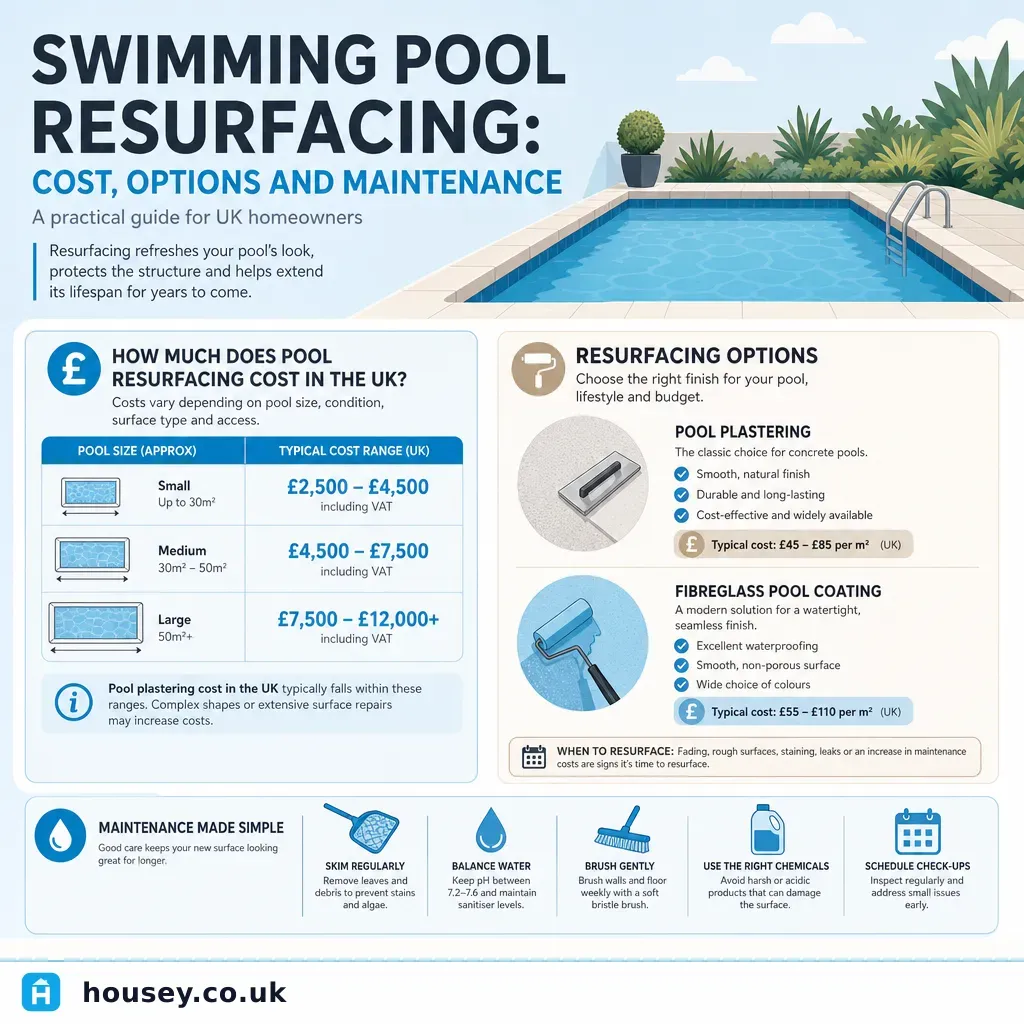
Swimming Pool Resurfacing: Cost, Options and Maintenance
Pool ownership in the UK has grown steadily, and with it the question of when and how to resurface ageing pool shells. Whether you have a newly acquired property with a tired-looking pool or a long-standing domestic pool showing its age, resurfacing is one of the larger maintenance decisions you will face — involving significant cost, downtime, and a choice between competing materials. Getting the specification right matters: the wrong finish or poor surface preparation shortens the life of any resurfacing work considerably, often by a decade or more.
Key points
- Most plaster and marcite finishes last 10–15 years; fibreglass gel coats and quality tiled pools can last 20–30 years with proper maintenance.
- Indicative UK resurfacing costs range from approximately £3,000 for a small pool re-plaster to £25,000+ for a full tile installation on a larger pool (Indicative UK costs, last reviewed 2026-06-01; costs vary significantly by region, pool size, and specification — always obtain itemised quotes).
- The pool must be fully drained and all structural cracks repaired before any new surface is applied — applying new material over active movement or leaks guarantees early failure.
- Water chemistry (pH 7.2–7.8, total alkalinity 80–120 ppm, free chlorine 1–3 ppm) is the primary factor governing how long a new surface lasts.
- Resurfacing an existing pool does not normally require planning permission, but drainage or electrical works associated with the project may be subject to Building Regulations notification.
Signs your pool needs resurfacing
Resurfacing is rarely an emergency decision, but delaying it too long increases repair costs and risks damage to the pool shell itself. Look for these indicators:
- Surface cracking or crazing — hairline cracks across plaster or fibreglass are normal over time, but widening, stepped, or deep cracks may indicate structural movement that requires investigation before resurfacing begins.
- Persistent staining that does not respond to chemical treatment or acid washing — often a sign the surface is beyond chemical restoration.
- Roughness or chalky texture — plaster surfaces erode gradually, leaving a rough finish that irritates swimmers' skin and makes algae control considerably harder.
- Delamination or blistering — fibreglass surfaces can separate from the underlying shell, creating raised areas or hollow-sounding voids when tapped.
- Visible leaks traced to surface porosity rather than pipework — a professional pressure test or dye test will confirm whether the shell surface is the source.
If you are unsure whether full resurfacing or spot repair is appropriate, commission an inspection from a Swimming Pool and Allied Trades Association (SPATA)-registered contractor before committing to any expenditure.
Resurfacing material options
Choosing the right surface depends on your pool shell type, budget, and aesthetic preferences. The most common options available in the UK are compared below.
Material | Best for | Typical lifespan | Approx. cost range (small–medium pool) | Main limitations |
|---|---|---|---|---|
White plaster (marcite) | Concrete shells; traditional look; lower upfront cost | 10–15 years | £3,000–£8,000 | Relatively porous; needs strict water balance; prone to staining |
Pebble or aggregate finish | Concrete shells; durability; textured appearance | 15–25 years | £6,000–£15,000 | Higher cost; can feel rough underfoot if poorly specified |
Fibreglass coating | Concrete or fibreglass shells; smooth finish; algae-resistant | 15–20 years | £4,000–£12,000 | Surface preparation is critical; delamination risk if applied incorrectly |
Ceramic or porcelain tiles | All shell types; premium appearance; longevity | 20–30+ years | £10,000–£25,000+ | High installation cost; ongoing grout maintenance required |
Vinyl liner replacement | Steel- or timber-framed pools; lower-cost option | 8–12 years | £2,500–£6,000 | Not suitable for concrete shells; liner can tear or fade |
Indicative UK costs, last reviewed 2026-06-01. Pool size, shape, accessibility, and regional contractor rates significantly affect final pricing. Always obtain at least three itemised quotes before instructing any contractor.
The resurfacing process: what a contractor should do
Understanding the standard resurfacing sequence helps you assess whether a quote is complete and whether any steps are being skipped.
- Drain the pool — a submersible pump removes pool water; hydrostatic pressure relief may be needed where high groundwater tables could cause the shell to lift during drainage.
- Inspect the shell — all structural cracks are assessed, plumbing and fittings checked, and the cause of any defects identified before surface work begins.
- Repair structural defects — cracks are cut out and filled with hydraulic cement or epoxy; any corroded steel reinforcement in concrete shells is treated before resurfacing proceeds.
- Prepare the surface — old plaster is acid-washed or sandblasted; fibreglass is abraded; tiles are removed where full replacement is specified. Surface preparation is the step most often skimped on and is the primary cause of early resurfacing failure.
- Apply the new surface — plaster and pebble finishes are trowel-applied; fibreglass is rolled or sprayed; tiles are set in adhesive with waterproof grout.
- Cure and refill — curing times vary by material; the pool is refilled slowly and water chemistry is carefully balanced to protect the new surface from the outset.
- Commission and handover — a responsible contractor will explain the start-up procedure, target chemical parameters, and ongoing maintenance schedule before leaving site.
Pre-resurfacing homeowner checklist
Before instructing a contractor, work through these steps:
How long does resurfacing last?
Service life depends on three factors in roughly equal measure: material quality, installation quality, and ongoing water chemistry maintenance. A well-applied plaster finish maintained at correct chemical balance can comfortably reach 15 years; the same finish with chronically poor water balance may begin to fail in five. Pebble finishes and tiles, correctly installed, routinely exceed 20 years.
The Pool Water Treatment Advisory Group (PWTAG) publishes water chemistry guidance for pool operators that is equally applicable to domestic pools and is a useful reference for maintaining a new surface correctly.
Maintenance after resurfacing
New surfaces are particularly vulnerable during the first 30 days. Follow material-specific recommendations:
- Plaster and marcite finishes: brush the pool walls and floor daily for the first two weeks to remove plaster dust, which clouds the water and causes pH spikes. Avoid automated cleaners with abrasive heads for the first 30 days.
- Fibreglass coatings: avoid copper-based algaecides in the start-up period, as these can stain fresh gel coat permanently.
- Tiled surfaces: inspect grout lines annually and re-apply waterproof sealant as needed; missing grout allows water ingress behind tiles and can trigger widespread failure.
In all cases, test water chemistry at least twice per week during the start-up period and weekly thereafter. Balanced chemistry is the single most cost-effective maintenance investment available to a pool owner.
When to get professional help
Pool resurfacing is not a realistic DIY project — specialist equipment, materials, and experience are required for every common finish. Seek qualified professional assessment if:
- You notice cracks that are widening, stepped through the pool shell, or accompanied by visible settlement of coping stones or surrounding paving.
- The pool shell appears to have moved or lifted — hydrostatic uplift requires structural or geotechnical assessment before any resurfacing work proceeds.
- Previous resurfacing has failed within a few years — this usually indicates a surface preparation, structural, or water chemistry problem that must be diagnosed before further expenditure.
- Any electrical work near the pool is involved — poolside electrical installations must comply with BS 7671 and the IET Wiring Regulations, and must be carried out by a qualified electrician.
How Housey can help
Housey connects UK homeowners with vetted local contractors across a wide range of improvement and build projects. If you are planning works associated with your pool — including drainage improvements, electrical inspections, or general building works around the pool area — the Housey platform allows you to compare quotes and review contractor credentials before committing to any work. Pool and leisure specialists are among the service categories expanding on the platform.
Frequently asked questions
How long does swimming pool resurfacing take in the UK?
Most domestic pool resurfacing projects take 5–14 days from draining to refilling, depending on the surface material chosen and any structural repair work required. Plaster and fibreglass coatings typically cure faster than full tile installations. Allow additional time for water chemistry balancing before the pool is safe to use — usually a further 24–72 hours.
Can I resurface a pool myself?
DIY pool resurfacing is not recommended for most finishes. Plaster application requires specialist tools and experience; fibreglass coating demands precise surface preparation and controlled conditions. Errors commonly result in premature delamination, persistent leaks, or chemical imbalances. Always use a SPATA-registered contractor or a similarly qualified pool specialist rather than attempting this as a home project.
Does pool resurfacing require planning permission?
Resurfacing an existing pool generally does not require planning permission, as it is maintenance of an existing structure. However, if you are significantly altering drainage, adding a pool enclosure, or your property is listed or in a conservation area, check with your local planning authority before starting any work.
How do I maintain my pool after resurfacing?
After resurfacing, maintain water chemistry within recommended ranges: pH 7.2–7.8, total alkalinity 80–120 ppm, free chlorine 1–3 ppm. Avoid brushing new plaster too aggressively in the first 30 days. Balanced water chemistry is the single most important factor in extending the life of any pool surface — more so than any product or additive.
Sources and further reading
- Swimming Pool and Allied Trades Association (SPATA) — Trade association for UK pool contractors; use the member search to find registered installers.
- Pool Water Treatment Advisory Group (PWTAG) — Technical Notes — Water chemistry guidance applicable to domestic and public pools in the UK.
- GOV.UK — Approved Document H: Drainage and Waste Disposal — Building Regulations guidance relevant to drainage works associated with pool projects.
- IET Wiring Regulations (BS 7671) — Electrical safety standards for poolside and outdoor electrical installations.
Useful next reads
 Improvement & Build
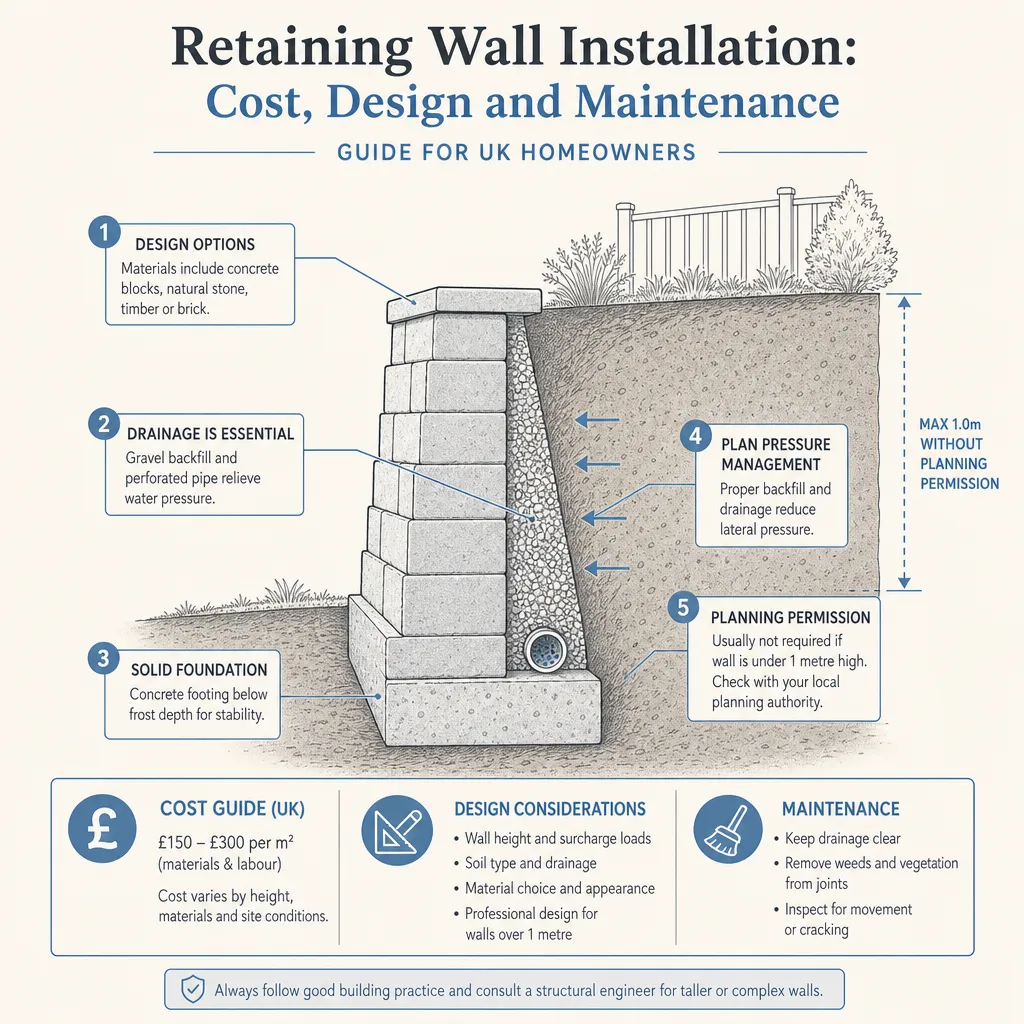
Retaining Wall Installation: Cost, Design and Maintenance
A retaining wall holds back soil on a sloped or banked site.
 Improvement & Build
Relocating a Bathroom: When to Hire a Plumber Versus a Bathroom Specialist
Relocating a bathroom usually requires both a qualified plumber for pipework and drainage and other specialist trades for electrics, tiling, and finishes.
 Improvement & Build
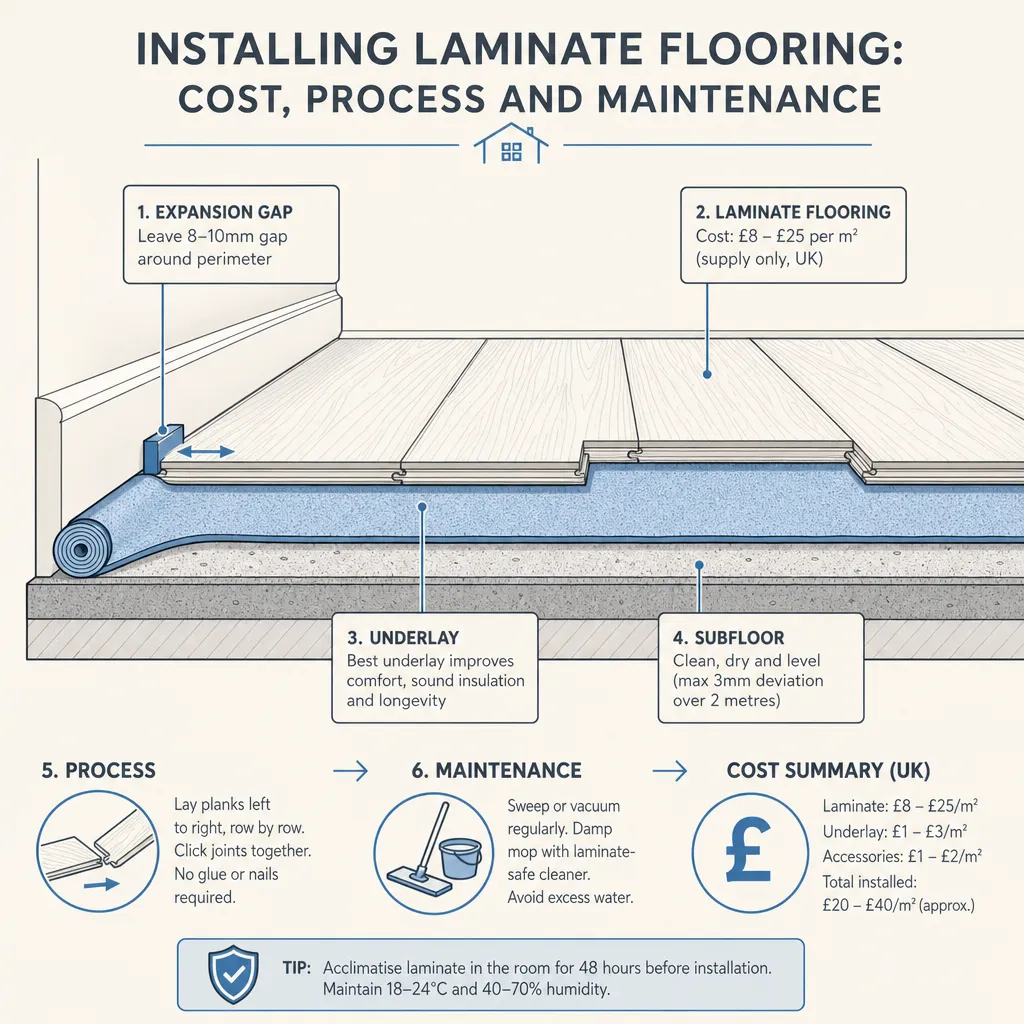
Installing Laminate Flooring: Cost, Process and Maintenance
Laminate flooring in the UK typically costs £15–40 per square metre for materials, plus £8–15 per square metre for professional fitting.
 Improvement & Build
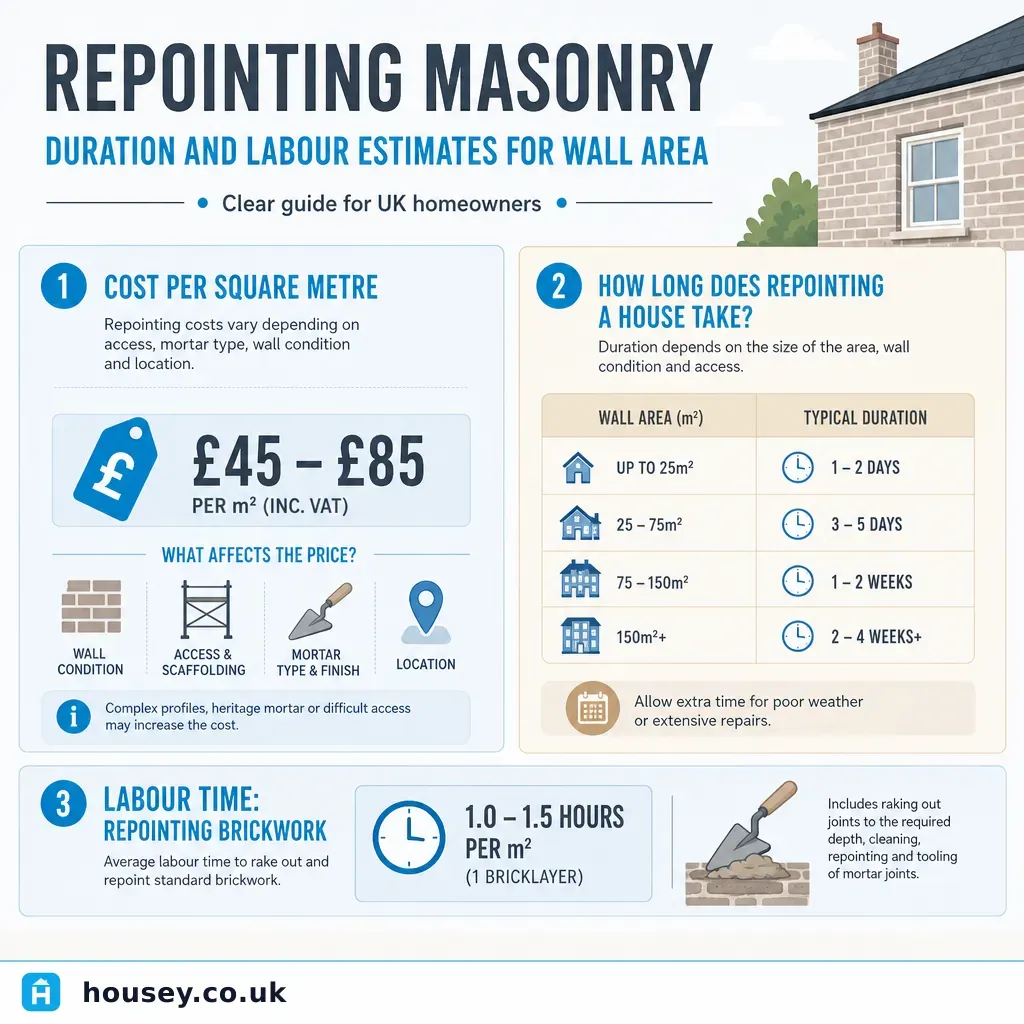
Repointing Masonry: Duration and Labour Estimates for Wall Area
A skilled bricklayer typically repoints 3–5 m² per hour when raking out and refilling joints by hand.
 Improvement & Build
Cleaning and Maintaining Your Deck: Costs and Techniques
Timber decking should be cleaned and re-oiled at least once a year, ideally in spring.