Tar and Gravel Flat Roofing: Installation Costs and Maintenance Considerations
By Housey · Last reviewed 25th of May 2026
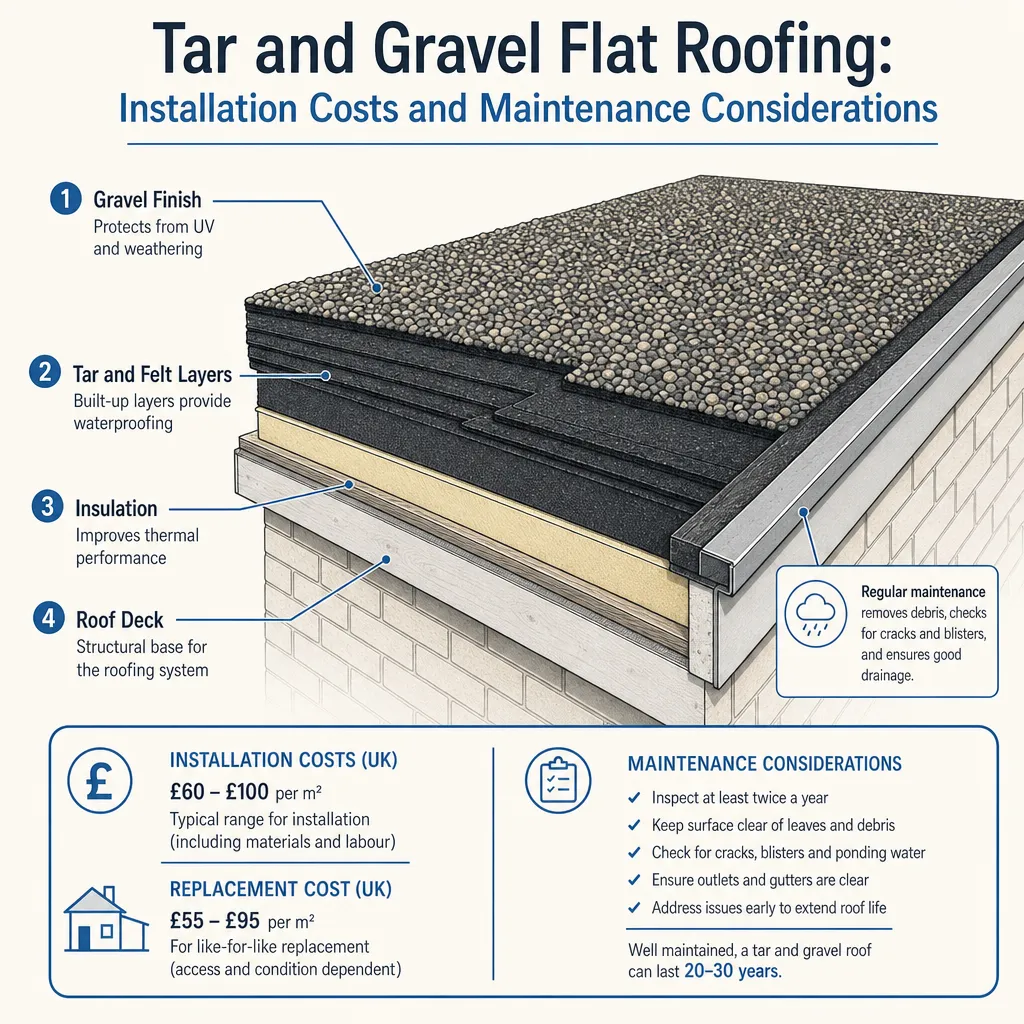
Tar and Gravel Flat Roofing: Installation Costs and Maintenance Considerations
Flat roofs are common on UK extensions, garages, and homes built during the 1960s to 1980s, and tar and gravel — more precisely described as built-up felt or bituminous felt roofing — remains one of the most widely installed flat roof systems in the country. Whether you have noticed blistering on an existing covering, are budgeting for a full replacement, or are weighing up flat roofing options for a new extension, understanding what built-up systems cost and how to maintain them helps avoid expensive, preventable failures.
Key points
- Built-up felt roofing uses two or three layers of bitumen-impregnated felt bonded together with hot or cold bitumen, finished with a layer of stone chippings to protect the surface from UV degradation.
- Indicative UK installed costs are typically £40–£80 per m², though prices vary by roof size, access, location, and specification; a standard single-garage roof (~18 m²) might cost £900–£1,800. (Indicative UK costs, last reviewed 2026-05-25.)
- Building Regulations Part L requires improved thermal performance when replacing more than 25% of a flat roof covering — the U-value target for flat roofs in existing English dwellings is currently 0.18 W/m²K.
- A well-maintained built-up felt roof typically lasts 15–25 years; poor drainage, ponding water, and neglected repairs are the most common causes of premature failure.
- Annual inspection, clearing drainage outlets, and prompt patching of splits or blisters can significantly extend roof life and defer costly replacement.
What is tar and gravel roofing?
"Tar and gravel" is the informal name for a built-up roofing (BUR) system, also known as built-up felt or bituminous felt roofing in the UK. It is not a single membrane — it is a multi-layer assembly constructed on site.
The standard specification includes:
- A base layer bonded to the structural deck (typically timber boards, plywood, or concrete)
- One or two intermediate felt layers, bonded with hot bitumen or cold bitumen adhesive
- A surface finish of loose stone chippings (typically 20 mm limestone or granite) embedded in a final pour of bitumen
The chippings provide UV protection, contribute to fire resistance, and act as ballast against wind uplift. On older UK properties — particularly flat-roofed garages and extensions built before 1990 — this system is the most commonly encountered flat roofing type.
What does tar and gravel roofing cost in the UK?
Costs depend on roof size, access conditions, existing deck condition, and whether insulation upgrades are required under Building Regulations.
Scenario | Approx. roof area | Indicative installed cost |
|---|---|---|
Single garage | ~18 m² | £900–£1,800 |
Double garage | ~36 m² | £1,700–£3,200 |
Rear extension (small) | ~20 m² | £1,000–£2,000 |
Rear extension (large) | ~50 m² | £2,500–£4,500 |
1970s bungalow flat roof | ~80 m² | £3,800–£7,500 |
Indicative UK costs, last reviewed 2026-05-25. Figures include materials, labour, and removal of the existing covering. Prices vary by region, access difficulty, and specification. Obtain at least three quotes.
Cost drivers to ask about when getting quotes:
- Is the existing deck structurally sound, or does it need repair or replacement?
- Is insulation being upgraded to meet Part L of the Building Regulations?
- What felt specification is being used — Type 3, Type 4, or polyester-reinforced Type 5 to BS EN 13707?
- What guarantee does the contractor offer, and is it backed by an insurance-backed warranty?
- Is VAT included in the quote?
Building Regulations and planning considerations
Replacing a flat roof does not usually require planning permission, as it is generally considered maintenance or repair work. If your property is in a conservation area or is listed, external alterations may require consent — check with your local planning authority before starting.
Approved Document L for existing dwellings is the key Building Regulations consideration. If you are replacing the entire flat roof covering (or more than 25% of it), the work must improve thermal performance to current U-value standards — currently 0.18 W/m²K for flat roofs in England. This typically requires adding or upgrading rigid insulation above or below the deck.
A competent roofing contractor should advise on this requirement and, where applicable, submit a Building Notice or Full Plans application to your local building control authority. Retain the completion certificate.
Maintenance: what to do and when
Annual checks (homeowner)
- Clear gutters and drainage outlets — ponding water is the leading cause of felt failure and deck rot
- Inspect chippings — areas of bare felt exposed by displaced chippings should be topped up promptly
- Look for blisters and splits — small, stable blisters (up to 150 mm) can be monitored; splits or open blisters should be patched
- Check flashings — lead or mineral felt flashings at upstands and parapet walls are common failure points; look for gaps or lifting edges
- Inspect penetrations — pipes and vents passing through the roof should be checked for deteriorating seals
Every three to five years: professional inspection
A qualified roofer should inspect the whole surface, assess remaining felt life, and re-apply chippings or a reflective solar coating if the surface has deteriorated.
Red flags that mean act now
- Water ingress visible on internal ceilings or walls directly below the flat roof area
- Felt pulling away from upstands or parapets, leaving exposed edges
- Large areas of bare deck where chippings and felt covering have failed completely
- Sagging or soft spots underfoot when walking on the roof, suggesting possible timber deck rot
- Pooling water still present more than 48 hours after rainfall
Should you repair or replace?
Situation | Likely recommendation |
|---|---|
Single localised split or blister; roof otherwise in good condition | Patch repair — cost-effective |
Multiple blisters spread across a large area | Full overlay or replacement — patching alone is likely uneconomical |
Roof older than 20 years with widespread cracking | Replacement — remaining serviceable life is limited |
Felt delaminating from deck across multiple areas | Replacement — deck condition needs structural assessment |
Deck rot in one small section; felt otherwise sound | Deck repair and localised patch |
Worked UK property scenario
Scenario: 1975 semi-detached house, single-storey rear extension (~22 m²), West Midlands
A homeowner notices damp patches on the extension ceiling after heavy rain. A roofing contractor inspects and finds multiple splits in the top felt layer, a blocked drainage outlet causing ponding, and some softness in deck boards near the external wall — likely rot in two or three boards.
The contractor replaces the affected deck boards, clears the drainage outlet, and re-lays a full three-layer polyester-reinforced built-up felt system with 60 mm PIR insulation board to meet Part L requirements. A Building Notice is submitted to the local building control authority. Total installed cost: approximately £2,200. An insurance-backed guarantee is issued for 10 years.
When to get professional help
Always use a qualified roofing contractor for new installation, full replacement, or structural deck work. For routine maintenance, a roofer is the right professional for anything beyond a careful visual inspection from ground level or a rooflight hatch.
Seek professional help promptly if:
- You suspect deck rot (soft spots felt underfoot on the roof surface)
- Water is actively entering the building below the roof area
- Flashings have visibly lifted or separated from upstands
- You are unsure whether localised repairs will hold, or whether full replacement is more cost-effective
Do not walk on a flat roof unless you are confident the deck is structurally sound — falls through weakened roof decks are a serious safety risk.
How Housey can help
If you need a flat roof inspected, repaired, or replaced, Housey connects you with qualified local roofers who can survey the existing covering, advise on specification, and submit Building Regulations notices where required.
Frequently asked questions
How long does a tar and gravel flat roof last?
A properly installed and maintained built-up felt roof typically lasts 15–25 years. Felt specification, installation quality, drainage management, and maintenance frequency all affect lifespan. Polyester-reinforced felts (Type 5 to BS EN 13707) generally outperform older organic-core Type 3 felts. Neglected drainage — particularly blocked outlets causing ponding water — is the most common cause of premature failure in UK conditions.
Does replacing a flat roof need planning permission?
Replacing a flat roof like-for-like is usually treated as maintenance and does not require planning permission. If the property is in a conservation area or is listed, external alterations may require consent — check with your local planning authority first. Building Regulations approval is required if you are replacing more than 25% of the roof covering and need to improve insulation to meet Part L.
Is built-up felt or EPDM better for a UK flat roof?
Both perform well when properly installed. EPDM (rubber membrane) is a single-layer system with a rated lifespan of 20–30+ years and is increasingly popular across the UK. Built-up felt is widely familiar to UK roofers, can be cheaper per m² in some cases, and is straightforward to patch locally. The right choice depends on budget, local contractor expertise, and roof configuration. Ask for quotes on both and compare specifications.
Can new felt be applied over an existing tar and gravel roof?
An overlay may be possible if the existing deck is confirmed sound and the existing felt is not heavily degraded. However, adding layers increases roof loading and can trap moisture between them, so most contractors recommend stripping back to the deck for a full replacement. A qualified roofer should assess the existing condition and deck integrity before recommending an overlay approach.
Sources and further reading
- Building Regulations Approved Document L — Conservation of fuel and power — GOV.UK
- Planning Portal — Roof alterations and planning permission — Planning Portal
- Working at height: a brief guide — Health and Safety Executive
- NFRC — National Federation of Roofing Contractors — NFRC
Useful next reads
 Improvement & Build
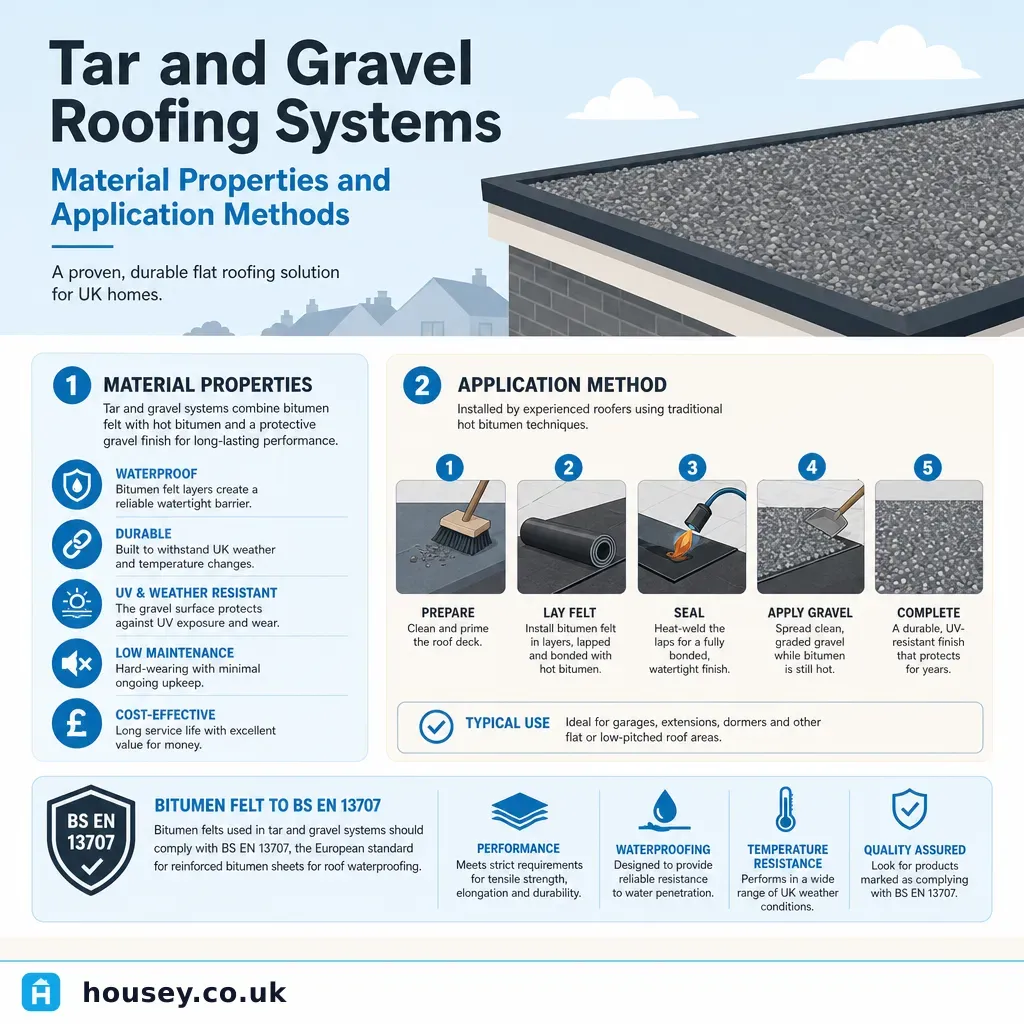
Tar and Gravel Roofing Systems: Material Properties and Application Methods
A tar and gravel roof is a built-up system of bitumen-bonded felt layers finished with stone chippings.
 Improvement & Build
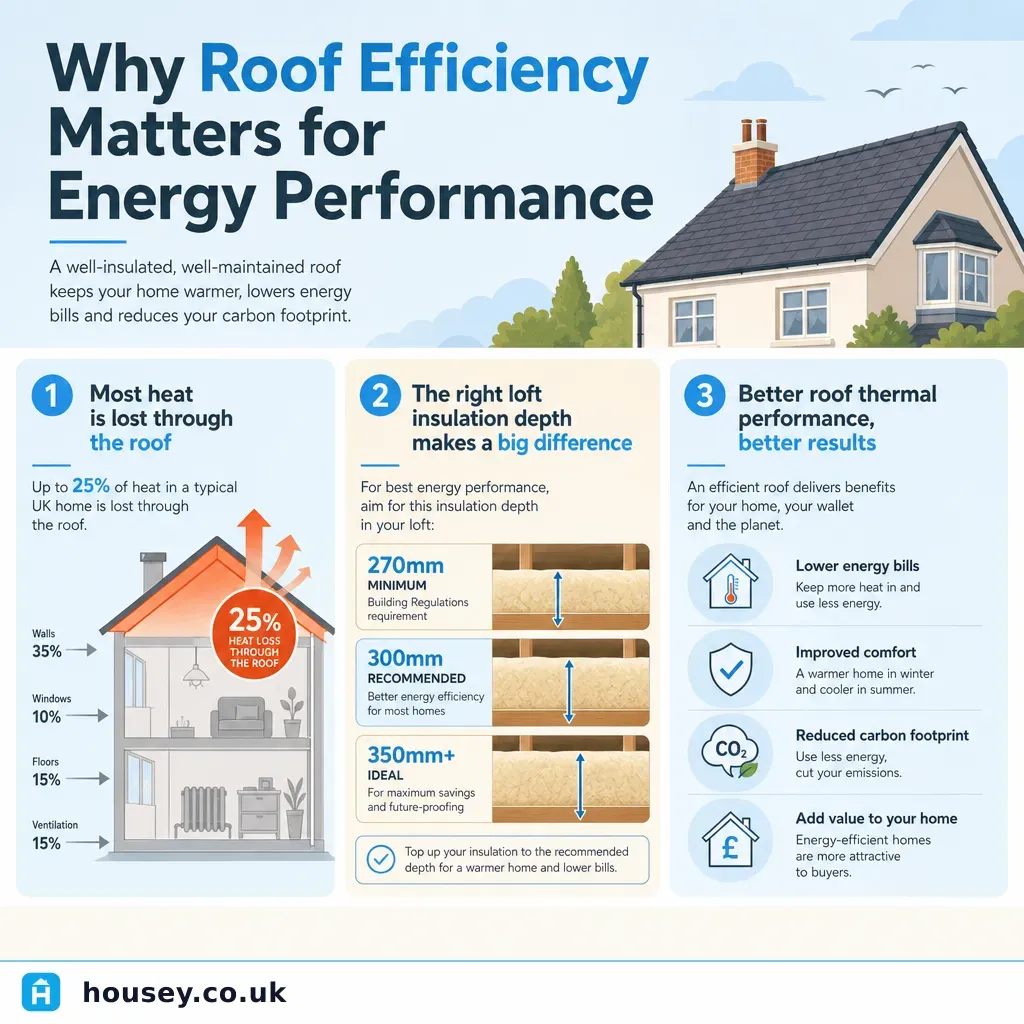
Why Roof Efficiency Matters for Energy Performance
A roof typically accounts for up to 25% of a home's heat loss where uninsulated, making it one of the highest-return areas to address in older UK properties.
 Improvement & Build
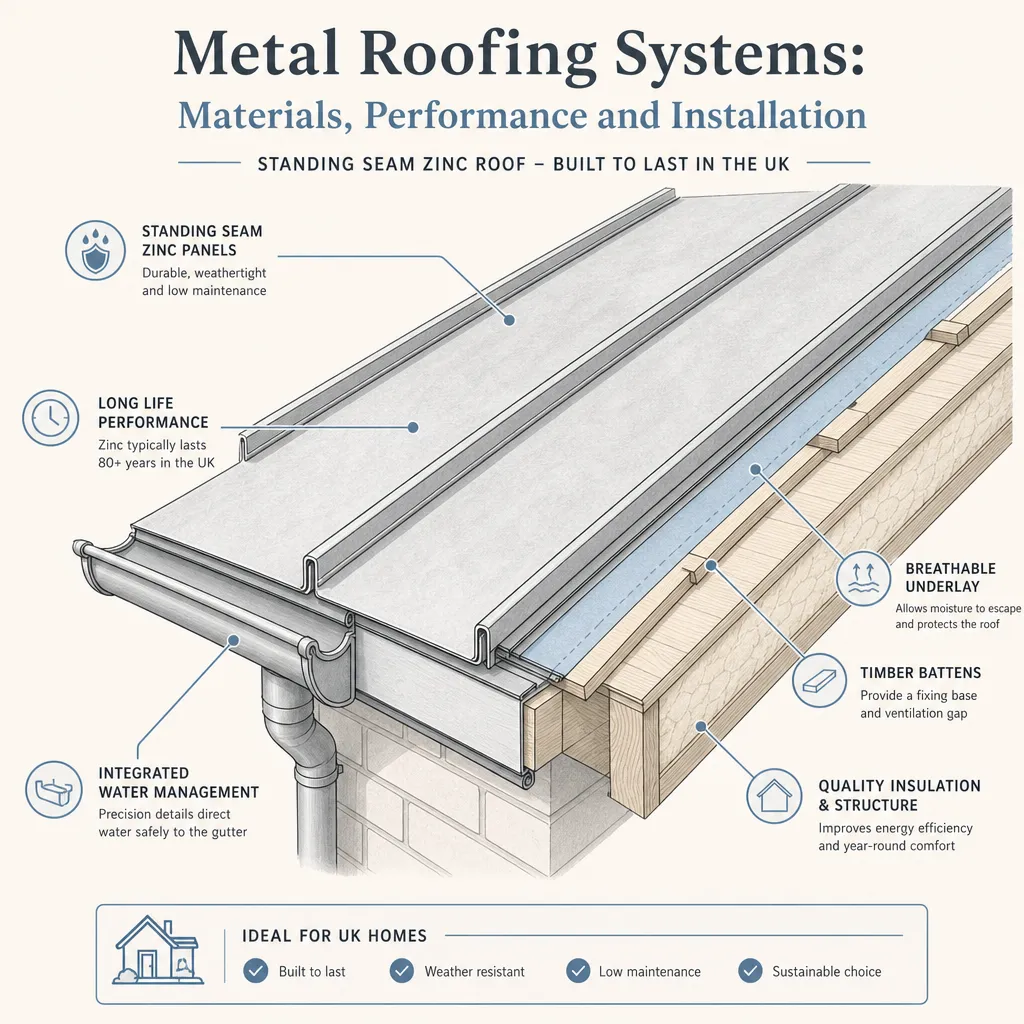
Metal Roofing Systems: Materials, Performance and Installation
Metal roofing systems in the UK include standing seam zinc, coated steel, aluminium, and copper panels, as well as profiled sheets.
 Improvement & Build
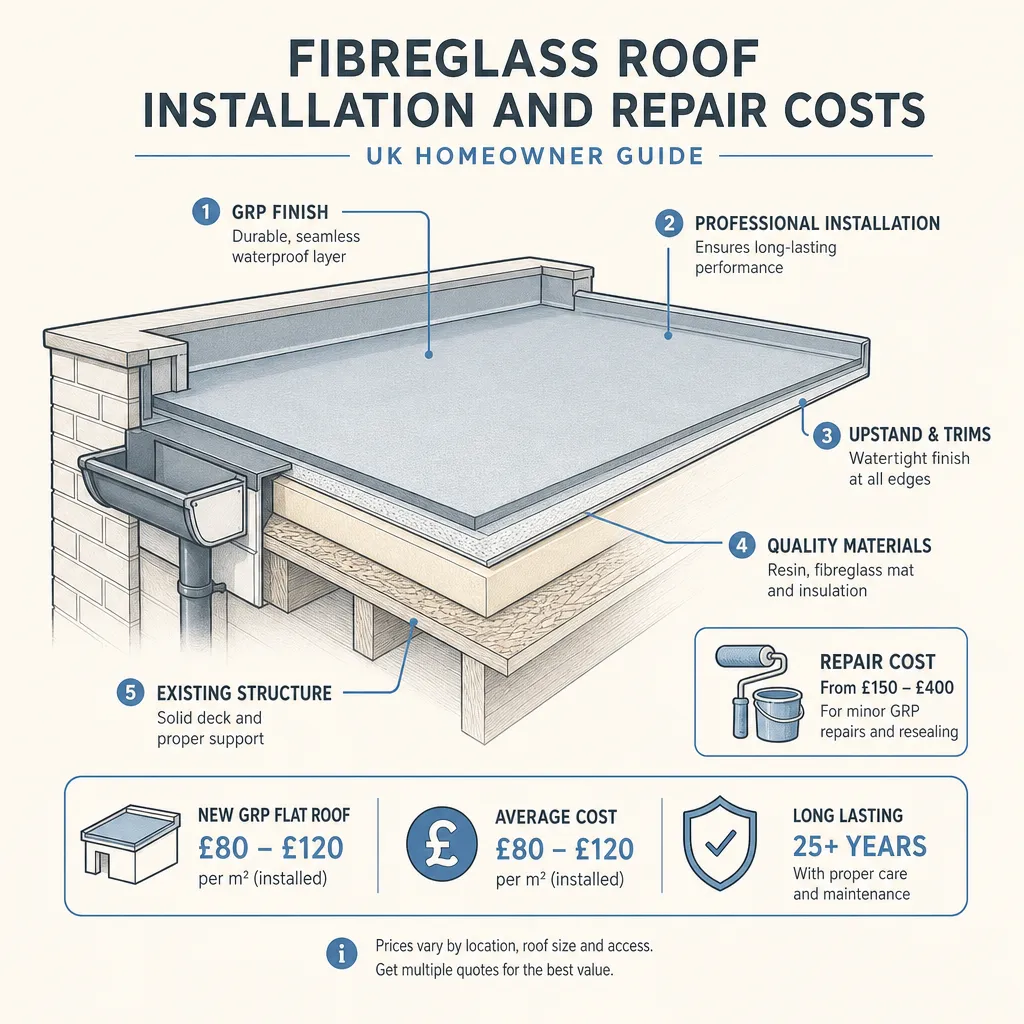
Fibreglass Roof Installation and Repair Costs
A fibreglass (GRP) flat roof costs approximately £70–£110 per square metre installed in the UK, with a typical 15 m² garage roof costing £1,200–£2,000.
 Improvement & Build
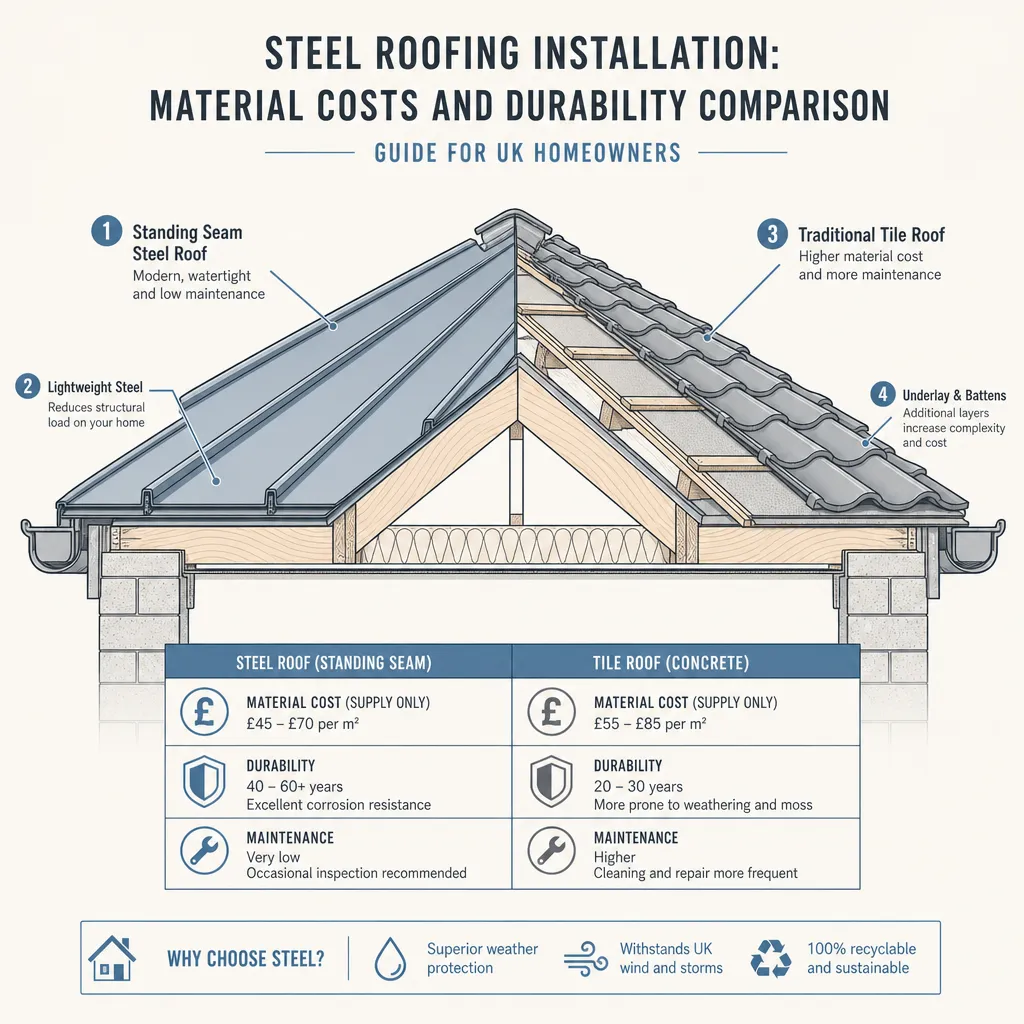
Steel Roofing Installation: Material Costs and Durability Comparison
Steel roofing comes in three main types for UK homes: standing seam (best for low-pitch contemporary roofs, 40–60 year lifespan), composite metal tile (traditional appearance), and corrugated sheet (outbuildings).