Driveway Materials Compared: Tarmac vs Concrete Costs and Durability
By Housey · Last reviewed 10th of May 2026
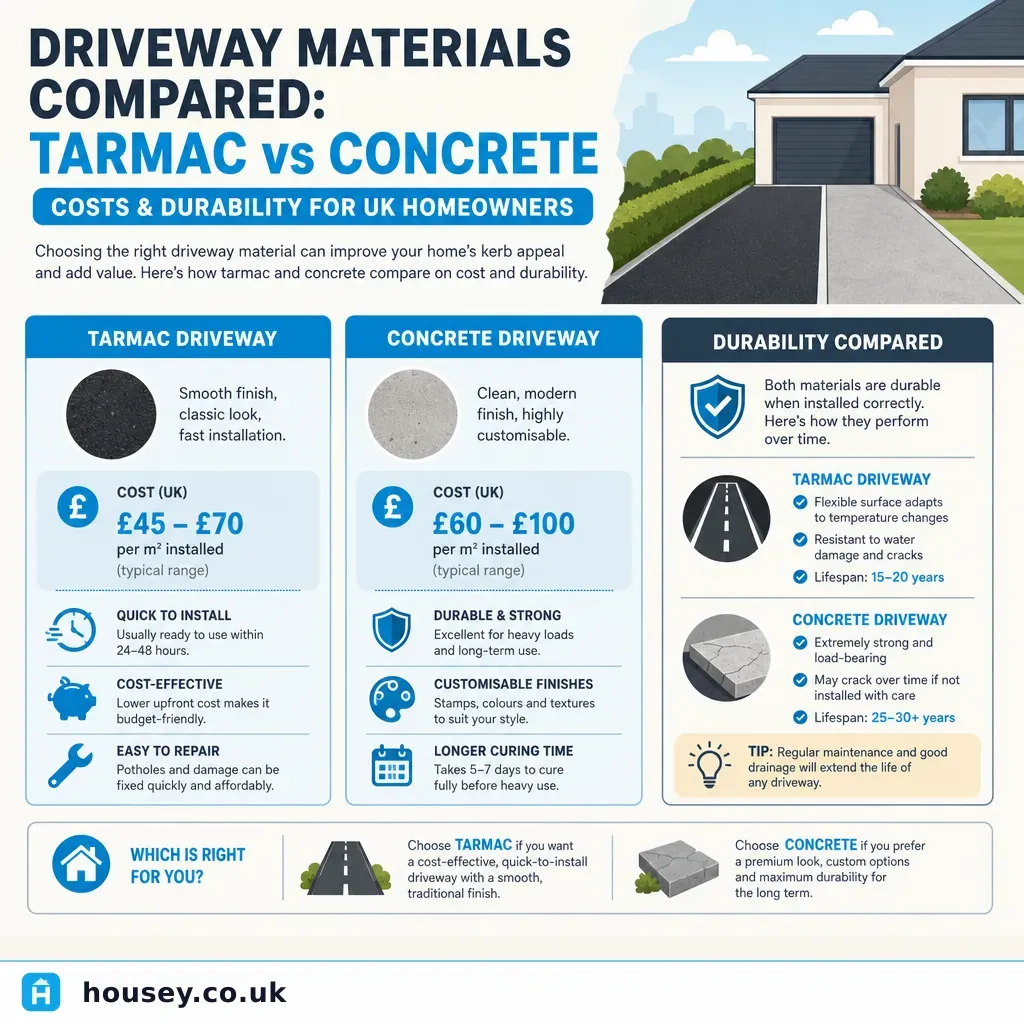
Driveway Materials Compared: Tarmac vs Concrete Costs and Durability
Replacing or laying a new driveway is one of the more common home improvement projects, but the choice of material has lasting consequences for cost, maintenance, and — since a 2008 change to permitted development rights — planning compliance. Tarmac and concrete are the two most widely used hard surfacing options in the UK, and the right choice depends on your budget, the size and shape of the driveway, how your property manages surface water, and how long you want the surface to last.
Key points
- Tarmac driveways typically cost £50–£80 per square metre installed; concrete typically costs £80–£130 per square metre. Indicative UK costs, last reviewed 2026-05-10.
- In England, front garden hard standing over 5 m² must use a permeable surface or drain to a lawn or border under the Town and Country Planning (General Permitted Development) (England) Order 2015; impermeable surfaces without adequate drainage require householder planning permission.
- Tarmac is usually ready to use within 24 hours of laying; concrete requires a curing period of 5–7 days before vehicle use.
- Both materials can last 20–30+ years with proper installation, but concrete is generally more durable on stable ground while tarmac is more forgiving where minor ground movement occurs.
- Planning regulations in Scotland and Wales differ from England — consult your local planning authority before specifying any impermeable front garden surface.
Tarmac vs concrete: a detailed comparison
Feature | Tarmac | Concrete |
|---|---|---|
Typical installed cost (per m²) | £50–£80 | £80–£130 |
Curing / usable time | Usable within 24 hours | 5–7 days before vehicle use |
Typical lifespan (well installed) | 20–25 years | 25–35 years |
Maintenance requirements | Resurfacing or crack-filling after 15–20 years | Occasional sealing; crack repair is more disruptive |
Appearance and finish options | Uniform dark grey or black; limited variety | Brushed, coloured, or pattern-imprinted finishes possible |
Permeable versions available | Yes — porous tarmac | Yes — permeable concrete and resin-bonded aggregate |
Repair ease | Straightforward patching | Patches are visible; large damage may need section replacement |
Oil stain susceptibility | Higher — oil can soften the surface | Lower — but stains are typically permanent |
Best for | Budget-conscious homeowners; ground with slight movement history | Long-term durability; design flexibility |
Indicative UK costs, last reviewed 2026-05-10. Costs vary by region, installer, and site conditions.
Planning rules for driveways in England
Since October 2008, householder planning permission has been required for new or replacement front garden driveways that use impermeable materials and do not include adequate drainage. This rule is set out in the Town and Country Planning (General Permitted Development) (England) Order 2015 and is explained in GOV.UK guidance on paving front gardens.
Key principles:
- Permeable surfaces are permitted development — porous tarmac, permeable concrete, gravel, and block paving with permeable joints do not require planning permission regardless of size.
- Impermeable surfaces with drainage to a lawn or border may also qualify as permitted development, provided the drainage is genuinely adequate for the surface area involved.
- Impermeable surfaces without adequate drainage require planning permission for any front garden area over 5 m².
- Listed buildings and conservation areas carry additional restrictions that may limit materials and finishes — always check with your local planning authority before committing.
- Scotland and Wales operate under different planning frameworks; contact your local authority before work begins.
If your planning position is unclear, call your local planning authority's duty planner. Advice is usually free and can prevent an enforcement issue later.
Which material suits your situation?
Choose tarmac if:
- You want the lowest upfront installation cost
- You need the driveway accessible quickly — within 24 hours of laying
- Your ground has a history of slight movement or settlement, where tarmac's flexibility is an advantage
- You are replacing a like-for-like tarmac surface and want a straightforward specification
Choose concrete if:
- You want the longest-lasting surface and are prepared to pay a modest premium
- Design flexibility matters — brushed, pigmented, or pattern-imprinted finishes are all achievable
- Your ground is well-compacted and stable
- You can manage without using the driveway for up to a week during curing
Consider permeable alternatives if:
- Planning rules or drainage challenges make impermeable surfacing complex — porous tarmac, permeable block paving, gravel, or resin-bound aggregate may simplify the project considerably
- Your driveway has a notable gradient where resin-bonded surfaces offer better slip resistance
Worked UK property scenario
Situation: A homeowner in a 1930s semi-detached in Surrey wants to replace a deteriorating tarmac driveway measuring approximately 40 m². The front garden drains adequately and there is an existing gravel border along one side.
- Option A — Standard tarmac resurfacing: Indicative cost £2,000–£3,200. Fast installation, usable the next day. Planning position: if surface water continues to drain to the existing gravel border, this may qualify as permitted development — worth confirming with the local planning authority before proceeding.
- Option B — Porous tarmac: Indicative cost £2,400–£3,800. Permitted development regardless of drainage arrangements, removing planning uncertainty entirely. Marginally higher cost than standard tarmac but broadly similar to the concrete option.
- Option C — Brushed concrete: Indicative cost £3,200–£5,200. Longer expected lifespan and more design choice, but a 5–7 day cure period before the driveway can be used. Same planning considerations as standard tarmac.
In this scenario, porous tarmac offered the clearest path — close to standard tarmac in cost, similar to the lower end of concrete, and with no need to confirm the planning position. The homeowner proceeded with Option B.
Indicative UK costs, last reviewed 2026-05-10. Always obtain written quotes for your specific site and access conditions.
What affects the installation cost?
Beyond the base material rate, several factors influence the final quote:
- Driveway size and shape — irregular shapes, tight curves, and decorative edging all add labour
- Existing surface condition — breaking out and removing old concrete is more labour-intensive and costly than lifting tarmac
- Sub-base preparation — a new driveway on weak or unstable ground needs more hardcore and levelling work; costs vary significantly
- Access constraints — narrow side passages or restricted street access may require smaller equipment and more hand-laying
- Edging and kerbs — concrete kerb edging or decorative border blocks add material and labour costs
- Drainage runs — connecting to an existing surface water drain or creating a new soakaway adds to the total
Homeowner checklist before getting driveway quotes
- Measure your driveway accurately: length multiplied by width in square metres
- Identify whether you are replacing an existing surface or laying on bare ground
- Check planning rules for your property type and location — front garden, conservation area, or listed building
- Decide on material preference and whether you want permeable or standard surfacing
- Note any access constraints: narrow passages, no roadside parking for a large vehicle, proximity to a boundary
- Ask three installers for itemised written quotes, comparing what is and is not included
- Confirm whether sub-base preparation, edging, and drainage work are included in each quote
- Check whether the installer holds TrustMark accreditation or a comparable government-endorsed quality mark
- Confirm whether VAT is included in the quoted price
When to get professional help
Driveway installation requires specialist equipment, knowledge of sub-base depths, drainage compliance, and correct material specification. Seek professional input when:
- Your planning position is unclear — contact your local planning authority or a planning consultant before committing to a material.
- You suspect weak ground, old drainage runs, or buried services beneath the existing surface — a drainage survey or ground investigation may be worthwhile before any hard standing is laid.
- Your property is listed or in a conservation area — restrictions may apply to materials, kerb heights, and the character of the finished surface.
How Housey can help
Housey connects UK homeowners with local driveway installers who can survey your site, advise on materials and drainage requirements, and provide itemised written quotes. Compare providers and get the information you need to make a confident choice.
Frequently asked questions
Do I need planning permission for a new driveway in England?
In England, you do not need planning permission if you use a permeable surface or if surface water drains to a lawn, border, or soakaway. Standard impermeable tarmac or concrete without adequate drainage requires planning permission for front garden areas over 5 m². Rules differ in Scotland and Wales — check with your local planning authority before starting work.
How long does a tarmac driveway last?
A well-installed tarmac driveway typically lasts 20–25 years. Lifespan is shortened by inadequate sub-base preparation, oil spills, vehicle overloading, and standing water. Minor cracks can be filled relatively easily; significant deterioration usually requires full resurfacing rather than spot repairs.
Can you lay tarmac over an existing concrete driveway?
In some cases, yes — tarmac can be laid over sound, stable, well-prepared concrete. If the concrete is cracked, uneven, or poorly draining, removing it before relaying is usually the better approach. Ask your installer to assess the existing surface in person before providing a quote.
Is concrete or tarmac better for a sloped driveway?
Both can be laid on slopes, but tarmac may become slippery when wet on steeper gradients and may benefit from a textured or brushed finish. Resin-bonded or brushed concrete offers better inherent grip. For any gradient that concerns you, discuss slip-resistance finish options with your installer before specifying a material.
Sources and further reading
- GOV.UK: Paving your front garden and planning permission — official guidance on permitted development rules for driveways
- Planning Portal: Driveways — permitted development rules for hard surfacing in front gardens
- TrustMark — government-endorsed quality scheme for home improvement trades
- Historic England: Guidance on listed buildings — relevant where a property is listed and materials may be restricted
Useful next reads
 Improvement & Build
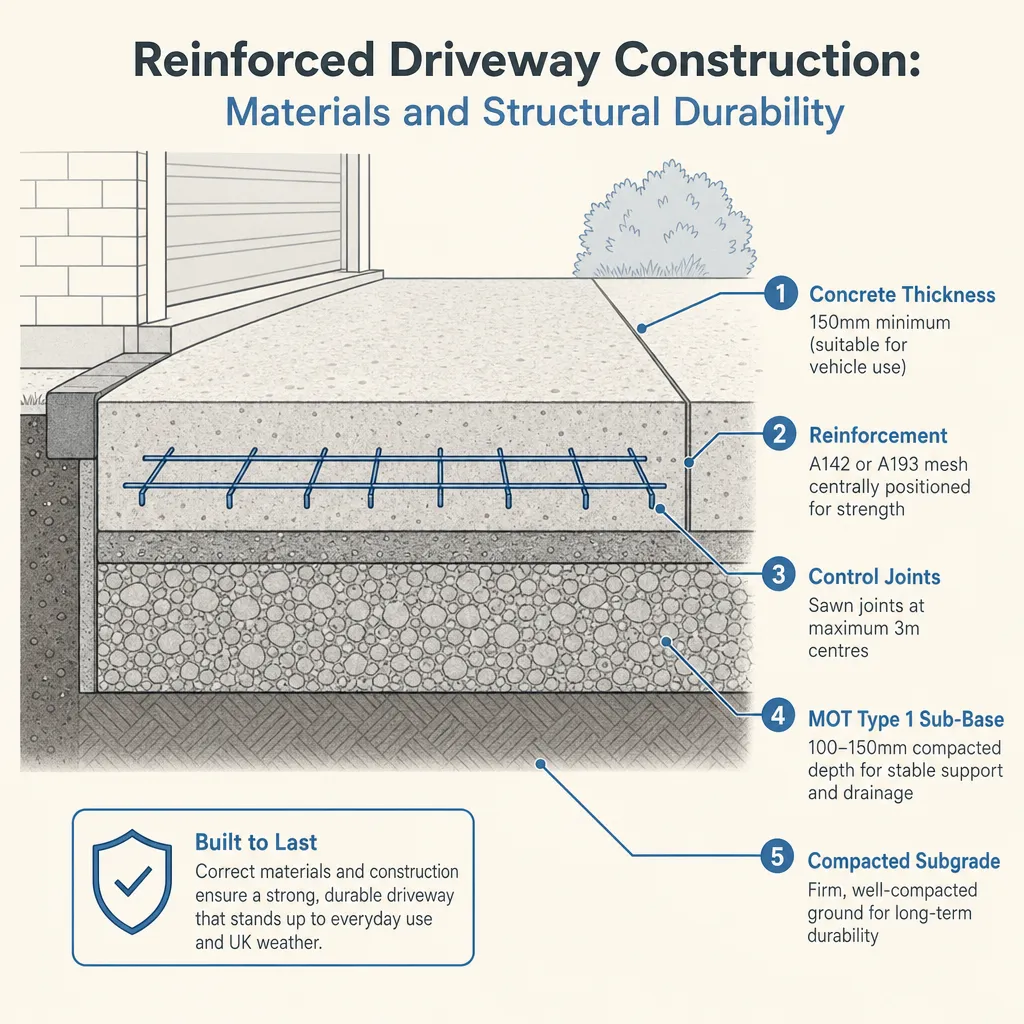
Reinforced Driveway Construction: Materials and Structural Durability
A domestic concrete driveway should be at least 100 mm thick — 150 mm where vans or heavier vehicles use it — on a compacted 100–150 mm MOT Type 1 sub-base, with A142 or A193 steel fabric mesh placed at mid-depth and expansion joints every 3–4 m.
 Improvement & Build
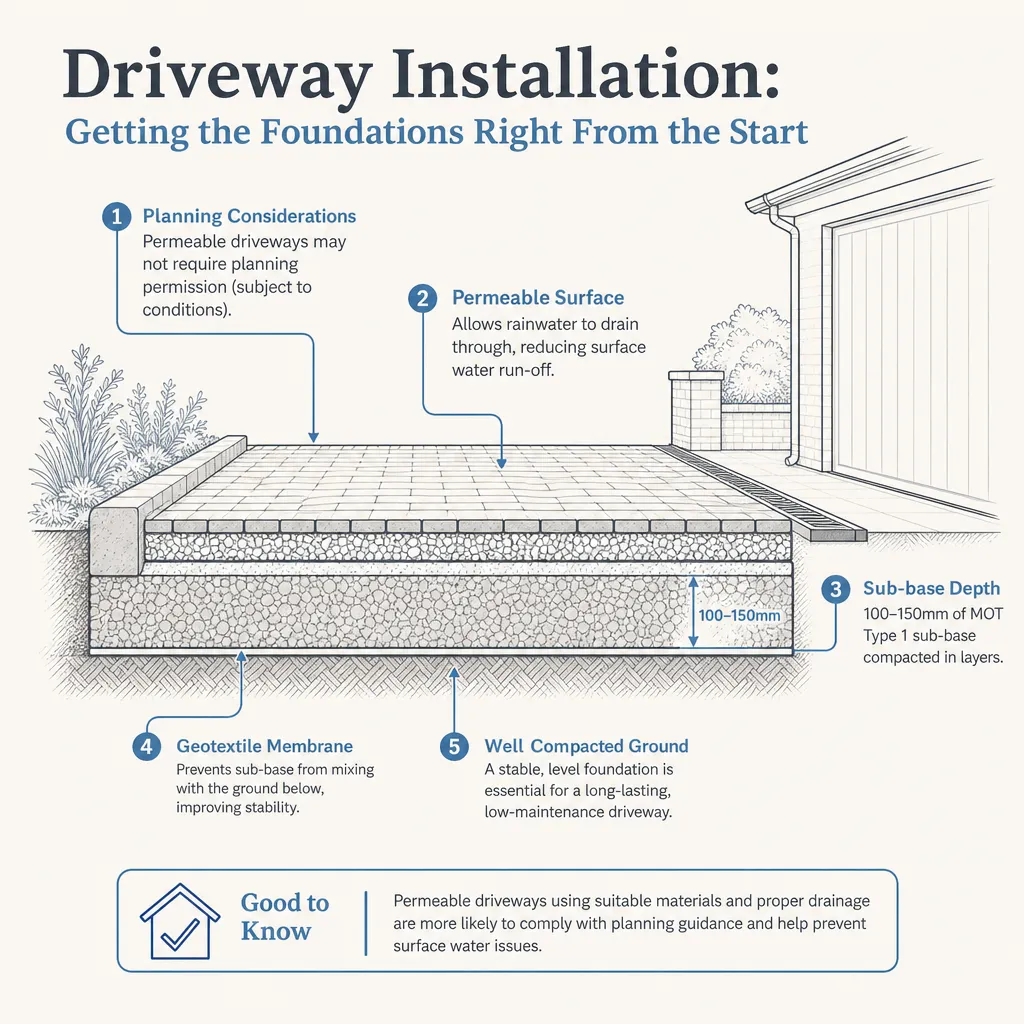
Driveway Installation: Getting the Foundations Right From the Start
A long-lasting driveway depends more on sub-base depth and drainage design than on the surface material chosen.
 Improvement & Build
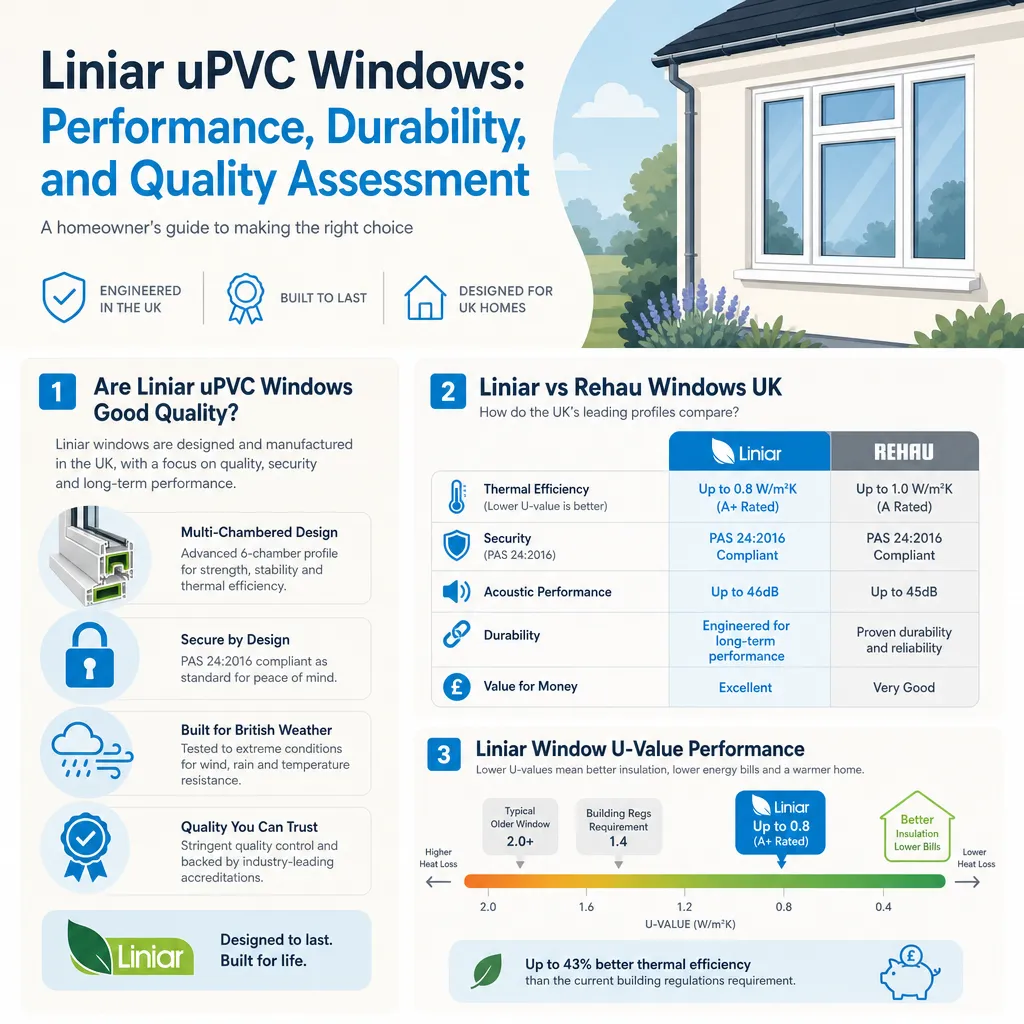
Liniar uPVC Windows: Performance, Durability, and Quality Assessment
Liniar uPVC window profiles are manufactured in the UK using multi-chambered, foamed frames.
 Improvement & Build
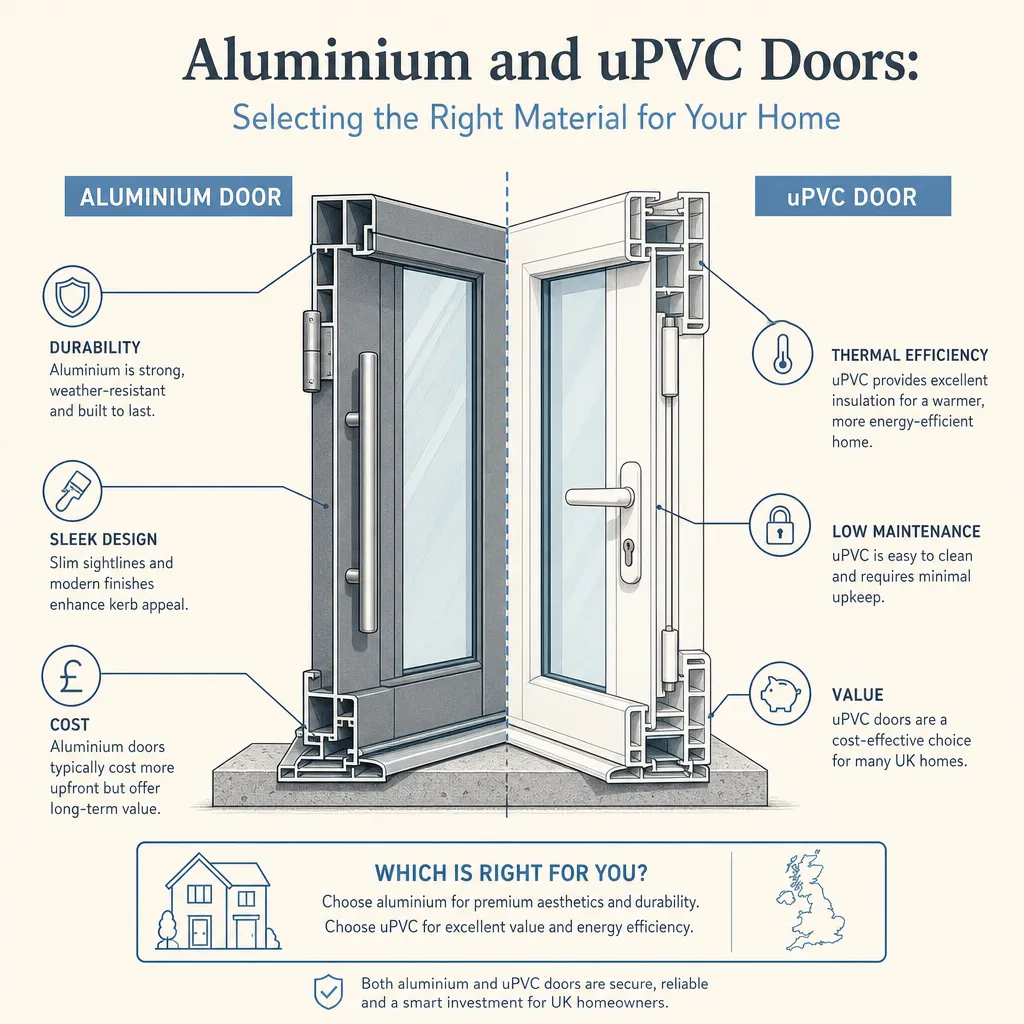
Aluminium and uPVC Doors: Selecting the Right Material for Your Home
uPVC doors are lower-cost and low-maintenance, making them a practical choice for most UK homes.
 Improvement & Build
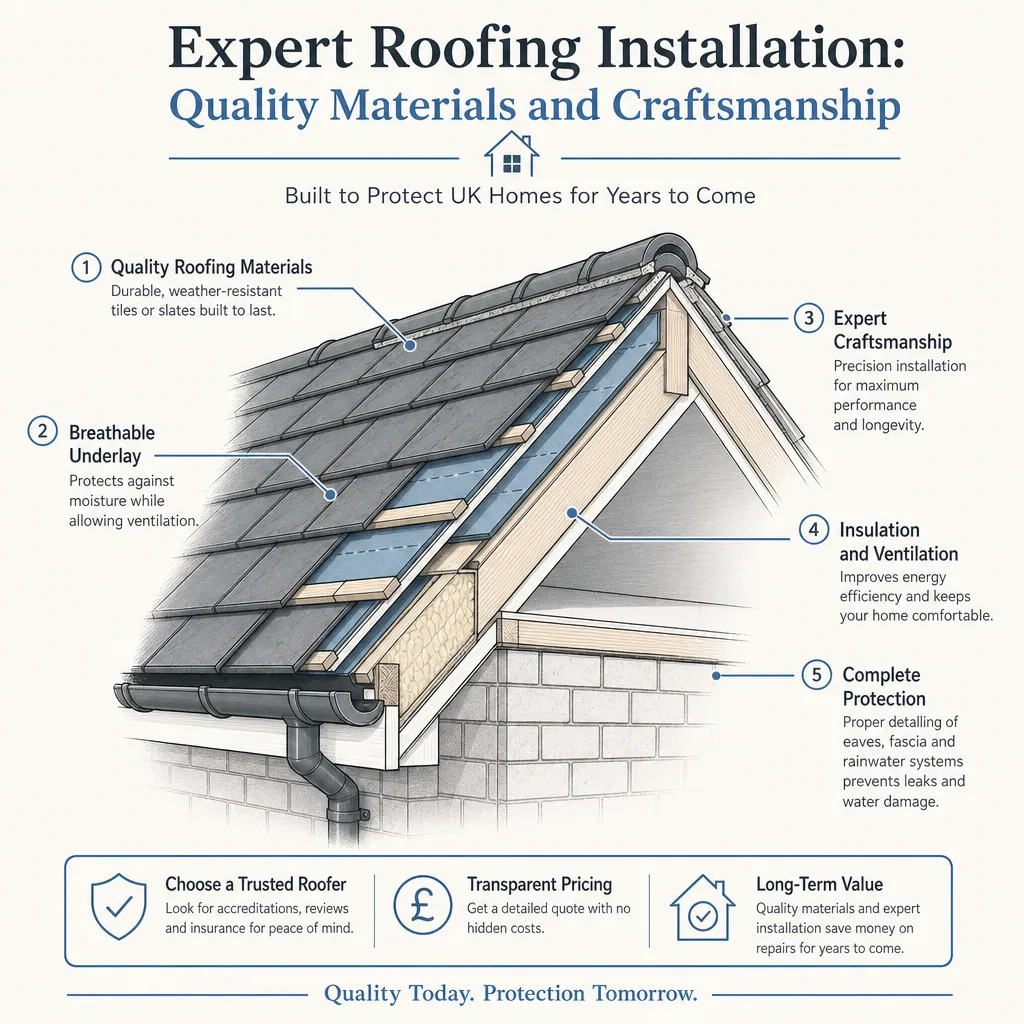
Expert Roofing Installation: Quality Materials and Craftsmanship
A quality roof installation depends on matching materials to your property type, hiring a suitably qualified roofer, and ensuring building regulations are met where required.