Thatched Roof Construction: Traditional Roofing Costs and Specialist Installation
By Housey · Last reviewed 25th of May 2026
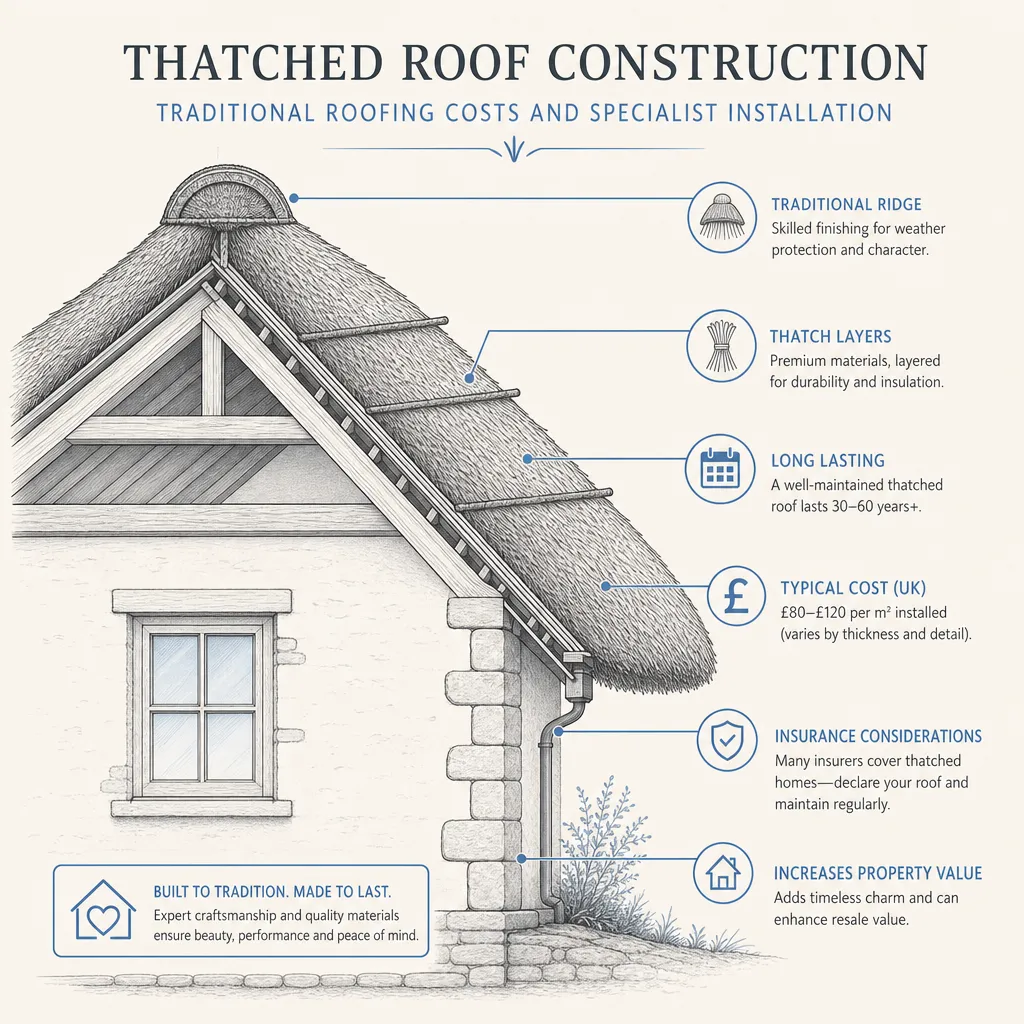
Thatched Roof Construction: Traditional Roofing Costs and Specialist Installation
Thatched roofing is one of the oldest building traditions in Britain, and around 60,000 properties in England still retain a living thatch. Questions about rethatching most commonly arise when a buyer takes on a heritage cottage, an existing thatch nears the end of its service life, or structural repairs reveal the condition of the underlying roof structure. The choices involved — material selection, specialist contractor, heritage consent, insurance arrangements, and fire safety measures — interact closely enough that skipping any one of them can prove costly.
Key points
- Water reed typically lasts 25–40 years; combed wheat reed 15–25 years; long straw 10–15 years depending on exposure and maintenance.
- A full rethatch is indicatively priced at £700–£1,200 per square metre depending on material and access; ridge-only replacement typically costs £3,000–£7,000 for an average cottage (Indicative UK costs, last reviewed 2026-05-25).
- Properties in conservation areas, and all listed buildings, require planning permission or Listed Building Consent before thatching work begins.
- Most specialist insurers require a fire-retardant membrane, chimney spark-arrestor, or both as conditions of cover on thatched properties.
- Thatchers should hold membership of a recognised trade body such as the National Society of Master Thatchers (NSMT).
Which thatching material is right for your property?
The three main materials used in UK thatching each have different lifespans, regional associations, and costs. Your choice may also be constrained by heritage designation or local planning requirements.
Material | Typical lifespan | Regional association | Best for | Relative cost |
|---|---|---|---|---|
Water reed (Phragmites australis) | 25–40 years | East Anglia, East Midlands | New thatches seeking long service life | Highest |
Combed wheat reed | 15–25 years | West Country (Devon, Somerset) | Traditional West Country properties; like-for-like replacement | Mid |
Long straw | 10–15 years | East Midlands, East Anglia (historic) | Vernacular buildings; sometimes specified on listed properties | Lowest material cost, higher labour |
Your local planning authority or conservation officer may specify which material is appropriate for a listed building or a property within a conservation area. Always confirm before ordering materials.
How much does a thatched roof cost?
Costs vary by material, roof area, pitch, accessibility, and region. The figures below are indicative for England; costs in London and the South East may be higher.
Indicative UK costs, last reviewed 2026-05-25:
- Full rethatch (water reed): £700–£1,200 per m²
- Full rethatch (combed wheat reed): £600–£1,000 per m²
- Full rethatch (long straw): £550–£950 per m²
- Ridge replacement only: £3,000–£7,000 for a typical cottage
- Patching and repairs: £500–£2,500 depending on extent
For a cottage with 80–120 m² of roof area, budget using the per-m² rates above plus scaffolding, structural preparation, and any fire-retardant membrane costs. Obtain at least three written quotes before committing.
Key cost drivers include:
- Roof pitch and access restrictions
- Whether existing battens and roof timbers need replacement
- Installation of a fire-retardant membrane
- Lead valley and hip details
- Regional material availability and contractor demand
Choosing a specialist thatcher
Thatching is a specialist craft with no statutory licensing, making professional membership and verifiable references more important than any formal certificate.
What to look for:
- Membership of the National Society of Master Thatchers (NSMT) or a comparable recognised body
- Public liability insurance of at least £2 million — ask to see the current certificate
- Specific experience with your material type and property age
- References from comparable projects completed within the last three years
- A written specification detailing material source, expected lifespan, and recommended maintenance schedule
What to ask before accepting a quote:
- What material and grade will be used, and what is the source?
- Will a fire-retardant membrane be installed, and if so, which product?
- What preparation work is included — stripping, batten replacement, structural checks?
- Who will carry out the work, and will subcontractors be used?
- What written guarantee is provided and on what terms?
- Is VAT included in the quoted price?
- What scaffolding arrangements are required, and who organises them?
- What maintenance schedule do you recommend after completion?
Planning permission, listed buildings, and conservation areas
Thatching work on most standard residential properties falls within permitted development and does not require planning permission. Important exceptions apply.
When consent is required:
- Listed buildings — any material alteration to a listed building's roof, including like-for-like rethatching, requires Listed Building Consent from your local planning authority under the Planning (Listed Buildings and Conservation Areas) Act 1990. Proceeding without consent is a criminal offence.
- Conservation areas — changing the material or character of a thatched roof in a conservation area may require planning permission, particularly where an Article 4 Direction applies. Check with your local planning authority before instructing a contractor.
- Change of thatching material — switching from long straw to water reed, or vice versa, on a listed building typically requires Listed Building Consent as it can alter the property's historic character.
Historic England publishes guidance on traditional building materials and is a useful first contact for heritage-designated properties.
Fire safety and insurance for thatched properties
Thatched roofs present a significantly heightened fire risk compared with conventional roofing materials. This directly affects both the construction specification and your insurance arrangements.
Key fire safety considerations:
- A fire-retardant underlay (such as ThatchBATT mineral-wool board or a comparable tested product) beneath the thatch reduces the risk of fire spreading through the substrate. Many specialist insurers now require this as a condition of cover.
- A spark-arrestor fitted to the chimney stack prevents burning embers from landing on the thatch surface.
- A lightning conductor is advisable for exposed rural properties.
- Open fires and solid-fuel stoves in thatched buildings carry additional risk. Flue systems should be installed and maintained by HETAS-registered engineers and chimneys swept at least annually.
Specialist thatched-property insurers include NFU Mutual, Towergate, and Hiscox, among others. Standard household insurers frequently exclude thatched roofs or impose significant restrictions. Confirm your insurer's requirements before finalising the specification, as a fire-retardant membrane installed retrospectively typically costs more than one fitted during the rethatch.
Important limitations
This article provides general information about thatched roof construction, costs, and fire safety. Planning permission requirements, Listed Building Consent rules, and insurance conditions vary significantly by property, local authority, heritage designation, and individual insurer. Cost figures are indicative and regional variation is significant. A qualified thatcher, your local conservation officer, and a specialist thatched-property insurer should each assess your specific situation before any work proceeds.
When to get professional help
Always use a specialist thatcher and a specialist insurer for thatched property works. Seek advice immediately if:
- The thatch is thinning noticeably at the ridge or eaves, pulling away from fixings, or showing signs of rot or collapse
- Any part of the roof structure has been affected by water ingress or vermin damage
- You have experienced a chimney fire or notice unusual heat or scorching near the chimney stack
- Your insurer has written to you about a condition of cover relating to the roof
- You are purchasing a thatched property and have not yet had a RICS Level 3 Building Survey
- You are uncertain whether your proposed works require Listed Building Consent or planning permission
What to ask a qualified professional
When instructing a thatcher or consulting a conservation officer, consider asking:
- What material is most appropriate for this property's heritage character and local planning requirements?
- Is a fire-retardant membrane required or recommended for this specification?
- Does this property require Listed Building Consent or planning permission for the proposed works?
- What is the realistic lifespan of the new thatch and what maintenance programme should I follow?
- Are there underlying structural or batten issues to resolve before rethatching begins?
- What chimney safety measures should accompany these roofing works?
How Housey can help
Housey connects homeowners with vetted specialist roofers with thatching experience. Submit your project details to receive quotes from experienced local contractors who understand material choice, heritage consent requirements, and insurer specifications.
Frequently asked questions
How long does a thatched roof last?
Lifespan depends on material, exposure, and maintenance. Water reed typically lasts 25–40 years, combed wheat reed 15–25 years, and long straw 10–15 years. Ridges wear faster and generally need replacing every 8–15 years regardless of the main material. Annual inspection and prompt repair of minor damage significantly extend the life of any thatch.
Does a thatched roof need planning permission?
Straightforward rethatching using the same material generally does not require planning permission. Listed buildings require Listed Building Consent for any roofing work, and properties in conservation areas or Article 4 Direction areas may need permission if the material or character is changing. Always confirm with your local planning authority before instructing a thatcher.
Is thatched roof insurance more expensive?
Yes, specialist thatched property insurance is typically significantly more expensive than standard home cover because of the higher fire risk and specialist repair costs. Many standard household insurers exclude thatched roofs entirely. Obtain specialist quotes — from providers such as NFU Mutual, Towergate, or Hiscox — alongside contractor quotes, as insurer requirements may affect your specification.
Can I convert a thatched roof to tiles?
Conversion is possible in principle but almost certainly requires planning permission. On a listed building, Listed Building Consent is required and is unlikely to be granted if the thatched character is significant to the heritage of the building. Specialist advice from a conservation architect or your local conservation officer is strongly recommended before considering any conversion.
Sources and further reading
- Planning (Listed Buildings and Conservation Areas) Act 1990 — legislation.gov.uk
- Traditional building materials guidance — Historic England
- National Society of Master Thatchers — NSMT
- Planning permission for householders — GOV.UK
- HETAS registered installers — HETAS
Useful next reads
 Improvement & Build
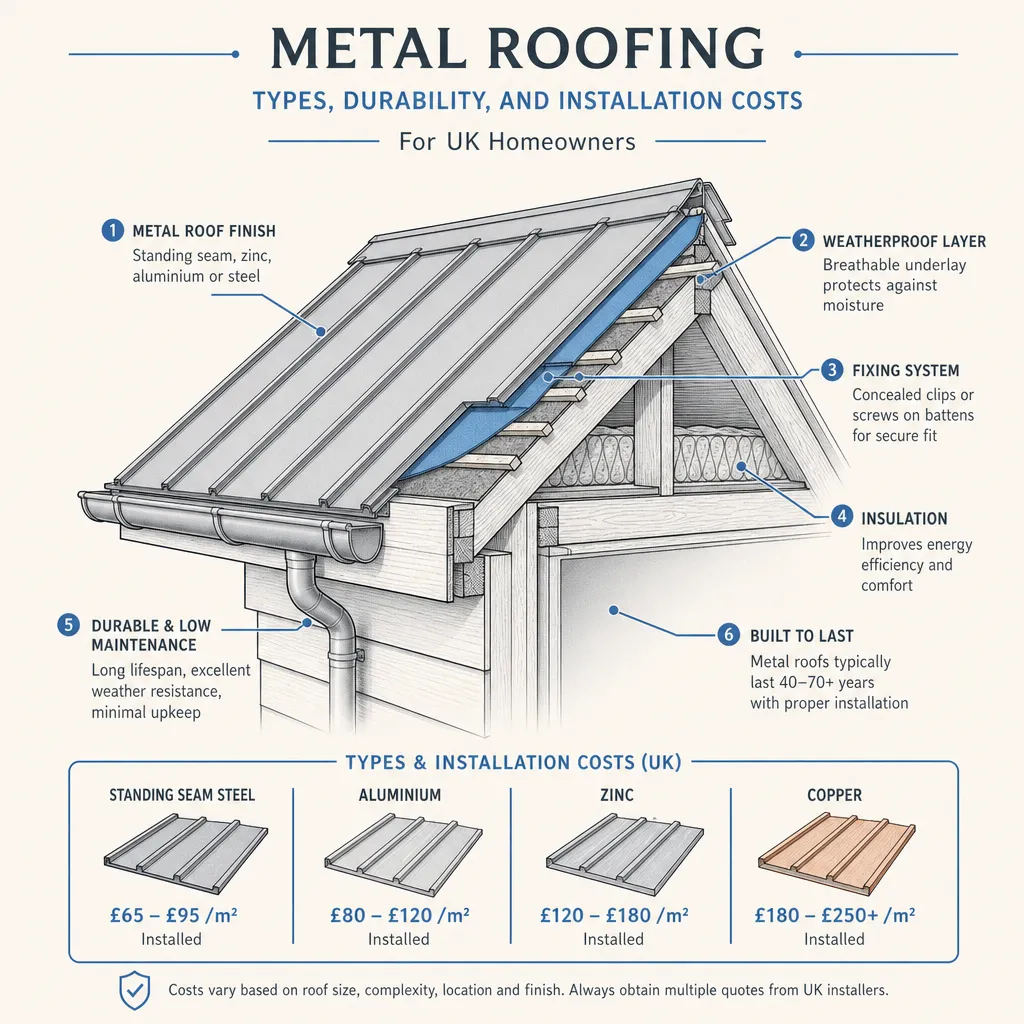
Metal Roofing: Types, Durability, and Installation Costs
Metal roofing in the UK includes standing seam, corrugated sheet, and metal tile systems in steel, aluminium, zinc, or copper.
 Improvement & Build
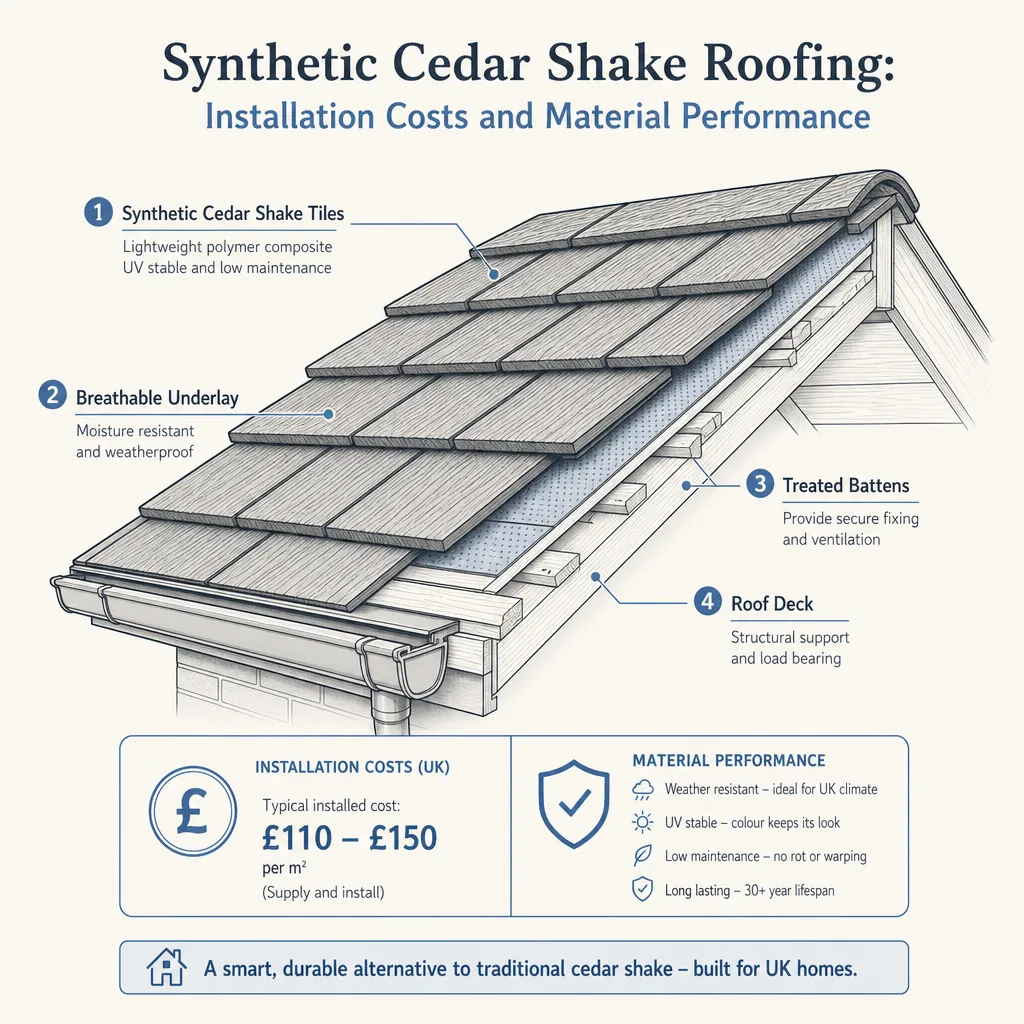
Synthetic Cedar Shake Roofing: Installation Costs and Material Performance
Synthetic cedar shake roofing uses polymer composite, rubber, or fibre-cement tiles to replicate the look of natural cedar wood shingles.
 Improvement & Build
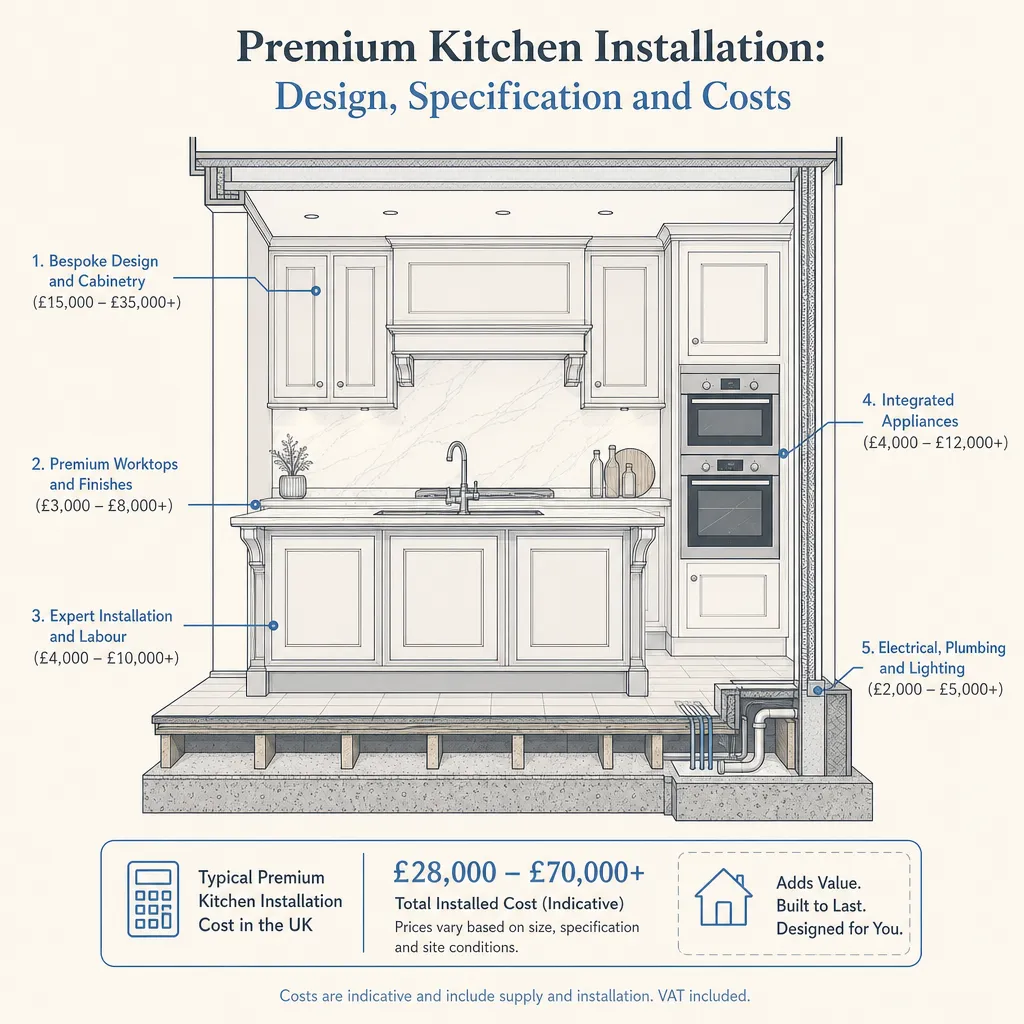
Premium Kitchen Installation: Design, Specification and Costs
A premium kitchen in the UK typically costs £20,000–£80,000 or more installed, depending on cabinetry specification, worktop material, appliance brands, and whether structural changes are needed.
 Improvement & Build
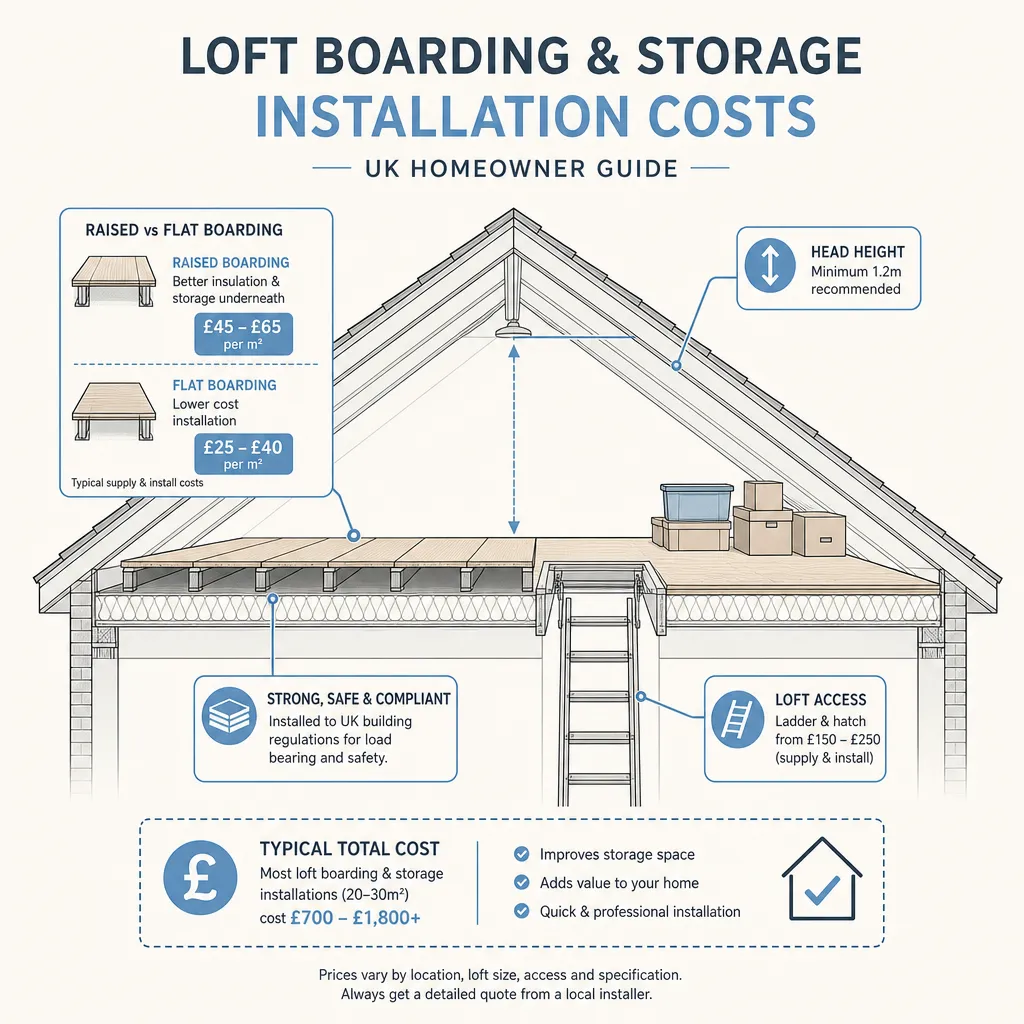
Loft Boarding and Storage Installation Costs
Basic loft boarding for an average semi-detached home costs £500–£1,500; a raised system that preserves insulation runs £800–£2,500.
 Improvement & Build
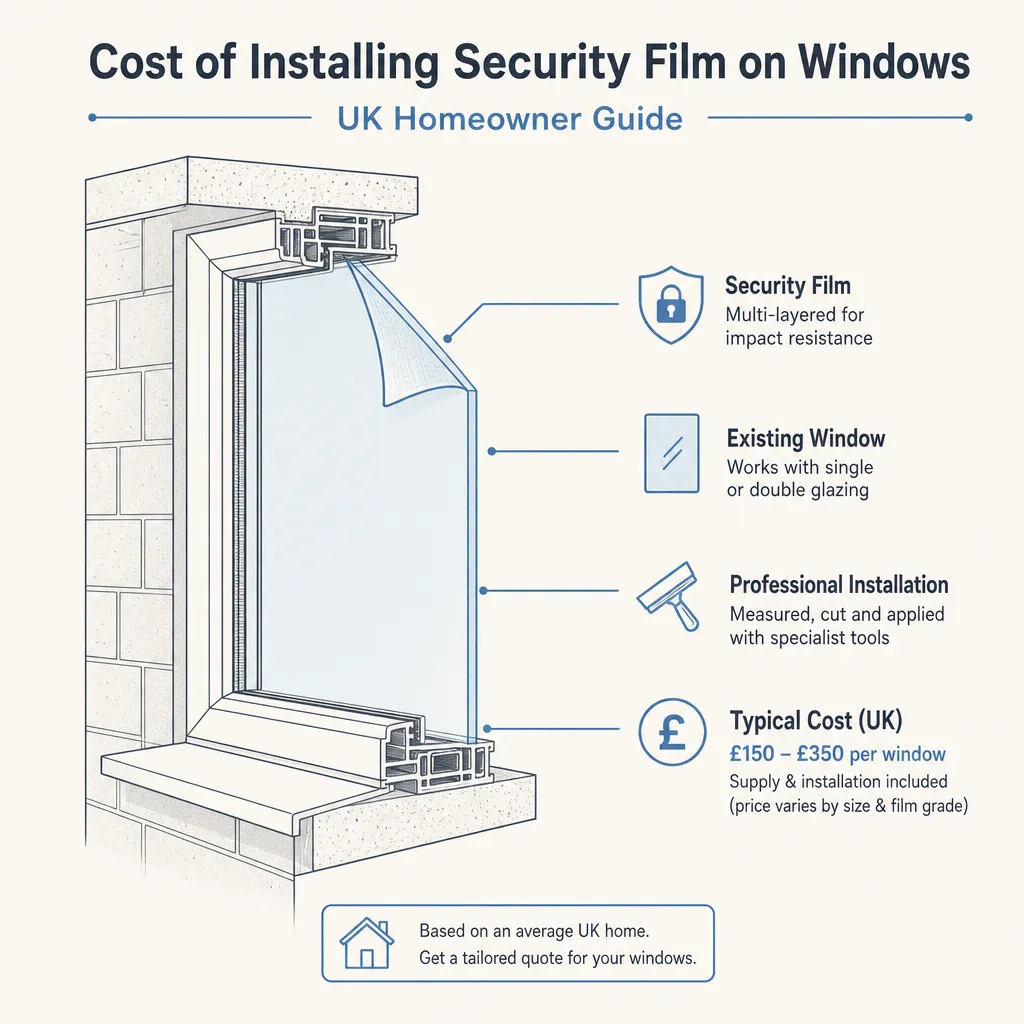
Cost of Installing Security Film on Windows
Security film for windows in the UK typically costs £25–£60 per m² for supply and professional installation, depending on film specification and window count.