The Scale of Energy Inefficiency: Why UK Homes Need Upgrading
By Housey · Last reviewed 18th of May 2026
The Scale of Energy Inefficiency: Why UK Homes Need Upgrading
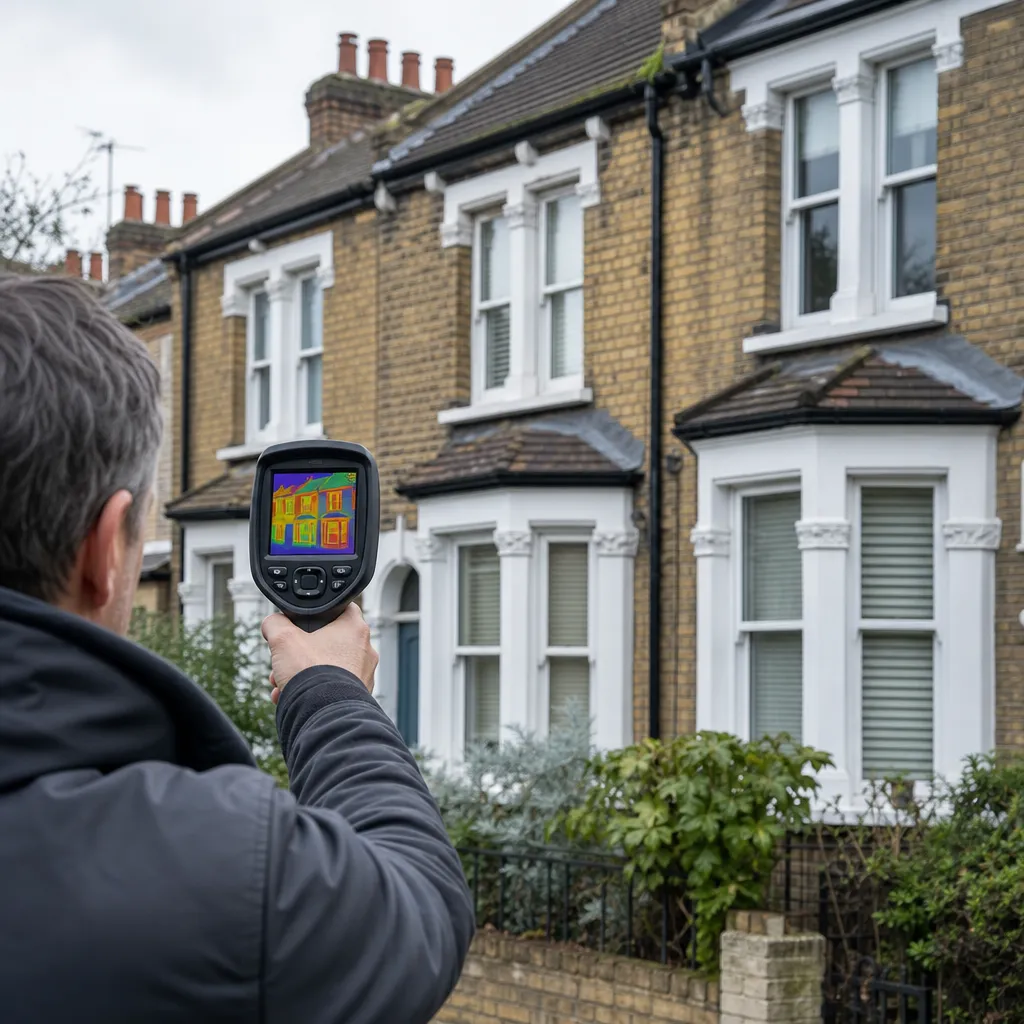
The UK has some of the oldest and least thermally efficient housing stock in Western Europe, with the majority of homes built before insulation standards became mandatory. For millions of households, the consequences are felt daily — through high energy bills, cold rooms, persistent condensation, and excessive carbon emissions. Quantifying the scale of the problem is the starting point for understanding what needs to change, and where your own home sits within the national picture.
Key points
- Around 19 million UK homes currently hold an EPC rating of D or below, according to data from the Department for Energy Security and Net Zero (DESNZ).
- Buildings account for approximately 17% of UK greenhouse gas emissions; domestic heating alone makes up around 14%.
- The UK Climate Change Committee's 2024 Progress Report found that progress on heating and building decarbonisation remains significantly off track.
- Minimum Energy Efficiency Standards (MEES) already require EPC E as a minimum for rented properties in England and Wales; a proposed tightening to EPC C was subject to legislative uncertainty as of publication.
- The average UK home loses approximately 35% of its heat through walls, 25% through the roof, 15% through the floor, and 10% through windows and doors (Energy Saving Trust estimates).
How does the UK housing stock compare?
The average UK home is over 60 years old. A significant proportion of the housing stock was built before the 1970s, when there were no mandatory insulation requirements. Victorian and Edwardian solid-brick terraces, 1930s semi-detached homes with unfilled cavity walls, post-war prefabricated construction, and 1960s system-built blocks all present challenging retrofit scenarios.
The English Housing Survey consistently shows that a large proportion of homes with cavity walls have never had them filled — meaning one of the cheapest and most impactful insulation measures available remains untaken in millions of properties. Loft insulation is more widespread but rarely reaches the recommended 270mm depth.
The EPC distribution across UK homes
Energy Performance Certificates rate homes from A (most efficient, score 92–100) to G (least efficient, score 1–20). Government data shows:
- Around 4% of UK homes hold an A or B rating.
- Approximately 28% hold a C rating.
- Around 40% — the largest single group — sit at D.
- The remaining 28–30% are rated E, F, or G.
Only EPC A and B homes are broadly in line with the thermal performance standards that allow a low-carbon heating system to run efficiently and cost-effectively.
What different EPC ratings mean in practice
EPC band | Typical energy cost | Common UK property types | Likely heat loss issues | Retrofit priority |
|---|---|---|---|---|
A–B | Low | New-builds post-2016, Passivhaus, post-retrofit | Minimal | Heating system upgrade if still gas |
C | Moderate | 1990s–2010s estate homes, post-insulation semis | Some heat loss at junctions and openings | Low-carbon heating transition |
D | Above average | 1970s–1990s cavity-wall homes, partial insulation | Cavity fill gaps, ageing boiler | Insulation top-up, boiler replacement |
E | High | Pre-1970 properties, unfilled cavities, older glazing | Significant through walls and roof | Priority: cavity or EWI/IWI insulation |
F–G | Very high | Pre-war solid wall, off-gas-grid rural homes | Poor or absent insulation, inefficient heating | Whole-house retrofit assessment required |
Indicative energy performance characteristics, last reviewed 2026-05-18. Actual bills vary by property size, location, and energy tariff.
A worked UK property scenario
Property: 1930s semi-detached house, East Midlands. EPC D. Cavity walls (unfilled). 100mm loft insulation. Gas combi boiler, 12 years old. Single-glazed bay window.
Starting energy cost: Approximately £1,800–£2,200 per year (indicative; varies with tariffs and household size).
Measure 1 — Cavity wall insulation: Estimated installed cost £500–£1,500. Potential annual saving £250–£400 (Energy Saving Trust estimate for a semi-detached home). May be partially or fully funded through the Great British Insulation Scheme or ECO4 for eligible households.
Measure 2 — Loft insulation top-up to 270mm: Estimated cost £300–£600. Potential annual saving £135–£200.
Measure 3 — Air source heat pump (after fabric improvements): Eligible for Boiler Upgrade Scheme grant of £7,500 — check current amount and eligibility at GOV.UK. Requires a heat loss calculation to BS EN 12831 and an MCS-accredited installer.
Projected outcome: After measures 1, 2, and 3, this property's EPC could improve from D to B or C depending on specification quality and the specific system chosen.
All figures indicative, last reviewed 2026-05-18. Obtain professional quotes and confirm current grant eligibility before proceeding.
Red flags: signs your home may be losing more heat than it should
- Rooms that remain cold even with the heating running at normal settings — check whether the issue is heat loss through the fabric or a distribution problem.
- Internal wall surfaces that feel significantly colder than the air temperature on a cold day — a clear sign of poor thermal performance through the building envelope.
- Persistent condensation on windows, particularly in ground-floor rooms — may indicate high moisture levels and inadequate thermal performance that needs professional investigation.
- Cold spots on internal corners and around window reveals — common in poorly insulated solid-wall properties and at thermal bridges.
- Energy bills that appear high relative to household size and floor area.
- An EPC certificate more than 10 years old — the rating may not reflect the current condition or changes to the assessment methodology.
- A boiler more than 15 years old, likely operating significantly below the 90%+ efficiency of modern A-rated condensing boilers.
Important limitations
This article provides general information about the state of UK housing energy performance. The correct retrofit sequence, insulation specification, and heating system choice for a specific property depend on its construction type, condition, existing moisture levels, ventilation, and occupancy pattern. Poorly specified retrofit can introduce damp, condensation, and structural problems. A qualified retrofit assessor working under PAS 2035 should assess your home before significant measures are installed.
What to ask a qualified professional
- What is my home's current heat loss rate, and how does it compare with what is needed for a heat pump to run efficiently?
- Which measures should be installed first, and in what sequence?
- Is my property's construction suitable for cavity wall insulation, or does it need solid-wall treatment (EWI or IWI)?
- How will ventilation be managed alongside insulation improvements?
- Am I eligible for ECO4, the Great British Insulation Scheme, or the Boiler Upgrade Scheme?
- Do I need a PAS 2035 retrofit coordinator to manage multiple measures?
- What are the risks of moisture problems, and how will they be prevented?
When to get professional help
Seek qualified input before any significant retrofit work — particularly when:
- You are planning more than one measure; combining improvements without professional coordination can cause moisture, ventilation, or comfort problems.
- Your home has solid walls, traditional lime mortar construction, or was built before 1919.
- You have existing damp, condensation, or mould — these must be diagnosed and resolved before insulation is added.
- You are considering a heat pump; an incorrectly sized system underperforms and increases running costs.
- You want access to government grant funding, which requires a qualified assessor and formal documentation.
- You are a landlord assessing obligations under the Minimum Energy Efficiency Standards.
How Housey can help
Housey connects homeowners with qualified professionals across the full retrofit journey. Speak to an energy-efficiency consultant for strategic advice, commission a retrofit assessment under PAS 2035, arrange a heat pump survey before choosing a heating system, request an insulation assessment to understand your options, book a thermographic survey to detect hidden heat loss, or arrange a solar survey to assess on-site generation potential.
Frequently asked questions
What does an EPC D rating mean for my home?
An EPC D rating means the property scores between 55 and 68 on the energy efficiency scale of 0 to 100. Around 40% of UK homes currently hold a D rating. It typically indicates some insulation is present but that there are significant opportunities to reduce energy use, bills, and carbon emissions through targeted improvement measures.
Am I legally required to upgrade my home's energy efficiency?
Owner-occupiers currently face no legal requirement to improve energy efficiency. Landlords in England and Wales must meet the Minimum Energy Efficiency Standards, currently requiring EPC E as a minimum for rented properties. Proposals to raise this to EPC C were consulted on but not enacted as of publication — check GOV.UK for the current legal position.
How long does a whole-house retrofit take?
This depends heavily on scope. A single measure such as cavity wall insulation can be installed in a day. A whole-house retrofit involving insulation, heating, and ventilation improvements requires careful sequencing and may take months to design and install, particularly for older properties following a PAS 2035-coordinated approach. Planning ahead significantly reduces disruption and risk.
What is PAS 2035 and why does it matter?
PAS 2035 is the UK publicly available specification for the retrofit of dwellings, published by BSI. It establishes a process for assessing a property, specifying measures in a safe and effective sequence, and checking installation quality. It is required for publicly funded schemes such as ECO4 and is widely considered best practice for whole-house retrofit programmes.
Sources and further reading
- English Housing Survey — DESNZ / GOV.UK
- Insulation and heat loss guidance for homeowners — Energy Saving Trust
- 2024 Progress Report to Parliament — Climate Change Committee
- Minimum Energy Efficiency Standards: landlord guidance — GOV.UK
- PAS 2035: retrofitting dwellings for improved energy efficiency — BSI Group
- Boiler Upgrade Scheme — GOV.UK
Useful next reads
 Energy & Retrofit
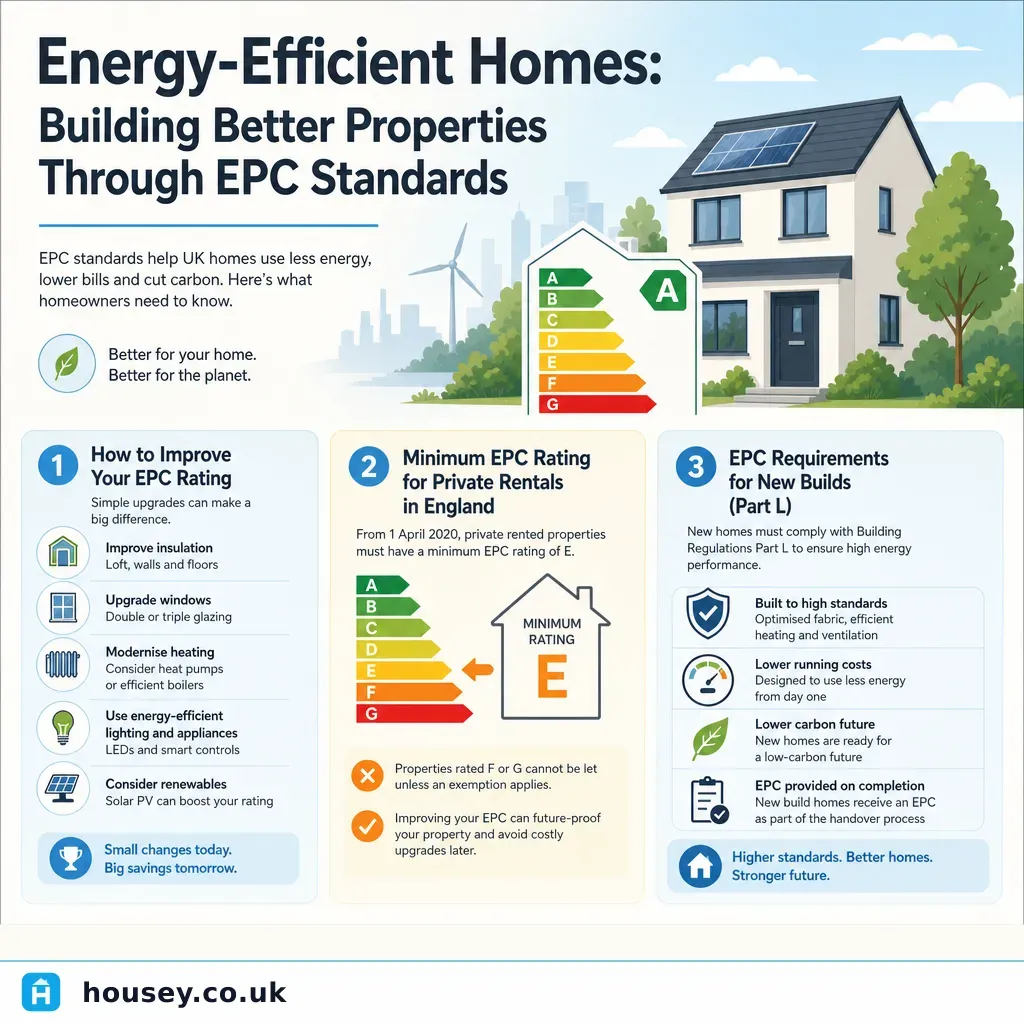
Energy-Efficient Homes: Building Better Properties Through EPC Standards
An EPC rates your home from A (most efficient) to G (least) using the Standard Assessment Procedure.
 Energy & Retrofit
The Rise of Green-Rated Homes: Energy Efficiency, Sustainability, and Long-Term Property Value
Homes with higher EPC ratings typically sell faster and can command a premium of up to 10% over equivalent lower-rated properties.
 Energy & Retrofit
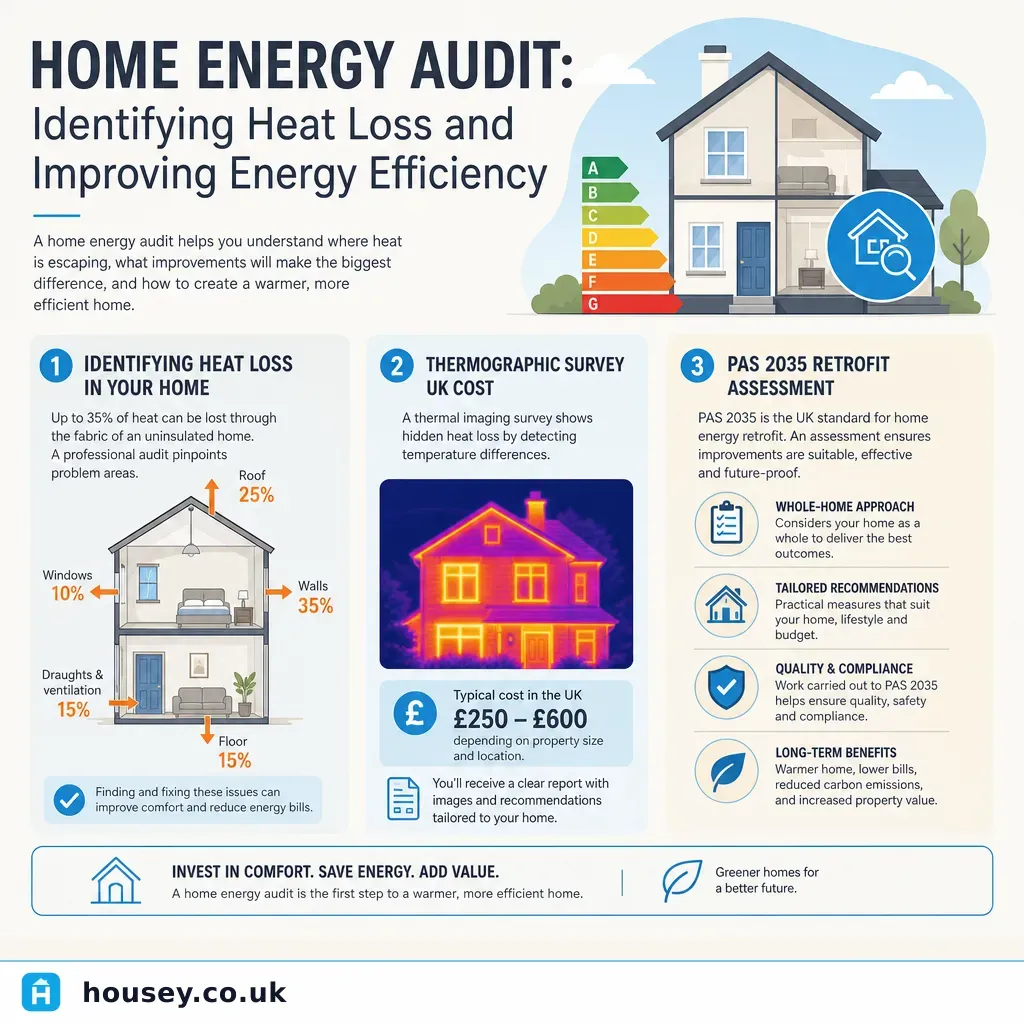
Home Energy Audit: Identifying Heat Loss and Improving Energy Efficiency
A home energy audit is a structured assessment of where your property loses heat and how efficiently it uses energy.
 Energy & Retrofit
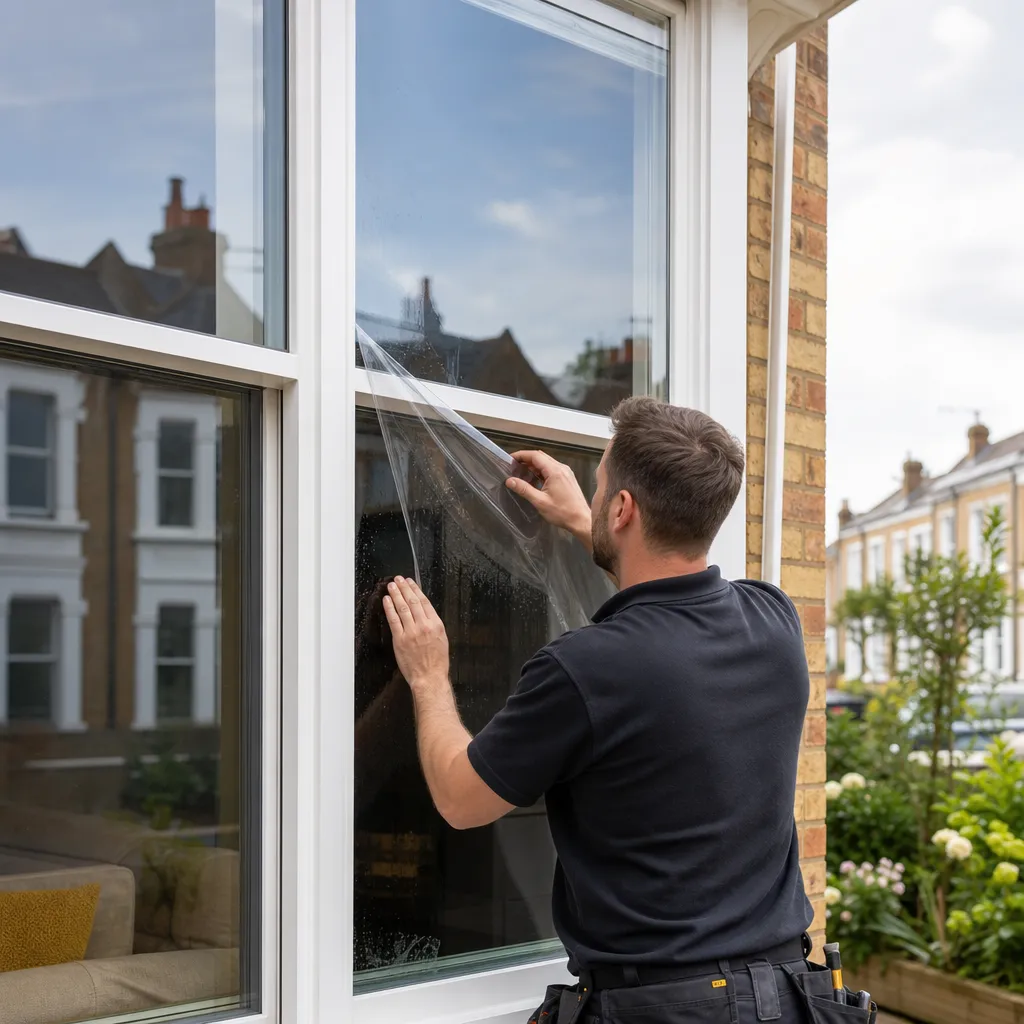
Solar window film: enhancing thermal performance and energy efficiency
Solar window film is a thin laminate applied to glass that reduces solar heat gain by 30–80% depending on specification.
 Energy & Retrofit
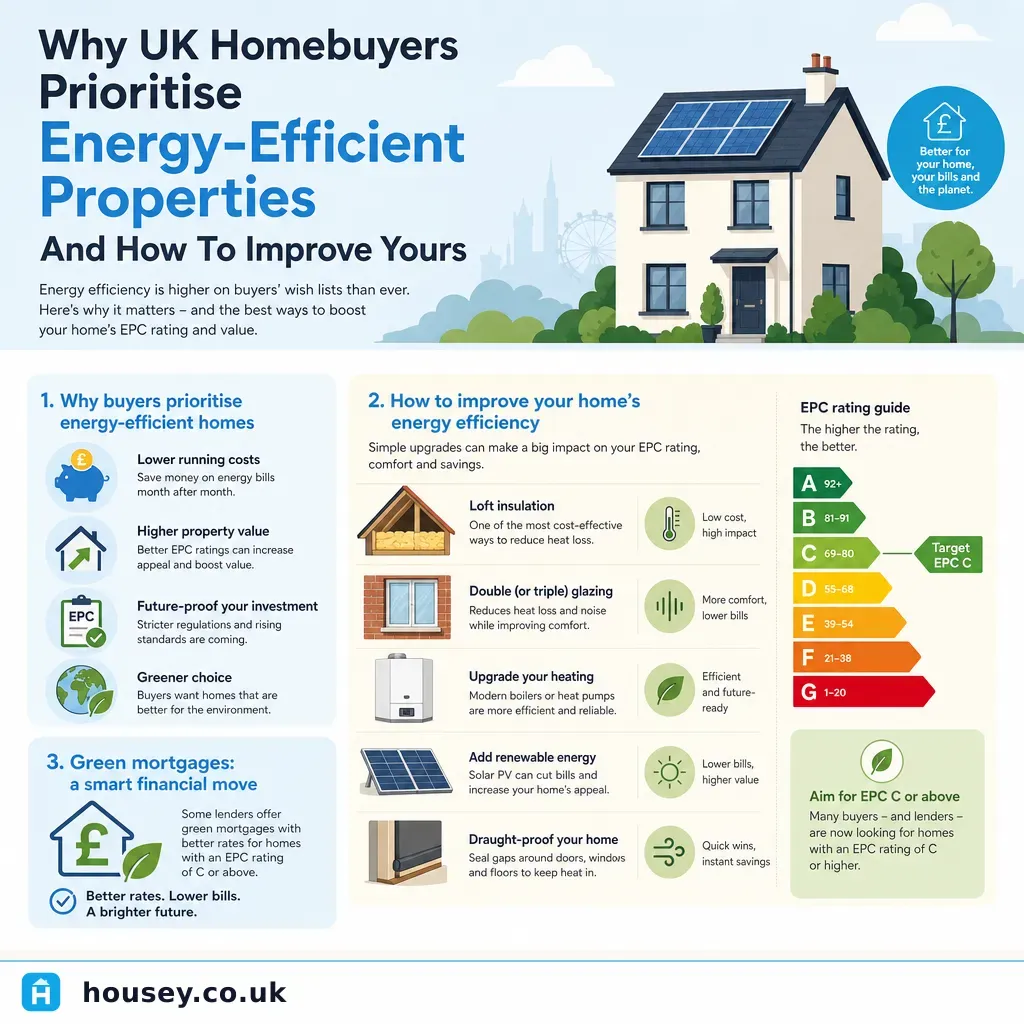
Why UK Homebuyers Prioritise Energy-Efficient Properties And How To Improve Yours
UK homebuyers increasingly favour energy-efficient properties because lower EPC ratings translate directly to higher heating bills — a significant concern after the 2021–23 energy crisis.