Thermal Pane Double-Glazed Windows: Energy Efficiency and Performance
By Housey · Last reviewed 25th of May 2026
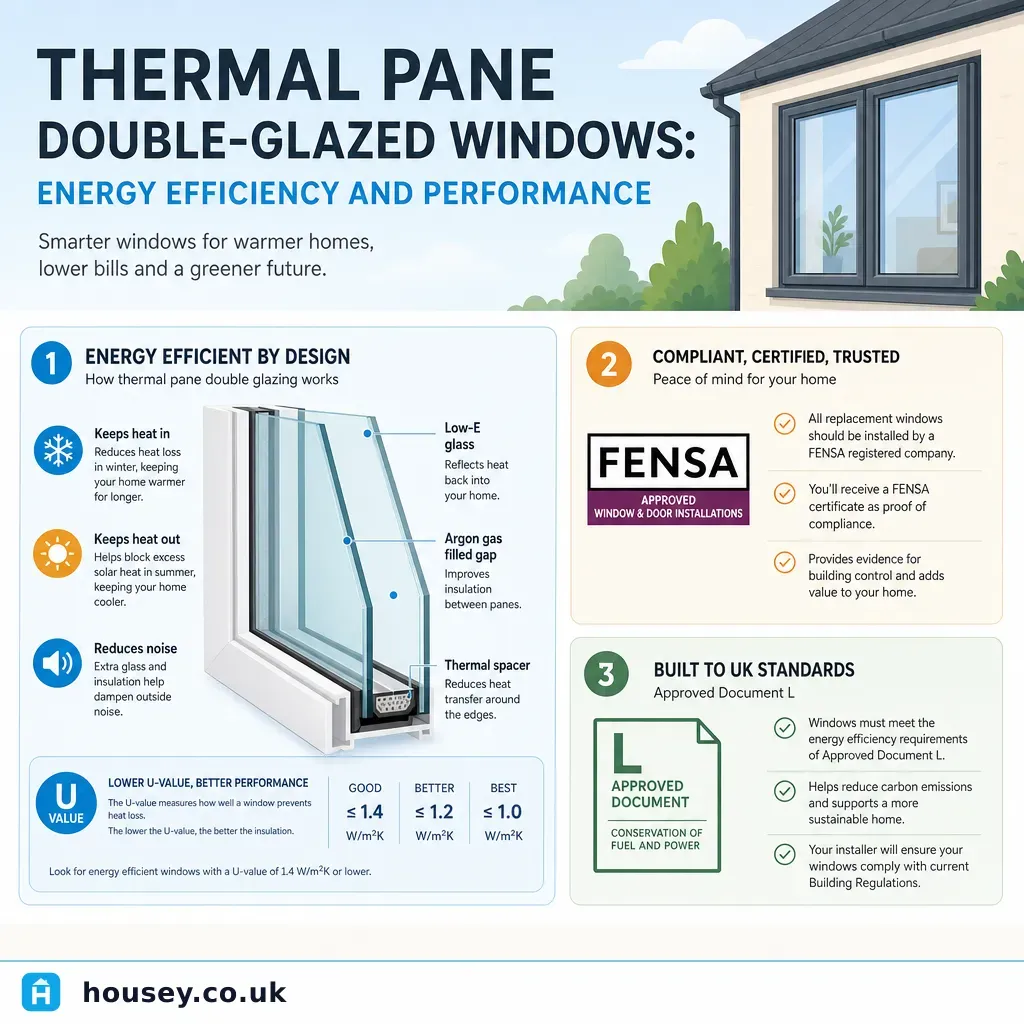
Thermal Pane Double-Glazed Windows: Energy Efficiency and Performance
Replacing windows is one of the more significant thermal upgrades available to a UK homeowner, but the range of products — from budget PVC units to high-specification aluminium frames with triple-glazed low-e glass — makes meaningful comparison difficult without some understanding of performance metrics. Questions about thermal glazing most commonly arise when existing units are misting or draughty, when a renovation is underway, or when a buyer, seller, or landlord wants to understand what the current standards require. Building Regulations set a legal minimum, but the market now offers products well above that floor.
Key points
- Approved Document L 2021 (England) requires replacement windows to achieve a whole-window U-value of ≤1.4 W/m²K or a minimum BFRC Band C energy rating.
- FENSA and Certass are Government-authorised competent person schemes: registered installers can self-certify compliance, removing the need for a local authority building control application.
- Low-emissivity (low-e) glass coatings reflect infrared heat back into the room and are standard on most modern high-performance units.
- Argon gas fill between panes reduces convective heat loss; krypton is used where a narrower cavity is needed, such as in heritage or slim-frame settings.
- Scotland, Wales, and Northern Ireland have their own Building Regulations with different threshold values — check the relevant national guidance if your property is outside England.
What makes a window thermally efficient?
Thermal performance is determined by several interacting components.
The glass unit:
- Number of panes: Double glazing uses two panes; triple glazing adds a third, typically achieving whole-window U-values of 0.6–1.0 W/m²K.
- Low-e coating: A microscopically thin metallic coating on one glass surface reflects long-wave infrared radiation back into the room, significantly reducing radiated heat loss. Most modern units include a soft- or hard-coat low-e layer.
- Glass-to-glass spacing: A cavity width of 16–20 mm is generally optimal for argon-filled units.
The gas fill: Argon is approximately 34% less thermally conductive than air and is now standard in most double-glazed units. Krypton is more expensive but allows narrower cavities where space is restricted.
The spacer bar: The spacer bar separating the two panes creates a cold bridge at the unit edge. Warm-edge spacers made from plastic or composite materials reduce this bridging effect and help prevent edge condensation.
The frame: PVC frames offer good thermal performance at relatively low cost. Timber frames can perform comparably when well-maintained. Aluminium frames are thermally poor unless fitted with a thermal break.
Building Regulations requirements for replacement windows in England
Replacing windows in an existing dwelling is notifiable building work under Part L of the Building Regulations. Approved Document L 2021 (in effect from 15 June 2022) sets the following minimum standards:
- Whole-window U-value of ≤1.4 W/m²K, or
- BFRC window energy rating of Band C or better
Compliance must be demonstrated by either:
- A FENSA- or Certass-registered installer who self-certifies compliance and issues a certificate, or
- Local authority building control notification, inspection, and completion certificate
If you are selling, buyers' solicitors will request the FENSA, Certass, or building control certificate. Missing certification can delay exchange and may require a retrospective regularisation application.
Exceptions and special cases:
- Like-for-like replacement of a failed sealed unit within an existing sound frame is generally not notifiable.
- Listed buildings require Listed Building Consent before window replacement; the conservation officer may restrict the specification.
- Conservation area properties may require planning permission if the fenestration character is changing.
Glazing specifications compared
Specification | Typical whole-window U-value | BFRC rating | Best for | Cost vs standard |
|---|---|---|---|---|
Standard double glazing (air-filled, no low-e) | 2.8–3.0 W/m²K | E–D | Budget replacement only; does not meet Part L | Baseline |
Argon fill + low-e coating | 1.2–1.6 W/m²K | C–A | Most residential replacements; standard Part L compliance | Low premium |
Argon + warm-edge spacer + enhanced low-e | 1.0–1.4 W/m²K | B–A+ | Higher-spec retrofit; exceeds Part L minimum | Moderate premium |
Triple glazing (argon/krypton, warm edge, low-e) | 0.6–1.0 W/m²K | A–A++ | Passivhaus; exposed elevations; high-specification new build | 20–40% more than double glazing |
Secondary glazing (internal added pane) | 1.8–2.4 W/m²K | N/A | Listed buildings where replacement frames are restricted | Variable |
U-values are whole-window values including frame. Figures are indicative — actual performance depends on manufacturer test data to EN ISO 10077.
Choosing the right glazing: a decision guide
- Choose standard argon/low-e double glazing if you are replacing failed sealed units in a sound existing frame and need cost-effective Part L compliance.
- Choose high-specification double glazing (warm-edge, enhanced low-e) if you are replacing windows as part of a broader energy retrofit and want to maximise heat retention without the full cost premium of triple glazing.
- Choose triple glazing if you are building to Passivhaus or near-Passivhaus standard, or have a particularly exposed elevation with high heat loss.
- Choose secondary glazing if your property is listed or in a conservation area and the planning authority requires original frames to be retained.
- Always ask your installer for the declared whole-window U-value to EN ISO 10077 and the BFRC label — not just the centre-pane U-value — before committing to a product.
Homeowner checklist: before and after installation
Before installation:
After installation:
When to get professional help
Most double glazing installation is straightforward, but seek further advice if:
- Your property is listed or in a conservation area — a heritage-experienced architect or conservation officer should advise on acceptable specifications before you instruct an installer
- Timber single-glazed frames of historic interest are involved and a specialist joinery restorer may be more appropriate than a standard replacement installer
- Condensation appears within new sealed units during the guarantee period — contact the installer before the guarantee lapses
- A quote references only the centre-pane U-value rather than the whole-window U-value — ask for clarification or seek an alternative supplier
How Housey can help
Housey connects homeowners with vetted FENSA- and Certass-registered window and door installers who can confirm Part L compliance and provide full specification details. Submit your requirements to compare quotes side by side.
Frequently asked questions
What is the difference between centre-pane U-value and whole-window U-value?
The centre-pane U-value measures heat flow through the glass only, ignoring the frame and spacer bar. The whole-window U-value accounts for all components and is the figure used for Building Regulations compliance. For argon/low-e units, the centre-pane value is typically around 1.0 W/m²K, while the whole-window value is usually 1.2–1.6 W/m²K. Always compare whole-window values when assessing products.
Do I need planning permission to replace windows?
For most properties in England, replacing windows is permitted development and does not require planning permission. Exceptions include listed buildings (Listed Building Consent required), properties subject to Article 4 Directions, and some conservation area situations where the fenestration character is changing. Always check with your local planning authority if there is any doubt before instructing an installer.
Is triple glazing worth the extra cost in the UK?
For most UK homes, high-specification double glazing delivers around 80–90% of the thermal benefit of triple glazing at lower cost. Triple glazing is most cost-effective in very exposed locations, Passivhaus schemes, or new-build projects where the structure already accommodates the additional weight. An energy assessor can model the likely payback for your specific property and orientation.
What VAT rate applies to double glazing installation?
The reduced rate of 5% VAT applies to installation of energy-saving materials — including double glazing — in qualifying residential dwellings under HMRC's guidance on energy-saving materials (VAT Notice 708/6). The standard 20% rate may apply in some new-build or commercial contexts. Ask your installer to confirm the applicable rate on the written quote.
Sources and further reading
- Approved Document L: Conservation of fuel and power — GOV.UK
- FENSA: competent person scheme for replacement glazing — FENSA
- British Fenestration Rating Council: window energy ratings — BFRC
- Energy Saving Trust: double glazing advice — Energy Saving Trust
- VAT Notice 708/6: energy-saving materials — HMRC / GOV.UK
Useful next reads
 Improvement & Build
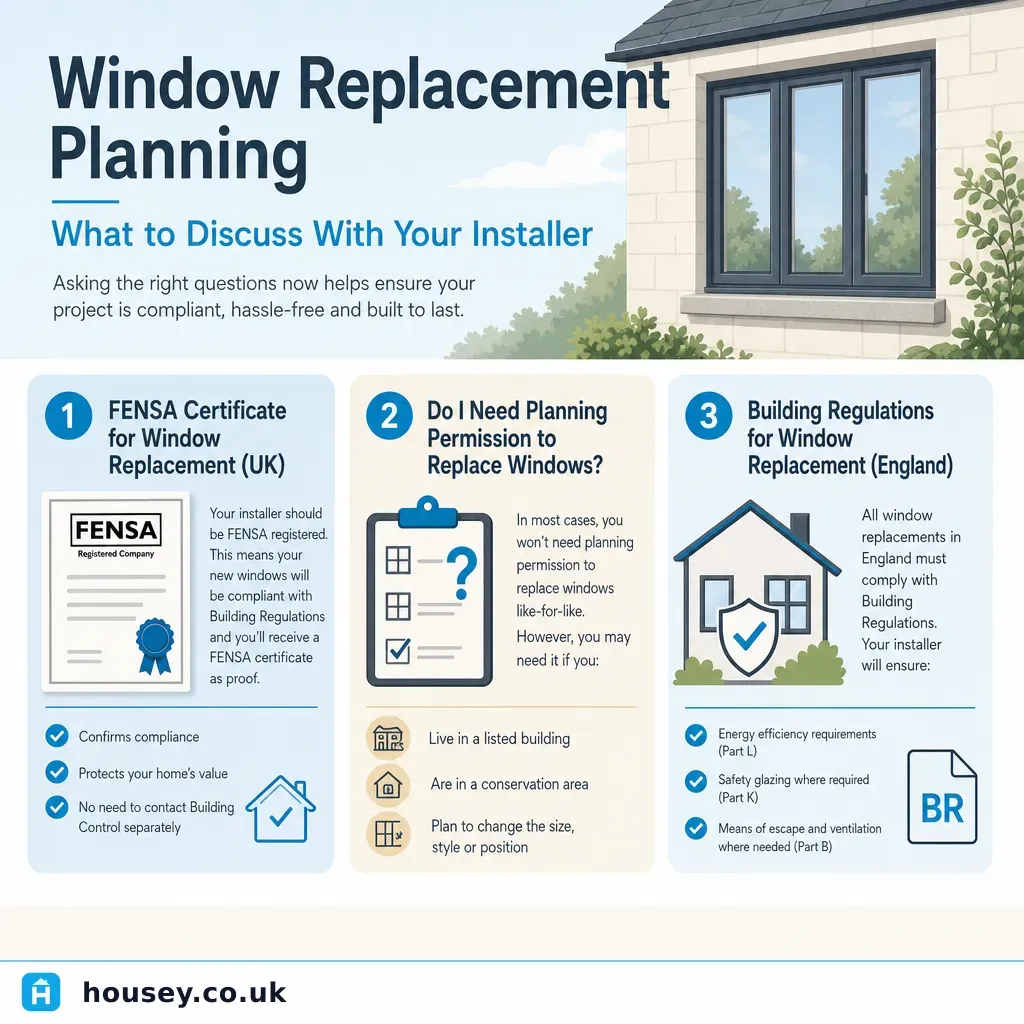
Window Replacement Planning: What to Discuss With Your Installer
Most window replacements in England fall under permitted development rights and do not require planning permission, but they must comply with Building Regulations Part L and Part K.
 Improvement & Build
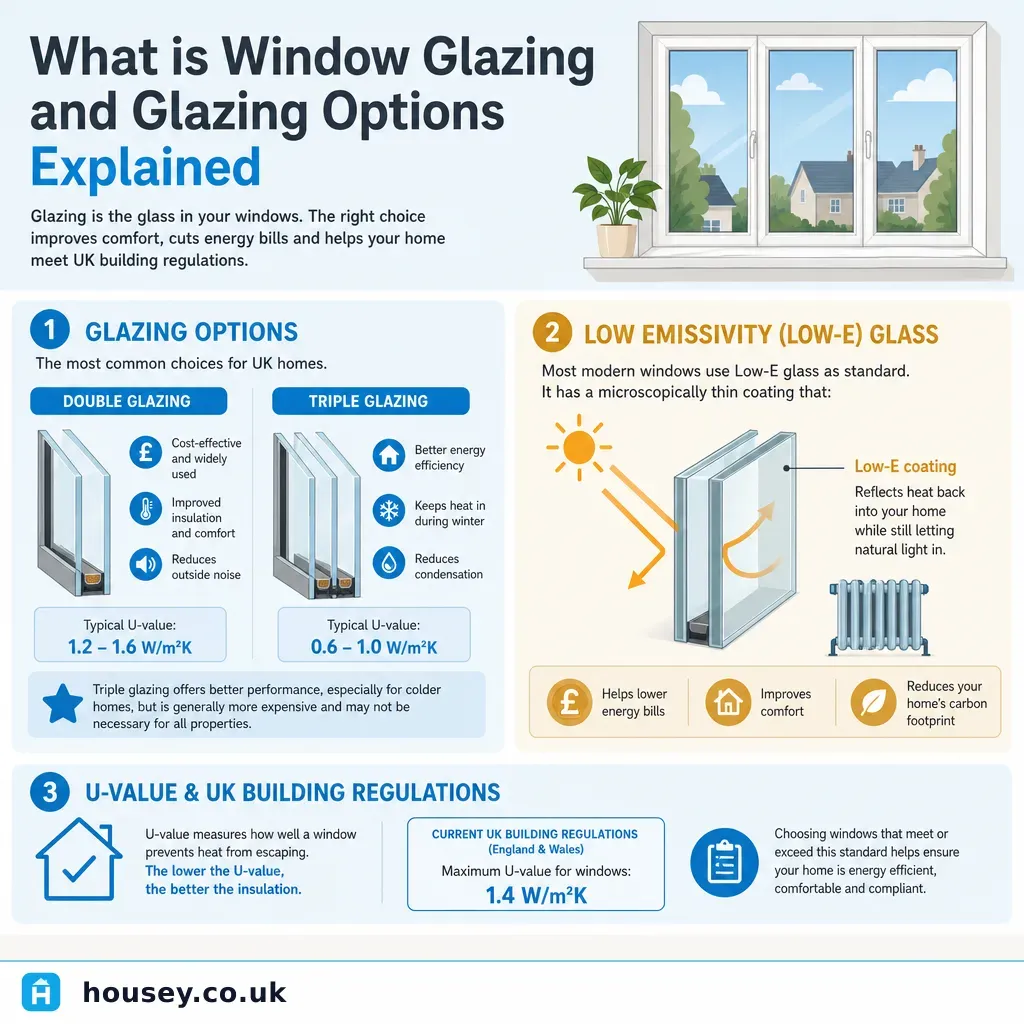
What is window glazing and glazing options explained
Window glazing refers to the sealed glass unit fitted within a window frame.
 Improvement & Build
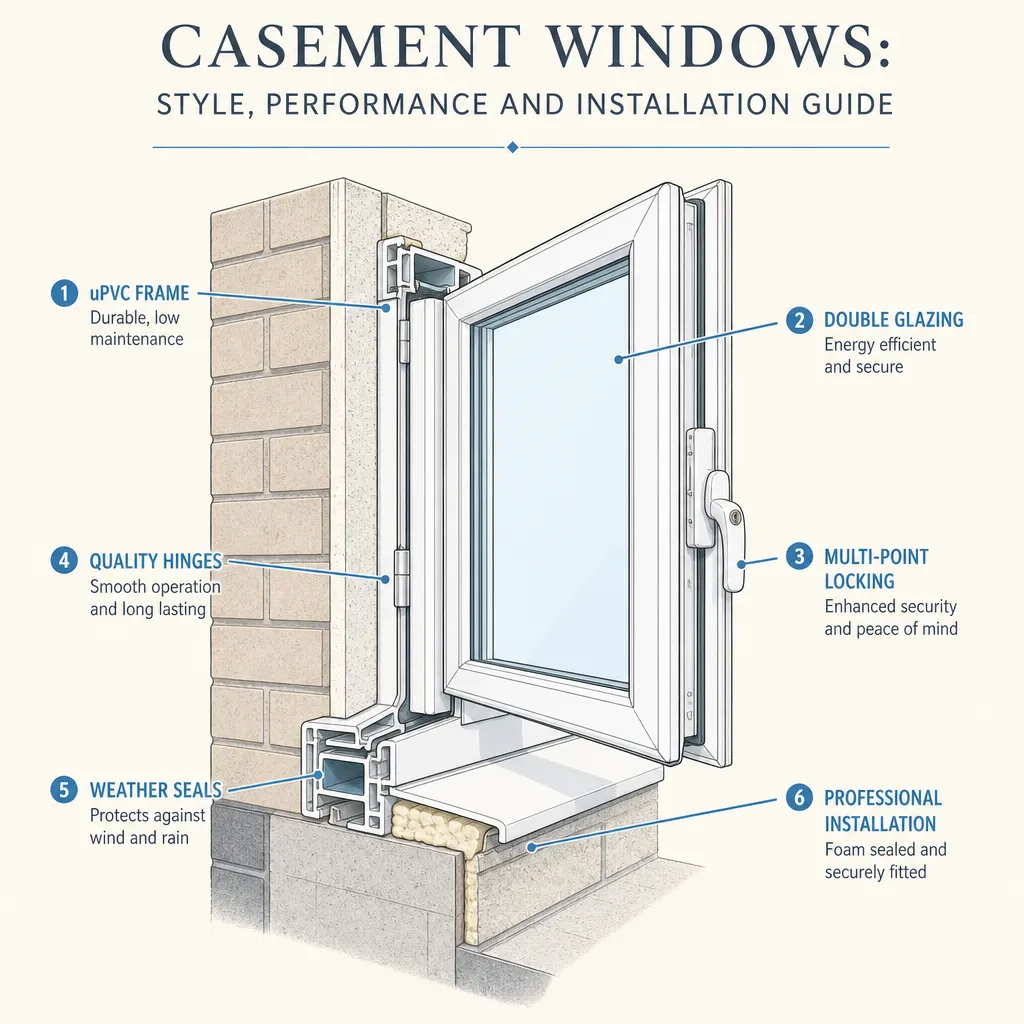
Casement Windows: Style, Performance and Installation Guide
Casement windows are hinged on one side and open outward, making them the most widely fitted window type in UK homes.
 Improvement & Build
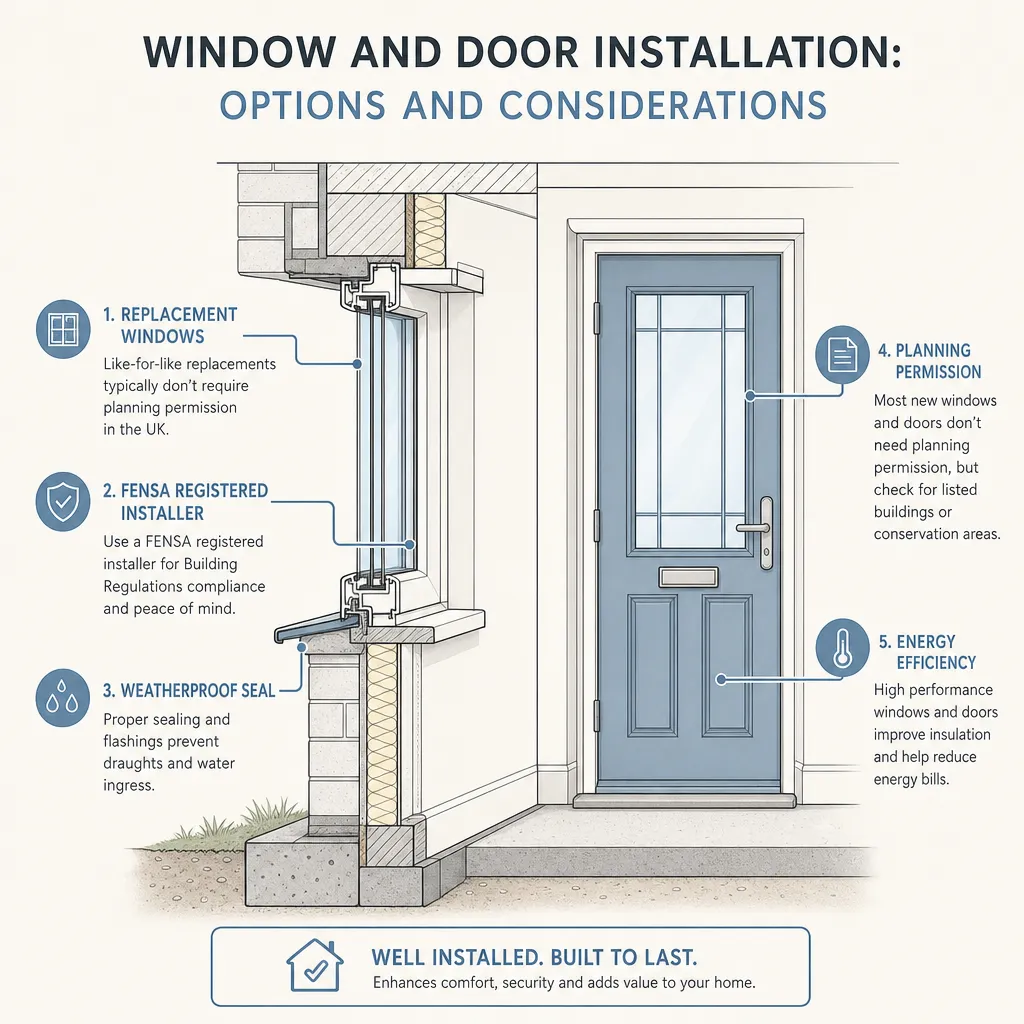
Window and Door Installation: Options and Considerations
Replacing windows and external doors in the UK requires compliance with Building Regulations Part L (thermal performance) and Part K (safety glazing).
 Improvement & Build
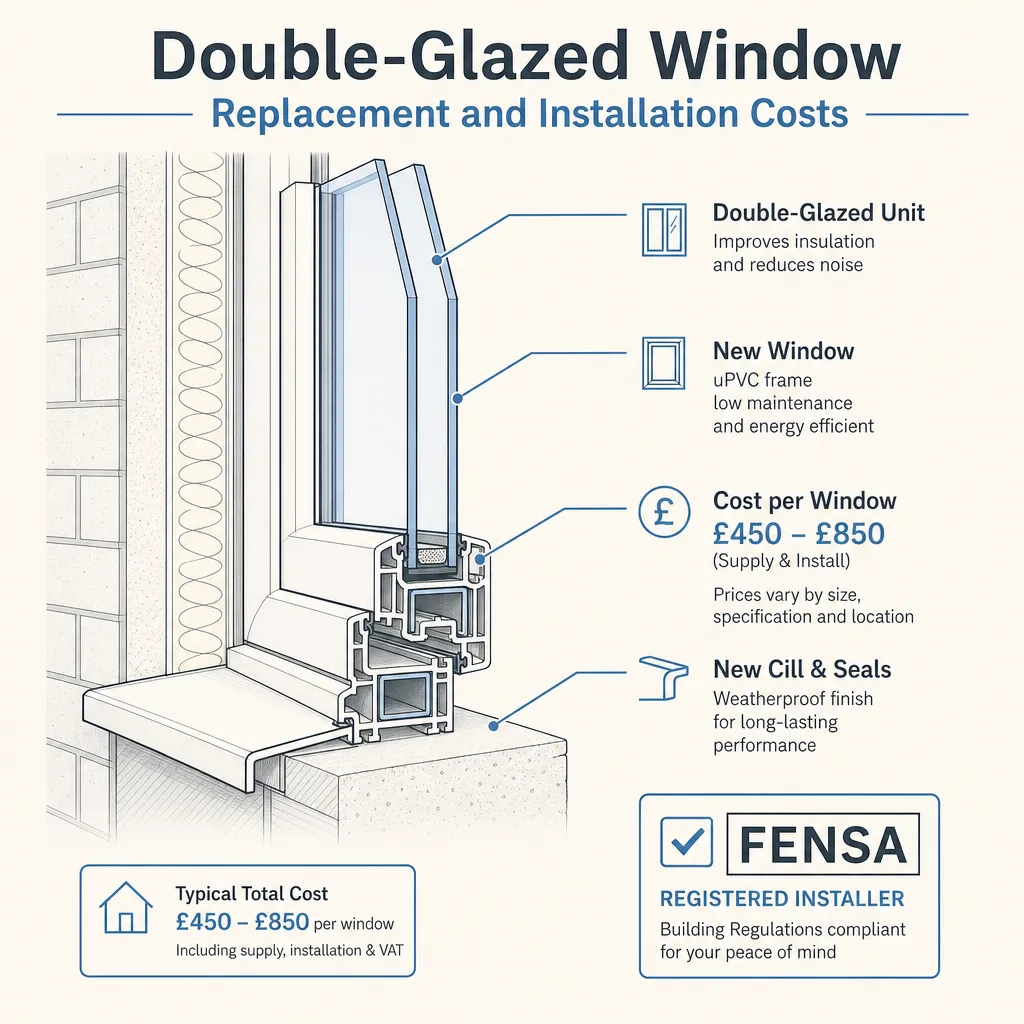
Double-Glazed Window Replacement and Installation Costs
Replacing double-glazed windows in a typical UK home costs roughly £300–£600 per uPVC casement window installed, rising to £500–£1,200 for timber and £400–£800 for aluminium.