Thermowood External Cladding Installation Costs
By Housey · Last reviewed 11th of May 2026
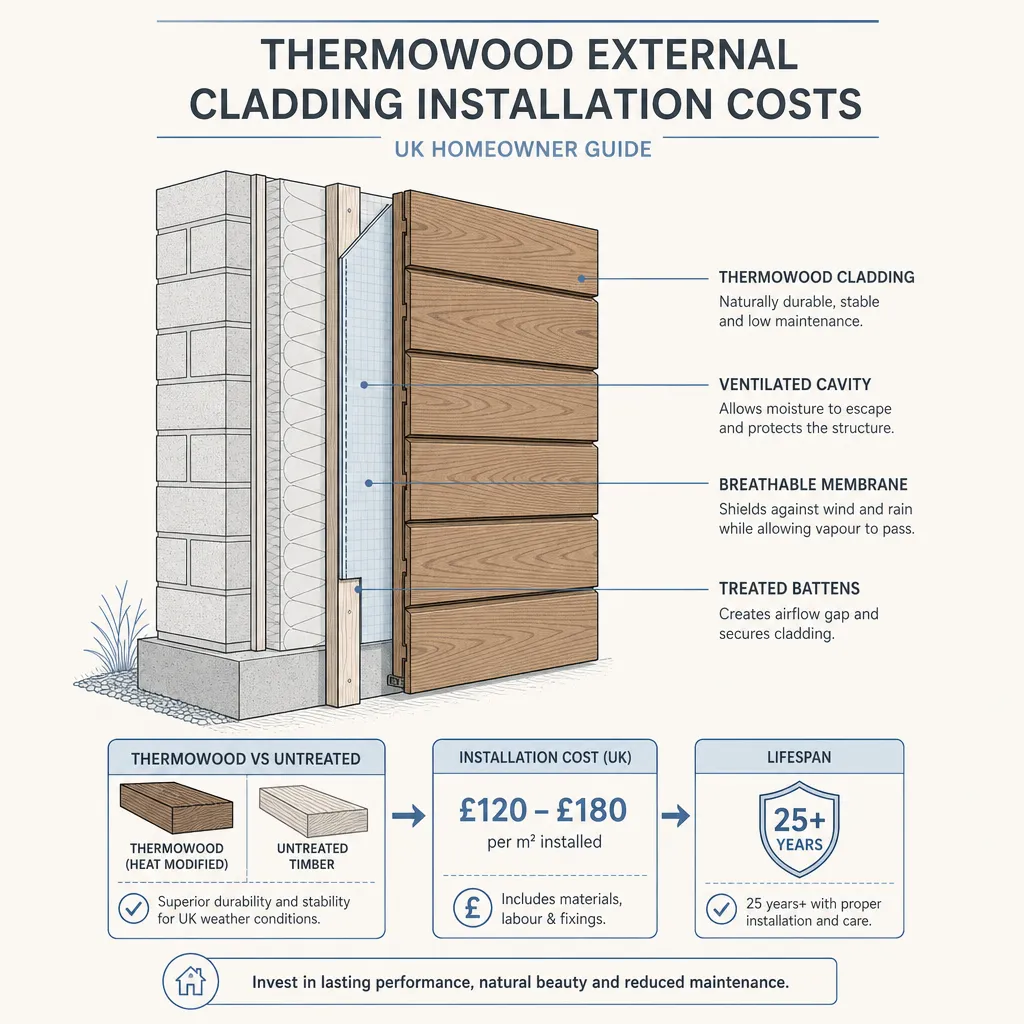
Thermowood External Cladding Installation Costs
Homeowners considering a facade upgrade or external wall insulation project often encounter thermowood as a premium cladding option. Whether you are refreshing a tired rendered exterior, adding insulation to a 1930s semi, or finishing a new extension, understanding what thermowood costs and how it behaves in the UK climate will help you set a realistic budget and compare quotes confidently.
Key points
- Thermal modification heats timber to 185–215°C in a steam-and-heat kiln, permanently altering the wood's cell structure to reduce moisture absorption and improve rot resistance — without chemical preservatives.
- Indicative UK supply-and-fit costs for thermowood cladding range from £80–£180 per m² (Indicative UK costs, last reviewed 2026-05-11); profiles, height, and access requirements drive most of the variation.
- External cladding on habitable buildings must comply with Building Regulations Part B (fire safety) and, where the thermal envelope is affected, Part L (energy efficiency) — a building control application may be required.
- Listed buildings and properties in conservation areas require listed building consent or conservation area consent before any external cladding work.
- The International ThermoWood Association grades thermally modified timber by modification level: ThermoS (Class 1, mild) and ThermoD (Class 2, higher durability) — specify the grade when sourcing.
What is thermowood and why does it perform better outdoors?
Thermowood is timber — commonly Scots pine, spruce, or ash — that has been subjected to high-temperature heat treatment (typically 185–215°C) in a controlled steam environment. The process degrades the sugars and hemicelluloses in the wood's cell walls, making it far less attractive to fungi and insects and significantly reducing the timber's equilibrium moisture content.
The practical results for UK homeowners:
- Better dimensional stability: the board is less prone to swelling, shrinking, and warping as humidity fluctuates — important in the UK's damp maritime climate.
- Extended service life: properly installed thermowood cladding is rated Durability Class 1–2 under EN 350, meaning a realistic service life of 25–40 years with minimal maintenance.
- No biocide preservatives: relevant to homeowners pursuing BREEAM or low-toxicity construction.
- Natural weathering to silver-grey: unpainted thermowood weathers to a consistent grey patina; if you prefer the original brown, an annual UV-stable oil treatment will retain the colour.
The trade-off is cost: thermowood boards typically cost 30–50% more than untreated softwood equivalents, though the reduced maintenance regime often offsets this over the building's life.
How much does thermowood cladding cost in the UK?
Indicative UK costs, last reviewed 2026-05-11. Quotes vary significantly by region, property type, and installer.
Cost element | Indicative range (per m²) | Notes |
|---|---|---|
Thermowood boards (supply only) | £30–£70 | Profile, grade, and species affect price |
Battens and breather membrane | £5–£15 | Required for ventilated rainscreen systems |
Installation labour | £40–£100 | Height, access, and corner detailing add cost |
Scaffolding | £15–£40 | Separate scaffold hire if required |
Total supply and fit | £80–£180 | Mid-terrace or semi, ground and first floor |
Cost drivers to discuss with your installer:
- Board profile: featheredge, shiplap, channel, and tongue-and-groove profiles all carry different price points and installation speeds.
- Property height and access: two-storey properties generally require scaffolding; single-storey extensions may be accessible by hop-up or podium.
- Substrate condition: applying cladding over existing render or brick that needs repair will add to overall cost.
- Ventilation cavity: a properly designed ventilated rainscreen with counter-battens and breather membrane adds resilience against moisture ingress and is recommended by BRE Good Practice guides.
- Window reveals and trims: each window or door opening requires careful detailing; multiple openings increase labour time.
Thermowood vs alternative external cladding materials
Cladding type | Typical installed cost (per m²) | Maintenance requirement | Service life | Key risk |
|---|---|---|---|---|
Thermowood | £80–£180 | Low (oiling if colour retention wanted) | 25–40 years | Requires ventilated cavity system |
Standard softwood (treated) | £50–£110 | Moderate (painting/staining every 3–5 years) | 15–25 years | More prone to moisture movement |
Fibre cement (e.g., Cedral) | £70–£140 | Very low | 25–35 years | Heavier; mineral-look appearance |
Composite wood | £90–£160 | Very low | 20–30 years | Can look less natural |
Brick slip | £120–£200 | Very low | 50+ years | Higher upfront cost; heavier |
Indicative UK costs, last reviewed 2026-05-11. Costs vary by region and installer.
Planning and building regulations
Planning permission is not usually required for re-cladding an existing external wall under permitted development rights — provided the materials are of a similar appearance to those used in the construction of the house. However:
- Properties in conservation areas or World Heritage Sites face tighter controls: re-cladding may require conservation area consent or prior approval.
- Listed buildings require listed building consent for any external alteration.
- New extensions or buildings: cladding must comply with Building Regulations, including Part B (fire spread), Part C (site preparation and moisture resistance), and Part L (conservation of fuel and power).
Always check with your local planning authority before starting work. An experienced installer should be familiar with local restrictions and advise accordingly.
What to ask before accepting a quote
- Is the timber ThermoD (Class 2, higher modification) or ThermoS (Class 1), and what is the species?
- Does the installation include a breather membrane and ventilated counter-batten system?
- What fixings are specified — stainless steel is essential to avoid rust staining on weathered timber?
- What is the assumed substrate condition, and what happens if it needs repair?
- Is scaffolding included, or is it a separate cost?
- What warranty does the installer provide, and does the timber manufacturer's warranty transfer to you?
- Is VAT included in the quoted price?
- What are the payment stages?
When to get professional help
For most thermowood cladding projects, a specialist cladding contractor or general builder with cladding experience is sufficient. Seek additional professional input if:
- The property is listed or in a conservation area — a planning consultant or conservation officer can advise before you commit.
- The wall behind the cladding shows signs of damp, cracking, or structural movement — a RICS chartered surveyor should inspect before you cover the problem.
- The project involves combustible cladding on a building over 11 metres in height — fire engineering advice and building control sign-off are legally required under Part B and the Building Safety Act 2022.
- You are combining cladding with external wall insulation (EWI) — this changes the thermal envelope and triggers a full Part L building control application.
How Housey can help
If your thermowood cladding project includes improving your home's thermal performance — whether adding external wall insulation beneath the cladding or upgrading the wall build-up — you can find vetted insulation installers through Housey. Comparing quotes from multiple specialists helps you benchmark price and understand what is (and is not) included.
Frequently asked questions
Does thermowood need treating before installation in the UK?
Thermowood can be installed untreated and will weather to a silver-grey patina over 12–18 months. If you want to retain the warm brown tone, apply a UV-protective oil before installation and once per year thereafter. No biocide preservative treatment is needed, as the thermal modification process itself provides the rot and moisture resistance.
How long does thermowood cladding last?
Properly installed ThermoD grade cladding in a ventilated rainscreen system typically achieves a service life of 25–40 years. Manufacturers of quality thermowood products often offer 25-year material warranties. Ask your installer what their own workmanship warranty covers — a reputable contractor will usually provide at least 2–5 years.
Can I clad my house without planning permission?
Re-cladding with materials of a similar appearance to the original is generally permitted development for houses (not flats). Conservation areas, listed buildings, and Article 4 Direction areas are exceptions — always check with your local planning authority first before starting work.
Is thermowood cladding fire-rated?
Thermowood is a combustible timber product. For buildings over 11 metres in England, the Building Safety Act 2022 and Part B of the Building Regulations impose strict requirements on external wall systems. Buildings below this threshold must still meet fire-spread requirements; your installer should confirm compliance with the relevant Approved Document.
Sources and further reading
- Building Regulations: Approved Document B (fire safety) — GOV.UK
- Building Regulations: Approved Document L (conservation of fuel and power) — GOV.UK
- Planning permission: when you need it — GOV.UK
- ThermoWood Handbook — International ThermoWood Association
- BRE Good Practice in the Design of Homes — BRE Group
Useful next reads
 Energy & Retrofit
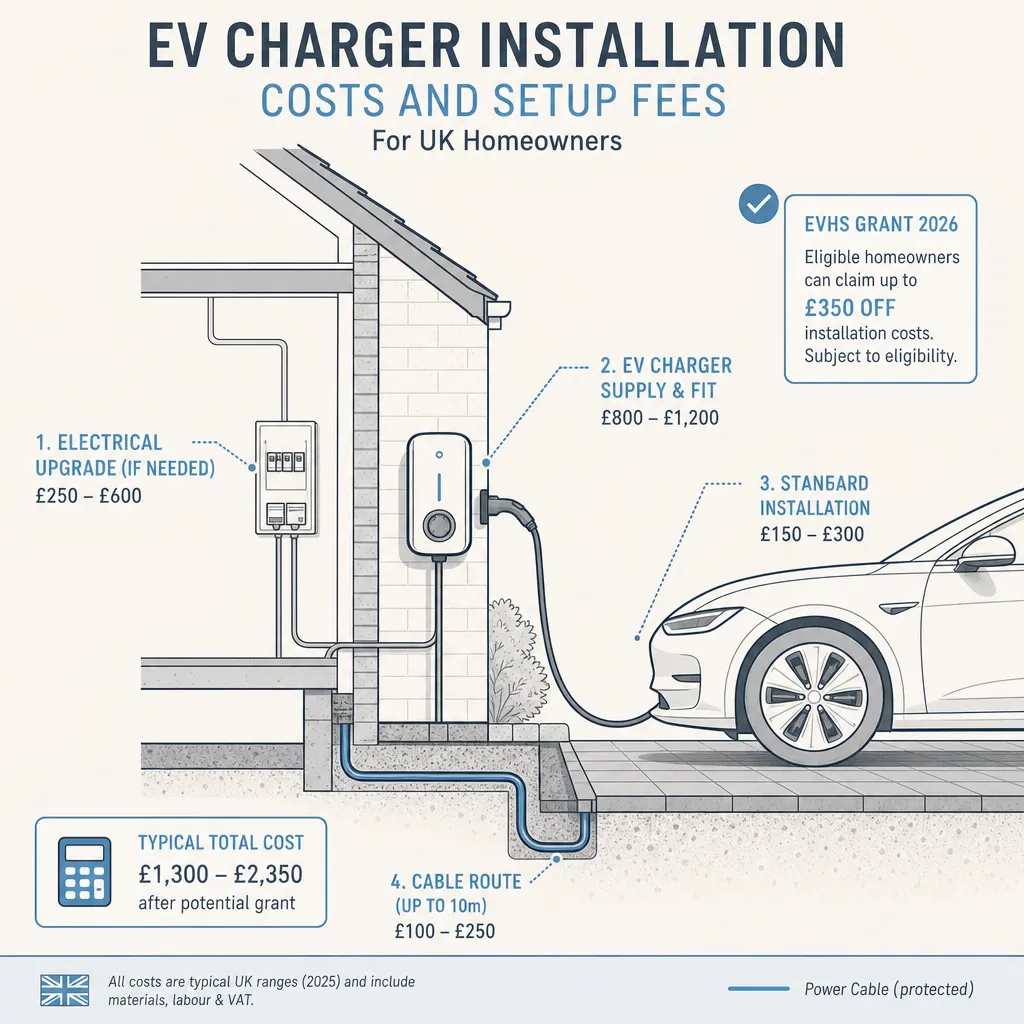
EV Charger Installation Costs and Setup Fees
A home EV charger typically costs £700–£1,200 installed in the UK, including unit and labour.
 Energy & Retrofit
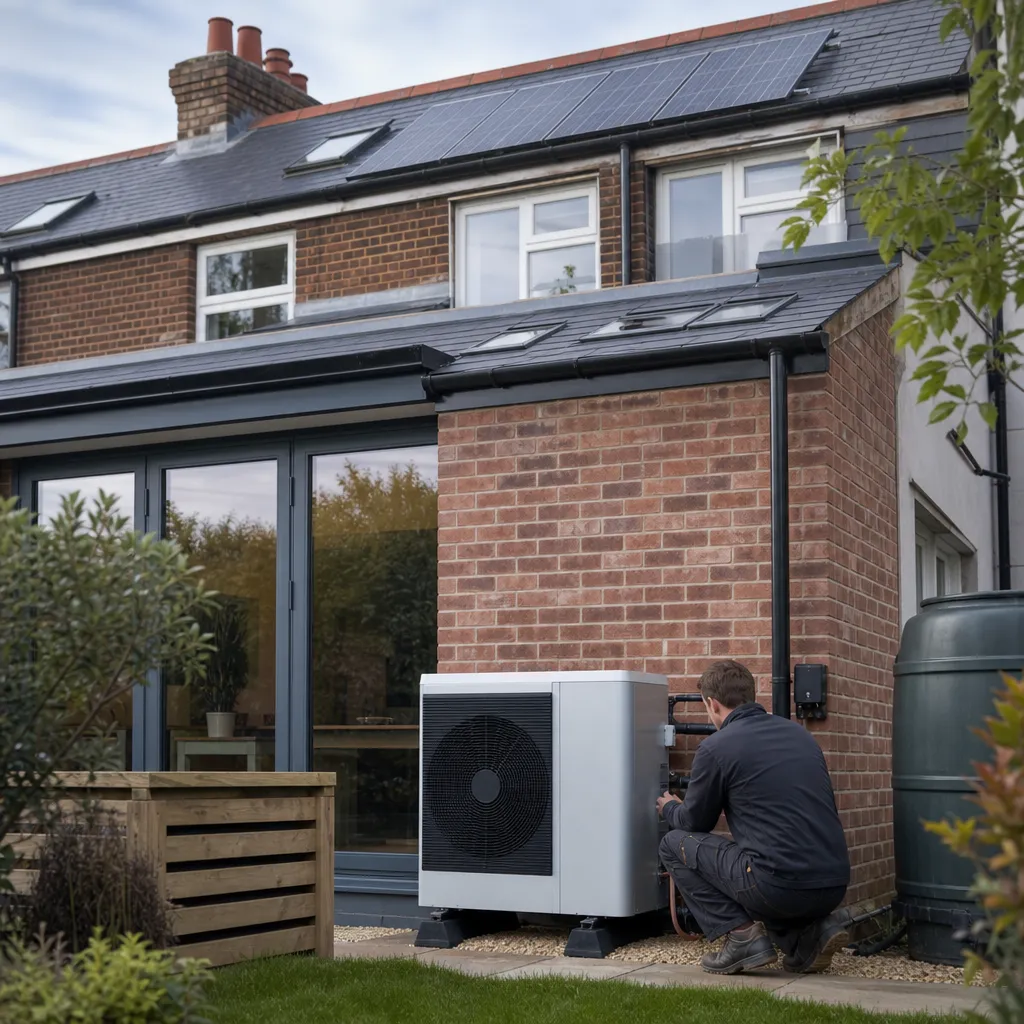
Renewable Energy Technologies for Homes
UK homes can choose from solar photovoltaic panels, air source heat pumps, ground source heat pumps, and battery storage as the main residential renewable technologies.
 Energy & Retrofit
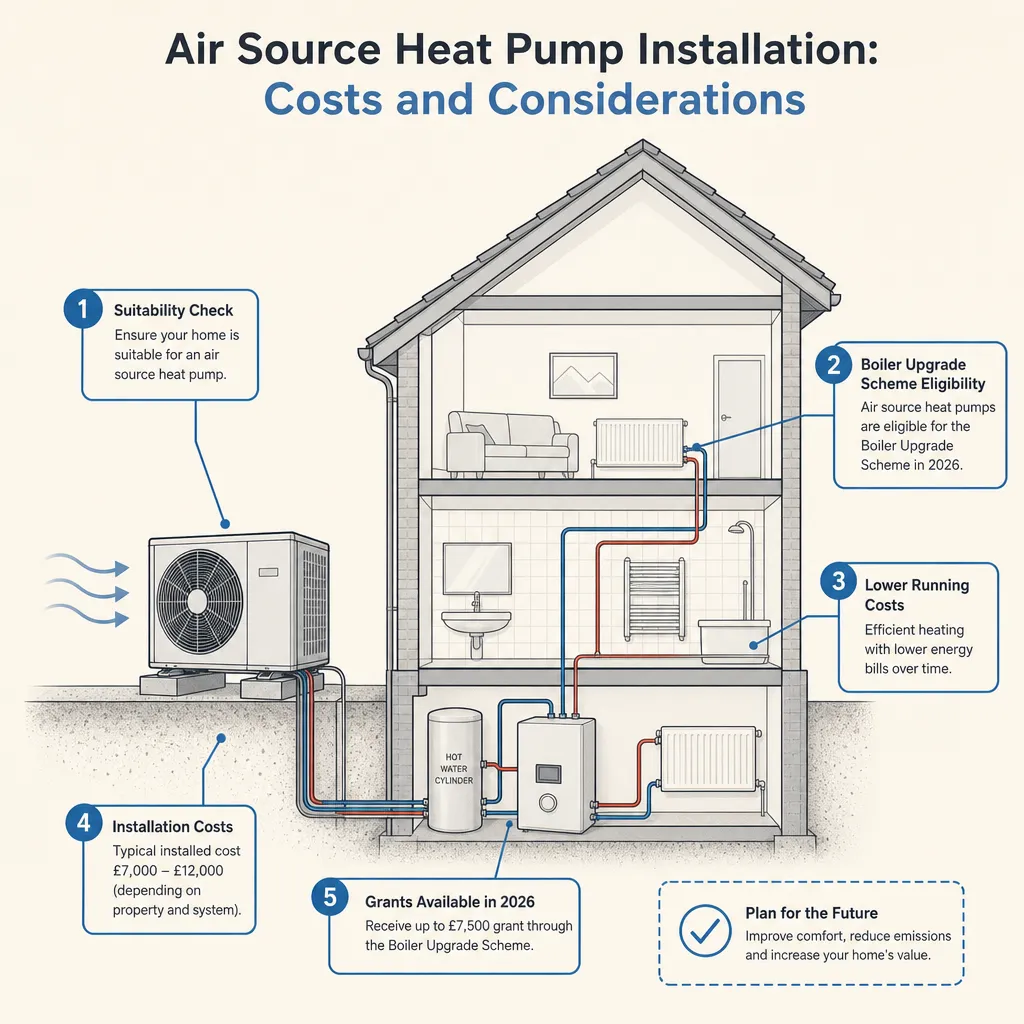
Air Source Heat Pump Installation: Costs and Considerations
Air source heat pump installation in the UK typically costs £8,000–£15,000 before the £7,500 Boiler Upgrade Scheme grant, available through MCS-certified installers in England and Wales.
 Energy & Retrofit
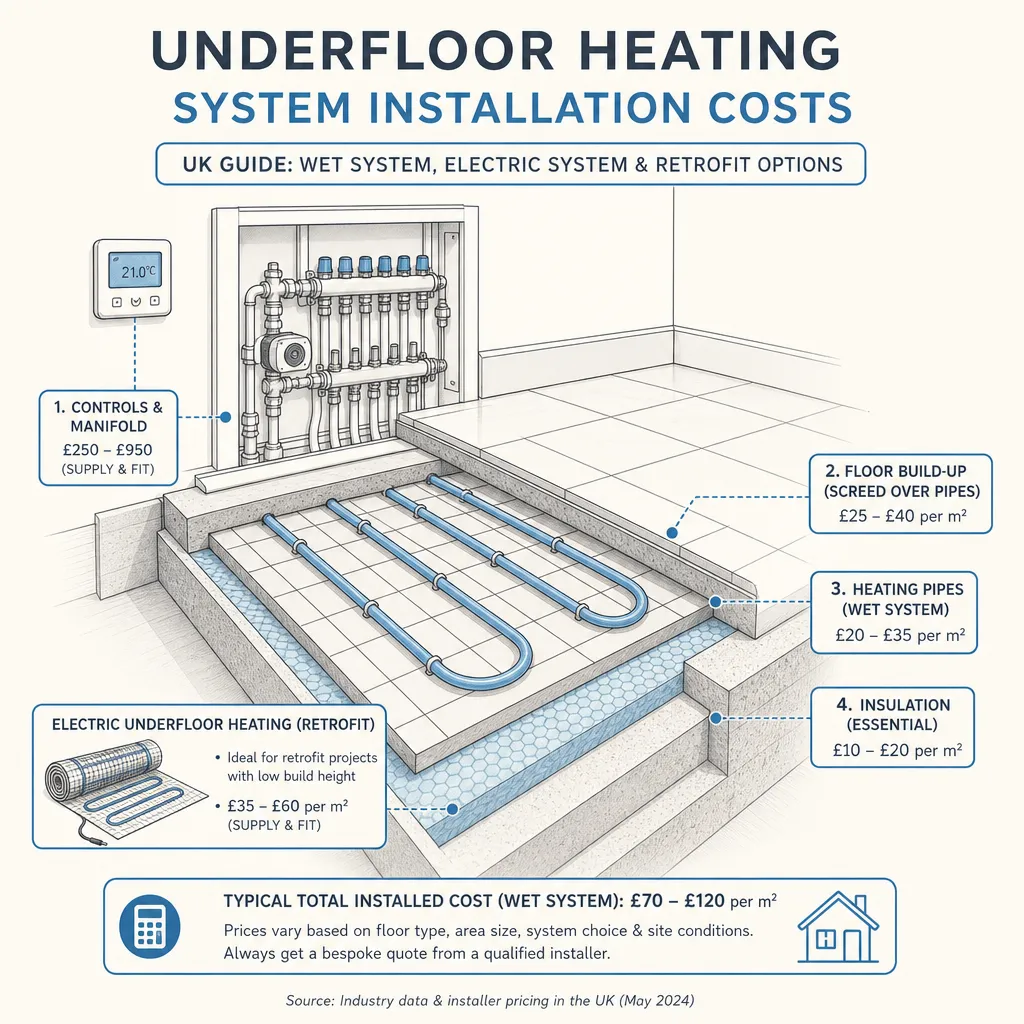
Underfloor Heating System Installation Costs
Underfloor heating installation in the UK typically costs £20–£50 per m² for electric mat or foil systems and £50–£150 per m² for wet (hydronic) systems, including labour.
 Energy & Retrofit
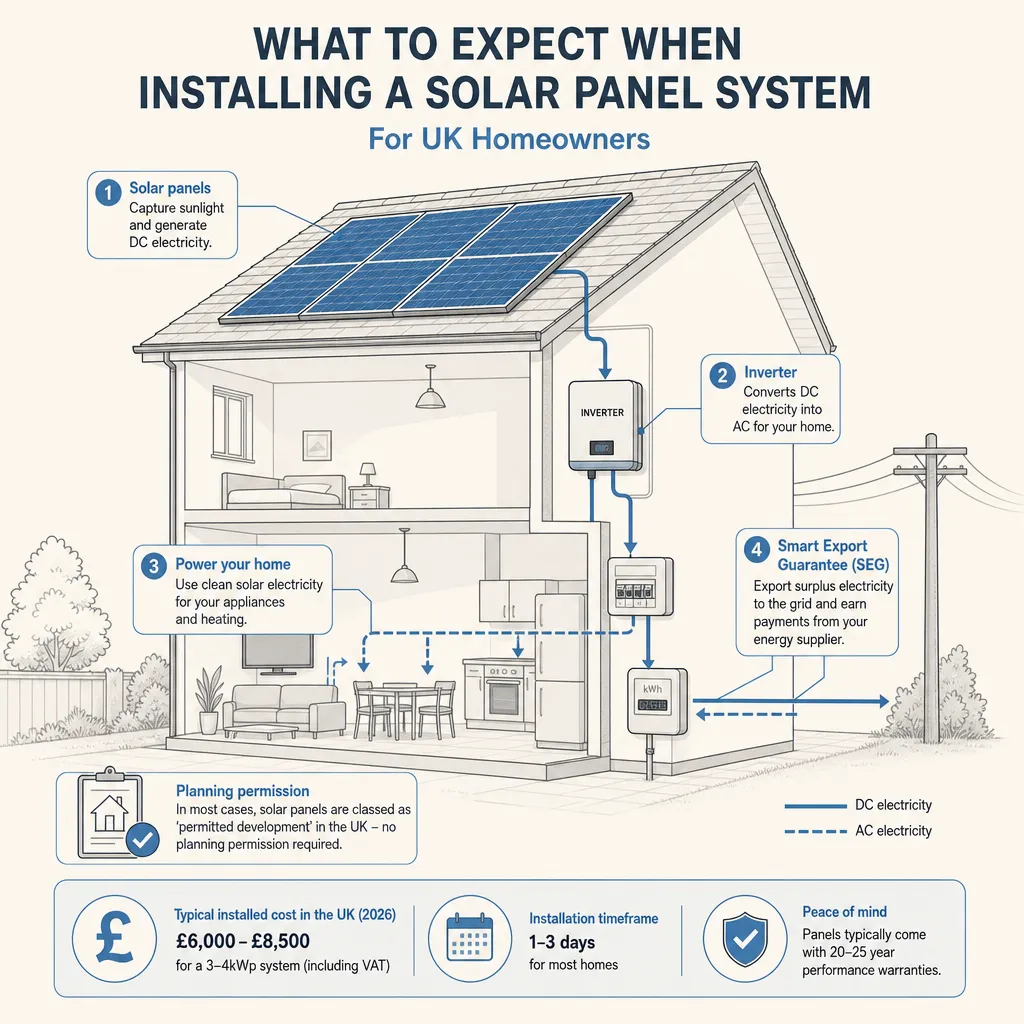
What to Expect When Installing a Solar Panel System
A standard residential solar installation in the UK involves a site survey, appointment of an MCS-certified installer, and a one-to-two day fit-out.