Timber-Frame Extension Construction Costs
By Housey · Last reviewed 11th of May 2026
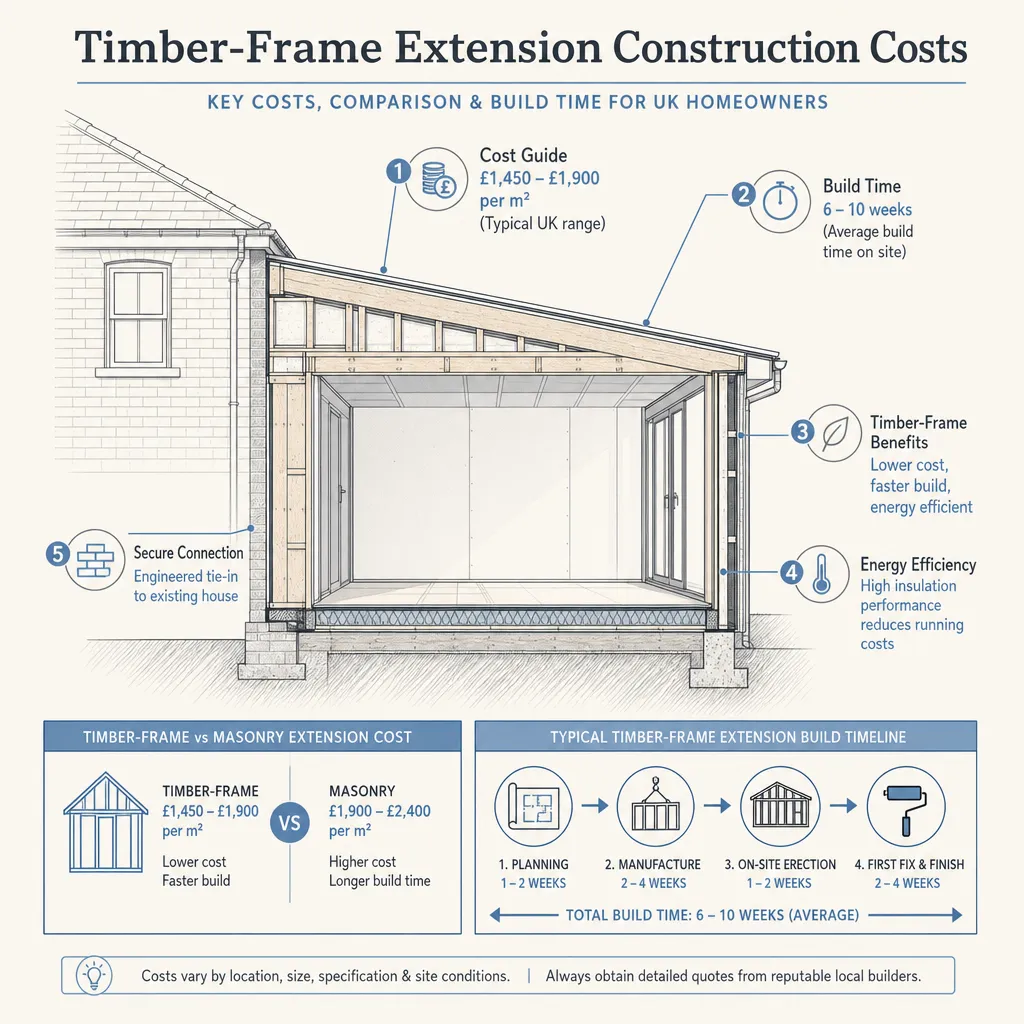
Timber-Frame Extension Construction Costs
Choosing between timber frame and masonry blockwork is one of the first structural decisions when planning a home extension in England or Wales. The choice affects build programme, insulation strategy, contractor availability, and budget — all before you have settled on glazing specification, finishes, or roof form. Most homeowners arrive at this question mid-way through the design process, after an initial conversation with a builder or architect has raised the possibility of a faster or more thermally efficient build method.
Key points
- Building Regulations Approved Document A requires structural elements — including timber frame panels — to be designed by or checked by a suitably qualified structural engineer.
- A well-specified timber-frame wall can achieve a U-value of 0.18 W/m²K or better, comfortably meeting the 0.28 W/m²K maximum required by Approved Document L (2021 edition) for new extensions.
- Off-site fabricated timber frame panels are typically erected in 1–3 days for a single-storey addition, compared with several weeks for masonry to reach wall-plate height.
- The Party Wall etc. Act 1996 applies if your extension is built at or near the boundary with a neighbour's land or property, requiring a formal party wall agreement before work starts.
- Indicative UK costs range from £1,800–£3,200 per m² fully finished, with London and the South East typically 20–30% higher than the national mid-range (Indicative UK costs, last reviewed 2026-05-11).
How much does a timber-frame extension cost per m²?
Timber-frame and masonry extensions often end up at a similar total project cost per m², but the cost breakdown differs. The frame kit costs more than blockwork material, yet savings typically appear through reduced wet-trade labour, faster weathering-in, and more straightforward insulation specification.
Extension spec | Low (per m²) | Mid-range (per m²) | High (per m²) |
|---|---|---|---|
Basic single-storey, standard finish | £1,800 | £2,200 | £2,600 |
Mid-spec single-storey, quality finish | £2,200 | £2,600 | £3,000 |
High-spec or two-storey, premium finish | £2,800 | £3,200 | £3,800+ |
Indicative UK costs, last reviewed 2026-05-11. Excludes VAT unless stated. Excludes abnormal groundworks. London and South East: add approximately 20–30%.
A 25 m² single-storey rear extension at mid-specification might cost £55,000–£75,000 fully finished — including glazing, electrical, plumbing, and decoration — but site-specific factors can shift this figure significantly. Always obtain at least three itemised quotes.
Timber frame vs masonry: a side-by-side comparison
Factor | Timber frame | Masonry blockwork |
|---|---|---|
Frame erection speed | 1–3 days (off-site fabricated panels) | 3–8 weeks to wall-plate height |
Thermal performance | U-values of 0.18 W/m²K or better achievable | 0.18–0.28 W/m²K with quality cavity fill |
Material cost | Higher for frame kit | Lower for blocks and mortar |
Wet-trade labour | Lower — frame is dry construction | Higher — bricklayers and plasterers throughout |
Design flexibility | High — long spans without intermediate columns | Moderate — structural masonry limits open spans |
Contractor availability | Specialist required; availability varies by region | Widely available across UK |
Moisture risk during build | Frame enclosed quickly; lower weather exposure | Mortar and plaster need curing time |
Structural junction with existing building | Engineering detail required | Straightforward bonding to existing masonry |
What drives the cost of a timber-frame extension?
Several factors can push costs above or below the headline ranges.
Factors that increase cost
- Two-storey footprint or complex roof form (multiple ridges, dormer, or parapet)
- Premium glazing: large bi-fold or sliding doors, structural roof glazing, or a roof lantern
- Poor ground conditions requiring engineered foundations (piles, raft, or beam-and-block)
- London, South East, or other high-labour-cost locations
- Listed building or conservation area designation — may require traditional-appearance cladding or additional consents
- Difficult site access requiring a crane, specialised plant, or extensive manual handling
Factors that reduce cost
- Simple rectangular footprint with a lean-to or mono-pitch roof
- Good ground conditions with straightforward strip foundations
- Standard double-glazed aluminium or uPVC doors and windows
- Easy site access for delivery vehicles and scaffold
Do you need planning permission?
Timber-frame construction does not in itself change your planning position. What matters is size, position, height, and whether permitted development rights apply.
Most single-storey rear extensions are covered by permitted development rights under Schedule 2, Part 1 of the Town and Country Planning (General Permitted Development) (England) Order 2015, subject to size and height limits. The neighbour consultation scheme allows detached houses to extend up to 8 m to the rear (single-storey) and semi-detached or terraced houses up to 6 m, subject to no objections from affected neighbours.
Planning permission or listed building consent is required for:
- Listed buildings (any work affecting their character)
- Properties in a conservation area where the extension would be visible from a highway
- Larger extensions that exceed permitted development limits
- Properties where PD rights have been removed by an Article 4 Direction
Always apply for a Lawful Development Certificate via the Planning Portal to confirm permitted development status in writing before starting work. Building Regulations approval is required regardless of planning status.
Worked example: 1930s semi-detached in Nottingham
A homeowner planned a 20 m² single-storey kitchen extension on a 1930s semi in Nottingham. The design used a timber-frame structure with a flat roof, a 600 mm rooflight, and bi-fold doors. Ground conditions were standard — clay subsoil, straightforward strip foundations.
- Frame fabricated off-site and erected in two days
- Total cost: approximately £48,000 including VAT, design fees, and building control
- Programme from groundworks start to practical completion: 14 weeks
- A masonry version from the same contractor was quoted at £44,500 with a 20-week programme
The £3,500 cost difference was modest; the homeowner chose timber frame for the shorter programme and a marginally better air-tightness specification. This scenario is fairly typical: the financial difference between structural systems is often smaller than expected, and programme length and thermal performance are frequently the deciding factors.
Pre-quote homeowner checklist
Prepare the following before inviting contractors to quote:
When to get professional help
A timber-frame extension involves structural design, thermal compliance, and potentially planning or party wall obligations that require qualified input. Seek professional help when:
- You are unsure whether planning permission or a Lawful Development Certificate is needed — ask your local planning authority or a planning consultant before starting design work.
- You need a structural engineer to design the frame connection to the existing building and specify the foundations — this is required under Approved Document A.
- Quotes vary by more than 30% without explanation — ask each contractor to itemise groundworks, frame supply, erection, first and second fix, and contingency separately.
- Your property is listed or in a conservation area — appoint a heritage architect or contact Historic England for guidance before progressing designs.
How Housey can help
Housey connects you with vetted extension builders, structural engineers, and architects experienced with timber-frame construction. Compare quotes from local professionals and get the right team from design through to completion.
Frequently asked questions
Does a timber-frame extension need planning permission?
Not always. Many single-storey rear extensions fall under permitted development rights, meaning no planning application is required. However, listed buildings, conservation areas, larger extensions, and properties with Article 4 Directions require planning permission. Always obtain a Lawful Development Certificate from your local planning authority to confirm your position in writing before starting work.
How long does a timber-frame extension take to build?
A typical single-storey timber-frame extension takes 12–20 weeks from start on site to practical completion. The frame erects in 1–3 days; the remaining programme covers groundworks, services rough-in, insulation, boarding, second-fix, and decoration. Groundworks conditions and glazing specification complexity are the most common causes of programme delays.
Is timber frame as durable as masonry for an extension?
Yes, when properly designed, detailed, and maintained. Modern engineered timber-frame panels use kiln-dried and preservative-treated timber. Key longevity factors are vapour control layer installation, ventilated cavity detailing, and regular maintenance of the external cladding and envelope.
Do I need a structural engineer for a timber-frame extension?
Yes, in most cases. Approved Document A requires structural elements to be designed by a suitably qualified engineer. Your timber-frame supplier may provide standard panel calculations, but an independent structural engineer is typically needed to check the connection to the existing building and to design the foundations.
Sources and further reading
- Approved Document A: Structure — GOV.UK
- Approved Document L: Conservation of fuel and power — GOV.UK
- Permitted Development Rights for Householders: Technical Guidance — GOV.UK
- Party Wall etc. Act 1996 — legislation.gov.uk
- BCIS Building Cost Information Service — RICS
Useful next reads
 Improvement & Build
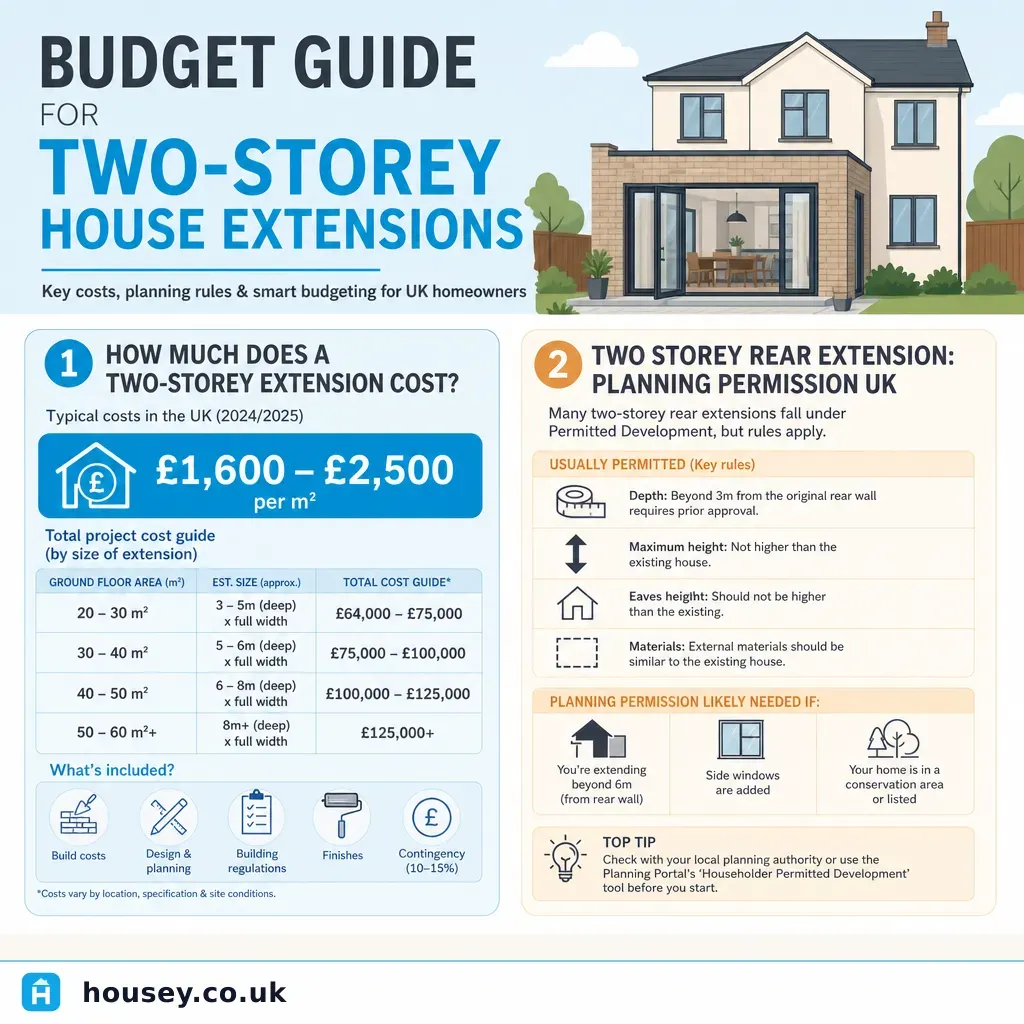
Budget Guide for Two-Storey House Extensions
A two-storey house extension in the UK typically costs £1,800–£3,000+ per square metre for the build alone.
 Improvement & Build
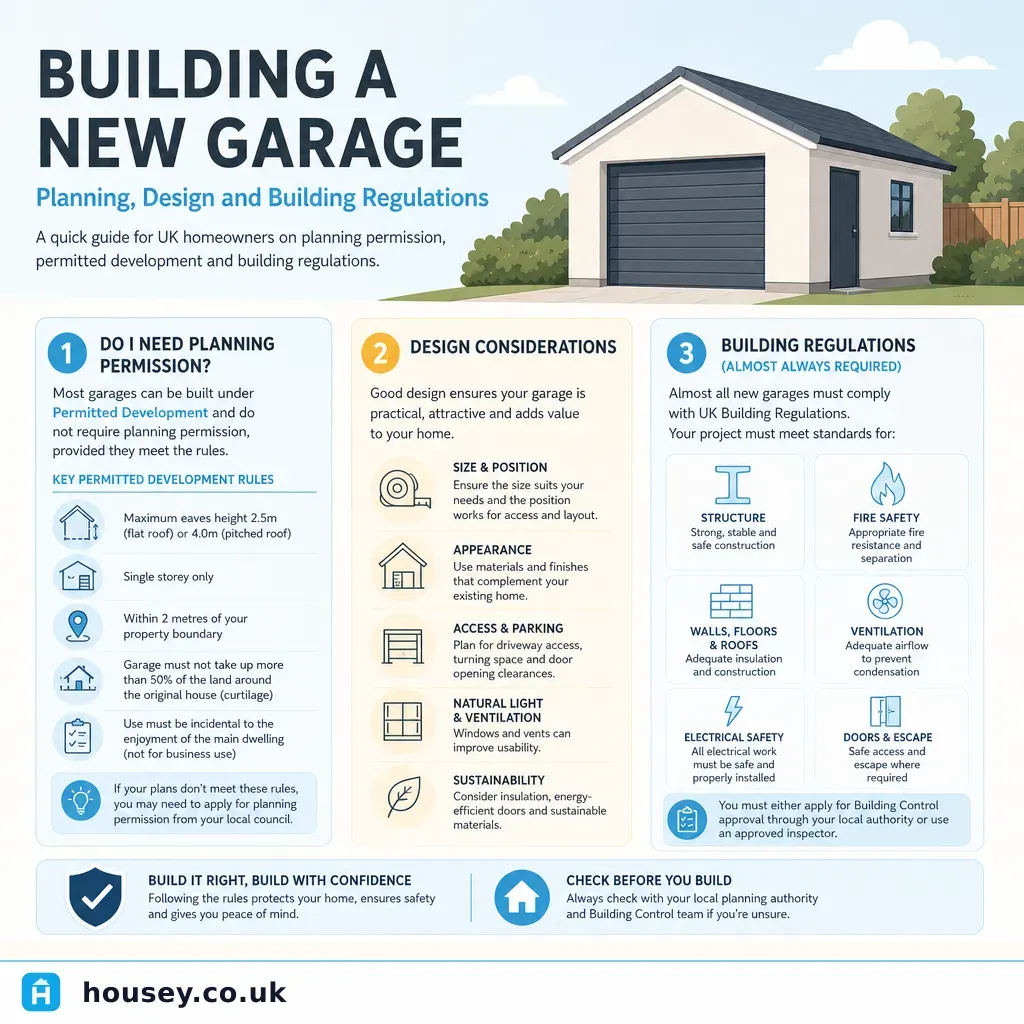
Building a New Garage: Planning, Design and Building Regulations
Most new detached garages in England qualify as permitted development and do not need planning permission, provided they stay within size, height, and coverage limits and are not within 5m of the dwelling.
 Improvement & Build
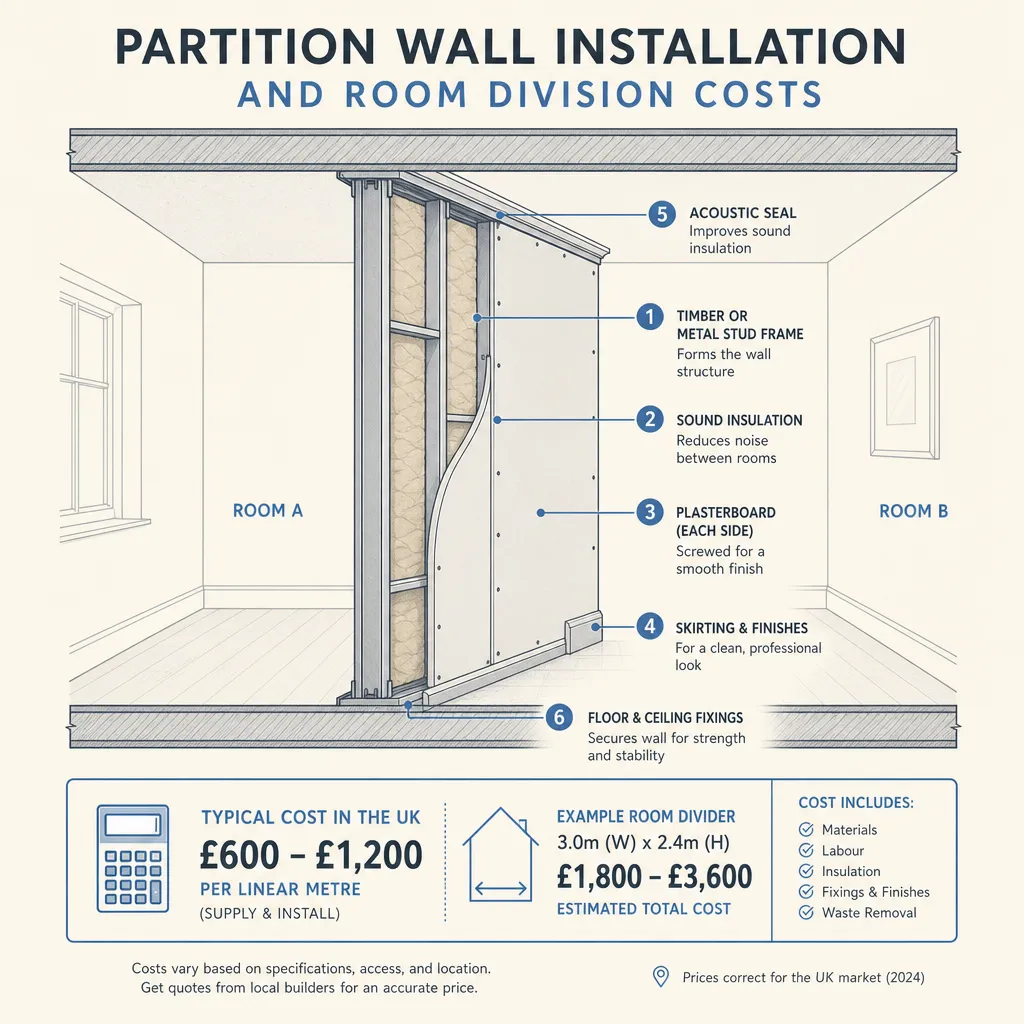
Partition Wall Installation and Room Division Costs
Installing a stud partition wall in the UK typically costs £800–£2,500 for a standard room divider, or roughly £30–£80 per m² installed.
 Improvement & Build
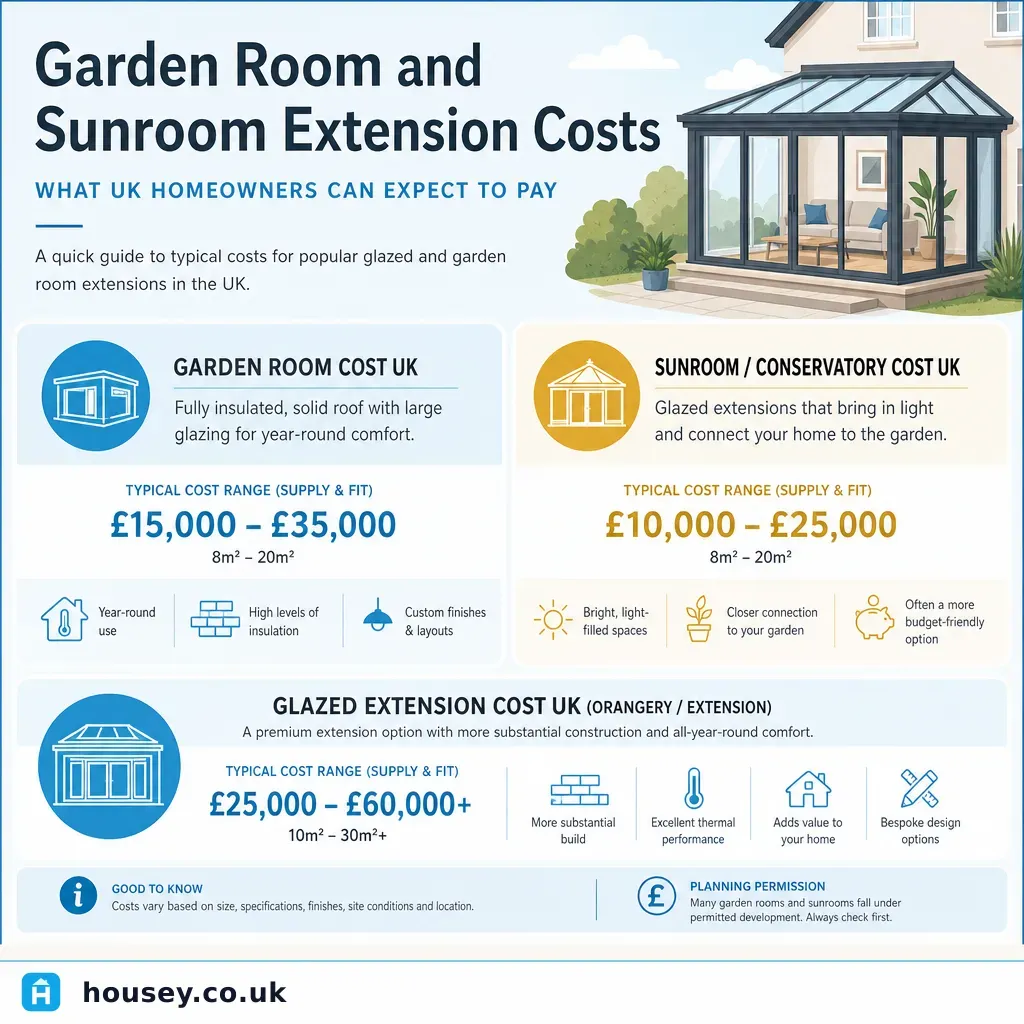
Garden Room and Sunroom Extension Costs
Garden rooms and sunroom extensions cost roughly £10,000–£80,000 installed in the UK depending on type, size, and glazing specification.
 Improvement & Build
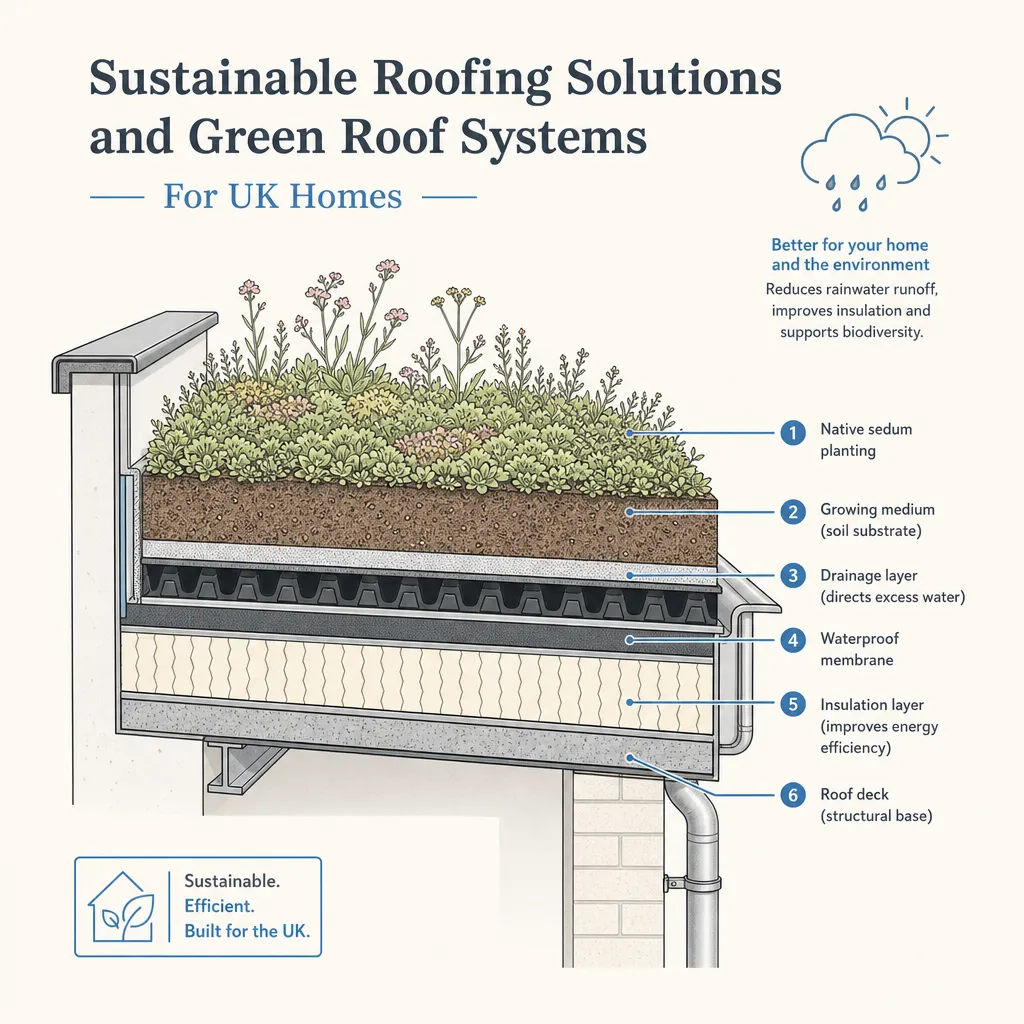
Sustainable Roofing Solutions and Green Roof Systems
Sustainable roofing in the UK covers several options: sedum or living roofs, recycled-content tiles, reclaimed slate, and solar-integrated roofing.