Tradesperson vs Tradesman: Understanding Modern Construction Terminology
By Housey · Last reviewed 24th of May 2026
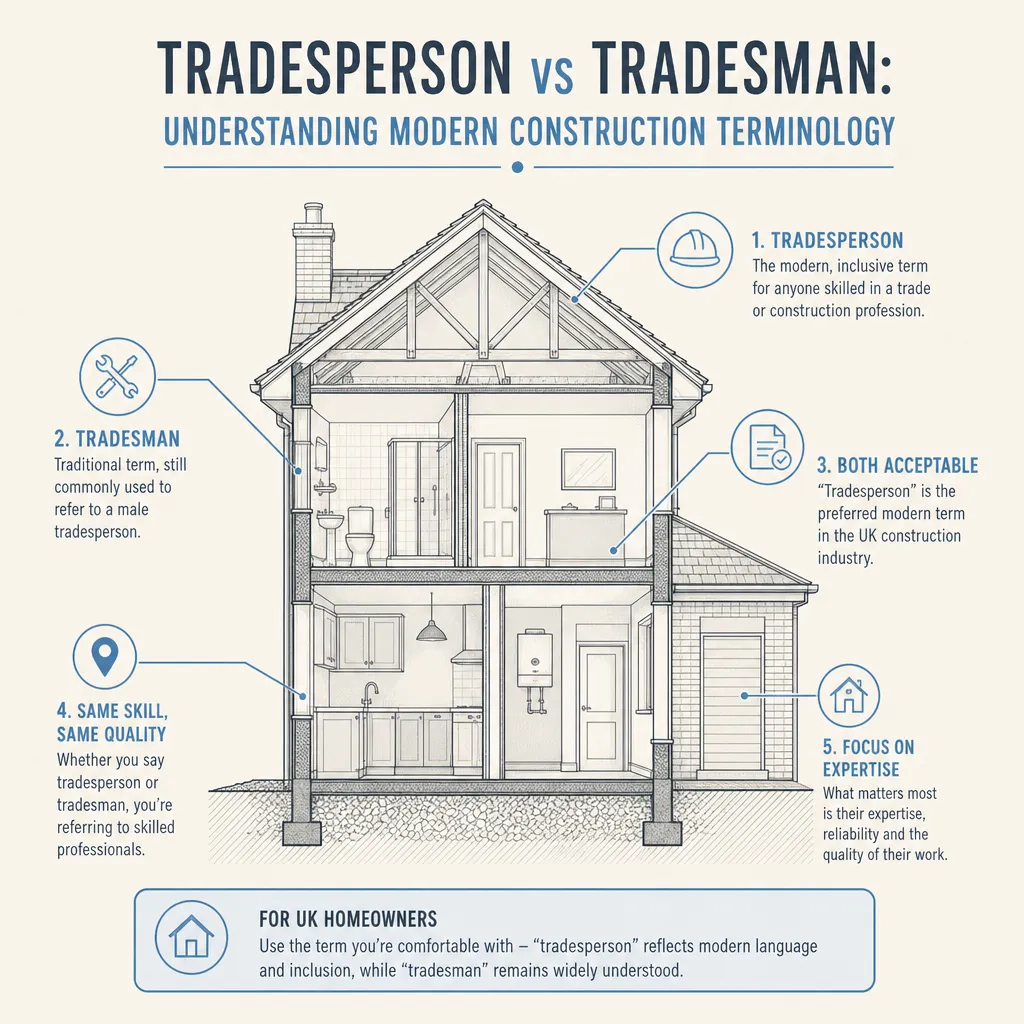
Tradesperson vs Tradesman: Understanding Modern Construction Terminology
The language used to describe skilled craft workers in the UK has shifted noticeably over the past decade. Official guidance from the Construction Industry Training Board (CITB), Health and Safety Executive (HSE), and various government bodies now consistently uses "tradesperson" in preference to "tradesman". For homeowners commissioning improvement work, understanding this shift — and what it reflects about the industry — can help when reading job adverts, contracts, and accreditation documents.
Key points
- The CITB, the principal training authority for the UK construction industry, uses "tradesperson" as standard in all current publications and apprenticeship frameworks.
- ONS Labour Force Survey data indicates that women account for approximately 15% of those employed in the UK construction sector, a share that has grown from around 11% a decade ago.
- HSE regulations, Approved Documents, and official guidance consistently use "workers", "operatives", and "persons" rather than gendered terms throughout.
- "Tradesman" remains commonly used in everyday speech but is increasingly absent from formal tendering documents, contracts, and trade body communications.
- The Equality Act 2010 does not mandate specific terminology, but the Equality and Human Rights Commission (EHRC) recommends inclusive language in job adverts as good practice.
What "tradesperson" means in the UK
A tradesperson is a skilled worker who has completed recognised training — typically an apprenticeship, an NVQ, or an equivalent qualification — in a specific craft or technical discipline. The term covers a wide range of occupations across the construction and building services sectors.
Common trades include:
- Bricklayers and stonemasons
- Carpenters and joiners
- Electricians (qualified to BS 7671 and registered under a competent person scheme such as NICEIC or NAPIT)
- Plumbers
- Gas engineers (Gas Safe Register required for all gas work in Great Britain)
- Roofers
- Plasterers and drylining operatives
- Tilers
- Painters and decorators
- Heating engineers
Each trade has its own qualification pathways and industry bodies. Some carry statutory registration requirements: gas engineers must be Gas Safe registered, and electricians carrying out notifiable electrical work must be registered with a recognised competent person scheme.
Tradesperson vs tradesman: a plain comparison
The table below sets out the practical differences between the two terms in modern UK usage:
Term | Current formal use | Who uses it | Context |
|---|---|---|---|
Tradesperson | Preferred in official publications, job adverts, contracts, apprenticeship frameworks | CITB, HSE, government guidance, most trade bodies | Formal and informal |
Tradesman | Common in everyday speech, some trade press, older documentation | General public, legacy trade directories | Primarily informal |
Skilled operative | Used specifically for site-based workers in larger contracts | JCT contracts, procurement documents, main contractors | Formal — contract context |
Craftsperson | Occasionally used for specialist heritage or conservation trades | Historic England, conservation bodies | Specialist and formal |
In practice, a homeowner asking a plumber to quote for a bathroom renovation does not need to think about which term to use in conversation. The distinction matters more when drafting or reviewing written contracts, posting a job advert, or reading qualification documentation.
What not to assume
Several common misunderstandings arise around construction terminology. This section addresses the most frequent ones.
"Tradesman" implies a more experienced or senior worker. The two terms are interchangeable in meaning — both refer to a skilled craft worker. Neither implies seniority, specialisation, or a higher level of qualification.
Gender-neutral language is a recent invention in construction. Skilled women have worked in UK construction trades throughout history, including during both World Wars when female workers carried out extensive building and repair work. The terminology has shifted to reflect this history more accurately.
Using "tradesperson" is legally required. There is no legal requirement in the UK to use any specific term when referring to skilled workers. The EHRC recommends inclusive language in job adverts as good practice, but there is no penalty for using "tradesman" in informal speech or existing documents.
All tradespeople are sole traders. Many tradespeople are employed by larger firms, work within subcontracting arrangements, or operate as limited companies. Their business structure does not affect their trade classification or qualification level.
A tradesperson and a contractor are the same thing. A contractor is typically a business entity that takes on a contract to carry out work. A tradesperson is an individual with a specific skill set. A one-person plumbing business may be both contractor and tradesperson — but on a larger project, the contractor manages multiple tradespeople working under a single agreement.
When to get professional help
For most home improvement projects, the terminology your contractor uses is far less important than their qualifications, accreditations, and track record. Consider seeking specialist input if:
- You are drafting a formal building contract for a larger project — a JCT Minor Works or JCT Homeowner contract provides clear, consistent terminology appropriate for residential use.
- You are concerned that a contractor is holding themselves out as a regulated professional (Gas Safe registered, NICEIC-registered) without proper credentials — verify status directly with the relevant register.
- A contractual dispute has arisen and terminology in an existing document is ambiguous — seek advice from Citizens Advice or a solicitor with construction experience.
How Housey can help
Housey lists qualified tradespeople across a wide range of disciplines. Whether you need extension builders, roofers, or drainage contractors, every provider on the platform has a profile showing their qualifications, accreditations, and reviews from completed jobs — so you can assess credentials without needing to navigate the terminology yourself.
Frequently asked questions
Is "tradesman" still acceptable to use in the UK?
"Tradesman" is still widely understood and used informally, but official bodies including the CITB, HSE, and government publications now consistently use "tradesperson". In professional or formal contexts — job adverts, contracts, and procurement documents — "tradesperson" is the preferred choice. Neither term is offensive in everyday speech; the shift is primarily a formal and institutional one.
What trades are covered by the term "tradesperson"?
The term covers any skilled craft worker who has completed recognised training or an apprenticeship in their field. This includes electricians, plumbers, plasterers, carpenters, bricklayers, tilers, roofers, painters and decorators, gas engineers, and heating engineers, among many others across the construction and building services sectors.
Do I need to worry about terminology when drafting a contract with a builder?
The specific word used matters less than the detail in the contract itself. Whether you write "tradesperson" or "tradesman", what counts legally is the precise scope of work, payment terms, defects liability period, and what happens if work falls short of specification. Using a standard residential contract form such as JCT Homeowner covers these points clearly.
Sources and further reading
- CITB — apprenticeship frameworks and industry training — Construction Industry Training Board
- HSE — construction health and safety — Health and Safety Executive
- Equality and Human Rights Commission — guidance on inclusion — EHRC
- ONS Labour Force Survey — Office for National Statistics
- Gas Safe Register — verify a gas engineer — Gas Safe Register
Useful next reads
 Improvement & Build
Professional Builders: Why Licensing and Qualifications Matter
There is no universal builder's licence in the UK, but certain types of work are legally regulated — gas work requires Gas Safe registration, notifiable electrical work needs a Part P competent person, and window replacements require FENSA or Certass certification.
 Improvement & Build
Stopping Unqualified Traders: Standards That Protect Homeowners
Protect yourself from unqualified traders by knowing which trades are legally regulated: gas engineers must be Gas Safe registered, electricians must work under Part P or notify building control, and window installers must be FENSA or Certass registered.
 Improvement & Build
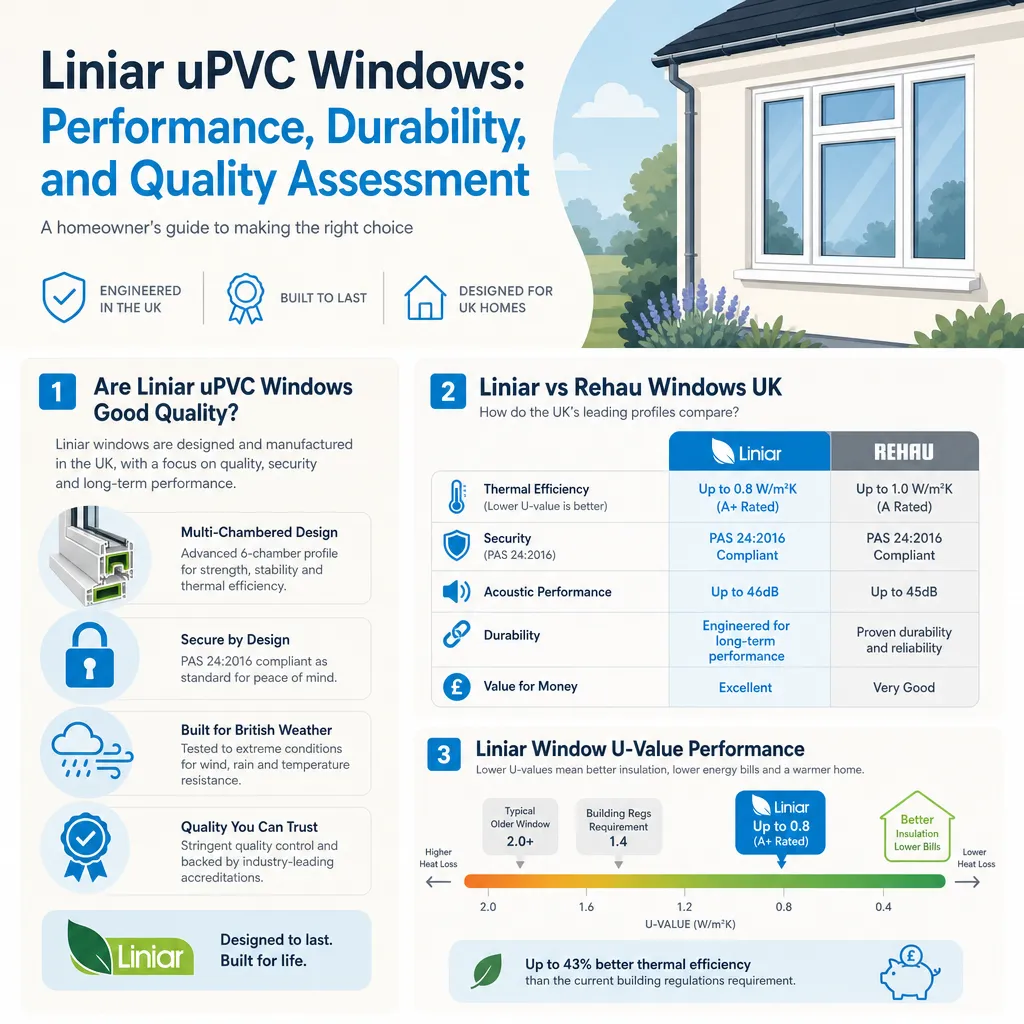
Liniar uPVC Windows: Performance, Durability, and Quality Assessment
Liniar uPVC window profiles are manufactured in the UK using multi-chambered, foamed frames.
 Improvement & Build
Garden Tap Installation with Hot and Cold Water: Plumbing Options
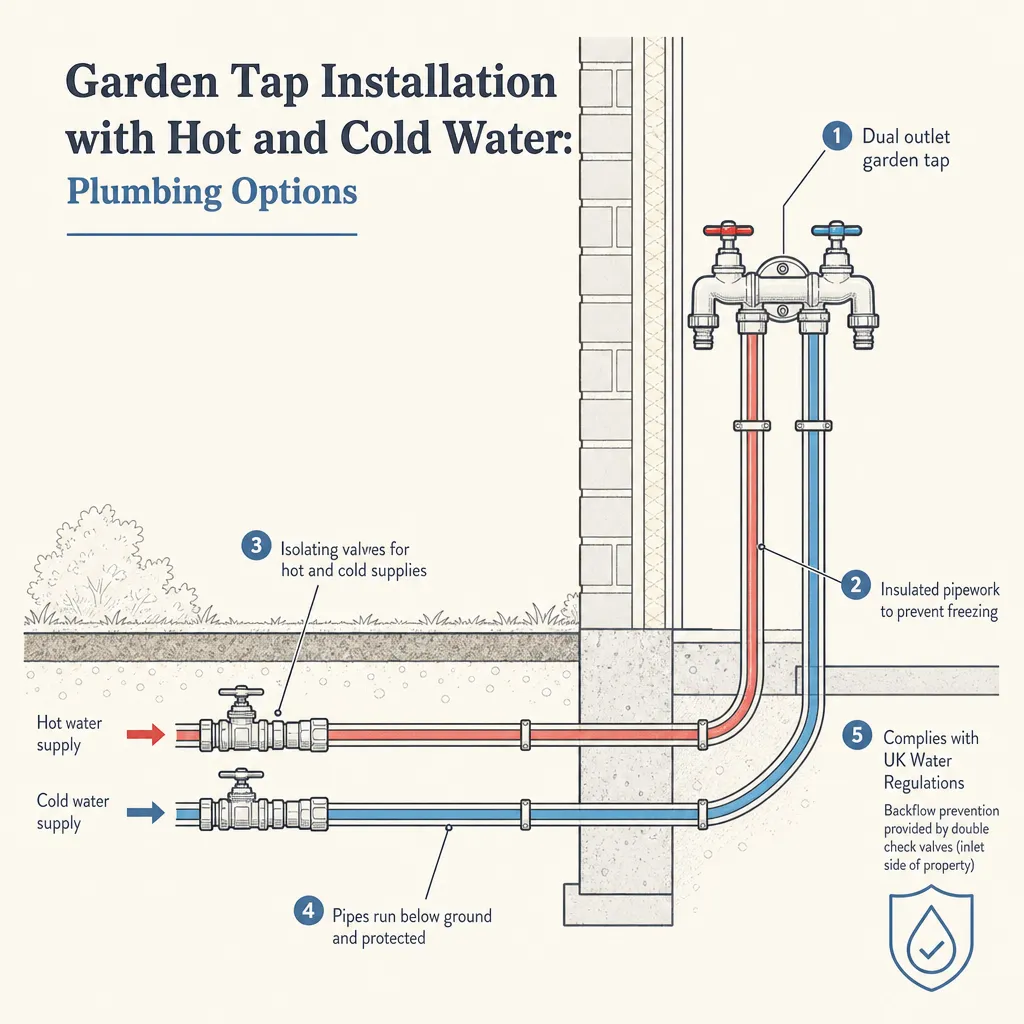
Adding a cold garden tap is a common DIY project, but routing hot water outdoors requires a plumber to connect to your domestic hot water system and comply with the Water Supply (Water Fittings) Regulations 1999.
 Improvement & Build
Sealing and Maintaining Historic Leaded Glass Windows: Preservation and Performance
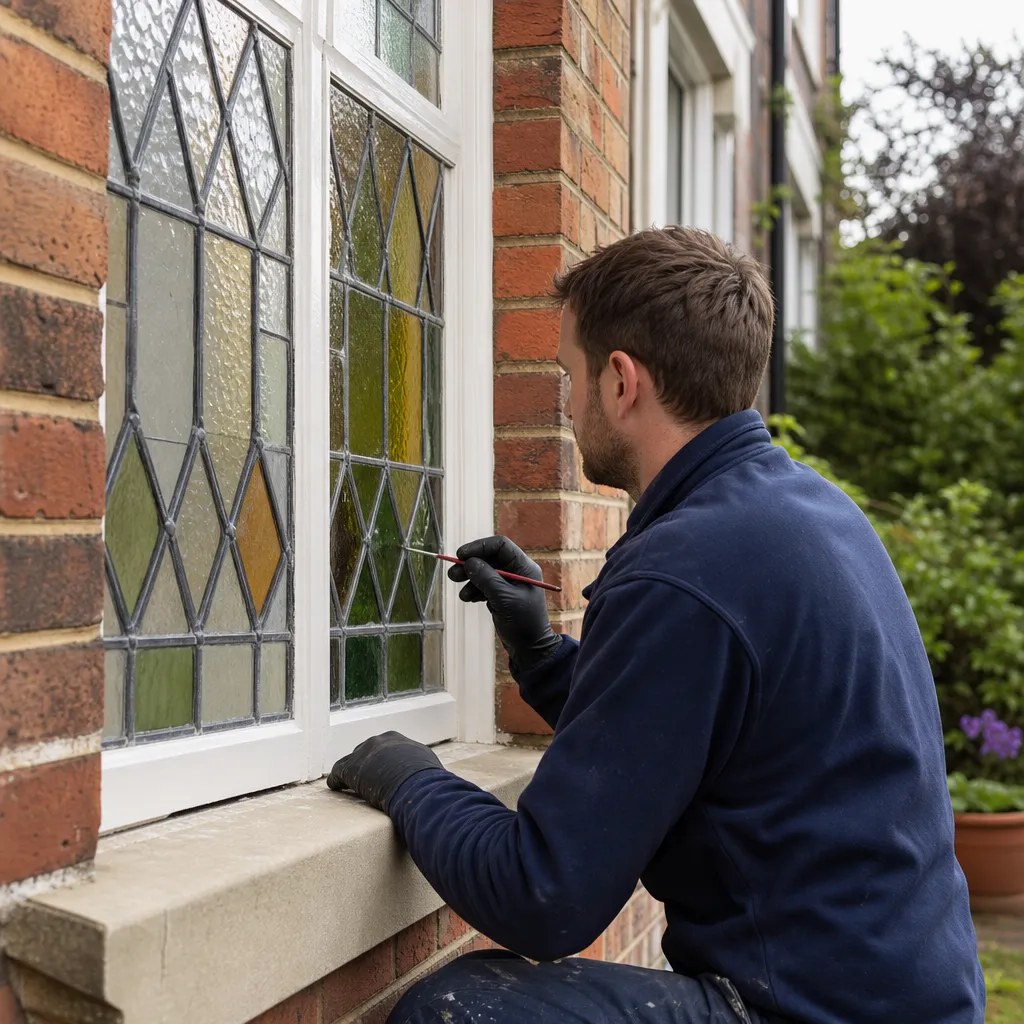
Leaded glass windows are maintained using traditional linseed oil cement — not silicone or modern sealants, which prevent natural movement in the lead came.