Transom Windows: Design, Features, and Installation
By Housey · Last reviewed 10th of May 2026
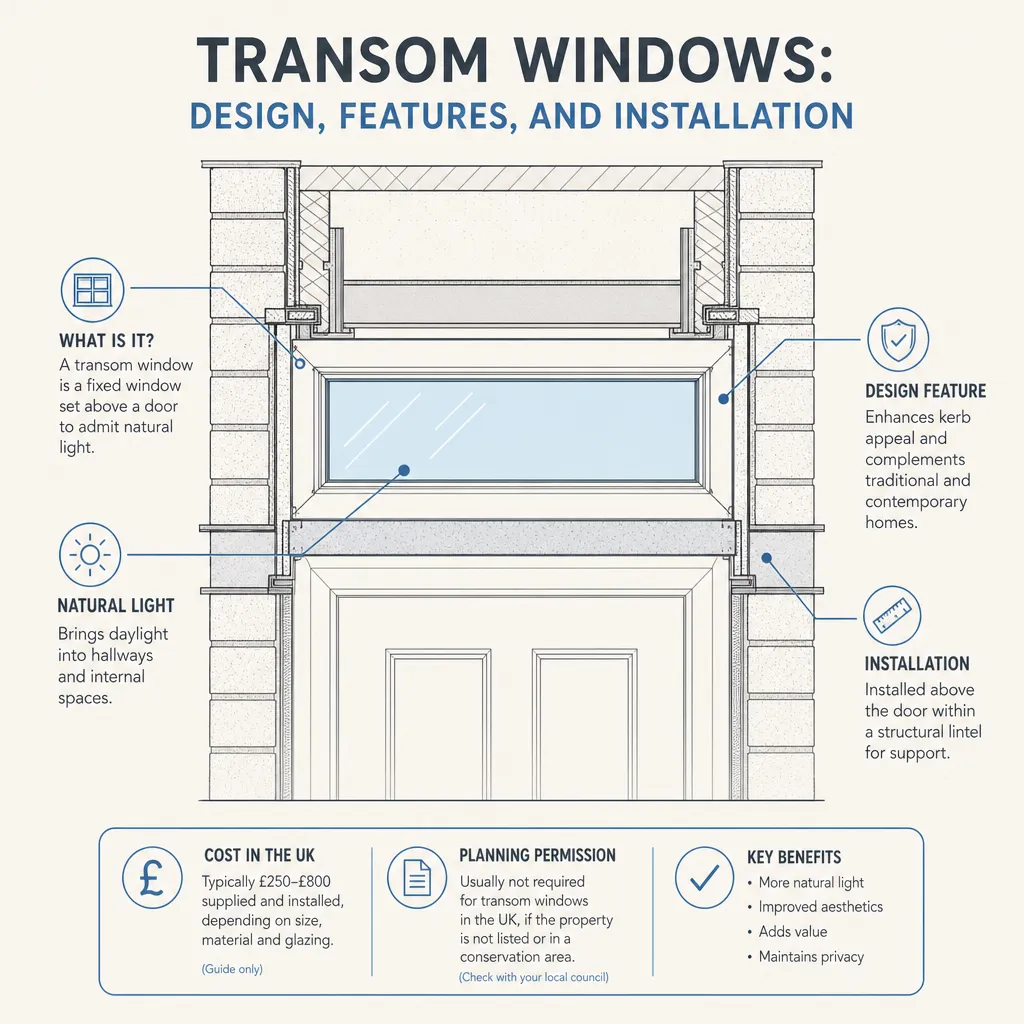
Transom Windows: Design, Features, and Installation
Transom windows appear across the full range of UK housing stock — from the timber fanlight above a Georgian front door to the slim aluminium bar dividing a contemporary extension's full-height glazing. Whether you are restoring an original feature, improving natural light in a dark entrance hallway, or specifying glazing for a new build or rear extension, understanding transom design, frame materials, planning obligations, and installation costs will help you achieve a result that suits the building, the budget, and building control requirements.
Key points
- Replacement transom windows in England must comply with Building Regulations Part L (thermal performance) and Part K (protection from falling), and must be notified to building control unless installed by a FENSA- or Certass-registered competent person.
- In conservation areas and on listed buildings, replacing or altering transom windows usually requires planning permission or Listed Building Consent; original glazing bar profiles and frame materials are often a condition of consent.
- Thermally broken aluminium and modern engineered timber frames achieve whole-window U-values of 1.2–1.6 W/m²K with double glazing, meeting the current Part L replacement threshold.
- The term fanlight specifically describes a semi-circular or fan-shaped transom light; the broader term transom light covers any glazed panel above a horizontal bar, including rectangular forms.
- A FENSA or Certass certificate issued on completion is evidence of building regulations compliance and will be requested during conveyancing.
What is a transom window?
A transom is a horizontal structural bar that divides a window or door opening. A transom window — also called a transom light — is the glazed panel positioned above this bar. In UK residential buildings, transoms appear most commonly:
- Above front and rear entrance doors, sometimes as part of a full door surround assembly including sidelights
- In staircase windows, dividing upper and lower glazed sections
- In bay windows or large sliding door assemblies where a horizontal bar provides proportion or structural support
- In extensions where high-level light is wanted but privacy is needed at eye level
The term fanlight — widely used in period property descriptions — refers specifically to a semi-circular or fan-shaped transom light, a defining feature of Georgian and Regency front doors. In modern usage it is often applied loosely to rectangular transom lights above doors; transom light is the more precise term.
Transom window types and frame materials
Frame material | Indicative whole-window U-value | Best suited to | Maintenance |
|---|---|---|---|
Softwood timber | 1.4–1.8 W/m²K (double glazed) | Period properties, conservation areas | Painting or staining every 5–10 years |
Hardwood timber | 1.4–1.6 W/m²K (double glazed) | Listed buildings, high-spec new builds | Less frequent than softwood; specialist finishes |
uPVC | 1.2–1.6 W/m²K | Modern homes, budget replacements | Very low — wipe clean |
Thermally broken aluminium | 1.2–1.5 W/m²K | Contemporary extensions, large openings | Very low — wipe clean |
Slim steel (heritage profile) | 2.0–2.8 W/m²K (slim double or secondary glazed) | Listed buildings, art deco, Crittall-style | Specialist painting and putty maintenance |
U-values are indicative and depend on glass specification and installation quality. Verify declared values with the supplier for building control and planning purposes.
Fixed vs. opening transom lights: A fixed transom light is sealed and admits light only. An opening transom incorporates a hinge and friction stay, providing natural ventilation above the door or window below. Where Part K of the Building Regulations applies — opening lights at height presenting a falling risk — restrictor stays limiting opening to 100 mm are typically required.
Design considerations for UK properties
Period and conservation area properties
In Georgian, Victorian, and Edwardian properties, transom and glazing bar details form part of the architectural character that local planning authorities seek to protect. Conservation area Supplementary Planning Documents commonly specify:
- Retention of original glazing bar widths (typically 44–50 mm for Victorian softwood)
- Prohibition of mock-Georgian glazing bars stuck to the outside face of a sealed double-glazed unit
- Putty-glazed or slim-profile double-glazed units to replicate the original appearance
- Handmade or horticultural glass on listed buildings to match the character of period glass
On listed buildings, any alteration to windows — including direct like-for-like replacement — requires Listed Building Consent. Engage your local planning authority early, and consider appointing a conservation architect for complex cases.
Contemporary extensions
In new extensions, a transom at high level introduces controlled natural light in spaces where privacy is needed at eye level. Aluminium systems with slim sightlines are widely used. For south-facing transoms, check the solar factor (g-value) of the specified glass to avoid overheating — a consideration under Part O of the Building Regulations, which applies to new buildings and extensions.
Dark entrance hallways
A transom light above a front door is one of the most cost-effective ways to improve natural light in a dark hallway without structural intervention. It can usually be incorporated into a door replacement package supplied and installed by a FENSA-registered company.
Planning permission and building regulations
When is planning permission needed?
Replacing existing windows like-for-like is usually permitted development for most houses in England under Schedule 2, Part 1, Class A of the Town and Country Planning (General Permitted Development) (England) Order 2015. Exceptions:
- Conservation areas: Like-for-like replacement may still require planning permission if an Article 4 Direction removes Class A permitted development rights. Check with your local planning authority.
- Listed buildings: All window alterations require Listed Building Consent regardless of similarity to the original.
- Flats: Flat owners have more restricted permitted development rights; check with your local planning authority before proceeding.
- New openings: Adding a transom where no opening previously existed may require planning permission depending on size and location.
Building Regulations compliance
Replacement glazing must comply with Part L, with current requirements setting a minimum window energy rating of Band C or a whole-window U-value no greater than 1.6 W/m²K. Part K applies where glazing is below 800 mm from floor level or where opening lights at height could create a falling risk.
Notification to building control is required unless the installer is registered under FENSA (Fenestration Self-Assessment Scheme) or Certass. Always ask for the certificate on completion — it is evidence of building regulations compliance and will be requested during conveyancing.
What does transom window installation cost?
Indicative UK costs, last reviewed 2026-05-10.
- uPVC transom light above a standard front door, supply and fit: £200–£600 depending on size, glass specification, and region.
- Timber or aluminium transom light, bespoke, supply and fit: £500–£2,000+ depending on material and complexity.
- Full door surround with sidelights and transom, uPVC: £800–£2,500 fitted.
- Heritage timber or slim-section aluminium door surround with transom, conservation specification: £2,000–£6,000+.
Quotes vary by region, material, glass specification, and access requirements. Request at least two itemised quotes from FENSA-registered installers.
Homeowner checklist: transom window installation
Before commissioning work, confirm the following:
When to get professional help
For like-for-like replacements on a standard house outside a conservation area, a FENSA-registered window company is usually sufficient. Seek specialist advice if:
- The property is listed or in a conservation area
- You are adding a new opening where none previously existed and the structural adequacy of the lintel is uncertain
- You are specifying bespoke heritage profiles or slim-section steel windows for a period building
- The proposed transom is in a structural wall and no confirmation of the existing lintel exists
How Housey can help
Housey connects you with vetted window and door installers who can advise on transom window options for your property type, specify glass performance to meet Part L requirements, and provide FENSA certification on completion.
Frequently asked questions
Do transom windows need planning permission?
For most houses in England, replacing an existing window like-for-like is permitted development and does not require planning permission. Listed buildings always require Listed Building Consent, and conservation area properties may require permission depending on local Article 4 Directions. Always check with your local planning authority before proceeding if you are unsure of your property's status.
What is the difference between a transom and a mullion?
A transom is a horizontal bar dividing a window or door opening. A mullion is a vertical bar. Many period windows feature both — mullions dividing the opening into vertical bays, and transoms dividing it horizontally — creating a grid of individual glazed panes characteristic of Georgian and Victorian architecture.
Can a transom window be made to open?
Yes. Opening transom lights, also called top lights or vent lights, are available in most frame materials and open on a friction stay to allow ventilation without compromising ground-level security. Where opening lights are positioned at height and a fall risk exists, restrictor stays limiting the opening to 100 mm may be required under Part K of the Building Regulations.
Are transom windows energy efficient?
Modern double- or triple-glazed transom units in thermally broken frames can achieve whole-window U-values of 1.2–1.6 W/m²K, meeting current Part L requirements. Energy performance depends on the glass unit specification and frame thermal performance rather than the transom design itself. Always ask the supplier for the declared whole-window U-value before ordering.
Sources and further reading
- Building Regulations Approved Document L: Conservation of fuel and power — GOV.UK
- Building Regulations Approved Document K: Protection from falling, collision and impact — GOV.UK
- Permitted development rights for householders: technical guidance — GOV.UK / DLUHC
- FENSA – Fenestration Self-Assessment Scheme — FENSA
- Windows: Historic England guidance — Historic England
Useful next reads
 Improvement & Build
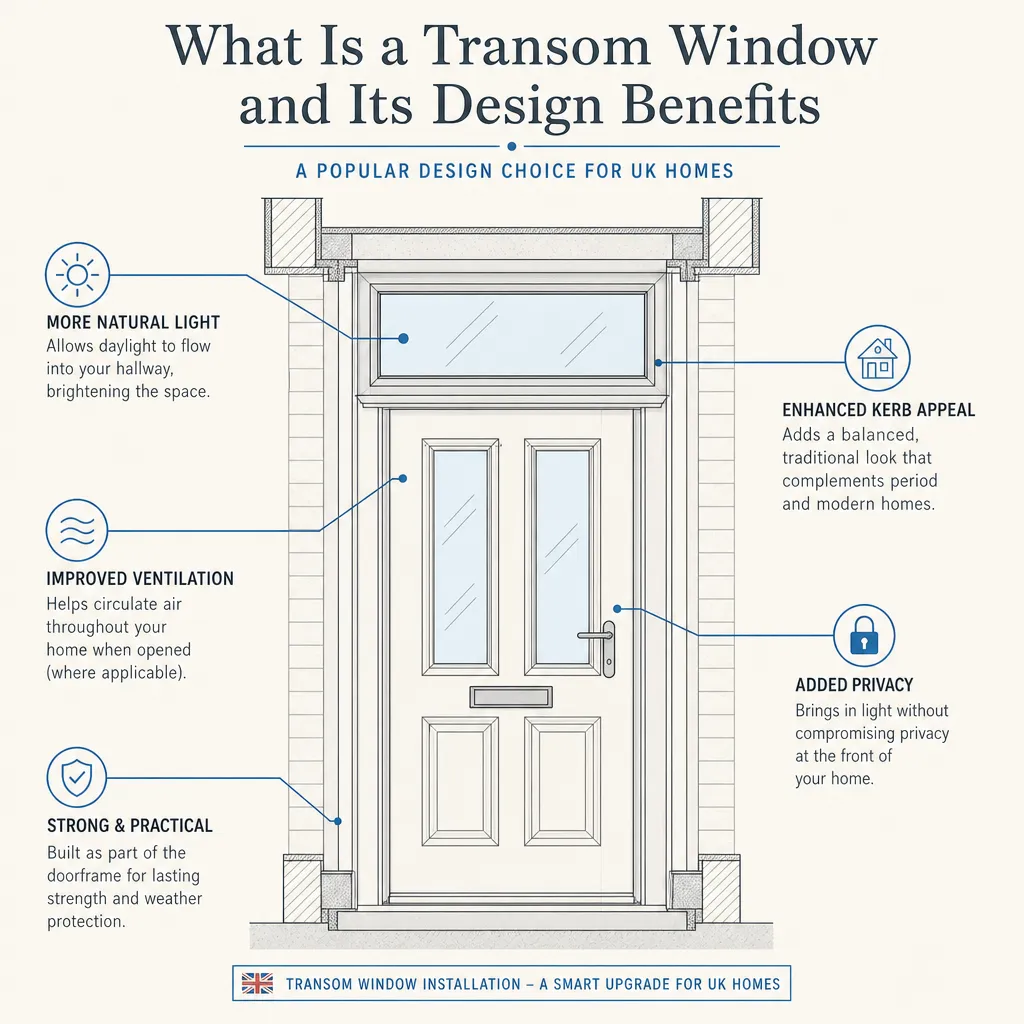
What Is a Transom Window and Its Design Benefits
A transom window is a glazed panel positioned above a door or another window, separated by a horizontal bar called the transom.
 Improvement & Build
Building an Outdoor Kitchen: Design, Materials, and Investment
Building an outdoor kitchen in the UK costs roughly £3,000–£25,000 depending on size and materials.
 Improvement & Build
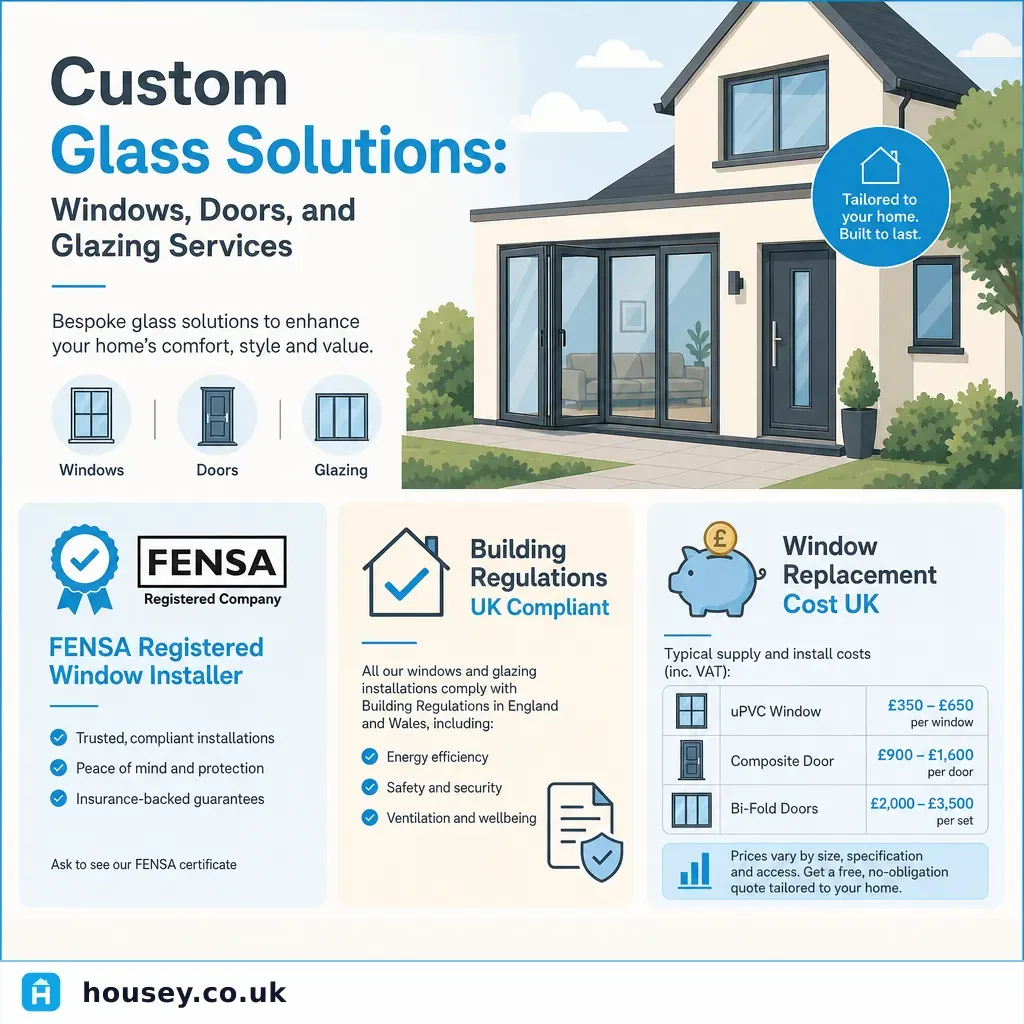
Custom Glass Solutions: Windows, Doors, and Glazing Services
Replacement windows and doors in England and Wales must comply with Building Regulations Approved Document L (2022), requiring a whole-window U-value of 1.
 Improvement & Build
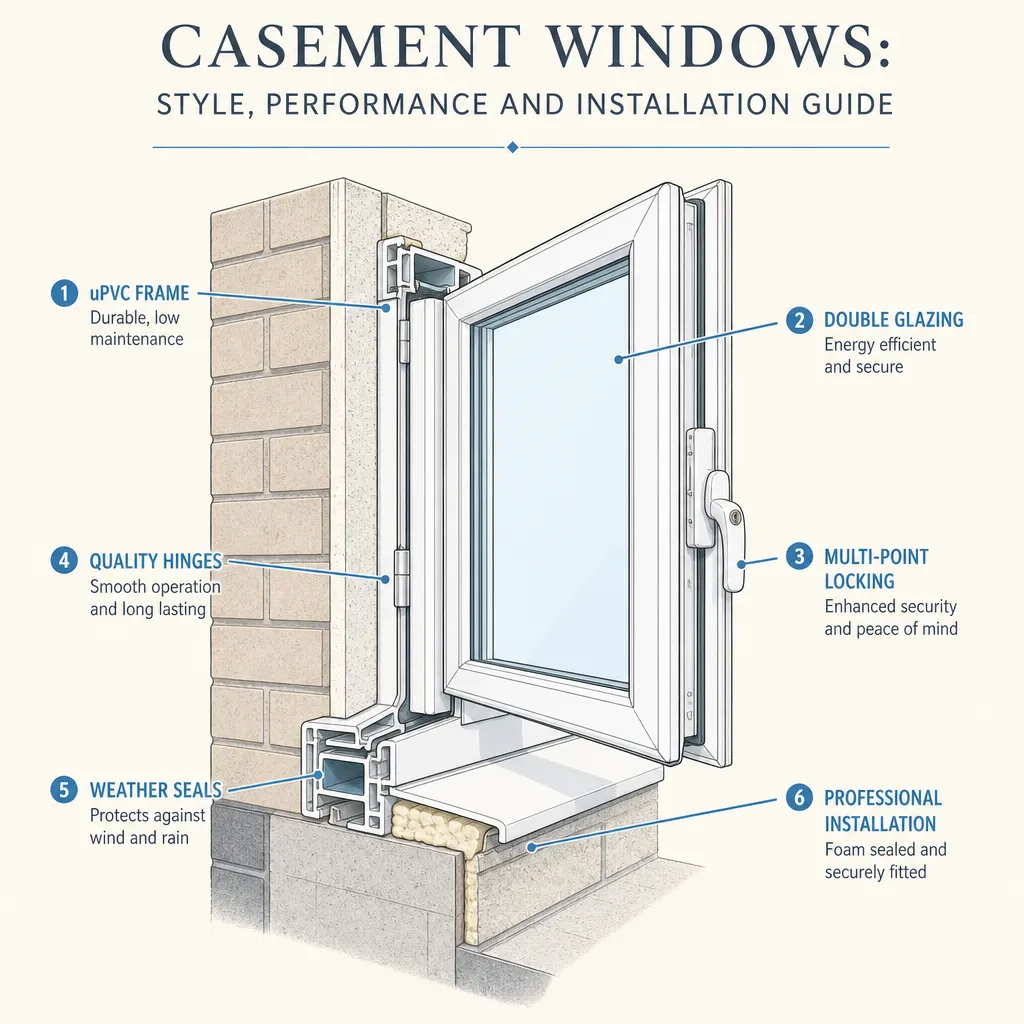
Casement Windows: Style, Performance and Installation Guide
Casement windows are hinged on one side and open outward, making them the most widely fitted window type in UK homes.
 Improvement & Build
Choosing the Right Windows for Kitchen Spaces: Materials and Styles
Kitchen windows must meet Building Regulations Part L, achieving at least Window Energy Rating Band C.