What Is a Transom Window and Its Design Benefits
By Housey · Last reviewed 31st of May 2026
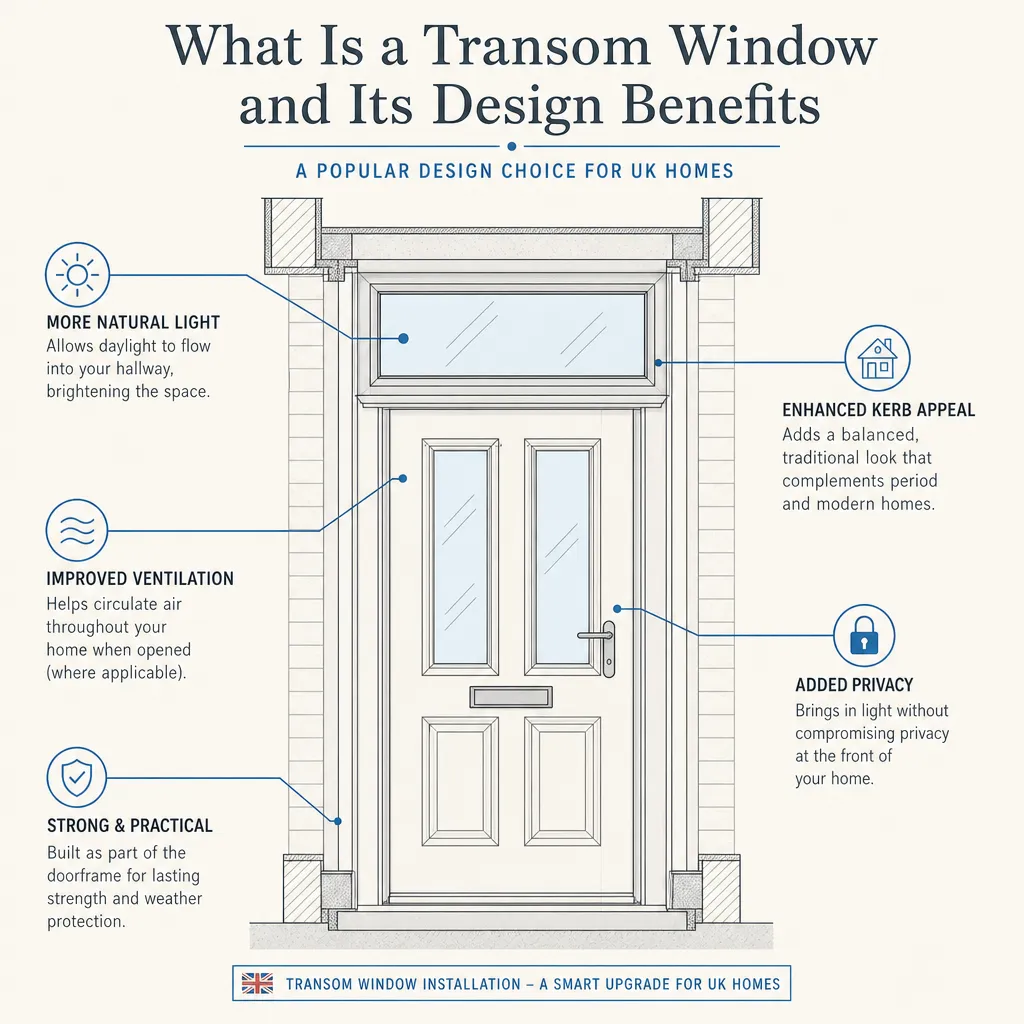
What Is a Transom Window and Its Design Benefits
Transom windows appear on Victorian terraces, Georgian townhouses, and contemporary extensions alike — yet many homeowners are unsure what distinguishes them from other window types or what to consider before adding or replacing one. Whether you are restoring an original fanlight above a period front door or planning a glazed panel above new bifold doors, understanding how transoms work and what regulations apply will help you make a better design decision and avoid planning or building control problems.
Key points
- A transom window is positioned above a door or another window and is separated from it by a horizontal bar called the transom, or transom bar.
- In listed buildings and conservation areas, replacing or altering transom windows may require Listed Building Consent or Conservation Area Consent from your local planning authority — unauthorised works to a listed building are a criminal offence.
- Replacement transom windows installed by a registered contractor must be certified under a competent person scheme such as FENSA or CERTASS, satisfying Building Regulations notification requirements without a separate building control application.
- Building Regulations Approved Document L requires replacement windows in England to achieve a whole-window U-value of 1.6 W/m²K or better.
- Fixed (non-opening) transom windows cannot be counted as escape windows for fire safety purposes under Building Regulations Approved Document B.
What is a transom window?
A transom window is a glazed panel positioned directly above a door or window opening, separated from the element below by a horizontal structural or decorative bar — the transom. The word derives from the Latin transtrum, meaning crossbeam.
Transom windows are distinct from sidelights (vertical glazed panels beside a door) and clerestory windows (positioned high on a wall above the main ceiling or roof line). In traditional UK architecture, the most recognisable form is the fanlight — a semicircular or rectangular transom above a Georgian or Victorian front door, often featuring decorative glazing bars in a fan or geometric pattern.
In contemporary UK homes, transom windows are commonly used:
- Above bifold or sliding doors, to continue the glazing height without extending the moveable opening.
- Above internal doorways, to borrow light between rooms without enlarging the wall opening.
- Above bath and shower rooms, providing high-level natural light while maintaining privacy.
- In hallways and stairwells, where standard-height windows are not always feasible alongside structural elements.
Design benefits of transom windows
Increased natural light without compromising privacy
Transom windows sit at or above eye level, admitting daylight without exposing interior spaces to external views. This makes them particularly effective in bathrooms, ground-floor front rooms facing a public pavement, and narrow hallways where a lower window would create overlooking concerns.
Improved daylight penetration in deep rooms
In terraced and semi-detached properties — where rooms can be long and narrow — a transom above a rear door or set of patio doors pushes daylight further into the space. The higher angle of incidence means more light reaches the back of the room than a standard window at the same position would achieve.
Architectural coherence on period properties
On Victorian and Georgian properties, an original or sympathetically matched fanlight above the front door enhances street appearance and, in some cases, can support a listed building or conservation area consent application by demonstrating sensitivity to historic character.
Space-efficient glazing
A transom allows you to increase the glazed area of an opening without widening or deepening the main door or window frame — useful where wall structure, permitted development limits, or planning constraints restrict the overall opening size.
Transom windows compared to other window types
Window type | Position | Primary benefit | Best suited to |
|---|---|---|---|
Transom | Above a door or window | Extra light, preserves wall space | Hallways, front doors, above patio and bifold doors |
Clerestory | High on wall above ceiling line | Passive solar light, strong privacy | Extensions, open-plan living rooms |
Sidelight | Vertical panels beside a door | Wider glazed entrance | Front doors, internal partitions |
Skylight or rooflight | Roof plane | Direct overhead daylight | Loft conversions, flat-roof extensions |
Standard casement | In wall at eye level | View, ventilation, and egress | All habitable rooms |
Planning and building regulations considerations
For most standard replacement transom windows in England and Wales, permitted development rights apply and no planning application is needed — provided the works do not increase the overall size of the original opening and the glazing performance meets Building Regulations.
Check with your local planning authority before proceeding if:
- The property is in a conservation area: replacing a window with a materially different design, frame material, or glazing pattern may require prior approval or Conservation Area Consent.
- The property is listed: any alteration to a window in a listed building — even a like-for-like replacement — may require Listed Building Consent.
- The property is a flat or maisonette: changes potentially affecting a shared fire strategy may require additional checks.
- The transom forms part of a new structural opening: creating a new opening requires Building Regulations approval and possibly planning permission.
All replacement glazing in England must meet minimum U-value requirements under Approved Document L and safety glazing requirements under Approved Document N. If your contractor is registered with FENSA or CERTASS, they will self-certify compliance — always request the certificate on completion.
Installation checklist for homeowners
Work through this checklist before instructing a window installer:
When to get professional help
A transom window replacement is generally low risk when carried out by a FENSA-registered installer on an existing opening. Seek professional advice if:
- The lintel above the existing opening looks damaged, cracked, or undersized for the span.
- You want to extend or enlarge the opening — this is structural work and will require Building Regulations approval and, likely, a structural engineer's calculations.
- The property is listed or in a conservation area.
- You are unsure whether the existing transom counts as an escape window under Approved Document B and whether any replacement would compromise fire safety.
How Housey can help
Housey connects you with vetted window and door installers across the UK, including specialists in period fanlights, contemporary glazed panels above bifold doors, and conservation-area-compliant replacements. Compare quotes from verified local specialists before committing to a specification.
Frequently asked questions
Do transom windows need planning permission in the UK?
Replacing an existing transom window on a non-listed house outside a conservation area usually falls within permitted development and does not need planning permission. Creating a new opening, altering a listed building, or working in a conservation area may require consent — check with your local planning authority before starting work.
What is the difference between a transom and a mullion?
A transom is a horizontal bar dividing a window or separating a glazed panel above a door from the element below. A mullion is a vertical bar dividing windows placed side by side. Many period windows, particularly Georgian sash windows, include both transoms and mullions in the same frame.
Can a transom window be opened for ventilation?
Yes — transom windows can be specified as opening units, typically top-hung or tilt-and-turn. An opening transom can contribute to habitable-room ventilation requirements under Building Regulations Approved Document F, which is useful in rooms where the main door or lower window cannot easily be left open.
Are transom windows energy efficient?
Modern transom windows with double or triple glazing and thermally broken frames can match the performance of standard windows. Under Building Regulations Approved Document L in England, replacement windows must achieve a whole-window U-value of 1.6 W/m²K or better. Ask your installer for the certified thermal performance data before agreeing a specification.
What is a fanlight?
A fanlight is a type of transom window found above doors on Georgian and Victorian properties. The name comes from the fan-shaped pattern of glazing bars radiating from a central point. Original cast-iron or timber fanlights are a character feature that conservation area guidance and Historic England often seek to preserve.
Sources and further reading
- Planning Portal — Frequently asked questions: windows — Planning Portal
- Building Regulations Approved Document L (Conservation of Fuel and Power) — GOV.UK
- FENSA — Fenestration Self-Assessment Scheme — FENSA
- Historic England — Windows in historic buildings — Historic England
- Building Regulations Approved Document N (Glazing Safety) — GOV.UK
Useful next reads
 Improvement & Build
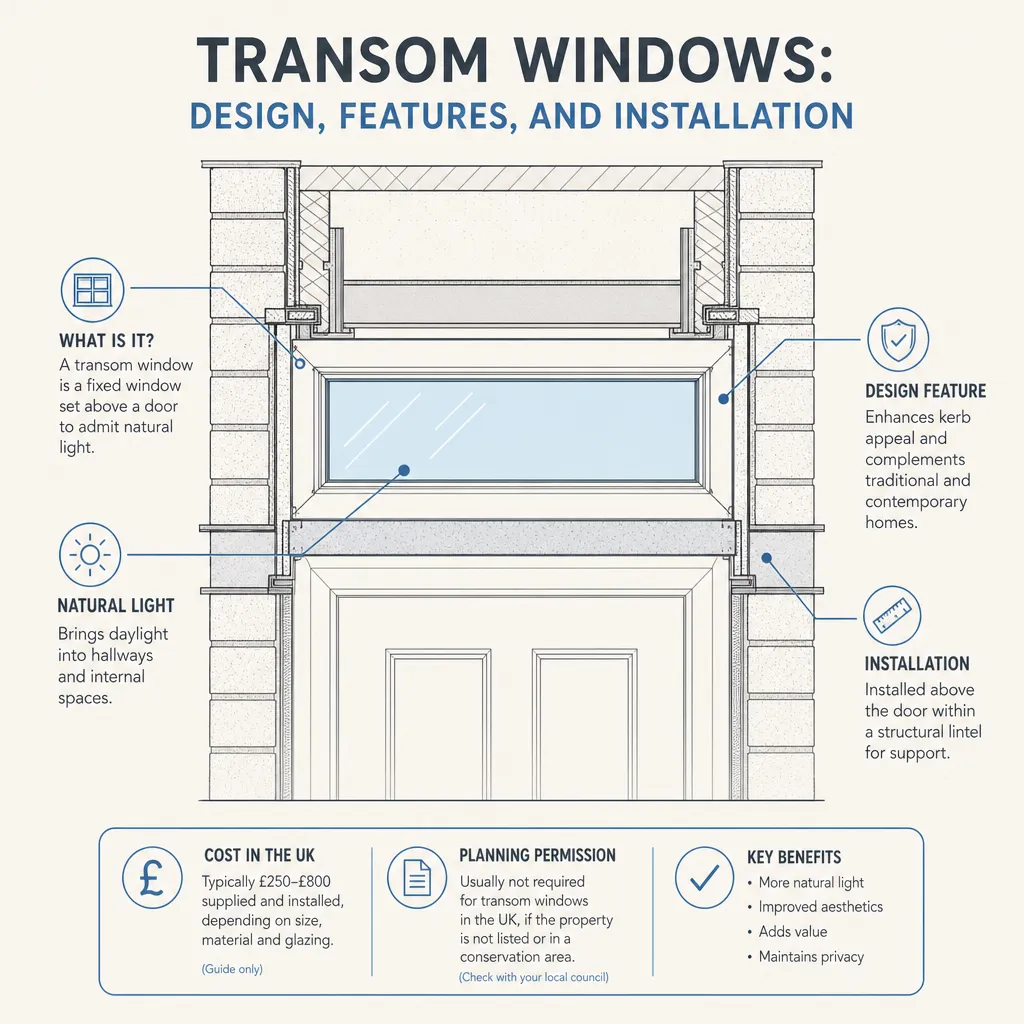
Transom Windows: Design, Features, and Installation
A transom window is a fixed or opening window positioned above a door or another window, separated by a horizontal bar called the transom.
 Improvement & Build
Building an Outdoor Kitchen: Design, Materials, and Investment
Building an outdoor kitchen in the UK costs roughly £3,000–£25,000 depending on size and materials.
 Improvement & Build
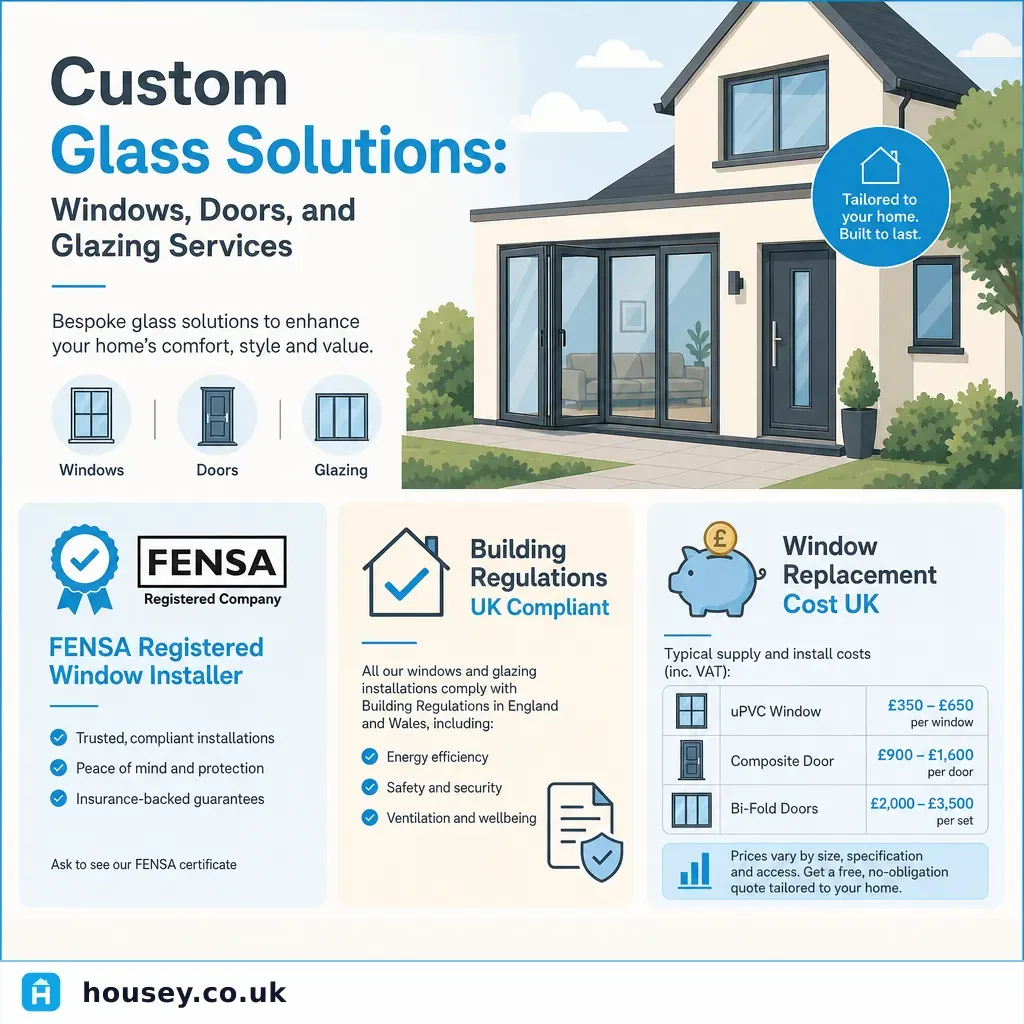
Custom Glass Solutions: Windows, Doors, and Glazing Services
Replacement windows and doors in England and Wales must comply with Building Regulations Approved Document L (2022), requiring a whole-window U-value of 1.
 Improvement & Build
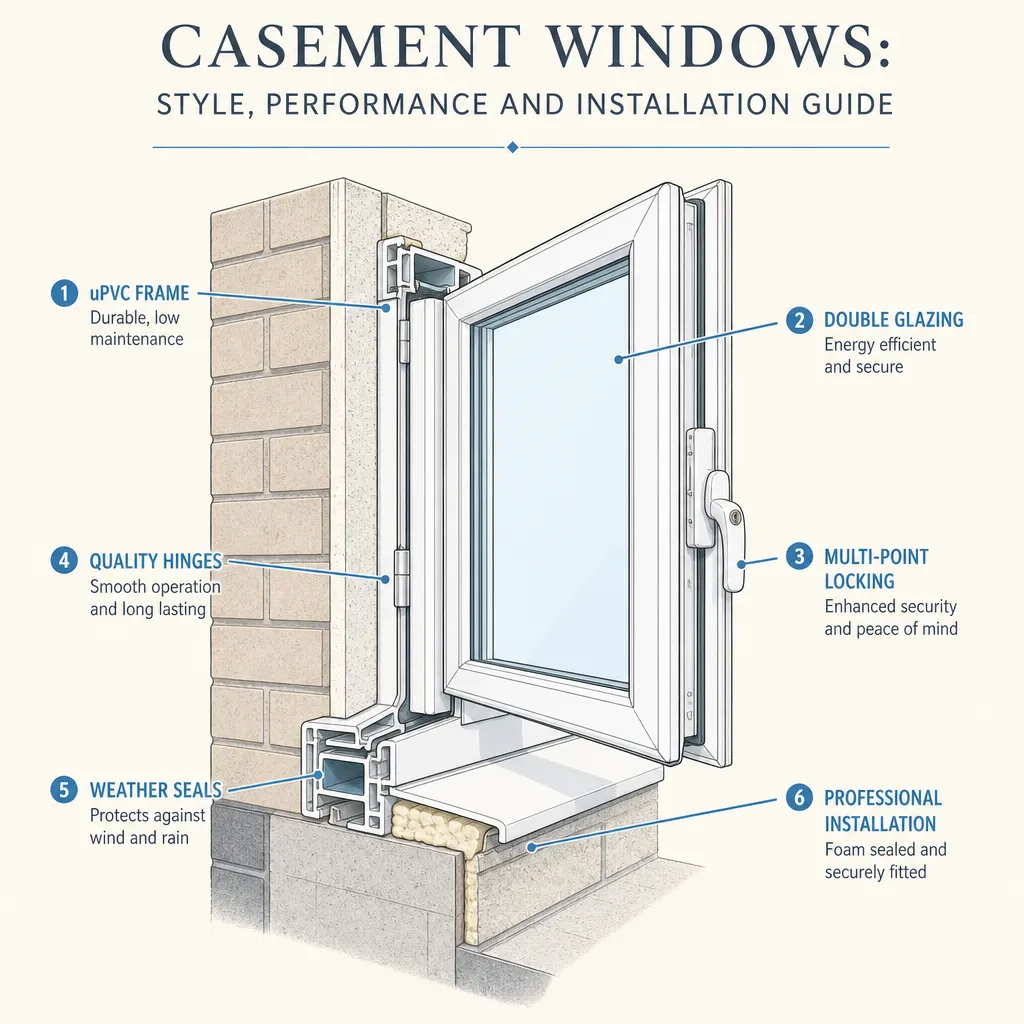
Casement Windows: Style, Performance and Installation Guide
Casement windows are hinged on one side and open outward, making them the most widely fitted window type in UK homes.
 Improvement & Build
Choosing the Right Windows for Kitchen Spaces: Materials and Styles
Kitchen windows must meet Building Regulations Part L, achieving at least Window Energy Rating Band C.