Treatment and Prevention of Damp Problems in Homes
By Housey · Last reviewed 31st of May 2026
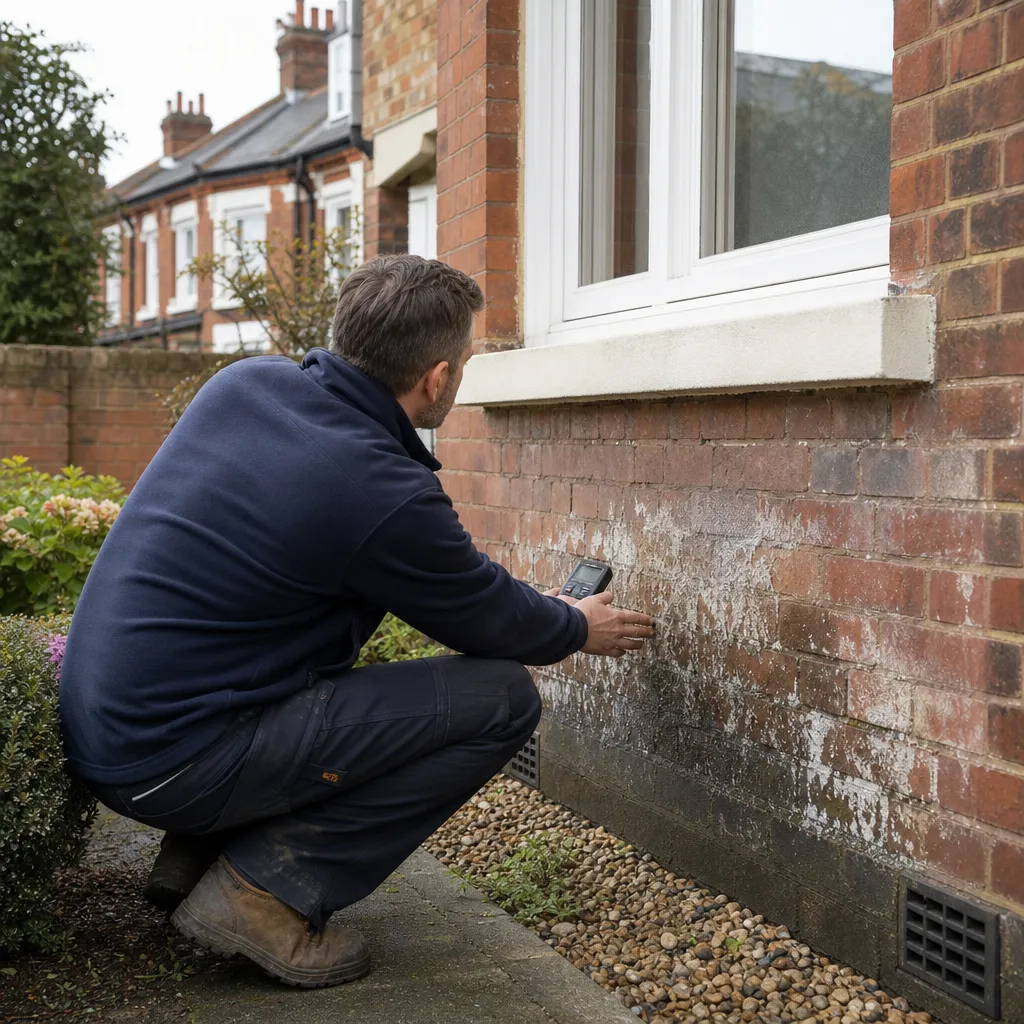
Treatment and Prevention of Damp Problems in Homes
Damp is one of the most commonly reported defects in UK housing and one of the most frequently misdiagnosed. Whether you are a buyer reviewing a survey report, a homeowner dealing with persistent black mould, or a landlord responding to a tenant complaint, understanding which type of damp you face — and why misidentification leads to expensive failed remediation — is the essential first step before any money is spent on treatment.
Key points
- The three main categories of damp in UK homes are rising damp, penetrating damp, and condensation; condensation is the most common, particularly in post-war housing with inadequate ventilation.
- RICS guidance notes that true rising damp above 1 m is rare; many cases attributed to rising damp are in fact caused by condensation, penetrating damp, or plumbing leaks.
- Approved Document C of the Building Regulations (site preparation and resistance to contaminants and moisture) sets standards for moisture resistance in new construction; most pre-1985 homes predate current standards.
- PAS 2035 — the British Standards specification for retrofitting dwellings for energy efficiency — requires a moisture risk assessment before insulation or airtightness measures are installed, to prevent trapping moisture within wall constructions.
- Under the Homes (Fitness for Human Habitation) Act 2018, landlords in England have a legal duty to ensure properties are free from damp and mould that constitute a health hazard; the UK Health Security Agency has published guidance on the respiratory effects of indoor mould exposure.
Understanding the three types of damp
Getting the diagnosis right determines whether treatment works at all. Applying a chemical damp-proof course injection to a building with a condensation problem, for example, will not resolve the issue and may cause further damage to the plaster and wall fabric.
Damp type comparison
Type | How it presents | Common causes | Where it typically appears | Usual approach |
|---|---|---|---|---|
Rising damp | Tide mark at low level (typically below 1 m), white salt deposits (efflorescence), flaking plaster | Failed or absent damp-proof course (DPC), bridged DPC, high external ground level | Ground-floor walls, lower wall sections only | DPC repair or chemical injection, salt-resistant replaster, reduce external ground levels |
Penetrating damp | Localised patches spreading inward from the external face; typically worse during or after rain | Defective pointing, failed render, blocked gutters, cracked flashing, flat roof failure | External walls, ceilings below flat roofs, around window and door reveals | Repair the defect: repoint, re-render, replace flashing, clear gutters, renew roof covering |
Condensation | Black mould in corners, behind furniture, around window frames; steamed-up glass | Inadequate ventilation, insufficient background heating, thermal bridging, lifestyle moisture | Bathrooms, kitchens, north-facing rooms, external wall corners, window reveals | Improve ventilation and heating, address thermal bridges, manage indoor moisture sources |
How to identify which type of damp you have
A professional survey is the appropriate response to persistent or extensive damp. The following decision tree can help you identify the likely category before commissioning specialist work.
Decision tree: which type of damp?
- Is the damp at low level (below 1 m), with a visible tide mark and white crystalline deposits on the wall surface? → Possible rising damp or bridged DPC. Do not treat without a specialist damp survey first — the same appearance can result from multiple different causes.
- Does the damp patch appear or worsen during or after heavy rain? → Likely penetrating damp. Inspect gutters, downpipes, pointing, flashings, and any roof directly above the affected area.
- Is the problem black mould in room corners, around window frames, or behind furniture — particularly in winter? → Likely condensation. Assess ventilation provision, heating patterns, and lifestyle moisture sources before any chemical treatment is considered.
- Is damp widespread, affecting multiple walls or rooms across the building? → Could be multiple simultaneous causes. Commission a damp and timber survey from a qualified specialist before doing anything else.
- Did damp or mould appear after insulation, cladding, or airtightness improvements? → May be moisture trapped or redistributed by the retrofit works. Commission a ventilation and condensation assessment and check whether the works complied with PAS 2035 requirements.
Treatment approaches by damp type
Penetrating damp
Treatment follows the building defect, not the surface symptom:
- Clear blocked gutters, downpipes, and hoppers; recheck after rainfall.
- Repoint deteriorated mortar joints using an appropriate mix — lime mortar for pre-1919 solid-wall properties; avoid dense cement mortar, which can trap moisture in older masonry.
- Replace failed lead or lead-effect flashing around chimney stacks, dormers, and roof abutments.
- Re-render cracked or failed external render, specifying a breathable render system for solid-wall properties.
- Replace failed flat roof coverings with a properly warranted modern system.
Do not apply impermeable waterproof coatings to solid brick or stone walls without specialist assessment; these can trap moisture inside the wall fabric and cause worse damage over time.
Rising damp
Where a genuine failed or absent DPC is confirmed by calibrated moisture meter readings at multiple heights:
- Chemical injection of a new DPC is the most common remediation method; use a contractor with Property Care Association (PCA) membership.
- Replastering with salt-resistant renovating plaster is typically required after DPC treatment, as salts drawn up by the previous damp will continue to affect standard plaster.
- Check and reduce external ground levels if they are bridging or close to the existing DPC.
- Be cautious of any contractor who diagnoses rising damp without evidence-based moisture readings — probe-based meter data at multiple heights is the minimum acceptable standard.
Condensation
Condensation responds to environmental change rather than to chemical treatment:
- Improve extract ventilation in kitchens and bathrooms. Building Regulations Part F specifies minimum rates: typically 15 l/s intermittent or 8 l/s continuous for a bathroom.
- Consider positive input ventilation (PIV) or mechanical ventilation with heat recovery (MVHR) where extract ventilation alone is insufficient.
- Address thermal bridging at floor-wall, roof-wall, and window reveal junctions through appropriate insulation detailing.
- Maintain background heating in unused rooms to keep surface temperatures above the local dewpoint.
- Keep trickle vents in windows open at all times; blocking them significantly increases condensation risk.
Prevention: keeping damp out long-term
Routine maintenance is more cost-effective than remediation. A practical annual routine for UK homeowners:
- Autumn: clear gutters and downpipes before leaf fall; inspect roof flashings, ridge tiles, and chimney pointing.
- Winter: check for condensation on windows and in wall corners; confirm extract ventilation is functioning correctly.
- Spring: inspect external render, brickwork pointing, and ground levels around the building; look for new cracks or movement near water entry points.
- Year-round: keep bathroom and kitchen extract fans clean and working; replace MVHR filters per the manufacturer's guidance.
Important limitations
This article provides general information about types of damp and common approaches to treatment and prevention in UK homes. Damp diagnosis is technically complex: identical visual symptoms can have very different underlying causes, and treating the wrong cause leads to ineffective or damaging remediation. The regulatory context — including landlord duties and retrofit standards — can change. This article does not constitute professional, legal, or structural advice. A qualified surveyor should assess any persistent, extensive, or structurally adjacent damp before remediation work is instructed.
When this becomes urgent
Seek professional advice without delay if:
- Structural timbers — floor joists, roof timbers, lintels, or wall plates — show any sign of softness, staining, or wet rot adjacent to a damp area.
- Mould is extensive, recurring within weeks of cleaning, or affecting multiple rooms; this can present a health risk to occupants as well as indicating a systemic building defect.
- Damp appeared or worsened following a major retrofit: external wall insulation, internal wall insulation, or significant draught-proofing measures.
- Wall cracks are present alongside damp — the two may be unrelated, but the combination should be assessed both structurally and for moisture.
- You are a landlord with a tenant reporting damp or mould: under the Homes (Fitness for Human Habitation) Act 2018, damp causing a health hazard may give tenants legal grounds for action.
What to ask a qualified professional
Before appointing a surveyor or damp specialist:
- Are you a member of the Property Care Association (PCA), or do you hold a RICS qualification covering damp investigation?
- Will your survey identify the type and likely cause of the damp, not just record its presence?
- Will you provide calibrated moisture meter readings at multiple heights and locations, included within the written report?
- Do you have a financial interest in the remediation you recommend — will your company also carry out the treatment work?
- If condensation is a possible cause, will you assess ventilation provision as part of the inspection?
- What guarantees cover any remediation work, and are they backed by independent insurance?
When to get professional help
A damp and timber survey is the appropriate starting point where damp is persistent, widespread, or of uncertain origin. Where condensation is the suspected primary cause, a ventilation and condensation assessment can identify deficiencies before any treatment is committed to. Where damp is clearly associated with a single identifiable building defect — cracked render, a failed flat roof, or a localised DPC failure — a specific defect survey provides a focused diagnosis and a repair specification.
How Housey can help
Housey connects homeowners with qualified specialists for damp and timber surveys, ventilation and condensation assessments, and specific defect surveys. Commissioning the right diagnosis before spending on treatment is consistently the most cost-effective step you can take — and the most reliable way to avoid repeating the same problem.
Frequently asked questions
Is rising damp common in UK homes?
Less common than many contractors suggest. RICS guidance notes that true rising damp above 1 m is rare, and many cases attributed to it are caused by condensation, penetrating damp, or plumbing leaks. Professional diagnosis using calibrated moisture meters and probe evidence at multiple heights is essential before any remediation is instructed.
Can I treat damp myself?
Minor condensation can be improved by better ventilation, consistent background heating, and routine maintenance — reasonable steps for any homeowner to take. Penetrating damp and rising damp, however, require professional diagnosis and in most cases professionally carried out repair work. Treating the visible symptom without identifying the underlying cause will not resolve the problem.
Does damp affect property value?
Yes. Unresolved damp will be noted in a RICS survey report and may give buyers grounds to renegotiate the purchase price or withdraw their offer. Remediated damp with evidence of professional treatment, third-party guarantees, and follow-up surveys is generally treated more favourably than untreated or cosmetically covered damp by both surveyors and lenders.
What is the link between energy retrofit and damp risk?
Adding insulation or airtightness measures without appropriate ventilation design can trap moisture within the building fabric or cause interstitial condensation inside wall constructions. PAS 2035 requires a moisture risk assessment as part of any major energy retrofit. If you are planning external wall insulation or significant draught-proofing, commission a ventilation assessment beforehand.
Who regulates damp surveyors in the UK?
There is no single statutory regulator. The Property Care Association (PCA) sets industry standards and CPD requirements for member firms. RICS-qualified surveyors can also carry out damp investigations as part of building surveys. Look for PCA membership or RICS qualification when appointing a specialist, and be cautious of contractors who both diagnose damp and sell the treatment products in the same visit.
Sources and further reading
- Approved Document C: site preparation and resistance to moisture — GOV.UK / DLUHC
- PAS 2035: retrofitting dwellings for energy efficiency — BSI Group
- Damp and mould: understanding and addressing the health risks — UK Health Security Agency
- Homes (Fitness for Human Habitation) Act 2018 — legislation.gov.uk
- Property Care Association: find a specialist member — Property Care Association
- RICS: home surveys and building inspections — RICS
Useful next reads
 Surveys & Inspections
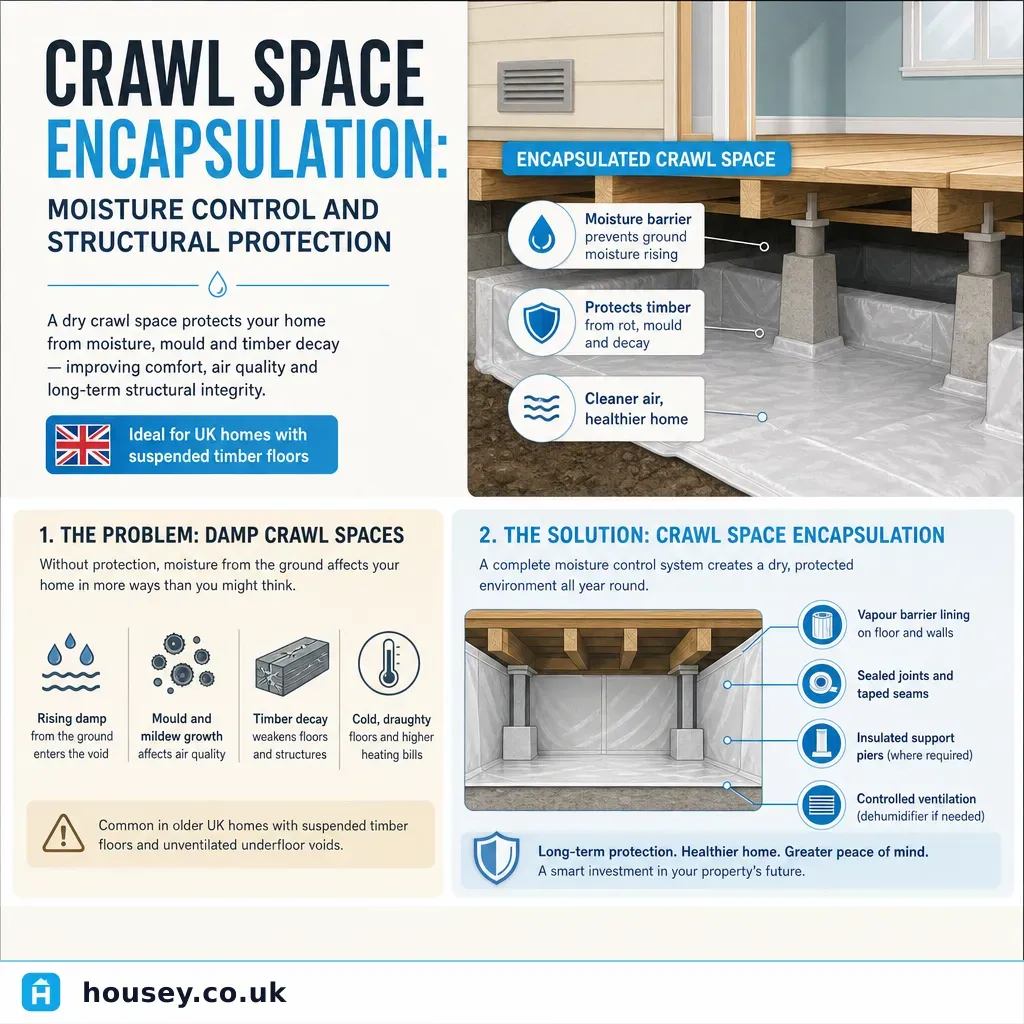
Crawl Space Encapsulation: Moisture Control and Structural Protection
Crawl space encapsulation seals the subfloor void beneath suspended timber floors with a vapour control layer and improved ventilation to prevent rising damp, condensation, timber rot and structural damage.
 Surveys & Inspections
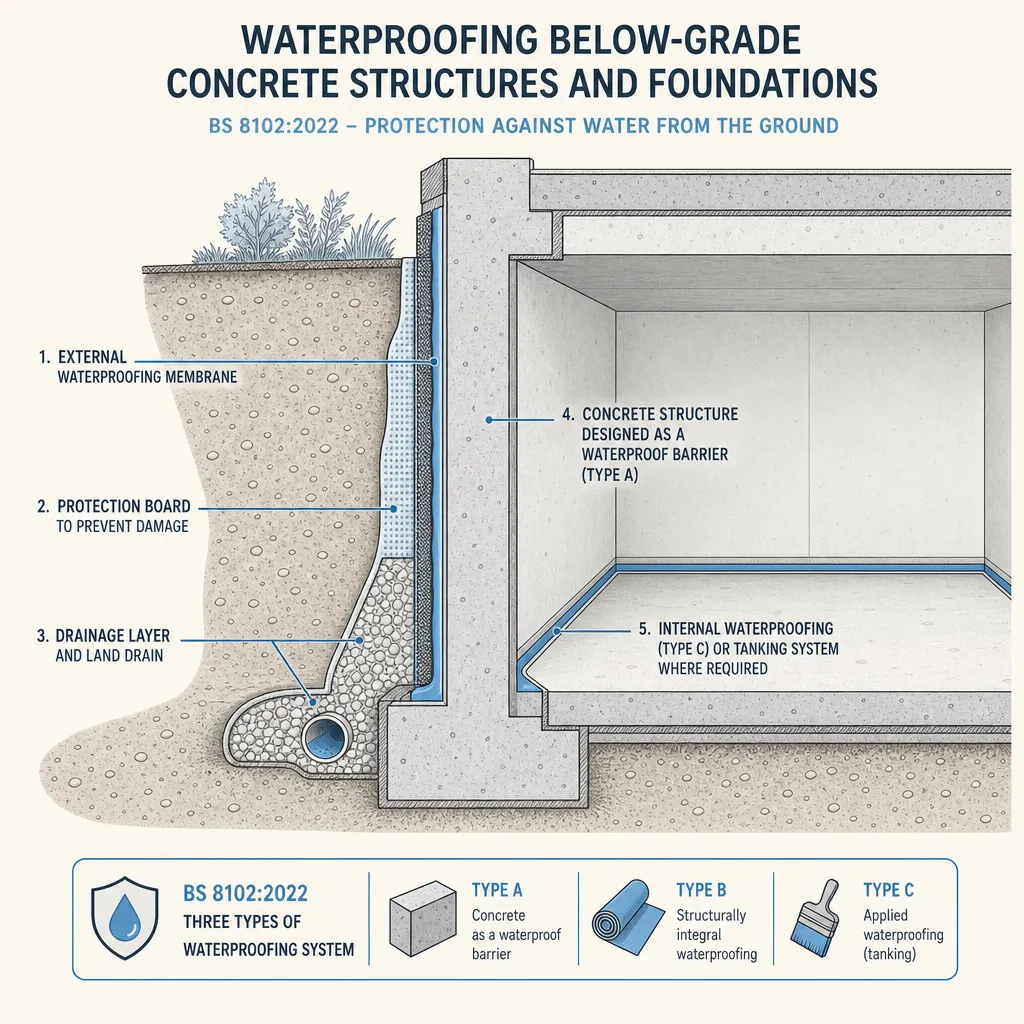
Waterproofing Below-Grade Concrete Structures and Foundations
Below-grade waterproofing in the UK should be designed to the grade of protection required under BS 8102:2022.
 Surveys & Inspections
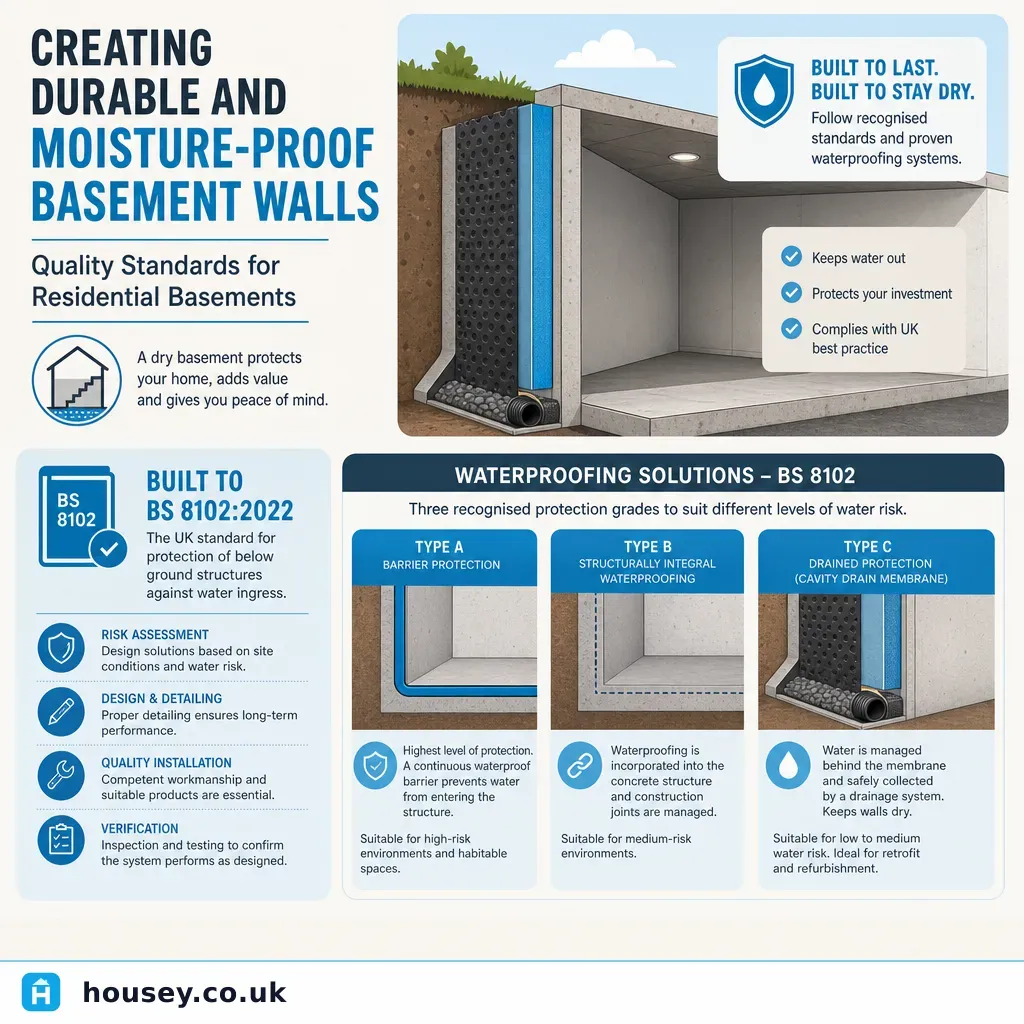
Creating Durable and Moisture-Proof Basement Walls: Quality Standards for Residential Basements
Basement waterproofing in UK homes must meet BS 8102:2022 requirements.
 Surveys & Inspections
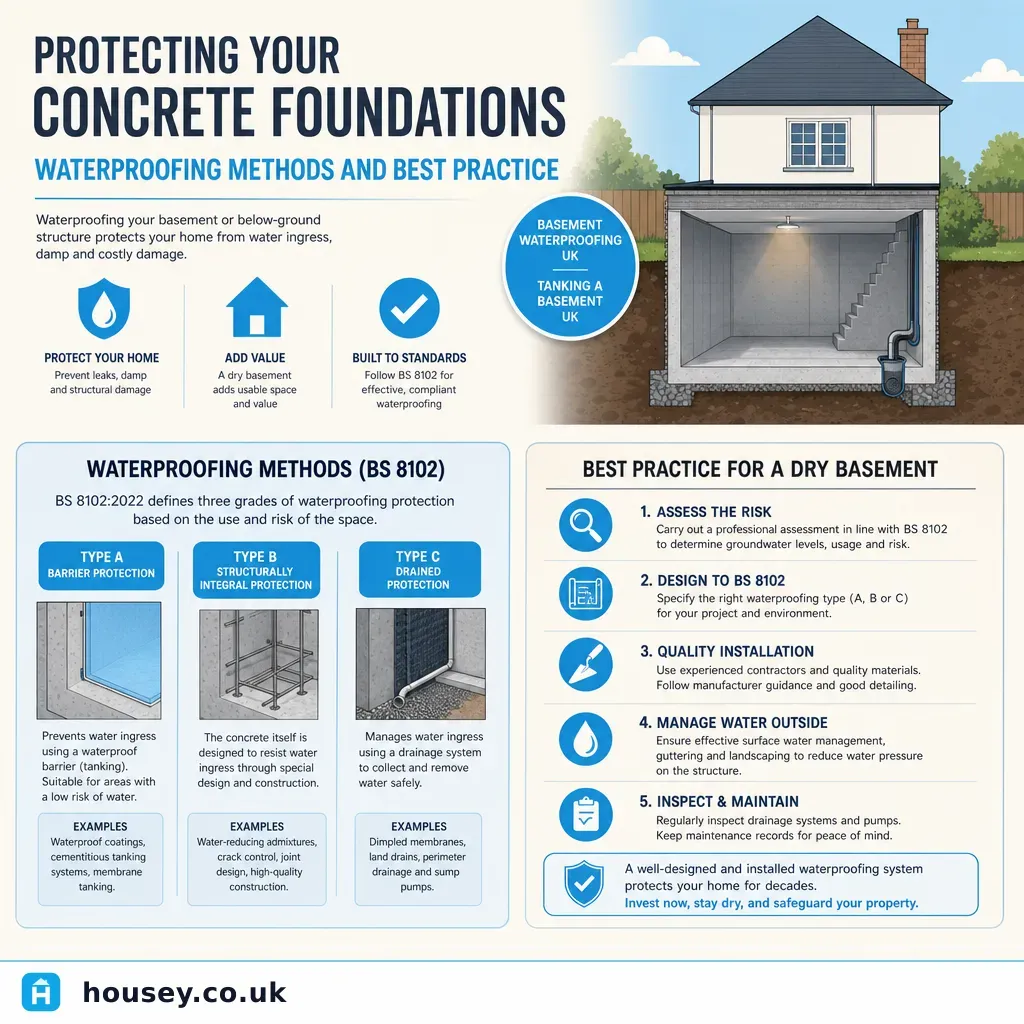
Protecting Your Concrete Foundations: Waterproofing Methods and Best Practice
Foundation waterproofing protects below-ground concrete structures from hydrostatic pressure and soil moisture.
 Surveys & Inspections
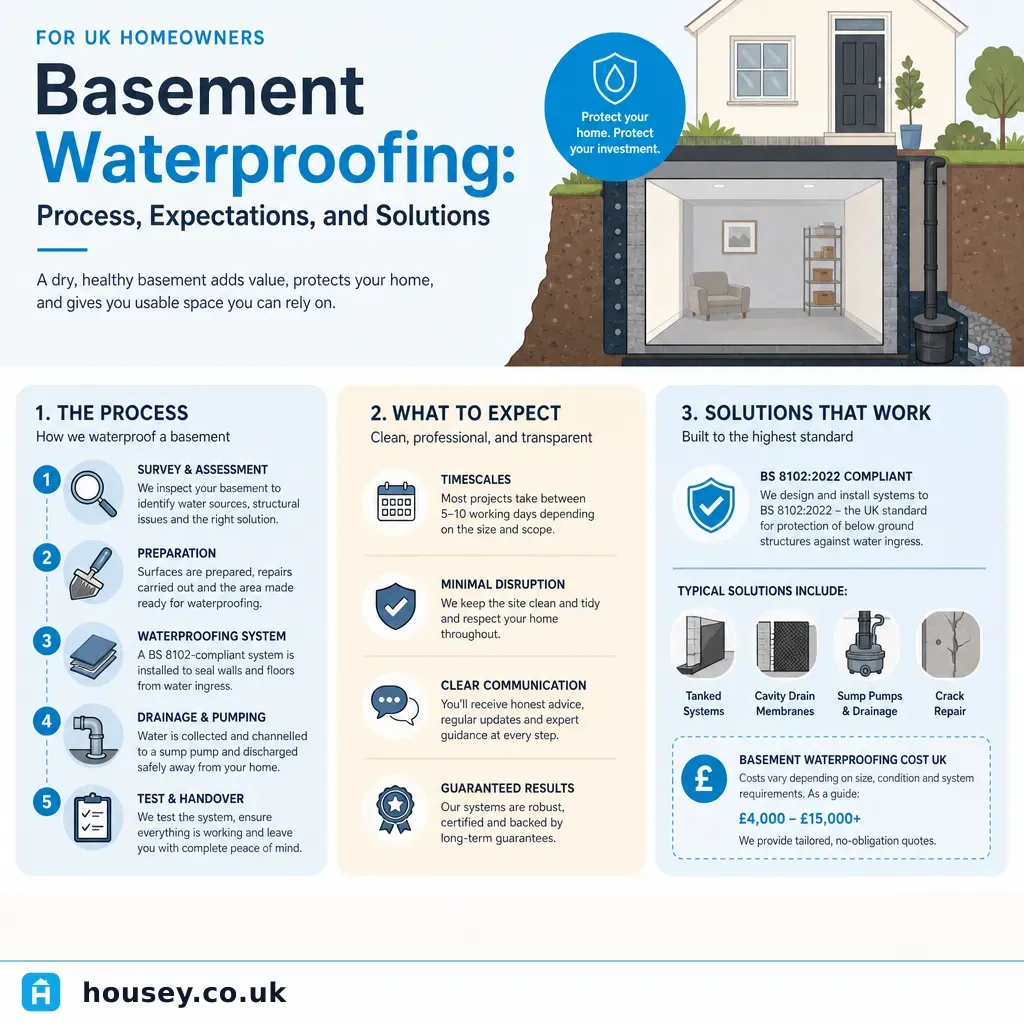
Basement Waterproofing: Process, Expectations, and Solutions
Basement waterproofing in the UK is governed by BS 8102:2022, which defines three protection grades and three system types: Type A barrier tanking, Type B structurally integral concrete, and Type C cavity drain membranes.