Tree Trimming Safety: What Property Owners Should Know
By Housey · Last reviewed 25th of May 2026
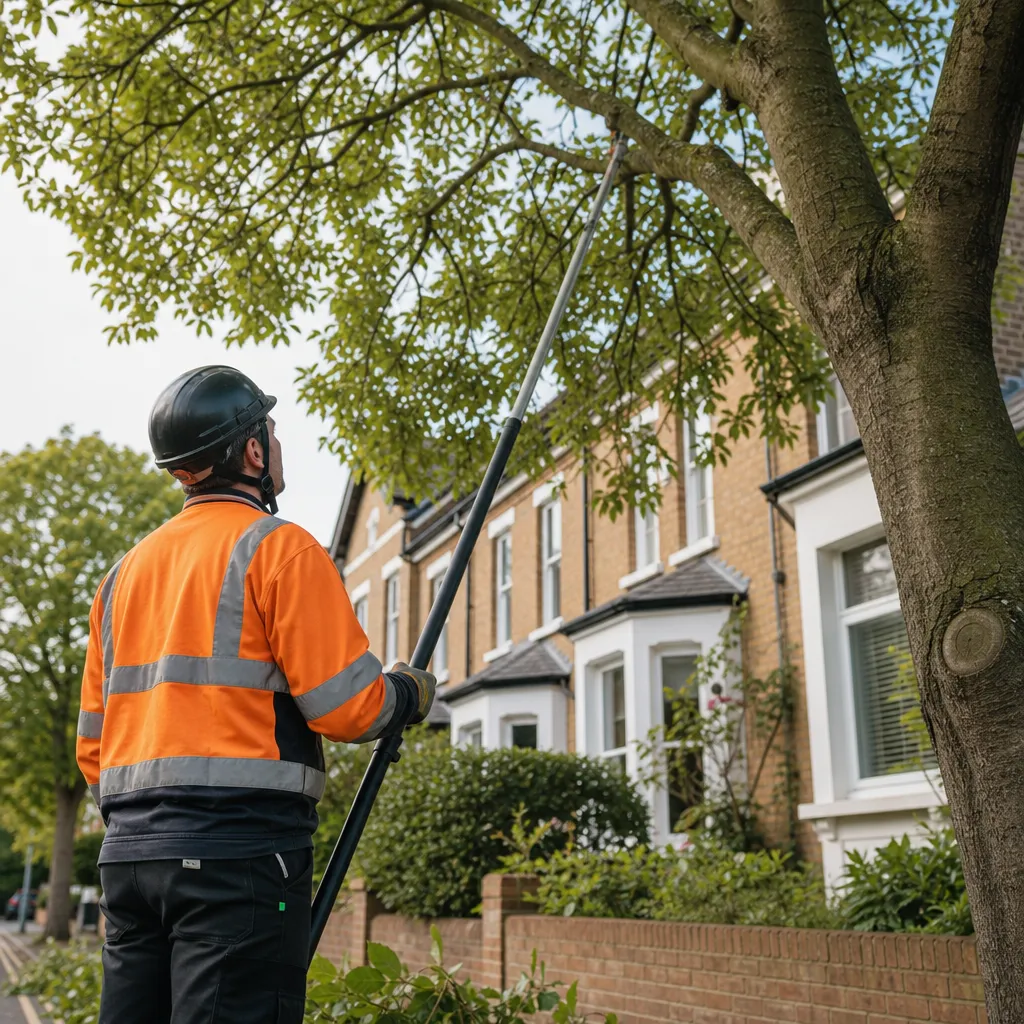
Tree Trimming Safety: What Property Owners Should Know
Tree work accounts for a disproportionately high number of serious and fatal accidents in UK horticulture and arboriculture each year. For property owners, the practical questions are: what risks are present on your land, what legal responsibilities do you carry, and at what point does tree maintenance move firmly beyond the safe DIY threshold? Understanding these boundaries protects you, your family, visitors, and neighbours.
Key points
- The HSE (Health and Safety Executive) classifies arboricultural work as high-risk; the sector records significantly above-average rates of serious and fatal injury compared to broader construction and horticulture.
- Property owners have a statutory duty of care under the Occupiers' Liability Act 1957 to ensure trees on their land do not pose a risk to lawful visitors; a related duty under the Occupiers' Liability Act 1984 may apply to unauthorised entrants.
- Work at height above 2 m without appropriate equipment, training, and risk assessment carries serious injury risk — the Work at Height Regulations 2005 set the professional standard that qualified arborists are required to meet.
- Trees growing within or adjacent to overhead electricity distribution lines must not be trimmed without prior contact with the relevant Distribution Network Operator (DNO) — many distribution cables are not fully insulated.
- Qualified arborists should hold a recognised NPTC/City & Guilds chainsaw and climbing certificate; the Arboricultural Association Approved Contractor scheme provides independent verification of competence and insurance.
Why tree trimming is classified as high-risk
Tree work presents a combination of hazards that rarely occur together in other domestic maintenance tasks:
- Working at height — even heights of 3–5 m above ground carry serious injury potential from an uncontrolled fall
- Chainsaws and cutting equipment — kickback, entanglement, and cutting errors are responsible for a significant proportion of arboricultural injuries; the HSE requires chainsaw operators to hold a recognised competency certificate such as NPTC CS30 or CS31
- Falling material — sections under stored tension can move unpredictably; a poorly planned cut can cause a barber-chair failure, where the stem splits vertically rather than falling as intended
- Proximity to overhead utilities — distribution network cables are not always visibly insulated; contact can be fatal at typical distribution voltages
- Unstable anchor points — dead, decayed, or structurally compromised wood can fail without warning, including under the weight of a climber
The HSE's arboriculture safety guidance and the Arboriculture and Forestry Advisory Group (AFAG) guidance series set out the risk management framework that professional arborists are expected to work within on every job.
Your legal duties as a property owner
Duty of care for trees on your land
If a tree on your property causes injury to a visitor, or falls onto neighbouring property, civil liability may follow. Courts have generally found liability where a property owner knew — or should reasonably have known — of a structural defect and failed to act. The broadly applied test is whether a reasonable and prudent owner would have identified and addressed the hazard.
In practical terms this means:
- Carry out periodic visual checks of trees on your land, particularly after storms or prolonged dry spells
- Act promptly on obvious signs of structural failure (see the Red flags section below)
- Keep records of inspections and any works commissioned
- Consider a periodic arboricultural condition survey if you have large, mature, or potentially hazardous trees
Tree protection and planning law
Property owners are also responsible for ensuring that any tree work complies with Tree Preservation Order (TPO) legislation and Conservation Area notification requirements. Carrying out unpermitted work on a protected tree is a criminal offence under the Town and Country Planning Act 1990 (as amended). Ignorance of the existence of a TPO is not a legal defence.
Red flags: when a tree needs urgent professional attention
Do not attempt to work on or structurally assess a tree showing any of the following signs without first consulting a qualified arborist:
- Cracks or splits in the main stem, at major branch unions, or in scaffold branches — particularly if they have appeared or widened after recent weather
- Fungal brackets or conks at the base of the trunk, on the trunk itself, or on major root buttresses — these often indicate advanced internal decay that is not visible externally
- A sudden or progressive lean that has appeared or worsened, especially following wet weather or ground saturation
- Root heave — cracking, lifting, or disturbance of soil, turf, or paving immediately around the base of the trunk
- Significant deadwood or sudden extensive dieback throughout the upper canopy
- Proximity to overhead power lines — do not trim; contact your Distribution Network Operator before any work near or below cables
- Visible damage following a storm or vehicle impact — structural integrity may be compromised even where surface damage appears minor
What property owners can — and cannot — safely do
The following is a scope guide, not a how-to. It is intended to help you understand where the boundary lies.
Generally within homeowner capability with appropriate care:
- Removing dead growth from shrubs and very small ornamental trees at ground level, using hand pruners or loppers
- Cutting back small branches (under approximately 50 mm diameter) below approximately 2 m height with hand tools
- Removing epicormic (water) shoots from trunks at ground level
Not recommended without proper training, equipment, and PPE:
- Any work at height above 2 m
- Chainsaw use without a recognised NPTC certificate and appropriate PPE
- Felling any tree, regardless of size or apparent simplicity
- Working within the drop zone of overhead power lines
- Crown reduction, thinning, or lifting on mature trees
- Removing branches under stored tension
When in doubt, instruct a qualified arborist.
What to ask before hiring an arborist
Before accepting a quote from any contractor, ask the following:
- What NPTC/City & Guilds certificates do your operatives hold? (Relevant certificates include CS30, CS31, CS38 as applicable, and aerial rescue — request copies)
- Are you a member of the Arboricultural Association Approved Contractor scheme?
- What is the level of your public liability insurance, and can you provide the current certificate? (£5 million cover is a common minimum)
- Have you confirmed whether this tree has a TPO or sits in a Conservation Area?
- Can you provide a method statement and risk assessment for this job?
- Is the work being carried out to BS 3998:2010?
- Who will supervise climbing operatives on site throughout the work?
- Will you obtain any required local authority notifications or consents before starting?
- Is VAT included in the quoted price?
When to get professional help
Tree trimming should always be carried out by a qualified arborist when it involves mature trees, working at height, chainsaws, or any activity near overhead cables. Contact a professional immediately if:
- A tree has suffered storm damage or developed a visible lean
- You can see fungal brackets or significant deadwood in the canopy
- A branch or tree section has already failed and further failure appears possible
- The tree is within reach of overhead electrical cables
- The tree has a TPO or sits in a Conservation Area and you are uncertain of the requirements
How Housey can help
Housey connects property owners with vetted, insured tree surgeons who hold the qualifications and insurance required for safe, compliant tree work. Describe your tree situation and receive quotes from qualified local professionals.
Frequently asked questions
Am I liable if a tree on my property falls on a neighbour's house?
Liability depends on prior knowledge of the defect. If a healthy tree falls unexpectedly in a storm, liability is generally limited. If you knew — or should reasonably have known — the tree was diseased or structurally compromised and failed to act, liability is more likely. Consult your home insurer and commission a professional arboricultural assessment if you have concerns about boundary trees.
Can I cut branches from a neighbour's tree that overhang my garden?
Generally yes — you have a common law right to cut back overhanging branches to the boundary line. You must offer the cut material to your neighbour as it remains their property, and the cutting must not damage the tree's health. You cannot carry out this work on a TPO or Conservation Area tree without the relevant consent or notification.
What qualifications should a tree surgeon hold?
Look for current NPTC/City & Guilds certificates for chainsaw operation (CS30, CS31) and aerial tree work, plus a climbing and aerial rescue certificate. Membership of the Arboricultural Association Approved Contractor scheme indicates independent competency assessment. Always request a copy of public liability insurance before work begins and confirm that all certificates are current.
Is tree work covered by permitted development rights?
Permitted development rights apply to physical development of land and structures, not vegetation management. Tree work is governed separately by Tree Preservation Order legislation and Conservation Area notification requirements under the Town and Country Planning Act 1990 and the Town and Country Planning (Tree Preservation) (England) Regulations 2012.
Sources and further reading
- Tree felling: getting permission — GOV.UK
- Health and Safety in Arboriculture — Health and Safety Executive
- Work at Height Regulations 2005 — legislation.gov.uk
- Find an Approved Contractor — Arboricultural Association
- Occupiers' Liability Act 1957 — legislation.gov.uk
- Town and Country Planning (Tree Preservation) (England) Regulations 2012 — legislation.gov.uk
Useful next reads
 Improvement & Build
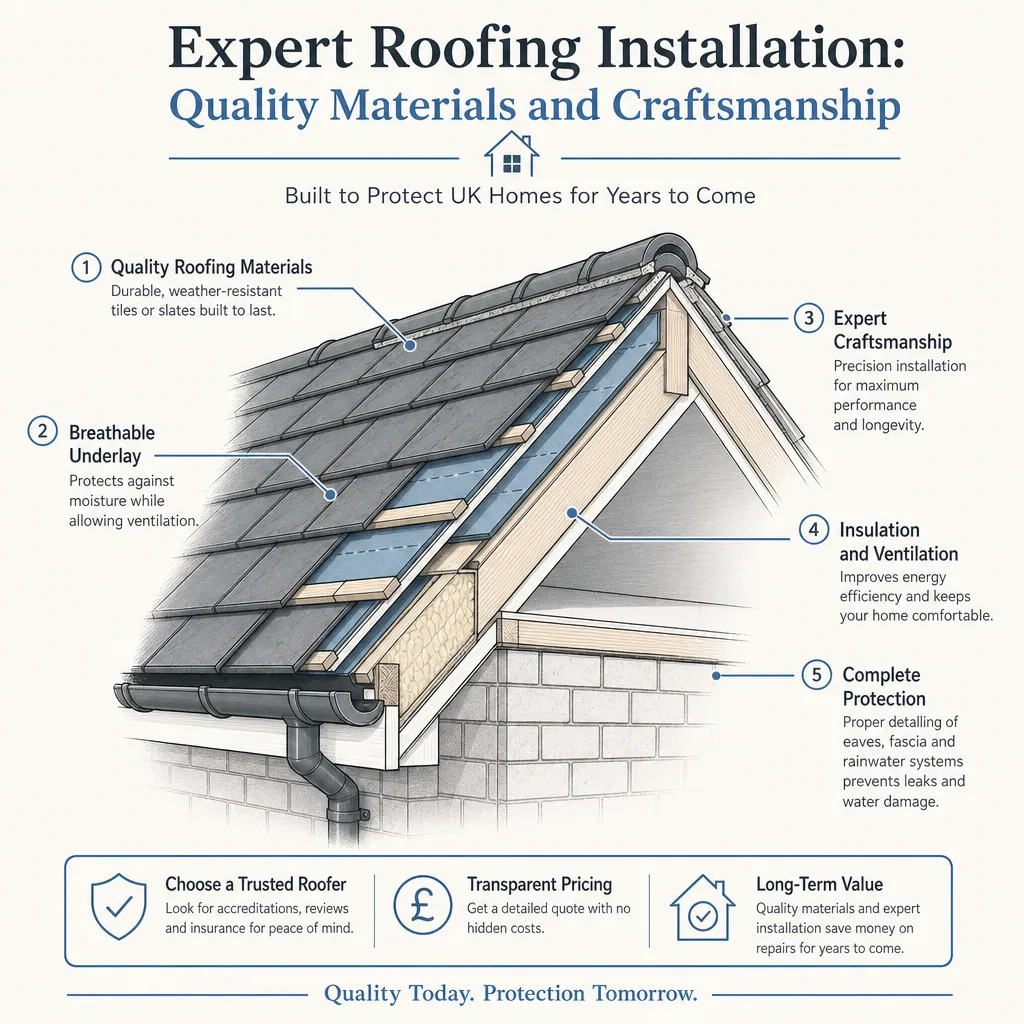
Expert Roofing Installation: Quality Materials and Craftsmanship
A quality roof installation depends on matching materials to your property type, hiring a suitably qualified roofer, and ensuring building regulations are met where required.
 Improvement & Build
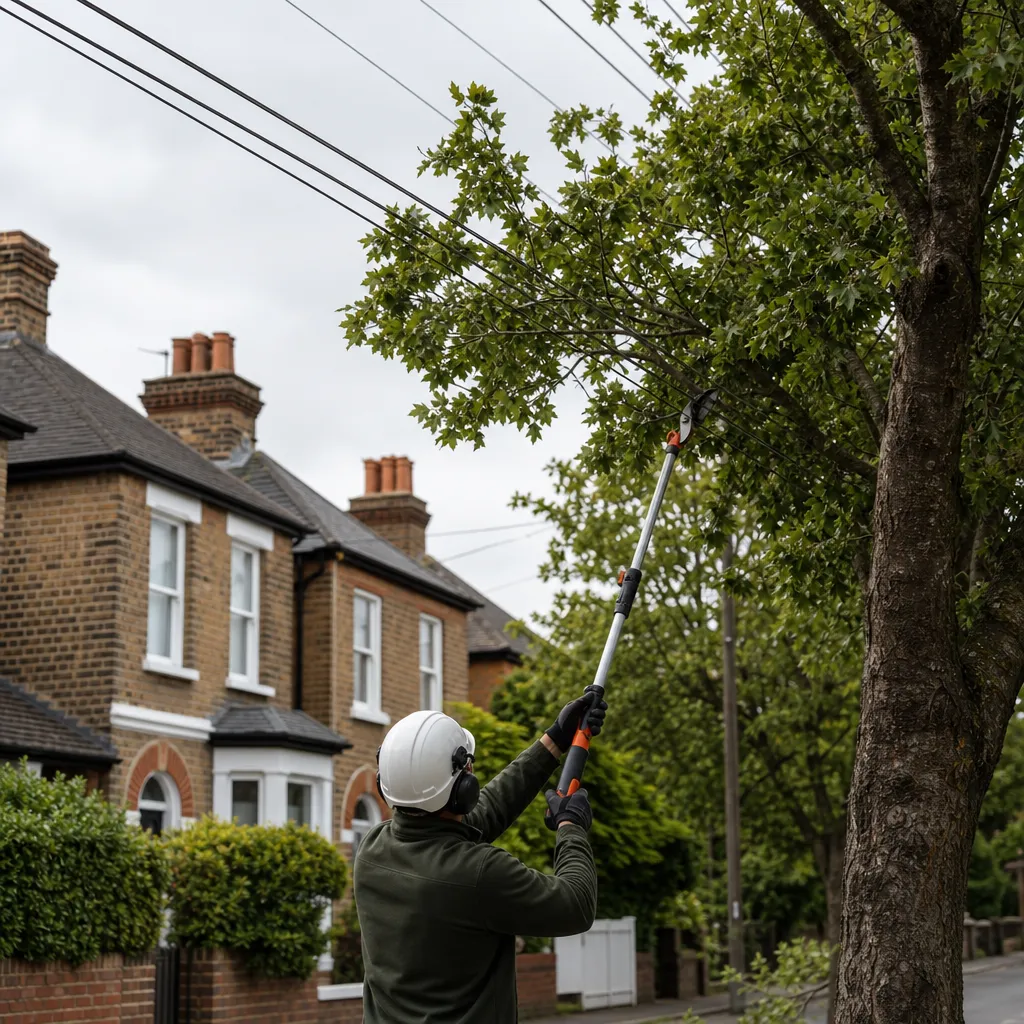
Safe Tree Trimming Near Overhead Power Lines
Never attempt to trim trees near overhead power lines yourself.
 Improvement & Build
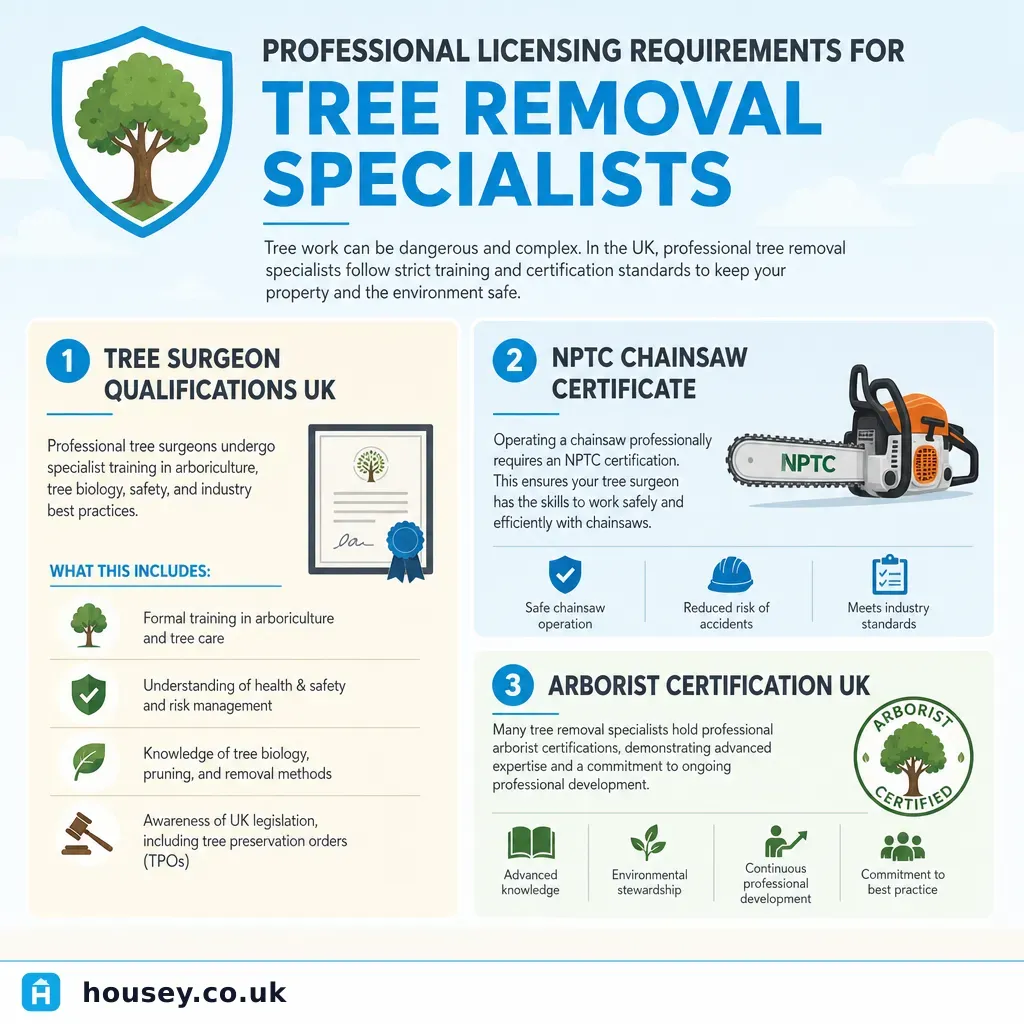
Professional Licensing Requirements for Tree Removal Specialists
Tree surgery in the UK has no single statutory licence, but chainsaw operators must hold recognised NPTC/City & Guilds certificates, and work near overhead lines requires specialist training.
 Improvement & Build
Managing Provider Reviews: A Guide for Building Strong Relationships
When hiring a UK contractor, reviews can be reliable indicators of quality — but only if you read them critically.
 Improvement & Build
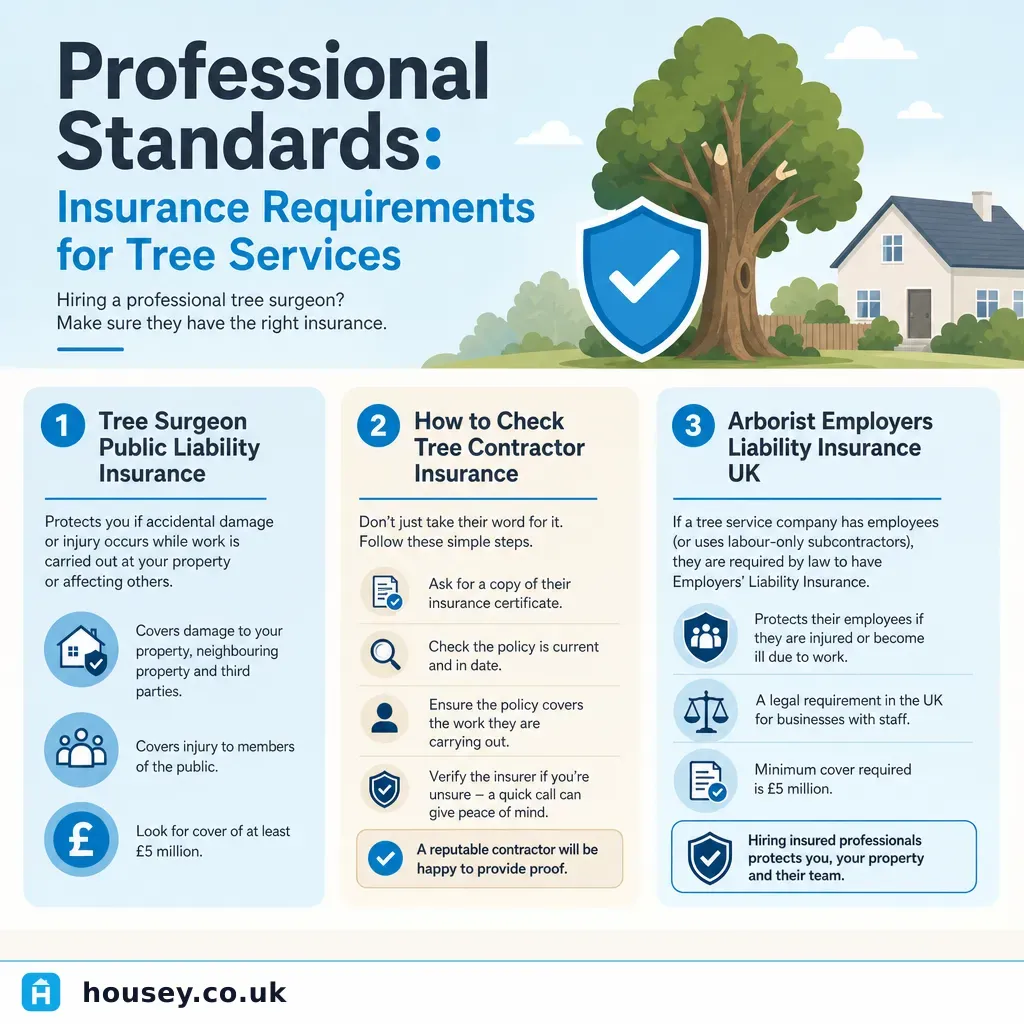
Professional Standards: Insurance Requirements for Tree Services
Reputable tree surgeons in the UK typically carry a minimum of £5 million public liability insurance and, if they employ staff, employers' liability cover of at least £5 million — a legal requirement under the Employers' Liability (Compulsory Insurance) Act 1969.