Two Solicitors or One? Managing Conveyancing Representation in Joint Purchases
By Housey · Last reviewed 25th of May 2026

Two Solicitors or One? Managing Conveyancing Representation in Joint Purchases
Joint property purchases are common for couples, friends, and family members buying together across England and Wales — and one of the first practical questions is who handles the legal side. Whether you share representation or instruct separate firms has implications for cost, efficiency, and what happens if your interests diverge during the transaction. Most buyers are unaware that the answer depends on professional conduct rules as much as personal preference.
Key points
- In England and Wales, joint buyers may instruct a single solicitor or licensed conveyancer, provided the Solicitors Regulation Authority (SRA) conflict-of-interest rules are satisfied.
- The SRA Code of Conduct for Solicitors 2019 permits acting for multiple clients where interests are aligned and both consent — but requires the solicitor to decline or stop acting if a material conflict arises.
- Most residential mortgage lenders allow the same conveyancing firm to act for both buyers and the lender on one transaction, though panel requirements vary by lender.
- A Declaration of Trust is a separate document — not part of standard conveyancing — used to record unequal ownership shares or financial contributions; it can often be drafted by the same firm.
- If buyers have significantly different financial contributions, separate mortgages, or a dispute about ownership terms, separate legal representation should be actively considered.
Can the same solicitor act for both buyers?
In most joint residential purchases, both buyers instruct the same conveyancing firm. The SRA Code of Conduct for Solicitors 2019 permits this where interests do not conflict and both clients give informed consent. If a conflict arises mid-transaction — say, one buyer wishes to renegotiate terms the other has accepted — the solicitor must reassess and may need to stop acting for one or both parties.
Most high-street mortgage lenders allow the buyers' conveyancer to act for them too. Some specialist lenders have their own panel requirements; confirm your lender's position at the outset.
When do joint buyers need separate solicitors?
Most joint purchases proceed smoothly with shared representation. Separate solicitors become appropriate — or necessary — in the following situations.
Decision tree: one solicitor or two?
- Use one solicitor if both buyers contribute equally, take a joint mortgage in equal shares, and agree on how the property will be owned.
- Use one solicitor plus a Declaration of Trust specialist if ownership shares are unequal but no other conflict exists between the buyers.
- Use separate solicitors if one buyer is making a significantly larger contribution and wants independent legal advice; if one party receives a family gift or loan the other does not; or if there is active disagreement about the transaction terms.
- Seek advice promptly if a conflict arises mid-transaction — your solicitor will advise whether they can continue or whether a new firm is needed.
- Check with your lender if the mortgage is in one name only or deposit arrangements are asymmetric.
Joint tenants vs tenants in common
How you own the property is a separate question from who represents you, but it often arises in the same solicitor conversation.
Ownership type | What it means | When it is common |
|---|---|---|
Joint tenants | Equal undivided shares; survivor automatically inherits (right of survivorship) | Couples with equal contributions and no wish to leave a share under a will |
Tenants in common | Each buyer holds a defined percentage share; passes under will or intestacy rules | Unequal contributions; different financial interests; family or business arrangements |
If you choose tenants in common, your solicitor will usually recommend a Declaration of Trust to record the agreed split in writing. In most cases this can be drafted by the same conveyancing firm, though buyers with significantly different financial stakes may prefer independent advice before signing.
Unequal contributions and gifted deposits
If one buyer contributes more to the deposit — or a family member gifts funds to only one buyer — both the solicitor and the mortgage lender need to understand the arrangement. Lenders typically require a gifted deposit letter confirming the money is not a loan. Where the imbalance is material, independent legal advice for the larger contributor is sometimes a lender requirement for certain mortgage products.
Costs: one firm vs two
One conveyancing firm charges per transaction, not per buyer — so a joint purchase costs the same as a single-buyer case. Separate representation typically adds £500–£1,500 per buyer in solicitor fees, varying with firm, property value, and complexity. Indicative UK costs, last reviewed 2026-05-25.
Important limitations
This article provides general information about conveyancing representation in joint purchases in England and Wales. Professional obligations and conflict-of-interest assessments depend on the specific circumstances of each transaction. Scotland and Northern Ireland have different conveyancing systems. A qualified conveyancing solicitor should advise on whether shared or separate representation is appropriate before you instruct.
When this becomes urgent
Seek professional advice promptly if:
- A conflict has arisen or become apparent between the buyers during the transaction.
- The mortgage lender's panel or representation requirements are unclear.
- One party wishes to withdraw or change ownership or financial terms after the transaction has started.
- A gift or loan from a third party is involved and the lender has raised queries.
What to ask a qualified professional
- Is there anything in our circumstances that would create a conflict of interest in your acting for both of us?
- Can you also act for our mortgage lender, or will a separate firm be needed?
- Should we have a Declaration of Trust, and can your firm draft one alongside the conveyancing?
- If a conflict arises mid-transaction, who bears the cost of instructing a new firm?
- Are your fees the same for a joint purchase as for a single buyer?
When to get professional help
Speak to a conveyancing solicitor before instructing anyone if you are uncertain whether separate representation is needed. Most firms can assess your situation quickly. Red flags suggesting you should consider separate solicitors include: one buyer has significantly more money at stake; a family gift goes to only one buyer; the buyers are not in an established relationship and each wants independent protection; or ownership involves a business structure or trust.
How Housey can help
Housey connects joint buyers with experienced conveyancing solicitors who handle joint purchases regularly. Use our conveyancing service to compare quotes from regulated firms and find the representation that suits your transaction.
Frequently asked questions
Can friends buying a property together use the same solicitor?
Yes, in most cases. Provided there is no conflict of interest — and both parties agree on the terms of the purchase and ownership structure — a single solicitor or licensed conveyancer can act for all buyers. If the arrangements are more complex, independent advice for one or both parties may be worth considering.
Does the mortgage lender need its own solicitor?
Most residential lenders allow the buyers' conveyancing solicitor to act for them as well. This is standard practice on most high-street lender panels. Some smaller or specialist lenders maintain their own panel requirements, so confirm with your lender at the outset.
What happens if a conflict of interest arises after we have both instructed the same solicitor?
The solicitor must assess whether they can continue to act fairly for both clients. If the conflict is material, they may need to stop acting for one or both parties. This may cause a delay and additional cost if new solicitors need to be instructed mid-transaction.
Is a Declaration of Trust the same as registering as tenants in common?
No — they are different documents that work together. Registering as tenants in common at HM Land Registry records the form of ownership on the title. A Declaration of Trust is a private document recording the agreed shares and financial arrangements. Both can be put in place during conveyancing, usually by your solicitor.
Sources and further reading
- SRA Code of Conduct for Solicitors 2019 — Solicitors Regulation Authority
- Joint property ownership — GOV.UK
- Registering land or property with Land Registry — HM Land Registry
- Buying with someone else — Citizens Advice
Useful next reads
 Buying & Moving
Complete Homebuying Checklist and Essential Services for First-Time Buyers
First-time buyers in the UK should commission an independent RICS Home Survey before exchange — a mortgage lender's valuation does not protect you.
 Buying & Moving
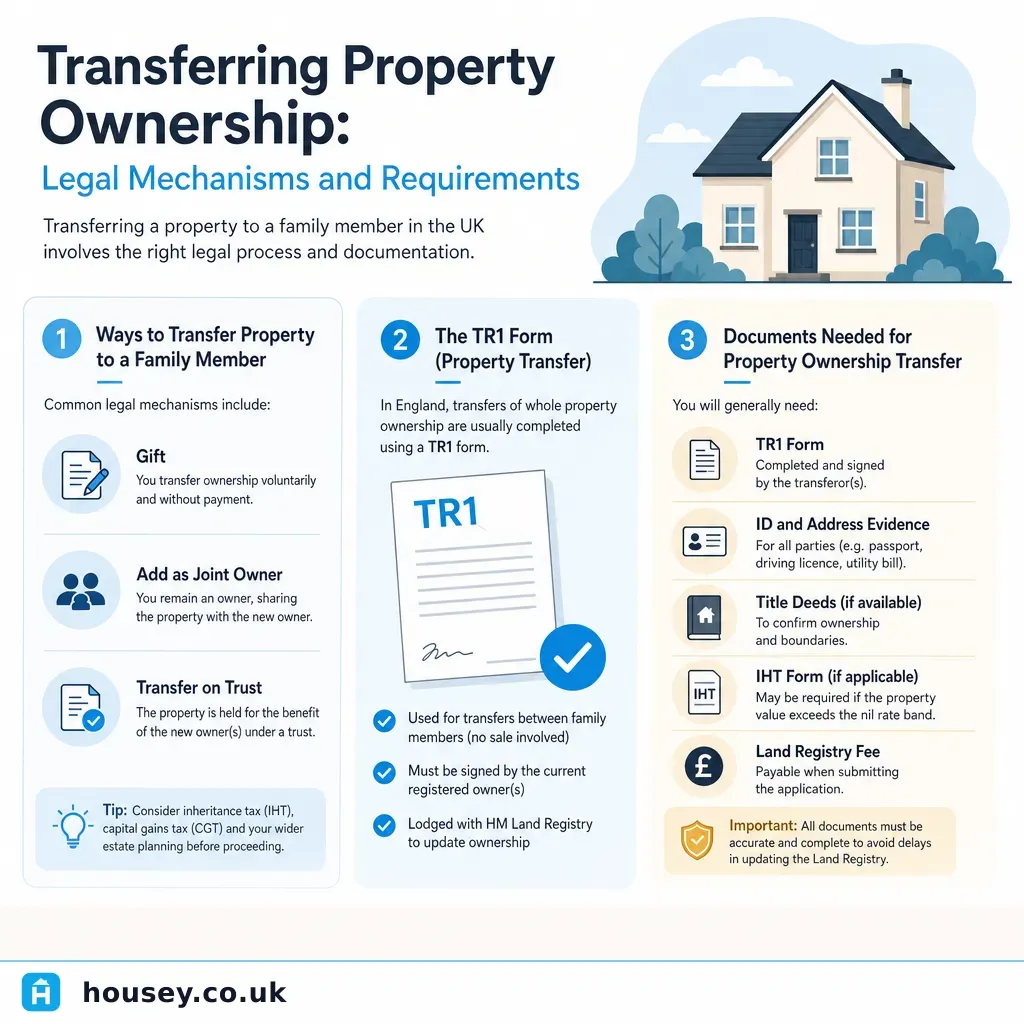
Transferring Property Ownership: Legal Mechanisms and Requirements
In England and Wales, property ownership transfers when HM Land Registry records a change of proprietor, triggered by a completed TR1 deed for full transfers or a TP1 for partial ones.
 Buying & Moving
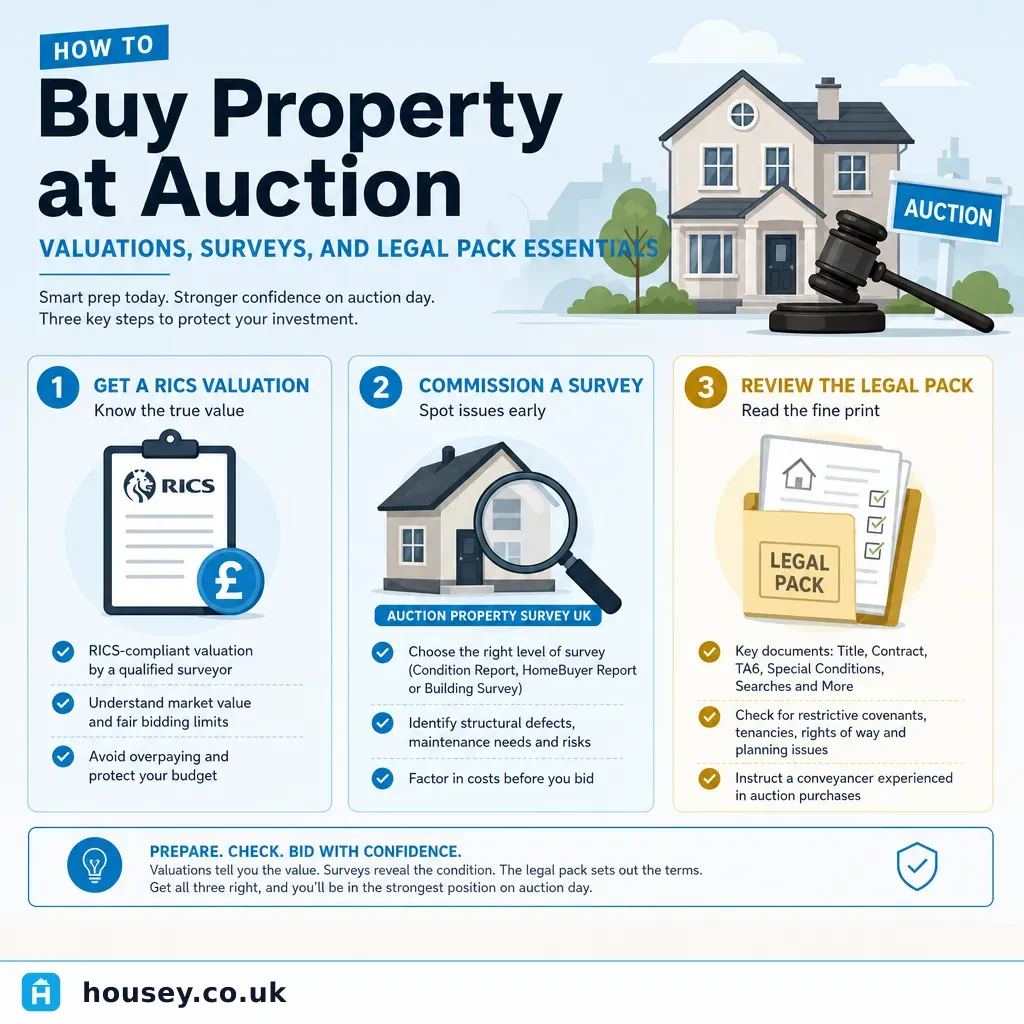
How to Buy Property at Auction: Valuations, Surveys, and Legal Pack Essentials
Buying at auction means contracts exchange the moment the hammer falls — there is no cooling-off period.
 Buying & Moving
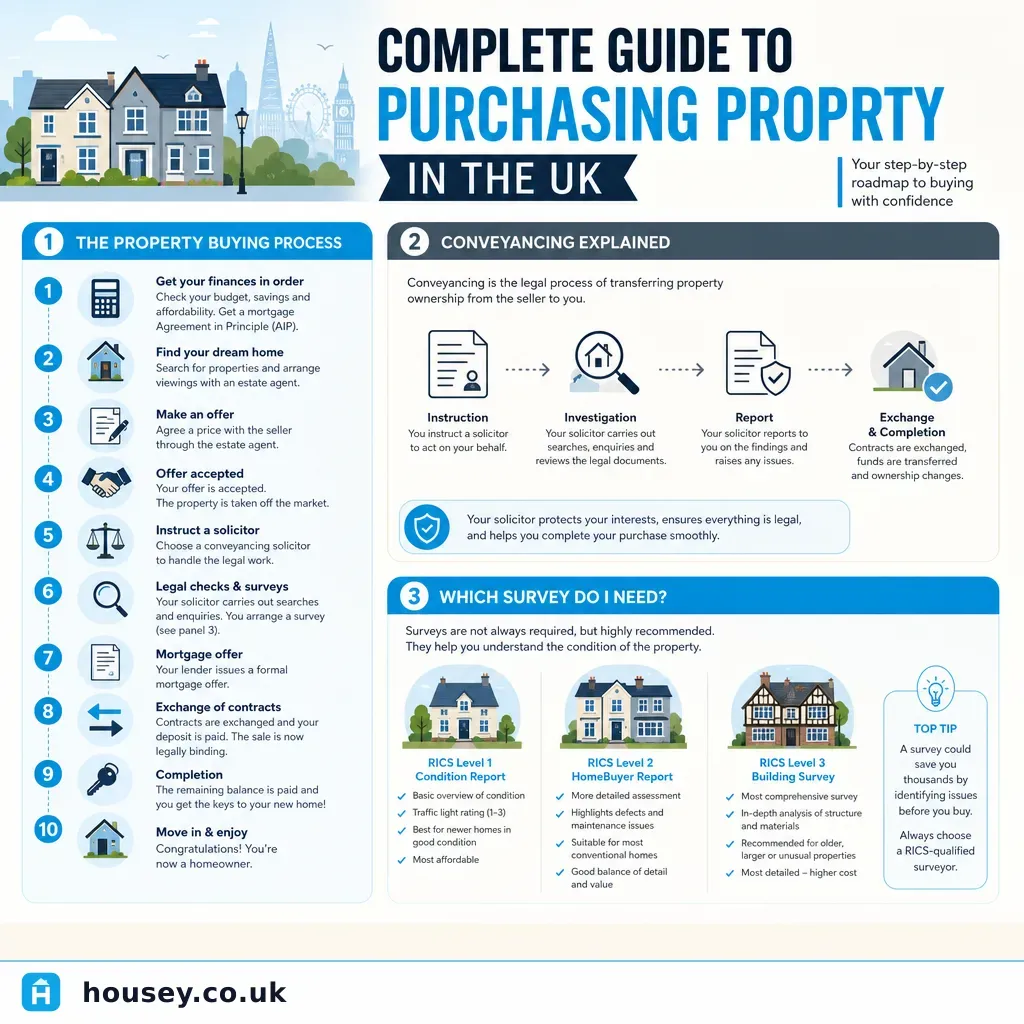
Complete Guide to Purchasing Property in the UK
Buying property in England and Wales typically takes 12 to 16 weeks from offer acceptance to completion.
 Buying & Moving
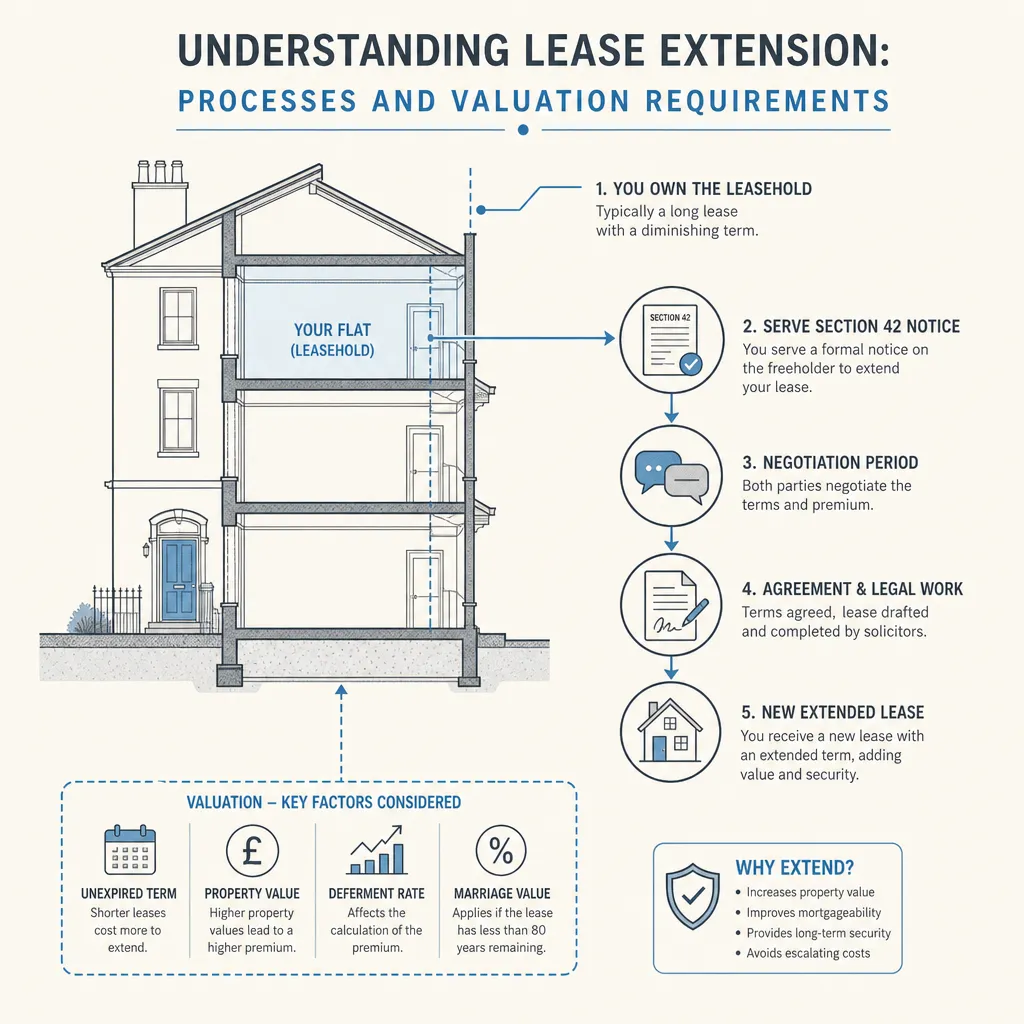
Understanding Lease Extension: Processes and Valuation Requirements
Qualifying flat owners in England and Wales can extend their lease by 90 years under the Leasehold Reform, Housing and Urban Development Act 1993, provided they have owned the property for at least two years.