Tyrolean Textured Render Installation Costs
By Housey · Last reviewed 11th of May 2026
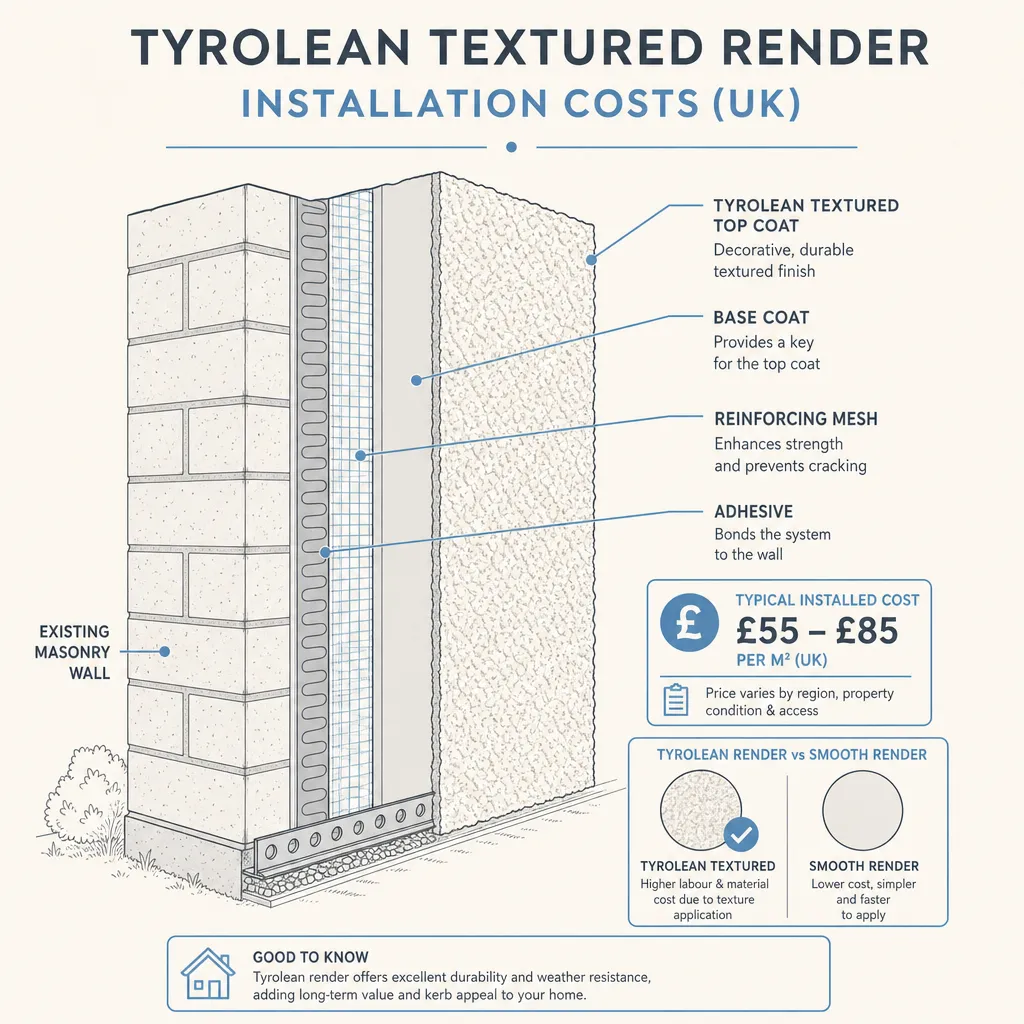
Tyrolean Textured Render Installation Costs
Tyrolean render — sometimes called 'tyrolean finish' or 'wet dash' — is a traditional textured external render that has been used on UK homes since the early twentieth century, particularly on interwar properties in suburban and coastal locations. Homeowners typically revisit costs when an existing coat is deteriorating, when a section of facade has been damaged and needs matching, or when a re-render is recommended following a RICS survey. Getting accurate costs requires understanding what the finish involves and, crucially, what the condition of the current substrate will mean for the overall scope of work.
Key points
- Tyrolean render typically costs £25–£45 per m² for material and labour on a prepared substrate (Indicative UK costs, last reviewed 2026-05-11).
- The finish is applied using a hand-cranked or machine-operated tyrolean projector, which throws a distinctive rough, spattered texture onto the base coat in two or three passes.
- A sound base coat — usually sand and cement or a proprietary render base — is essential before tyrolean is applied; remediating a failed base coat adds significant additional cost to the project.
- Tyrolean render is not suitable for direct application to timber-framed buildings without an appropriate substrate board, such as cement particle board, or a specialist mesh system.
- A correctly applied tyrolean finish on solid masonry can last 20–30 years or more; premature failure is most often caused by inadequate preparation or moisture ingress at poorly sealed junctions.
What does tyrolean render installation involve?
Tyrolean is typically a two-stage process.
Stage 1 — Base coat: A sand and cement base coat or proprietary render base is applied to the masonry and allowed to cure. On existing buildings, the current render is assessed by sounding — tapping to detect hollow areas — and any loose, cracked, or delaminated sections must be cut out, or the elevation stripped, before new base coat is applied.
Stage 2 — Tyrolean top coat: A premixed tyrolean compound — typically containing fine aggregate, cement, and sometimes a pigment — is loaded into the projector machine and thrown at the wall in two or three passes to build a consistent, even texture. The finish can be left as-thrown for a rough, dimpled profile, or lightly brushed when partially set for a more uniform appearance.
Tyrolean render cost breakdown
Indicative UK costs, last reviewed 2026-05-11. Costs vary by location, access, substrate condition, and total area. Obtain at least three quotes.
Cost element | Indicative range |
|---|---|
Tyrolean render material (premixed) | £8–£15 per m² |
Labour — tyrolean application to prepared substrate | £15–£28 per m² |
Base coat (new or full replacement) | £12–£20 per m² additional |
Scaffolding (typical two-storey semi) | £800–£1,800 for the works period |
Defect repair and making good prior to render | £50–£200 per patch (varies widely) |
For a typical two-storey semi-detached house with approximately 80–120 m² of elevations requiring a full tyrolean re-render, budget £3,500–£7,500 all-in including scaffolding. Spot repairs or a single elevation will cost proportionally less.
Tyrolean vs. other external render finishes
Finish | Texture | Indicative cost per m² | Typical lifespan | Best suited to |
|---|---|---|---|---|
Tyrolean | Rough, spattered | £25–£45 | 20–30 years | Solid masonry; period properties; coastal exposures |
Smooth sand and cement | Flat, smooth | £20–£35 | 15–25 years | Modern and traditional masonry; painted finishes |
Monocouche (through-colour) | Textured or scraped | £35–£55 | 25–30 years | New build and renovation; no redecoration required |
Silicone render (K-rend type) | Fine textured | £35–£55 | 20–30 years | Renovations; flexible and crack-resistant |
Pebbledash | Coarse aggregate | £20–£35 | 20–40 years | Exposed locations; traditional northern and Scottish styles |
All figures indicative, last reviewed 2026-05-11.
Is tyrolean render right for your property?
- Choose tyrolean if your property already has an existing tyrolean finish that needs renewal or matching, or if you want a traditional rough-texture aesthetic on solid masonry.
- Consider monocouche or silicone render if you want a more modern appearance, a wider choice of through-colours, or a longer maintenance-free period.
- Ask a specialist render contractor if your property has unusual construction — lightweight steel frame, insulated render board over existing cladding, or cavity construction — before specifying any render system.
- Check with your local planning authority if the property is in a conservation area or is listed — changes to the external appearance may require consent before work begins.
What to ask a render contractor before accepting a quote
- What base coat system will be used, and is it compatible with tyrolean?
- Will the existing render be sounded and any loose sections cut out before the new coat is applied?
- What tyrolean product is specified — bagged premix or site-mixed formulation?
- How many passes of tyrolean will be applied to achieve consistent coverage?
- Is scaffolding included in the quoted price, or costed separately?
- Is pointing or window and door bead replacement included?
- What substrate condition does the quote assume, and how will variations be priced?
- Is VAT included?
- What guarantee or warranty is offered on the finished work?
When to get professional help
External rendering is skilled, physically demanding work requiring specialist equipment and materials knowledge. Always use a professional render contractor. Seek urgent professional advice if:
- Large areas of render sound hollow when tapped, particularly above windows or near wall-to-roof junctions — this may indicate water ingress behind the coat
- Cracks in the render are stepped, wide, or follow masonry joints, which may suggest structural movement rather than surface shrinkage
- You are working on a listed building or in a conservation area — inappropriate render specification can lead to planning enforcement action
How Housey can help
Housey helps homeowners find and compare quotes from experienced render contractors across the UK. Submit your project details to receive competitive quotes and review tradespeople in your local area before committing to any works.
Frequently asked questions
Can tyrolean render be painted?
Yes. Tyrolean render can be overcoated with a masonry paint — microporous or silicone-based paints are preferred as they allow moisture vapour to escape without causing the paint film to blister. If the existing finish is unpainted tyrolean, many homeowners leave it in its natural cement colour or apply masonry paint after several months of curing.
How long does tyrolean render last?
On solid masonry with a sound base coat and correct application, tyrolean render can last 20–30 years or more. Early failure is usually caused by inadequate preparation, moisture entering at poorly sealed junctions around windows and doors, or freeze-thaw action in exposed northern or coastal locations in the UK.
Does tyrolean render require planning permission?
In most cases, no — applying external render to a residential property is usually permitted development. However, properties in conservation areas, listed buildings, or those subject to Article 4 directions may require consent before any change to external appearance. Always check with your local planning authority before starting work, particularly in historic or sensitive locations.
Can I patch-repair tyrolean render rather than re-render the whole elevation?
Patch repairs are possible, but matching the texture and colour of an aged tyrolean finish is difficult, and repairs are often visible once dried and weathered differently from the surrounding coat. For significant areas of failure, re-rendering the whole elevation usually produces a more uniform and durable result than multiple small patched repairs.
Sources and further reading
- Render on Traditional Buildings — Historic England
- Do I Need Permission? External Changes to Your Home — Planning Portal
- Cost of Rendering a House — Checkatrade (indicative cost reference, commercial source)
Useful next reads
 Improvement & Build
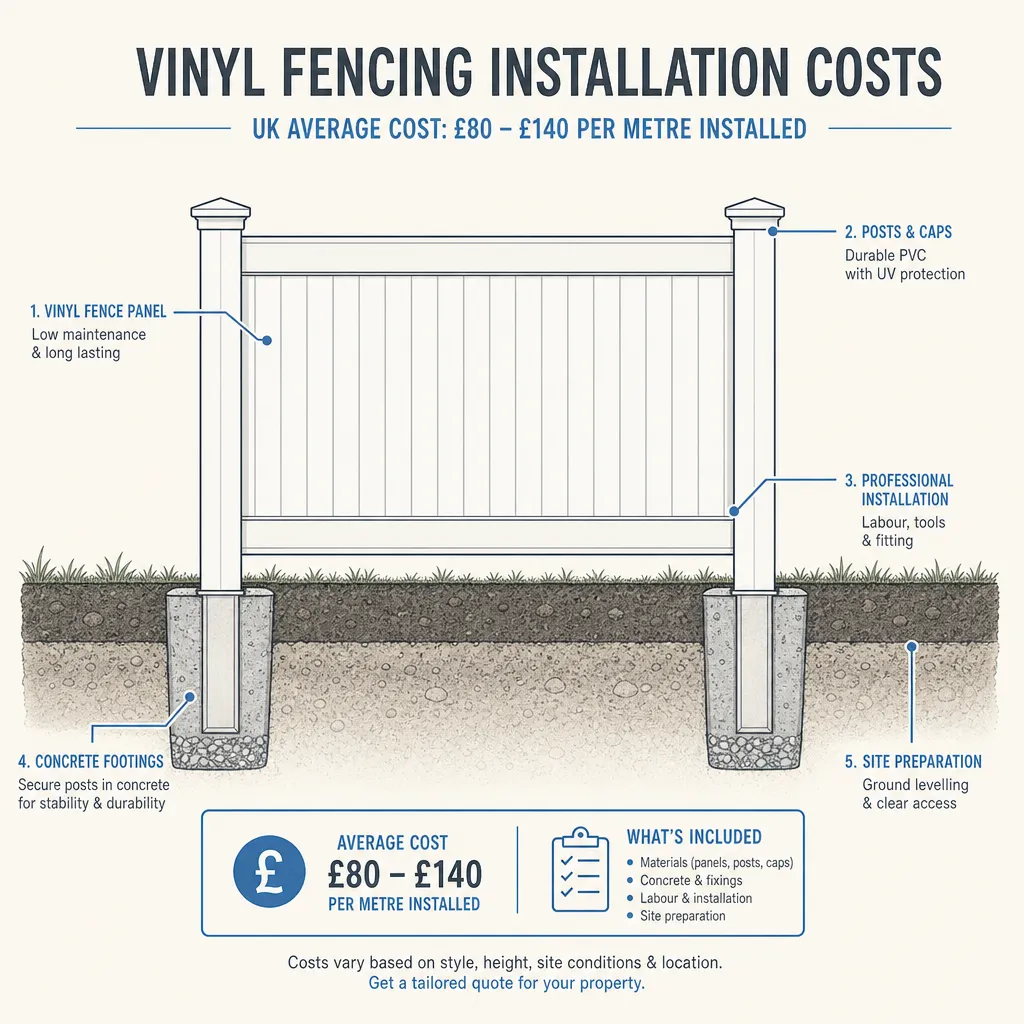
Vinyl Fencing Installation Costs
Vinyl fencing in the UK costs roughly £60–£200 per metre for supply and installation, depending on fence style, height, and ground conditions.
 Improvement & Build
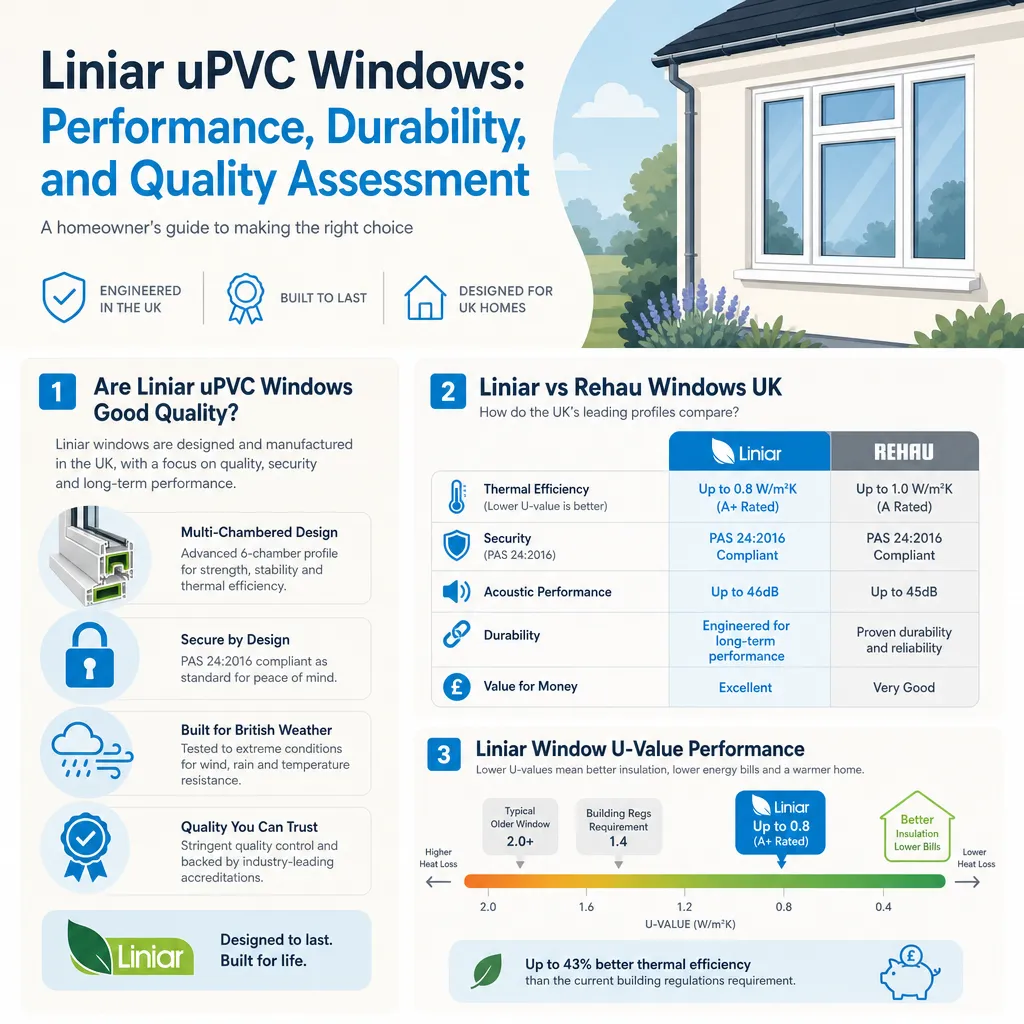
Liniar uPVC Windows: Performance, Durability, and Quality Assessment
Liniar uPVC window profiles are manufactured in the UK using multi-chambered, foamed frames.
 Improvement & Build
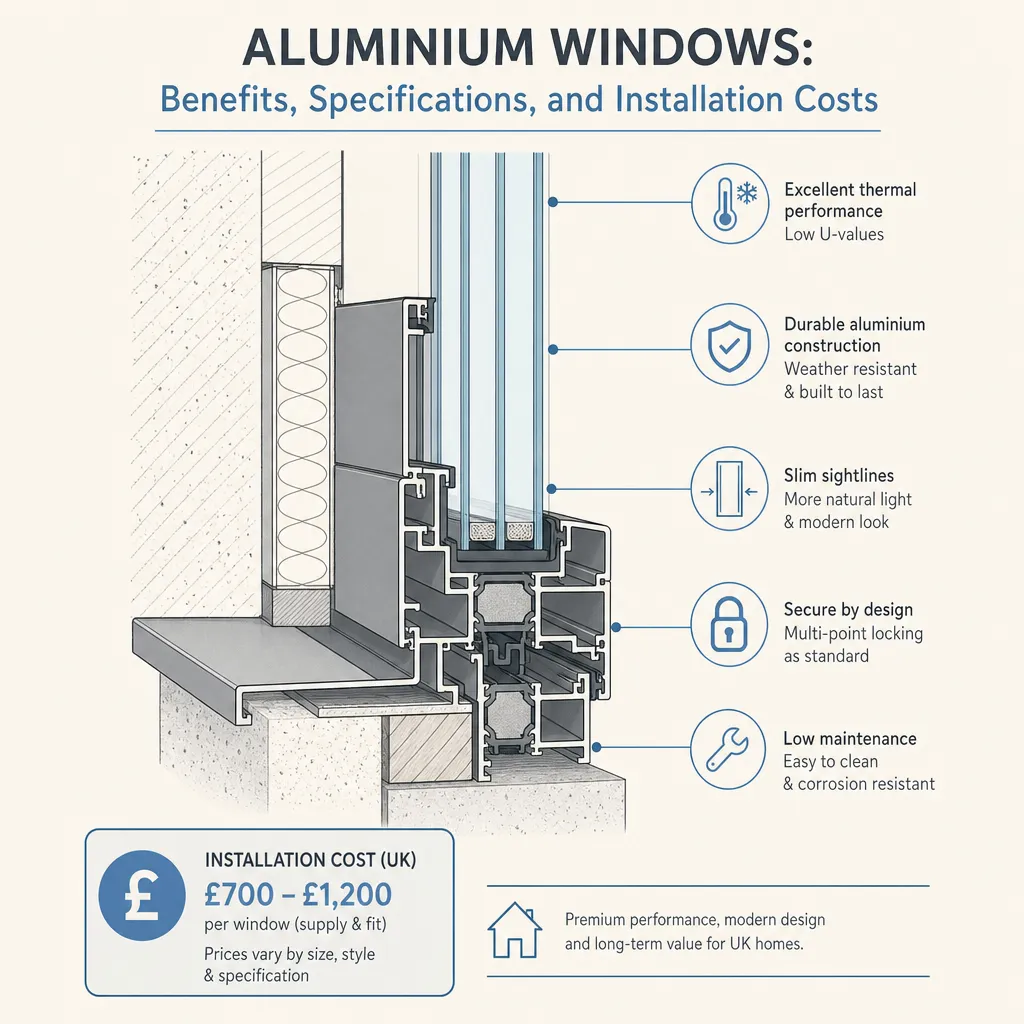
Aluminium Windows: Benefits, Specifications, and Installation Costs
Aluminium windows typically cost £600–£1,800 per window installed in the UK, depending on size and specification.
 Improvement & Build
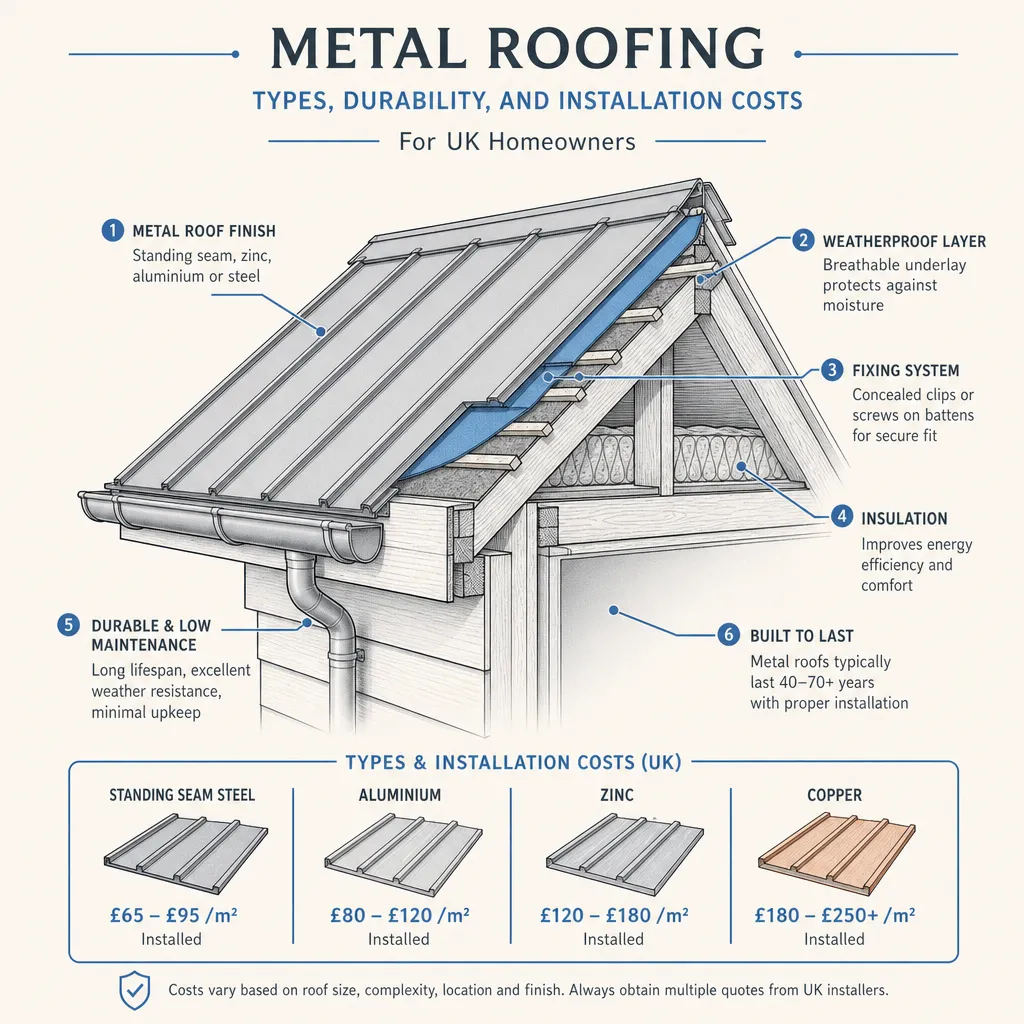
Metal Roofing: Types, Durability, and Installation Costs
Metal roofing in the UK includes standing seam, corrugated sheet, and metal tile systems in steel, aluminium, zinc, or copper.
 Improvement & Build
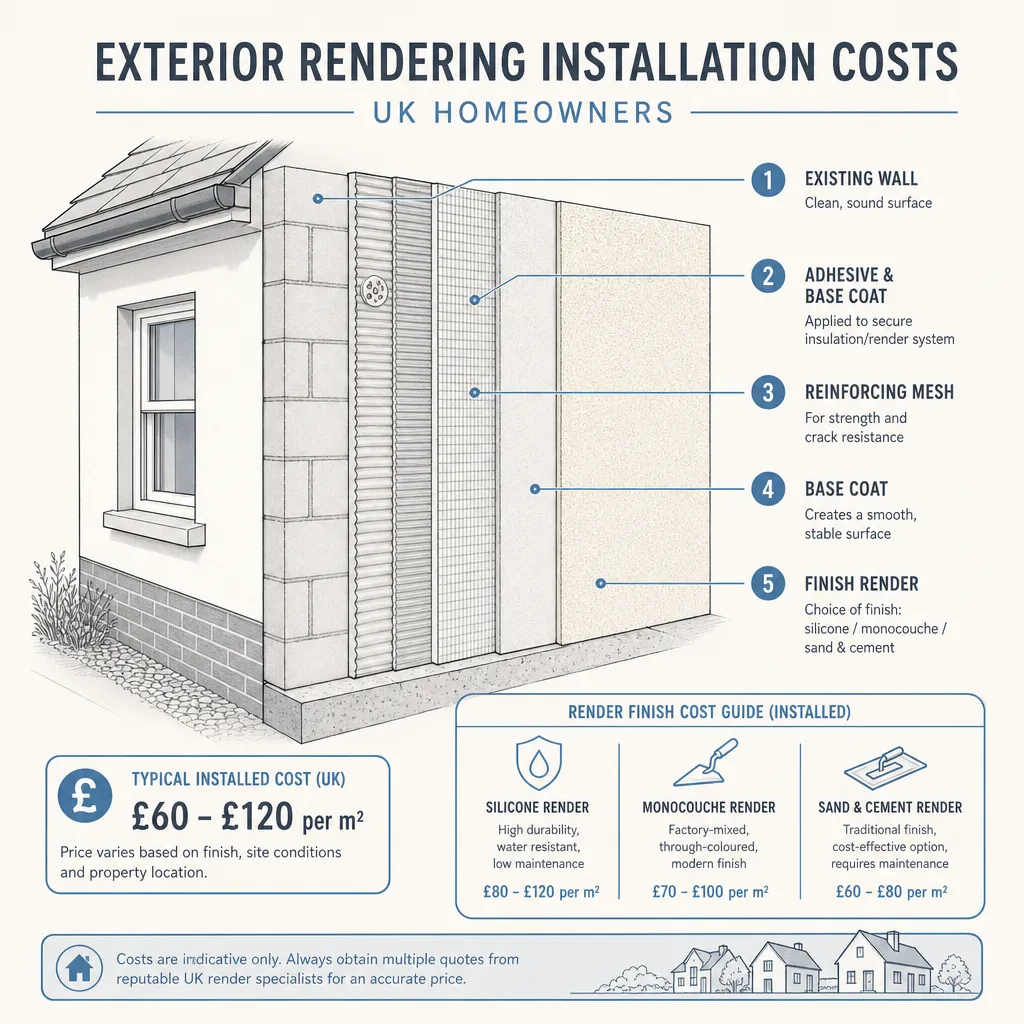
Exterior Rendering Installation Costs
Exterior rendering in the UK typically costs £20–£60 per square metre for standard render systems, or £80–£150 per square metre for External Wall Insulation with a render finish.