UK Construction Sector Outlook: What Industry Confidence Means for Your Build Project
By Housey · Last reviewed 30th of May 2026
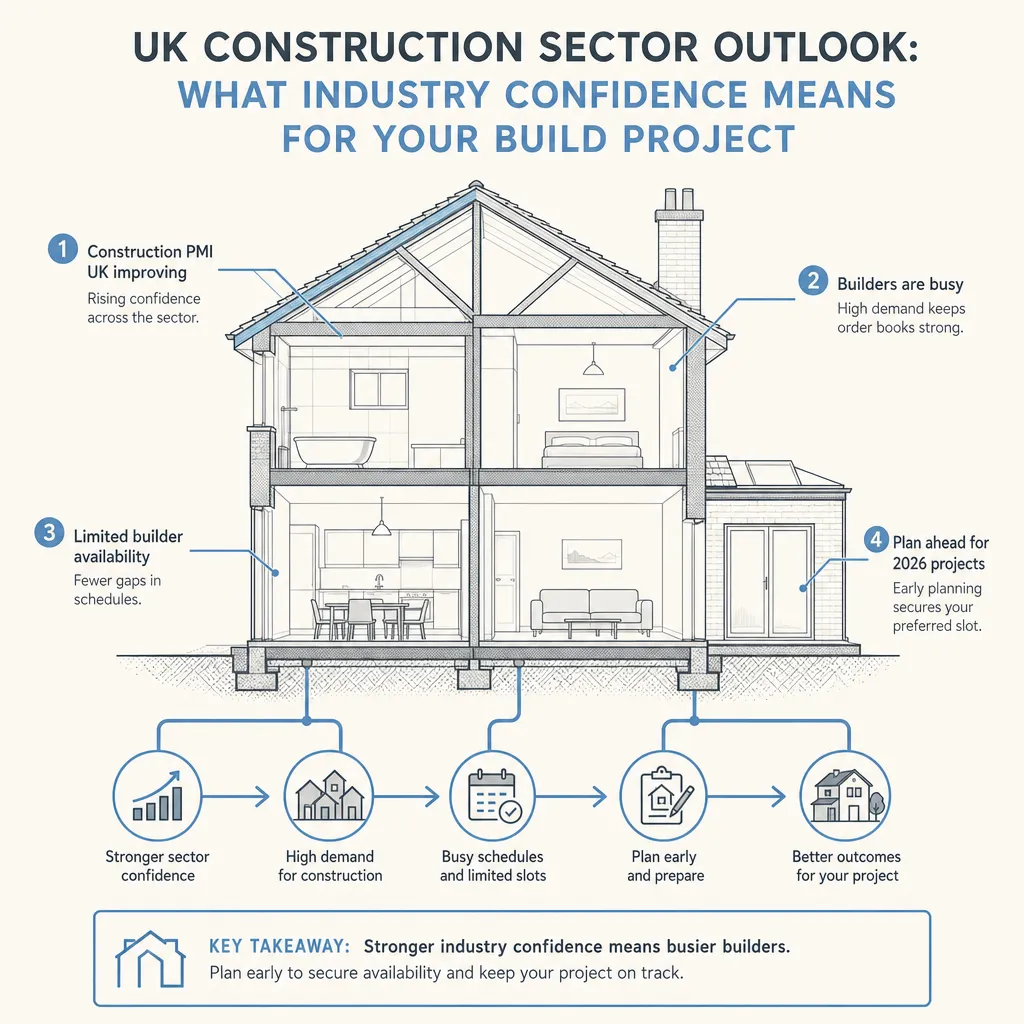
UK Construction Sector Outlook: What Industry Confidence Means for Your Build Project
The state of the construction industry directly shapes what you pay, how long you wait, and how many quotes you receive when planning a home extension, conversion, or new build. Questions about builder availability, rising costs, and project lead times are often triggered by news about housing starts, contractor pipelines, or infrastructure spending — and understanding what that data actually means for a domestic project helps you plan more effectively and set realistic expectations.
Key points
- The Construction Products Association (CPA) publishes quarterly output forecasts covering private housing, commercial, and infrastructure segments — a useful reference when assessing builder demand in your sector.
- S&P Global/CIPS UK Construction PMI measures monthly business activity; a reading consistently above 50 signals expanding order books and potentially longer lead times for contractors.
- CITB (Construction Industry Training Board) publishes annual five-year employment forecasts tracking skills shortages by trade — directly relevant to availability of bricklayers, plasterers, and specialist site managers.
- New housing starts data published by MHCLG correlates with demand for the same trades and materials used in domestic extension and renovation work.
- Infrastructure programmes and large commercial contracts compete for the same skilled labour pool as residential builds, tightening regional availability and pushing up day rates for specialist trades.
How construction sector confidence affects your project
When headline sentiment is high — order books are growing, firms are taking on staff, new contracts are being signed — the practical impact for domestic clients is usually twofold: builders are busier, so lead times grow and price competition among contractors reduces. In a slower market, the reverse tends to apply.
This matters most during the planning stage. If the CPA is forecasting growth in private housing output, it is worth building additional time into your quote-gathering process — timelines from initial enquiry to site start can extend from a few weeks to several months during peak demand periods.
What the data actually tracks
The main indices that move construction headlines are:
Indicator | What it measures | Published by | Frequency |
|---|---|---|---|
UK Construction PMI | Business activity, new orders, employment sentiment | S&P Global / CIPS | Monthly |
Construction output (value) | Volume of construction work completed | ONS | Monthly |
Housing starts and completions | New dwellings started and finished | MHCLG | Quarterly |
CPA output forecast | Forward-looking sector output by segment | Construction Products Association | Quarterly |
CITB Construction Skills Network | Five-year trade employment projections | CITB | Annual |
These indices track commercial, infrastructure, and housebuilding activity in aggregate. Domestic renovation and extension work is partly captured under "private housing" and "repair, maintenance, and improvement" (RMI) output figures — the segments most relevant to homeowners planning projects.
What sector optimism does not tell you
It is important not to over-read headline confidence data when making decisions about your own project.
What not to assume:
- "High sector confidence means my project will cost more." Material and labour costs are influenced by many factors beyond PMI readings: energy prices, import tariffs, trade skill availability by region, and proximity to major infrastructure corridors all play a role. Your regional market may behave very differently from the national aggregate.
- "A slow market means I can negotiate aggressively on price." Contractors do adjust pricing during quieter periods, but quality firms with strong reputations tend to protect their margins. Unusually low quotes in any market condition warrant careful scrutiny.
- "I should delay my project until the market cools." Timing the construction market is extremely difficult and may mean postponing indefinitely. A well-scoped project, clearly specified drawings, and competitive tendering usually produce better outcomes than market-timing.
- "All trades move in line with headline sentiment." Structural engineers, groundworkers, and specialist trades can be in short supply even when general sentiment is cautious. Always check trade-specific lead times rather than relying solely on sector-wide headlines.
Red flags when seeking quotes in a busy market
During periods of high sector confidence, demand pressure can create conditions where problems are more likely to arise. Watch for:
- Contractors declining to provide itemised quotes, citing time pressure
- Very short tender windows (fewer than two weeks for a complex project)
- Unusually high deposit requests (more than 10–25% upfront is worth questioning)
- Vague programme dates and reluctance to commit to a site start date in writing
- Subcontractor-heavy proposals with no named key trades
- No reference to building control, structural drawings, or planning consent in the quote
If multiple firms show these signs simultaneously, it may indicate a very tight labour market in your area — factor this into your project timeline and contingency budget accordingly.
How to plan effectively regardless of market conditions
Whatever the sector sentiment at the time you build, these steps tend to produce better outcomes:
- Define scope before seeking quotes. Clear drawings, specifications, and planning consent reduce guesswork and allow contractors to price accurately.
- Approach at least three contractors. In a busy market, aim for four or five initial enquiries, as not all firms will respond.
- Check accreditations. Verify the contractor carries current public liability insurance and, where relevant, holds memberships such as FMB (Federation of Master Builders) or Constructionline registration.
- Build contingency into your timeline. In high-confidence markets, add at least four to six weeks to standard lead-time estimates.
- Stage payments to a clear programme. Never pay a substantial proportion upfront, regardless of market conditions.
When to get professional help
If your project involves any of the following, engage a professional before approaching contractors:
- Structural changes such as removing walls, altering foundations, or underpinning
- Planning permission applications or works affecting a listed building or conservation area
- Party wall matters governed by the Party Wall etc. Act 1996
- Complex multi-trade projects where a dedicated project manager or architect can manage contractor procurement and programme on your behalf
How Housey can help
Housey connects you with vetted extension builders, design-and-build firms, and project managers — making it straightforward to gather competitive quotes and find qualified professionals regardless of current market conditions.
Frequently asked questions
Does a strong construction market mean I will pay more for my home extension?
Not necessarily. While high demand can push up labour rates, material costs are driven by separate factors including import prices, energy costs, and supplier availability. A well-tendered project with clear drawings and a competitive shortlist of contractors often controls costs more effectively than trying to time the market.
How can I tell if builders are busy in my local area?
Response rates to quote requests tend to drop when local contractors are at capacity. CITB regional employment data and CPA regional output breakdowns give a broader sense of demand by region. Your local planning authority's weekly decision list shows how many projects are being approved — a useful proxy for local build activity.
Should I delay my build project if the construction PMI is very high?
Delaying a project based on headline PMI data alone is rarely advisable. Market conditions may take months or years to shift. Starting the design, specification, and tendering process early gives you far more control over costs and lead times than waiting for a quieter market period to materialise.
Sources and further reading
- CPA Construction Forecasts — Construction Products Association
- Construction output in Great Britain — Office for National Statistics
- CITB Construction Skills Network reports — CITB
- House building: new build dwellings — MHCLG / GOV.UK
- UK Construction PMI — S&P Global / CIPS
Useful next reads
 Improvement & Build
Repiping Your Home: Water Supply Line Replacement
Repiping is typically needed when lead, iron, or early polybutylene pipes corrode, leak, or restrict flow.
 Improvement & Build
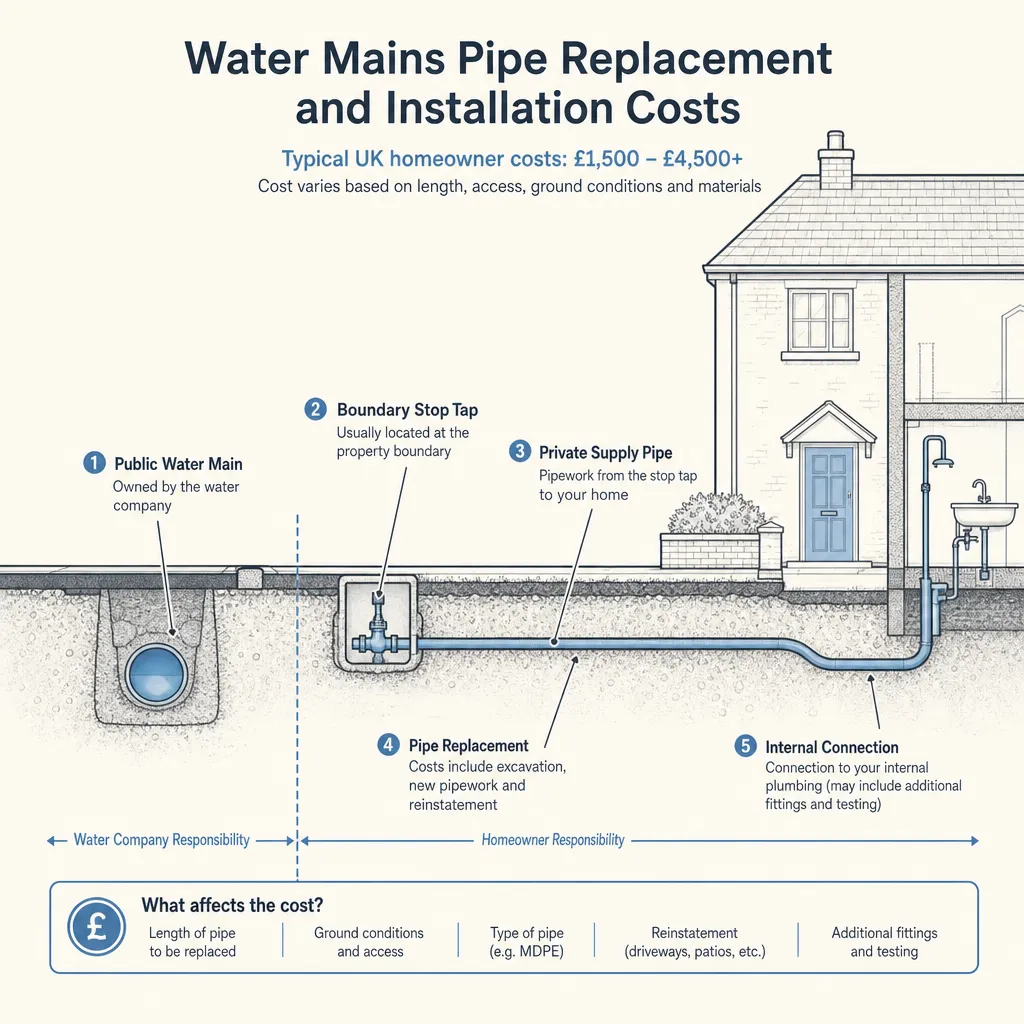
Water Mains Pipe Replacement and Installation Costs
Replacing the supply pipe from the boundary stopcock to your home typically costs £1,500–£3,500 in the UK, depending on pipe length, ground conditions, and whether any hard surfacing must be excavated.
 Improvement & Build
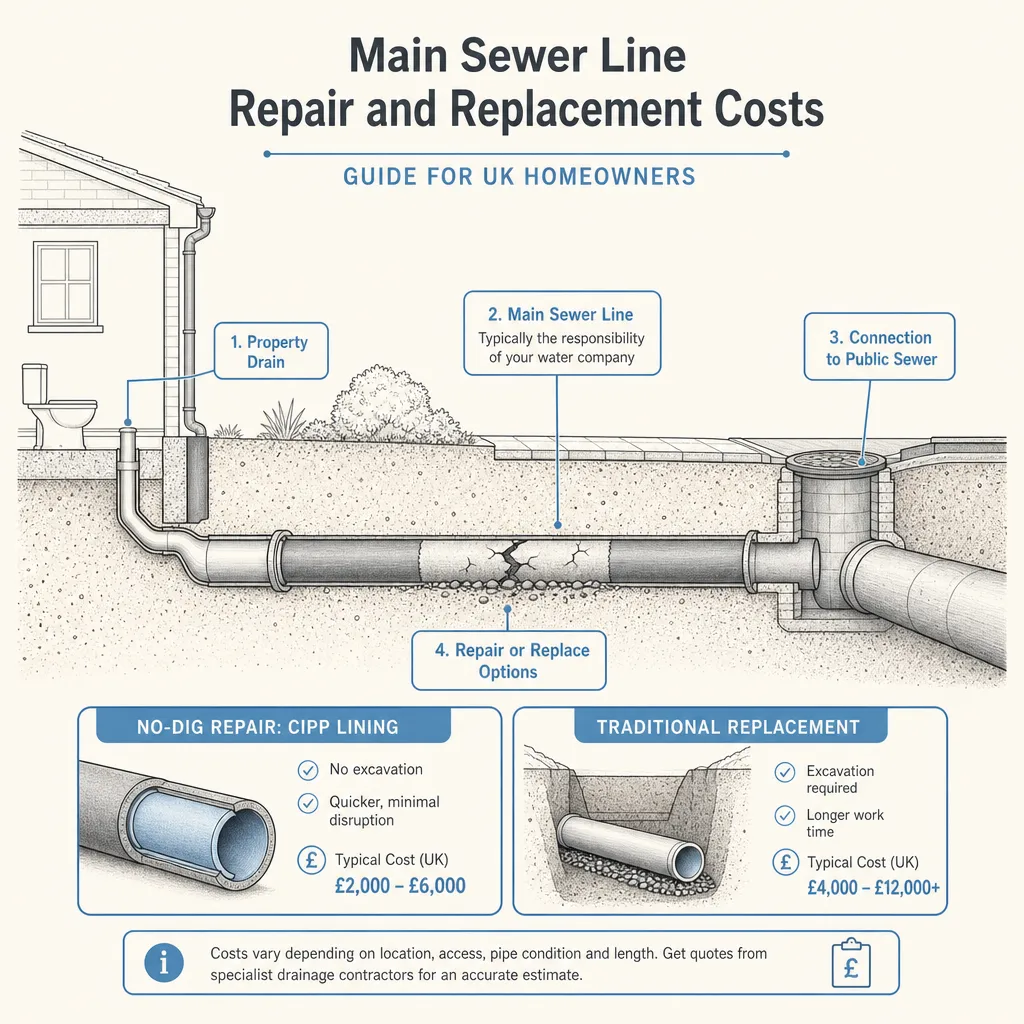
Main Sewer Line Repair and Replacement Costs
Main sewer line repair in the UK costs roughly £500–£2,500 for no-dig methods such as patch lining or full CIPP lining, and £3,000–£10,000 or more for open-cut excavation and pipe replacement.
 Improvement & Build
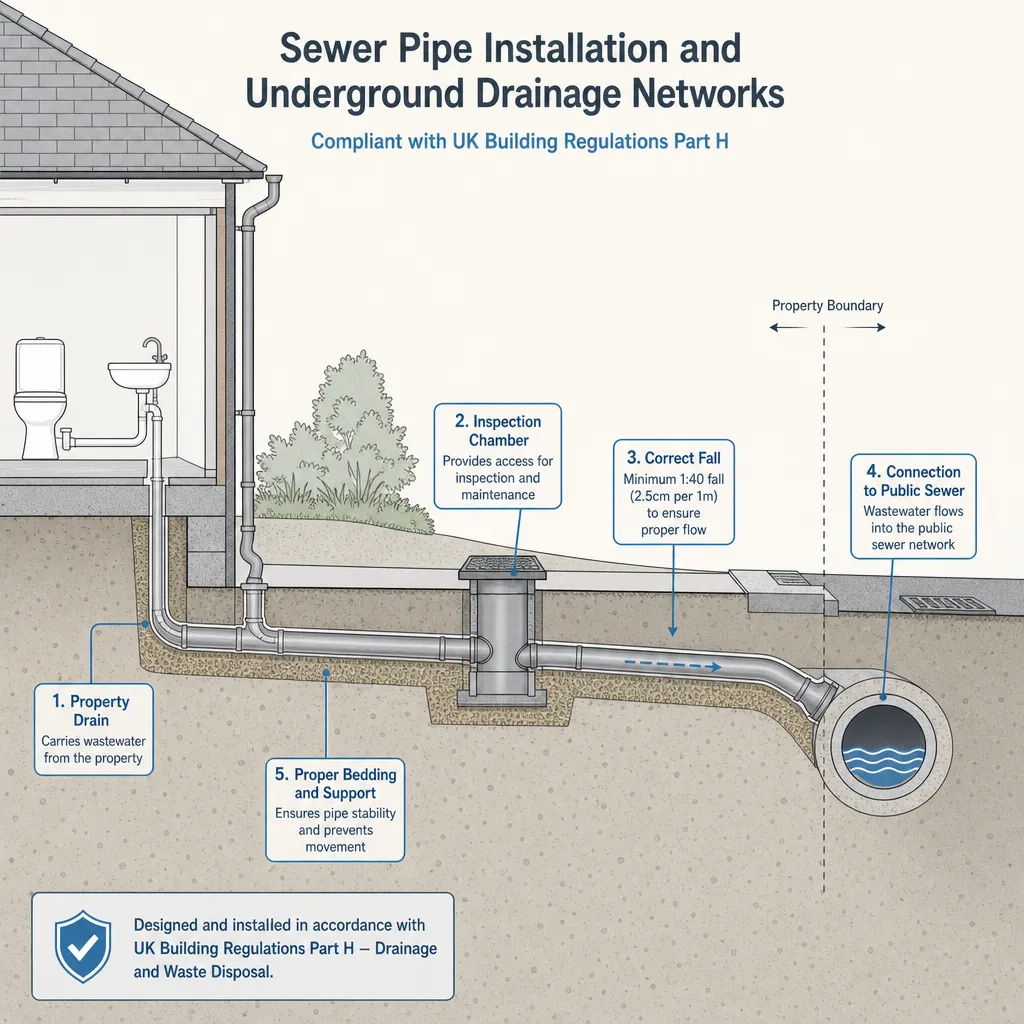
Sewer Pipe Installation and Underground Drainage Networks
Installing sewer pipes and underground drainage in the UK requires compliance with Building Regulations Part H, and connections to a public sewer need formal consent from the water and sewerage company under the Water Industry Act 1991.
 Improvement & Build
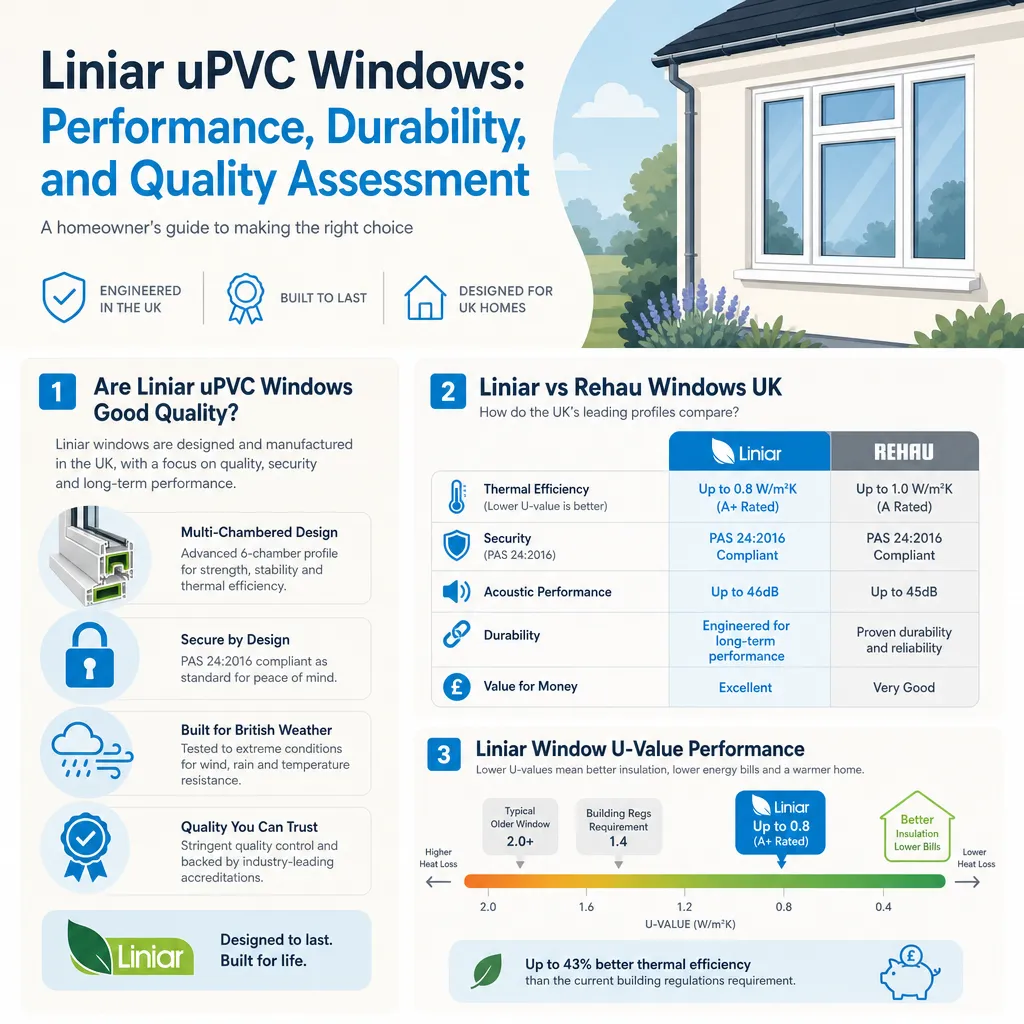
Liniar uPVC Windows: Performance, Durability, and Quality Assessment
Liniar uPVC window profiles are manufactured in the UK using multi-chambered, foamed frames.