Water Mains Pipe Replacement and Installation Costs
By Housey · Last reviewed 8th of May 2026
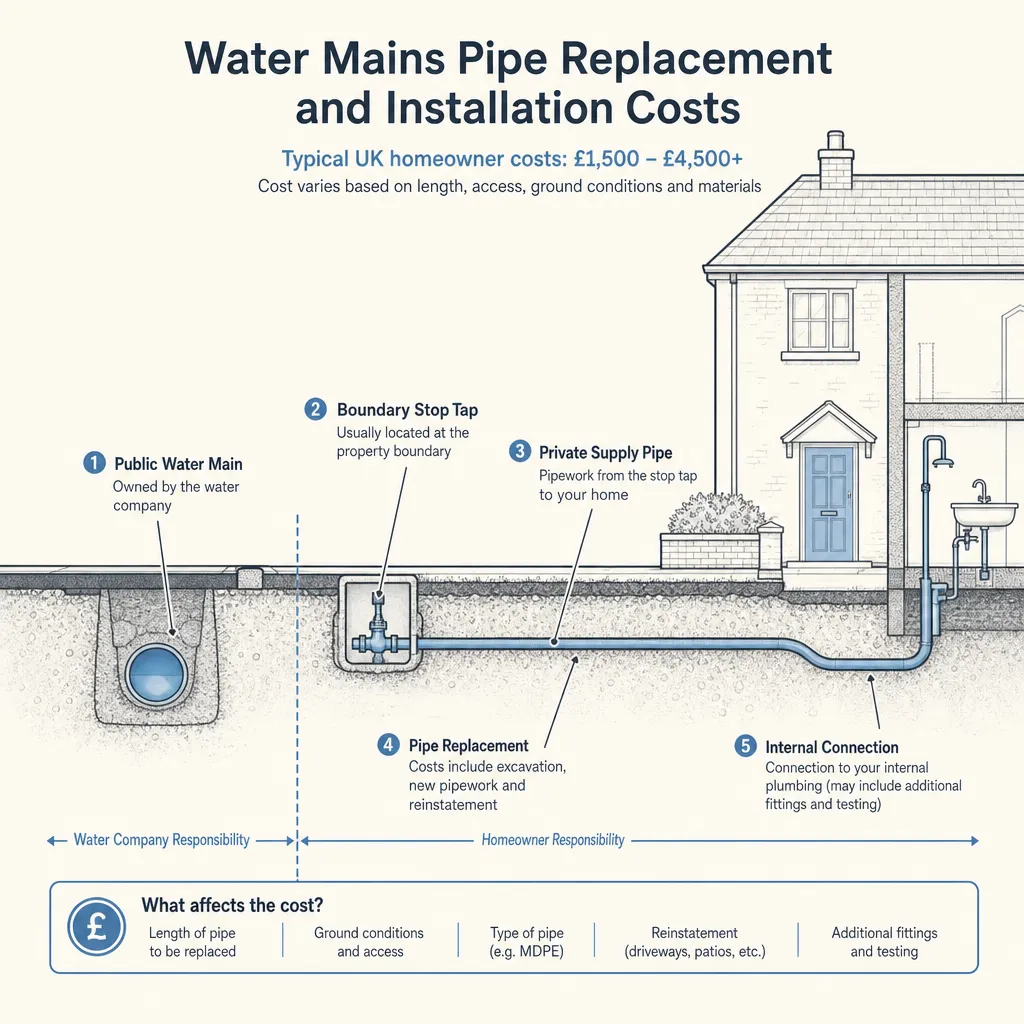
Water Mains Pipe Replacement and Installation Costs
Water supply pipe problems often surface unexpectedly — a persistently low water pressure, a soggy patch in the garden, or a surveyor's report flagging lead pipework in a pre-1970 property. Understanding who owns which section of pipe, what replacement involves, and what it realistically costs helps you budget accurately and avoid delays when work is needed.
Key points
- You are responsible for the supply pipe from your property's boundary stopcock into the house; your water company owns everything from the water main in the street to the boundary.
- Lead water pipes — common in homes built before the 1960s — should be replaced on health grounds; most UK water companies offer subsidised or free lead pipe replacement schemes for the section they own.
- Replacing a typical domestic supply pipe costs roughly £1,500–£3,500 (indicative UK costs, last reviewed 2026-05-08), but groundworks under driveways or concrete can push totals above £5,000.
- MDPE (medium-density polyethylene) blue pipe, approved under BS 6572, is the current standard material for cold water supply, replacing older copper and lead runs.
- Building control notification may be required if works involve breaking through external walls or affect shared drainage.
Who owns your water supply pipe?
Your water supply runs in two legally distinct sections:
- Water company's section: The water main under the street, the ferrule (connection point), and the communication pipe up to and including the external or boundary stopcock. Your water company is responsible for repairs and replacement here.
- Your section: The supply pipe from the boundary stopcock into your home, including any internal pipework. This is your responsibility as the property owner.
This distinction matters for cost. If the defective or lead section falls entirely within the water company's infrastructure, you may pay nothing. Contact your water company before commissioning any work — they can often inspect and confirm exactly where the boundary lies.
Lead pipe replacement schemes
Many UK water companies — including Thames Water, Severn Trent, and United Utilities — operate lead pipe replacement schemes. These typically offer:
- Free replacement of the water company's communication pipe if lead is confirmed.
- A subsidised contribution or free replacement of the homeowner's supply pipe in some cases.
- A co-ordinated replacement covering both sections in one visit, avoiding two separate excavations.
Check GOV.UK guidance on lead in drinking water and contact your water company before getting independent quotes, as you may not need to fund the full job yourself.
What affects the cost of supply pipe replacement?
Several factors can move costs significantly:
Cost factor | Lower cost | Higher cost |
|---|---|---|
Pipe length | Short run (under 5m) | Long run (15m+) |
Ground conditions | Soft garden soil | Hard clay or rocky ground |
Surface above pipe | Lawn or flower bed | Tarmac driveway or concrete path |
Access | Clear, open run | Near existing services or retaining walls |
Scope of work | Like-for-like replacement | Rerouting or relocating the service entry |
Indicative UK costs, last reviewed 2026-05-08:
- Standard supply pipe replacement (garden run, no hard surfacing): £1,500–£2,500
- Replacement under a path or soft landscaping: £2,000–£3,500
- Replacement under a tarmac or block-paved driveway: £3,000–£5,500+
- New installation (connecting a new build or outbuilding): £2,000–£6,000+ depending on run length and any road-crossing requirements
Quotes vary significantly by region and contractor. Always obtain at least three written quotes and confirm that excavation, backfill, reinstatement, and water company liaison are all included.
Which pipe materials are used?
Material | Status in UK | Notes |
|---|---|---|
Lead | Being phased out | Pre-1960s homes; the UK drinking water standard limits lead to 10 µg/L. Replace on health grounds. |
Copper | Acceptable; less common for new work | Durable, but more expensive to install than MDPE. |
MDPE (blue) | Current standard | Flexible, resistant to ground movement, approved for potable water use under BS 6572. |
HPPE / PE100 | Used for larger or high-pressure runs | Less common in standard domestic settings. |
Worked UK property scenario
A homeowner in a 1952 semi-detached property in the West Midlands discovers low water pressure. A RICS Level 2 survey notes lead pipework throughout. The water company confirms the communication pipe is also lead. The total run from the boundary to the kitchen is 9 metres, passing partly under a block-paved driveway.
The water company replaces its section at no charge. The homeowner obtains three quotes for the supply pipe:
- Quote A: £2,800 — includes full block-paved driveway reinstatement
- Quote B: £3,400 — includes a post-completion water quality test
- Quote C: £2,200 — excludes driveway work beyond temporary road plates
The homeowner chooses Quote A and asks the contractor to co-ordinate with the water company so both sections are replaced in a single trench visit, minimising disruption to the driveway.
Checklist before you accept a quote
When to get professional help
A qualified contractor — typically a drainage contractor or groundworker with water supply experience — should carry out any supply pipe replacement. Do not attempt to excavate and reconnect a live water supply yourself.
Seek professional help promptly if you notice:
- A sudden drop in water pressure across the whole property, which may indicate a burst or fracture in the supply pipe
- Discoloured water, which may indicate corrosion in an old lead or iron pipe
- Unexplained wet patches in the garden following dry weather
- A water quality test result flagging lead above the 10 µg/L guideline
How Housey can help
If your supply pipe needs replacement, Housey can connect you with vetted drainage contractors and experienced groundworkers who handle excavation, pipe installation, and surface reinstatement. Submit your project details to receive and compare quotes from local specialists.
Frequently asked questions
Who is responsible for replacing a water mains supply pipe?
You are responsible for the section running from your property's boundary stopcock to the house. Your water company is responsible for the pipe from the street main to the boundary. Contact your water company before commissioning any work — they may replace their section for free, and some offer subsidised schemes for the homeowner's section, particularly where lead pipes are involved.
How long does supply pipe replacement take?
A straightforward garden-run replacement usually takes one day. Jobs involving breaking through driveways, concrete, or hard landscaping typically take two to three days, allowing time for reinstatement materials to cure. Co-ordinating a joint replacement with the water company may add scheduling lead time, so contact them early.
Do I need building regulations approval to replace a water supply pipe?
Most like-for-like supply pipe replacements do not require a full building regulations application. However, you should notify your water company before connecting to or disconnecting from their infrastructure. If work involves breaking through an external wall or affects drainage, a building control notification may be needed. Check with your local authority building control if you are unsure.
Can I replace a lead water pipe myself?
Excavation and reconnection to the water supply is not standard DIY work. Connections to the water company's communication pipe must be made by an approved contractor. Making an unauthorised connection to a water main is an offence under the Water Industry Act 1991. Always hire a qualified contractor with experience in water supply work.
Will replacing the supply pipe improve my water pressure?
It may, particularly if an old, narrow, or partially blocked pipe is replaced with correctly sized MDPE pipe. However, if pressure is low because of issues in the water company's network, replacing your section alone will not resolve it. Contact your water company to check network pressure in your area before commissioning work.
Sources and further reading
- Lead in drinking water — GOV.UK / Drinking Water Inspectorate
- Water Supply (Water Fittings) Regulations 1999 — legislation.gov.uk
- Ofwat: household water supply guidance — Ofwat
- Lead pipes — Water UK — Water UK
Useful next reads
 Improvement & Build
Aluminium Windows: Benefits, Specifications, and Installation Costs
Aluminium windows typically cost £600–£1,800 per window installed in the UK, depending on size and specification.
 Improvement & Build
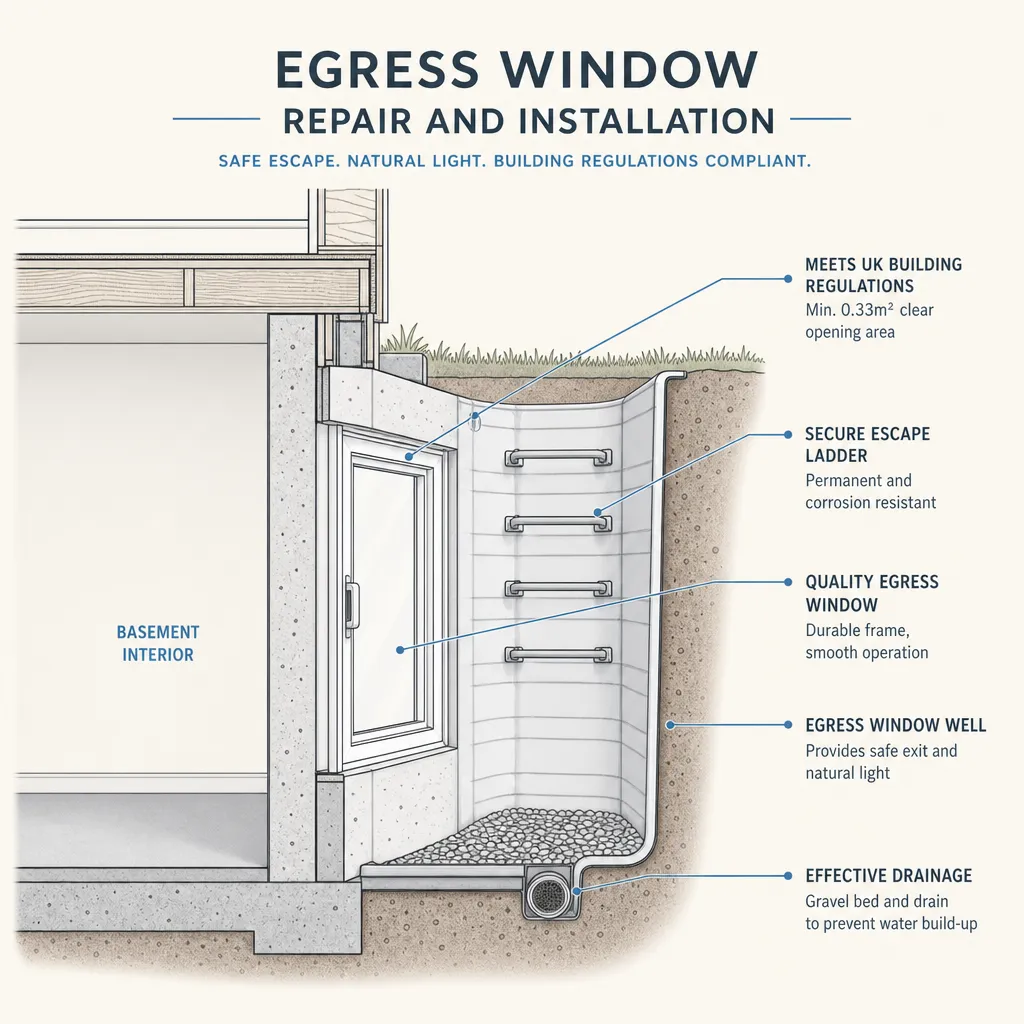
Egress Window Repair and Installation
An egress window is a window large enough to serve as an emergency escape route from a habitable room.
 Improvement & Build
Porch Screening: Options and Professional Installation Costs
Porch screening ranges from simple insect mesh on a timber frame to bespoke aluminium-framed glazed enclosures.
 Improvement & Build
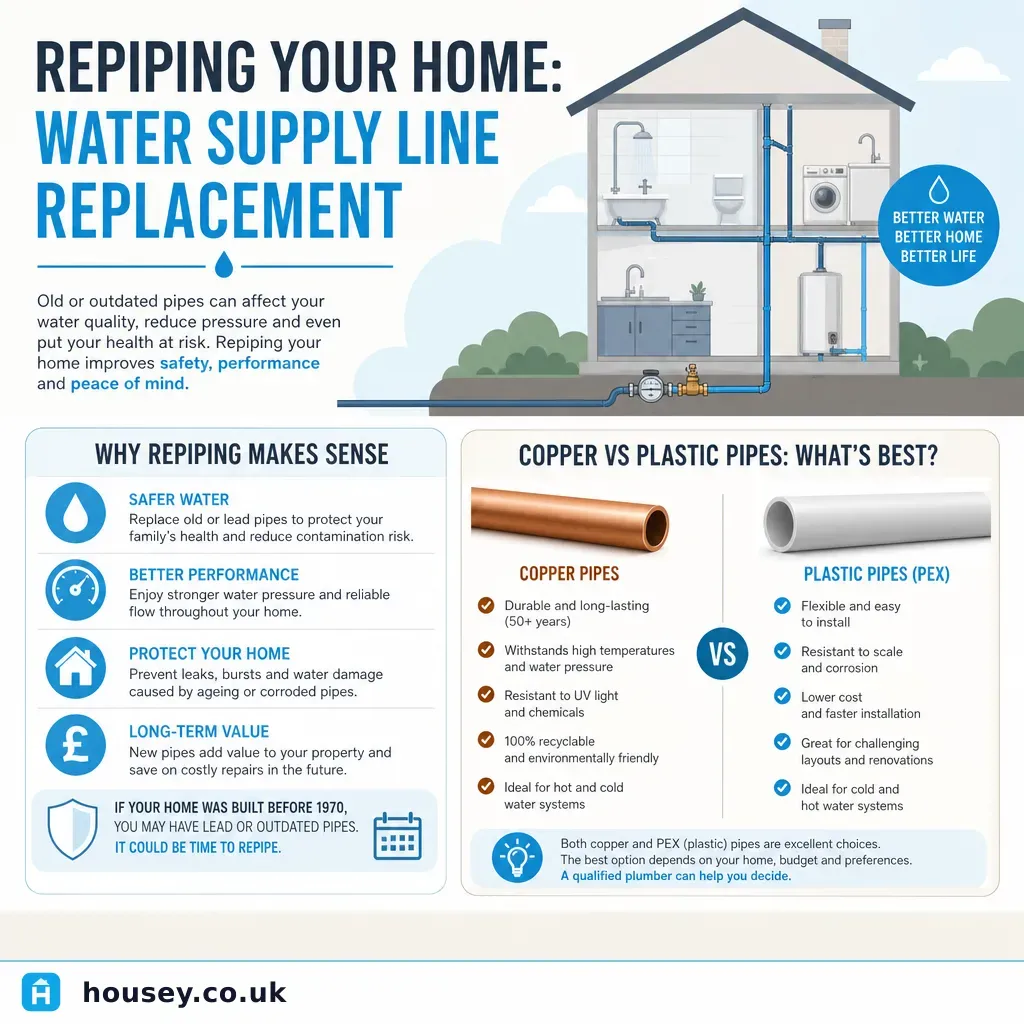
Repiping Your Home: Water Supply Line Replacement
Repiping is typically needed when lead, iron, or early polybutylene pipes corrode, leak, or restrict flow.
 Improvement & Build
Building an Outdoor Kitchen: Design, Materials, and Investment
Building an outdoor kitchen in the UK costs roughly £3,000–£25,000 depending on size and materials.