UK Energy Policy Updates 2026: What Homeowners Need to Know
By Housey · Last reviewed 30th of May 2026
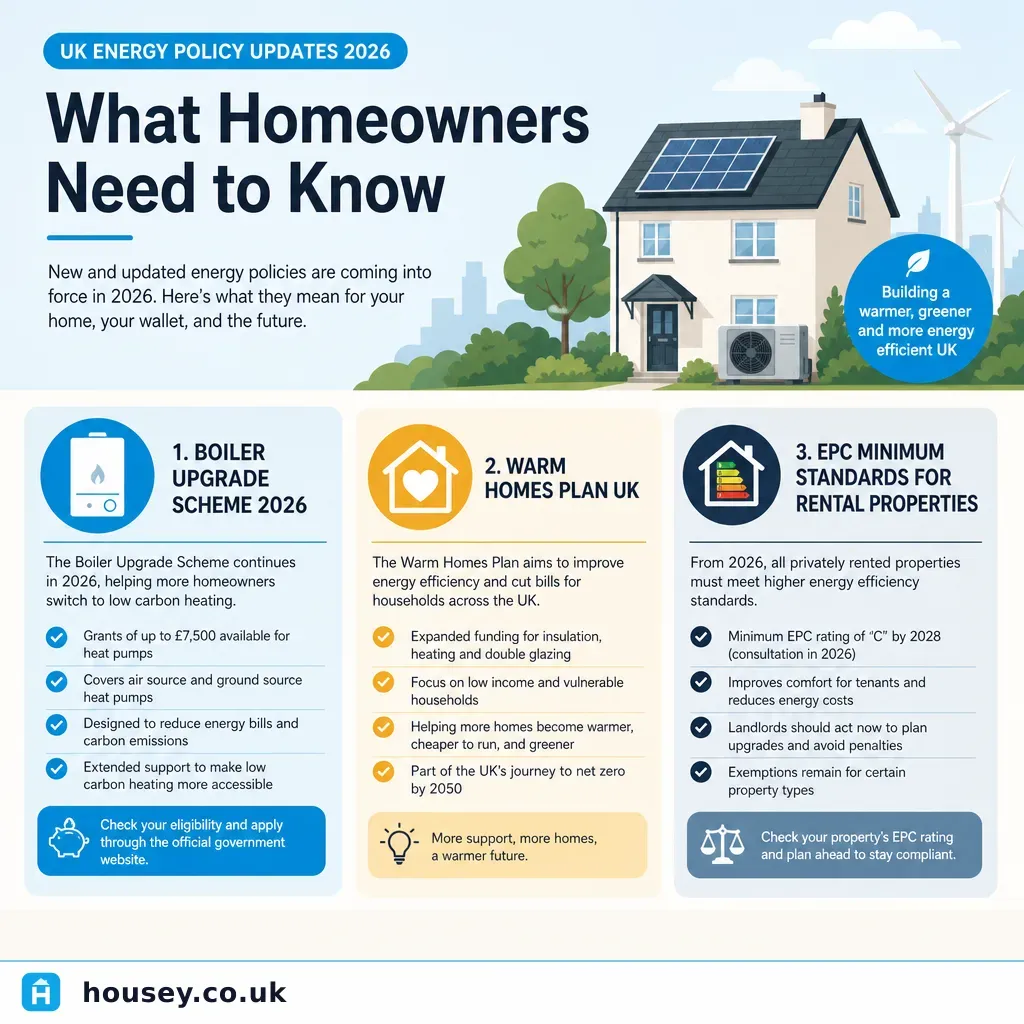
UK Energy Policy Updates 2026: What Homeowners Need to Know
Energy policy is reshaping decisions across the UK housing market — from what landlords must spend on their properties to what buyers increasingly look for when comparing homes. For owner-occupiers and investors alike, the regulatory landscape of grants, standards, and scheme deadlines now sits alongside mortgage terms and survey reports as something worth understanding before starting a retrofit, purchasing a buy-to-let, or listing a property for sale.
Key points
- The Boiler Upgrade Scheme (BUS) currently offers £7,500 grants for air source and ground source heat pump installations in England and Wales, accessed through MCS-accredited contractors.
- ECO4, which provided free insulation and heating upgrades for lower-income households, was scheduled to close in March 2026; check GOV.UK for information on successor funding arrangements.
- The Warm Homes Plan is the Labour government's flagship energy efficiency programme, prioritising households with EPC ratings of D or below.
- Proposed Minimum Energy Efficiency Standards (MEES) would require private rented properties to reach EPC Band C before new tenancies are granted — implementation dates remain subject to confirmation on GOV.UK.
- The Future Homes Standard, once implemented, will require new-build homes to produce 75–80% fewer carbon emissions than those built under current Building Regulations Part L.
Current government energy schemes explained
Three distinct funding streams are currently the most relevant for UK homeowners and landlords planning energy improvements.
Scheme | Who it is for | Typical benefit | How to access |
|---|---|---|---|
Boiler Upgrade Scheme (BUS) | Owner-occupiers in England and Wales replacing fossil-fuel heating | £7,500 off eligible heat pump installation | Via MCS-accredited installer; grant applied at point of installation |
ECO4 / successor scheme | Lower-income or fuel-poor households | Free insulation and/or heating upgrade | Via energy supplier or local council |
Great British Insulation Scheme (GBIS) | EPC D–G homes or lower council tax bands | Single insulation measure (e.g. loft, cavity wall) | Via energy supplier |
Warm Homes: Local Authority Delivery | Fuel-poor households referred by councils | Multiple measures possible | Via local authority |
Always verify current scheme availability on GOV.UK before making installation decisions, as programmes can open, close, or change eligibility criteria without much notice.
The Warm Homes Plan: what it means in practice
The Warm Homes Plan is the Labour government's overarching framework for improving domestic energy efficiency. Backed by significant public investment, the plan prioritises households in fuel poverty and properties with the lowest energy performance ratings.
Practical entry points for homeowners include:
- ECO-linked upgrades: Households on qualifying benefits, or in homes rated D or below, may be referred through energy suppliers or local councils for funded upgrades under schemes flowing from the plan.
- Local authority programmes: Some Warm Homes funding flows through councils, which may operate their own area-based schemes. Check your local authority website for locally administered offers.
- Retrofit coordinators: Larger-scale projects are expected to follow PAS 2035 — the quality standard for domestic retrofit — which requires a qualified Retrofit Coordinator to oversee the design and specification of works.
EPC minimum standards for rental properties
The private rented sector faces the most significant medium-term regulatory pressure. Under proposals developed across successive governments, landlords would need to ensure properties reach EPC Band C before new tenancies are granted.
The existing MEES rules already prohibit letting residential properties in England and Wales rated F or G (with limited exemptions). If Band C requirements are legislated, landlords with Band D properties would face new compliance costs.
What landlords should do now:
- Commission an up-to-date EPC if the existing certificate is more than five years old or if improvements have been made since it was issued.
- Obtain a retrofit assessment from a PAS 2035-qualified assessor if insulation, glazing, or heating works are likely to be needed.
- Check exemption eligibility — a cost cap exemption applies if compliant improvements would cost more than the current statutory threshold; confirm the current figure on legislation.gov.uk.
- Monitor GOV.UK for the formal consultation response and any commencement orders before planning works or tenancy changes.
The Future Homes Standard
The Future Homes Standard (FHS) is a planned revision of Building Regulations Part L (energy efficiency) and Part F (ventilation) for new-build homes in England. Once implemented, new homes would produce roughly 75–80% fewer carbon emissions than those built under current standards, and fossil-fuel heating systems would be prohibited in new builds.
Key implications for those involved in new-build or development projects:
- New homes built after the FHS is implemented should require minimal retrofit to accommodate heat pumps or other low-carbon heating systems.
- Fabric performance requirements — wall U-values, roof U-values, floor insulation, and glazing standards — will be significantly tightened.
- The government conducted FHS consultations in 2023 and 2024; check DESNZ and GOV.UK for confirmed implementation dates before proceeding with design or building control applications.
Electricity pricing and the retrofit economics question
The running-cost economics of heat pumps relative to gas boilers depend heavily on the ratio of electricity and gas unit prices. Ofgem sets the energy price cap quarterly. As of spring 2026, electricity remains considerably more expensive per kWh than gas — a gap that affects the financial case for low-carbon heating.
The government has committed to reforming electricity pricing to support the switch to low-carbon heating. Smart Time-of-Use (ToU) tariffs offered by several suppliers allow heat pump owners to shift consumption to cheaper off-peak periods — particularly valuable for households also charging an electric vehicle or running battery storage.
Homeowner policy checklist
Use this checklist to identify which current policy developments are most relevant to your situation:
When to get professional help
Policy details, scheme eligibility, and regulatory timelines change frequently. Seek professional guidance if:
- You are a landlord planning a portfolio retrofit strategy — a PAS 2035-qualified retrofit coordinator or energy assessor can model upgrade options and costs across multiple properties before you commit to works.
- You are planning a heat pump installation — always use an MCS-accredited contractor to ensure BUS grant eligibility and correct system sizing for your property.
- You receive formal correspondence from a local authority or enforcement body about energy performance standards — take this seriously and seek independent legal or professional advice promptly.
How Housey can help
Housey connects UK homeowners and landlords with qualified energy professionals, from energy assessors and retrofit coordinators to heat pump installers and solar PV advisers. Browse the Housey services directory to find accredited professionals in your area.
Frequently asked questions
What is the Boiler Upgrade Scheme and is it still available?
The Boiler Upgrade Scheme (BUS) is a government grant programme in England and Wales that reduces the upfront cost of installing a heat pump or biomass boiler in place of a fossil-fuel heating system. As of May 2026, grants of £7,500 are available for eligible air source and ground source heat pump installations. Always check GOV.UK for current availability and eligibility rules, as scheme terms can change.
Who qualifies for free home insulation under ECO4 or its successor?
ECO4 was targeted at households receiving qualifying means-tested benefits or living in homes with an EPC rating of D or below. Eligibility was assessed through energy suppliers and local authorities. The scheme was due to close in March 2026; check GOV.UK or contact your energy supplier for information on any successor funding and current eligibility criteria.
What does the proposed EPC Band C requirement mean for landlords?
If minimum energy efficiency standards are tightened to EPC Band C as proposed, landlords with D-rated properties would need to fund improvement works or register a valid exemption before granting new tenancies. The existing MEES rules already prohibit letting F or G-rated homes with limited exceptions. Always check the current legal position on legislation.gov.uk and GOV.UK before making portfolio decisions.
What is the Smart Export Guarantee?
The Smart Export Guarantee (SEG) requires eligible energy suppliers to pay households for surplus electricity exported to the grid from small-scale renewable generators, including solar PV. Rates vary by supplier and are not fixed by government. Compare current tariffs via the Energy Saving Trust or Ofgem's published guidance before committing to a solar installation.
Sources and further reading
Useful next reads
 Energy & Retrofit
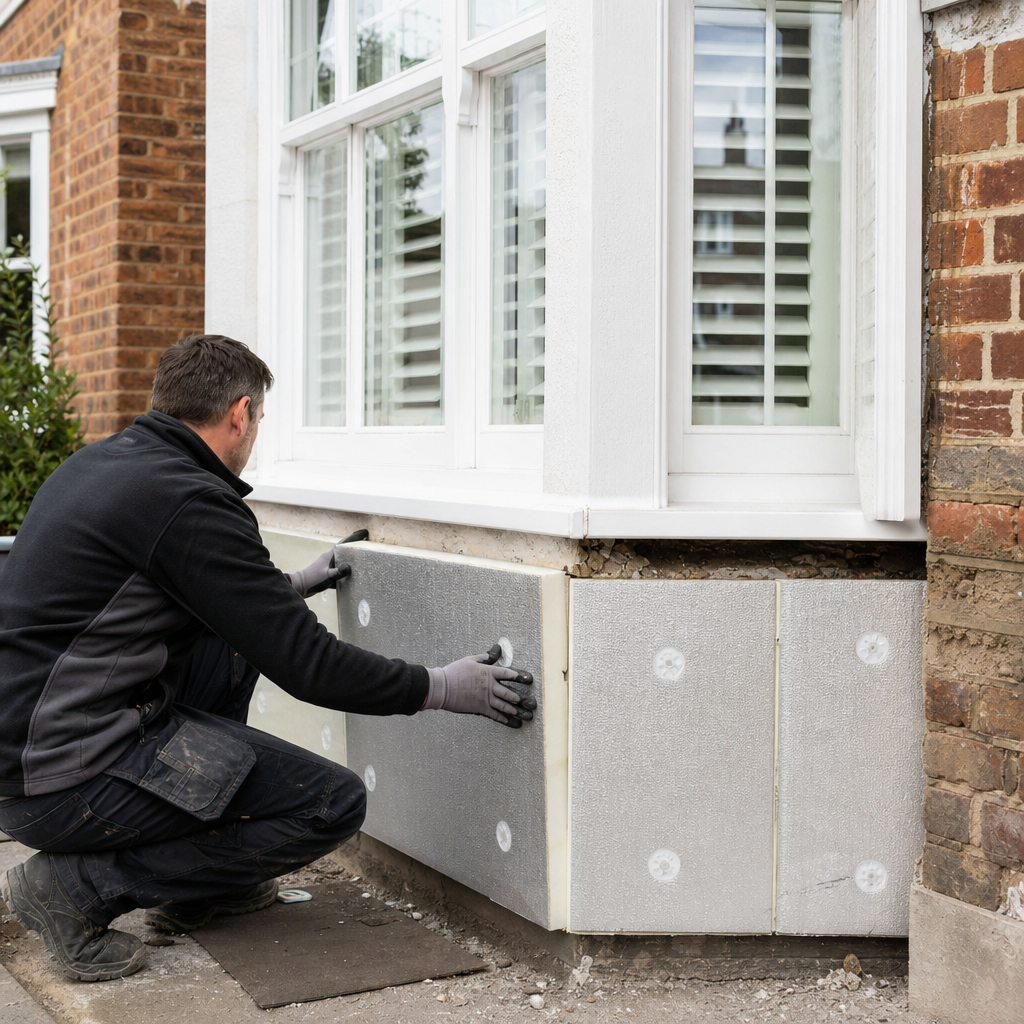
Insulating Solid Masonry Walls Under Bay Windows: Technical Guidance
Insulating solid masonry walls under bay windows requires specialist detailing at angled wall faces, window reveals, and the bay floor and ceiling junctions.
 Energy & Retrofit
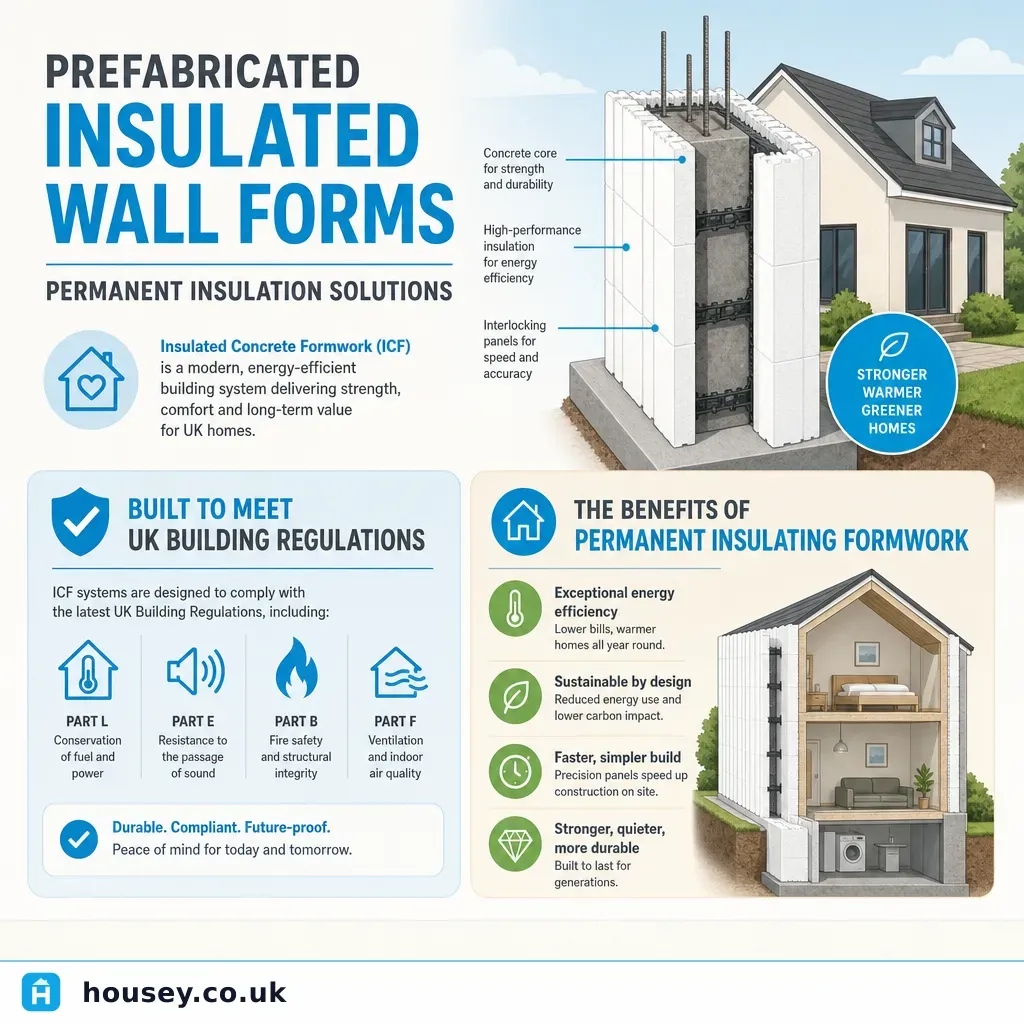
Prefabricated Insulated Wall Forms: Permanent Insulation Solutions
Prefabricated insulated wall forms — including ICF and SIPs systems — deliver high thermal performance by combining permanent insulation with structural concrete or timber in a single wall assembly.
 Energy & Retrofit
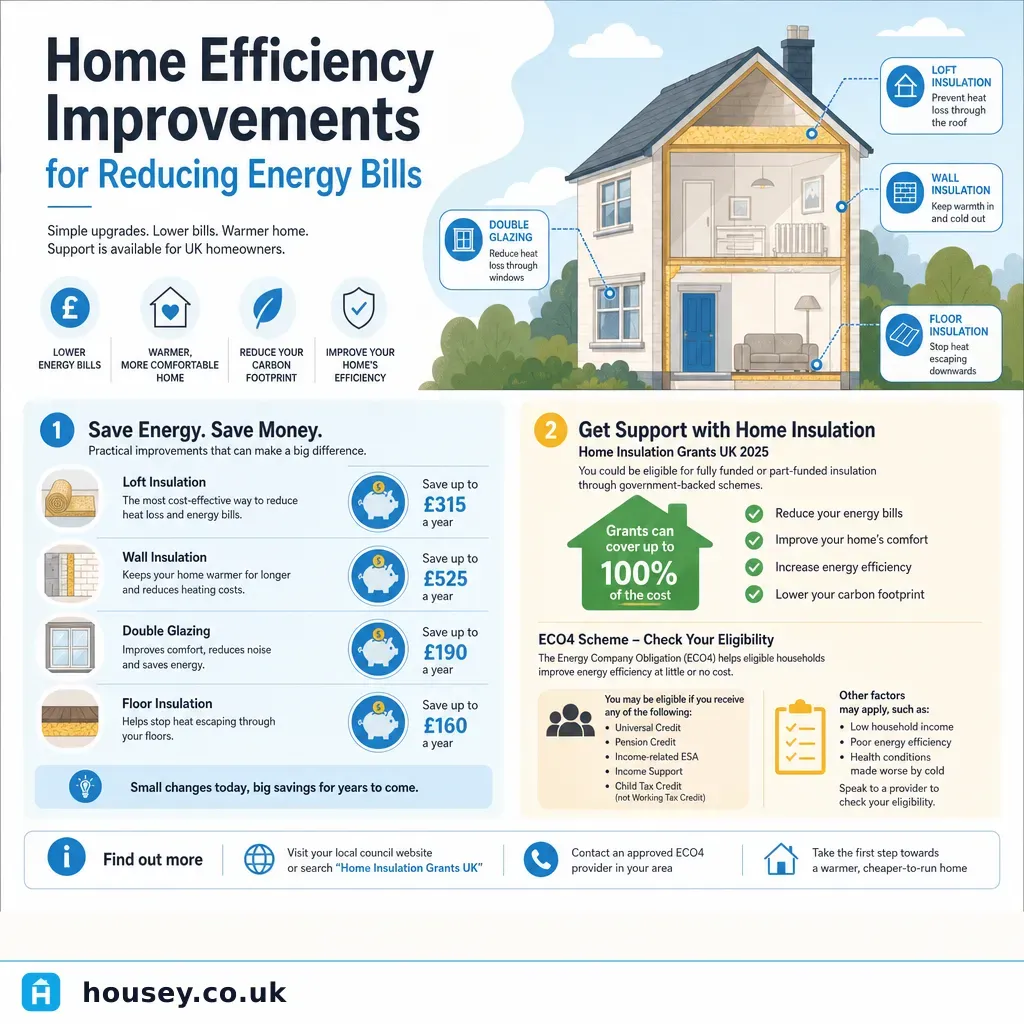
Home Efficiency Improvements for Reducing Energy Bills
The most cost-effective UK home efficiency improvements are usually loft insulation, cavity wall insulation, draught-proofing, and upgrading heating controls.
 Energy & Retrofit
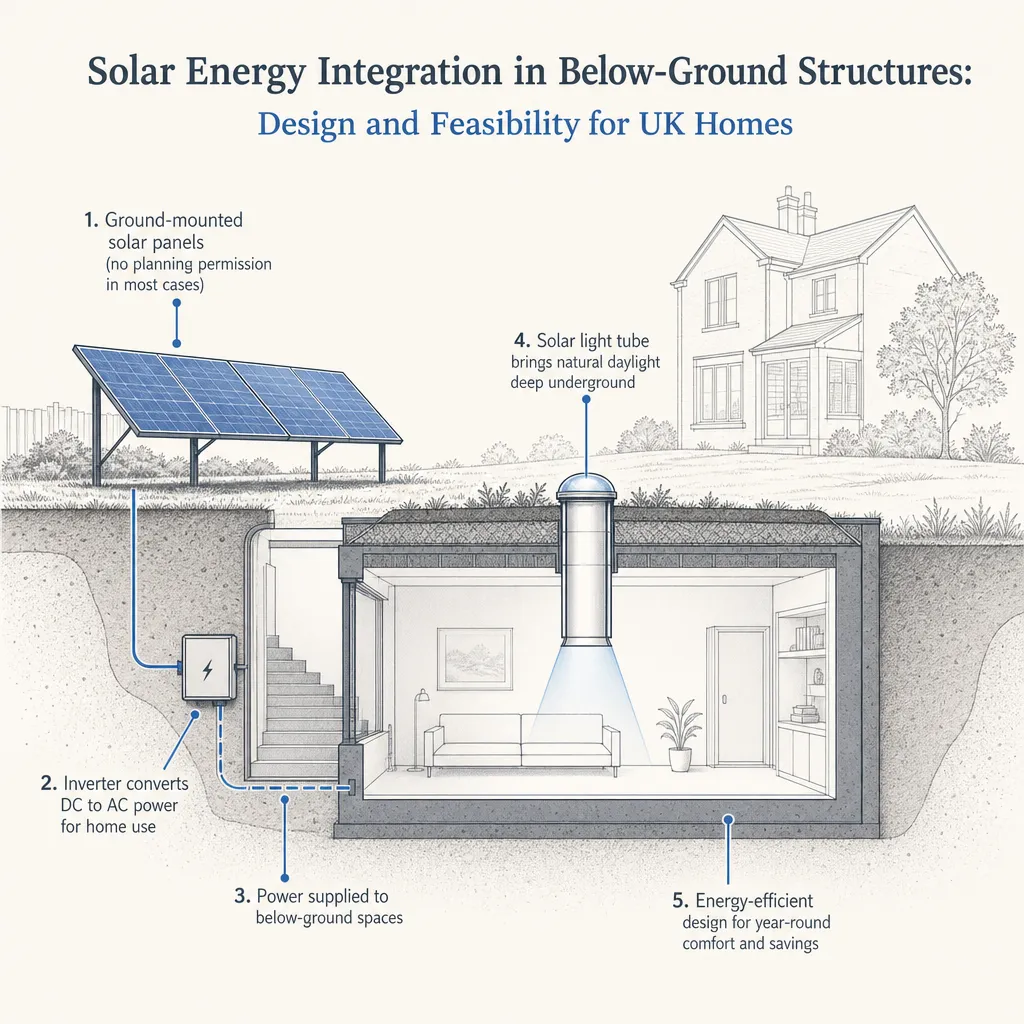
Solar Energy Integration in Below-Ground Structures: Design and Feasibility
Below-ground structures cannot host solar panels on their own roofs but can use surface-mounted panels connected via cable runs, solar light tubes for daylighting, and battery storage.
 Energy & Retrofit
Climate-Ready Home Improvements for the Future
Climate-ready home improvements tackle four main risks for UK properties: overheating, increased rainfall and flooding, storm damage, and energy cost volatility.