UK Garden Planting Calendar and Seasonal Timing
By Housey · Last reviewed 10th of May 2026
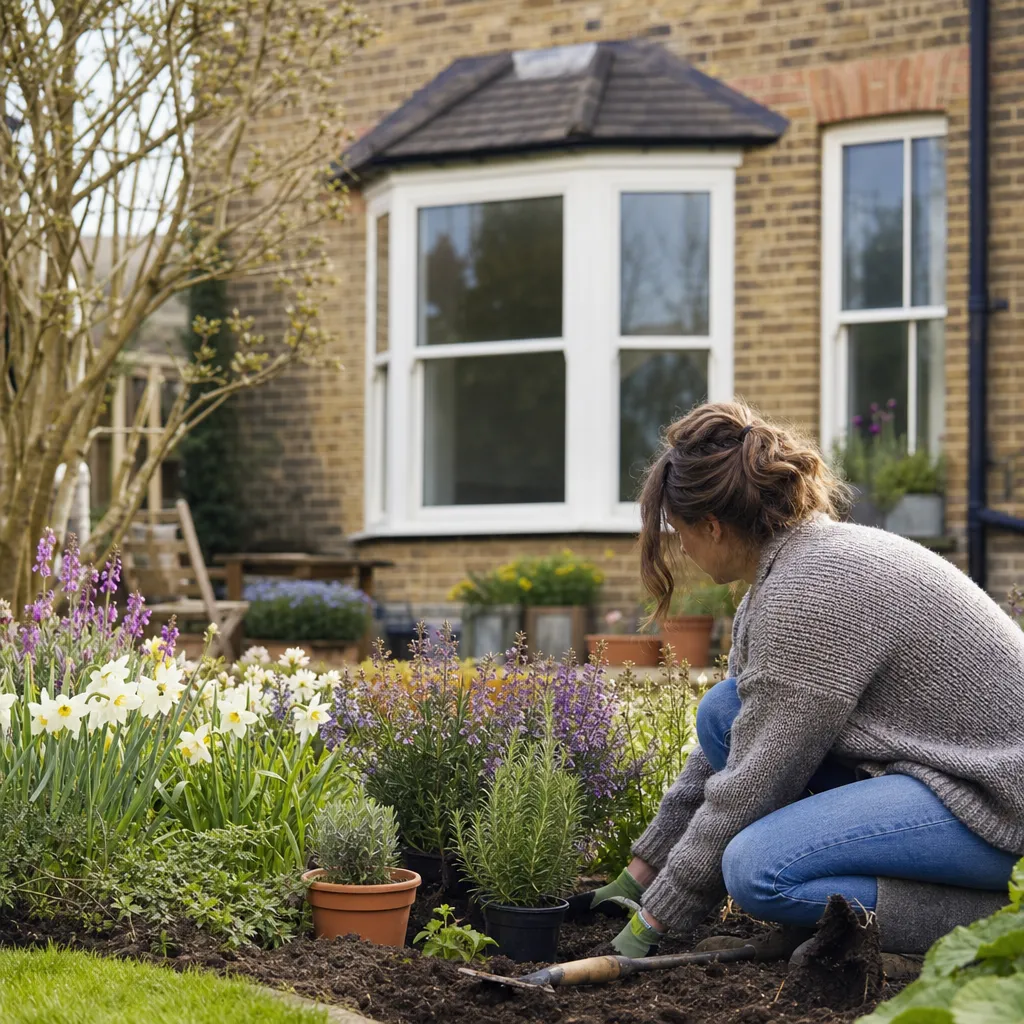
UK Garden Planting Calendar and Seasonal Timing
Getting the timing right is one of the most practical challenges in UK gardening. The length of the growing season varies significantly across the country — a gardener in Cornwall will often be sowing outdoors several weeks ahead of one in the Scottish Highlands — and even within England, a late frost can set back work done too early. Whether you are planning a kitchen garden, replanting borders, or establishing a new lawn, understanding the seasonal rhythm of the UK garden calendar helps you avoid wasted effort and failed plantings.
Key points
- The average last frost in most of lowland England falls between mid-April and mid-May; in northern England, Scotland, and upland areas it can be late May or early June — check Met Office historical frost data for your postcode area before planting tender crops outdoors.
- The Royal Horticultural Society (RHS) recommends planting hardy deciduous shrubs and bare-root trees between November and March when the plant is dormant and the ground is neither frozen nor waterlogged.
- Spring bulbs — daffodils, tulips, and crocuses — should be planted between September and November; tulips planted in late November carry a lower risk of tulip fire disease than those planted earlier in autumn.
- Half-hardy annuals and tender vegetables such as tomatoes, basil, and courgettes must not be planted outdoors until all frost risk has passed, typically late May to early June across most of England.
- The RHS Award of Garden Merit (AGM) scheme identifies plants trialled and confirmed to perform reliably in UK conditions — a practical guide when selecting varieties for a new garden.
Autumn (September–November): establish and plant
Autumn is the planting season for much of the garden's permanent structure. Soil retains summer warmth while moisture increases, giving new plants time to establish roots before spring growth demands energy above ground.
Plant type | Timing | Notes |
|---|---|---|
Spring bulbs — daffodil, crocus, allium | September–October | Plant at 2–3× bulb depth |
Tulips | November (late) | Later planting reduces tulip fire risk |
Bare-root trees and hedging | Late October–March | When dormant; not in frozen or waterlogged ground |
Deciduous shrubs (bare-root) | November–February | Water in well; stake trees taller than 60 cm |
Hardy perennials | September–October or March | Avoid planting into waterlogged ground |
Garlic | October–November | Plant cloves pointy end up, 5 cm deep |
Overwintering spring onion sets | October | Varieties such as White Lisbon Winter Hardy |
Lawn re-seeding (bare patches) | September–October | Soil temperature must be above 7°C |
Winter (December–February): prepare and plan
Winter is a period for soil preparation, pruning, and ordering seeds and plants for spring. Hard frost limits what can go in the ground, but there is still productive work to do.
- Prune deciduous trees, roses (late February), and wisteria (January–February for the second seasonal prune)
- Sow indoors from mid-February: chillies, aubergines, and early tomato varieties that need a long growing season before outdoor temperatures allow transplanting
- Order bare-root roses and hedging for delivery during dormancy — bare-root stock is usually better value than pot-grown equivalents bought in spring
- Improve soil by incorporating well-rotted garden compost or manure when the ground is neither frozen nor waterlogged, allowing it to work down before spring sowing
Spring (March–May): sow and grow
Spring is the busiest season. Frost risk determines when tender plants move outdoors; hardening off — gradually acclimatising plants raised under glass to outdoor temperatures — takes 7–14 days and should not be skipped.
Vegetable | Sow indoors | Sow or plant outdoors | Notes |
|---|---|---|---|
Tomatoes | Late February–April | After last frost (late May–June) | 6–8 weeks under cover before transplanting |
Courgettes | April–May | Late May–June | One plant per 90 cm spacing |
Broad beans | February–March | March–April | Hardy enough to sow direct outdoors |
Salad leaves | March onward | March–September | Sow every 2–3 weeks for continuous supply |
Beetroot | — | March–July (fleece for early sowings) | Thin to 10 cm once established |
Climbing beans | April–May indoors | Late May–June outdoors | Needs a support structure in place |
Sweet peas | January–March indoors | April–May hardened off | Pinch growing tips at 10 cm for bushier plants |
Summer-flowering bulbs — dahlias, gladioli, begonias — go into the ground from March to May once frost risk has reduced. In colder or northern areas, start dahlia tubers in pots under glass in April and plant out after the last frost.
Summer (June–August): maintain and harvest
Summer is primarily about maintenance and successive sowing for autumn crops. New planting should be minimised during hot, dry spells unless irrigation is reliable and consistent.
- Sow successionally: French beans, courgettes, and salad leaves into July for a continuous harvest
- Plant out brassica seedlings — cauliflower, calabrese, kale — raised in a nursery bed earlier in spring
- Sow biennials outdoors from June to July for flowers the following year: foxglove, wallflower, and sweet William
- Take softwood cuttings of lavender, pelargoniums, and salvias in June–July to increase stock for next season
Homeowner planting checklist for a new garden
Before planting anything new, work through this list to avoid common and costly mistakes:
Regional differences across the UK
The UK spans a wide range of climatic conditions that affect planting timing significantly:
- South-west England and coastal Wales — mild winters and early springs; planting outdoors 2–4 weeks ahead of Midlands timing is often feasible
- Scotland, northern England, and upland areas — last frosts can occur in late May or early June; the growing season is typically 4–8 weeks shorter than in southern England
- East Anglia — cold, dry winters and warm summers; drought-tolerant varieties and those bred for continental climates often perform well
- Urban areas across the UK — the urban heat island effect can meaningfully reduce frost risk and extend the growing season compared to the surrounding countryside
When to get professional help
A professional landscaper or garden designer is worth considering when:
- You are establishing a garden from scratch and need site grading, drainage work, or hard landscaping before any planting begins
- You want a cohesive planting scheme that accounts for soil type, aspect, year-round interest, and realistic maintenance requirements
- You are working near a listed building where external works may require listed building consent
- Significant tree removal has recently altered drainage patterns or soil chemistry on the site
How Housey can help
For larger garden projects, working with a professional can save time and prevent expensive mistakes. Landscapers on Housey can handle site preparation, hard landscaping, and planting, while garden designers on Housey can create a planting scheme tailored to your soil type, aspect, and maintenance goals.
Frequently asked questions
When is the last frost in my area of the UK?
Average last frost dates vary considerably. Most of lowland England sees the last frost between mid-April and mid-May. Northern England and Scotland can see frost into late May or early June. The Met Office and the RHS both publish frost risk data by region. For tender plants, a practical rule is: do not plant out until you have had two consecutive frost-free nights.
Can I plant spring bulbs in spring?
Spring bulbs — daffodils, crocuses, and most tulips — require a cold period to flower and should be planted in autumn between September and November. Bulbs found on sale in spring are usually pre-chilled and sold as pot-grown plants. Summer-flowering bulbs — dahlias, gladioli, and begonias — are planted from March onward once frost risk has reduced.
What is hardening off and why does it matter?
Hardening off acclimatises plants raised indoors or under glass to outdoor conditions. Over 7–14 days, place plants outside for increasing periods each day in a sheltered spot, avoiding frost and wind. Skipping this step can cause cold shock, wilting, or death even in plants that would otherwise thrive permanently outdoors once properly established.
Should I feed my garden in autumn?
Avoid nitrogen-rich feeds in autumn as they encourage soft growth that is vulnerable to frost. Use a low-nitrogen, high-potassium fertiliser — such as a tomato feed — to help harden plants before winter, or apply a balanced granular fertiliser to borders. Bulb fertiliser applied at planting time encourages strong root development through the colder months.
Sources and further reading
- RHS grow guides — planting and sowing times — Royal Horticultural Society
- Met Office seasonal climate data and frost risk — Met Office
- RHS Award of Garden Merit plant search — Royal Horticultural Society
- RHS hardiness ratings explained — Royal Horticultural Society
Useful next reads
 Improvement & Build
Managing Garden Tasks Through Winter Weather: Practical Strategies
Most UK winter garden tasks can be carried out during mild, dry spells — pruning dormant shrubs, clearing debris, and improving soil structure are all suitable when the ground is not frozen or waterlogged.
 Improvement & Build
Winter Garden Soil Improvement and Preparation
Winter is an ideal time to improve garden soil in the UK because beds are largely clear of crops.
 Improvement & Build
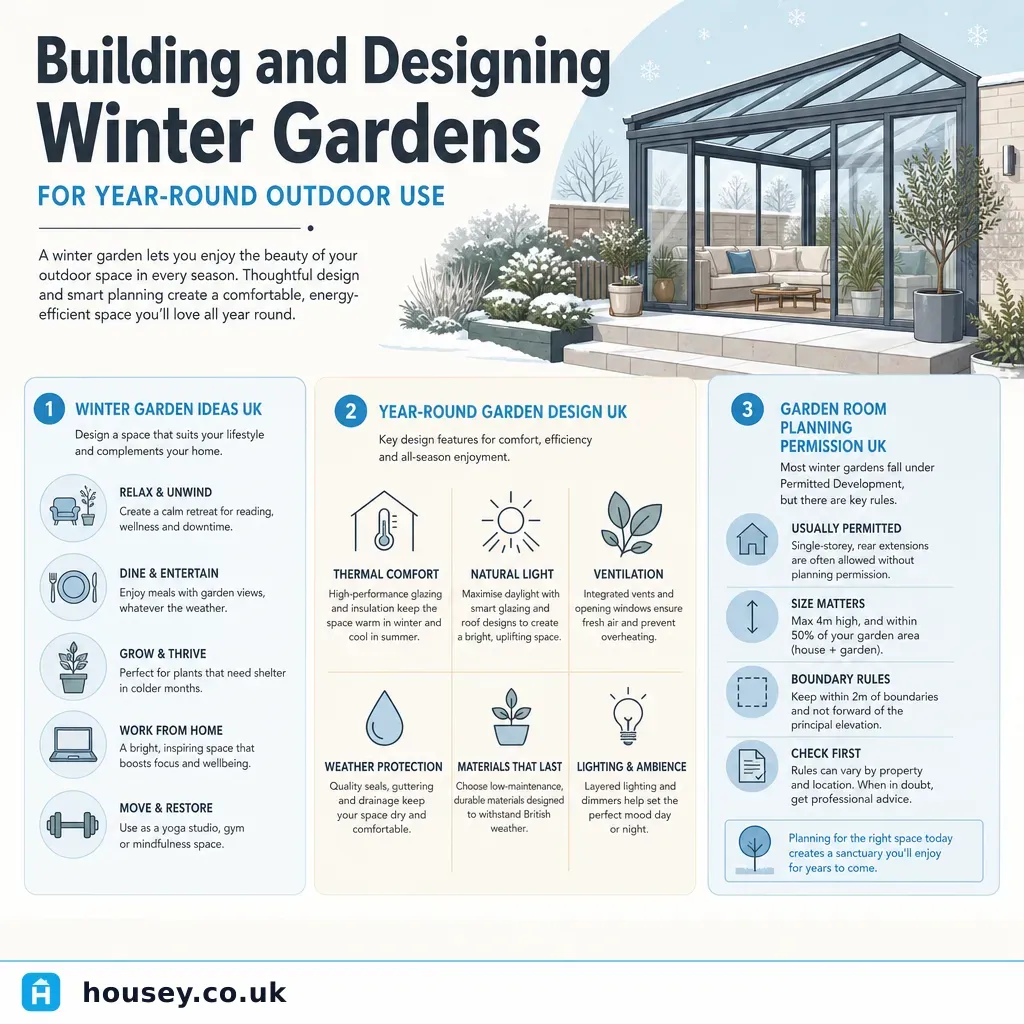
Building and Designing Winter Gardens for Year-Round Outdoor Use
A UK winter garden combines a sheltered microclimate, frost-hardy structural planting, and often a covered or glazed structure to make outdoor space usable across all seasons.
 Improvement & Build
Seasonal Garden Maintenance: Spring Preparation and Planting
Spring garden maintenance in the UK runs from late February through May, with timing dictated by your location, last frost date, and soil temperature.
 Improvement & Build
Garden Design Inspiration and Professional Landscaping Ideas
A professional garden designer creates layouts, planting plans, and material palettes, while a landscaper carries out the physical build.