Winter Garden Soil Improvement and Preparation
By Housey · Last reviewed 11th of May 2026
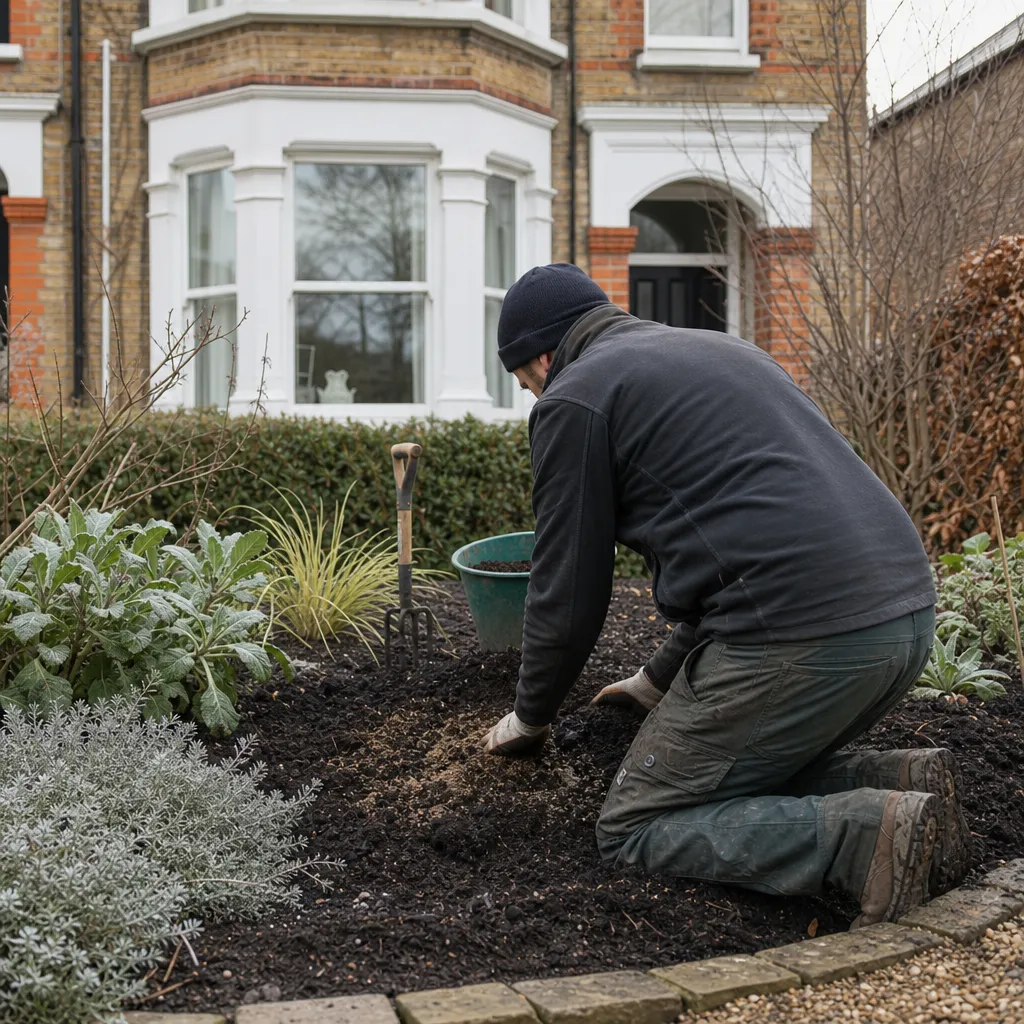
Winter Garden Soil Improvement and Preparation
Winter months are often dismissed as a quiet period in the UK garden, but for soil health they represent one of the most productive windows of the year. With beds cleared of summer crops and persistent ground frost forecast, late autumn and early winter offer the opportunity to add organic matter, protect bare soil from erosion and nutrient leaching, and allow frost action to break down heavy clay — all without disturbing growing plants. The question of winter soil preparation arises most commonly in autumn, when gardeners are deciding whether to dig, mulch, sow green manures, or simply leave the soil undisturbed until spring.
Key points
- Well-rotted farmyard manure or garden compost applied in November–December has typically broken down sufficiently for spring planting by March, improving both structure and nutrient availability.
- Green manures such as grazing rye (Secale cereale) and field beans (Vicia faba) sown in late summer or early autumn protect bare soil from nutrient leaching over winter and should be incorporated 4–6 weeks before spring planting.
- On heavy clay soils, digging in autumn and leaving the surface rough allows freeze–thaw cycles to break down clods — a technique long endorsed by the RHS.
- No-dig methods involve applying a 5–10 cm layer of compost to the surface in autumn; earthworms incorporate it over winter without causing compaction.
- Applying garden lime in winter — not simultaneously with manure — is standard practice for acidic vegetable beds where pH adjustment is needed before spring planting.
Why winter is the right time for soil improvement
UK soil improvement is most effective when it has time to work. Organic matter needs months to break down and integrate; amendments such as lime need time to neutralise acidity; green manures need a growing period to build root mass and fix nitrogen. All of this points to winter preparation rather than a last-minute spring rush.
There is also a structural argument. Wet UK winters leach nutrients — particularly nitrogen and potassium — from bare soil. Covering or mulching over winter retains those nutrients in the soil profile where plants can access them in spring. A bare vegetable bed in January is losing more than most gardeners appreciate.
Organic matter: what to add and when
The most universally beneficial winter soil improvement is organic matter — but not all organic matter is equal, and timing matters.
Well-rotted farmyard manure is high in organic matter and nutrients. Apply in November–December so it has 3–4 months to break down before planting. Fresh (unrotted) manure must be fully composted before use — it can scorch roots and may carry pathogens. Horse, cow, and chicken manure are all suitable when well composted.
Garden compost is typically lower in nutrients than manure but excellent for soil structure. Apply at 5–10 cm depth over cleared beds. Partially finished compost benefits from a winter on the surface to complete decomposition before it is incorporated in spring.
Leaf mould (composted autumn leaves) is slow-release and particularly useful on sandy soils for improving water retention. It typically takes 1–2 years to produce. Applying a layer in winter alongside compost works well as a surface mulch.
No-dig vs traditional digging in winter
Approach | Best for | Main benefit | Main limitation |
|---|---|---|---|
Traditional single digging | Clay soils with compaction; first-year cultivation of new beds | Breaks compaction; exposes clods to frost action | Disrupts soil microbiology; labour-intensive |
Double digging | Very compacted or waterlogged soils | Improves drainage; incorporates deep organic matter | High effort; rarely needed in established gardens |
No-dig (surface mulch) | Established beds; loamy or silty soils | Preserves soil structure and worm activity; reduces weeding | Slower to correct deep compaction |
Minimal cultivation | Sandy soils; low-weed plots | Low disturbance; energy-efficient | Less effective on heavy clay |
For most UK domestic gardens — particularly those with established worm populations and decent drainage — the no-dig approach is now widely recommended as the winter-friendly default.
Winter soil preparation checklist
Work through this checklist from October through December:
Green manures for UK winters
Green manures are fast-growing plants sown specifically to protect and improve soil rather than for harvest. Choosing the right species for a UK winter matters.
Grazing rye (Secale cereale): the most winter-hardy option; sow by mid-October in most UK regions. Produces extensive root mass that opens up compacted soil. Incorporate in early March, 4–6 weeks before planting.
Field beans (Vicia faba): fixes atmospheric nitrogen via root nodules — this nitrogen becomes available to the following crop after incorporation. Sow September–October.
Winter tares (Vicia sativa): nitrogen-fixing; can be sown as late as October in mild areas. Shorter growing period than field beans.
Phacelia (Phacelia tanacetifolia): not reliably winter-hardy across the UK but can overwinter in mild South West gardens. Excellent for soil structure and beneficial insects if established before the first frosts.
When to get professional help
Winter soil improvement is a practical task for most UK homeowners. Consider consulting a professional if:
- Compaction and poor drainage persist after two winters of improvement — drainage works may be needed rather than further organic matter addition.
- You are planning a significant landscaping project on a plot with unknown soil history or possible contamination from building work.
- The soil shows signs of severe waterlogging, clay shrinkage, or structural movement — these may point to issues beyond organic matter amendment that a landscape professional should assess.
How Housey can help
If you're planning more than routine winter maintenance — a garden redesign, new raised beds, or a significant planting scheme — a professional landscaper or garden designer can assess soil conditions, advise on drainage, and develop a structured improvement plan. Use Housey to compare quotes from qualified local professionals.
Frequently asked questions
Can I dig my garden in winter?
Yes, in most cases. On heavy clay soil, digging in early winter and leaving the surface rough allows frost cycles to break down clods — a practice the RHS has long recommended. Avoid digging when soil is frozen solid or heavily waterlogged, as this damages structure. On lighter soils, a no-dig mulching approach is usually preferable.
What is the best green manure for UK winters?
Grazing rye (Secale cereale) is the hardiest and most reliable option for UK winters, tolerating temperatures well below freezing. Field beans are a good choice where nitrogen fixation is the priority. Sow green manures by mid-October in most UK regions to ensure sufficient establishment before the coldest months.
Should I add lime to my garden in winter?
Lime can be applied in winter to acidic soils and this timing is often recommended — it has months to work before spring planting. Do not apply lime at the same time as manure, as the combination drives off nitrogen as ammonia. Apply lime first, then leave at least 4 weeks before adding manure, or vice versa.
Is no-dig gardening suitable for heavy clay?
No-dig works on clay soils, but initial results are slower than on lighter soils. Applying a 10 cm compost layer in autumn and repeating annually builds structure from the top down over 2–3 years. For severely compacted clay, one initial single dig may be worthwhile before adopting a no-dig approach going forward.
How much compost should I add per square metre in winter?
A 5–10 cm layer per square metre is the standard recommendation for annual application to vegetable beds, equating to approximately 50–100 litres per sq metre. For new beds or very poor soils, a 10–15 cm application in the first year is acceptable, tapering to maintenance levels in subsequent seasons.
Sources and further reading
- Improving your soil — Royal Horticultural Society
- Green manures — Royal Horticultural Society
- No-dig gardening — Royal Horticultural Society
- Soil management — Garden Organic
Useful next reads
 Improvement & Build
UK Garden Planting Calendar and Seasonal Timing
In the UK, most vegetables are sown under cover from February to April and transplanted outdoors after the last frost — mid-May in most of England, later in Scotland and upland areas.
 Improvement & Build
Managing Garden Tasks Through Winter Weather: Practical Strategies
Most UK winter garden tasks can be carried out during mild, dry spells — pruning dormant shrubs, clearing debris, and improving soil structure are all suitable when the ground is not frozen or waterlogged.
 Improvement & Build
Building and Designing Winter Gardens for Year-Round Outdoor Use
A UK winter garden combines a sheltered microclimate, frost-hardy structural planting, and often a covered or glazed structure to make outdoor space usable across all seasons.
 Improvement & Build
Garden Design Inspiration and Professional Landscaping Ideas
A professional garden designer creates layouts, planting plans, and material palettes, while a landscaper carries out the physical build.
 Improvement & Build
Garden Bed Preparation and Soil Working Methods
Preparing a garden bed involves clearing weeds, testing soil pH (ideally 6.