Understanding Roofing Service Demand Across the UK Market
By Housey · Last reviewed 30th of May 2026

Understanding Roofing Service Demand Across the UK Market
The UK's housing stock — one of the oldest in Europe, with a substantial proportion of homes built before 1940 — creates persistent demand for roofing repair and replacement work. Whether you are planning a full re-cover, tackling wind damage after a winter storm, or preparing a property for loft insulation under a retrofit scheme, understanding how demand shapes contractor availability can help you plan more effectively and avoid the frustration of searching for qualified help during peak periods.
Key points
- The National Federation of Roofing Contractors (NFRC) represents contractors covering the majority of roofing work by value in the UK; NFRC membership requires contractors to carry insurance and comply with a Code of Practice.
- Building Regulations Part L (England) requires insulation to be upgraded to current minimum standards when more than 50% of a roof covering is replaced — your contractor must notify building control before work begins.
- Demand for residential roofing services peaks in late summer (July–September) and immediately after significant storm events; booking lead times during these periods can extend to several weeks.
- TrustMark registration is required for contractors carrying out roofing work linked to ECO4 or the Great British Insulation Scheme.
- Suspected asbestos-containing materials in pre-2000 roofing must be surveyed by a competent professional before any disturbance — do not disturb suspect material without a prior survey.
What drives demand for roofing services in the UK
Residential roofing demand in the UK is shaped by several overlapping forces that keep the market consistently active.
Housing stock age. England has approximately 25 million homes (ONS Housing Stock data), a significant proportion of which predate the Second World War. Traditional clay and slate coverings, lead flashings, and older timber roof structures need periodic maintenance, repair, and eventual replacement. Post-war homes built during the 1950s and 1960s also have roofs that may have been patched multiple times and are approaching the end of their serviceable lives.
Weather-driven spikes. Named storms — particularly those tracking across northern England, Scotland, and coastal Wales — cause sudden, widespread tile loss, flashing damage, and, in severe cases, structural failure of roof sections. The Association of British Insurers (ABI) consistently reports weather-related property claims spiking after storm events, with roofing accounting for a significant share. Local contractor capacity can be exhausted within 24–48 hours of a major weather event.
Energy retrofit policy. The ECO4 scheme and the Great British Insulation Scheme create indirect demand for roofing repair ahead of loft insulation installation: poorly maintained roofs with active leaks need to be made weather-tight before insulation work can proceed safely. This policy-driven demand adds to the market's underlying repair and replacement cycle.
Extension and new build activity. Planning application volumes, tracked by the Ministry of Housing, Communities & Local Government (MHCLG), provide a broad proxy for new roofing demand tied to extensions and completions. High extension volumes in suburban areas can constrain general roofing contractor capacity in those localities.
Seasonal patterns and booking lead times
Roofing demand follows a broadly predictable seasonal cycle, though weather events can disrupt it sharply in either direction.
Season | Demand level | Typical lead time | Notes |
|---|---|---|---|
Spring (Mar–May) | High | 3–6 weeks | Homeowners assess winter damage; popular window for planned work |
Summer (Jun–Aug) | High | 4–8 weeks | Peak planned-work season; dry weather favours most roofing systems |
Autumn (Sep–Oct) | Very high | 4–10 weeks | Storm preparation; demand spikes sharply after named storms |
Winter (Nov–Feb) | Moderate | 1–4 weeks | Planned work slows; cold or wet weather restricts some systems |
Indicative lead times based on typical contractor market conditions; actual availability varies by region and contractor capacity. Indicative UK market context, last reviewed 2026-05-30.
For non-emergency work — re-covering, ridge tile replacement, chimney repointing — aim to contact contractors at least 4–6 weeks before your preferred start date during spring or summer. For work dependent on dry conditions (GRP flat roofs, felt systems), build flexibility into your schedule for weather delays.
How to find a qualified roofing contractor
Accreditation and scheme membership are the most reliable proxies for competence and accountability in the absence of a personal recommendation.
Decision tree: which contractor do you need?
- Choose an NFRC-member contractor if you are commissioning a full roof covering replacement, significant structural repair, or extension roofing — they carry required insurance and comply with the NFRC Code of Practice.
- Choose a TrustMark-registered contractor if your roofing work is connected to a government energy scheme (ECO4, GBIS) — TrustMark registration is a scheme requirement.
- A general builder with verifiable roofing experience may be adequate for minor repairs (replacing individual slipped tiles, minor pointing) — check public liability insurance and references.
- Engage a chartered structural engineer or RICS-accredited surveyor rather than a roofer if you observe sagging, visible rafter deflection, or internal staining suggesting structural rather than surface-covering failure.
- Do not disturb any material you suspect contains asbestos — arrange a survey by a UKAS-accredited professional before any work begins.
Contractor type | Best for | What to verify |
|---|---|---|
NFRC member | Full re-covering, structural roof repairs, new roofing systems | NFRC membership number on the register; written workmanship warranty |
TrustMark registered | ECO4/GBIS linked work, insulation-prerequisite repairs | TrustMark registration number; PAS 2030 certification where applicable |
Specialist flat-roof contractor | GRP, felt, EPDM, or liquid-applied flat-roof systems | Manufacturer-approved installer status for the product being used |
General builder | Minor repairs: slipped tiles, small pointing jobs | Public liability insurance certificate; verifiable references |
Red flags when hiring a roofer
The following should prompt you to seek an alternative contractor:
- No fixed business address, registered company number, or verifiable trading history.
- Demands full payment before work begins or before materials are ordered.
- Cannot produce a written, itemised quotation covering scope, materials, and price.
- Cannot provide evidence of current public liability insurance.
- Claims that significant re-covering work does not require building regulations notification.
- Approaches you unsolicited after a storm and pressures you to sign on the day.
- Refuses to provide references or photographs of recent comparable work.
- Quote is substantially lower than others without a clear explanation of what is excluded.
What to ask before accepting a quote
Before instructing any roofing contractor, confirm the following:
- What is the exact scope — which elements will be replaced, repaired, or left untouched?
- What roofing product or system is being specified, and does it carry a manufacturer warranty?
- Who will carry out the work — direct employees or sub-contractors?
- What accreditations does the contractor hold (NFRC, TrustMark, CHAS, Constructionline)?
- Does the price include scaffolding, waste disposal, and VAT?
- Is building control notification required, and who will manage it?
- What weather conditions would delay the work, and how will rescheduling be handled?
When to get professional help
Most roofing defects — missing tiles, minor flashing failure, blocked valley gutters — can be properly diagnosed by a qualified roofing contractor. However, escalate to a specialist in the following circumstances:
- Sagging rooflines, visible rafter deflection, or widespread internal staining may indicate structural failure. A RICS Level 3 building survey or a structural engineer's assessment is needed before any surface repair is commissioned.
- Suspected asbestos in roofing materials — common in pre-2000 garages, outbuildings, and flat-roof coverings using fibre cement — do not disturb any suspect material. Arrange a survey by a UKAS-accredited asbestos surveyor. The HSE publishes guidance on licensed asbestos removal requirements.
- Listed buildings or conservation areas require planning or listed building consent before changing roofing materials. Check with your local planning authority before specifying any product.
How Housey can help
Housey connects homeowners with vetted roofing contractors across the UK. Describe your project — whether it is a post-storm repair, a planned re-cover, or a chimney stack rebuild — and receive quotes from qualified local roofers without searching for available contractors during a busy period.
Frequently asked questions
How far in advance should I book a roofer in the UK?
For planned work such as re-slating, re-tiling, or lead flashing replacement, booking 4–8 weeks ahead is advisable during peak periods (late summer and spring). After a storm, emergency slots fill very quickly — placing yourself on waiting lists with two or three contractors is sensible. Non-urgent repairs can often be scheduled at shorter notice in mid-winter.
Does replacing a roof covering require building regulations approval?
In England, replacing more than 50% of a roof covering triggers a requirement to upgrade insulation to current minimum standards under Building Regulations Part L. Your contractor should notify building control before work starts. In Scotland, consult Section 6 of the Scottish Building Standards; in Wales, Part L of the Welsh Building Regulations applies. Minor like-for-like repairs generally do not require notification.
What does NFRC membership mean for a roofing contractor?
The National Federation of Roofing Contractors (NFRC) requires members to carry adequate insurance and comply with its Code of Practice. Membership does not guarantee workmanship quality, but it provides a formal complaints route and a baseline standard of accountability. Checking NFRC membership is a sensible starting point when you cannot rely on a personal recommendation.
Can I claim roofing repairs through a government scheme?
Some roofing repairs linked to loft insulation may be eligible for partial funding under ECO4 or the Great British Insulation Scheme, depending on household income and property type. Work must be carried out by TrustMark-registered and PAS 2030-compliant contractors. Check eligibility via GOV.UK or through an energy broker before commissioning work.
Sources and further reading
- National Federation of Roofing Contractors — NFRC
- Approved Document L: Conservation of Fuel and Power — GOV.UK
- TrustMark — TrustMark
- State of Trade Survey — Federation of Master Builders
- Asbestos guidance — Health and Safety Executive
Useful next reads
 Improvement & Build
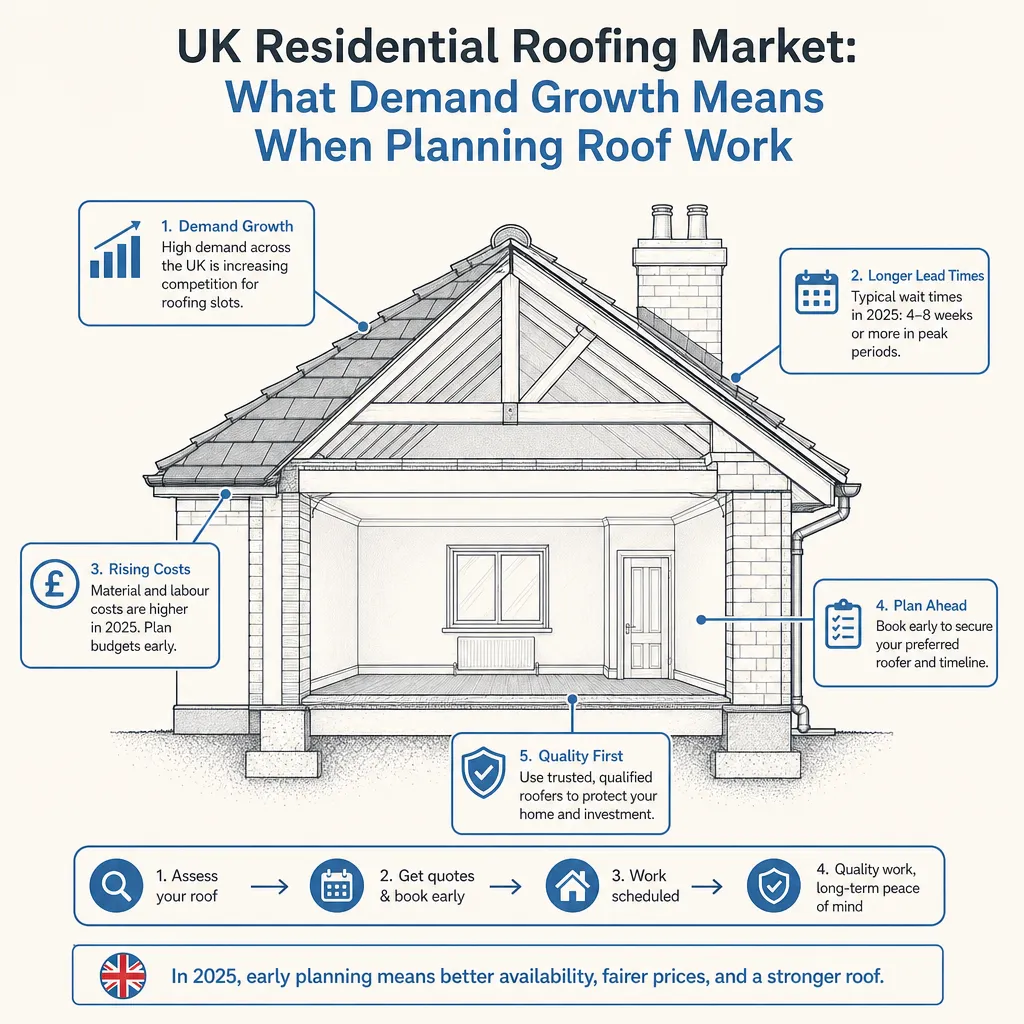
UK Residential Roofing Market: What Demand Growth Means When Planning Roof Work
Rising demand in the UK roofing market typically extends lead times from 4–8 weeks to 3–6 months and puts upward pressure on costs.
 Improvement & Build
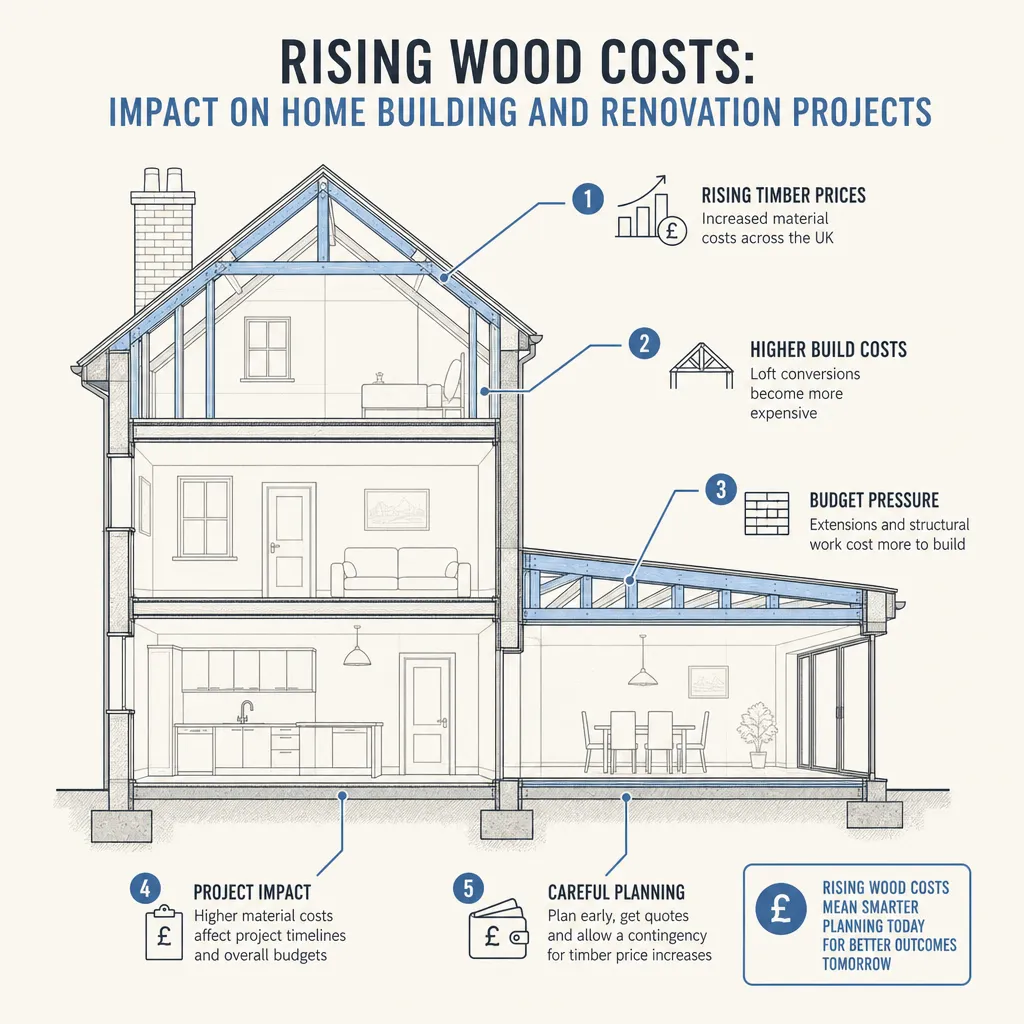
Rising Wood Costs: Impact on Home Building and Renovation Projects
Rising timber prices affect UK home renovation budgets most on timber-frame extensions, loft conversions, and self-builds, where structural wood can account for 15–25% of material costs.
 Improvement & Build
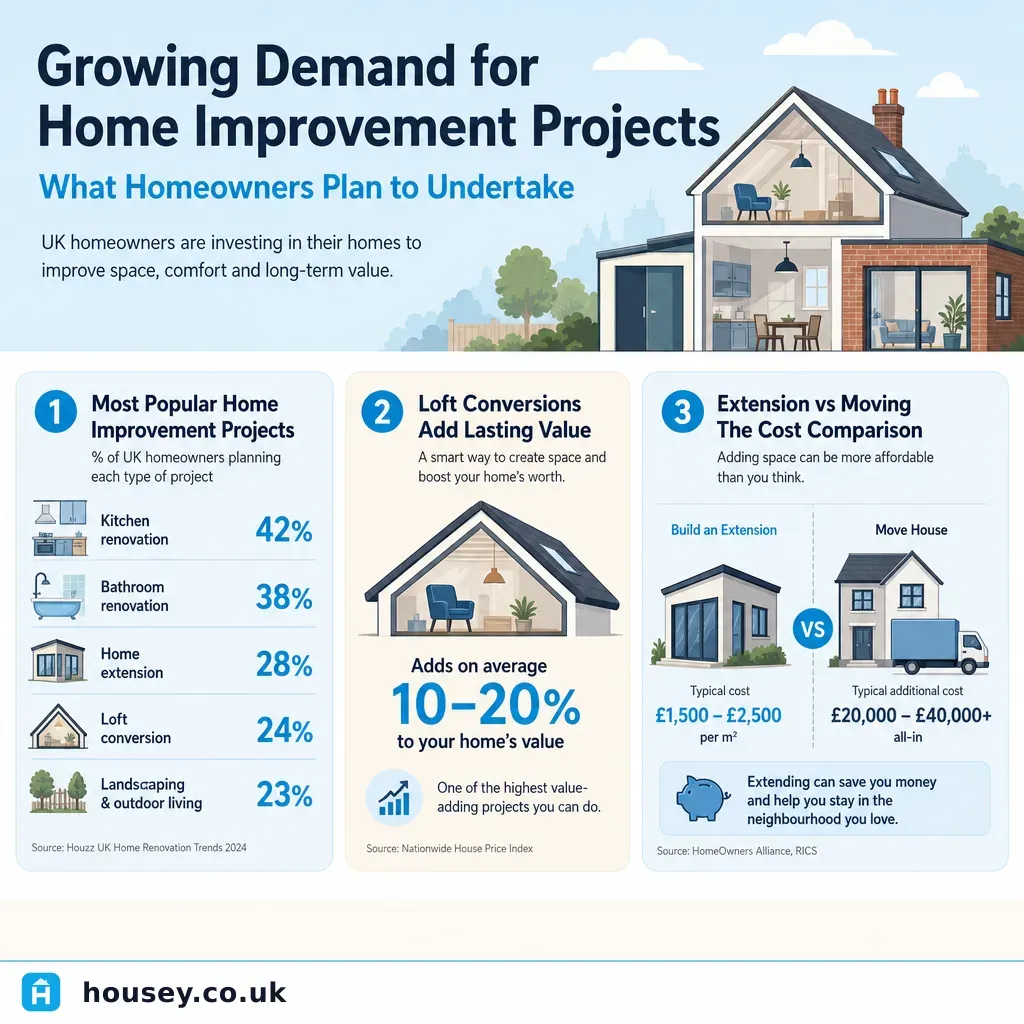
Growing Demand for Home Improvement Projects: What Homeowners Plan to Undertake
UK homeowners are increasingly choosing to improve rather than move, driven by high stamp duty costs, limited housing supply, and demand for home-office space.
 Improvement & Build
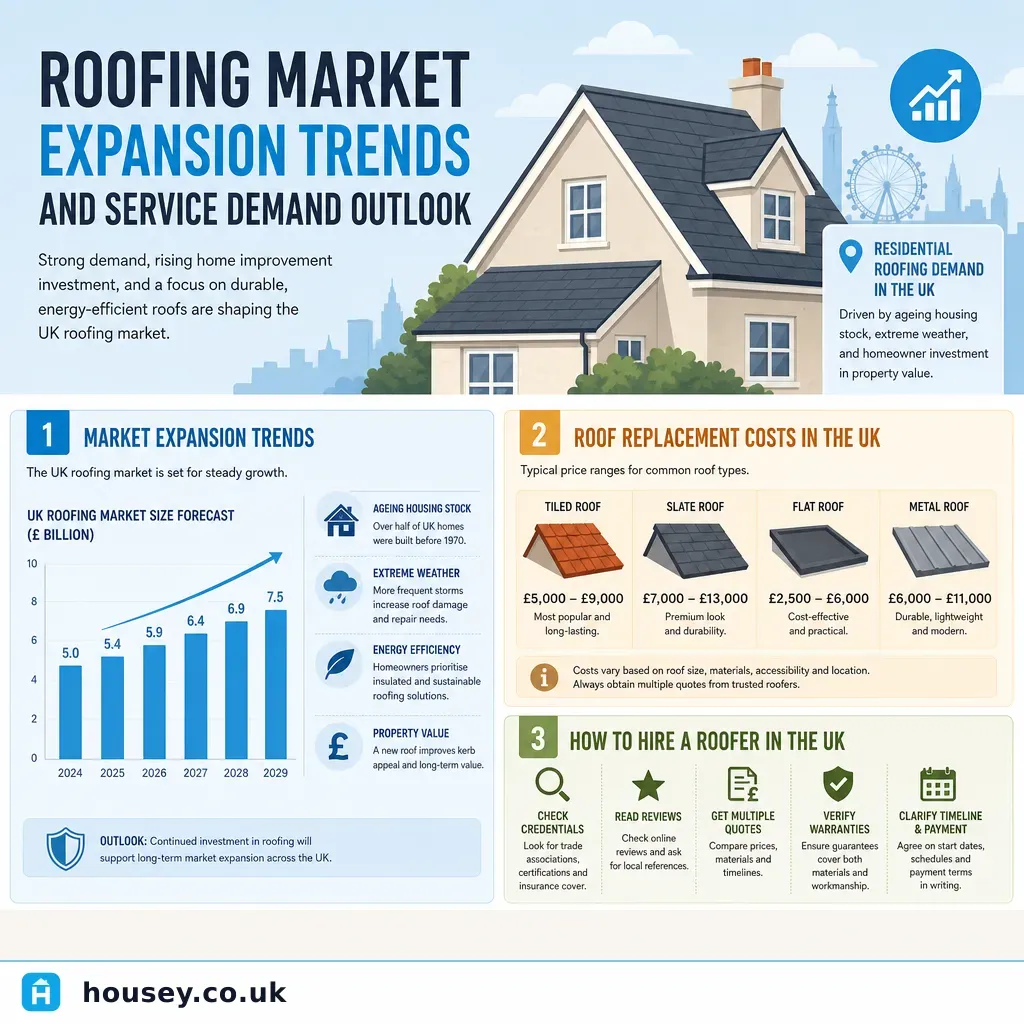
Roofing Market Expansion Trends and Service Demand Outlook
UK roofing demand remains strong and growing, driven by an ageing housing stock, energy efficiency requirements under Approved Document L, and increasing storm-related damage.
 Improvement & Build
The Silver Demographic: How Older Homeowners Are Reshaping Property Design
Older homeowners — around 76% of England's 65-plus population are owner-occupiers — are driving demand for accessible extensions, wet rooms, and single-storey living zones.