Underfloor Heating Efficiency: Performance and Energy Savings
By Housey · Last reviewed 11th of May 2026
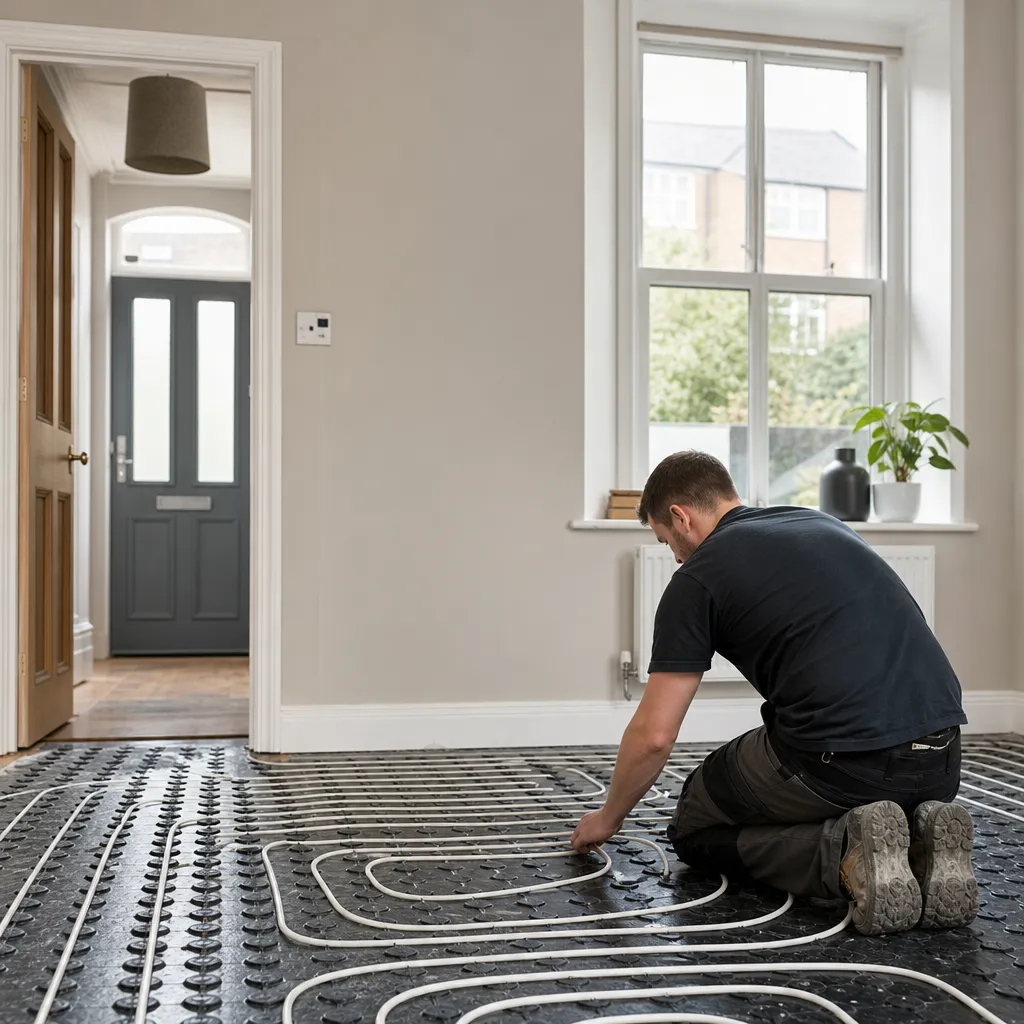
Underfloor Heating Efficiency: Performance and Energy Savings
Underfloor heating (UFH) appears in a growing number of UK homes — from newly built detached houses to retrofitted Victorian terraces and ground-floor extensions. Its reputation for efficiency is well-founded in many configurations, but real-world performance depends on how the system is designed, what heat source powers it, and how well the property is insulated and controlled.
Key points
- Wet (hydronic) underfloor heating typically operates at flow temperatures of 35–55°C, compared with 65–80°C for a conventional radiator system; this lower operating temperature is what makes it significantly more compatible with heat pumps.
- Heat pumps paired with wet UFH can achieve a Seasonal Coefficient of Performance (SCOP) of 3–4, delivering 3–4 kWh of heat per kWh of electricity consumed (Energy Saving Trust).
- Electric underfloor heating converts electricity to heat at near-100% efficiency, but at UK electricity tariff rates it is typically cost-effective only as supplementary heating in small areas such as bathrooms.
- PAS 2035 retrofit standards require a whole-house Retrofit Assessment before fabric or heating changes in a governed retrofit project, to manage moisture and condensation risk.
- The combined thermal resistance (tog value) of the floor finish and underlay over wet UFH should not exceed 0.15 m²K/W; thick carpet significantly reduces heat output and increases energy consumption.
How underfloor heating delivers heat more efficiently
Conventional radiators rely heavily on convection: a small, very hot surface heats nearby air, which rises and circulates through the room. Underfloor heating warms the entire floor surface to a relatively low temperature — typically 27–29°C surface temperature in a domestic room — using a combination of radiant heat and gentle convection.
This has two practical efficiency advantages:
- Reduced stratification. Hot air from radiators rises to the ceiling, creating a temperature gradient of 3–5°C between floor and ceiling level. UFH's radiant heat reduces this stratification, meaning less heat is wasted at ceiling level.
- Lower thermostat set-point effect. Radiant surfaces raise the perceived warmth of a space, allowing the air temperature thermostat to be set 1–2°C lower than with radiators while maintaining equivalent comfort — which directly reduces energy consumption (CIBSE guidance).
For wet UFH, the lower required flow temperature is the key efficiency driver, because it allows the heat source — whether a boiler or heat pump — to operate more efficiently.
Wet vs electric underfloor heating: efficiency comparison
Type | Heat source | System efficiency | Best for | Main limitation |
|---|---|---|---|---|
Wet (hydronic) UFH | Gas boiler, heat pump, or solar thermal | High — especially with heat pump (SCOP 3–4) | Whole-house primary heating, new builds, extensions | Higher installation cost; requires screeded or panel floor |
Electric UFH mat or cable | Mains electricity | Near-100% conversion efficiency | Bathrooms, single rooms, supplementary heating | Electricity costs more per kWh than gas; expensive as primary heat |
Electric UFH with off-peak tariff | Economy 7 or time-of-use electricity | Improved cost efficiency on off-peak periods | Homes with thermal mass floors and off-peak meters | Requires careful programming; thermal lag must align with tariff window |
Efficiency comparisons depend on current energy tariff prices, which are revised quarterly by Ofgem. Check your own supplier tariff before making investment decisions.
Underfloor heating and heat pumps
Wet UFH combined with an air source or ground source heat pump is one of the most efficient domestic heating configurations available in the UK. A heat pump's efficiency drops as the required flow temperature rises: at 70°C — typical for a radiator system in a poorly insulated home — a standard air source heat pump may achieve a SCOP of around 2.0. At 35–45°C, which is typical for wet UFH, the same heat pump may achieve a SCOP of 3.0–4.0.
This means you receive 3–4 units of heat for every unit of electricity purchased, substantially reducing both running costs and carbon emissions compared with direct electric heating or a gas boiler.
The UK government's Boiler Upgrade Scheme (BUS) offers grants of up to £7,500 towards eligible heat pump installations in England and Wales (check GOV.UK for current figures and eligibility). Wet UFH is frequently specified alongside heat pump installations to maximise SCOP and the overall value of the grant.
Floor construction and heat transfer
The choice of floor construction and finish materially affects how efficiently a UFH system delivers heat:
- Sand-cement or anhydrite screed: The most effective base for wet UFH. Thermal mass stores heat and releases it steadily. Anhydrite (liquid) screed has better thermal conductivity than sand-cement and is increasingly common in new builds.
- Timber suspended floors with aluminium spreader plates: Lower thermal efficiency than screed; faster response times suit rooms with variable occupancy.
- Tile, stone, or polished concrete: Excellent thermal conductors that maximise heat output. The ideal finish for wet UFH.
- Thick carpet or underlay: A significant barrier to heat transfer. Exceeding 0.15 m²K/W total thermal resistance causes the floor thermostat to hunt and the system to over-run, wasting energy.
Controls and zoning: the efficiency multiplier
A well-designed UFH layout without adequate controls can waste considerable energy. Best practice includes:
- Zone by area of use: Separate the ground floor from the first floor, and habitable rooms from bathrooms, so each can be controlled independently.
- Use programmable or smart thermostats: UFH's thermal mass means the system must begin heating before the space is occupied. Smart thermostats such as Heatmiser NeoStat, Warmup 4iE, or Honeywell Home T6 can learn occupancy patterns and pre-heat accordingly.
- Set weather compensation on heat-pump systems: This adjusts flow temperature based on external temperature, preventing over-heating on mild days and reducing heat pump electricity consumption.
- Commission the manifold correctly: Flow rates should be balanced across all pipe loops at installation to ensure even heat output across the floor area.
Homeowner checklist: before installing underfloor heating
When to get professional help
Wet UFH design and installation requires a qualified heating engineer or MCS-certified installer for design, installation, and commissioning — it is not a DIY project. Seek additional specialist input if:
- You are pairing UFH with a heat pump and intend to claim the Boiler Upgrade Scheme grant.
- Your property is a solid-floor retrofit where moisture barriers and sub-floor insulation need assessment.
- The project falls under PAS 2035-governed whole-house retrofit.
- You are unsure whether your suspended timber floor structure can accommodate UFH without significantly reducing void height or thermal performance.
How Housey can help
Housey can connect you with local underfloor heating specialists and energy efficiency professionals across the UK. Whether you are planning a new extension or assessing a retrofit, comparing quotes from multiple installers helps you understand both the installation costs and the projected efficiency gains for your specific property and heat source.
Frequently asked questions
Is underfloor heating more efficient than radiators?
Wet underfloor heating is generally more efficient than radiators when paired with a heat pump, because it operates at lower flow temperatures — raising the heat pump's SCOP from around 2.0 to 3.0–4.0. With a gas boiler, the efficiency difference is smaller but still present through better heat distribution and lower thermostat set-points. Electric UFH is efficient in conversion terms but expensive to run as primary heat.
How long does underfloor heating take to warm a room?
Screed-based wet UFH typically takes 30–60 minutes from cold to reach a comfortable temperature, due to the thermal mass of the screed. Electric UFH mats in bathrooms respond in 15–30 minutes. Smart controls programmed to pre-heat rooms before occupancy are strongly recommended for screed systems — heating on demand wastes energy and takes too long to feel responsive.
Does underfloor heating work with all floor finishes?
Tiles, stone, and polished concrete are ideal because they conduct heat readily. Engineered hardwood and laminate are suitable if the manufacturer rates them for UFH use. Thick carpet above 1.5 tog combined with underlay is generally unsuitable for wet UFH and markedly reduces heat output. Solid hardwood requires careful moisture content management and a bespoke UFH design.
Sources and further reading
- Heat pumps: how they work and their efficiency — Energy Saving Trust
- Boiler Upgrade Scheme — GOV.UK
- PAS 2035: Retrofitting dwellings for improved energy efficiency — BSI Group
- CIBSE knowledge and research — CIBSE
- Ofgem energy price cap — Ofgem
Useful next reads
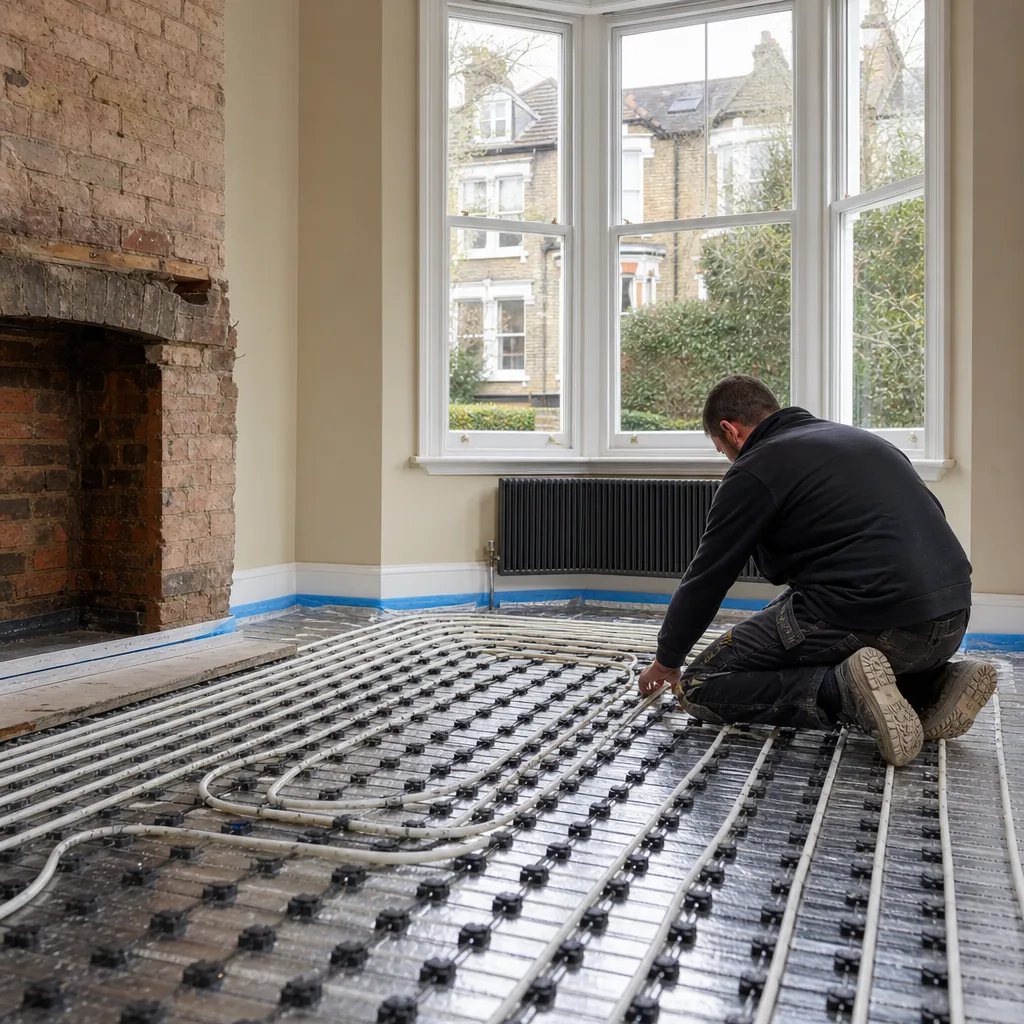 Energy & Retrofit
Heating Elements and Radiant Systems in Concrete Floors
Underfloor heating embedded in a concrete floor or screed delivers radiant heat at low flow temperatures (35–50°C), making it highly compatible with heat pumps.
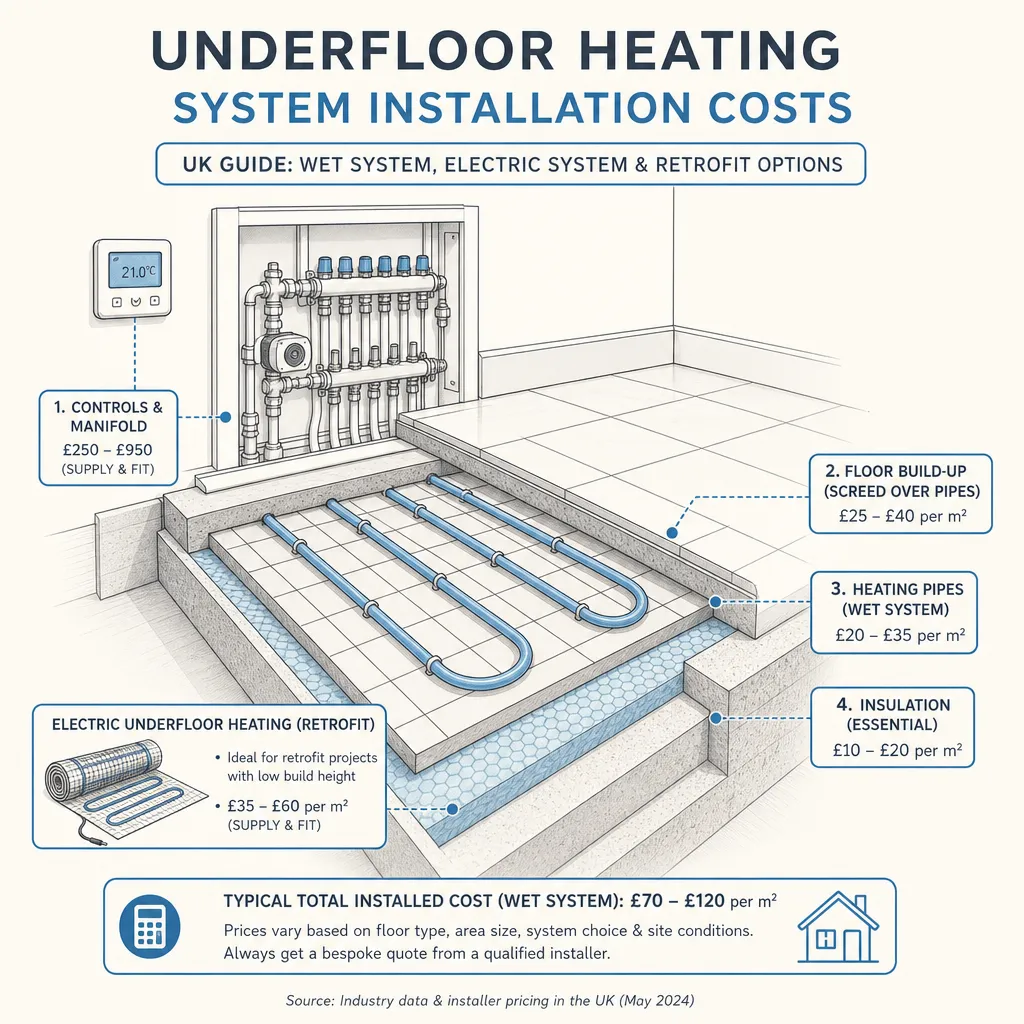 Energy & Retrofit
Underfloor Heating System Installation Costs
Underfloor heating installation in the UK typically costs £20–£50 per m² for electric mat or foil systems and £50–£150 per m² for wet (hydronic) systems, including labour.
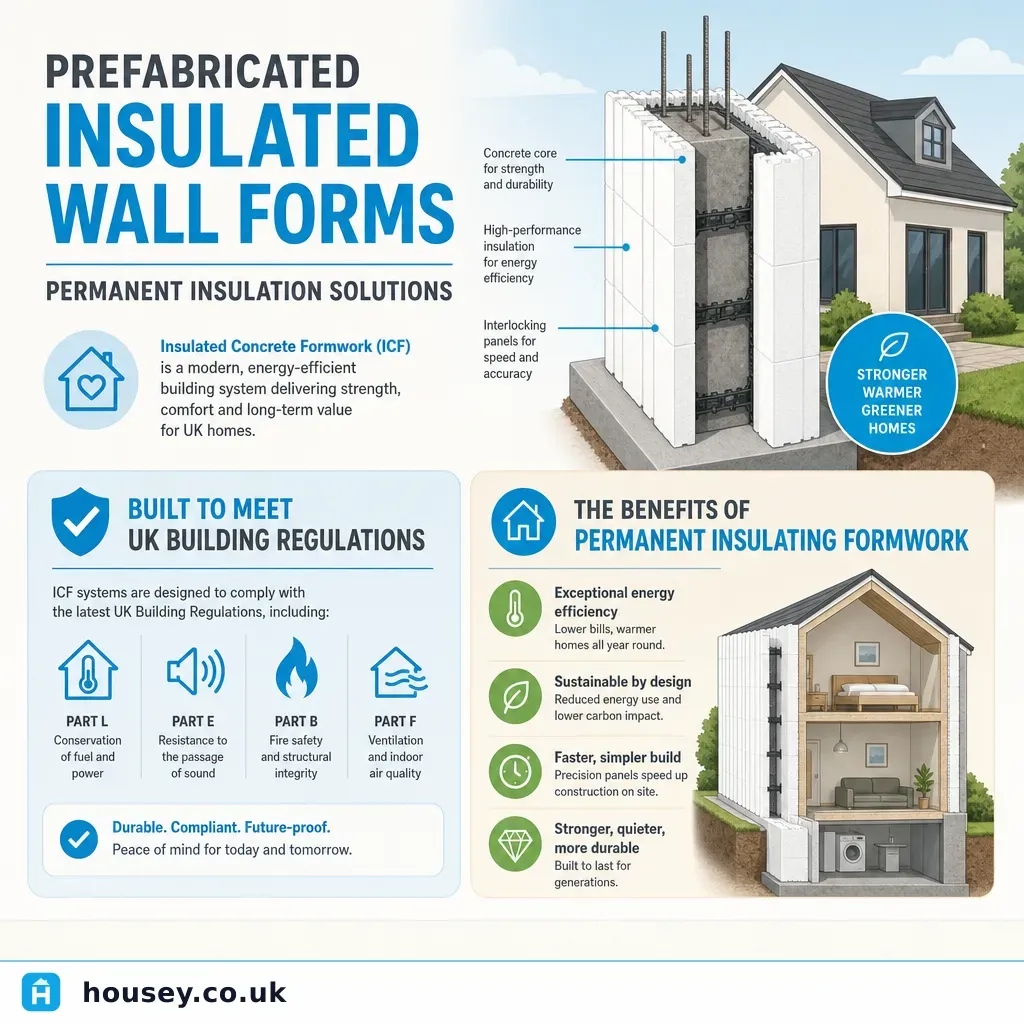 Energy & Retrofit
Prefabricated Insulated Wall Forms: Permanent Insulation Solutions
Prefabricated insulated wall forms — including ICF and SIPs systems — deliver high thermal performance by combining permanent insulation with structural concrete or timber in a single wall assembly.
 Energy & Retrofit
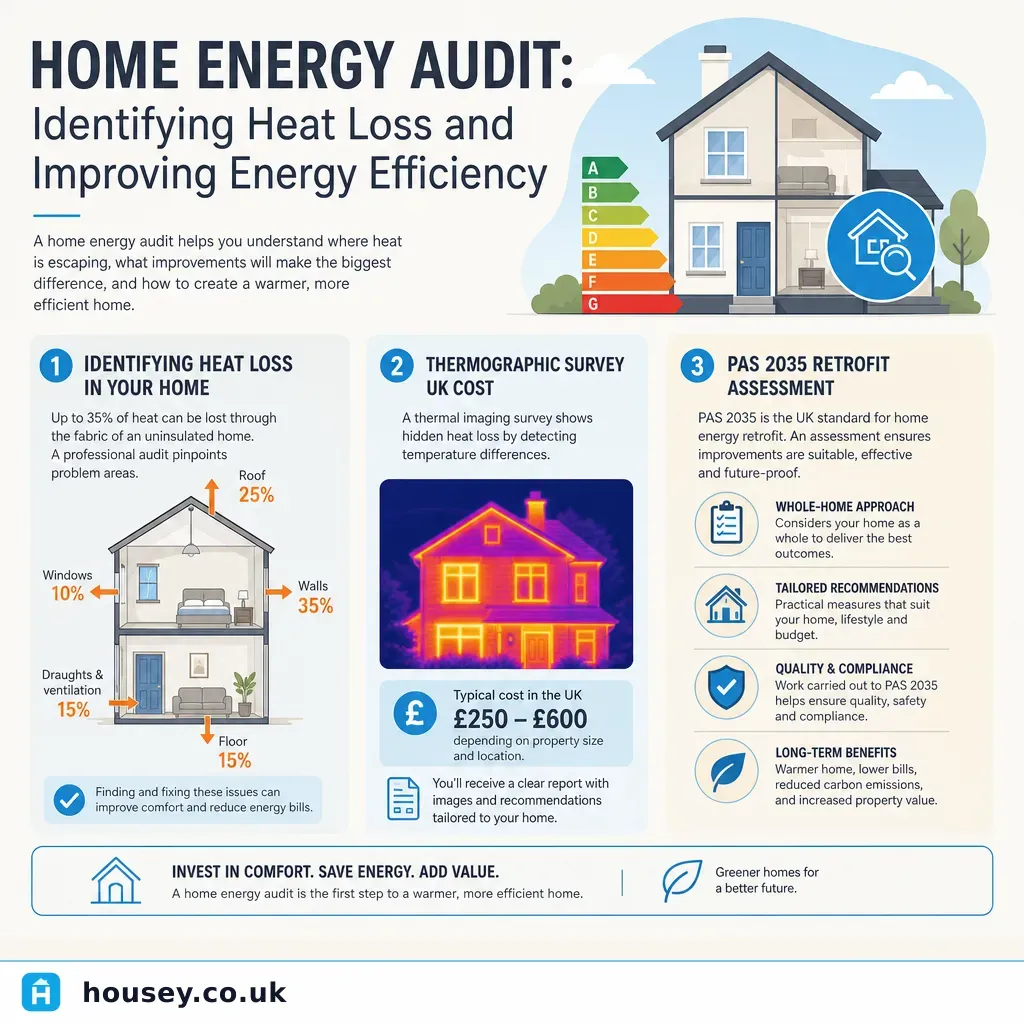
Home Energy Audit: Identifying Heat Loss and Improving Energy Efficiency
A home energy audit is a structured assessment of where your property loses heat and how efficiently it uses energy.
 Energy & Retrofit
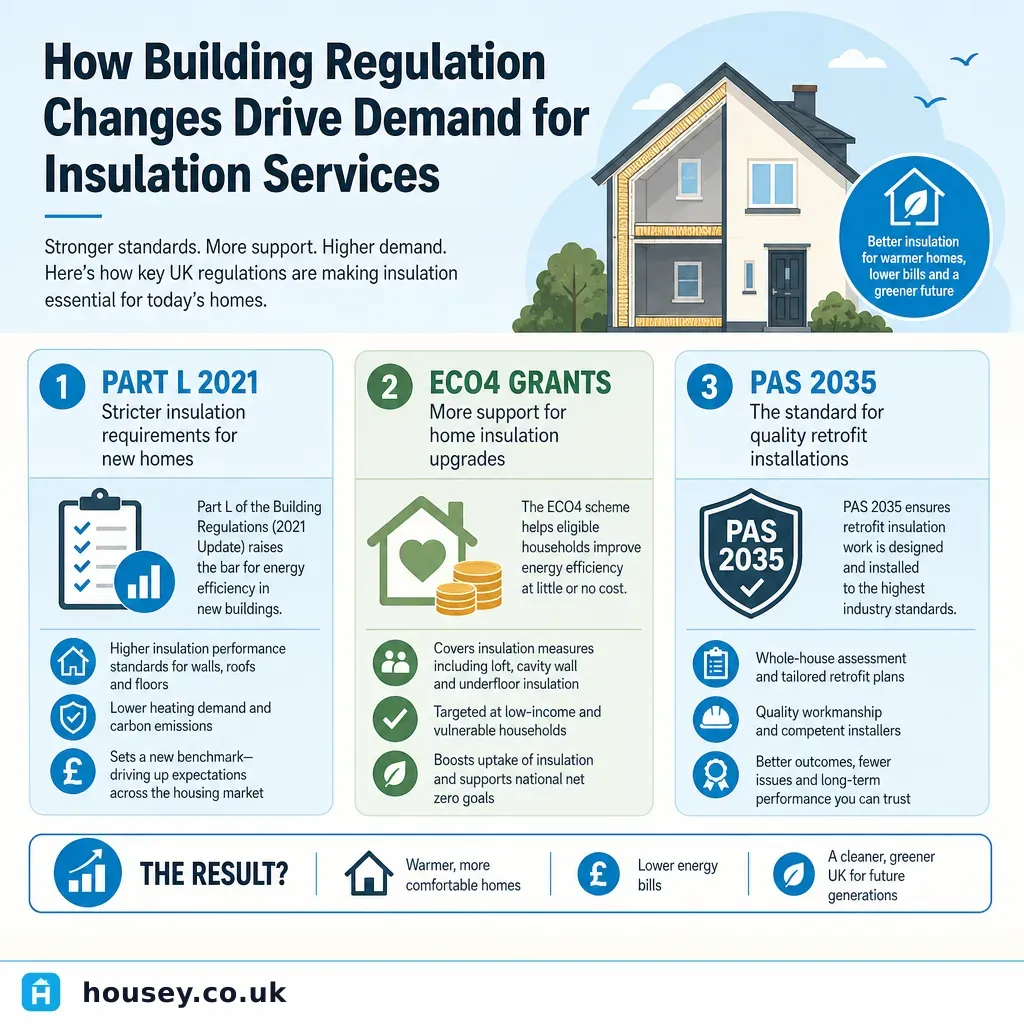
How Building Regulation Changes Drive Demand for Insulation Services
Building regulation changes — including 2021 updates to Approved Document L, ECO4 funding obligations, and proposed MEES tightening — are creating sustained demand for insulation services across the UK.