Underfloor Ventilation System Installation Costs
By Housey · Last reviewed 11th of May 2026
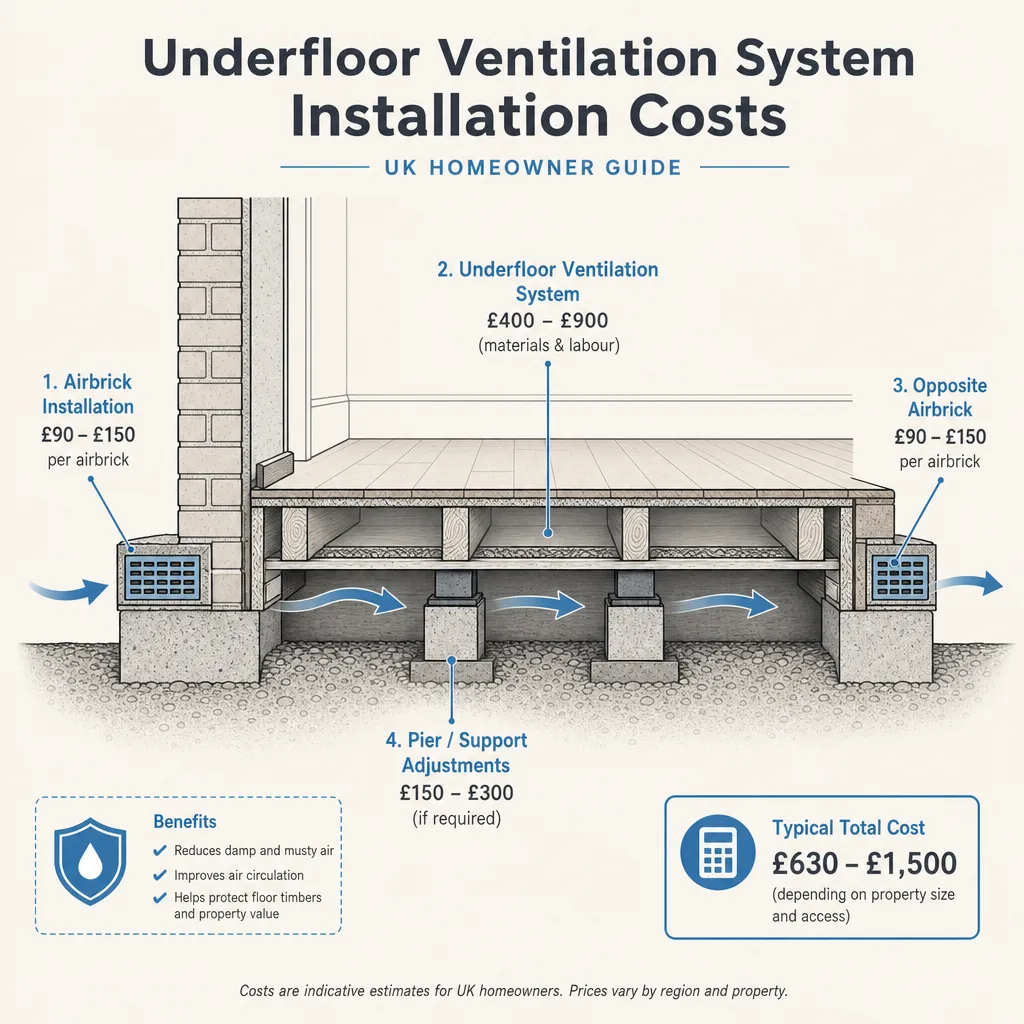
Underfloor Ventilation System Installation Costs
Inadequate airflow beneath a suspended timber ground floor is one of the more common—and more easily overlooked—causes of timber rot and damp in UK homes. Properties built before the 1940s routinely have suspended timber floors over a poorly ventilated void, and when airbricks are blocked, damaged, or simply insufficient, the trapped damp air creates exactly the conditions in which dry rot and wet rot thrive. The question of underfloor ventilation typically surfaces during a damp and timber survey, a pre-purchase RICS Level 3 building survey, or when a homeowner notices springy floorboards, a persistent musty smell, or a Condition 3 rating for sub-floor timbers in a survey report.
Key points
- Building Regulations Approved Document C (Site Preparation and Resistance to Contaminants and Moisture) requires cross-ventilation of sub-floor voids in new residential construction; many pre-1940s properties fall well short of current standards.
- Traditional guidance from BS 5250 and NHBC Chapter 5.1 recommends airbrick openings of at least 1,500 mm² per metre run of external wall—many Victorian and Edwardian homes have fewer or partially blocked airbricks.
- Adding new airbricks typically costs £100–£400 per airbrick including drilling, pointing, and debris clearance; a full mechanical sub-floor ventilation system costs £800–£2,500 for a typical two-bedroom terraced house. (Indicative UK costs, last reviewed 2026-05-11.)
- Any active dry rot (Serpula lacrymans) or wet rot must be treated by a specialist timber treatment contractor before or alongside improved ventilation—improved airflow will not reverse fungal decay that has already taken hold.
- PAS 2035, the overarching standard for domestic retrofit in the UK, requires that moisture pathways and sub-floor ventilation are assessed before any energy improvement measures—such as underfloor insulation—are installed beneath a suspended floor.
What is underfloor ventilation and why does it matter?
Suspended timber ground floors—common in Victorian terraces, 1930s semis, and other pre-war housing—sit above a void extending from the oversite or bare earth to the underside of the floor joists. Without adequate cross-ventilation, moisture from the ground rises as water vapour and condenses on cooler timber surfaces, feeding mould and fungal decay.
Signs of inadequate underfloor ventilation:
- Springy or bouncy floorboards, suggesting early-stage joist degradation.
- A persistent musty smell at ground-floor level.
- Damp patches on ground-floor walls, particularly near skirting boards.
- Visible mould on the underside of floorboards if the void is accessible.
- A damp and timber surveyor reporting high moisture readings in floor joists.
Comparing underfloor ventilation methods
Method | How it works | Best for | Typical installed cost (UK, 2026) | Limitations |
|---|---|---|---|---|
Additional airbricks | Drill through external wall, fit terracotta or plastic airbrick | Low-ventilation properties with a dry void and sound joists | £100–£400 per airbrick | Ineffective if cross-ventilation is blocked internally by sleeper walls or debris |
Airbrick upgrading to high-flow units | Replace existing low-flow airbricks with high-flow plastic units | Properties where airbricks are present but partially blocked | £80–£250 per airbrick | Requires access from inside and outside |
Passive sub-floor ducting | Polypropylene ducts connect airbricks to blocked areas of the void | Older properties where sleeper walls or debris obstruct airflow | £400–£1,200 | Requires access under floor or lifting of boards |
Mechanical positive-pressure ventilation | Fan-assisted unit draws dry external air through the void | Severe or persistent damp despite adequate airbrick provision | £800–£2,500 installed | Requires electrical supply; ongoing running costs |
PAS 2035-compliant retrofit (insulation and ventilation) | Combined underfloor insulation with managed ventilation layer | Energy-improvement programmes under ECO4 or the Great British Insulation Scheme | Variable; grant-funded in some cases | Requires PAS 2035 risk assessment and a registered retrofit coordinator |
Indicative UK costs, last reviewed 2026-05-11. Quotes vary by region, floor area, access, and extent of remediation required.
Which solution should you choose?
- Choose additional airbricks if a damp and timber survey confirms the void is dry, joists are sound, and the existing airbrick count is below 1,500 mm² per metre run of external wall.
- Choose passive sub-floor ducting if airbricks are present but internal sleeper walls or accumulated debris are preventing adequate cross-ventilation through the void.
- Choose mechanical ventilation if passive measures have already been tried without success, or if a specialist survey finds persistently high moisture readings despite adequate airbrick provision.
- Commission a damp and timber survey first if you are uncertain about the cause—investing in ventilation before establishing whether rot is already present risks leaving active fungal decay untreated.
- Consult a PAS 2035 retrofit coordinator before installing any insulation beneath a suspended timber floor, as insulation without managed ventilation can significantly worsen moisture conditions.
- Instruct a structural engineer if survey findings suggest that floor joists or supporting sleeper walls have already been structurally compromised by decay.
Document preparation: what to gather before getting quotes
Having the following information ready will help any specialist produce an accurate, like-for-like quote:
What to ask before accepting a quote
- Is the installer or surveyor a member of the Property Care Association (PCA) or an equivalent recognised trade body?
- Will the quote include a pre-works moisture survey of the void, or is it based on visual inspection only?
- What moisture readings will confirm the installation is effective, and will the contractor return at a set interval to check?
- Is the work guaranteed, and for how long? Reputable firms typically offer 10–20 year guarantees on timber treatment and associated ventilation works.
- If active rot is found during works, what is the process and indicative cost for remediation?
- Does the proposed work require Building Regulations notification under Approved Document C?
- Is VAT included in the quoted fee?
When to get professional help
Do not rely on ventilation improvements alone if you notice any of the following:
- Floorboards feel soft, sunken, or noticeably springy in specific areas—this may indicate significant joist decay requiring structural assessment.
- A strong mushroom-like or musty odour at floor level, which may indicate active fungal decay rather than mild condensation dampness.
- A surveyor has given a Condition 3 rating to sub-floor timbers and recommended urgent investigation.
- Visible fungal fruiting bodies protruding through skirting boards or between floorboards—a strong indicator of dry rot requiring specialist treatment.
- Underfloor insulation is planned and no moisture risk assessment has been carried out.
For diagnosis of the damp source before any works are commissioned, our damp and timber survey specialists can identify whether ventilation, rising damp, or penetrating damp is the root cause. Where structural damage to joists or sleeper walls is suspected, our structural engineering service connects you with chartered engineers.
Important limitations
This article provides general cost and process guidance for underfloor ventilation in UK residential properties. Moisture problems in sub-floor voids are highly specific to individual properties and may involve soil type, oversite condition, water table depth, flood risk, property orientation, and existing construction details. The guidance here is not a substitute for a professional damp and timber survey or structural assessment. All cost figures are indicative and should not be used for budgeting without obtaining professional quotes specific to your property.
When this becomes urgent
Contact a specialist immediately if:
- Floorboards are noticeably soft or have sunken areas, suggesting structural joist decay.
- You can smell a strong fungal odour (often described as mushroom-like) at ground-floor level.
- A surveyor's report has given a Condition 3 rating to sub-floor timbers and recommended urgent investigation.
- Visible fungal fruiting bodies are appearing through skirting boards or floorboard gaps.
- The property is about to undergo underfloor insulation as part of an energy improvement programme and no sub-floor ventilation assessment has been carried out.
What to ask a qualified professional
Before instructing a damp specialist or structural engineer for sub-floor concerns:
- Are you a member of the Property Care Association (PCA), and does the work carry a guarantee protected by the PCA guarantee protection scheme?
- Will you carry out a full moisture survey of the void before specifying a solution?
- If dry rot (Serpula lacrymans) is identified, what treatment protocol will you follow—and will it include a structural assessment of affected timbers?
- Can you confirm whether the proposed works require Building Regulations notification under Approved Document C?
- If I plan to install underfloor insulation, can you confirm whether a PAS 2035 retrofit assessment is required before proceeding?
How Housey can help
If a survey has flagged poor sub-floor ventilation or you suspect moisture beneath your ground floor, the right first step is professional diagnosis before any installation work begins. Housey connects homeowners with qualified damp and timber survey specialists who can identify the cause before recommending a solution. For properties where structural damage to joists or sleeper walls is suspected, our structural engineering service can help you find a chartered engineer in your area.
Frequently asked questions
Do I need planning permission to install airbricks?
Installing airbricks on most standard residential properties does not require planning permission and is considered routine maintenance. However, if the property is listed or in a conservation area, any visible external change—including airbrick replacement—may require listed building consent or prior discussion with the local planning authority. Check with your local authority before proceeding if either condition applies.
Can I install airbricks myself?
On a straightforward single-skin or cavity wall, a competent DIYer can install an airbrick with a core drill and appropriate knowledge of wall construction. Care is needed to avoid bridging the damp-proof course. Where there is any evidence of timber rot or a structural concern, always instruct a qualified professional rather than attempting DIY installation.
Will better underfloor ventilation stop damp entirely?
Improved ventilation will reduce moisture levels if inadequate airflow is the root cause. However, if damp originates from rising damp through the oversite, penetrating damp through external walls, or a plumbing leak, better ventilation will not resolve it. A professional damp and timber survey should identify the source before any works are specified.
How long does underfloor ventilation installation take?
Adding a small number of airbricks typically takes one day or less. Passive sub-floor ducting under a two-bedroom house usually takes 1–2 days. A mechanical ventilation unit installation adds approximately half a day for the electrical connection. Where significant debris clearance or associated timber treatment is also required, allow 3–5 days.
Sources and further reading
- Approved Document C: Site Preparation and Resistance to Moisture — GOV.UK
- PAS 2035: Specification for the energy retrofit of domestic buildings — BSI
- Property Care Association: timber and damp guidance — Property Care Association
- Damp in traditional buildings — Historic England
- NHBC Standards Chapter 5.1: Substructure — NHBC
Useful next reads
 Planning & Pre-Build
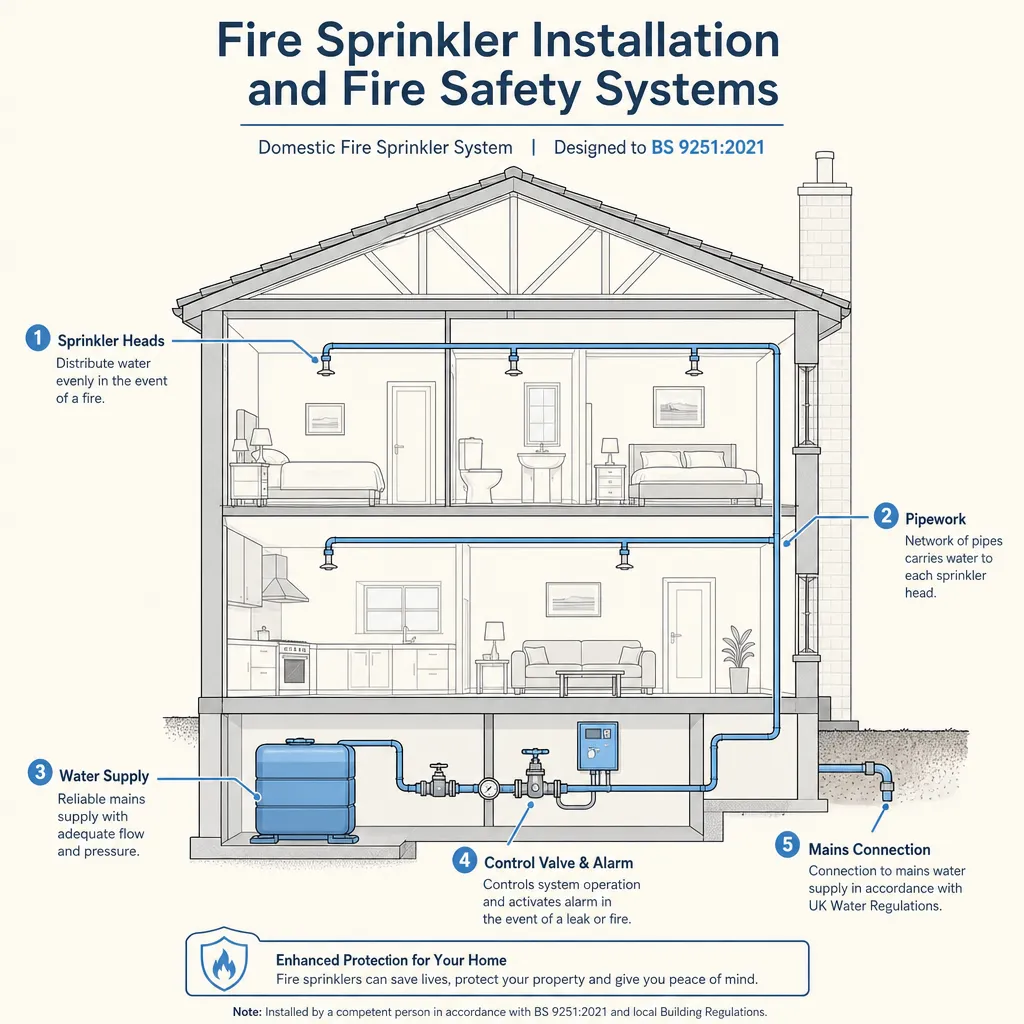
Fire Sprinkler Installation and Fire Safety Systems
Residential fire sprinkler systems in the UK must comply with BS 9251:2021.
 Planning & Pre-Build
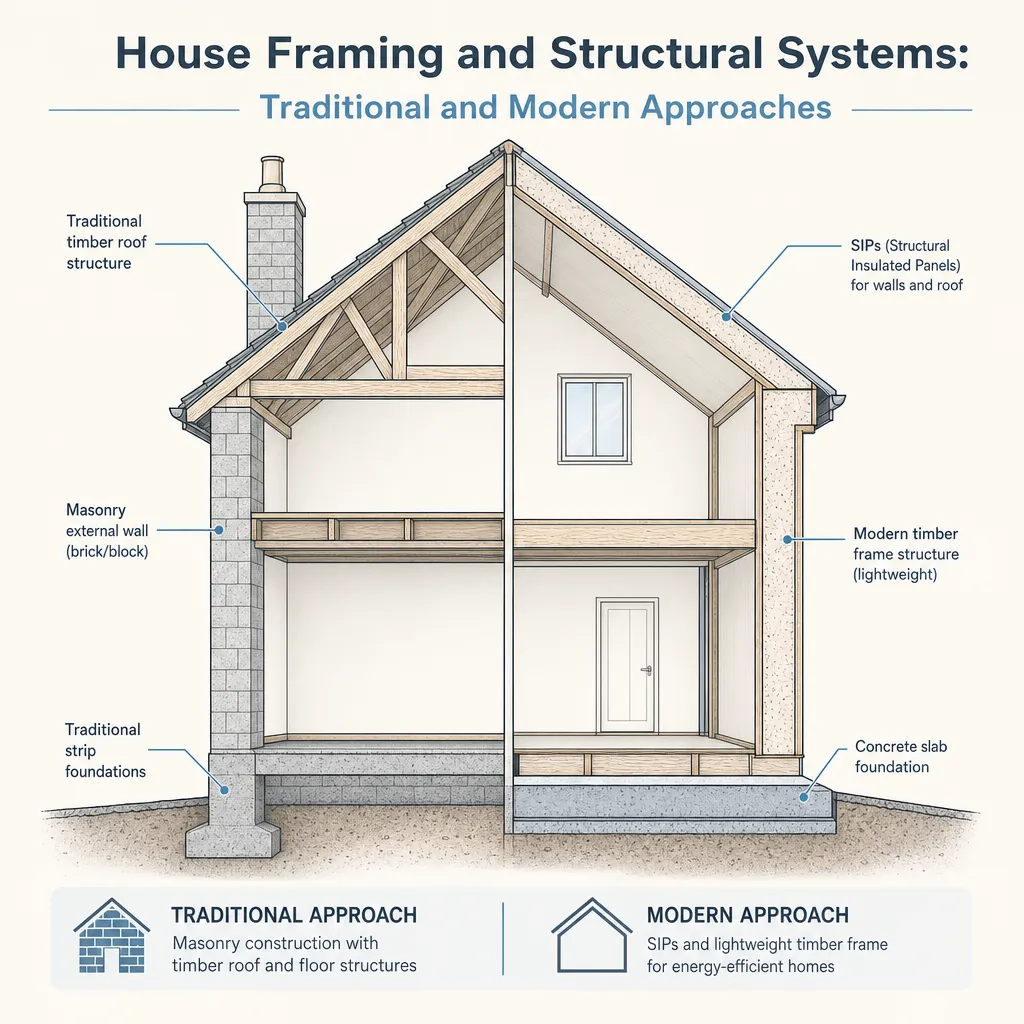
House Framing and Structural Systems: Traditional and Modern Approaches
UK homes are built using four main structural systems: traditional masonry (brick and block), timber frame, structural insulated panels (SIPs), and insulated concrete formwork (ICF).
 Planning & Pre-Build
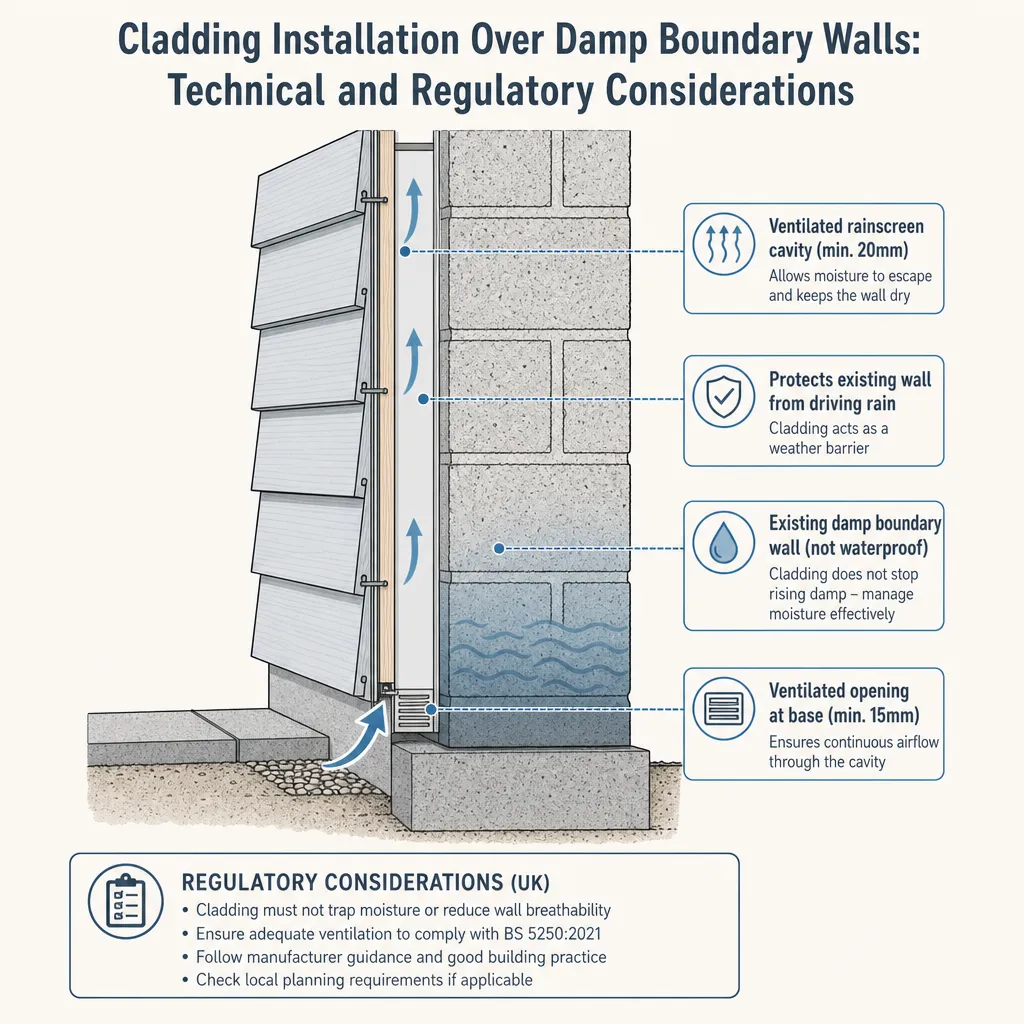
Cladding Installation Over Damp Boundary Walls: Technical and Regulatory Considerations
Installing cladding over a damp boundary wall requires a damp survey to identify the moisture source before any cladding system is specified.
 Planning & Pre-Build
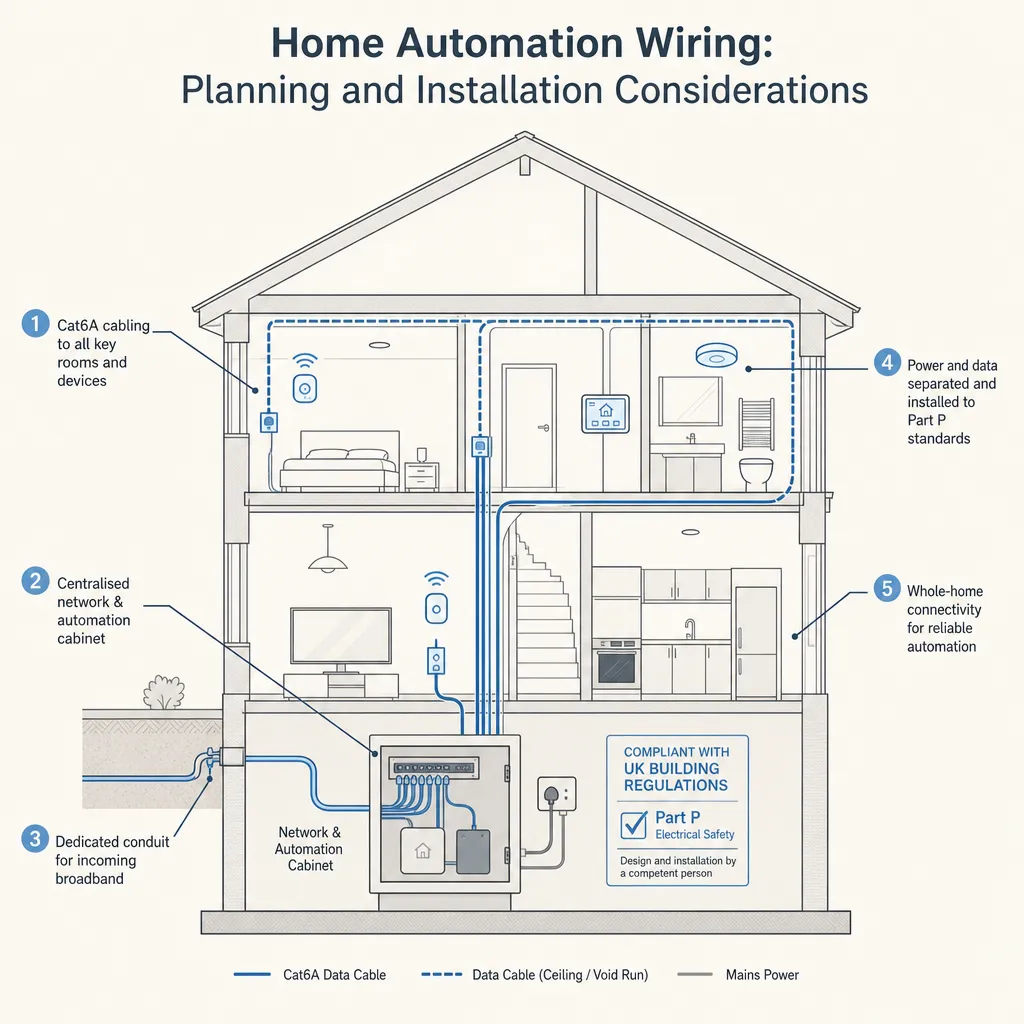
Home Automation Wiring: Planning and Installation Considerations
Home automation wiring decisions — data cabling, power circuits, control wiring — are most cost-effectively made during first-fix, before walls are closed.
 Planning & Pre-Build
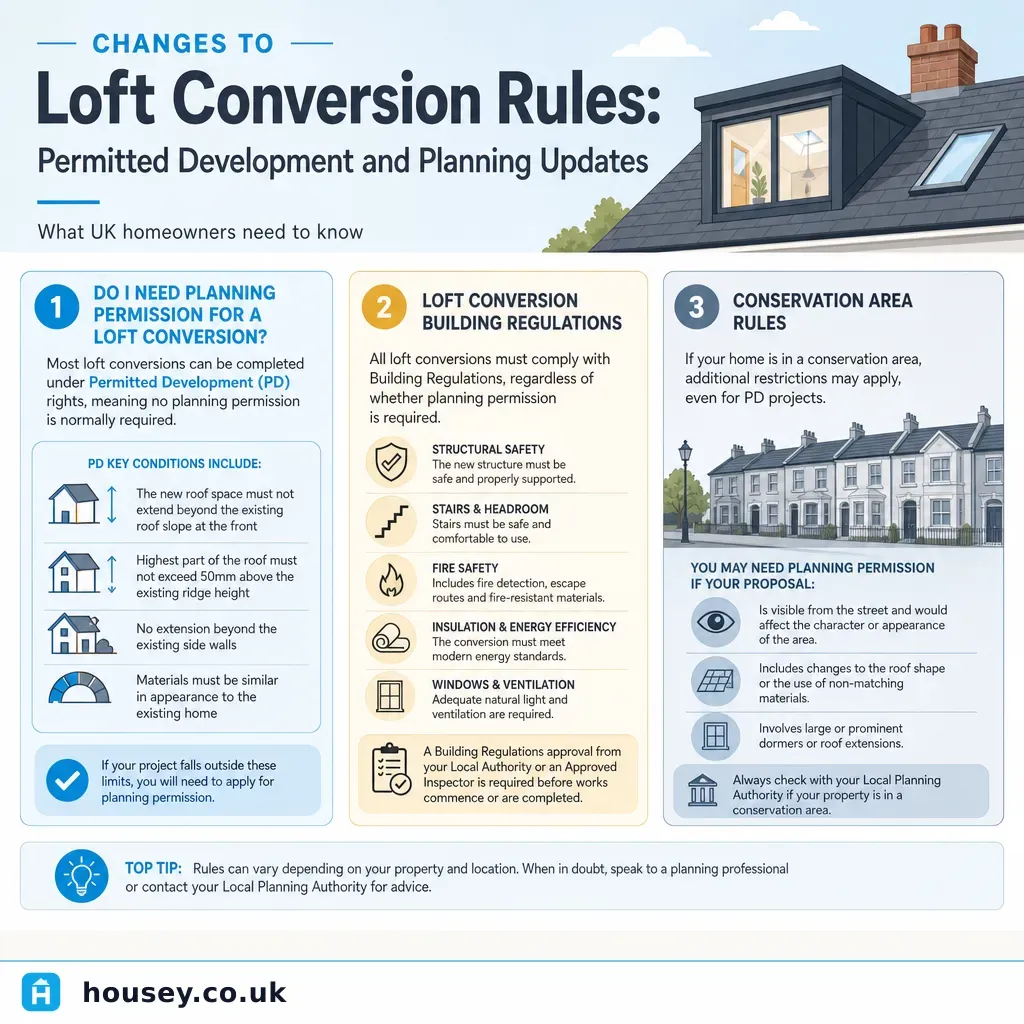
Changes to Loft Conversion Rules: Permitted Development and Planning Updates
In England, most loft conversions on standard houses qualify as Permitted Development under Class B of the GPDO 2015, allowing up to 40 cubic metres (terraced) or 50 cubic metres (detached or semi-detached) without a planning application — if conditions are met.