Underground Drainage System Repair and Replacement Costs
By Housey · Last reviewed 18th of May 2026
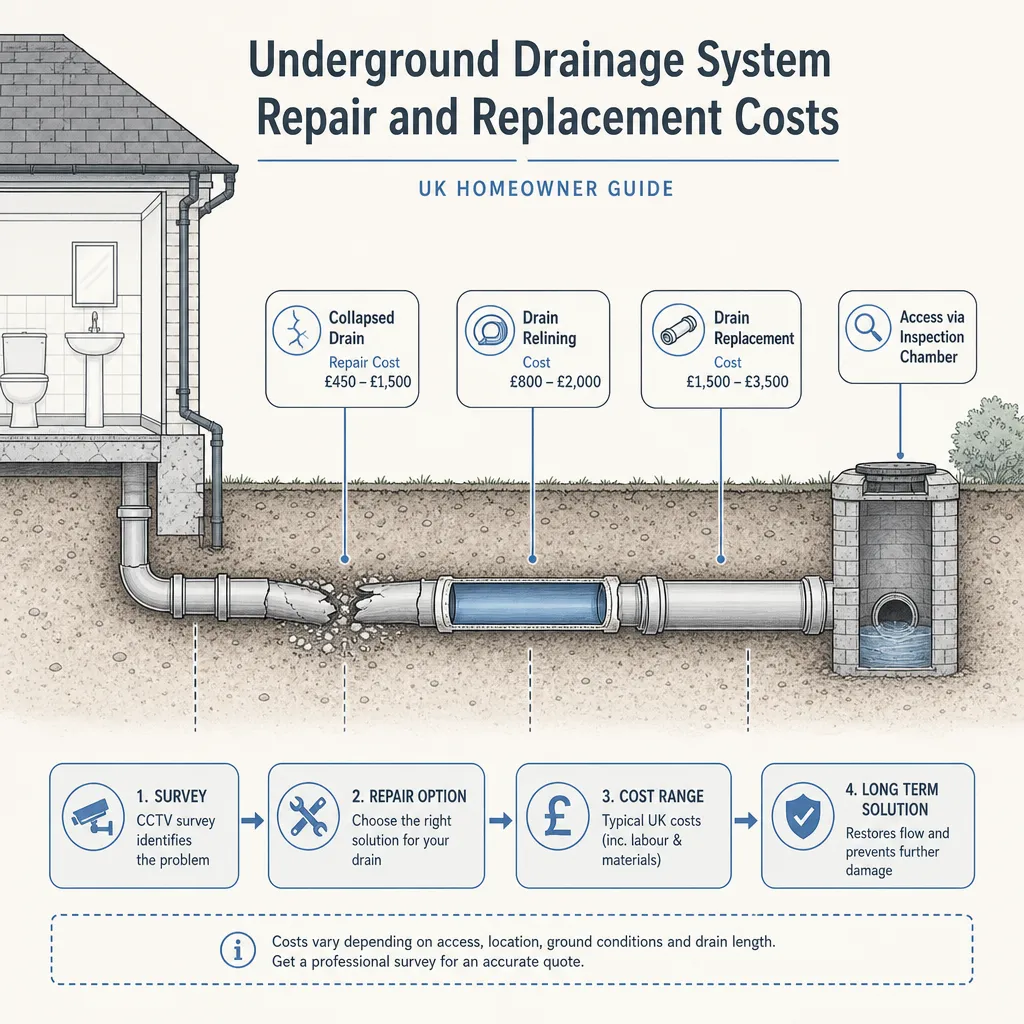
Underground Drainage System Repair and Replacement Costs
When a drain blocks, backs up, or collapses beneath a UK property, the question quickly moves from what is wrong to what will it cost to fix. Underground drainage repair can range from a relatively simple relining job to a full excavation and replacement scheme lasting several days, and the correct approach can only be determined once a CCTV drain survey has identified the nature and extent of the defect.
Key points
- Drain relining using cured-in-place pipe (CIPP) technology typically costs £150–£400 per metre installed, making it the most cost-effective repair for pipes with cracking or joint failure where the pipe retains its general shape (Indicative UK costs, last reviewed 2026-05-18).
- Full open-cut excavation and pipe replacement typically costs £3,000–£15,000 for a standard residential drainage run, depending on depth, length, and surface reinstatement requirements.
- The Water Industry Act 1991 (amended 2011) transferred most private lateral drains to water company ownership — confirm who is responsible for the affected pipe before commissioning or paying for repairs.
- Building Regulations Approved Document H (Drainage and Waste Disposal) applies to any new or replacement drainage installed as part of building work, and notification to building control is required.
- A CCTV drain survey must precede repair — working without survey evidence frequently leads to incorrect method selection and repeat expenditure.
What repair methods are available?
The right method depends on the defect type, pipe condition, material, diameter, and depth. The table below summarises the main options available to UK homeowners:
Method | Best for | Not ideal for | Indicative cost range |
|---|---|---|---|
High-pressure water jetting | Soft blockages, fat and silt build-up | Structural defects, cracked or collapsed pipe | £80 – £200 per visit |
Patch lining | Isolated crack or joint failure, defect under 1m | Multiple defects spread across a long run | £400 – £900 per patch |
Full pipe relining (CIPP) | Long runs with multiple cracks or joint defects | Severely collapsed pipe, pipes under 100mm diameter | £150 – £400 per metre |
Excavation and open-cut replacement | Collapsed pipe, severely misaligned run, root-destroyed section | Deep pipes under reinforced slabs without specialist support | £3,000 – £15,000+ per run |
Pipe bursting (trenchless replacement) | Replacing deteriorated pipe without full excavation | Clay soil with unstable surrounding ground | £2,000 – £6,000 per run |
Indicative UK costs, last reviewed 2026-05-18. Prices exclude VAT and vary significantly by region, depth, and surface reinstatement requirements.
Who is responsible for the repair?
Before spending money on underground drainage repair, confirm who owns the affected pipe. Under the Water Industry Act 1991 (as amended by the Water Industry (Schemes for Adoption of Private Sewers) Regulations 2011), most private lateral drains serving a single property were transferred to the relevant water company in October 2011.
- Lateral drain (from your property to the public sewer, serving only your property): likely adopted by your water company in 2011. Contact your water company — for example Thames Water, Severn Trent, or Yorkshire Water — to confirm ownership and request a drainage record.
- Shared private sewer (serving two or more properties but not adopted): joint responsibility of the connected property owners.
- Drainage within the curtilage of a single property (internal runs): generally the homeowner's responsibility.
Provide your water company with the survey footage and a sketch plan to establish the ownership boundary before instructing repair works.
Worked UK property scenario: 1900 Victorian terrace in Leeds
Consider a 1900 Victorian terraced house in Leeds where the owner notices slow drainage from the kitchen and ground-floor bathroom. A CCTV drain survey reveals:
- 4 metres of collapsed vitrified clay pipe at 1.2 metres depth beneath the rear yard, running from the rear gulley to a shared boundary manhole.
- Root ingress at two further joints, each affecting a section of less than 0.5 metres.
Repair decision:
- The collapsed section requires open-cut excavation and replacement with uPVC pipe, including haunching, backfill, and reinstatement of paving slabs: estimated £3,500–£5,500.
- The two root-ingress joints are candidates for patch lining: estimated £600–£800 each.
- Estimated total before seeking quotes: £4,700–£7,100 plus VAT.
The contractor also confirms that the pipe running from the shared boundary manhole to the public sewer was adopted by Yorkshire Water in 2011 — so the homeowner is not liable for that section.
What affects the cost of drainage repair?
- Pipe depth: deeper pipes require more excavation and temporary shoring, significantly adding to labour and time costs.
- Surface reinstatement: replacing concrete, block paving, tarmac, or garden landscaping adds cost. Tarmac reinstatement alone can add £500–£2,000 depending on the area disturbed.
- Ground conditions: rock, contaminated ground, or a high water table slows excavation and increases cost.
- Access: narrow passageways, locked shared access, or proximity to structures restricts machinery and adds working time.
- Pipe material and diameter: uPVC pipe relining is straightforward; older salt-glazed or pitch-fibre pipes may require specialist handling or different liner materials.
- Emergency vs. planned works: out-of-hours emergency call-out rates are substantially higher than rates for planned repair.
What to ask before accepting a quote
Before instructing a drainage contractor, ask:
- Has a CCTV survey been carried out, and will you work from that footage and written report?
- What repair method are you recommending, and why is it the most appropriate for this specific defect?
- Is the affected pipe confirmed as my responsibility, and not the water company's?
- What are the exact start and end points of the proposed repair, and what is excluded from the scope?
- Does the quoted price include surface reinstatement, and to what standard will surfaces be left?
- Is VAT included in the quoted price?
- What warranty do you offer on the completed repair or relining?
- Are you a member of a recognised trade body such as the NADC, CEDA, or WaterSafe?
- What documentation will I receive on completion — a report, photographs, video footage, or a completion certificate?
When to get professional help
Underground drainage repair is specialist work and should not be attempted as a DIY project. Seek professional input promptly if:
- Drains are backing up into the property — raw sewage in the home is a health risk requiring immediate professional attention.
- You notice sinkholes, ground settlement, or subsidence near a drainage run — a collapsed sewer can undermine building foundations and warrants urgent assessment.
- Multiple neighbouring properties are experiencing the same drainage problem, which may indicate a shared or public sewer issue for the water company to address.
- The drain runs beneath a structure, retaining wall, or shared boundary feature.
- Ground conditions suggest contamination, for example on former industrial land or filled ground.
How Housey can help
Housey connects homeowners with specialist contractors for CCTV drain surveys and drainage surveys. Comparing quotes from vetted professionals and understanding the recommended repair method before instructing will help you evaluate quotes on a like-for-like basis and avoid unnecessary expenditure.
Frequently asked questions
Can I claim on home insurance for drain repairs?
Home buildings insurance policies vary considerably. Sudden accidental damage — such as ground movement crushing a pipe — may be covered, but gradual deterioration, tree root ingress, and wear-and-tear are typically excluded. Check your policy schedule carefully and contact your insurer before starting work, as completing repairs without prior authorisation may affect any subsequent claim.
How long does drain relining (CIPP) last?
When correctly installed to current standards, CIPP drain liners are designed to last up to 50 years according to manufacturers and WRc technical guidance. Actual lifespan depends on installation quality, the condition of the host pipe before lining, and the materials used. Request a warranty from the contractor and ask what maintenance is needed to preserve the liner over time.
Do I need planning permission or building regulations approval for drainage repair?
Like-for-like repairs to existing private drains on private land do not generally require planning permission. Building Regulations Approved Document H applies where new or replacement drainage is installed as part of building work — this requires notification to your local authority building control department or an approved inspector before work begins on site.
How do I find out where my underground drains run?
Your water company can supply records showing public sewer locations. For private drains, drainage layout drawings may be held with your property deeds or in local authority building control records. A CCTV survey using a sonde — an electromagnetic transmitter in the camera head — allows the drainage engineer to trace and mark the pipe route at the surface.
Sources and further reading
- Building Regulations Approved Document H: Drainage and Waste Disposal — GOV.UK
- Water Industry Act 1991 — legislation.gov.uk
- Private Sewers Transfer — Water UK
- WRc Drain and Sewer Survey Manual — WRc plc
Useful next reads
 Surveys & Inspections
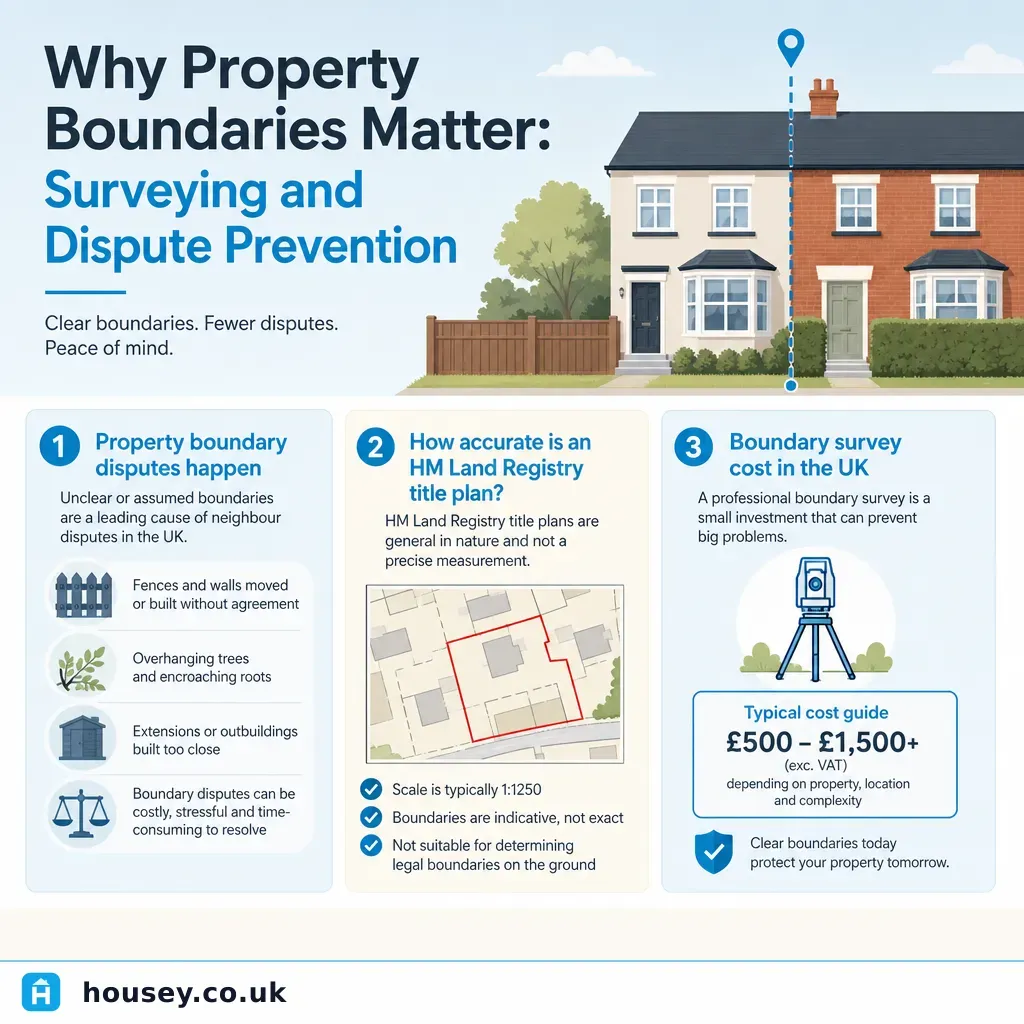
Why Property Boundaries Matter: Surveying and Dispute Prevention
Property boundaries in England and Wales are recorded as general boundaries by HM Land Registry — not precise measurements.
 Surveys & Inspections
Safe Property Viewing Practices: Protecting Yourself During Inspections
When viewing a property in the UK, always tell someone where you are going and share the full address before you leave.
 Surveys & Inspections
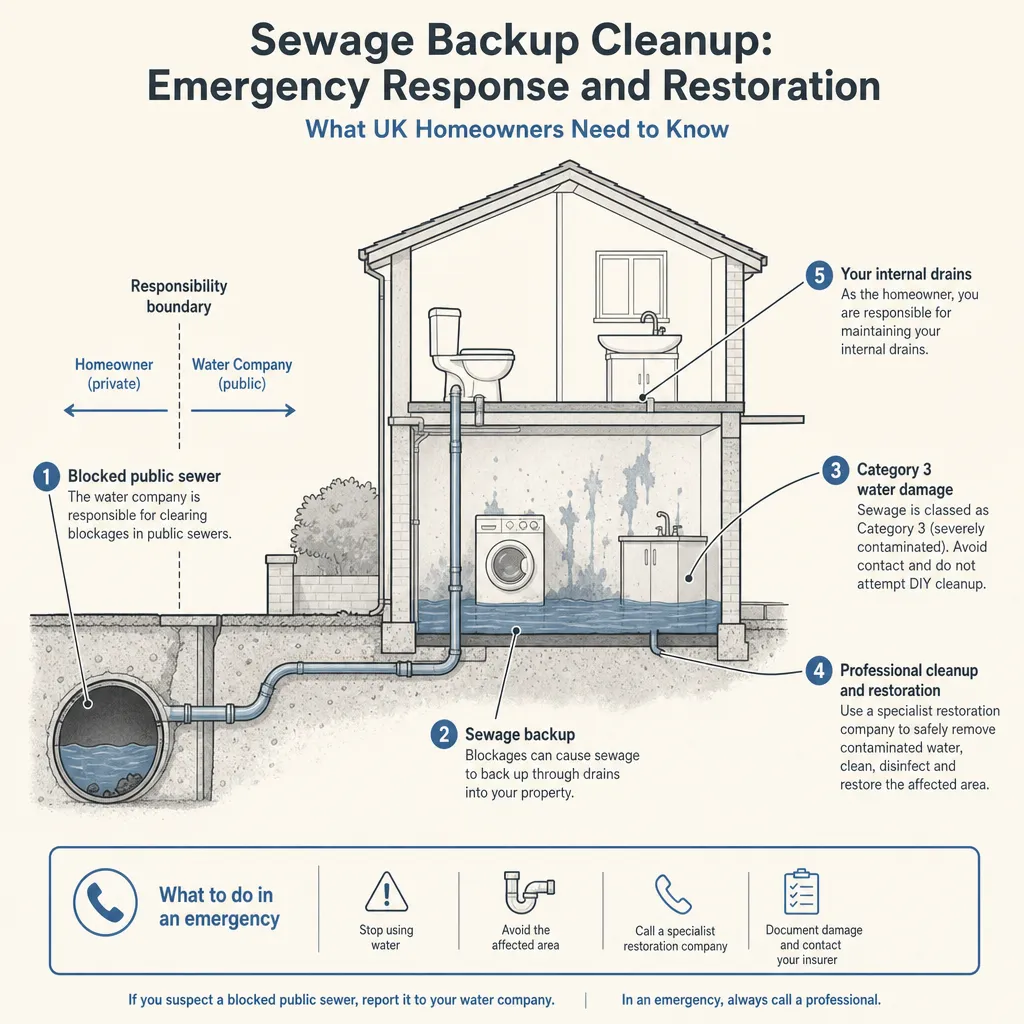
Sewage Backup Cleanup: Emergency Response and Restoration
A sewage backup should be treated as a Category 3 contamination event.
 Surveys & Inspections
Identifying Asbestos Insulation: What You Need to Know for Your Property
Asbestos insulation was widely used in UK properties built before 2000, commonly found in pipe lagging, ceiling tiles, loose-fill loft insulation, and around boilers.
 Surveys & Inspections
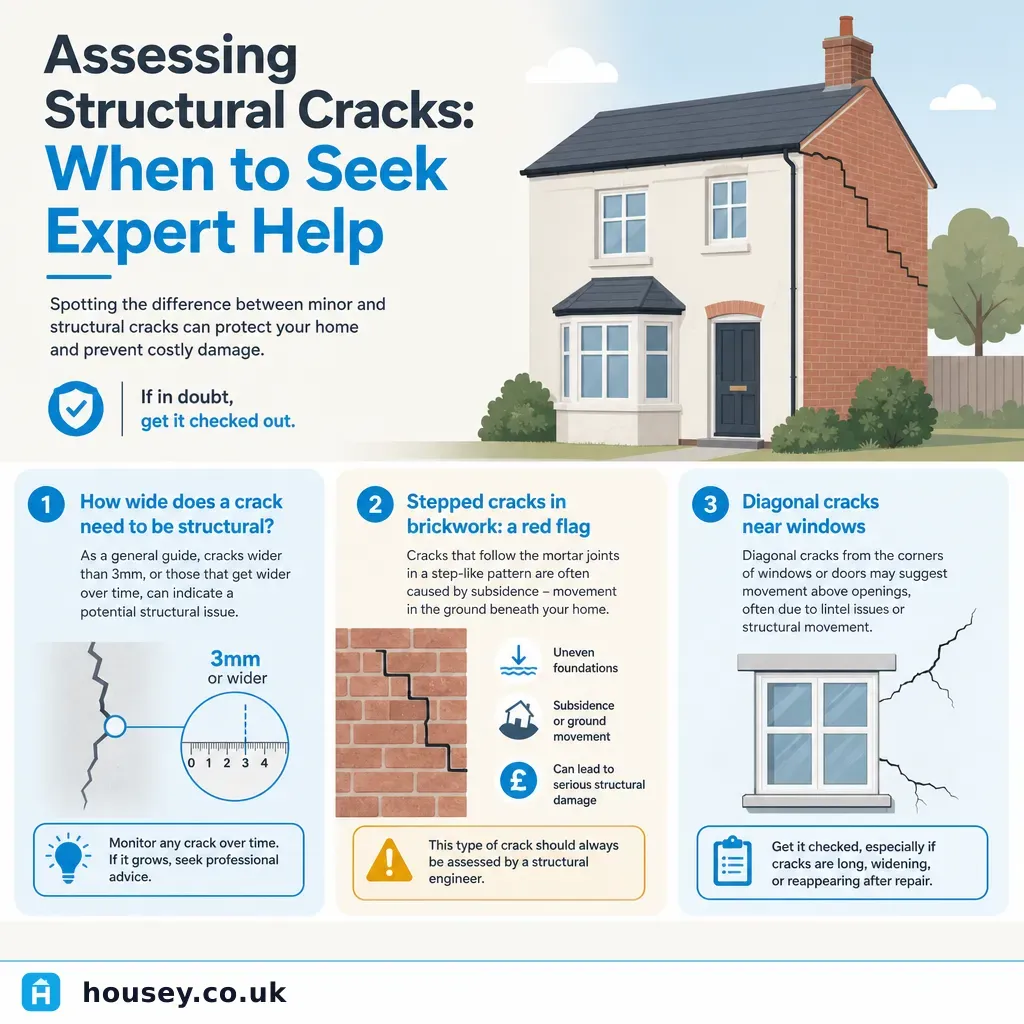
Assessing Structural Cracks: When to Seek Expert Help
Structural cracks range from harmless shrinkage hairlines to signs of subsidence or foundation movement.