Understanding and Managing Damp in Properties
By Housey · Last reviewed 30th of May 2026
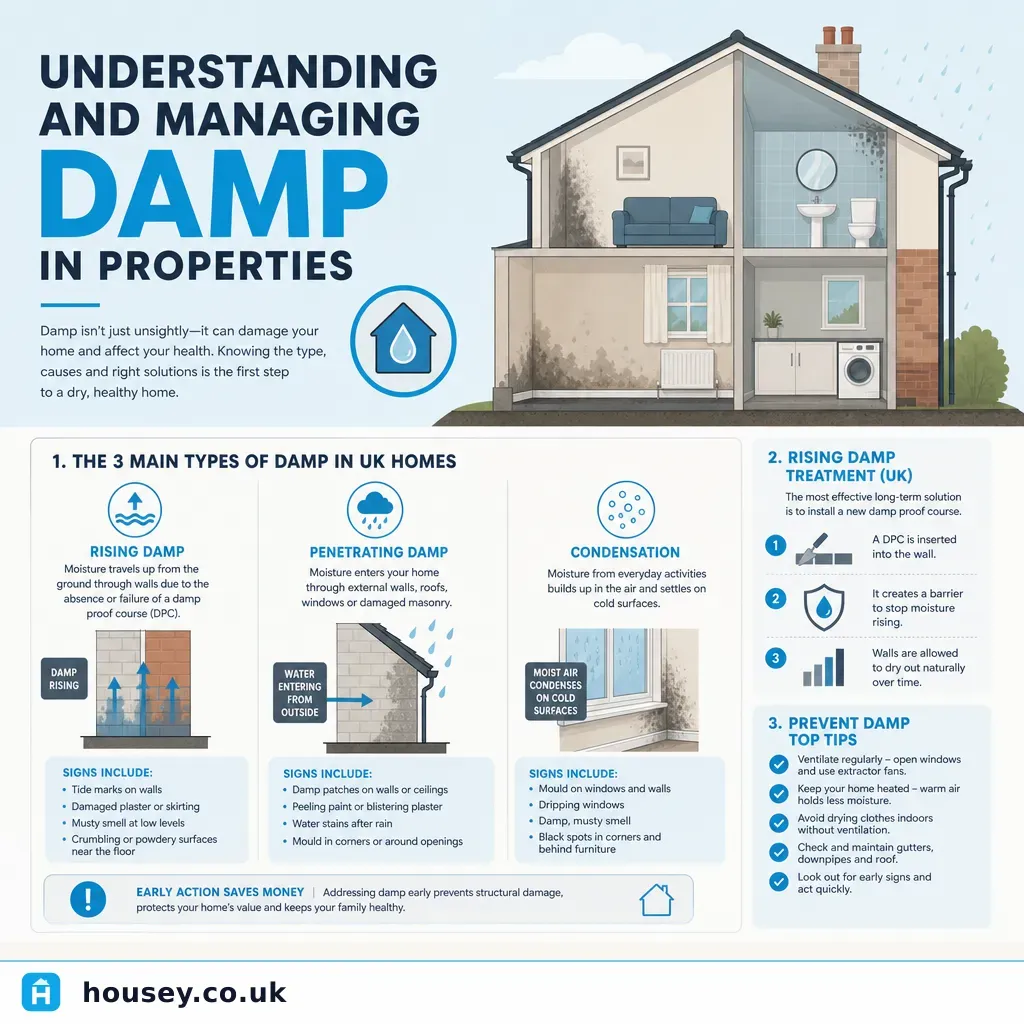
Understanding and Managing Damp in Properties
Damp is one of the most frequently cited concerns in UK property surveys, affecting homes of every age and construction type — from Victorian terraces with failing damp-proof courses to modern flats with insufficient ventilation. The costs of misdiagnosis are significant: treating the wrong type of damp, or addressing surface symptoms rather than the underlying cause, often leaves the problem recurring within months and can lead to unnecessary expenditure on treatments that provide no lasting benefit.
Key points
- There are three principal categories of damp in UK properties: rising damp, penetrating damp, and condensation — each with different causes requiring different treatment approaches.
- Damp-proof courses (DPCs) in older properties were often made from slate, pitch, or bitumen; these can degrade or be bridged by raised external ground levels, render garden beds, or poorly installed patio slabs.
- PAS 2035 — the UK standard for energy retrofit — identifies moisture risk as a critical consideration before insulating solid-wall or cavity-wall properties, as poorly specified insulation can create new damp problems.
- Timber in contact with damp masonry or in poorly ventilated floor voids is at risk of wet rot and dry rot (Serpula lacrymans), both of which require specialist remediation.
- A professional damp and timber survey should precede any remedial treatment; the Property Care Association (PCA) publishes a code of practice for remedial contractors and maintains a register of qualified members.
What causes damp in UK homes?
Understanding the source of moisture is essential before any treatment is considered. The three main types behave differently and call for different remedies.
Rising damp
Rising damp occurs when ground moisture travels upward through masonry by capillary action. It is usually confined to the lower 1–1.2 m of a wall and produces a characteristic tide mark of salts, staining, and blown plaster. True rising damp is less common than once believed — many suspected cases prove to be penetrating damp or condensation — but it remains a genuine problem in older properties where the DPC has failed, is absent, or has been bridged by raised external ground levels.
Penetrating damp
Penetrating damp results from water entering through defects in the building fabric: cracked render, failed pointing, leaking gutters, defective window seals, flat-roof ponding, or poorly flashed chimneys. It can appear at any height on a wall and is often associated with specific weather events such as heavy rain or driving wind. Penetrating damp in solid-wall properties is a particular challenge, as there is no cavity to drain moisture away from the inner leaf.
Condensation
Condensation is the most common form of damp in UK homes, occurring when warm, moisture-laden air contacts cold surfaces — typically external walls, windows, and poorly insulated corners. Modern airtight homes with insufficient mechanical ventilation are especially susceptible. Condensation manifests as water droplets on windows, black mould growth on cold surfaces, and musty odours — particularly in bathrooms, kitchens, and north-facing bedrooms.
Types of damp compared
Type | Key indicators | Typical location | Main treatment | Common misdiagnosis risk |
|---|---|---|---|---|
Rising damp | Tide mark of salts, lower wall staining, peeling paint below 1.2 m | Ground-floor internal walls | Chemical or physical DPC; replaster | Often confused with penetrating damp |
Penetrating damp | Staining linked to rain events, higher wall patches, worsens after wet weather | Any external wall, chimney breast, flat-roof junctions | Fix external defect (pointing, render, gutters, flashing) | Often over-treated as rising damp |
Condensation | Surface mould, water on windows, worse in winter and wet rooms | Cold corners, north-facing walls, thermal bridges | Improve ventilation, heating, and insulation where appropriate | Mistaken for rising damp when near floor level |
Diagnosing damp correctly
Accurate diagnosis requires more than a moisture meter reading. A reputable damp and timber surveyor will use a combination of visual inspection, carbide (speedy) moisture testing, borescope investigation where needed, and a review of the external envelope before drawing conclusions.
Be cautious of any contractor who diagnoses rising damp based solely on an electrical moisture meter reading. These instruments detect surface resistance — not liquid water content — and can produce misleading readings in salted plaster or after recent wet weather. A carbide (calcium carbide) test provides a more reliable measure of actual moisture content within the masonry.
The Property Care Association (PCA) publishes technical guidance and maintains a register of qualified member contractors who are bound by its code of practice for damp and timber treatment works.
Common red flags that damp is being mismanaged
- A contractor diagnoses rising damp without a carbide moisture test or laboratory salt analysis.
- DPC injection is recommended before the external envelope has been inspected and repaired.
- Tanking or waterproof render on internal walls is specified as the sole treatment for what appears to be penetrating damp.
- Fungicide treatment of mould is quoted without addressing the underlying moisture source — ventilation deficit or heat loss.
- No inspection of floor void timbers or roof timbers adjacent to damp masonry is carried out.
- A contractor's free survey results in a treatment specification that is substantially more expensive than the cost of commissioning an independent survey first.
Timber at risk: wet rot and dry rot
Where damp masonry is in sustained contact with structural or decorative timber — floor joists, wall plates, skirting boards, and window boards — the risk of timber decay increases significantly.
Wet rot requires sustained high moisture to progress; affected timber becomes soft, darkened, and cracked along the grain. It generally stops advancing once the moisture source is removed and the timber allowed to dry.
Dry rot (Serpula lacrymans) is more serious. It can spread through damp masonry and reach timber remote from the original moisture source. Treatment requires removal of all affected timber, chemical treatment of surrounding masonry, and thorough resolution of the original moisture cause. Dry rot remediation is specialist work and should be carried out by a PCA-registered contractor.
If a damp survey identifies timber at risk, the surveyor should specify the extent of decay, the moisture content of affected members, and a remediation strategy with a clear scope of works.
When to get professional help
Damp is rarely a straightforward DIY fix, and incorrect treatment can be costly. Call a qualified specialist if:
- Mould growth returns persistently within weeks of cleaning.
- Plaster is blowing, crumbling, or showing white salt efflorescence at low level.
- Timber near external walls feels soft, springy, or shows visible fungal growth.
- Damp appears to be spreading through internal partition walls.
- You are about to install internal or external wall insulation in an older solid-wall property — PAS 2035 requires a whole-house moisture risk assessment before such work proceeds.
- A RICS survey has flagged damp as a potential defect prior to exchange.
How Housey can help
Housey connects you with qualified surveyors for a professional damp and timber survey — the essential first step before any treatment is commissioned. Once the cause is confirmed, our network of damp proofing specialists can provide treatment quotes based on an accurate diagnosis, helping you avoid paying for unnecessary or misidentified remediation.
Frequently asked questions
How much does a damp survey cost in the UK?
Indicative UK costs, last reviewed 2026-05-30: a professional damp and timber survey from an independent surveyor — not a contractor offering a free survey — typically costs £200–£400 for a standard residential property. Contractor-provided free surveys often lead to higher treatment quotes. Costs vary by property size, location, and the complexity of investigation required.
Does a DPC injection guarantee the problem is fixed?
Not necessarily. DPC injection addresses rising moisture through the wall, but if external ground levels are bridging the new DPC, or if penetrating damp from above is also present, moisture will continue to appear. Effective treatment usually requires addressing all moisture pathways simultaneously rather than relying on a single intervention.
Can I treat black mould myself?
Surface mould caused by condensation can be cleaned with a fungicidal wash, but this treats the symptom rather than the cause. Without improving ventilation, heating, and surface temperatures, mould will return. If coverage is extensive — particularly in a bedroom or child's room — instruct a specialist to assess the root cause before attempting treatment.
Will damp affect my EPC rating?
Damp itself is not directly scored in an Energy Performance Certificate (EPC), but the underlying causes — poor insulation and inadequate ventilation — often contribute to a lower energy rating. Addressing damp as part of a planned retrofit programme following PAS 2035 guidance can improve both comfort and energy performance simultaneously.
Does buildings insurance cover damp damage?
Most standard buildings insurance policies exclude gradual damp and rot, treating them as maintenance issues rather than insurable events. Sudden water ingress from a burst pipe or storm damage may be covered. Check your policy wording carefully, and contact the Financial Ombudsman Service if a claim is disputed.
Sources and further reading
- Property Care Association technical guidance — Property Care Association
- BRE Good Building Guides — damp and condensation — Building Research Establishment
- PAS 2035: Retrofitting dwellings for improved energy efficiency — BSI Group
- GOV.UK: understanding and addressing the health risks of damp and mould — GOV.UK
- Damp problems in rented homes — Citizens Advice
Useful next reads
 Surveys & Inspections
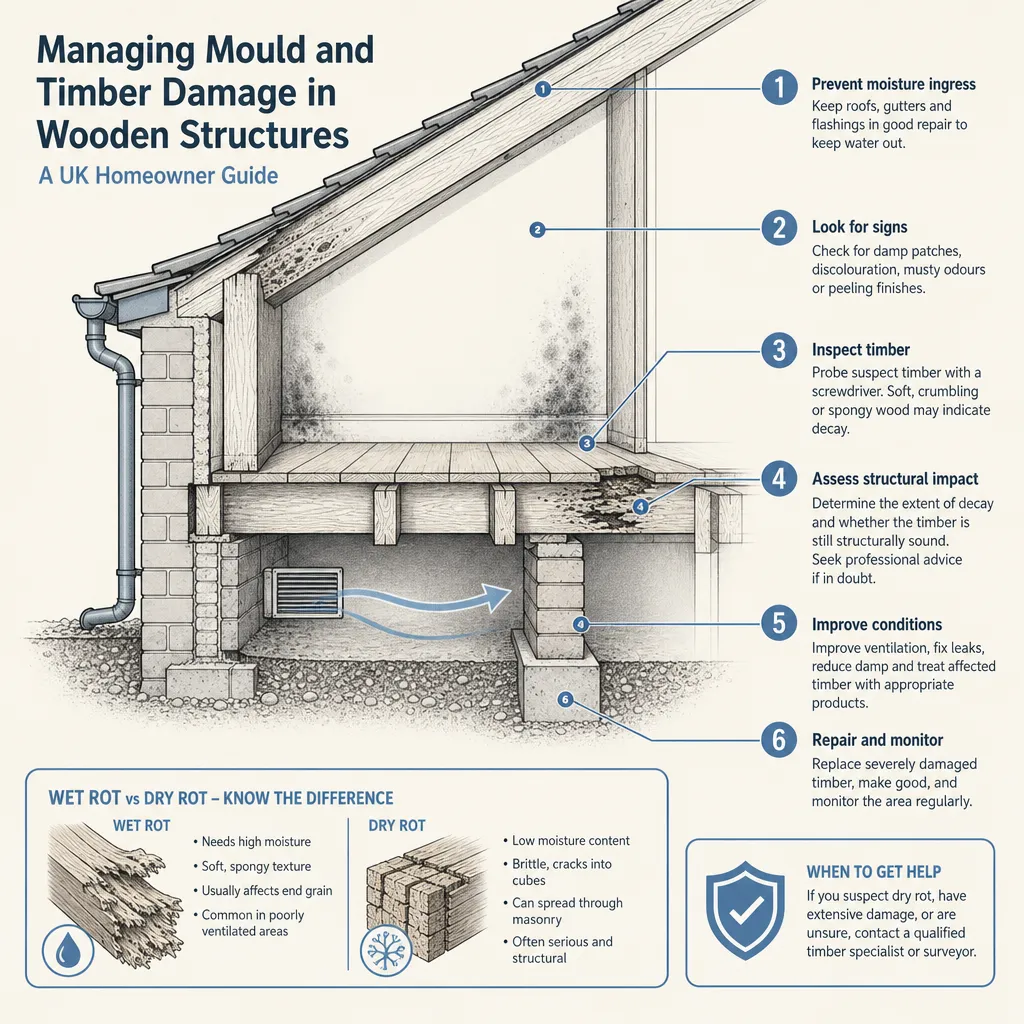
Managing Mould and Timber Damage in Wooden Structures
Mould and timber decay in wooden structures are usually symptoms of excess moisture rather than standalone problems.
 Surveys & Inspections
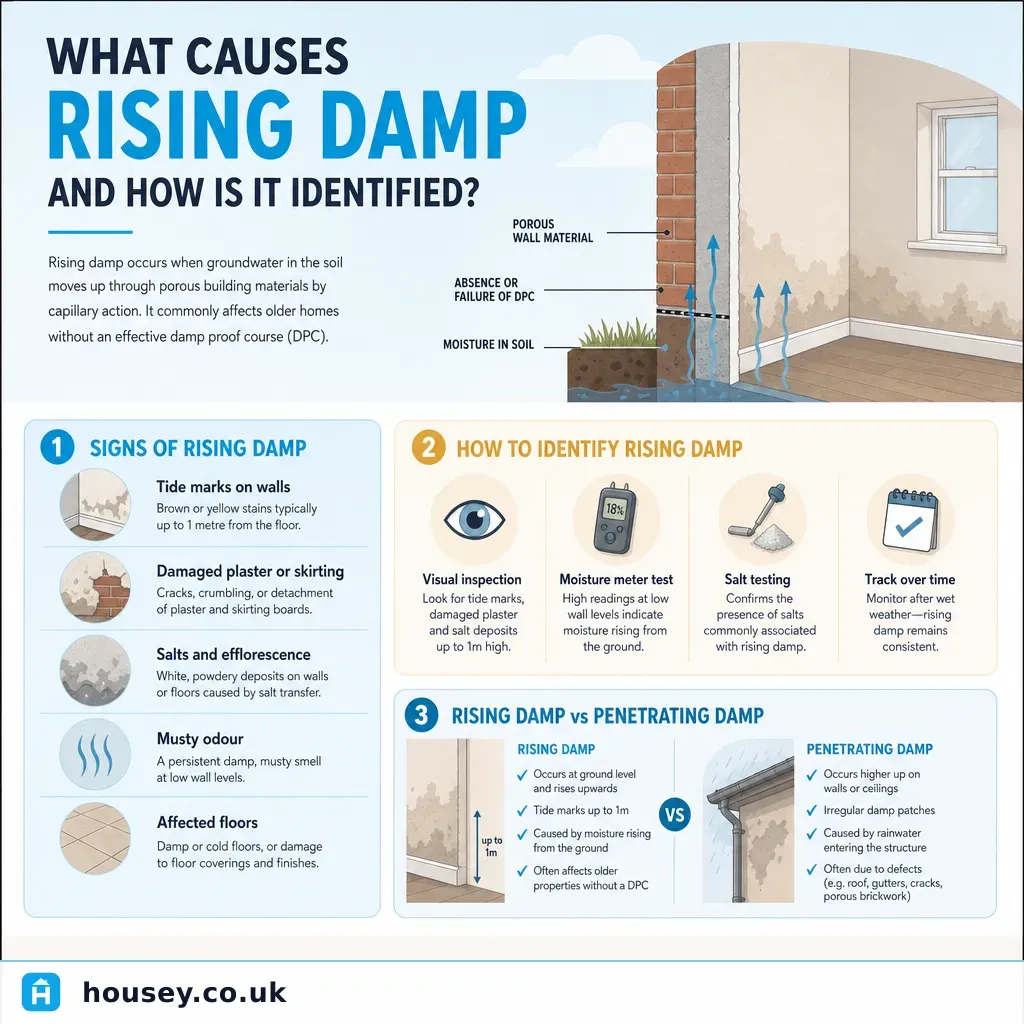
What Causes Rising Damp and How Is It Identified?
Rising damp occurs when groundwater travels upward through masonry via capillary action, usually because the damp-proof course (DPC) has failed, is absent, or has been bridged.
 Surveys & Inspections
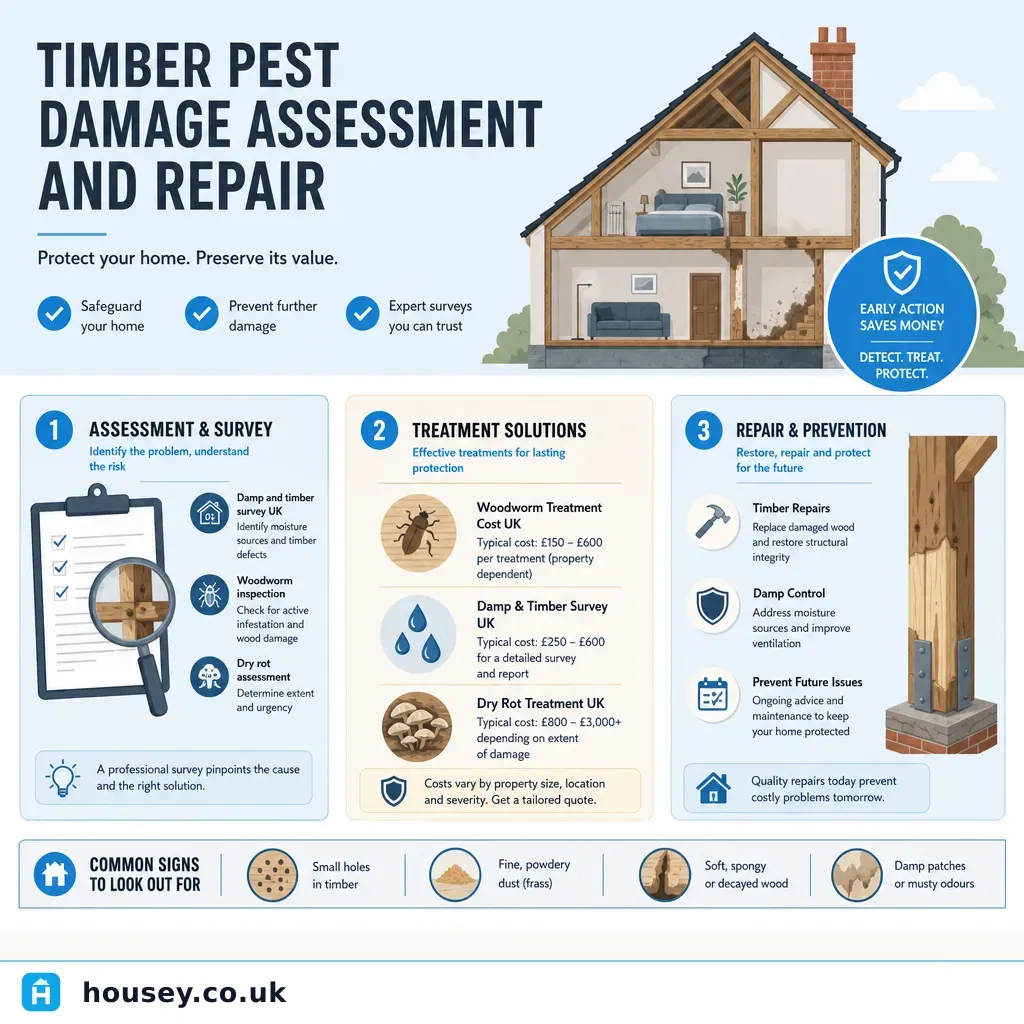
Timber Pest Damage Assessment and Repair
Timber pest damage in UK homes is most commonly caused by Common Furniture Beetle (woodworm), Death Watch Beetle, or fungal decay such as dry rot.
 Surveys & Inspections
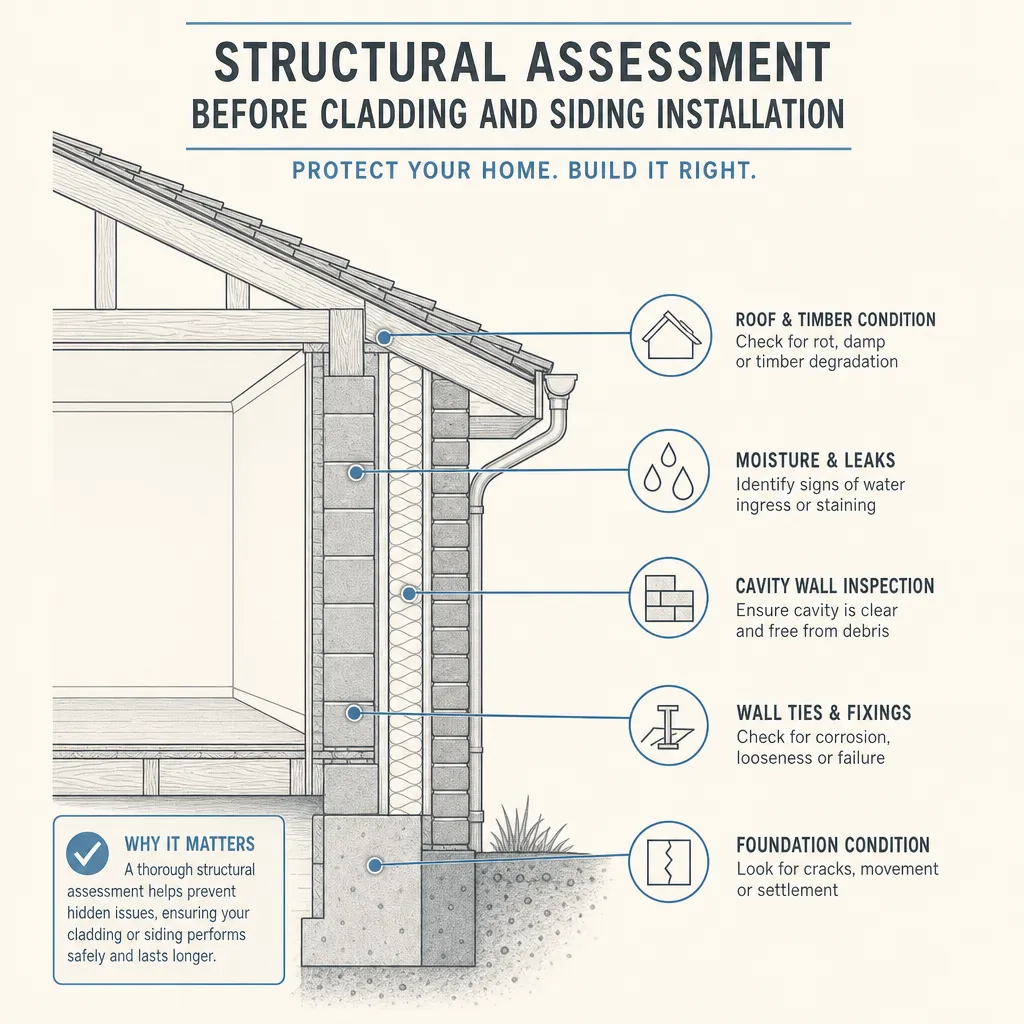
Structural Assessment Before Cladding and Siding Installation
Before installing external cladding or siding, a structural or specific defect assessment is needed to identify hidden timber decay, damp penetration, cavity wall defects, and any load-bearing implications.
 Surveys & Inspections
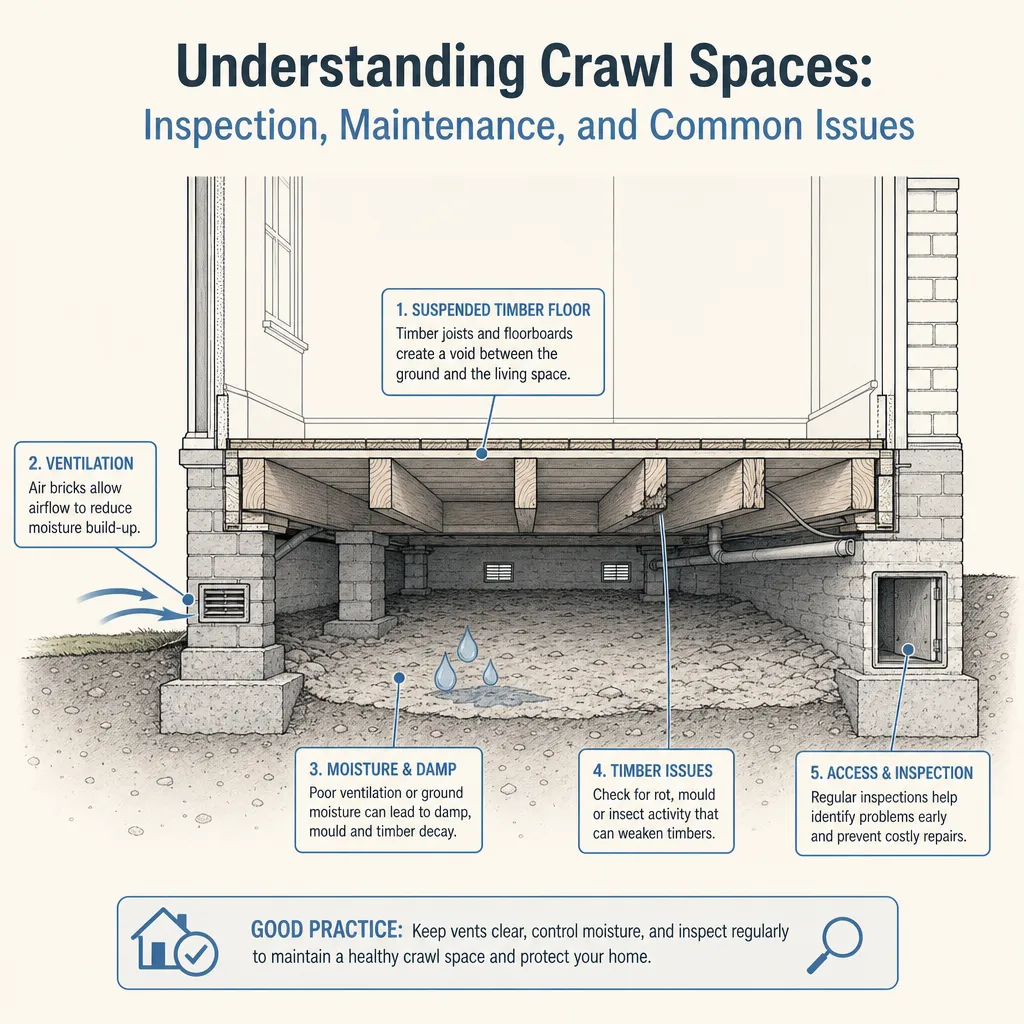
Understanding Crawl Spaces: Inspection, Maintenance, and Common Issues
Sub-floor voids beneath suspended timber ground floors in pre-1960 UK homes need cross-ventilation through airbricks to prevent dry rot and wet rot in floor timbers.