Understanding Drywall Cracks: Assessment and Remediation
By Housey · Last reviewed 11th of May 2026
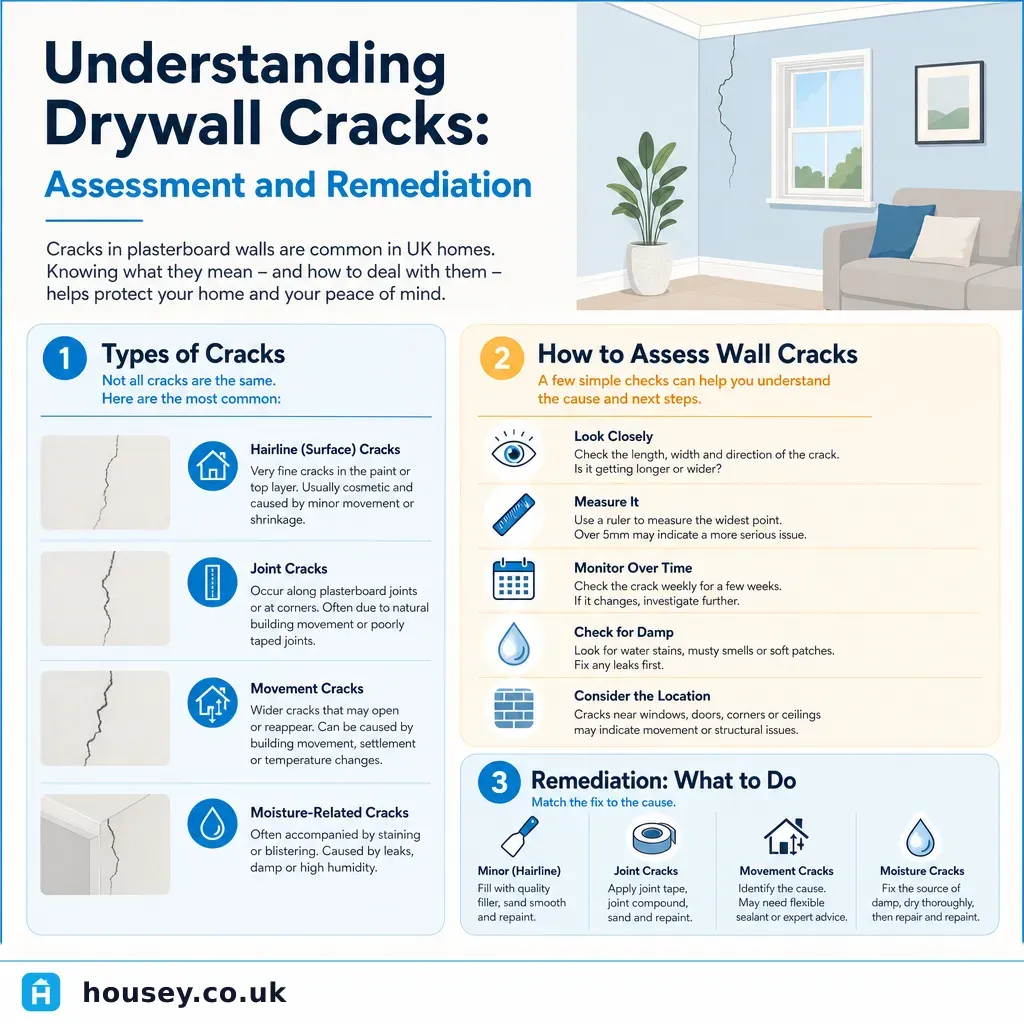
Understanding Drywall Cracks: Assessment and Remediation
Wall cracks are one of the most frequently noticed defects in UK homes and one of the most widely misinterpreted. Whether they appear in a property you have just bought, during a dry summer, or following building works next door, cracks in plasterboard walls raise immediate questions about cause and severity — and about whether a solicitor, mortgage lender, or insurer needs to be involved. Getting the assessment right before reaching for a decorator or a contractor is the critical first step.
Key points
- BRE Digest 251 classifies building damage on a scale from Category 0 (negligible, < 0.1 mm) to Category 5 (very severe, > 25 mm); most plasterboard wall cracks in UK homes fall into Category 0 or 1.
- Diagonal cracks radiating from door or window corners, stepped cracks following masonry joints, and horizontal mid-wall cracks are patterns associated with structural or foundation movement rather than cosmetic defect.
- The Party Wall etc. Act 1996 means neighbouring building works can trigger or accelerate cracking; a photographic schedule of condition before notifiable works begin can protect your legal position.
- Sellers must disclose known material defects — including structural cracking — on the TA6 Property Information Form; a pre-sale specific defect survey can document cause and remediation cost.
- Repair costs range from under £20 of DIY filler to £300–£600 for a plasterer to re-skim a full wall. Indicative UK costs, last reviewed 2026-05-11.
Types of drywall cracks and what they suggest
The location, orientation, width, and pattern of a crack are the four key variables in any initial assessment.
Vertical cracks
Vertical cracks running directly up a plasterboard wall — especially those aligned with a stud position or board joint — are almost always caused by thermal movement or joint-compound failure. They are the most common type and the least likely to indicate structural concern. They may widen slightly in warm, dry conditions and partially close in winter, following a seasonal rhythm.
Horizontal cracks
Horizontal cracks mid-height on internal or external walls carry more significance. They may be associated with lintel failure above an opening, lateral pressure on an external wall in older buildings without adequate cavity wall ties, or wall plate fixing failure in timber-frame structures. A horizontal crack that is widening or accompanied by wall lean warrants structural assessment.
Diagonal cracks at openings
Diagonal cracks radiating from the corners of doors or windows — sometimes called a crow's-foot pattern — are a classic symptom of differential settlement or subsidence. They reflect stress concentrating at these structurally weaker points in the wall plane. Severity depends on crack width and whether the crack is active or stable under monitoring.
Stepped cracks
Stepped cracking follows the mortar joints of the masonry wall behind the plasterboard. This indicates movement in the structure beneath the drylining and is rarely cosmetic. If you see stepped cracking on external render or brickwork, there is likely a corresponding pattern on the internal plasterboard finish.
Crack severity: a reference table
Category (BRE Digest 251) | Crack width | Typical internal appearance | Recommended action |
|---|---|---|---|
0 — Negligible | < 0.1 mm | Barely visible hairline | No action required |
1 — Very slight | < 1 mm | Fine crack, no lip | Monitor; cosmetic repair when stable |
2 — Slight | 1–5 mm | Visible crack, possible slight lip | Monitor; investigate if part of a pattern |
3 — Moderate | 5–15 mm | Noticeable crack or several Category 2 cracks | Professional assessment required |
4 — Severe | 15–25 mm | Extensive damage, possible wall distortion | Structural engineer required |
5 — Very severe | > 25 mm | Structural failure visible | Urgent — seek structural help immediately |
Source: BRE Digest 251, Assessment of damage in low-rise buildings.
How to assess drywall cracks before calling a professional
A structured self-assessment takes around 20 minutes and provides a surveyor with useful context about the crack's history and behaviour.
- Photograph all visible cracks with a scale reference (coin or ruler) from both close-up and 1 m distance.
- Measure maximum crack width using a crack gauge, feeler gauge, or credit card edge.
- Mark and date the crack ends with a pencil line or a proprietary crack tell-tale.
- Monitor for four to eight weeks, checking whether the crack has extended, widened, or partially closed.
- Check associated symptoms — sticking doors or windows, sloping floors, a gap between skirting and floor, or matching cracks on external render or brickwork.
- Research the property — check whether it falls within a Coal Authority mining risk zone, a chalk or clay shrinkage area, or near mature trees that could cause root-related movement.
Decision tree: assessment to action
- Self-monitor if the crack is < 1 mm, vertical, at a board joint, has no lip, and there are no associated symptoms elsewhere in the building.
- Cosmetic repair if monitoring confirms the crack is stable after 4–8 weeks and it falls within BRE Category 0–1.
- Instruct a specific defect survey if the crack is ≥ 5 mm, diagonal, horizontal, or is accompanied by other building symptoms such as sticking doors or external cracking.
- Instruct a RICS Level 3 survey or structural engineer if multiple cracks appear across different areas or levels, if the crack extends measurably during monitoring, or if the property sits on clay soil near mature trees.
- Seek urgent help if any crack falls in BRE Category 4 or 5, or if a wall is visibly leaning or bowing outward.
Remediation options and indicative costs
For cracks confirmed to be cosmetic and stable, the standard repair sequence is to open the crack slightly to remove loose material, apply flexible filler in thermal movement zones, re-tape joint-line cracks with fibreglass mesh and jointing compound, sand smooth when dry, prime, and redecorate.
Approach | Suitable for | Indicative cost (2026) |
|---|---|---|
DIY filler and redecoration | BRE Category 0–1 stable cracks | < £20 materials |
Plasterer — localised repair | Category 1–2, isolated cracks | £150–£300 |
Plasterer — full re-skim | Multiple cracks or large wall area | £300–£600 per room |
Specific defect survey | Uncertain or Category 2–3 cracks | £200–£500 |
RICS Level 3 Building Survey | Multiple cracks or pre-purchase assessment | £500–£1,200+ |
Indicative UK costs, last reviewed 2026-05-11. Always obtain at least two written quotes. Costs vary by region, access, and property type.
Red flags: when cracks are more serious than they look
Stop and seek professional advice if you notice any of the following:
- A crack that has visibly extended, widened, or changed shape since you first noticed it
- Any crack accompanied by a door or window that no longer closes or latches correctly
- Cracks appearing in more than one room or on more than one floor level
- Cracking that matches a pattern on the external face of the building — render, brickwork, or pointing
- A crack accompanied by a damp patch — water ingress can accelerate movement and mask its true cause
- Horizontal cracking at mid-height on an external wall
- Any wall that appears to lean or bow outward, however slightly
Important limitations
This article is for general guidance only and does not constitute structural or engineering advice. The significance of any crack depends on the property's specific construction, soil type, foundation design, loading history, and maintenance record — factors that cannot be assessed without a physical site inspection. If you are buying a property, self-assessment is not a substitute for a pre-purchase survey. If you have any doubt about the cause of a crack, consult a RICS-registered building surveyor or a structural engineer.
What to ask a qualified professional
When instructing a surveyor or structural engineer to assess wall cracking:
- What level of survey is appropriate — a specific defect survey or a RICS Level 2 or Level 3 Home Survey?
- Will the assessment include access to the loft, underfloor void, or cavity wall where relevant?
- Do you recommend a crack-monitoring period before issuing a final opinion?
- What methodology will you use, and will your report reference BRE Digest 251 crack categories?
- If subsidence or settlement is suspected, will you recommend soil investigation or further specialist input?
- What remediation would you typically recommend for each category of crack identified?
When to get professional help
Consult a qualified surveyor or structural engineer if:
- Any crack is 5 mm or wider
- Cracks have appeared suddenly after heavy rain, a prolonged drought, or nearby building works
- The property is in a known mining or chalk dissolution zone (check the Coal Authority interactive map)
- Cracks are visible on multiple walls or levels
- You are purchasing the property and cracks are visible during a viewing
- Your property insurer has requested a structural assessment report
How Housey can help
Housey connects homeowners with vetted surveyors and building defect specialists across the UK. Whether you need a focused specific defect survey to investigate a single crack or a comprehensive structural survey covering the whole property, Housey makes it straightforward to compare quotes from qualified local professionals.
Frequently asked questions
Are drywall cracks covered by home insurance?
Most home insurance policies cover sudden, unforeseen structural damage such as subsidence, but not gradual deterioration or cosmetic cracking. You will need to demonstrate the cause is a qualifying event under your policy terms. Insurer definitions of subsidence and settlement vary — some policies exclude certain soil types or properties near mature trees.
Do drywall cracks mean my house has subsidence?
Not usually. Most plasterboard wall cracks result from thermal movement, shrinkage, poor workmanship, or minor settlement — none of which constitutes subsidence. Subsidence is characterised by ongoing downward foundation movement, typically producing diagonal and stepped cracking, door and window misalignment, and measurable change observed over time.
How long should I monitor a crack before getting a survey?
For most cracks, four to eight weeks is sufficient to establish whether a crack is active or stable. During summer drought conditions, when clay shrinkage is a possibility, a monitoring period of up to three months may be more appropriate before instructing a definitive survey.
Can I sell a house with cracks in the walls?
Yes. Cracks are common in older UK homes and do not automatically prevent a sale. Sellers must disclose known material defects on the TA6 Property Information Form. A pre-sale specific defect survey can document cause and quote for remediation, reducing the risk of price renegotiation after the buyer's own survey.
Sources and further reading
- BRE Digest 251: Assessment of damage in low-rise buildings — BRE Group
- Approved Document A: Structure — GOV.UK
- Subsidence: guidance for homeowners — Association of British Insurers
- RICS Home Survey Standard — RICS
- Check if a property is in a Coal Authority mining area — GOV.UK / Coal Authority
Useful next reads
 Surveys & Inspections
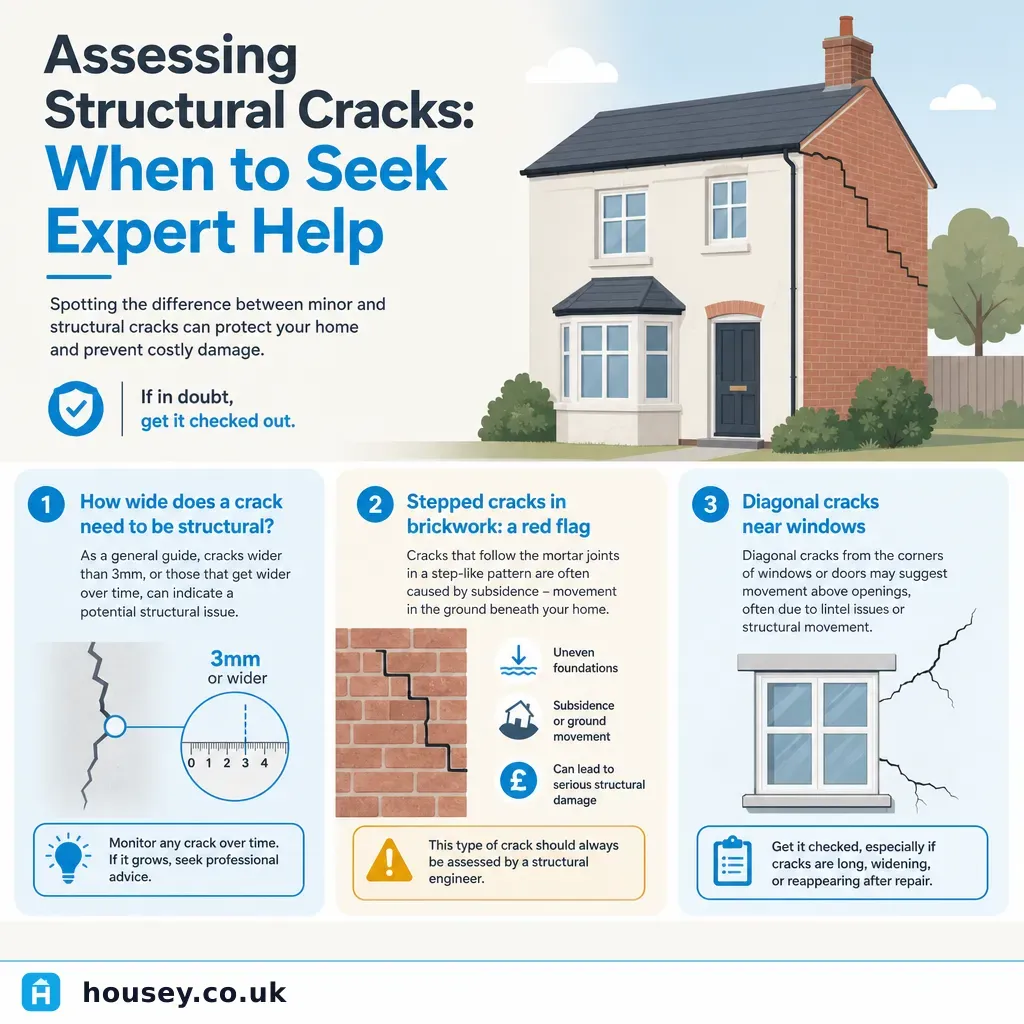
Assessing Structural Cracks: When to Seek Expert Help
Structural cracks range from harmless shrinkage hairlines to signs of subsidence or foundation movement.
 Surveys & Inspections
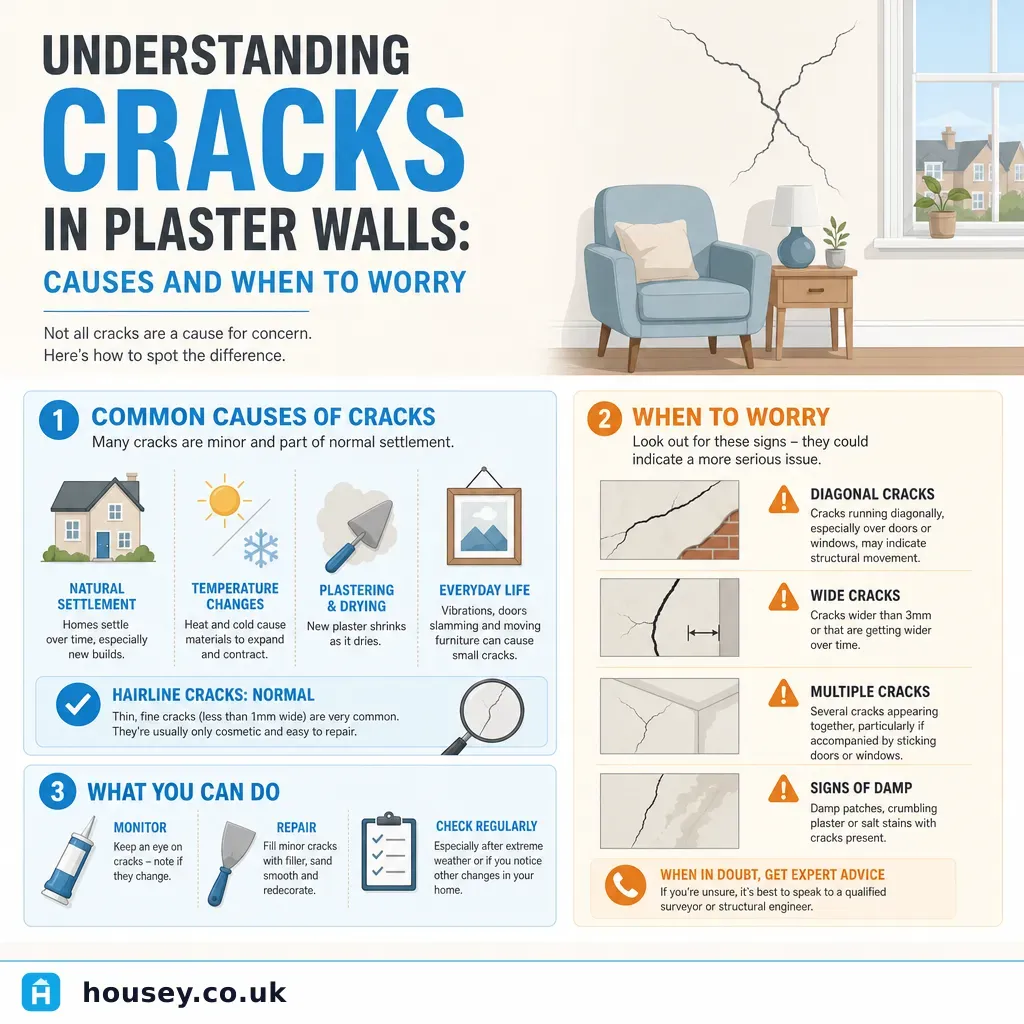
Understanding Cracks in Plaster Walls: Causes and When to Worry
Most hairline plaster cracks are cosmetic, caused by seasonal shrinkage or minor settlement.
 Surveys & Inspections
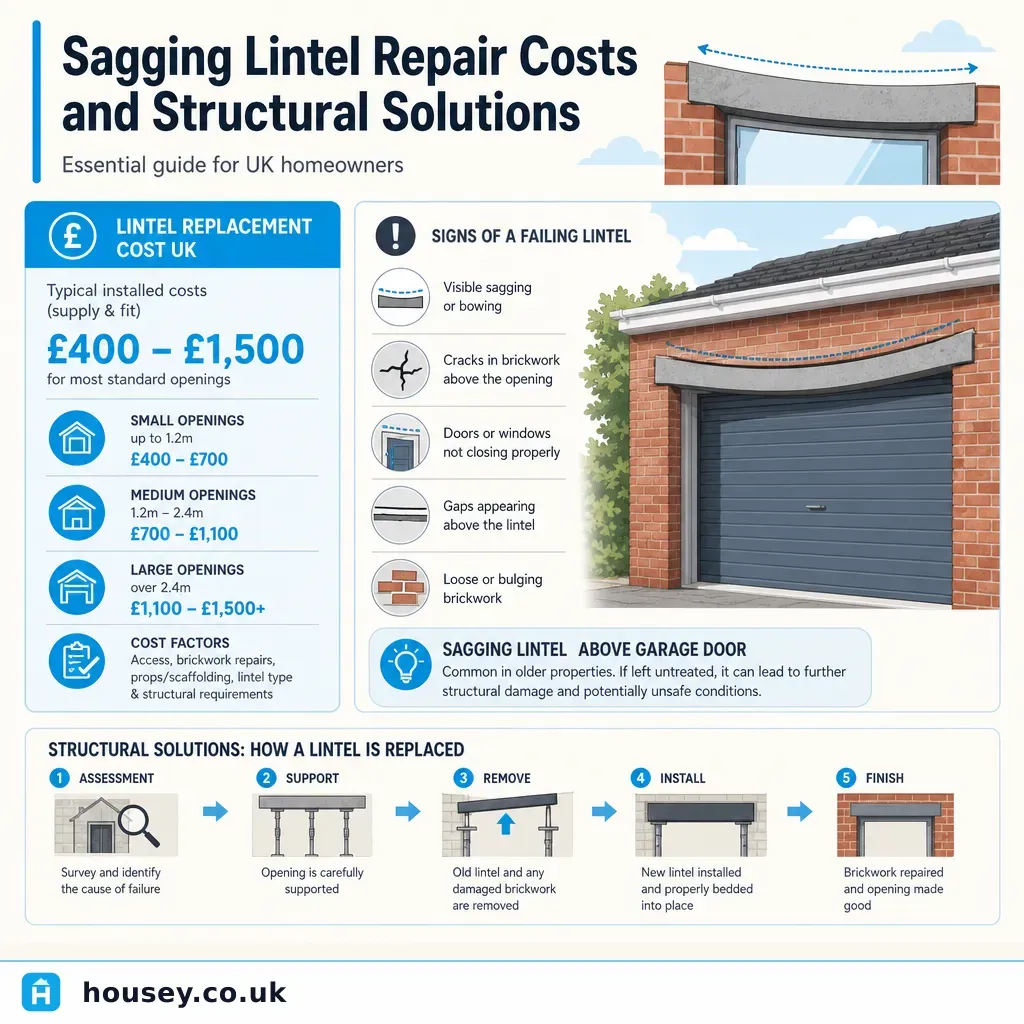
Sagging Lintel Repair Costs and Structural Solutions
A sagging lintel is a structural defect requiring prompt professional assessment.
 Surveys & Inspections
Identifying Unpleasant Odours in Your Home
Unpleasant smells in a UK home often point to damp, mould, a drainage fault, or — in the most urgent cases — a gas leak.
 Surveys & Inspections
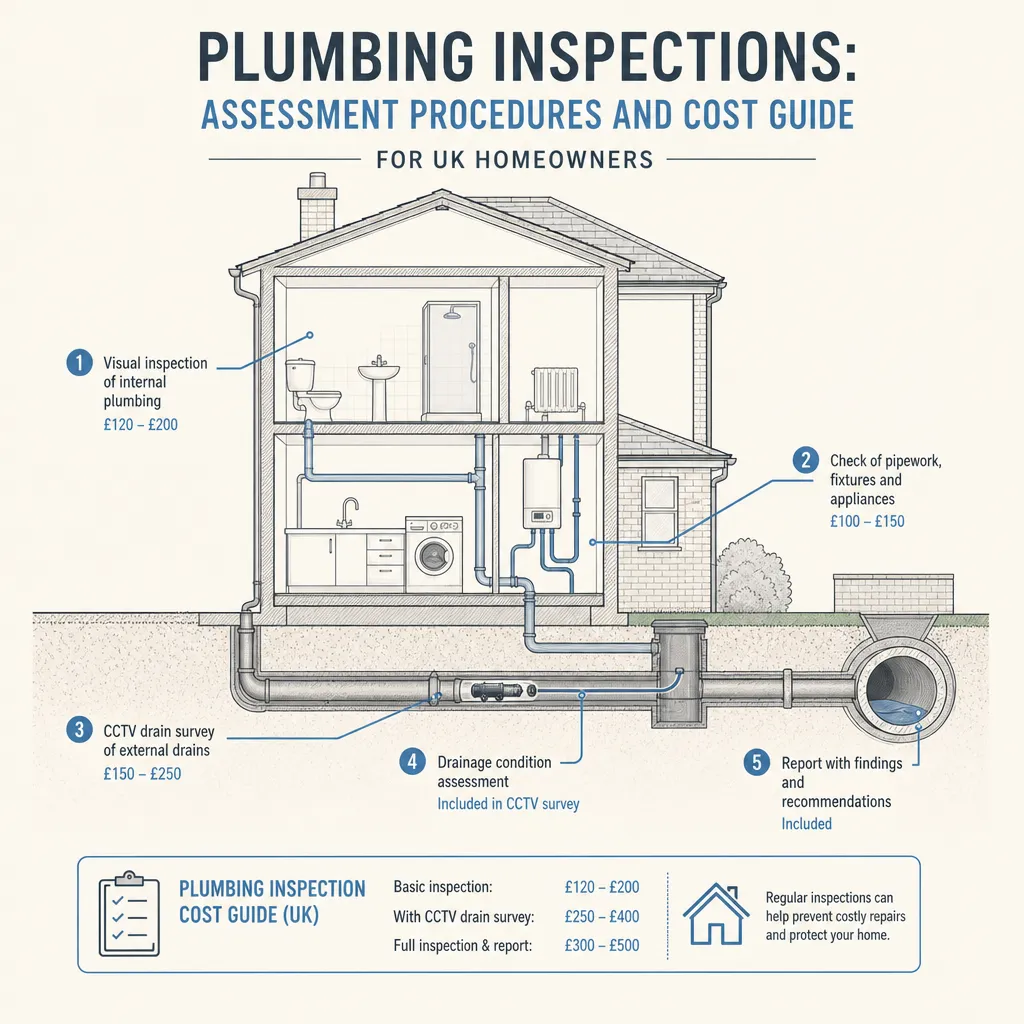
Plumbing Inspections: Assessment Procedures and Cost Guide
A professional plumbing inspection in the UK typically covers water pressure, pipe condition, boiler and hot water systems, and visible drainage.