Understanding Electric Vehicle Charging Safety Risks
By Housey · Last reviewed 11th of May 2026
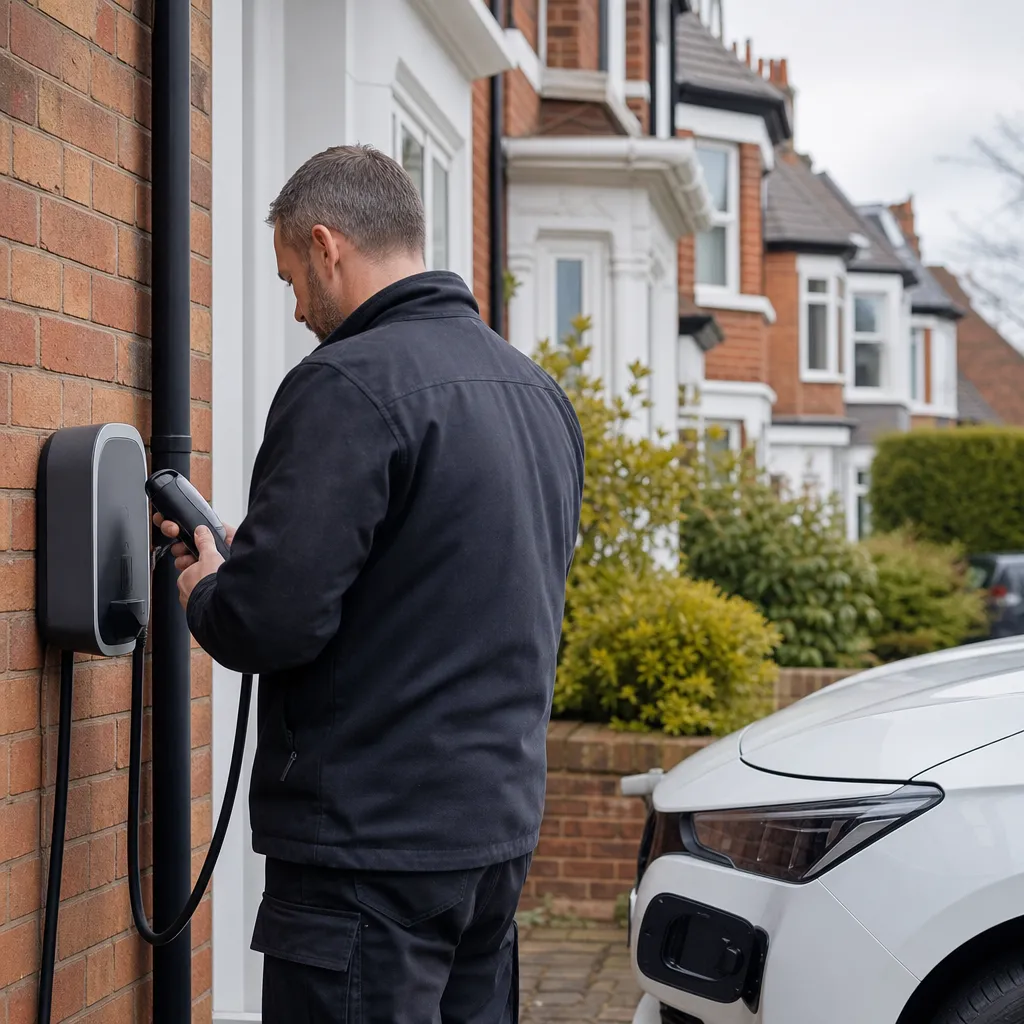
Understanding Electric Vehicle Charging Safety Risks
Home charging is the most common way UK electric vehicle owners top up overnight, and for most people it is uneventful. But as EV ownership grows rapidly across the UK, questions about electrical safety, fire risk, and the gap between convenient and genuinely safe charging have become increasingly important for homeowners to understand. The risks are concentrated around a small number of specific behaviours and installation decisions — and almost all of them are avoidable with the right setup.
Key points
- Using a standard 13-amp 3-pin socket for regular overnight EV charging carries documented fire and electrical overload risks and is not recommended by Electrical Safety First for routine use.
- A dedicated home EV chargepoint (typically 7 kW single-phase) should be installed by a qualified electrician registered with a competent person scheme such as NICEIC or NAPIT.
- The UK Government's Electric Vehicle Chargepoint Grant (administered by OZEV) funds up to £350 towards an eligible home chargepoint — the installer must be OZEV-approved.
- Thermal runaway in lithium-ion battery packs can produce intense, fast-moving fires that are difficult to suppress with standard extinguishers; the National Fire Chiefs Council advises against leaving vehicles charging unattended for extended periods in enclosed domestic garages.
- EV charger installation is notifiable work under Part P of the Building Regulations in England; a registered electrician will issue a BS 7671 Electrical Installation Certificate and notify building control automatically.
What makes home EV charging risky?
The electricity demand of EV charging is unlike most domestic appliances. A 7 kW home chargepoint draws around 30 amps continuously for several hours — a load that a correctly rated dedicated circuit handles without difficulty, but one that can cause overheating, cable degradation, and fire risk if forced through an undersized or ageing circuit.
The main risk factors fall into three categories.
Using the wrong charging equipment
- Standard 3-pin socket (Mode 1 charging): Drawing 10–13 amps for 8–12 hours continuously is beyond what standard domestic socket wiring is designed for over the long term. Heat accumulates in the socket, plug, and cable. Electrical Safety First has documented incidents involving 3-pin socket EV charging, including socket charring and partial failure.
- Extension leads and multi-way adaptors: Extension leads are not rated for sustained high-current loads and present a serious fire and electric shock risk. Never use an extension lead or adaptor for EV charging.
- Unchecked consumer unit capacity: Adding a 7 kW charger to an already heavily loaded consumer unit without assessment can trip the main fuse or, in older installations, overload wiring that does not meet current standards.
Installation by an unqualified person
Part P of the Building Regulations (England) requires that new fixed electrical installations — including EV charger circuits — are carried out by a registered competent person, or notified to building control before work begins. An unregistered installation may use undersized cable, lack adequate earth fault protection, and fail to produce an Electrical Installation Certificate. This can also invalidate home insurance in the event of a fire.
Lithium-ion battery fire risk
EV battery fires are rare but serious. Thermal runaway — a chain reaction within a battery cell that generates intense heat — can be triggered by physical damage, manufacturing defects, or prolonged overcharging. The National Fire Chiefs Council notes that EV fires can reignite hours after apparent suppression and are not effectively tackled with standard fire extinguishers.
Key risk-reduction behaviours:
- Do not leave a vehicle charging unattended overnight in an enclosed garage without working smoke detection in or adjacent to the space.
- Follow the manufacturer's charging guidance; many EVs allow you to cap regular charging at 80% to reduce battery stress.
- Do not charge a vehicle with a damaged, recalled, or recently impacted battery pack without manufacturer guidance.
Red flags: when your charging setup may be unsafe
- You are using a standard 3-pin socket for regular overnight charging sessions.
- The socket, plug, or charger feels warm or hot after a charging session.
- The circuit breaker for the charging circuit trips regularly or unexpectedly.
- The charger was installed by someone who did not provide a signed Electrical Installation Certificate (EIC).
- The charger or cable lacks CE or UKCA marking.
- The garage or charging area has no smoke detector, or the existing detector has not been tested recently.
- You have no way of receiving an alert from the charging area overnight.
The OZEV grant and why approved installation matters
The UK Government's Electric Vehicle Chargepoint Grant provides up to £350 towards a home chargepoint for eligible applicants — homeowners and renters who own or have ordered an eligible EV. The installation must be carried out by an OZEV-approved installer. Current eligibility criteria and a list of approved installers are available on GOV.UK.
The grant effectively enforces a quality baseline: OZEV-approved installers are assessed for competence and are required to install equipment meeting BS EN 62196 (for connectors) and BS 7671 (for wiring). Using an approved installer provides documented assurance that the installation is safe, certified, and properly notified.
Important limitations
This article provides general information about EV home charging safety. It is not a substitute for a technical electrical assessment of your specific property. The risks associated with any individual installation depend on the age and condition of your consumer unit, the capacity of the incoming supply, cable routes, the vehicle model, and the charger being used. A qualified, registered electrician should assess your property before any EV charger is installed.
When this becomes urgent
Seek immediate professional advice if:
- A socket, cable, or charger shows signs of burning, scorching, or melted casing.
- A circuit breaker trips during or after charging and does not reset cleanly.
- You can smell burning from the charging area during or after a session.
- Your vehicle has been involved in a collision and you are uncertain about the condition of the battery.
- You are purchasing a property with an existing EV charger and there is no Electrical Installation Certificate on file.
Call 999 immediately if there is smoke, flames, or the smell of burning from a vehicle or the charging area.
What to ask a qualified professional
Before instructing an electrician to install an EV charger, ask:
- Are you registered with NICEIC, NAPIT, or another recognised competent person scheme for Part P electrical work?
- Are you OZEV-approved, and can I use the Electric Vehicle Chargepoint Grant with your installation?
- Will you carry out a consumer unit assessment before quoting — is there capacity for a dedicated 7 kW circuit?
- What cable specification and route will you use?
- Will I receive a signed Electrical Installation Certificate (EIC) on completion?
- Does the installation include any additional earthing arrangements if the property supply is TT earthed?
- What smart charging features are available — can the charger integrate with off-peak tariffs to reduce running costs?
When to get professional help
A qualified installer should always carry out the fixed chargepoint circuit — this is notifiable work under Part P of the Building Regulations and carries serious safety implications if done incorrectly. Use a qualified EV charger installer registered with NICEIC, NAPIT, or another UKAS-accredited competent person scheme.
If you are currently using a 3-pin socket for regular overnight charging, arrange an assessment sooner rather than later. The risks are manageable once a proper dedicated installation is in place, but a standard domestic socket is not suitable for routine, long-duration charging.
How Housey can help
Housey connects UK homeowners with vetted, OZEV-approved qualified EV charger installers. Getting quotes through Housey means you can compare registered professionals, verify their credentials, and receive a signed Electrical Installation Certificate once work is complete.
Frequently asked questions
Is it safe to charge an EV with a 3-pin plug occasionally?
For occasional, supervised use — topping up from a low charge rather than a full overnight session — the risk is lower than regular overnight charging. The concern is sustained high-current draw over many hours. Electrical Safety First's guidance is that a dedicated chargepoint is the safer option for any routine home charging, regardless of how frequently the vehicle is charged.
Does a home EV charger need building regulations approval?
Yes, in England. Installing a dedicated EV charger circuit is notifiable work under Part P of the Building Regulations. A registered competent person (NICEIC, NAPIT, etc.) can self-certify the work and notify building control on your behalf, issuing an Electrical Installation Certificate. Using an unregistered installer requires the homeowner to notify local building control before work begins.
Can I charge an EV in a garage overnight safely?
Yes, provided the charger is correctly installed, the garage has working smoke detection, and the vehicle does not have a known battery issue or recent impact damage. The National Fire Chiefs Council advises smoke detection in or adjacent to any space where an EV charges regularly. Avoid leaving a charging vehicle in an integral attached garage without any alert in place overnight.
How long does a home EV charger installation take?
A typical 7 kW home charger installation takes 2–4 hours for an experienced electrician, assuming a straightforward cable route from the consumer unit. Indicative UK costs for supply and installation range from approximately £800–£1,200 all-in, varying by region, charger model, and consumer unit condition. If the OZEV grant applies, this reduces the net cost by up to £350. Indicative UK costs, last reviewed 2026-05-11.
Sources and further reading
- Electric Vehicle Chargepoint Grant — GOV.UK — eligibility, approved installers, and application process for the OZEV grant
- EV charging at home — Electrical Safety First — safety guidance on domestic EV charging equipment and incident data
- Electric vehicle fire guidance — National Fire Chiefs Council — fire risk mitigation and operational guidance for EV fires
- Find a qualified electrician — NICEIC — UKAS-accredited competent person scheme for electrical installers in the UK
- Part P — electrical safety in dwellings — Planning Portal — overview of notifiable electrical work under Building Regulations in England
Useful next reads
 Energy & Retrofit
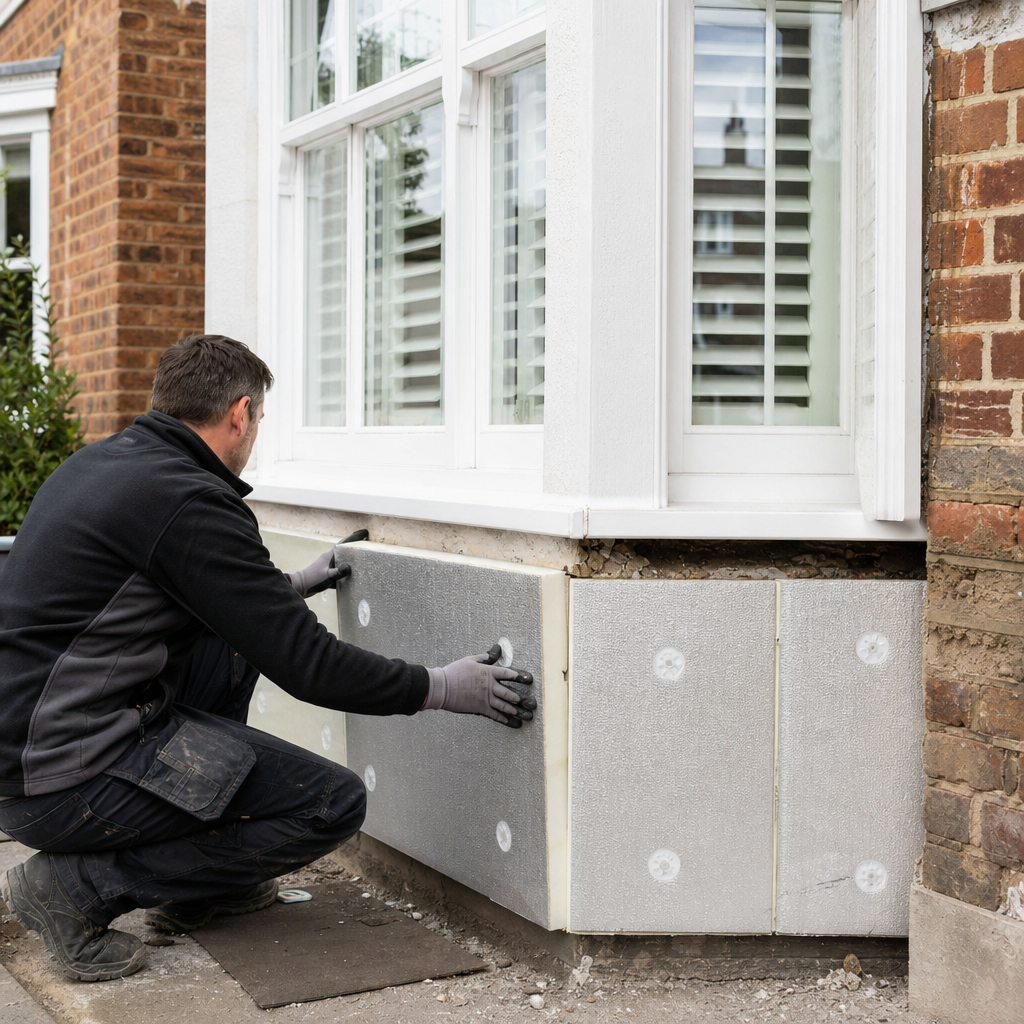
Insulating Solid Masonry Walls Under Bay Windows: Technical Guidance
Insulating solid masonry walls under bay windows requires specialist detailing at angled wall faces, window reveals, and the bay floor and ceiling junctions.
 Energy & Retrofit
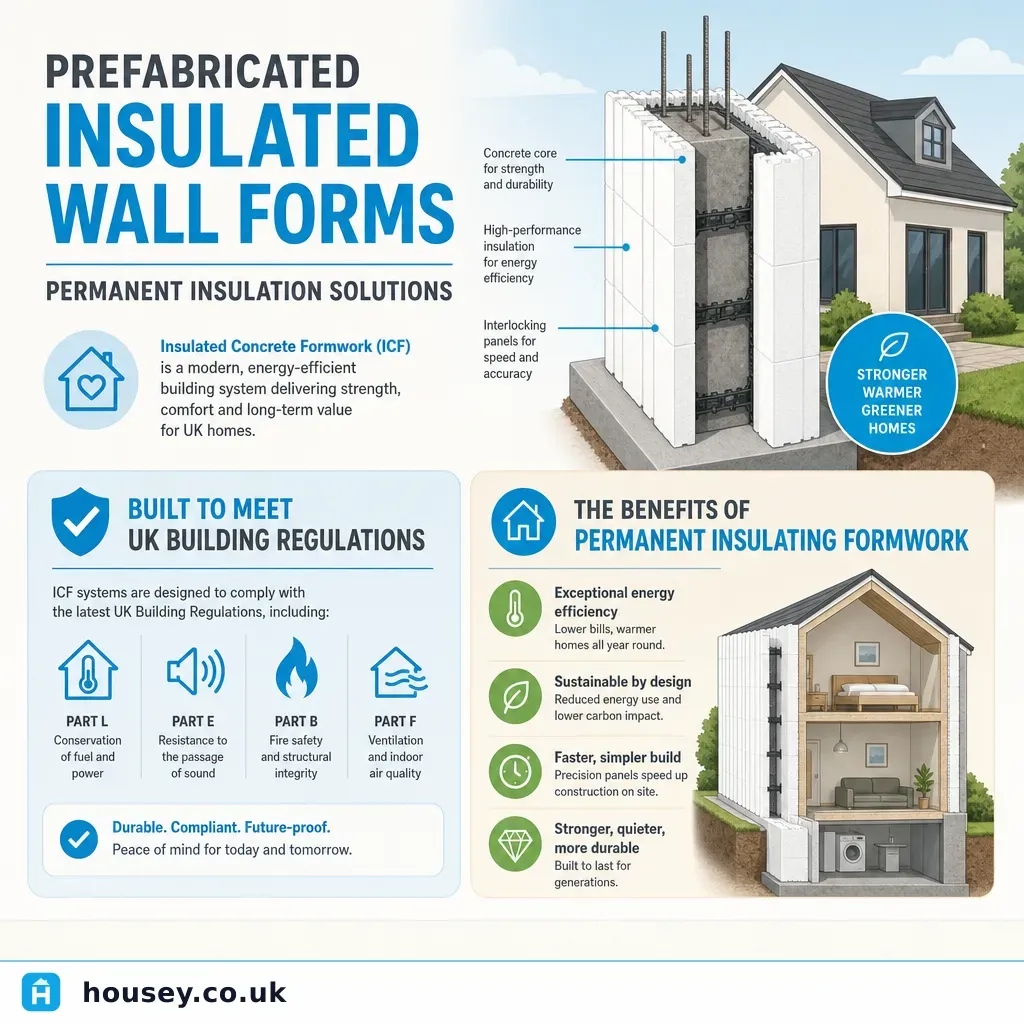
Prefabricated Insulated Wall Forms: Permanent Insulation Solutions
Prefabricated insulated wall forms — including ICF and SIPs systems — deliver high thermal performance by combining permanent insulation with structural concrete or timber in a single wall assembly.
 Energy & Retrofit
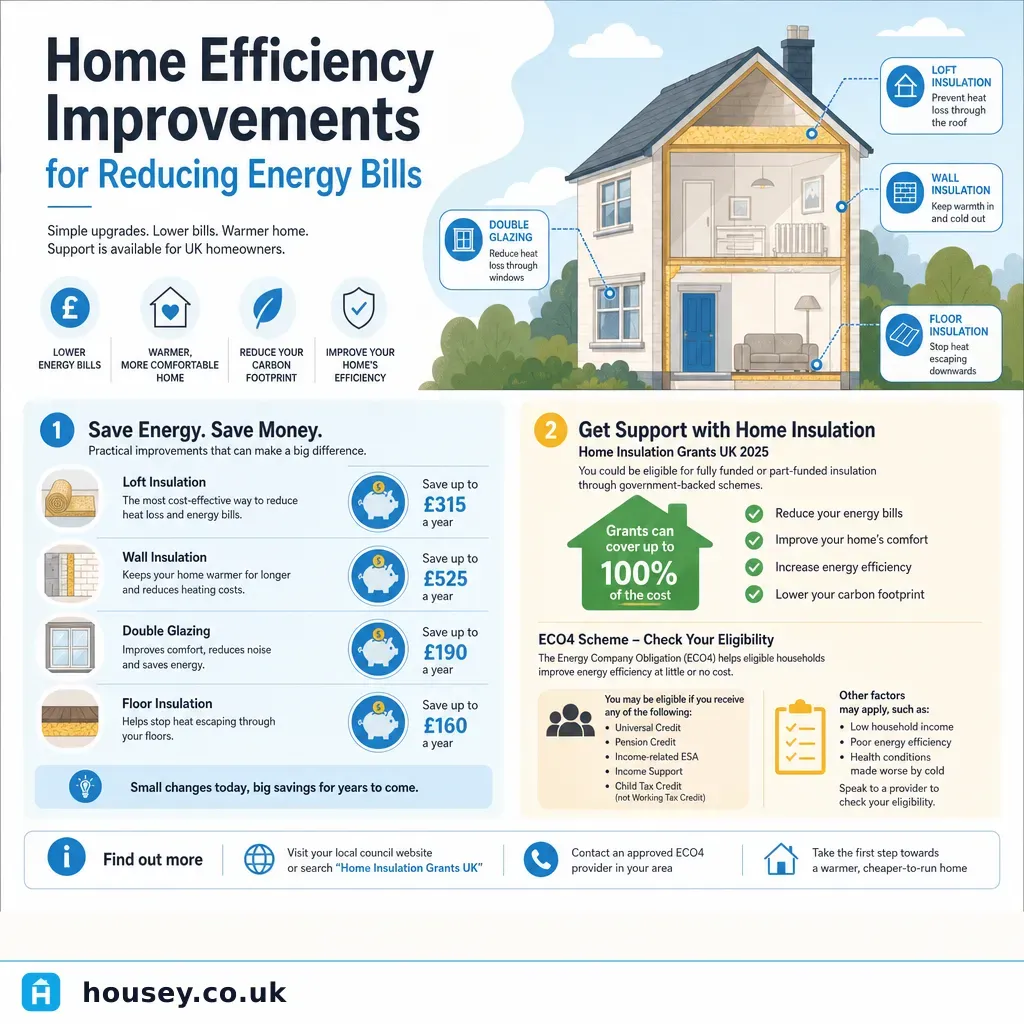
Home Efficiency Improvements for Reducing Energy Bills
The most cost-effective UK home efficiency improvements are usually loft insulation, cavity wall insulation, draught-proofing, and upgrading heating controls.
 Energy & Retrofit
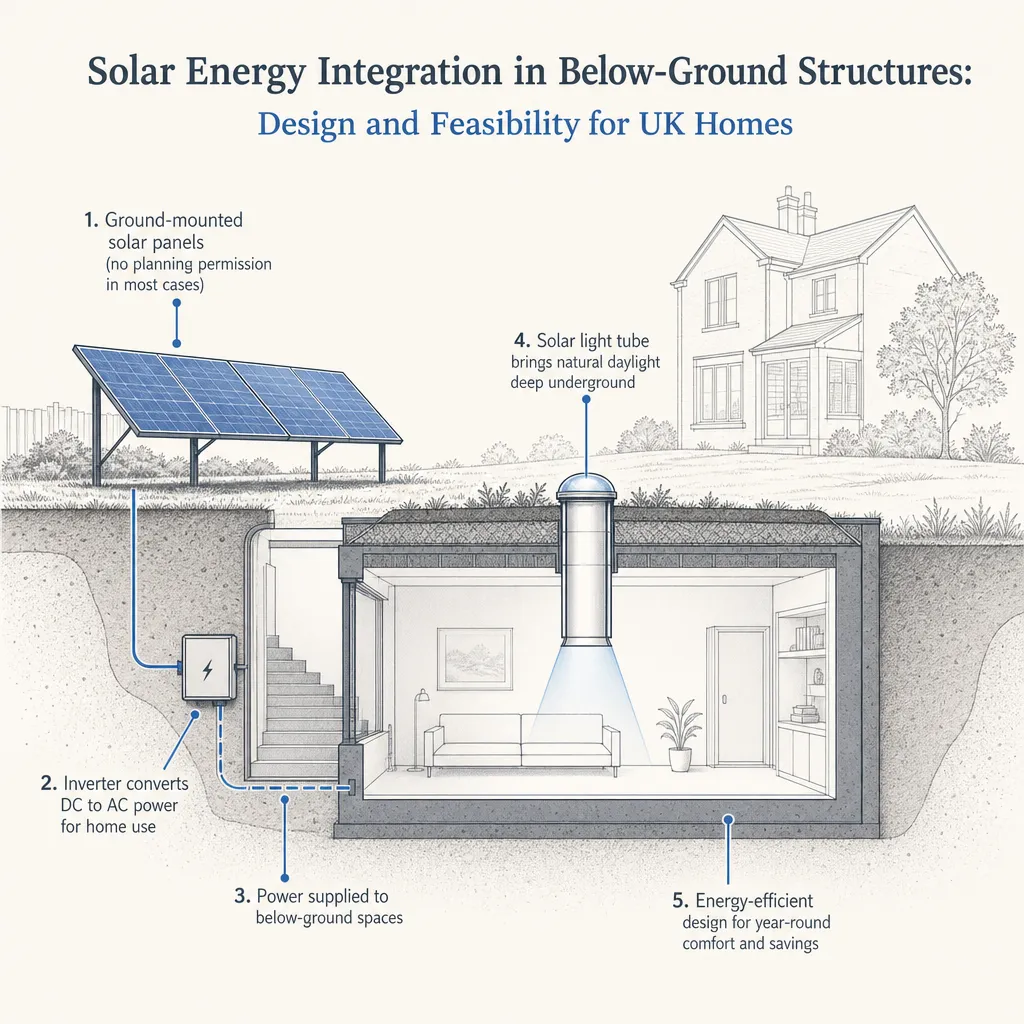
Solar Energy Integration in Below-Ground Structures: Design and Feasibility
Below-ground structures cannot host solar panels on their own roofs but can use surface-mounted panels connected via cable runs, solar light tubes for daylighting, and battery storage.
 Energy & Retrofit
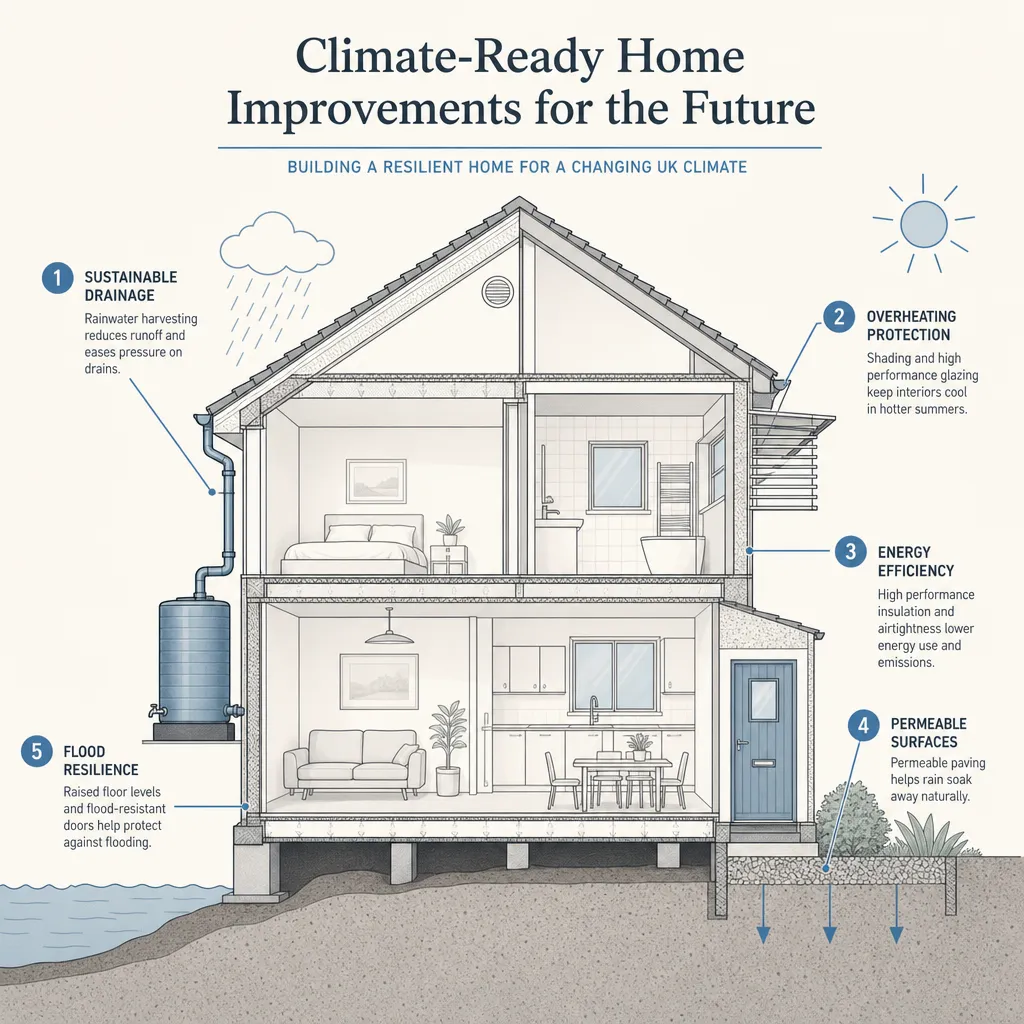
Climate-Ready Home Improvements for the Future
Climate-ready home improvements tackle four main risks for UK properties: overheating, increased rainfall and flooding, storm damage, and energy cost volatility.