Understanding Pest Control Service Costs in the UK
By Housey · Last reviewed 30th of May 2026
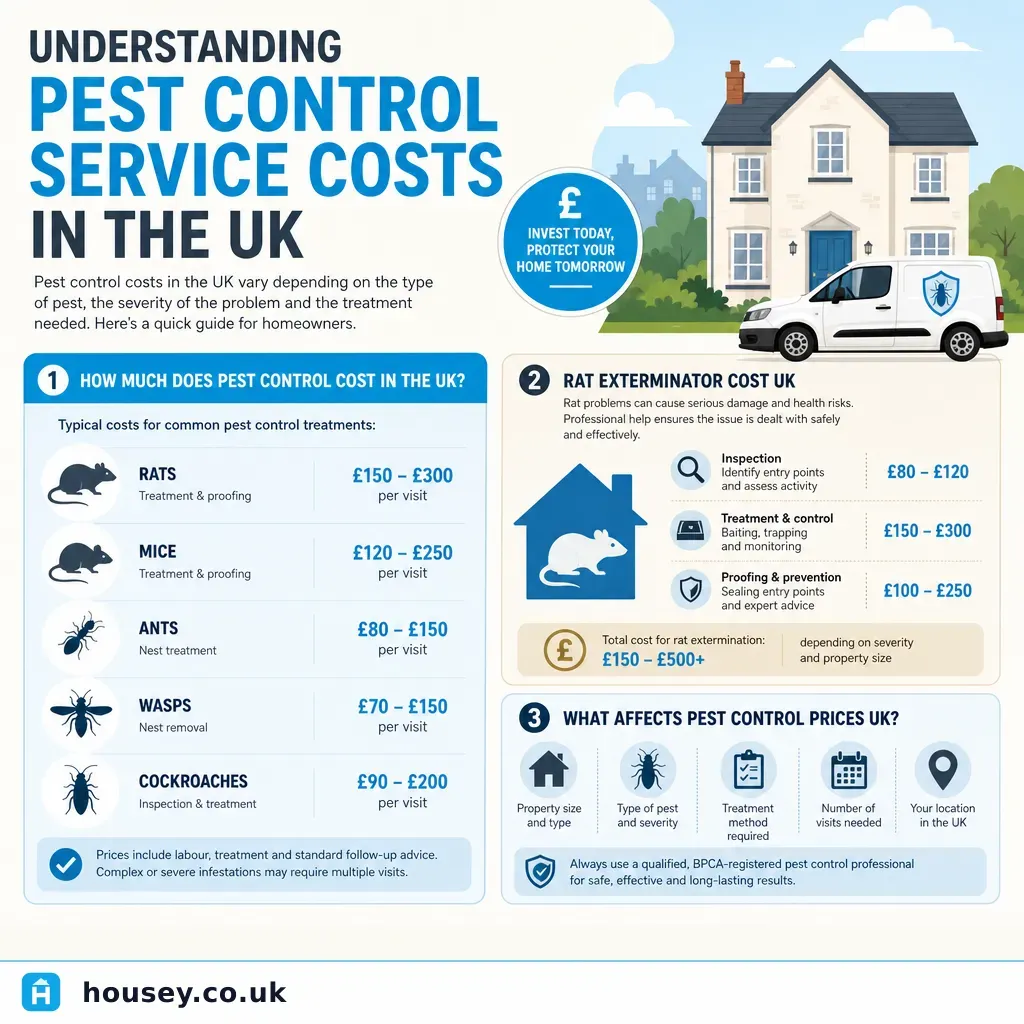
Understanding Pest Control Service Costs in the UK
When a pest problem arises — whether mice in the kitchen, a wasp nest in the eaves, or a suspected rat burrow along the garden wall — most homeowners want to know what professional treatment will cost before calling anyone out. Pest control pricing in the UK varies substantially depending on the pest type, property size, severity of infestation, contractor type, and location. Getting a realistic picture of cost ranges before you call around helps you assess quotes fairly, identify whether a quote covers the full scope of work needed, and avoid choosing a contractor solely on headline price.
Key points
- Pest control in the UK is not a licensed or regulated profession — anyone can offer pest services without mandatory qualifications. British Pest Control Association (BPCA) membership and a Royal Society for Public Health (RSPH) Level 2 Award in Pest Management are the principal quality indicators to check.
- Many English councils still offer pest control at subsidised rates, sometimes free for rats, under the Prevention of Damage by Pests Act 1949 — but provision varies widely by authority and some councils have withdrawn the service in recent years.
- Most reputable pest controllers require at least two visits for an active infestation: an initial treatment and a follow-up to assess effectiveness and apply further measures if needed. A single-visit quote for a moderate infestation should be questioned.
- VAT at 20% may or may not be included in quoted prices — always confirm before accepting a quote.
- Pest control costs cover the infestation only and do not include structural repairs, professional cleaning, or remediation of any associated property damage such as gnawed cables or moisture-damaged timbers.
What drives pest control costs?
Prices vary because pest control is not a fixed-price commodity service. The principal cost drivers are:
Pest type — some pests are far faster and simpler to treat than others. A single wasp nest treated in under an hour costs significantly less than a multi-location rat infestation requiring bait stations, repeated visits, and entry-point identification.
Property size — larger properties may have more harbourage points, a greater number of infestation sites, or a larger floor or surface area to treat.
Severity and duration — a recent, localised infestation needs fewer visits than one that has spread across a building or been present for several months.
Treatment method — standard insecticide sprays and bait applications cost less than specialist approaches such as heat treatment for bed bugs or fumigation, which require specialist equipment and homeowner preparation.
Location — contractors in London and the South East generally charge more than those in other UK regions, reflecting higher business operating costs.
Number of visits — most effective treatments involve two to three visits; some pest control contracts cover four or more.
Proofing and exclusion work — identifying and permanently sealing entry points is often priced separately from treatment, but is essential to prevent reinfestation and may add meaningfully to the overall cost.
Indicative cost ranges by pest type
Indicative UK costs, last reviewed 2026-05-30. Figures represent typical contractor rates; actual quotes will vary by location, property, severity, and contractor. Always request itemised quotes.
Pest | Typical price range | Visits usually included | Notes |
|---|---|---|---|
House mouse | £80–£200 per visit | 2–3 visits | Baiting or trapping; proofing often priced separately |
Rat | £90–£250 per visit | 2–3 visits | May include basic proofing; council service may be cheaper or free |
Wasp nest | £45–£120 | Usually 1 | Ground-level nests cheaper than roof or soffit locations |
Bed bugs | £200–£600+ per treatment | 2–3 treatments | Heat treatment significantly more; requires homeowner preparation |
Cockroaches | £100–£300 per visit | 2–3 visits | Gel bait application; commercial properties often higher |
Fleas | £80–£200 per treatment | 1–2 treatments | Homeowner preparation required before technician visit |
Grey squirrel | £100–£250 | 1–2 visits | Lethal trapping standard under Wildlife and Countryside Act 1981 |
Ants (household) | £60–£150 | 1–2 visits | Recurrence common; surface treatments may need repeating |
Woodworm | £150–£500+ | Usually 1 treatment visit | Often priced per m²; survey to confirm extent advisable first |
Council pest control versus private contractor
Some English councils still offer pest control at subsidised rates or free of charge, particularly for rats, reflecting the statutory duty under the Prevention of Damage by Pests Act 1949. However, provision has contracted significantly and varies considerably by local authority area.
Option | Typical cost | Coverage | Practical considerations |
|---|---|---|---|
Local council | Free to £70 (varies by authority) | Rats most commonly; other pests vary | May have waiting lists; check your council website for current availability |
Private BPCA-member contractor | £80–£300+ per visit | All pest types | Faster scheduling; accountability via BPCA code of conduct |
National franchise | Higher initial cost typical | All pest types | Standardised service; useful where written documentation is required |
Independent sole trader | Variable | Varies | Check qualifications carefully; may not hold professional body membership |
What a pest control quote should include
Use this checklist to compare quotes before committing to any contractor:
- What specific treatment method will be used, and why is it recommended for this pest and property?
- How many visits are included in the quoted price?
- What qualifications does the attending technician hold — BPCA membership, RSPH Level 2 Award in Pest Management, BASIS PROMPT registration?
- Will proofing (sealing entry points) be included, or is it priced separately?
- What guarantee or warranty is offered, and for how long does it apply?
- What preparation do I need to carry out before the visit — and is there a charge if preparation has not been completed?
- What happens if treatment is unsuccessful — is a return visit included in the price?
- Is VAT included in the quoted figure?
- Will a written treatment record or certificate be provided?
- Are there any materials, disposal fees, or call-out charges not covered by the quoted price?
What pest control costs do not cover
A treatment fee covers addressing the active infestation — it does not include:
- Structural repairs to entry points such as masonry, soffits, air bricks, or pipe penetrations
- Electrical inspection and cable repair where gnawing is suspected
- Plumbing inspection or repair if pipework has been damaged
- Professional cleaning and disinfection of contaminated food storage areas, water tanks, or surfaces
- Replacement of gnawed or contaminated loft or underfloor insulation
- Timber treatment or repair where fungal decay has accompanied the infestation
If you suspect that a rodent infestation has caused structural or moisture-related damage to your property, commission a professional building inspection separately — a pest controller is qualified to treat the infestation, not to assess load-bearing capacity or diagnose moisture ingress.
When to get professional help
Always use a qualified pest professional rather than relying solely on DIY products if:
- The infestation is active and you cannot access or identify the source
- The pest is within a wall cavity, loft void, or sub-floor space
- Rats are involved, given the health risks of Weil's disease (leptospirosis) from contaminated surfaces
- Any member of the household is elderly, very young, or immunocompromised
- An infestation has persisted despite repeated DIY treatment
- You are a landlord with obligations under the Homes (Fitness for Human Habitation) Act 2018
How Housey can help
Housey helps UK homeowners find and compare local professionals for a range of property services. If a pest problem has also caused structural or moisture-related damage to your property, Housey can connect you with qualified surveyors for follow-up inspections. Use Housey to request and compare quotes from professionals in your area before committing to any contractor.
Frequently asked questions
Is pest control covered by home insurance?
Most standard home insurance policies do not cover pest control costs or damage caused by pests. Some specialist landlord or home emergency policies include basic rodent control, but limits and exclusions vary widely. Check your policy documents carefully and contact your insurer directly to confirm what is covered before assuming any costs will be reimbursed.
How long does pest control treatment take to work?
This depends on the pest and method. Wasp nests typically die within 24–48 hours of treatment. Rodent infestations usually require two to three visits over two to four weeks as bait is consumed. Bed bug heat treatment achieves results in a single session. Cockroach gel baiting typically shows results within one to two weeks but often needs a follow-up visit.
Do I need to leave my home during pest control treatment?
For most treatments — rodenticide baiting, spray, or gel bait application — you can remain in the property, though brief ventilation after spraying is often recommended. Heat treatment for bed bugs requires all occupants to vacate for several hours. Your pest controller should provide specific preparation instructions in advance of the visit.
How do I verify a pest controller's qualifications?
Recognised quality indicators include BPCA (British Pest Control Association) membership, RSPH Level 2 Award in Pest Management, BASIS PROMPT professional register, and TrustMark registration. Ask for evidence of these accreditations before instructing any contractor. The BPCA website provides a member search tool to verify current membership independently.
Sources and further reading
- Find a BPCA member pest controller — British Pest Control Association
- Prevention of Damage by Pests Act 1949 — legislation.gov.uk
- Leptospirosis (Weil's disease) — Health and Safety Executive
- Wildlife and Countryside Act 1981 — legislation.gov.uk
- TrustMark — find a registered firm — TrustMark
Useful next reads
 Improvement & Build
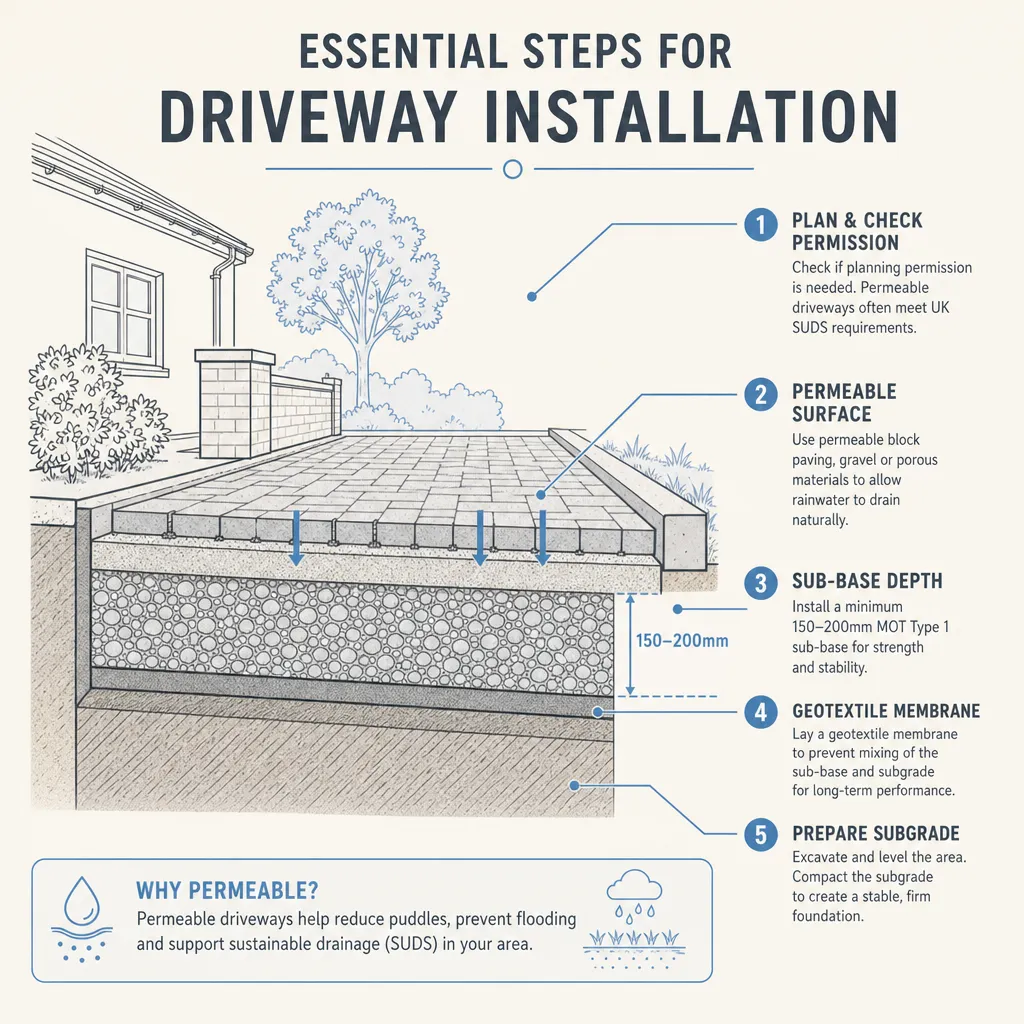
Essential Steps for Driveway Installation
Installing a driveway in England requires planning permission only when using an impermeable surface (standard tarmac, concrete, or block paving) on a front garden area over 5 m².
 Improvement & Build
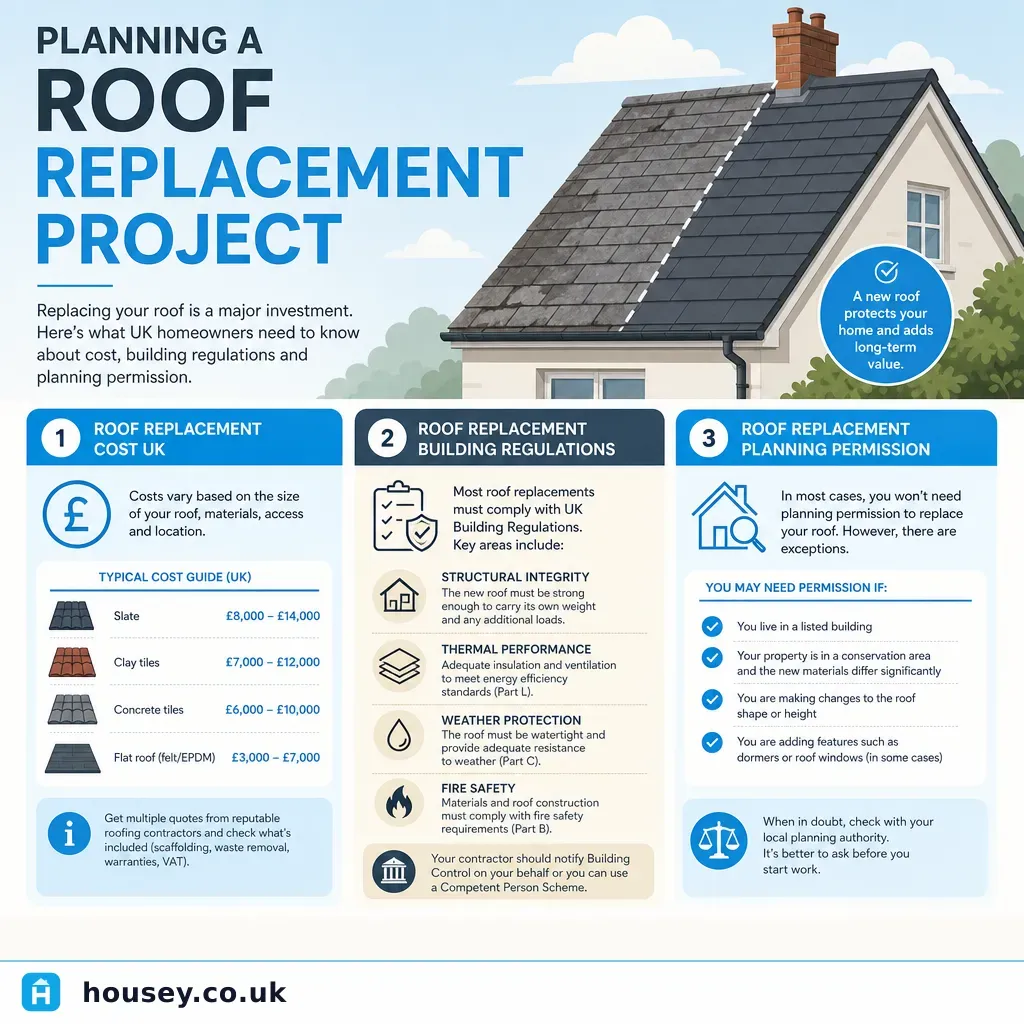
Planning a Roof Replacement Project
A roof replacement project involves stripping the existing covering, renewing the sarking felt and battens, and laying new tiles, slates, or a flat-roof membrane.
 Improvement & Build
Selecting and Hiring a Remodelling Contractor
Hiring a remodelling contractor starts with a written scope of works and a shortlist of at least three companies registered with TrustMark or the Federation of Master Builders.
 Improvement & Build
Garden Pest Management: Homeowner's Essential Guide
Common UK garden pests include slugs, aphids, vine weevil, and lily beetle.
 Improvement & Build
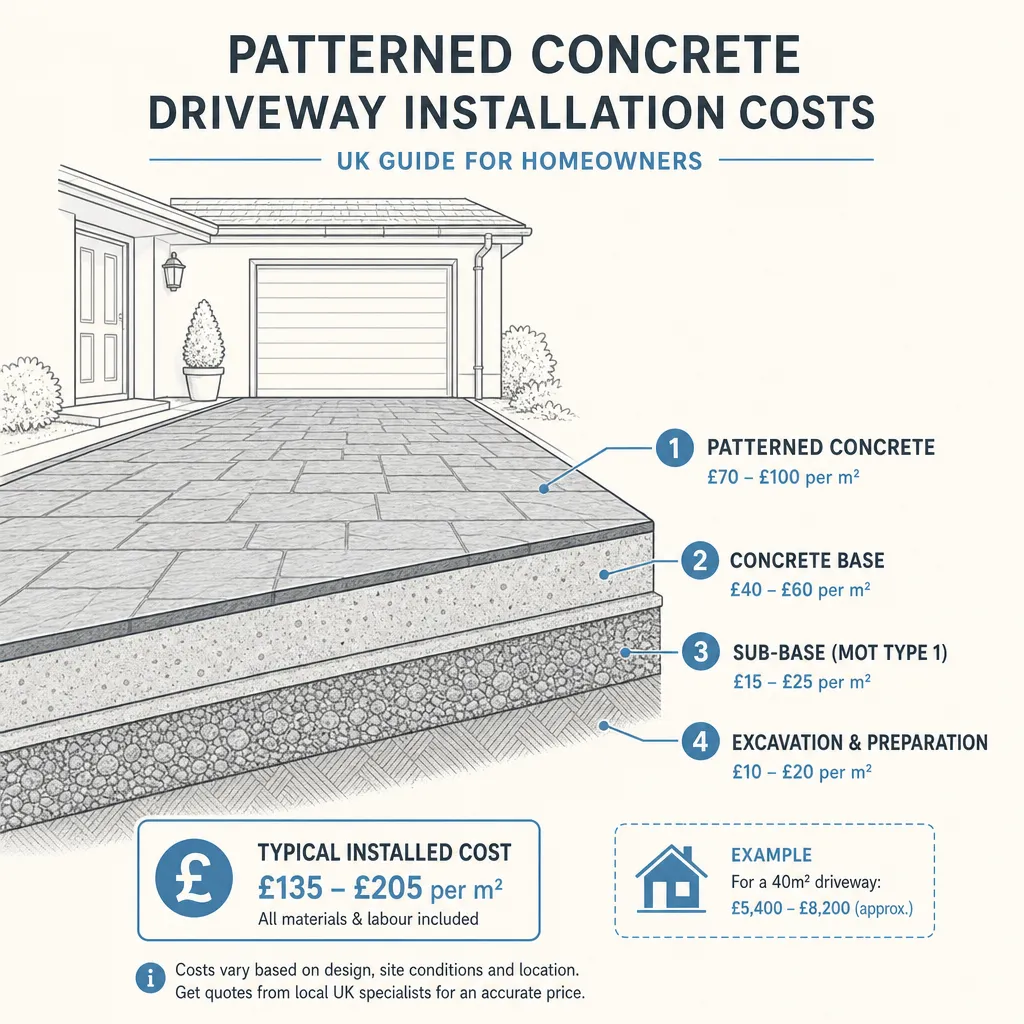
Patterned Concrete Driveway Installation Costs
A patterned concrete driveway in the UK typically costs £50–£120 per square metre installed, depending on pattern complexity, site preparation, and driveway size.