Understanding replacement cycles for household systems and building components
By Housey · Last reviewed 30th of May 2026

Understanding replacement cycles for household systems and building components
Planning ahead for component replacement is one of the most effective ways UK homeowners can manage long-term maintenance costs. The question typically arises when buying a property, commissioning a survey, or preparing a five- or ten-year home improvement budget. Knowing when major systems are likely to need replacing — rather than waiting for failure — helps avoid emergency expenditure and can inform price negotiations during a purchase.
Key points
- Gas boilers installed after 2005 must be condensing models under Building Regulations and typically last 10–15 years with annual servicing by a Gas Safe registered engineer.
- Flat roofs using felt or bitumen membranes generally last 20–25 years; GRP (fibreglass) and cold-applied liquid systems may reach 25–30 years before replacement is needed.
- UPVC windows and doors typically last 20–25 years before seals, frames, or multipoint locking mechanisms begin to fail; timber windows maintained with repainting every 5–7 years can last 50 years or more.
- Unvented hot water cylinders have a typical working life of 20–30 years; expansion vessels and temperature-and-pressure relief valves require annual checking as part of the manufacturer service regime.
- PVC-insulated electrical wiring installed after the 1970s typically has a 25–35 year lifespan; older rubber-insulated (TRS) or lead-sheathed wiring may require immediate assessment regardless of age.
Major building fabric: roofs, walls, and structure
Building fabric components tend to have the longest lifespans but also the highest replacement costs. Timing depends on material choice, maintenance history, and local exposure to weather.
Component | Typical lifespan | Key variables |
|---|---|---|
Pitched tiled roof (clay or concrete) | 50–80 years | Tile condition, batten and felt age, roof ventilation |
Pitched slate roof (natural Welsh slate) | 80–150 years | Nail fatigue ("nail sickness"), sarking board condition |
Flat roof (felt or bitumen) | 20–25 years | Drainage quality, ponding water, UV degradation |
GRP (fibreglass) flat roof | 25–30 years | Joint and ridge integrity, topcoat condition |
Masonry cavity wall ties (mild steel) | 40–60 years | Shorter lifespan in coastal or exposed locations; pre-1981 properties at higher risk |
External sand and cement render | 20–30 years | Adhesion, cracking pattern, substrate movement |
Indicative UK guidance, last reviewed 2026-05-30. Actual lifespan depends on installation quality, ongoing maintenance, and local exposure conditions.
Signs the building fabric may need attention sooner than expected:
- Missing, slipped, or cracked tiles or slates
- Damp patches or tide-mark staining on ceilings close to the roof level
- Stepped or diagonal cracking in render or brickwork, which may indicate wall tie failure or structural movement
- Horizontal cracking at regular storey-height intervals in a cavity masonry wall — a potential indicator of tie failure
Building services: heating, hot water, and plumbing
Heating and plumbing systems are among the most frequent sources of unplanned expenditure in UK homes.
Boilers and heating controls
A well-serviced condensing boiler should reach 12–15 years; some manufacturers cite up to 20 years for premium models under full service agreements. Key milestones include annual service by a Gas Safe registered engineer, magnetic filter cleaning every 1–3 years, and heat exchanger inspection in hard-water areas such as the South East.
Thermostatic radiator valves (TRVs) and motorised zone valves typically last 10–15 years. Smart thermostats and programmable controls generally have a useful life of 7–12 years.
Hot water systems
System type | Typical lifespan | Notes |
|---|---|---|
Vented copper hot water cylinder | 20–25 years | Immersion heater elements: 5–10 years |
Unvented cylinder (megaflo-style) | 20–30 years | Annual pressure and safety valve check required |
Combi boiler domestic hot water section | Same as boiler | Scaling can shorten effective life in hard-water areas |
Solar thermal evacuated tube collectors | 20–25 years | Antifreeze condition and collector integrity need periodic checking |
Plumbing pipework
Copper pipework in clean mains water supplies typically lasts 40–70 years. Lead pipework should be replaced regardless of age in line with Water Supply (Water Fittings) Regulations 1999 guidance. Plastic push-fit joints in older installations (pre-2000) may benefit from inspection as connectors and manifolds age.
Windows, doors, and internal finishes
Windows and external doors
Building Regulations Part L requires replacement glazing in England to achieve a minimum whole-window U-value of 1.4 W/m²K (or a minimum energy rating of Band C under the BFRC scheme). This requirement applies regardless of the age of the window being replaced.
Homeowner window replacement checklist:
Kitchens and bathrooms
Kitchen installations typically last 15–25 years depending on build quality and use; bathroom suites 20–30 years. Cabinet carcasses often outlast door fronts, worktops, and taps — partial refurbishment is frequently more economical than a full strip-out.
Electrical installations
Wiring type or era | Approximate installation period | Recommended action |
|---|---|---|
Lead-sheathed wiring | Pre-1950s | Replace immediately — significant safety risk |
Rubber-insulated (TRS) wiring | 1950s–1960s | Assess and replace — rubber becomes brittle and cracks with age |
PVC-insulated (early generation) | 1960s–1970s | EICR assessment recommended; approaching end of useful life |
PVC-insulated (modern) | Post-1980 | 25–35 year typical life; EICR every 10 years or on change of occupancy |
Consumer units with rewirable fuses | Pre-1990s | Consider replacement — modern RCDs and RCBOs provide significantly improved protection |
An Electrical Installation Condition Report (EICR) assesses the existing installation against current BS 7671 standards and identifies any remedial work required.
Planning your replacement budget
Building a rolling 5- and 10-year forecast around estimated component ages gives homeowners a practical framework for managing capital expenditure before it becomes urgent.
5-year replacement planning checklist:
A condition survey — particularly a RICS Level 2 or RICS Level 3 survey — provides an independent professional assessment of current condition and identifies components likely to need attention within the next five to ten years, making it especially valuable at the point of purchase.
When to get professional help
Not all maintenance decisions can be made from a checklist. Seek professional assessment when:
- You are buying a property and want an independent view of remaining component life, particularly for roofs, heating systems, and electrical installations.
- A RICS surveyor has flagged an item requiring further specialist investigation.
- You suspect structural defects in walls, foundations, or lintels beyond surface cracking.
- The property is pre-1919 construction, listed, or within a conservation area, where standard maintenance approaches may need adapting.
- A mortgage lender has raised a concern about condition following a valuation.
How Housey can help
If you are buying a home or assessing an existing property, a RICS home survey gives you an independent professional view of the condition of major components and identifies systems approaching end of life. Where a formal market valuation is also needed, a valuation survey can combine both assessments. Use Housey to compare quotes from RICS-qualified surveyors in your area.
Frequently asked questions
How long does a boiler last in a UK home?
A condensing boiler (mandatory in new installations since 2005) typically lasts 10–15 years with annual Gas Safe servicing. Older non-condensing boilers are likely past their expected working life. Manufacturer warranties vary from 2 to 10 years depending on brand and registration; extended warranties and service plans are available from some manufacturers and energy suppliers.
When should I replace the roof on a UK property?
Pitched roofs with clay or concrete tiles generally last 50–80 years, but underlay, battens, and any flat-roof sections will need attention sooner. A professional inspection every 5–10 years — or after significant storm damage — helps identify slipped tiles, failing flashings, or batten deterioration before water ingress occurs. Flat roof felt or bitumen sections typically need replacement every 20–25 years.
Do I need planning permission to replace windows in the UK?
In most cases, replacing like-for-like windows in a standard residential property is permitted development and does not require planning permission. If the property is listed or within a conservation area, Listed Building Consent or planning permission may be required. Always check with your local planning authority before ordering replacements if you are unsure of the property's designation.
What triggers an EICR on a residential property?
For owner-occupiers there is no statutory requirement on a fixed schedule, but BS 7671 recommends an EICR every 10 years or on change of occupancy. For private landlords in England, an EICR is legally required every 5 years under the Electrical Safety Standards in the Private Rented Sector (England) Regulations 2020. Buyers should request any existing EICR documentation when purchasing a property.
Sources and further reading
- Building Regulations Approved Document L: Conservation of Fuel and Power — GOV.UK
- Electrical Safety Standards in the Private Rented Sector (England) Regulations 2020 — legislation.gov.uk
- Water Supply (Water Fittings) Regulations 1999 — legislation.gov.uk
- RICS Home Surveys — RICS
- Heating your home: quick tips to save energy — Energy Saving Trust
Useful next reads
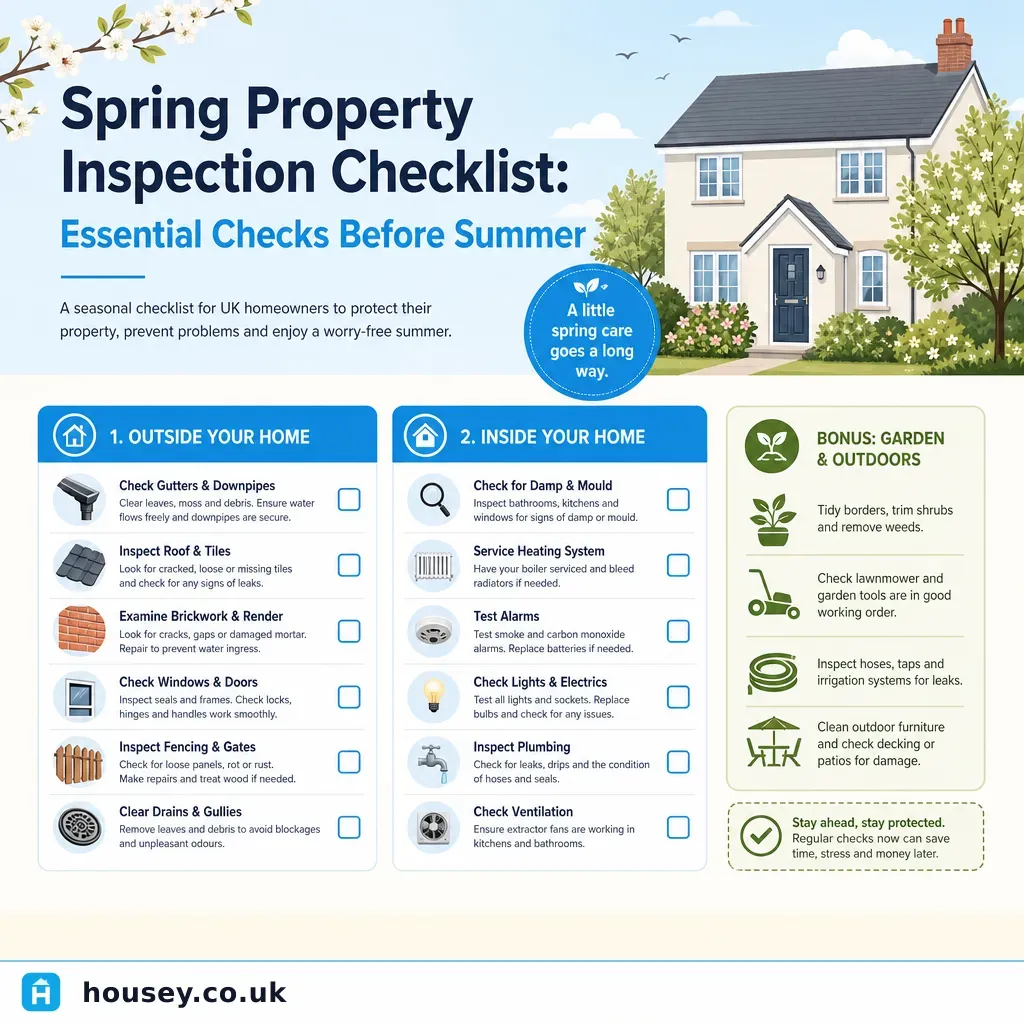 Surveys & Inspections
Spring Property Inspection Checklist: Essential Checks Before Summer
Each spring, UK homeowners should check the roof covering, gutters, flashings, drainage, external walls, and window seals for signs of winter damage.
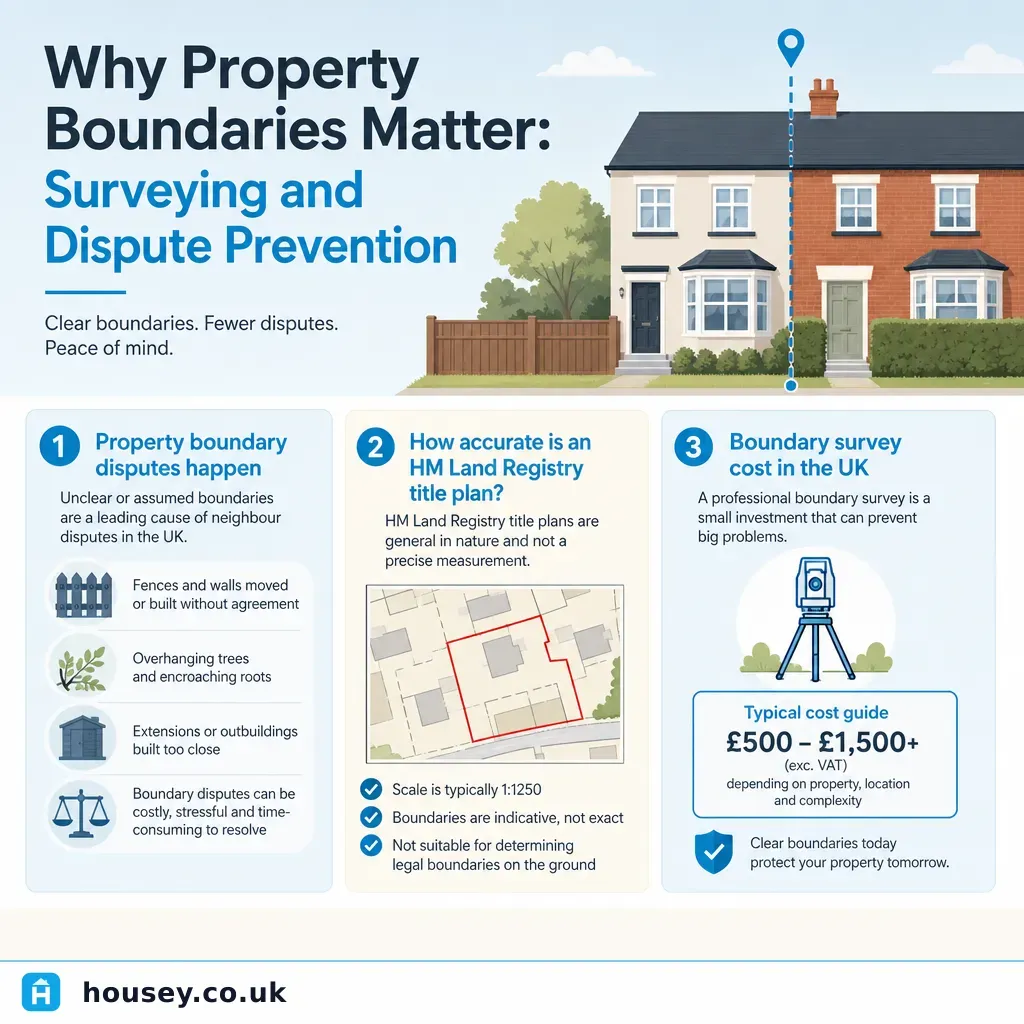 Surveys & Inspections
Why Property Boundaries Matter: Surveying and Dispute Prevention
Property boundaries in England and Wales are recorded as general boundaries by HM Land Registry — not precise measurements.
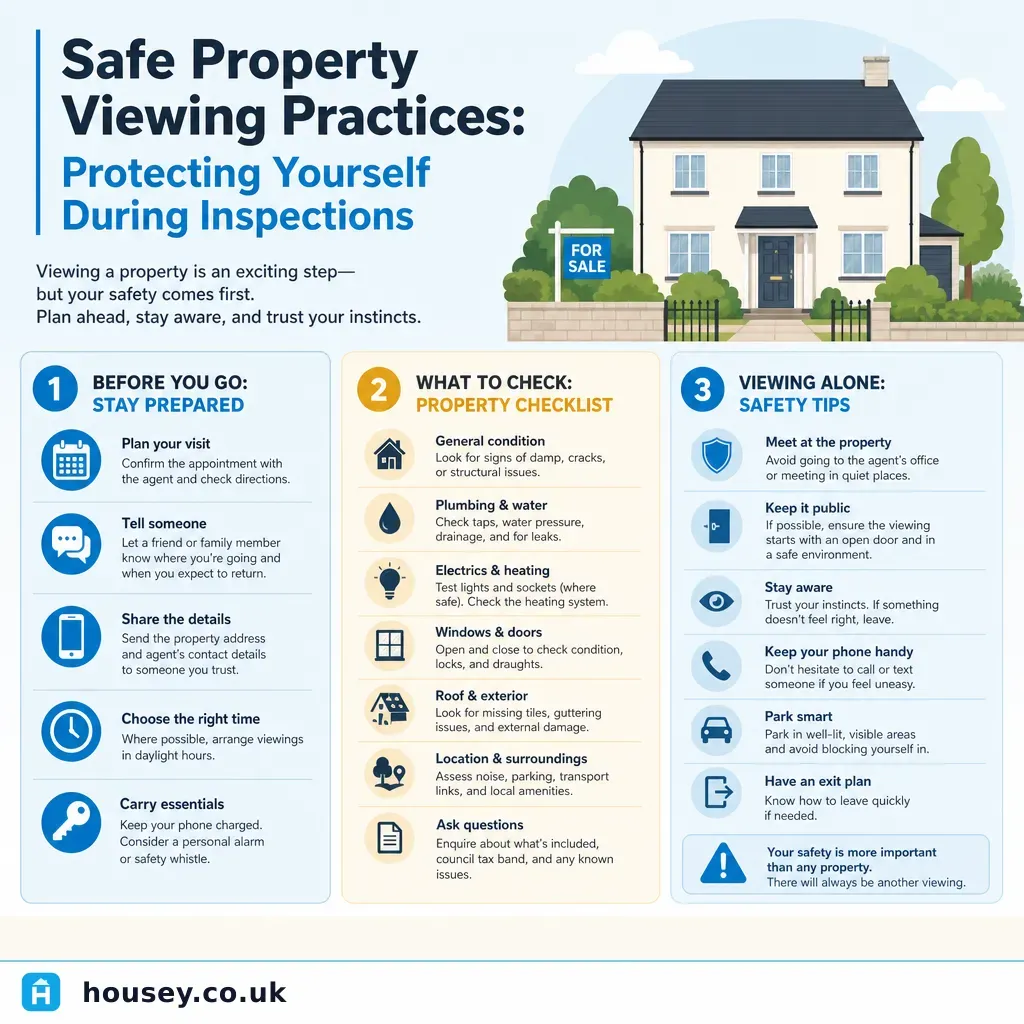 Surveys & Inspections
Safe Property Viewing Practices: Protecting Yourself During Inspections
When viewing a property in the UK, always tell someone where you are going and share the full address before you leave.
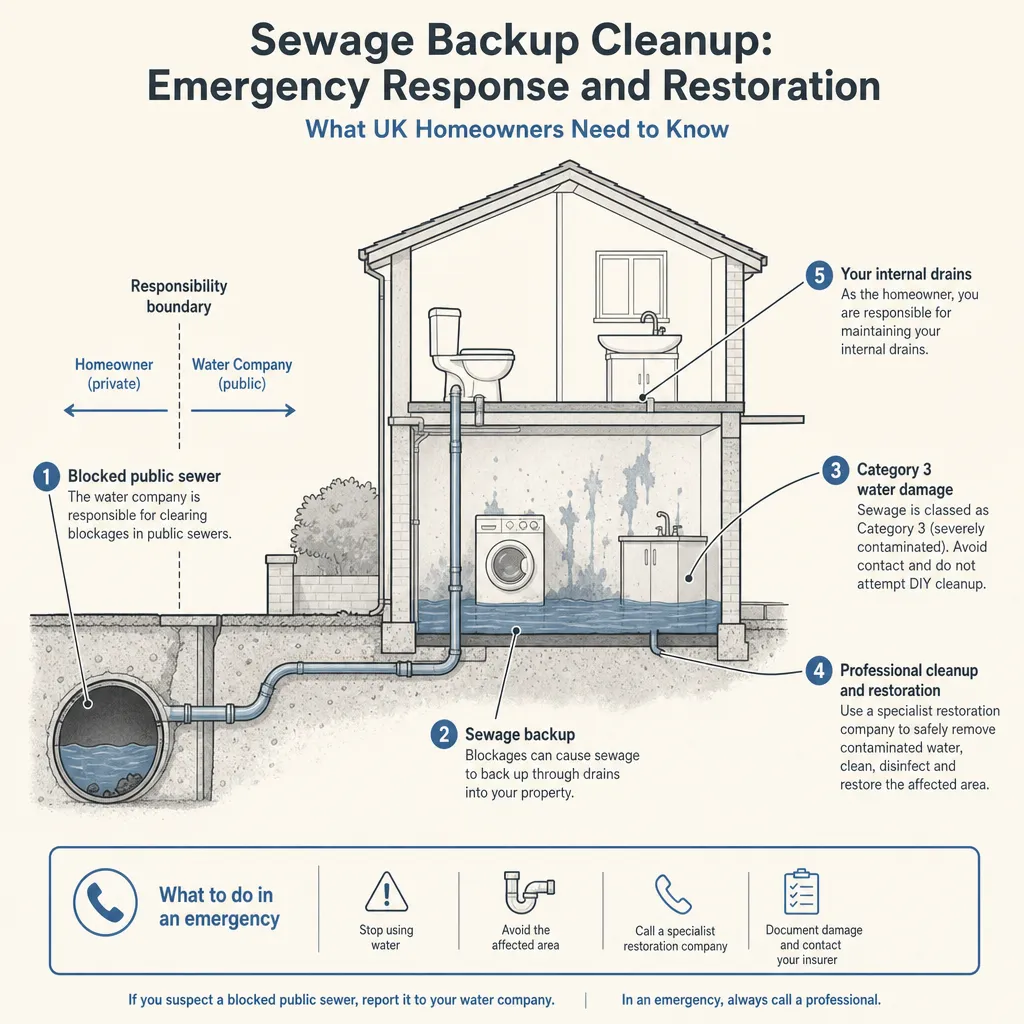 Surveys & Inspections
Sewage Backup Cleanup: Emergency Response and Restoration
A sewage backup should be treated as a Category 3 contamination event.
 Surveys & Inspections
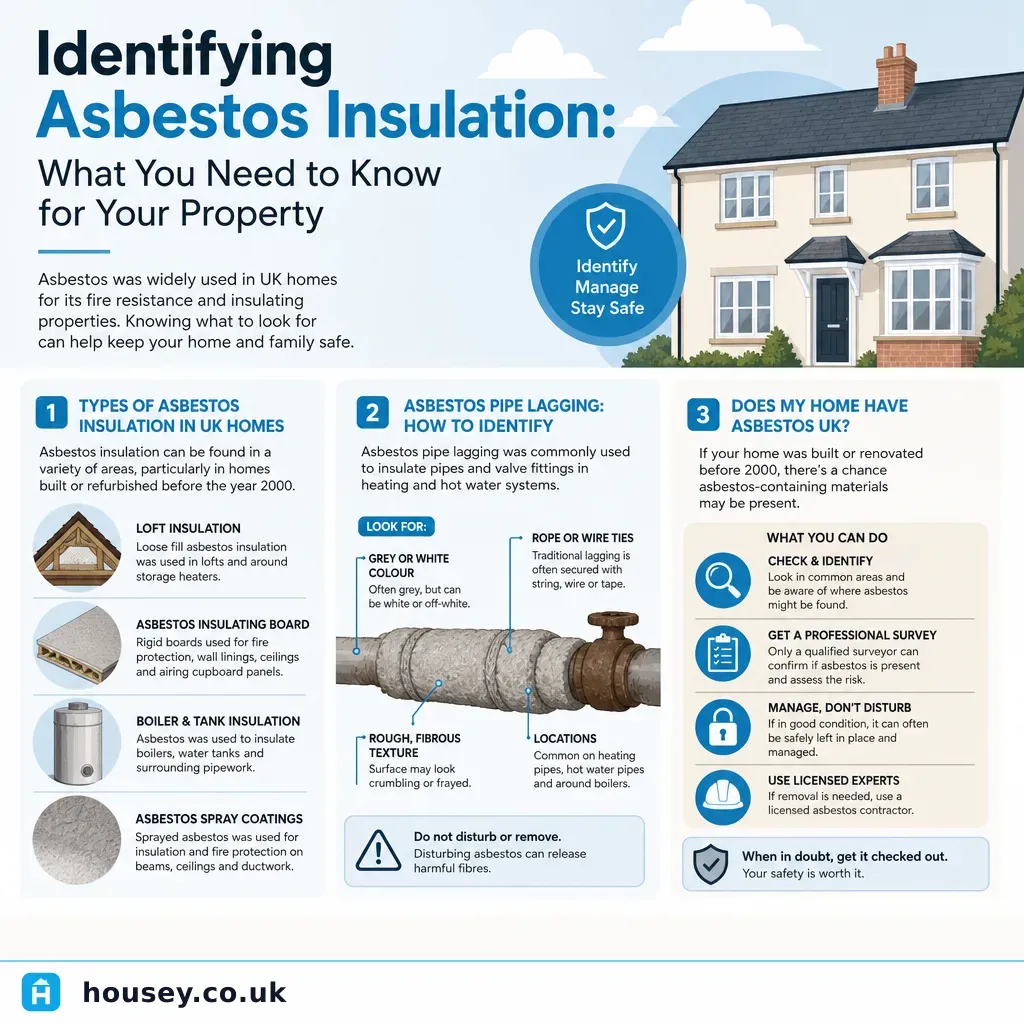
Identifying Asbestos Insulation: What You Need to Know for Your Property
Asbestos insulation was widely used in UK properties built before 2000, commonly found in pipe lagging, ceiling tiles, loose-fill loft insulation, and around boilers.