Understanding Vermiculite Insulation and Asbestos Risks
By Housey · Last reviewed 31st of May 2026
Understanding Vermiculite Insulation and Asbestos Risks
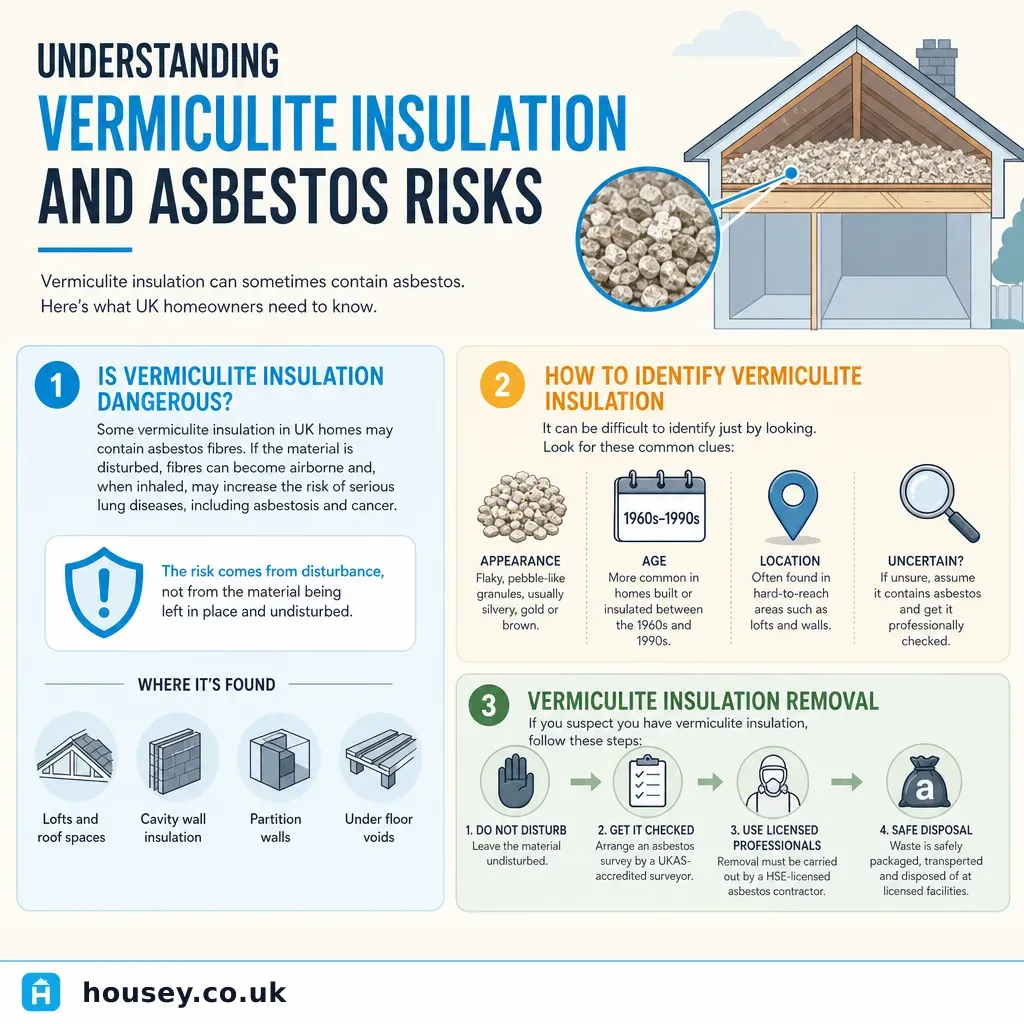
Vermiculite insulation is found in thousands of UK homes, particularly in properties built or insulated between the 1960s and late 1980s. The concern is not vermiculite itself — it is a naturally occurring mineral and was a popular insulation choice — but the contamination of a significant portion of global vermiculite supply with tremolite asbestos. If you are planning loft works, a conversion, or have recently bought an older property, understanding what vermiculite looks like and how to approach it safely is essential before you or any contractor disturbs it.
Key points
- The HSE advises that all vermiculite insulation installed before the mid-1990s should be treated as potentially containing asbestos unless confirmed otherwise by a UKAS-accredited laboratory analysis.
- The main contamination source was the Libby mine in Montana, USA, which supplied global vermiculite until 1990 — ore from this mine is confirmed to have contained tremolite asbestos, a particularly hazardous form of amphibole asbestos fibre.
- Disturbing vermiculite containing asbestos releases respirable fibres linked to mesothelioma, asbestosis, and lung cancer — all of which are serious, often fatal, and may not manifest for decades after exposure.
- Under the Control of Asbestos Regulations 2012, removal of asbestos insulation containing more than 0.1% asbestos by weight can only be carried out by a contractor holding a current HSE asbestos removal licence.
- Bulk sampling and laboratory analysis of vermiculite must use a UKAS-accredited laboratory and follow HSG248 (Asbestos: The analysts' guide) procedures — do not attempt to self-sample without proper training and respiratory protective equipment.
What is vermiculite insulation?
Vermiculite is a naturally occurring hydrated magnesium iron aluminium silicate mineral that expands dramatically when heated. The expanded material is lightweight, fire-resistant, and a reasonable thermal insulator — properties that led to its widespread use as a loose-fill loft insulation, a cavity wall fill, and as a constituent in legacy plaster products and concrete blocks.
In loft insulation, vermiculite typically appears as small, grey-brown or golden-brown granular pellets, roughly 3–8 mm in diameter, with a layered or accordion-like texture when examined closely. It is a loose-fill material — not batts, rolls, or boards — and may have been poured directly onto the ceiling boards between roof joists.
In the UK, vermiculite loft insulation was particularly common in homes insulated during the 1960s, 1970s, and 1980s, sometimes through government-backed schemes. Some properties also have vermiculite in cavity walls or embedded in legacy plasterwork.
Why vermiculite insulation may contain asbestos
Not all vermiculite deposits contain asbestos. The contamination problem is linked specifically to ore from the Libby mine in Lincoln County, Montana, operated by W. R. Grace and Company. Libby ore is confirmed to have contained tremolite-actinolite asbestos — a hazardous amphibole asbestos fibre — and was exported globally before the mine's closure in 1990.
Before closure, Libby vermiculite was processed into a range of products distributed across Europe and the UK. Because the proportion of contaminated ore in specific UK supply batches cannot be identified without laboratory testing, the HSE's position — consistent with guidance from the US Environmental Protection Agency and Health Canada — is that all pre-1990 vermiculite insulation should be treated as potentially containing asbestos until proven otherwise.
How to identify vermiculite insulation in your home
Vermiculite insulation typically:
- Is a loose-fill granular material — not batts, rolls, or boards.
- Appears grey-brown, golden-brown, or dark grey in colour.
- Has a rough, layered, worm-like or accordion texture on close inspection.
- Is found in loft spaces sitting directly on the ceiling boards between joists.
It can be confused with perlite (similar appearance but white or pale grey, with no known asbestos association) or with granules from degraded mineral wool batts. Do not disturb the material to inspect it more closely. Visual identification alone cannot confirm whether asbestos is present — only laboratory analysis can do this.
Decision tree: what to do if you suspect vermiculite insulation
- Do you have loose-fill granular insulation in a loft installed before the mid-1990s? Treat it as potentially containing asbestos until confirmed otherwise by laboratory testing.
- Are you planning loft, roofing, or renovation works that will disturb the material? Stop. Arrange a UKAS-accredited asbestos refurbishment and demolition survey before any works proceed.
- Has the material already been disturbed without respiratory protection? Avoid the area, do not vacuum, and seek advice from a licensed asbestos contractor immediately.
- Is the material undisturbed and sealed below a boarded loft floor? An asbestos management survey can confirm condition and risk rating; leaving it in place with a documented management plan may be appropriate.
- Are you unsure whether the material is vermiculite? Arrange bulk sample analysis by a UKAS-accredited laboratory — do not attempt self-sampling without appropriate training and respiratory protective equipment.
Red flags: when to act immediately
Stop any work and seek professional advice without delay if:
- A contractor, electrician, or tradesperson disturbs loose-fill granular insulation in a loft where vermiculite has not been ruled out.
- Anyone has recently worked in a loft with suspected vermiculite without respiratory protective equipment.
- You notice fine dust settling on surfaces in rooms below, following works near the loft.
- A survey report classifies any sampled loft insulation as an asbestos-containing material.
- You are purchasing an older property and the vendor cannot provide an asbestos survey covering the loft insulation.
- A loft conversion contractor submits a quote without first checking for asbestos — this is a significant red flag about their competence and compliance.
If fibres may have been released, leave the affected area and contact a licensed asbestos contractor for assessment and decontamination advice.
Testing and surveys
There are two main types of asbestos survey relevant to vermiculite insulation:
Asbestos management survey Appropriate for properties in normal occupation where no disturbance works are planned. It identifies the location and condition of asbestos-containing materials as far as reasonably practicable. This is the correct starting point when you suspect vermiculite but have no immediate renovation plans.
Asbestos refurbishment and demolition survey Required before any refurbishment or demolition work — including loft conversions, re-roofing, rewiring in affected loft spaces, and insulation replacement. This survey is more intrusive, involving sampling of materials in the areas to be disturbed. Both types should be carried out by a person qualified to P402 standard, with samples analysed by a UKAS-accredited laboratory in accordance with HSG248.
Important limitations
This article provides general information about vermiculite insulation and asbestos risk in UK residential properties. It is not a substitute for a professional asbestos survey or advice from a licensed asbestos contractor. The legal framework under the Control of Asbestos Regulations 2012 varies by premises type and extent of works — the duty-to-manage requirements for non-domestic premises differ from those for domestic properties. Do not attempt to sample or remove suspect vermiculite yourself; instruct a qualified professional.
When this becomes urgent
Seek professional help without delay if:
- Any vermiculite insulation has been disturbed, even briefly, without respiratory protective equipment.
- You are about to commence a loft conversion, re-roofing, or other works in a loft containing suspected vermiculite.
- A buyer, mortgage lender, or surveyor has flagged vermiculite insulation as a concern during a property transaction.
- You manage or own a non-domestic property with suspected vermiculite — the duty to manage asbestos under regulation 4 of the Control of Asbestos Regulations 2012 applies and non-compliance carries legal risk.
What to ask a qualified professional
Before instructing an asbestos surveyor or contractor, ask:
- Are your surveyors qualified to P402 standard (surveying and sampling of asbestos-containing materials), and are you a member of a recognised body such as ARCA or BOHS?
- Is laboratory analysis carried out by a UKAS-accredited laboratory — and can you provide the UKAS schedule reference?
- Will you provide a full written survey report with a materials risk assessment and recommended management or remediation actions?
- If removal is recommended, do you hold a current HSE asbestos removal licence (required for licensed work above the 0.1% threshold)?
- What clearance procedures and air monitoring will you carry out after any removal works?
- Will removed material be disposed of at a licensed hazardous waste facility, and will you provide a waste transfer note?
- What will you do if you identify additional asbestos-containing materials beyond the loft insulation during the survey?
When to get professional help
Any property with suspected vermiculite insulation where renovation, conversion, or maintenance works are planned requires a professional asbestos survey before work begins. Visual identification is not reliable — only UKAS-accredited laboratory analysis can confirm whether asbestos fibres are present. An insulation assessment can also help establish the full extent and condition of existing insulation before any replacement or upgrade works are scoped.
How Housey can help
Housey connects UK homeowners with qualified professionals for asbestos surveys and insulation assessments. If you have identified or suspect vermiculite insulation in your property, use Housey to find and compare verified local specialists who can carry out the correct survey type and advise on safe and legally compliant next steps.
Frequently asked questions
Is all vermiculite insulation dangerous?
Not all vermiculite insulation contains asbestos, but because contaminated and uncontaminated material cannot be distinguished by eye, the HSE advises treating all pre-1990 vermiculite as potentially hazardous. Laboratory testing by a UKAS-accredited laboratory is the only reliable way to confirm whether asbestos fibres are present.
Can I remove vermiculite insulation myself?
If vermiculite is confirmed to contain asbestos above the licensable threshold (more than 0.1% by weight), removal must be carried out by an HSE-licensed asbestos contractor. Even below this threshold, removal should use appropriate respiratory protection and the waste disposed of at a licensed hazardous waste facility. DIY removal is strongly inadvisable.
Does vermiculite insulation have to be removed?
Not always. If vermiculite is in good condition, sealed under a boarded loft floor, and will not be disturbed by any planned works, leaving it in place with a documented management plan may be appropriate. A qualified asbestos surveyor can advise based on condition and risk rating. Removal is typically required before loft conversion or significant roofing work.
How much does a vermiculite asbestos survey cost?
Indicative UK costs, last reviewed 2026-05-31: a domestic asbestos management survey for a typical loft typically costs £150–£350, depending on property size and access. A refurbishment and demolition survey may cost more where destructive sampling is required. Laboratory analysis fees may be charged separately. Always obtain written quotes from UKAS-accredited surveyors.
What should I do if I have already disturbed vermiculite insulation?
Leave the affected area immediately and do not re-enter without appropriate respiratory protective equipment. Contact a licensed asbestos contractor for advice on assessment, decontamination, and air monitoring. Keep a record of who may have been in the area during the disturbance in case any future health monitoring is recommended by an occupational health adviser.
Sources and further reading
- HSE — Asbestos: The survey guide (HSG264) — HSE
- Control of Asbestos Regulations 2012 — legislation.gov.uk
- HSE — Working with asbestos in buildings — HSE
- UKAS — United Kingdom Accreditation Service — UKAS
- HSE — Asbestos: The analysts' guide (HSG248) — HSE
- US EPA — Vermiculite — US Environmental Protection Agency
Useful next reads
 Surveys & Inspections
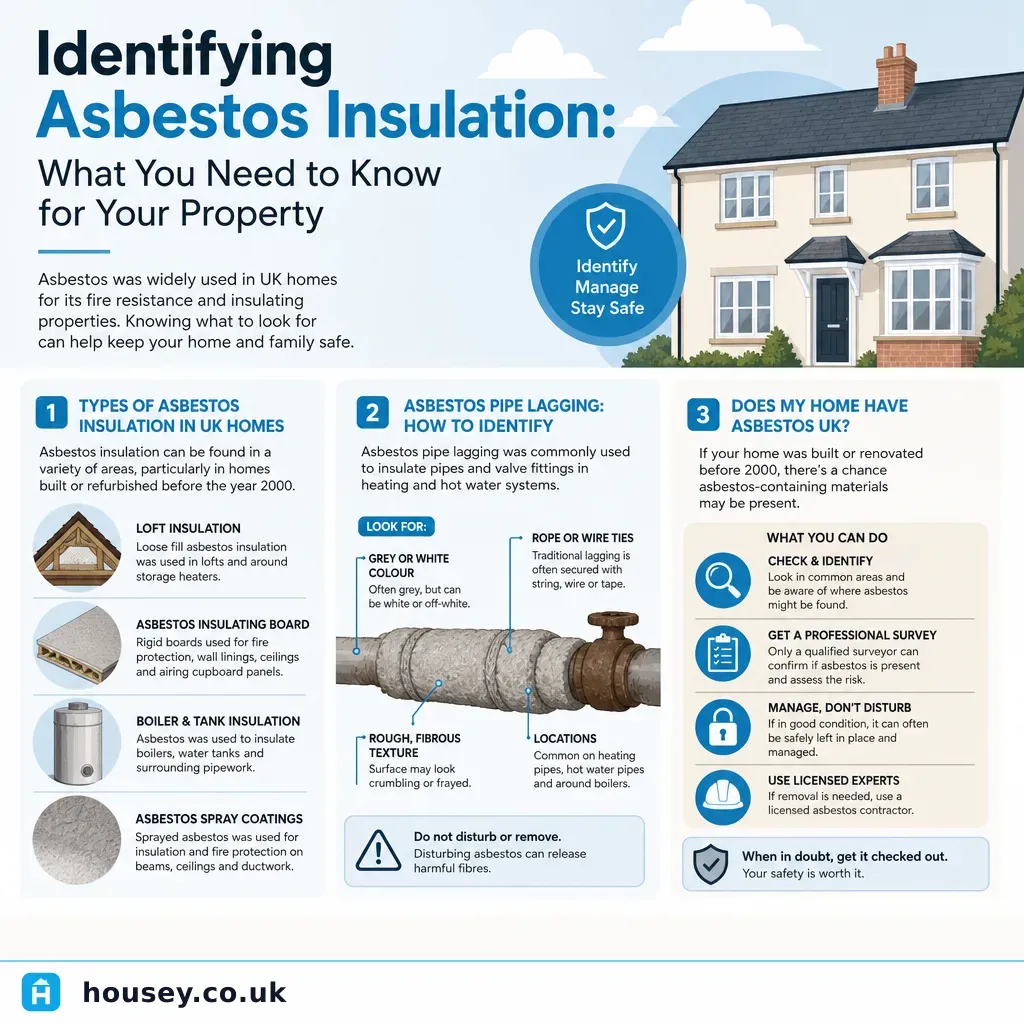
Identifying Asbestos Insulation: What You Need to Know for Your Property
Asbestos insulation was widely used in UK properties built before 2000, commonly found in pipe lagging, ceiling tiles, loose-fill loft insulation, and around boilers.
 Surveys & Inspections
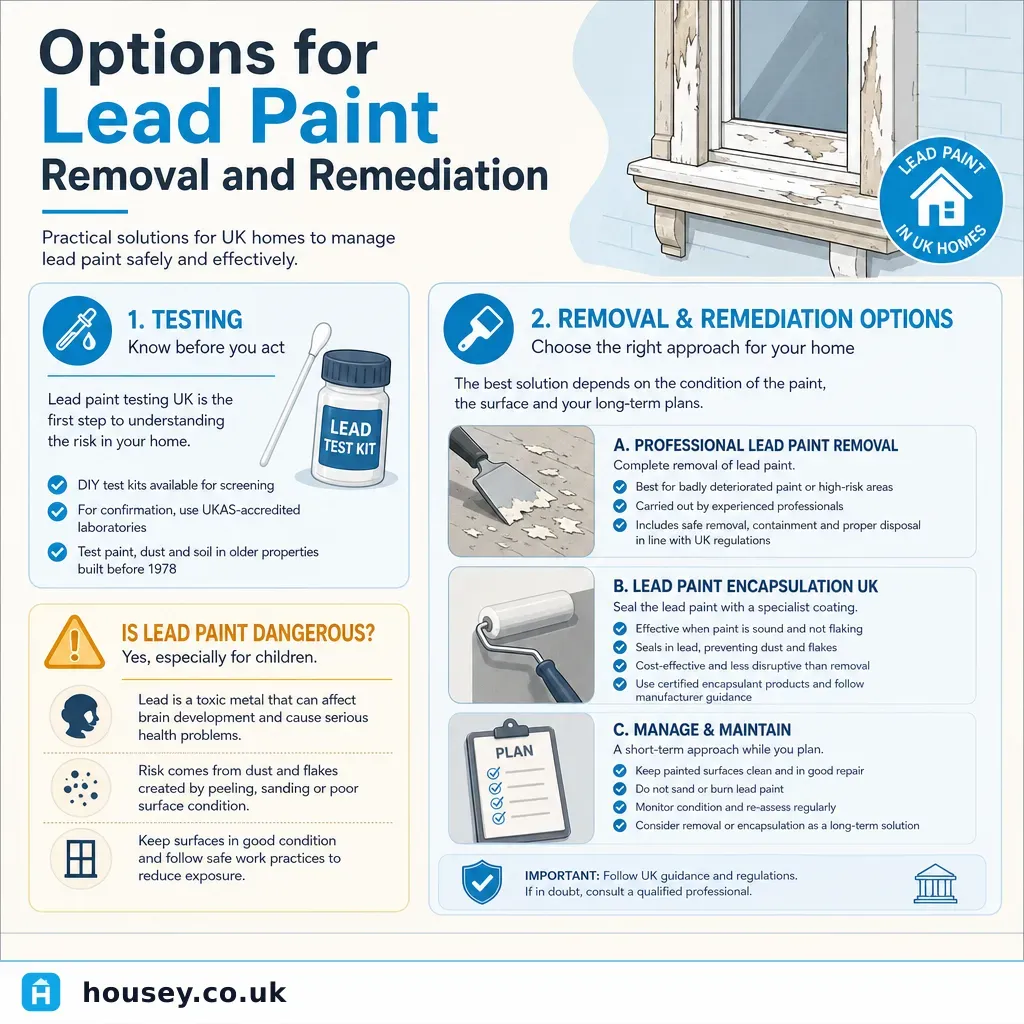
Options for Lead Paint Removal and Remediation
Lead paint in UK homes built before 1960 is common and not automatically hazardous if in good condition.
 Surveys & Inspections
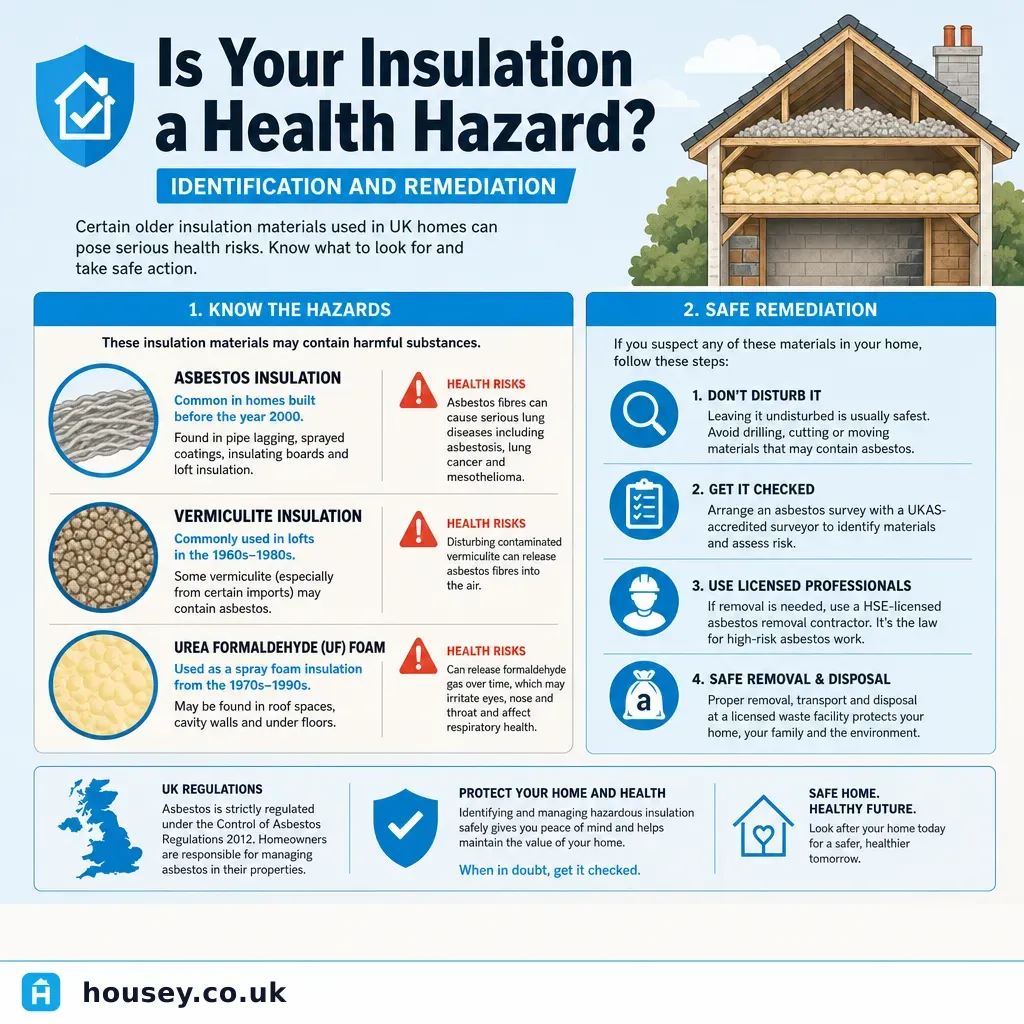
Is Your Insulation a Health Hazard? Identification and Remediation
Some insulation materials in pre-2000 UK homes may pose genuine health risks.
 Surveys & Inspections
Asbestos Testing: Finding a Qualified Surveyor
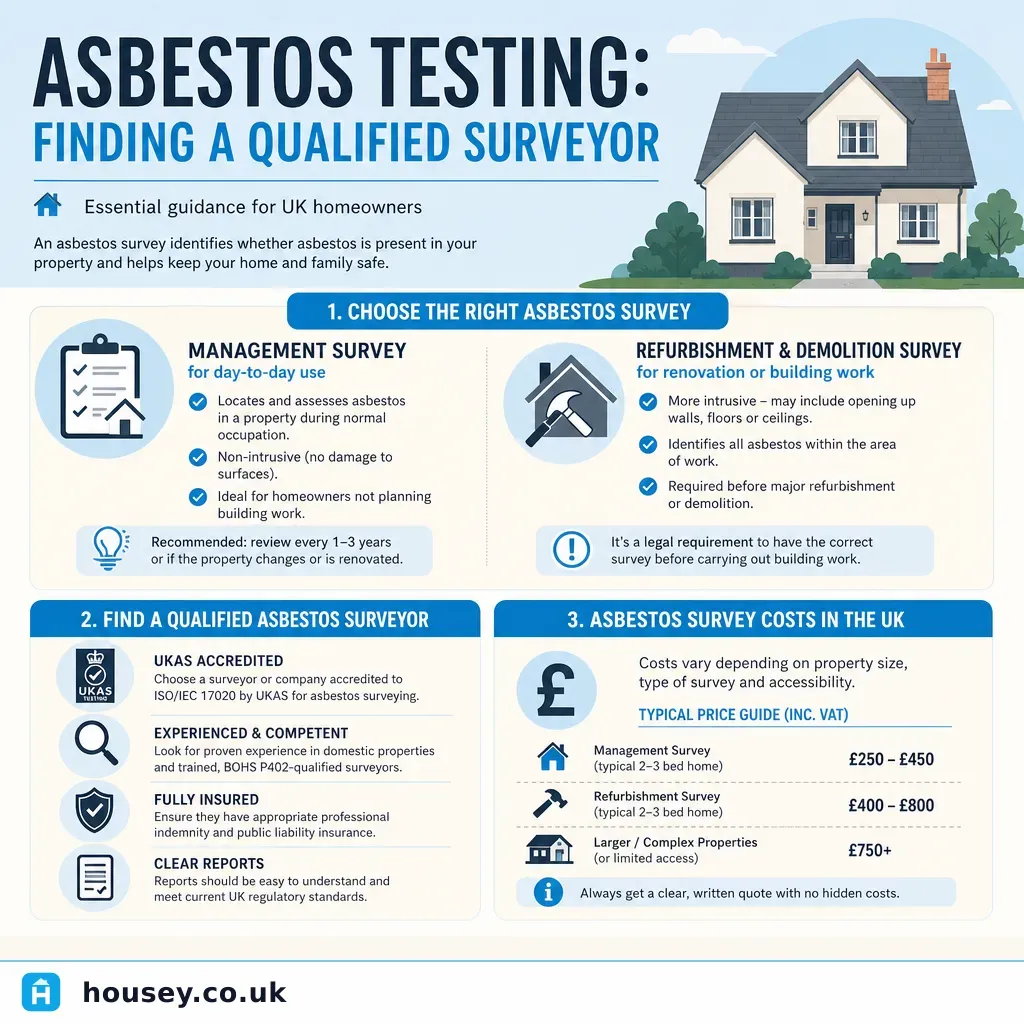
Finding a qualified asbestos surveyor means choosing a company accredited by UKAS to ISO/IEC 17020, with analysts holding BOHS P402 or equivalent qualifications.
 Surveys & Inspections
Mould Removal and Damp Assessment Services
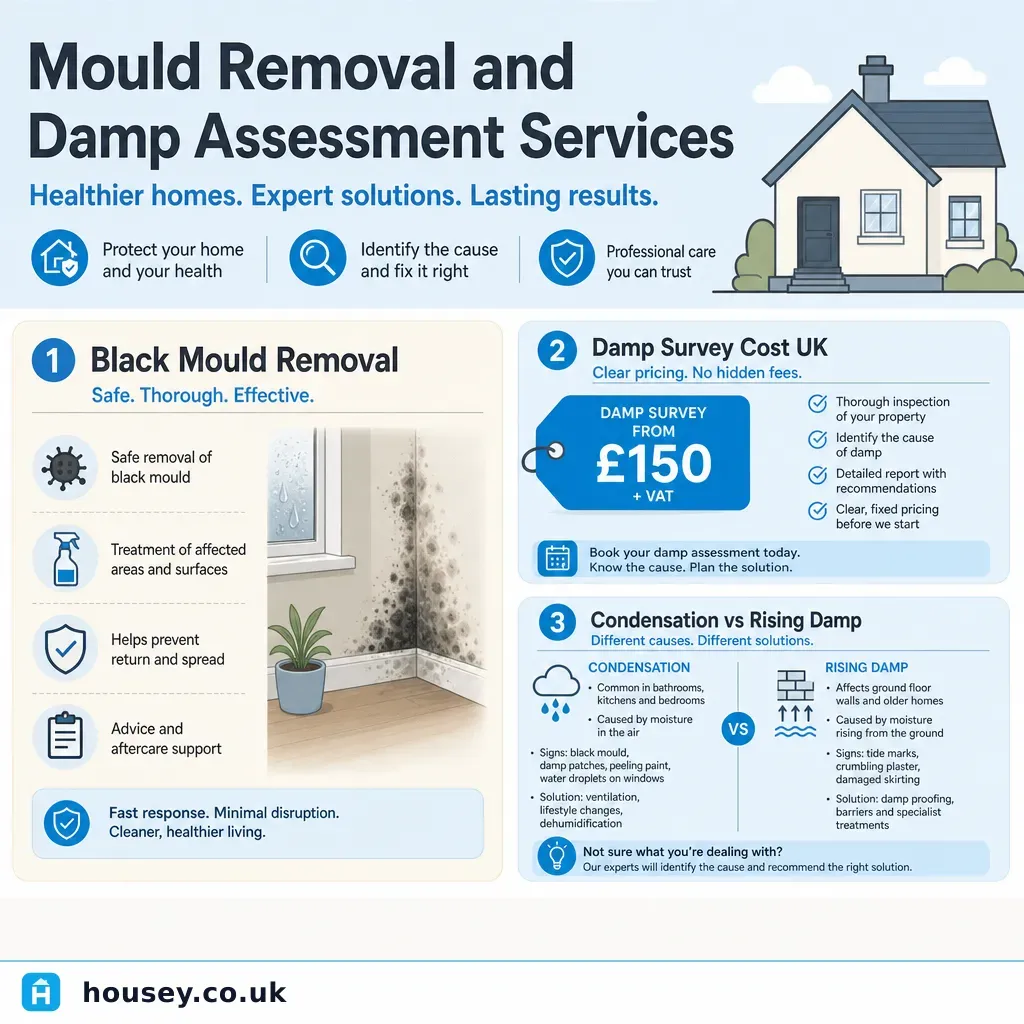
Professional mould removal and damp assessment starts with identifying the moisture source—condensation, rising damp, or penetrating damp—before any treatment begins.