Understanding VOCs in Homes and Minimising Air Quality Issues
By Housey · Last reviewed 30th of May 2026
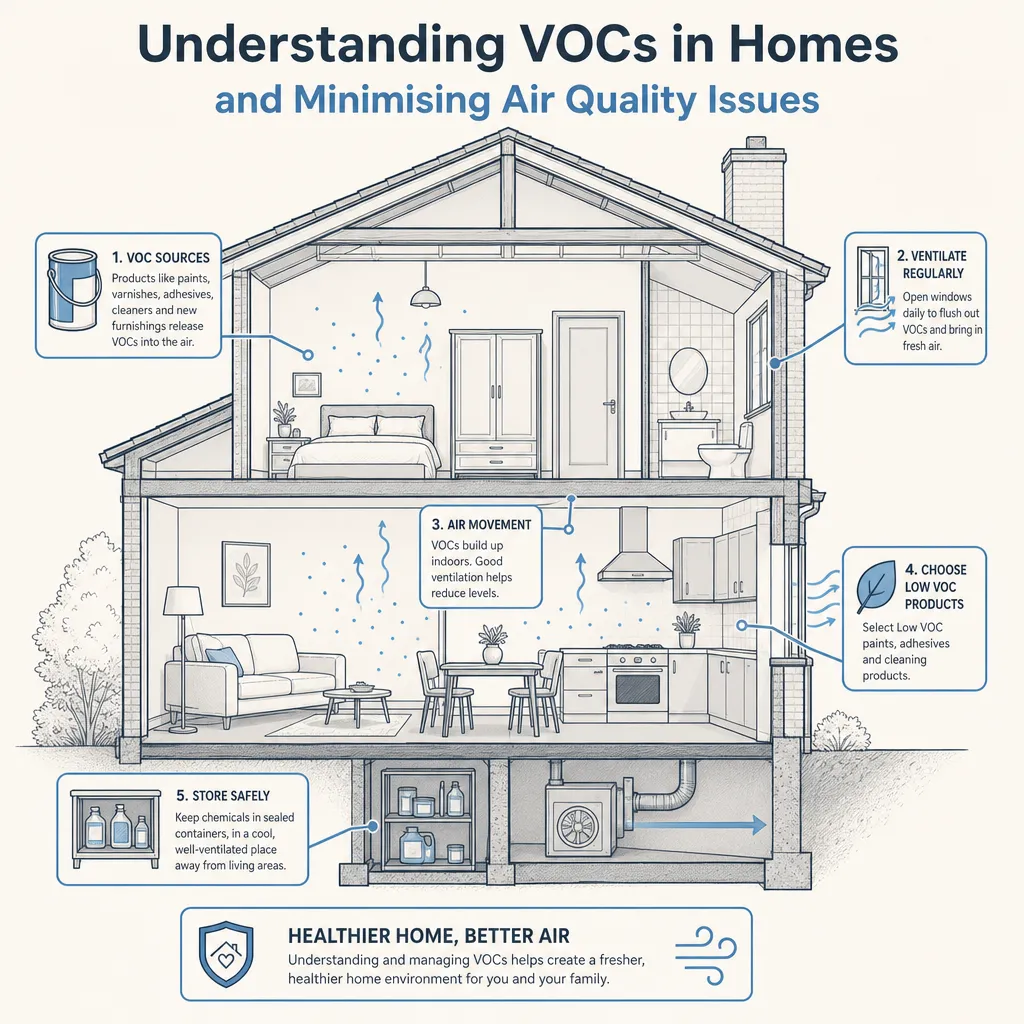
Understanding VOCs in Homes and Minimising Air Quality Issues
Concerns about volatile organic compounds arise most often following renovation — when fresh paint, new flooring, or newly installed kitchen units create a noticeable smell in an enclosed space. For UK homeowners undertaking improvement work, particularly in well-insulated or recently retrofitted homes where background ventilation may be limited, understanding what VOCs are and how to manage them is a practical part of planning any significant project.
Key points
- VOCs are emitted by a wide range of common household products including paints, varnishes, adhesives, flooring, furniture, cleaning products, and candles — indoor concentrations are typically two to five times higher than outdoor air.
- The UK Health Security Agency (UKHSA) has published indoor air quality guidelines for VOCs in UK dwellings, identifying guideline values for common compounds including formaldehyde, benzene, and toluene.
- Building Regulations Part F (Ventilation) sets minimum ventilation requirements for UK dwellings — insufficient ventilation is a primary driver of elevated indoor VOC levels, particularly in post-2000 energy-efficient construction where natural air movement is limited.
- The World Health Organisation classifies formaldehyde — a VOC commonly emitted by particleboard, MDF, and some adhesives — as a known carcinogen at elevated concentrations.
- Low-VOC and zero-VOC paints and finishes significantly reduce emissions at source; the EU Ecolabel and the British Coatings Federation provide recognised guidance on VOC limits for decorative products sold in the UK.
What are VOCs and where do they come from?
Volatile organic compounds are carbon-based chemicals that evaporate at room temperature, releasing gases into indoor air. In a domestic context, sources fall into several broad categories.
Building materials and renovation products
- Paints, varnishes, lacquers, and stains
- Tile adhesives, carpet underlay adhesives, and floor finishes (including some luxury vinyl tile products)
- Particleboard and MDF, which off-gas formaldehyde from urea-formaldehyde binders used in manufacture
- Sealants, caulks, and expanding foam
Furnishings and consumer goods
- New upholstered furniture and foam padding
- Synthetic carpets and vinyl flooring, particularly in the weeks immediately after installation
- Dry-cleaned clothing, which can carry residues of perchloroethylene
Household activities
- Cooking — particularly frying at high temperatures, which generates acrolein and formaldehyde
- Burning candles, incense, or wood in open fires or log burners
- Aerosol cleaning products, air fresheners, and disinfectant sprays
Concentrations are usually highest in the days and weeks immediately following renovation and then reduce gradually as materials off-gas. Poorly ventilated properties accumulate VOCs more significantly than those with adequate background and extract ventilation.
How VOC exposure can affect health
Most people experience no acute symptoms from background VOC levels in a well-ventilated home. Elevated concentrations — particularly in newly renovated or newly furnished spaces — are associated with:
- Eye, nose, and throat irritation
- Headaches and dizziness
- Nausea
- Worsening of asthma or allergic symptoms
- With prolonged high-level exposure, longer-term effects for specific compounds such as formaldehyde and benzene
Children, older people, and those with existing respiratory conditions are generally considered more sensitive. If you notice symptoms that consistently resolve when you leave the property, indoor air quality is worth investigating.
What not to assume:
- A fresh-paint smell does not necessarily indicate dangerous VOC levels — many modern water-based paints are low-VOC by formulation and the smell dissipates quickly.
- The absence of smell does not mean the absence of VOCs — some volatile compounds are odourless at concentrations that may still affect air quality.
- Symptoms improving when a window is opened do not confirm VOCs as the cause — other indoor pollutants including combustion gases, mould spores, and dust mite allergens produce similar symptoms and can coexist with elevated VOC levels.
- A well-insulated or recently retrofitted home is not automatically a healthy home — improved airtightness without compensating ventilation raises indoor concentrations of all pollutants, including VOCs.
Reducing VOC levels in your home
During renovation and new installation
Action | Effectiveness | Practical notes |
|---|---|---|
Choose low-VOC or zero-VOC paints and adhesives | High | Check EU Ecolabel status or grams-per-litre VOC content on the label; apply this check to the tinted product, not only the base |
Ventilate continuously during and after application | High | Open windows and run extract fans throughout; maintain ventilation for several days after the work is finished |
Allow off-gassing time before reoccupation | Medium–high | 48–72 hours minimum for most products; longer for high-VOC materials such as solvent-based varnishes or floor adhesives |
Air flat-pack furniture before bringing indoors | Medium | Off-gassing is highest in the first days; leaving items in a garage or outbuilding first reduces indoor impact |
Use solid wood rather than particleboard or MDF where feasible | Medium | Solid wood has negligible formaldehyde emissions; seal exposed MDF edges before painting to slow off-gassing |
Apply a sealing coat to MDF and particleboard surfaces | Low–medium | Slows but does not eliminate formaldehyde off-gassing from the substrate |
Indicative effectiveness ratings, last reviewed 2026-05-30.
Day-to-day management
- Ventilate regularly. Opening windows for 10–15 minutes daily significantly reduces accumulated VOC concentration. Trickle vents, where fitted, should remain open rather than closed for energy-saving purposes.
- Choose cleaning products with care. Unscented or plant-based ingredient cleaners typically have lower VOC content than aerosol sprays and synthetic air fresheners.
- Service combustion appliances. Poorly maintained gas boilers, cookers, and log burners produce combustion-related VOCs and other harmful by-products. Annual servicing is both a safety requirement and a VOC-reduction measure.
- Maintain mechanical ventilation systems. If your home has a mechanical ventilation and heat recovery (MVHR) unit, clean or replace filters per the manufacturer's schedule — a blocked filter reduces effectiveness and may recirculate contaminants.
Ventilation as the primary control measure
Improved ventilation is the most reliable long-term control for VOC levels in UK homes. This applies to background ventilation (trickle vents, passive stack) as well as to extract ventilation in kitchens and bathrooms.
Decision tree: choosing a ventilation approach for VOC management
- Choose background ventilation improvements (trickle vents, passive stack) if your home is older, has reasonable natural air movement, and VOC concerns follow a specific renovation rather than being persistent.
- Choose continuous mechanical extract (MEV) if your home is post-2000 construction with limited natural ventilation and indoor air quality feels persistently poor.
- Choose MVHR (mechanical ventilation with heat recovery) if you are undertaking a deep energy retrofit under PAS 2035 where airtightness is being significantly improved — MVHR is the standard compensating ventilation measure for high-airtightness retrofits.
- Commission a ventilation and condensation assessment if you are unsure which approach suits your property, if a recent retrofit has tightened the building significantly, or if residents are experiencing persistent symptoms linked to time spent at home.
- Seek professional indoor air quality assessment if renovation work has recently been completed and symptoms are severe, persistent, or affect multiple occupants — a qualified assessor can measure airflow rates and identify specific VOC sources.
When to get professional help
For most households, following the practical steps above will manage VOC levels adequately. Professional advice is worth pursuing if:
- Residents experience persistent respiratory or neurological symptoms that correlate with time spent at home and do not resolve with routine ventilation improvements
- A significant renovation has recently been completed and ventilation appears inadequate for the building's current airtightness
- A deep energy retrofit has been undertaken, substantially increasing airtightness without equivalent compensating ventilation
- You suspect a specific product — such as a heavily gassing adhesive — was used in a confined or poorly ventilated space during construction
- You are a landlord with obligations under the Homes (Fitness for Human Habitation) Act 2018 to ensure a property is safe for occupation
How Housey can help
If you are concerned about indoor air quality following renovation or retrofit work, Housey can connect you with qualified professionals offering a ventilation and condensation assessment. A trained assessor can measure airflow rates, identify problem areas, and recommend practical improvements tailored to your property type and usage.
Frequently asked questions
How long do VOCs off-gas from new paint?
Most water-based paints reach their lowest VOC emission levels within 24–72 hours of application, though off-gassing continues at low levels for several weeks. Oil-based paints and varnishes can emit VOCs for considerably longer — sometimes months. Ventilating the room throughout the drying period and for several days afterwards significantly reduces indoor concentration.
Are 'zero VOC' paints genuinely safer?
Zero-VOC paints contain negligible VOC content in the base formulation, but tints and pigments added during mixing can introduce some VOCs. They are a significantly better choice than conventional solvent-based paints, particularly in poorly ventilated spaces or for people with respiratory sensitivities. Check the VOC content of the tinted product, not just the base.
Can houseplants reduce VOCs in my home?
A widely cited NASA study suggested certain houseplants can absorb VOCs, but subsequent research indicates the effect in a typical home is negligible. You would need hundreds of plants to achieve a meaningful reduction compared with simply opening a window. Plants are pleasant additions to a room but should not replace ventilation as an air quality strategy.
Does a wood-burning stove increase indoor VOC levels?
Wood burning produces combustion by-products including VOCs and particulate matter. A correctly installed and maintained HETAS-certified stove used with properly seasoned wood produces significantly lower indoor emissions than a poorly maintained appliance. Never burn treated, painted, or composite wood, and ensure carbon monoxide detectors are fitted and in working order.
Sources and further reading
- Indoor Air Quality Guidelines for VOCs in UK Dwellings — UK Health Security Agency
- Approved Document F: Ventilation — GOV.UK
- Homes (Fitness for Human Habitation) Act 2018 — legislation.gov.uk
- HETAS: Solid Fuel and Wood Burning Appliances — HETAS
- EU Ecolabel: Paints and Varnishes — European Commission
Useful next reads
 Energy & Retrofit
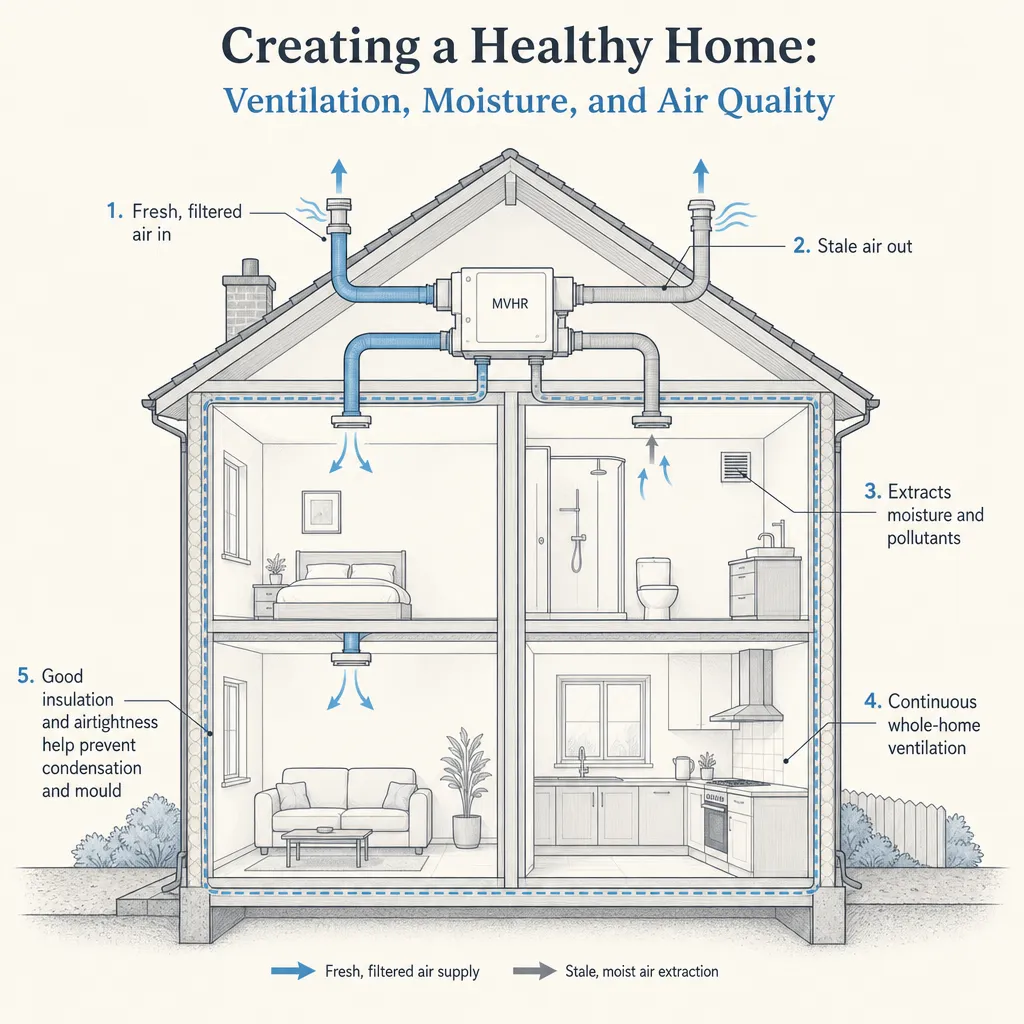
Creating a Healthy Home: Ventilation, Moisture, and Air Quality
Healthy indoor air quality depends on balancing airtightness with adequate ventilation, managing moisture from everyday activities, and removing pollutants at source.
 Energy & Retrofit
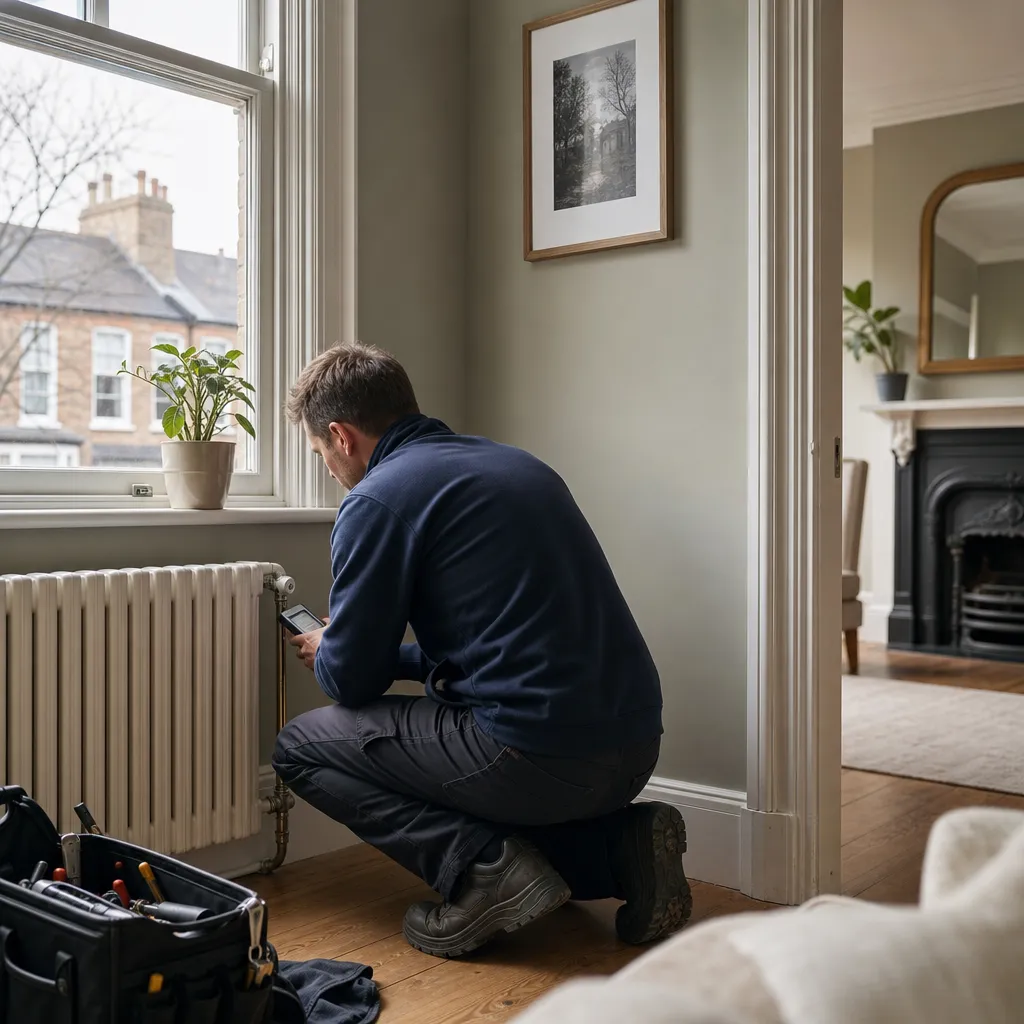
Diagnosing and Fixing Temperature Imbalances in Your Home
Temperature imbalances in UK homes usually stem from hydraulic imbalance in the central heating system, cold bridging at poorly insulated walls or junctions, air infiltration through gaps and draughts, or problems with thermostat placement.
 Energy & Retrofit
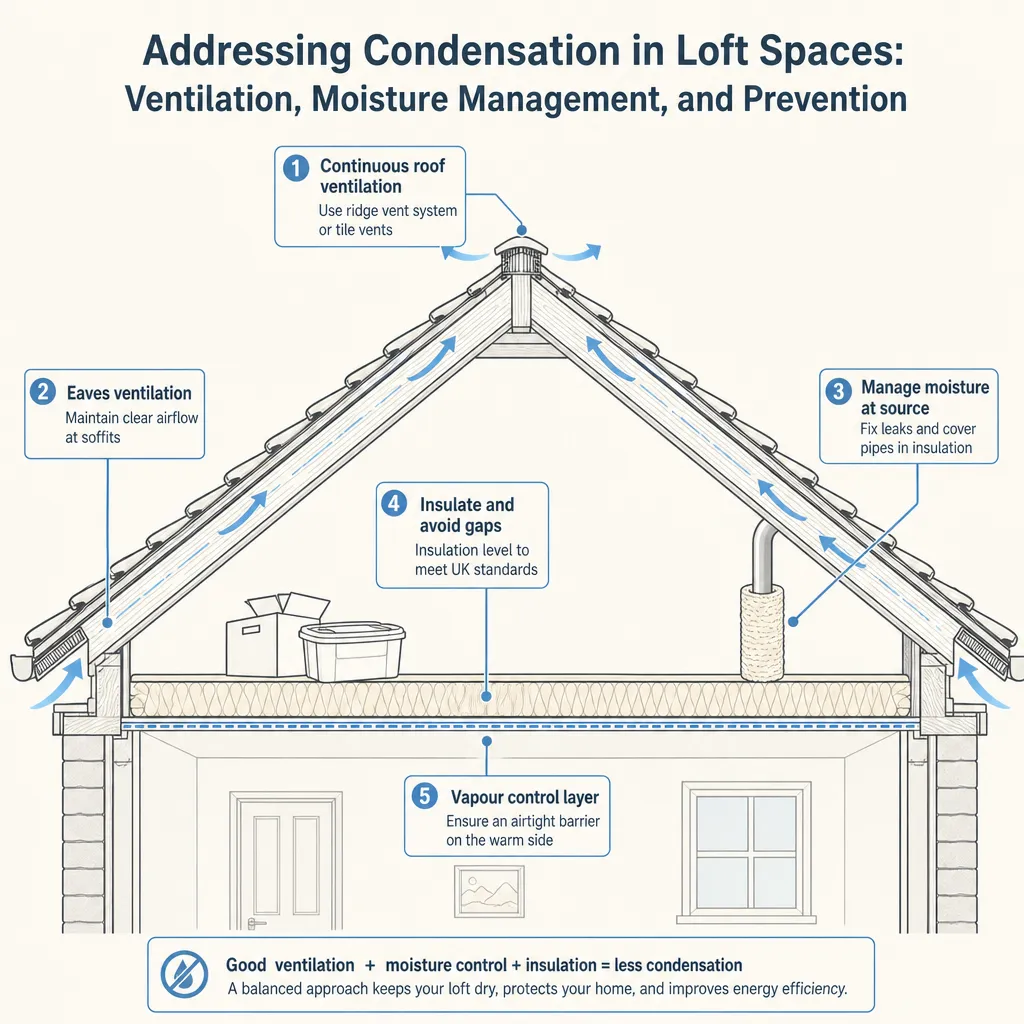
Addressing Condensation in Loft Spaces: Ventilation, Moisture Management, and Prevention
Loft condensation forms when warm, moist air from living spaces passes through ceiling gaps and deposits moisture on cold roof timbers or underfelt.
 Energy & Retrofit
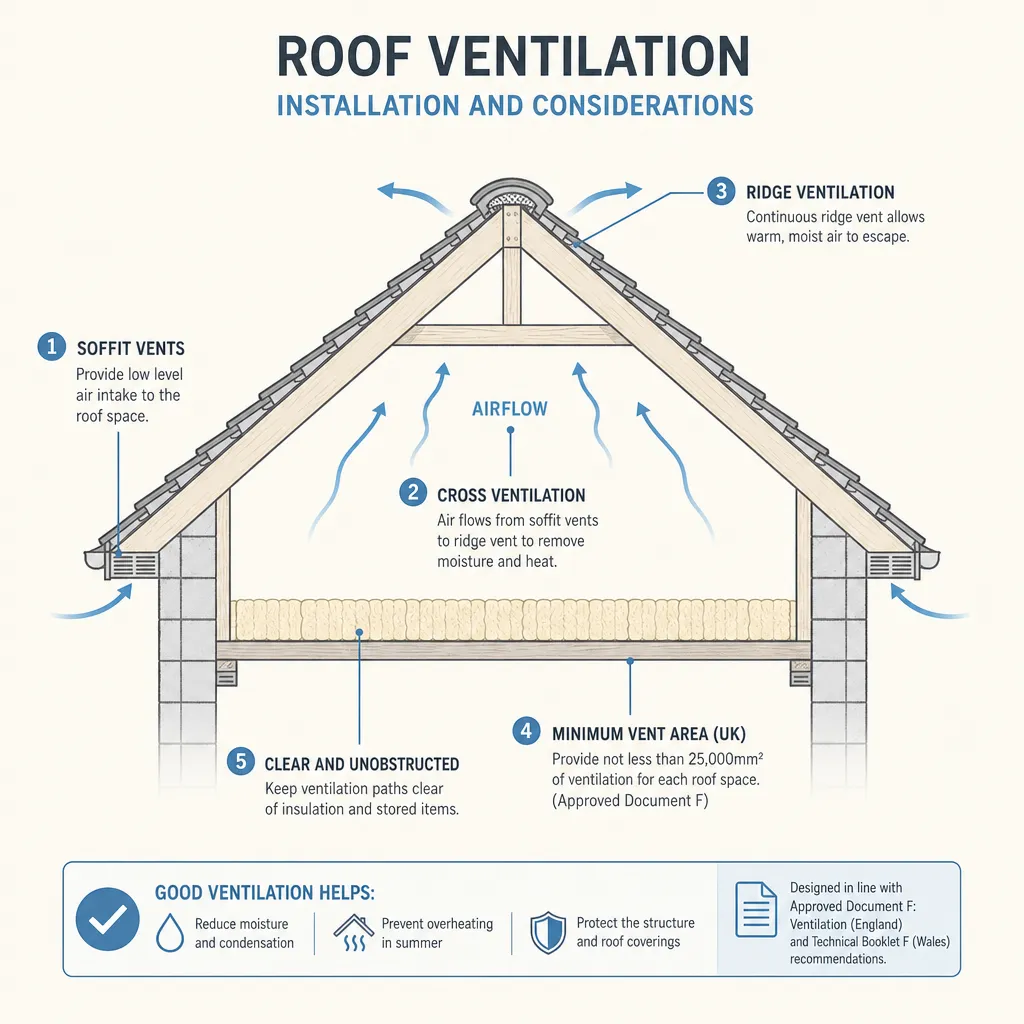
Roof Ventilation Installation and Considerations
Roof ventilation prevents condensation, rot, and structural damage in UK roof spaces by maintaining airflow above insulation.
 Energy & Retrofit
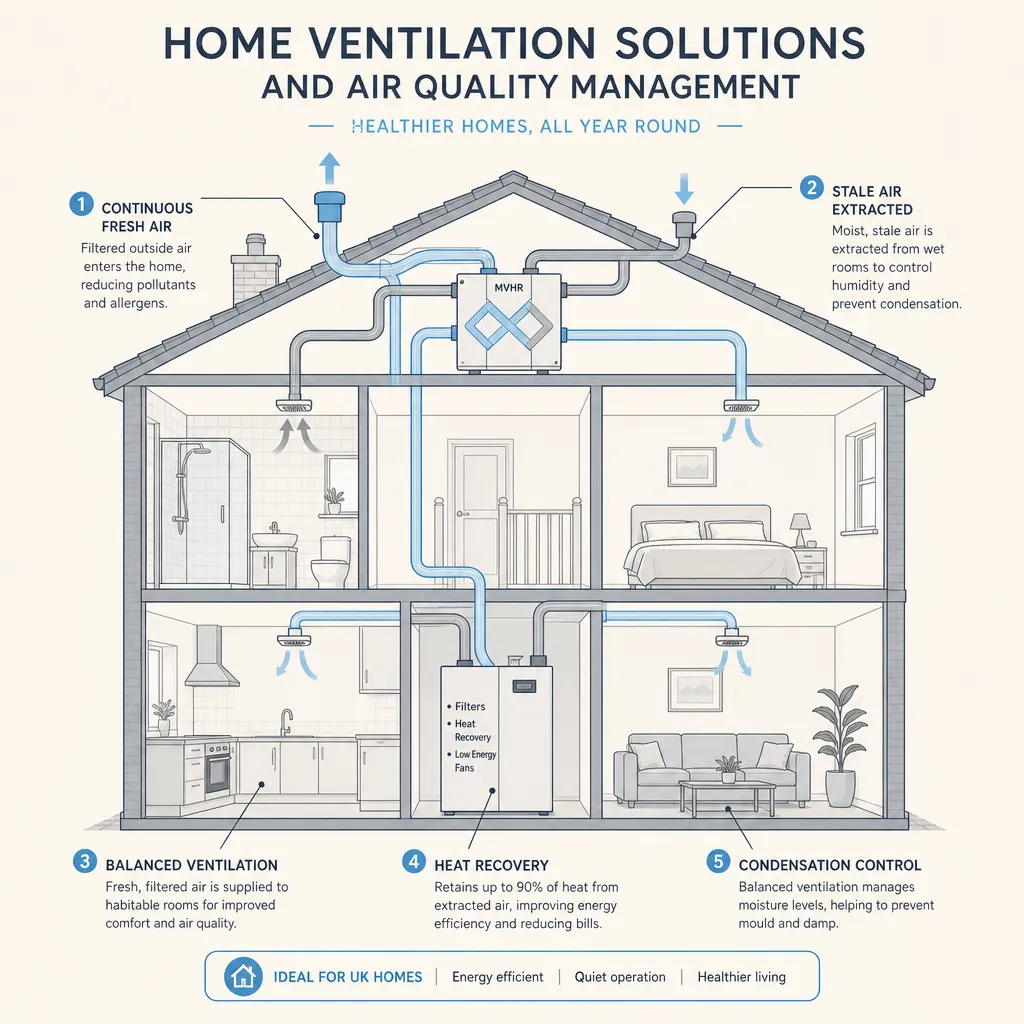
Home Ventilation Solutions and Air Quality Management
The right home ventilation solution depends on how airtight and well-insulated your property is.