Universal Design Principles: Adding Value and Accessibility to Your Home
By Housey · Last reviewed 19th of May 2026
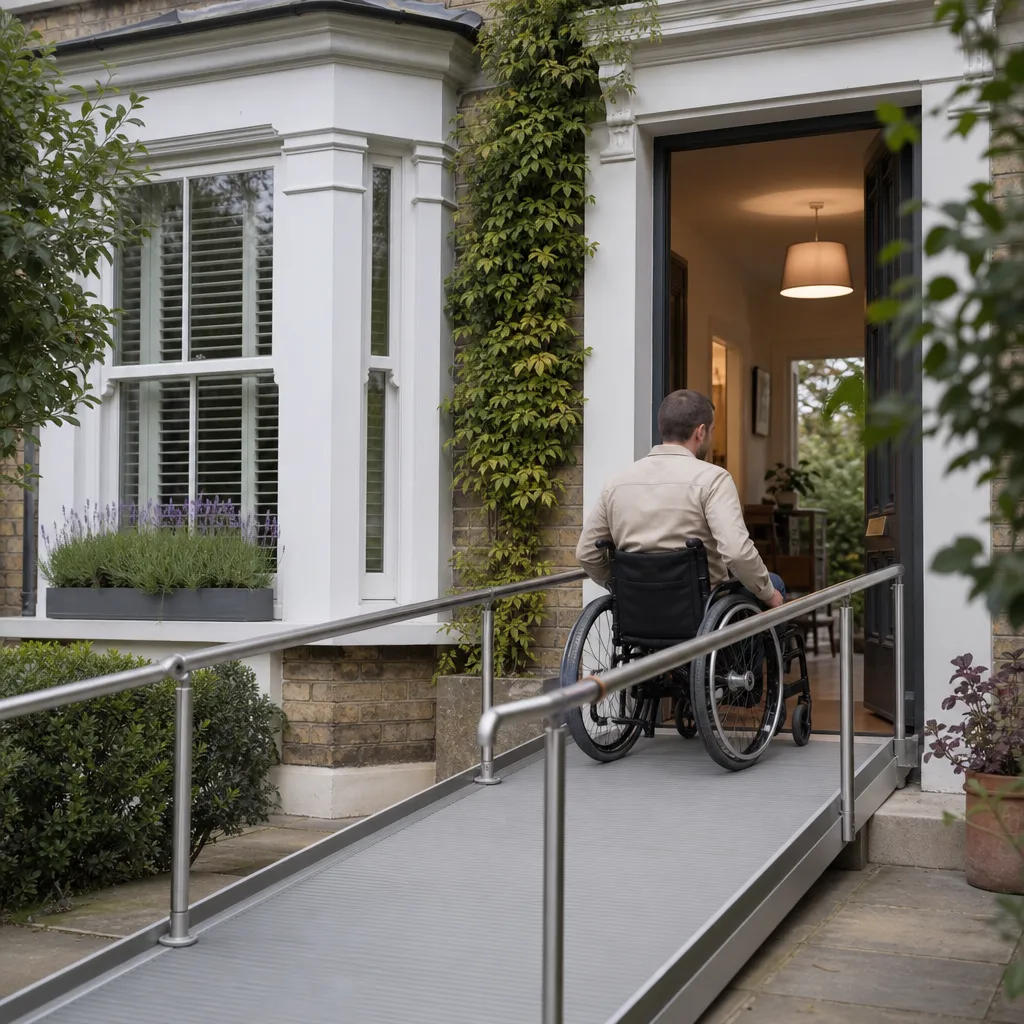
Universal Design Principles: Adding Value and Accessibility to Your Home
Universal design — sometimes called inclusive design or design for all — is attracting growing interest from UK homeowners planning extensions, refurbishments, or new builds. The trigger is often a change in personal circumstances: a family member becoming less mobile, approaching later life in a home that was never designed for it, or buying a property that needs adapting for a disabled household member. It can also be a proactive investment decision, as accessible features are increasingly valued by buyers and can future-proof a property against costly structural adaptations in years to come.
Key points
- Universal design aims to create spaces usable by the widest possible range of people without the need for later adaptation — distinct from retrofitting accessibility features reactively after a problem arises.
- Building Regulations Part M (Access to and use of buildings) sets minimum accessibility requirements for new dwellings and material changes of use, with Category 2 (Accessible and adaptable dwellings) requiring wider doorways (minimum 775mm clear internal, 850mm front door), ground-floor WC provision, and reinforced bathroom walls for future grab rails.
- The Lifetime Homes Standard sets 16 design criteria for inclusive housing, going beyond Part M minimums; it is incorporated into many local authority planning policies and is increasingly cited in design-and-build briefs.
- The Disabled Facilities Grant (DFG) provides means-tested funding of up to £30,000 in England and up to £36,000 in Wales for eligible adaptations, applied for through your local council.
- Retrofitting accessible features after a home is built is significantly more expensive than incorporating them at design stage — a level-access shower conversion in an existing bathroom typically costs £2,000–£8,000 or more versus planning it from the outset.
What does universal design mean in practice?
Universal design is not primarily about adding equipment or specialist aids retrospectively — it is about designing spaces from the outset so they work for people across a wide range of abilities, ages, and life stages. The seven principles of universal design include equitable use, flexibility in use, simple and intuitive operation, and tolerance for error. In UK residential practice, these translate into concrete decisions about layout, floor level changes, door widths, fixture positioning, and finish choices.
Key features of universally designed UK homes include:
- Level-access entrances: No steps at the front or rear door, with a covered approach where possible. Part M Category 2 requires a level or gently ramped approach with no greater than 1:20 gradient.
- Wider doorways: Part M Category 2 requires a minimum 775mm clear opening width for internal doors and 850mm for the front entrance. Wheelchair users typically need 800mm clear as a working minimum.
- Ground-floor WC: Space to include a toilet at ground level, even if the WC is not installed immediately. Category 2 requires the space to be provided; the fixture can follow when needed.
- Step-free internal circulation: Level floor transitions between room types, avoiding sudden thresholds between tile, timber, and carpet zones.
- Accessible bathroom or wet room: Level-access shower, walls reinforced with blocking for future grab rail installation, and adequate turning space (1,500mm diameter minimum for a wheelchair user).
- Adaptable kitchen design: Potential for knee space under worktops, varied work surface heights, and accessible appliance positioning.
Worked UK property scenario
Scenario: A couple in their late fifties own a 1960s detached house in Surrey. The hallway has 640mm clear door widths, there are two steps at the front entrance, and there is no ground-floor WC. They plan a single-storey rear extension to create a larger kitchen-dining room.
Universal design approach: Their architectural technologist incorporates a level-access threshold from the new extension into the rear garden, widens the internal hallway connecting to the main house to 900mm clear, and locates a ground-floor WC within the extension footprint. The bathroom upstairs is remodelled as a wet room with walls pre-fitted with blocking for grab rails and a 1,500mm turning circle at the entry point. Flush floor finishes are used throughout the extension and transition to the existing house.
Outcome: The works pre-empt the need for a stairlift or major structural adaptation later, the extension footprint meets Part M Category 2 criteria, and a subsequent valuation notes the ground-floor WC and level-access garden door as marketable features for the growing cohort of older buyers in the area.
Does universal design add value?
The relationship between accessible design and property value is nuanced but increasingly supported by market and demographic evidence:
- Estate agents in areas with older buyer demographics — many rural, coastal, and commuter-belt locations across southern England — report that ground-floor WCs, level-access showers, and single-storey layouts are actively sought-after.
- Properties meeting the Lifetime Homes Standard may appeal to a broader buyer pool including buyers with disabilities, older purchasers, and families planning multi-generational use.
- The cost differential between designing for accessibility at build stage versus retrofitting later is significant. A level-access shower planned into a new wet room may add minimal cost; installing one in an existing bathroom with structural floor alterations typically costs £2,000–£8,000 or more, not including associated decoration.
Comparison: designing in accessibility versus retrofitting
Approach | Timing | Cost efficiency | Disruption | Regulatory trigger |
|---|---|---|---|---|
Design for accessibility at new build or extension stage | During construction | Highly cost-efficient | Minimal (built in) | Part M applies |
Retrofit adaptation after a need is identified | Post-occupancy | Higher per-feature cost | Can be significant | DFG may part-fund |
Part M Category 1 (Visitable dwellings) | New dwellings, minimum standard | Moderate addition | None | Mandatory for new homes |
Part M Category 2 (Accessible and adaptable) | New dwellings, enhanced standard | Moderate addition | None | Required by many LPAs via planning policy |
Disabled Facilities Grant funded adaptation | After need is assessed | Grant-funded, means-tested | Varies by scope | Not regulatory — grant application |
Universal design homeowner checklist
Use this checklist when briefing an architect or planning a refurbishment or extension to identify universal design opportunities:
Planning and building regulations
For new dwellings and material changes of use, Part M of the Building Regulations applies. Local planning authorities in England are increasingly requiring a proportion of new housing to meet Category 2 (M4(2)) standards through planning policy, and some require a smaller proportion to meet Category 3 (M4(3), wheelchair user dwellings).
For extensions and alterations to existing dwellings, Part M requirements are more limited — confirm with your local authority building control body what applies to your specific project and property type.
Some works — particularly external ramps above a certain dimension, or works to listed buildings — may also require planning permission. Always check before committing to a design.
When to get professional help
An architectural technologist or architect with accessible design experience can ensure Part M compliance, apply the Lifetime Homes criteria, and identify universal design opportunities beyond the minimum standard. For adaptations funded by a Disabled Facilities Grant, an occupational therapist (usually arranged through your local council's adult social care team) will assess your needs and specify required works. For planning applications requiring Category 2 or 3 compliance, demonstrate compliance with an access statement prepared by someone familiar with Approved Document M.
How Housey can help
Housey connects you with experienced architectural technologists who understand Part M compliance and the Lifetime Homes Standard and can incorporate universal design principles into your extension or refurbishment brief. Design-and-build firms with inclusive construction experience can deliver the complete package from design through to handover, while extension builders familiar with accessible construction can work from an inclusive brief to deliver lasting, adaptable results.
Frequently asked questions
What is the Disabled Facilities Grant and how do I apply?
The Disabled Facilities Grant (DFG) is means-tested government funding available through your local council — up to £30,000 in England and up to £36,000 in Wales — to fund adaptations such as level-access showers, stairlifts, ramps, and widened doorways. Applications are typically assessed by an occupational therapist. Contact your local council's housing or adult social care team to start the process; waiting times vary considerably by area.
Do I need planning permission for accessibility adaptations?
Minor adaptations such as grab rails, small threshold ramps, and internal works generally do not require planning permission. Larger works — extensions, significant external ramps, or works to listed buildings or in conservation areas — may need consent. Always check with your local planning authority before starting work. The GOV.UK planning portal provides guidance on what counts as permitted development for your property type and location.
What is Part M Category 2 and how does it differ from Category 1?
Part M of the Building Regulations sets three dwelling categories. Category 1 (Visitable dwellings) is the mandatory minimum for new homes, requiring basic visitability including a level threshold. Category 2 (Accessible and adaptable dwellings) goes further — wider doorways, ground-floor WC provision, accessible bathrooms, and reinforced walls for future grab rails. Many local planning authorities now require Category 2 for some or all new homes in their area through planning policy.
Is universal design only relevant for older or disabled people?
No. Universal design benefits all users — parents with pushchairs, people recovering from injury, delivery workers, and anyone whose mobility changes temporarily or permanently over a lifetime. Level thresholds, wider doorways, and accessible bathrooms are features many buyers of any age find practically useful. The broader a home's usability, the wider its potential buyer pool and the more resilient its value across life stages.
Sources and further reading
- GOV.UK: Disabled Facilities Grant — GOV.UK
- Approved Document M: Access to and use of buildings — GOV.UK / DLUHC
- Lifetime Homes: Design criteria — Lifetime Homes / Helen Hamlyn Centre
- Centre for Accessible Environments — Centre for Accessible Environments
- Housing LIN: Inclusive design resources — Housing Learning and Improvement Network
Useful next reads
 Improvement & Build
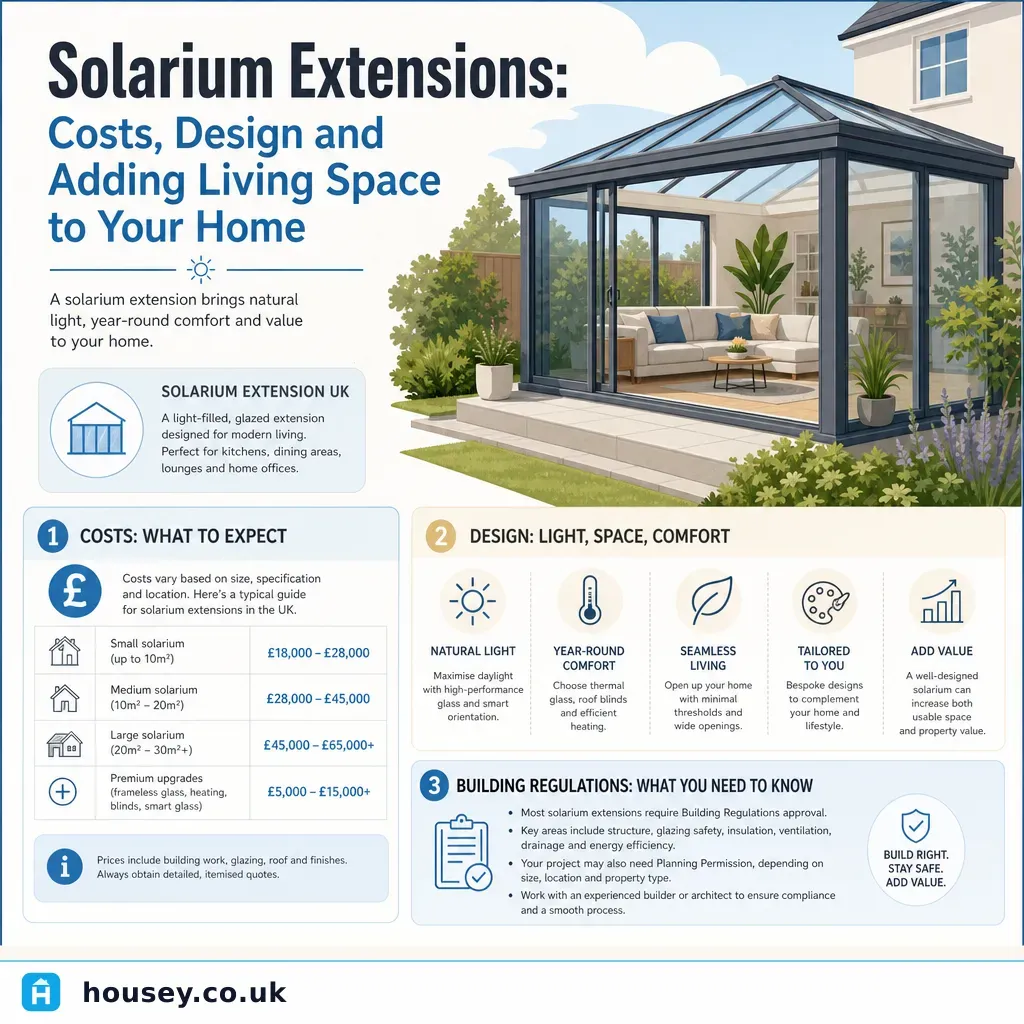
Solarium extensions: costs, design and adding living space to your home
A solarium extension is a predominantly glazed room addition with a structural glass roof, typically costing £28,000–£130,000 in the UK depending on size and specification.
 Improvement & Build
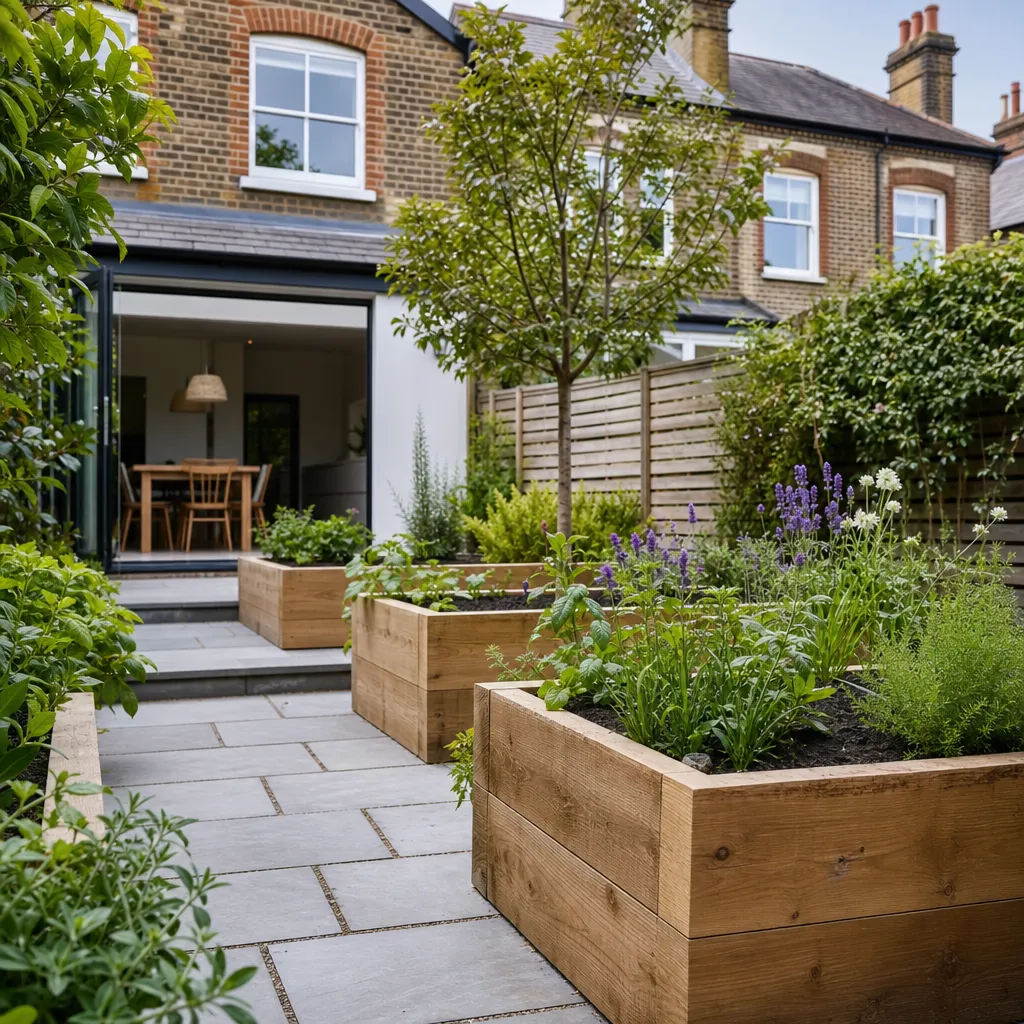
Raised Garden Beds: Design Benefits and Implementation
Raised garden beds suit most UK gardens, particularly those with heavy clay, poor drainage, or limited growing space.
 Improvement & Build
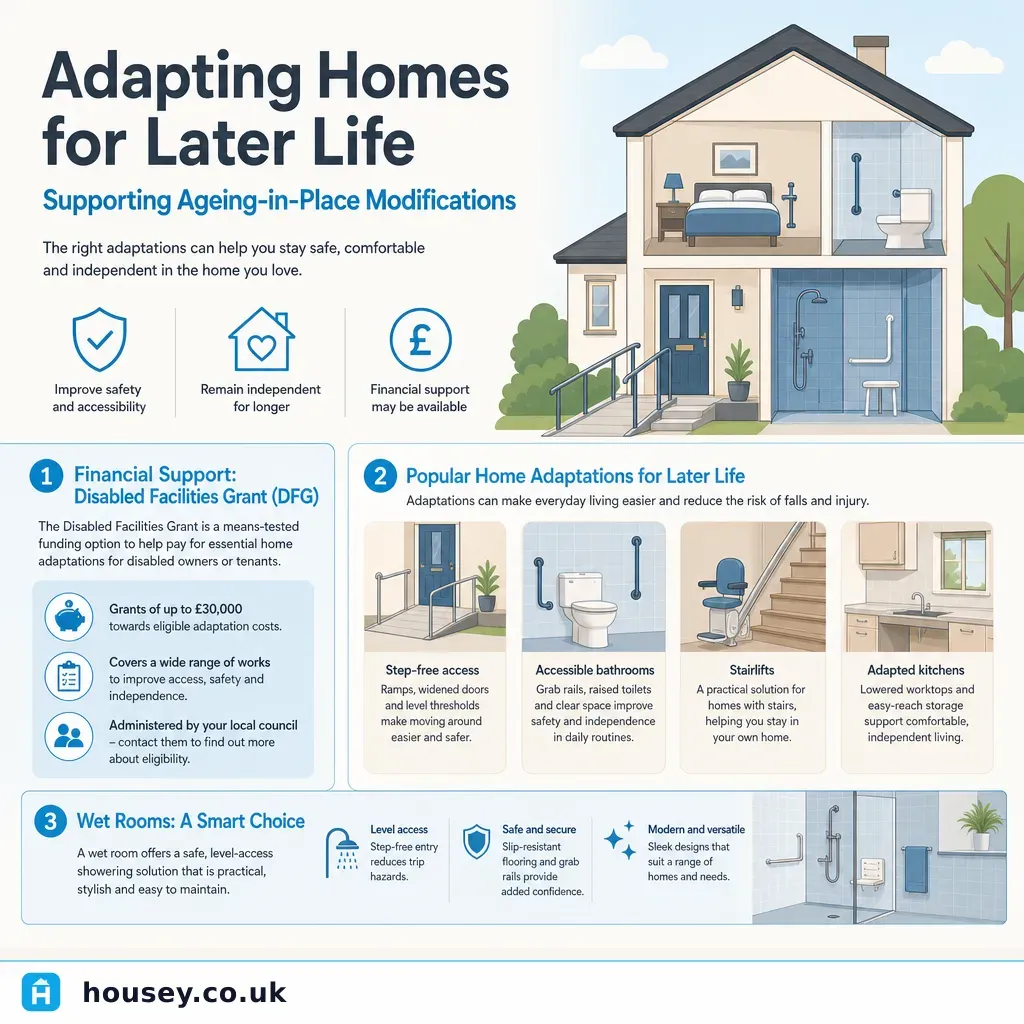
Adapting Homes for Later Life: Supporting Ageing-in-Place Modifications
Ageing-in-place adaptations in the UK range from simple aids such as grab rails and lever taps to major works including wet rooms, stairlifts, and single-storey extensions.
 Improvement & Build
Essential Home Improvements to Boost Appeal Before Selling
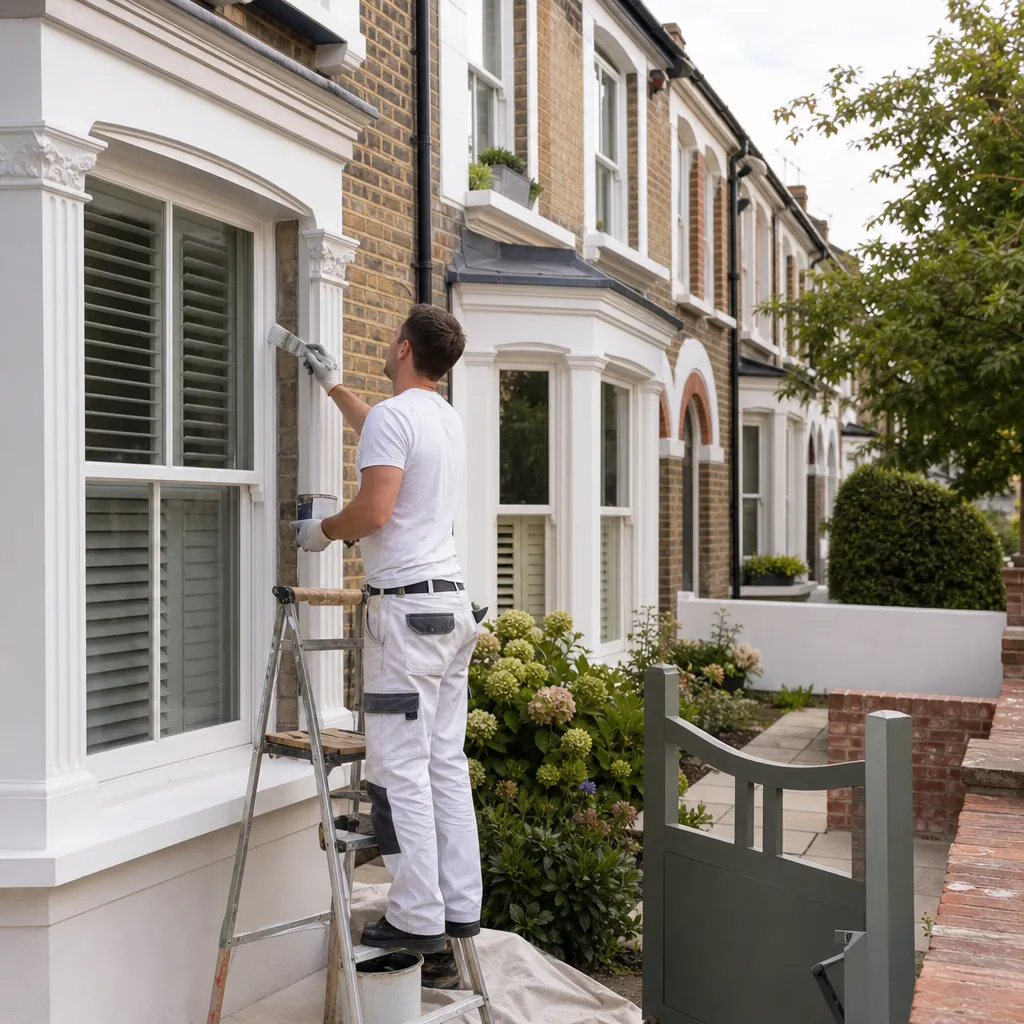
The highest-return pre-sale improvements are usually the simplest: fresh neutral décor, thorough cleaning, and kerb-appeal fixes such as a new front door or tidy garden.
 Improvement & Build
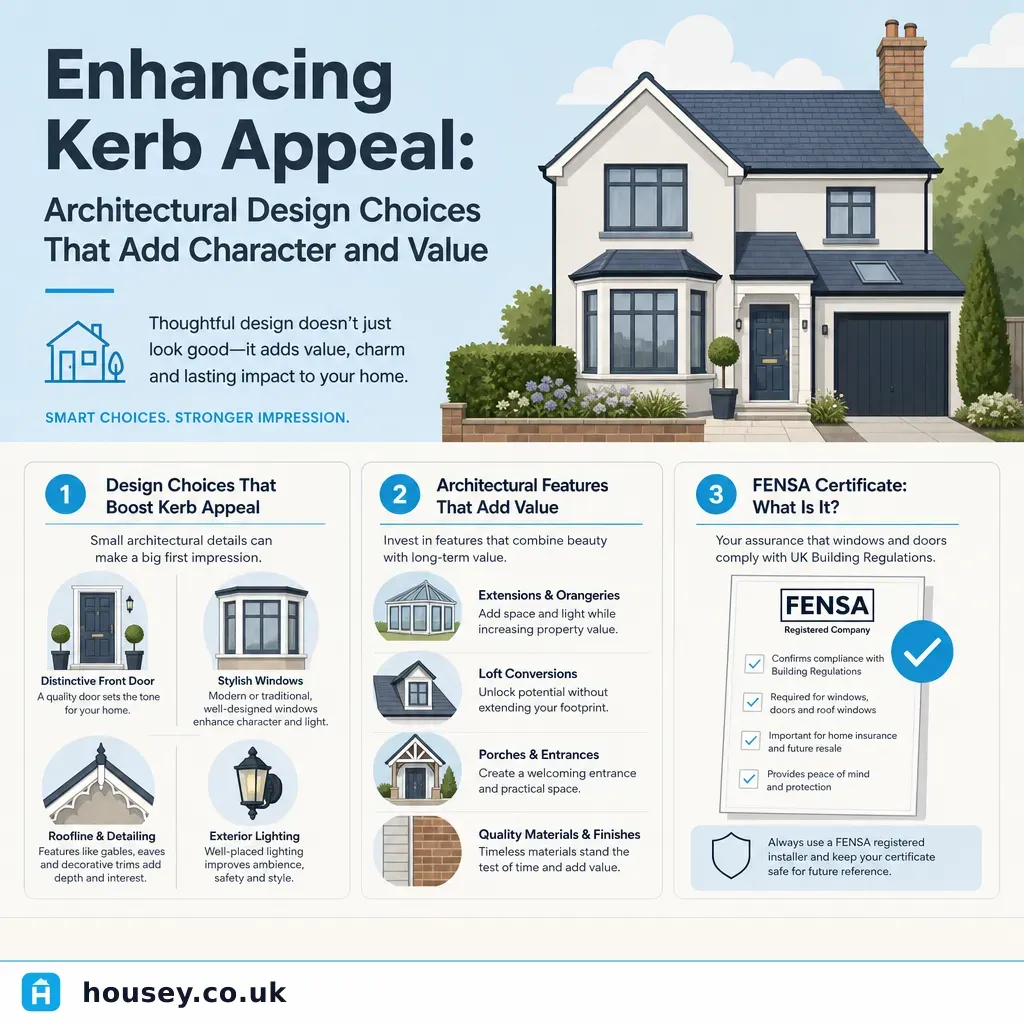
Enhancing Kerb Appeal: Architectural Design Choices That Add Character and Value
Improving kerb appeal in the UK starts with windows, doors, and boundary treatments matched to your property's era and planning context.