Upgrading From Gas to Electric Heating Systems
By Housey · Last reviewed 1st of June 2026
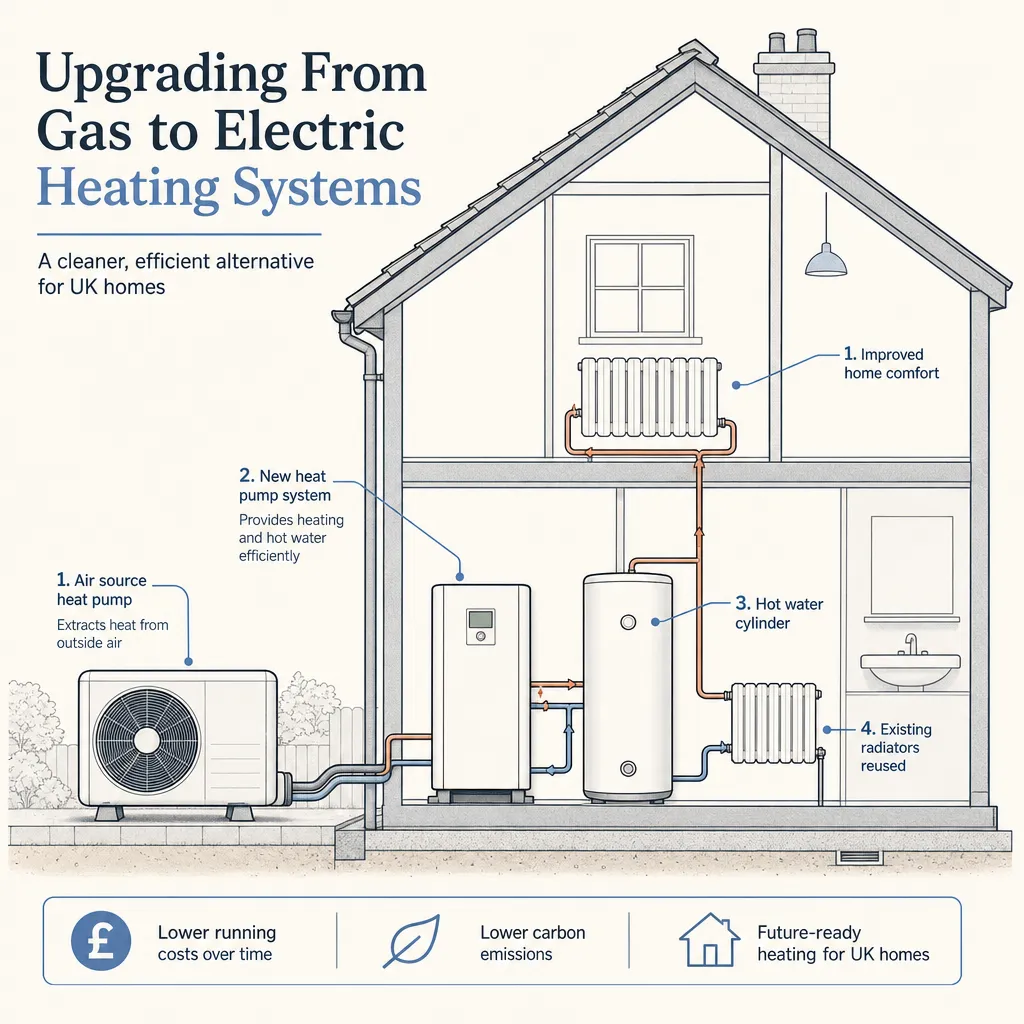
Upgrading From Gas to Electric Heating Systems
Millions of UK homes still rely on gas boilers, but a combination of net-zero climate policy, volatile gas prices, and rapidly improving heat pump technology is making electric heating a genuinely serious option for many households. Whether you are replacing an ageing boiler, planning a whole-house retrofit under PAS 2035, or preparing a new build for the post-2025 regulatory landscape, understanding what a switch to electric actually involves — the upfront costs, the running costs, the installation requirements, and the grant landscape — is essential before you commit.
Key points
- The Boiler Upgrade Scheme (BUS) offers a £7,500 grant towards an air source heat pump (ASHP) or ground source heat pump (GSHP) in England and Wales; your installer must hold MCS certification to apply on your behalf.
- Heat pumps achieve a Coefficient of Performance (CoP) of 2.5–4.5, meaning they deliver 2.5–4.5 units of heat for every unit of electricity consumed — but this advantage depends on correct sizing and adequate home insulation.
- PAS 2035:2023 is the UK standard governing domestic retrofit; appointment of a Retrofit Coordinator is mandatory for any project drawing on government-backed funding.
- New gas boiler installations are banned in new-build homes in England from 2025; replacement boilers in existing homes are not yet banned under current legislation.
- MCS heat pump installations must include a MCS 3005-compliant heat loss calculation to correctly size the unit — oversizing reduces efficiency, undersizing leaves rooms cold.
Which electric heating system suits your home?
System | How it works | Best for | CoP / efficiency | BUS grant? |
|---|---|---|---|---|
Air source heat pump (ASHP) | Extracts heat from outdoor air | Well-insulated homes, EPC C or above, space for outdoor unit | 2.5–4.5 CoP | Yes — £7,500 |
Ground source heat pump (GSHP) | Extracts heat from ground via buried loops | Large gardens, excellent insulation, higher budgets | 3.5–5.0 CoP | Yes — £7,500 |
Electric storage heaters | Store heat overnight on off-peak tariffs | Flats, smaller properties, limited outdoor space | ~100% (direct conversion) | No |
Infrared panels | Radiant heat from ceiling or wall panels | Supplementary heating, low-use rooms | ~100% (direct conversion) | No |
Electric boiler | Heats water for a wet radiator circuit | Smaller homes replacing combi with minimal disruption | ~99% (direct conversion) | No |
Decision tree: which system should you consider?
- Choose an ASHP if your home is EPC C or above (or will be after insulation upgrades), you have outdoor wall or garden space for the unit, and you want to maximise available grant support.
- Choose a GSHP if you have significant garden space, a very well-insulated home, and a budget to accommodate higher installation costs (typically £15,000–£30,000 indicative, last reviewed 2026-06-01).
- Choose electric storage heaters if your home is a flat or smaller property, you cannot accommodate a heat pump, or you are on a cheaper overnight electricity tariff such as Octopus Go or Economy 7.
- Consider an electric boiler if your existing wet radiator circuit is in good condition and you want a relatively straightforward like-for-like swap without the full heat pump process.
- Ask a qualified retrofit assessor first if your home has solid walls, poor existing insulation, signs of damp, or an EPC rating of D or below — insulation and ventilation work should be addressed before, or alongside, any heating system change.
Costs and grants
Indicative UK costs, last reviewed 2026-06-01. Quotes vary significantly by property size, location, installer, and existing infrastructure.
Work | Indicative cost range |
|---|---|
ASHP supply and installation | £8,000–£15,000 (before BUS grant) |
GSHP supply and installation | £15,000–£30,000 (before BUS grant) |
Electric boiler supply and installation | £1,500–£4,000 |
Electric storage heater replacement (per unit) | £400–£1,200 |
Radiator upgrades (for heat pump compatibility) | £150–£400 per radiator |
Wet underfloor heating (retrofit) | £80–£120 per m² |
The Boiler Upgrade Scheme is administered by Ofgem. The grant is applied as a discount at the point of installation — you pay the balance. Your installer must be MCS-certified and apply on your behalf; homeowners cannot apply directly. Scotland has separate grant and loan schemes through Home Energy Scotland.
ECO4 (Energy Company Obligation) may cover insulation and heating upgrades for low-income households or those in fuel poverty. Eligibility is means-tested and scheme availability changes; check GOV.UK for current details.
Running costs depend heavily on your electricity tariff. Specialist time-of-use tariffs (Octopus Cosy, Intelligent Octopus) designed for heat pump users can significantly reduce annual bills compared to standard variable rates.
What the installation process involves
A heat pump installation is not a straight boiler swap. Most properties require:
- Retrofit assessment — a qualified assessor (or Retrofit Coordinator under PAS 2035 where government funding is involved) evaluates your home's fabric, insulation, airtightness, and heat demand.
- Fabric-first improvements — loft insulation, cavity wall fill, or wall insulation may be recommended to reduce heat demand before the heat pump is sized.
- Heat loss calculation — MCS-certified installers must carry out an MCS 3005-compliant room-by-room heat loss calculation to correctly size the unit.
- Radiator and pipework assessment — heat pumps run at lower flow temperatures (35–55°C versus 70–80°C for a gas boiler). Existing radiators often need to be upsized or supplemented with underfloor heating.
- Hot water provision — most heat pump systems require a hot water cylinder; if your current system is a combi boiler, space must be found for a cylinder.
- Electrical supply check — an ASHP typically requires a dedicated 32A or larger circuit; your consumer unit and incoming supply may need upgrading by a registered electrician.
- Planning and Building Regulations — most domestic ASHPs are permitted development in England, but exceptions apply. Building Regulations Part L compliance is managed by your MCS-certified installer.
Important limitations
This article provides general information only. Heat pump sizing, system design, and retrofit sequencing are technical disciplines where errors can result in underheating, interstitial condensation, damp, or wasted expenditure. Grant schemes, tariff structures, and regulations change frequently. None of the information here constitutes engineering, energy, or legal advice. A qualified professional — such as an MCS-certified installer or PAS 2035 Retrofit Coordinator — should assess your specific property before you commit to any system or expenditure.
What to ask a qualified professional
Before instructing a heat pump installer or retrofit assessor:
- Is my home suitable for a heat pump without significant upfront fabric improvements, or does insulation need to come first?
- What is the MCS 3005 heat loss calculation for my property, and what size heat pump does it indicate?
- Which rooms will need larger radiators or underfloor heating to work effectively at the design flow temperature?
- Is my electrical supply adequate, or will I need to budget for a supply or consumer unit upgrade?
- Are you MCS-certified, and will you apply for the Boiler Upgrade Scheme grant on my behalf?
- What is the estimated Seasonal Coefficient of Performance (SCoP) for this system in my specific property?
- Are there any ventilation or moisture risks I need to address as part of this retrofit?
- What maintenance does the heat pump require annually, and what warranty does the unit carry?
When to get professional help
Seek advice from a Retrofit Coordinator, MCS-certified installer, or independent energy consultant if:
- Your home has solid walls, no cavity insulation, or an EPC rating of D or below.
- There is any existing damp, condensation, or mould in the property.
- The property is listed or in a conservation area.
- You are applying for ECO4 or any other government-backed funding (PAS 2035 Retrofit Coordinator appointment is mandatory in these cases).
- A previous heat pump installation has left rooms cold or produced excessive condensation.
How Housey can help
An independent energy-efficiency consultant can assess your home's heat demand, advise on the most appropriate electric heating system for your situation, help you sequence fabric improvements correctly, and prepare you to compare installer quotes on an equal basis — before any money changes hands.
Frequently asked questions
Will a heat pump heat my home as effectively as a gas boiler?
Yes, provided the system is correctly sized and your home has adequate insulation. Heat pumps run at lower flow temperatures than gas boilers, so radiators may need to be upsized. An MCS 3005-compliant heat loss calculation before installation is essential to confirm whether existing radiators can emit enough heat at the lower flow temperature a heat pump requires.
Can I get a grant for switching from gas to electric heating?
The Boiler Upgrade Scheme offers £7,500 for an air source or ground source heat pump in England and Wales. Your installer must be MCS-certified to apply on your behalf. Separate grant schemes exist in Scotland through Home Energy Scotland. Electric storage heaters and infrared panels do not currently qualify for Boiler Upgrade Scheme support.
Is a heat pump more expensive to run than a gas boiler?
At 2026 UK energy prices, running costs depend heavily on your electricity tariff, home insulation, and the system's seasonal coefficient of performance. Specialist time-of-use tariffs such as Octopus Cosy can reduce costs significantly. Use the Energy Saving Trust's heat pump running cost calculator with your property's actual heat demand for a realistic comparison against your current gas bill.
Do I need planning permission to install a heat pump?
Most domestic air source heat pumps in England qualify as permitted development, so no planning application is needed. Exceptions include flats, listed buildings, and some conservation areas. Always check with your local planning authority before installation, and confirm that the unit meets the noise and siting conditions set out in the Permitted Development Order.
Sources and further reading
- Boiler Upgrade Scheme — Ofgem — grant eligibility and application
- PAS 2035:2023 — BSI — UK retrofit standard for domestic buildings
- MCS Standards (MCS 003) — Microgeneration Certification Scheme — heat pump sizing and installation requirements
- Heat pumps: what you need to know — Energy Saving Trust — consumer guidance on costs and performance
- ECO4 scheme — GOV.UK — fuel poverty heating and insulation support
- Home Energy Scotland — Energy Saving Trust — Scottish grant and loan schemes
Useful next reads
 Energy & Retrofit
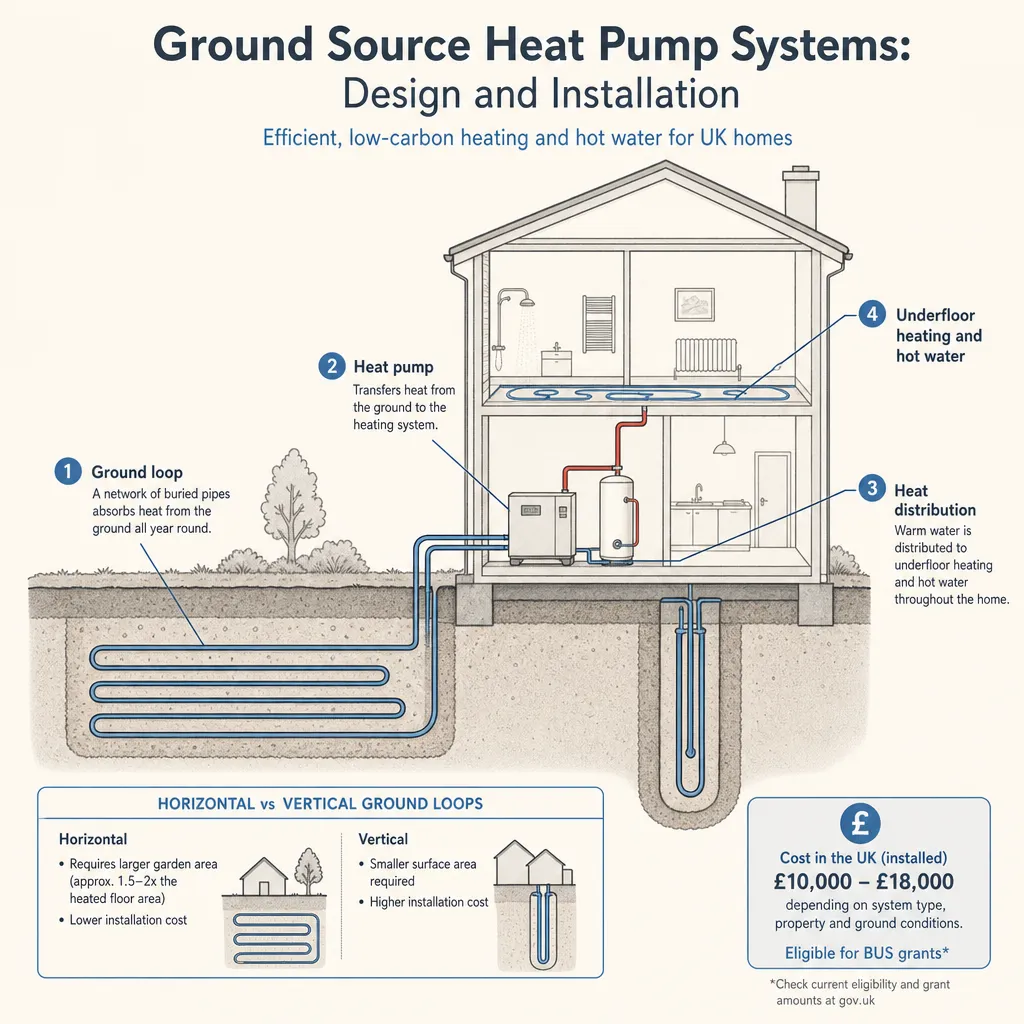
Ground Source Heat Pump Systems: Design and Installation
Ground source heat pumps extract heat from the earth through buried loops or boreholes, then upgrade it for space heating and hot water.
 Energy & Retrofit
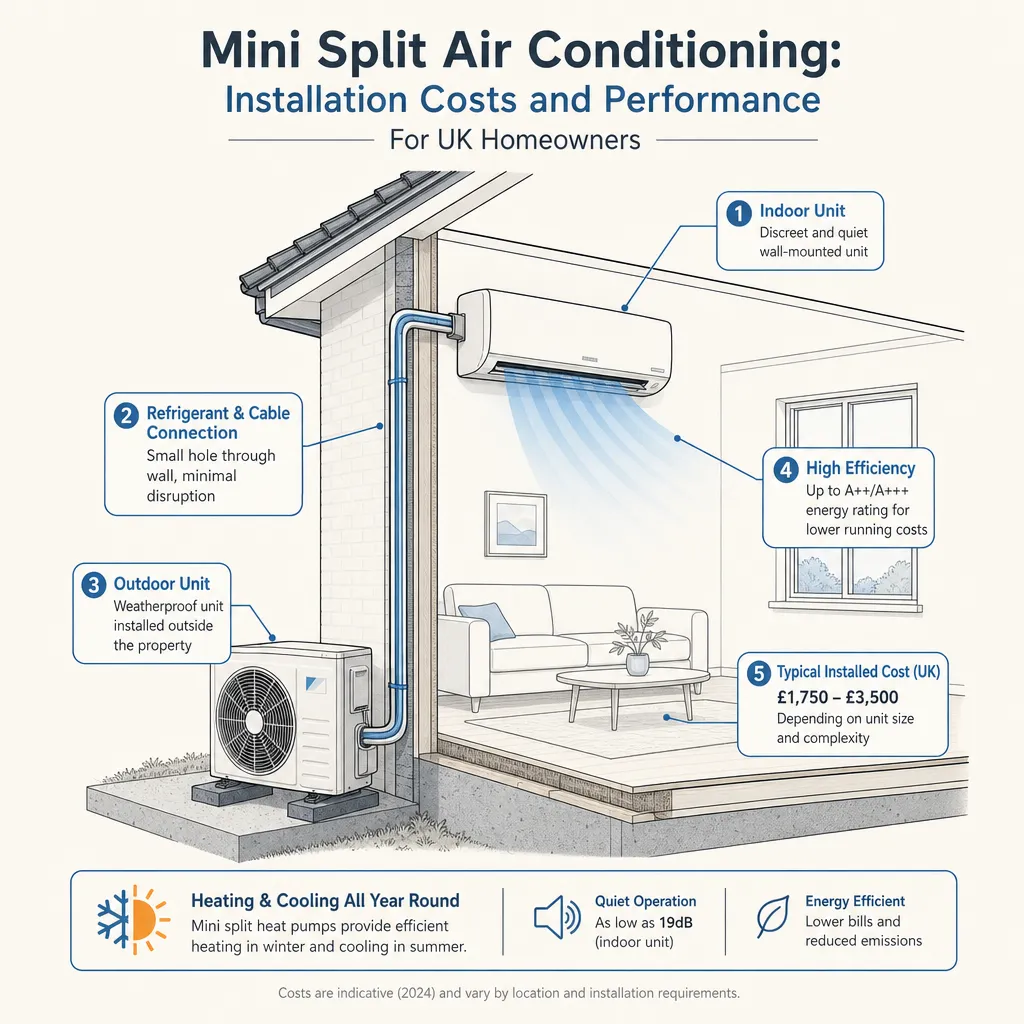
Mini Split Air Conditioning: Installation Costs and Performance
A mini-split (ductless) air conditioning unit costs roughly £1,500–£4,000 installed for a single room in the UK.
 Energy & Retrofit
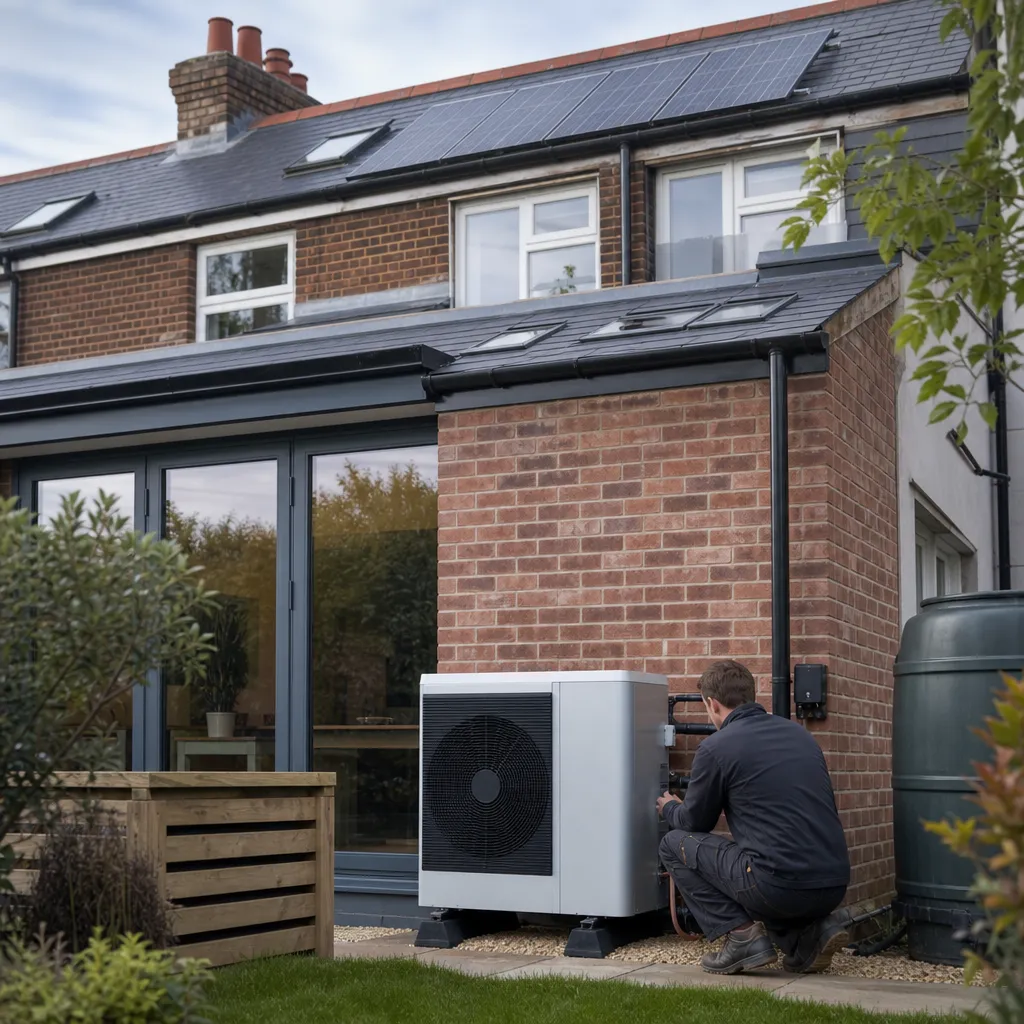
Renewable Energy Technologies for Homes
UK homes can choose from solar photovoltaic panels, air source heat pumps, ground source heat pumps, and battery storage as the main residential renewable technologies.
 Energy & Retrofit
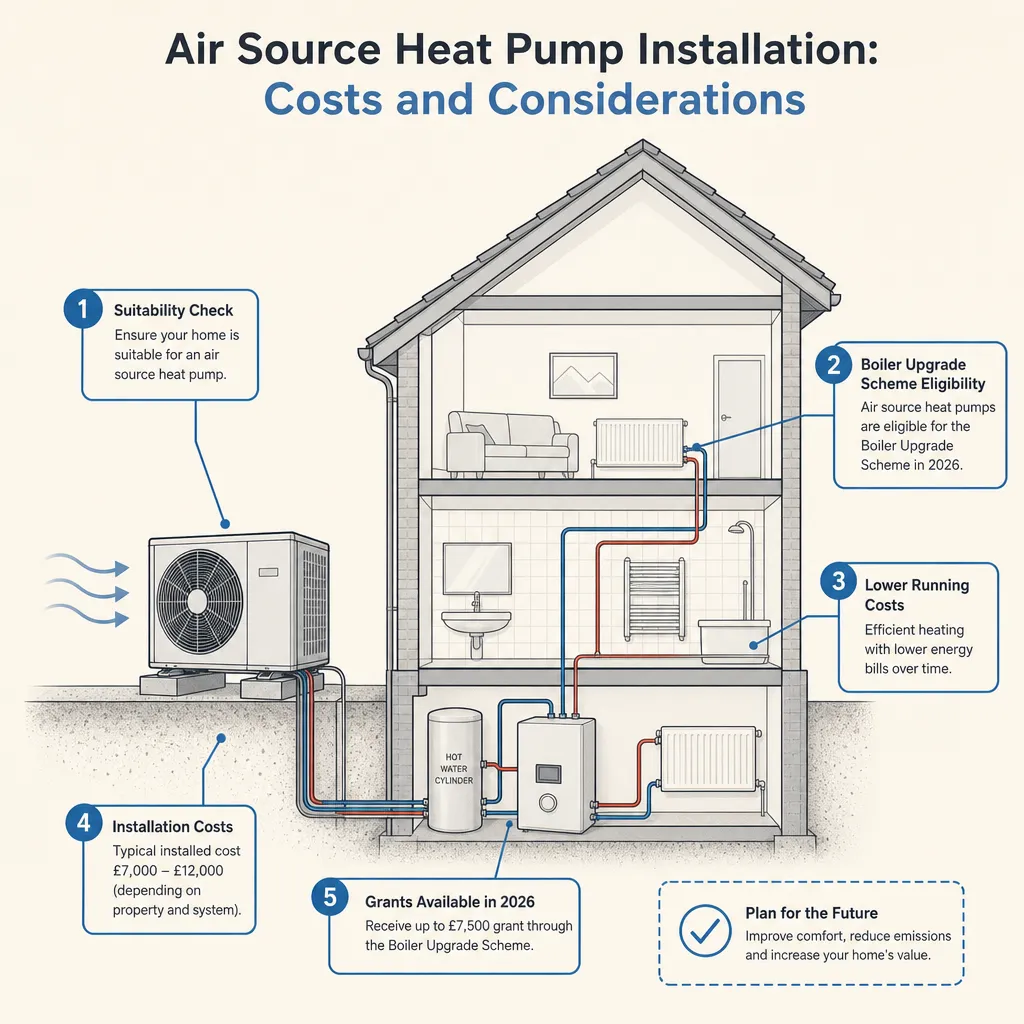
Air Source Heat Pump Installation: Costs and Considerations
Air source heat pump installation in the UK typically costs £8,000–£15,000 before the £7,500 Boiler Upgrade Scheme grant, available through MCS-certified installers in England and Wales.
 Energy & Retrofit
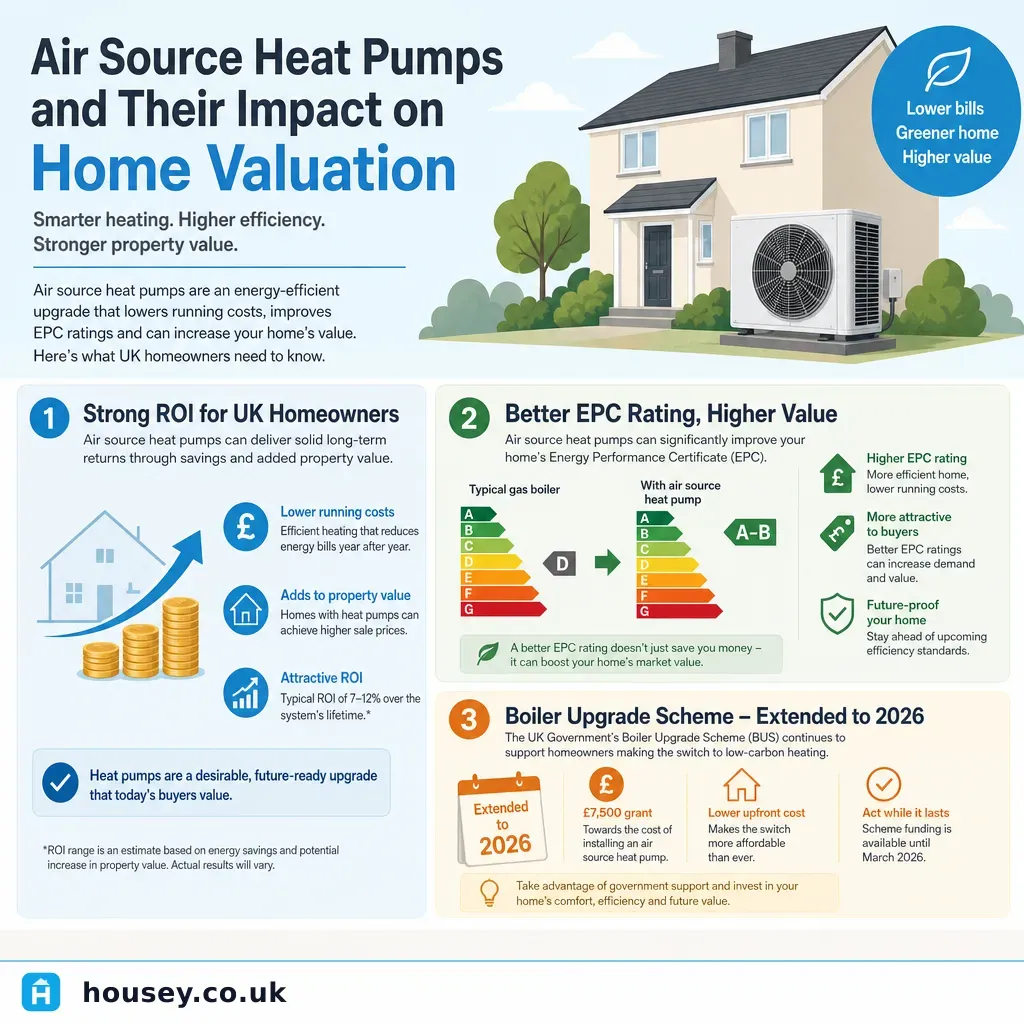
Air Source Heat Pumps and Their Impact on Home Valuation
An air source heat pump can improve your home's EPC rating, which may positively influence its market value — particularly as mortgage lenders and buyers increasingly factor in energy performance.