Upgrading to a Tiled Roof Conservatory: Performance, Aesthetics, and Installation
By Housey · Last reviewed 18th of May 2026
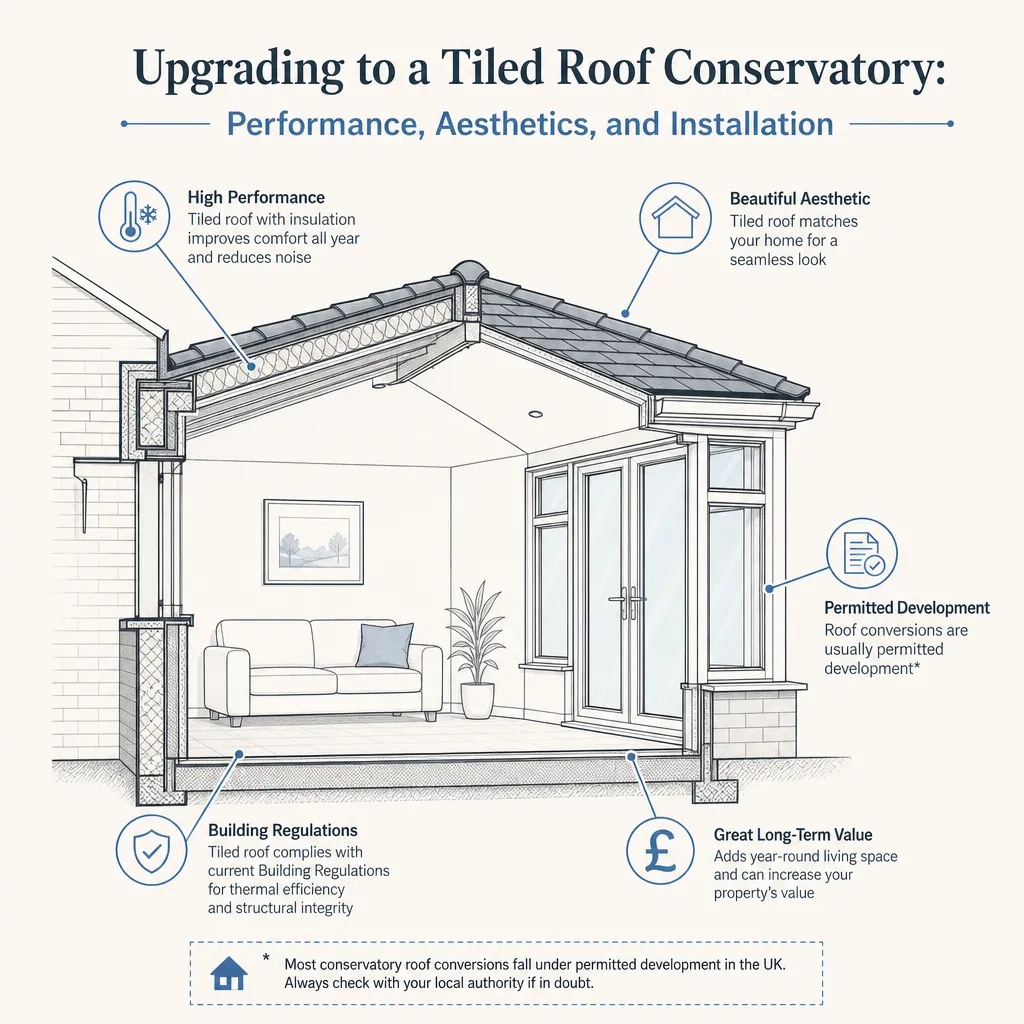
Upgrading to a Tiled Roof Conservatory: Performance, Aesthetics, and Installation
Many UK homeowners find their conservatory unusable in summer heat and winter cold — polycarbonate and single-glazed glass roofs offer little thermal resistance, turning the space into a greenhouse in July and an unheated lean-to in January. Replacing that roof with a tiled solid structure transforms the conservatory into a genuinely habitable room, but the project sits at the intersection of building regulations, planning rules, and structural requirements that vary by property and local authority.
Key points
- Converting a conservatory roof from a translucent or transparent material to solid tiles almost always triggers Building Regulations approval under Part A (structural loading) and Part L (thermal performance) in England and Wales — the standard conservatory exemption does not apply once the roof is no longer predominantly translucent.
- Most tiled conservatory roof conversions fall within permitted development rights in England under the Town and Country Planning (General Permitted Development) (England) Order 2015, but properties in conservation areas, listed buildings, or with planning conditions attached will need formal permission.
- Approved Document L (2021 edition) sets a maximum U-value of 0.18 W/m²K for roofs in new or replacement extensions — proprietary lightweight tile systems typically achieve 0.13–0.18 W/m²K.
- The existing conservatory's base and frame must be assessed for structural adequacy before a tiled roof is fitted; many aluminium-frame conservatories built in the 1980s–2000s are not rated to carry the additional dead load.
- Indicative costs for a tiled conservatory roof conversion range from £5,000 to £20,000+ depending on size, system type, glazed ridge options, and frame condition. Indicative UK costs, last reviewed 2026-05-18.
Why upgrade your conservatory roof to tiles?
Polycarbonate roofs have very poor thermal performance — typical U-values can exceed 2.0 W/m²K, far above what modern extensions require. A modern tiled system can achieve 0.18 W/m²K or better, making the space genuinely usable year-round and reducing heat loss through the roof of the adjoining house.
Beyond thermal performance, tiled roofs offer:
- Acoustic improvement: Polycarbonate amplifies rainfall noise significantly; tiles dampen it.
- Aesthetic integration: A tiled pitch matches the main roof of Victorian terraces, 1930s semis, and traditional detached homes far better than sheeted polycarbonate.
- Increased usable space: The room is more likely to be treated as habitable living space by mortgage lenders and estate agents once thermally improved.
- Reduced solar gain in summer: Opaque tiles block radiant heat, eliminating the overheating that polycarbonate roofs cause on sunny days.
Which tiled roof system should you choose?
System | Best for | Not ideal for | Typical U-value | Notes |
|---|---|---|---|---|
Lightweight tile-effect solid roof (e.g. Ultraroof, Leka) | Most conservatories; aluminium or uPVC frames | Very large spans without additional support | 0.13–0.18 W/m²K | Pre-engineered; most building control-friendly; often includes compliance documentation |
Traditional roof tiles on new timber or steel frame | Large Victorian-style conservatories; brick bases; period homes | Older thin aluminium frames without reinforcement | 0.15–0.20 W/m²K | Usually requires full frame replacement |
Glazed-ridge hybrid roof | Homeowners wanting natural light with improved insulation | Purely thermal focus | Varies by design | Combines tile panels with a central glazed ridge or roof lantern |
Choose a system that comes with a building control compliance pack — this simplifies the approval process and provides the documentation you will need when selling the property.
Building regulations and planning permission
When building regulations approval is required
Replacing a conservatory roof with a solid tiled structure removes the conservatory's building regulations exemption. The exemption under Schedule 2, Class 7 of the Building Regulations 2010 applies specifically to structures with a translucent or transparent roof — once the roof changes, Building Regulations apply.
Approval is typically needed under:
- Part A — structural adequacy of the new roof and existing frame
- Part L — thermal performance (the roof must meet the U-value in Approved Document L)
- Part B — fire spread and means of escape where the conservatory connects to habitable rooms
- Part F — ventilation, if the new structure changes airflow patterns
Your installer can submit a Building Notice (simpler, no drawings needed upfront) or a Full Plans application to your local building control body or an Approved Inspector.
Planning permission and permitted development
In England, most domestic conservatory roof conversions are permitted development under Part 1 of Schedule 2 to the Town and Country Planning (General Permitted Development) (England) Order 2015. Permitted development does not apply if:
- The property is in a conservation area, an Area of Outstanding Natural Beauty, or is a listed building
- The property has had permitted development rights removed by a planning condition
- The converted structure would exceed the height of the ridge of the original house
A Lawful Development Certificate (LDC) is not mandatory but provides written confirmation from the local planning authority that no permission was needed — useful when selling the property. Rules differ in Scotland, Wales, and Northern Ireland.
What to expect during installation
A typical tiled conservatory roof conversion follows this sequence:
- Structural survey — the installer assesses the existing frame, base, and fixings for load-bearing capacity.
- Building control and planning applications — submitted before or concurrent with ordering materials.
- Frame preparation or replacement — glazing bars removed; frame reinforced or replaced where structurally inadequate.
- Proprietary frame and tile installation — including ridge, valley, soffit, and fascia details.
- Electrical installation — recessed lighting and any new circuits, by an NICEIC or NAPIT-registered electrician.
- Internal boarding and plastering — insulated ceiling and internal wall finishes installed.
- Building control sign-off — inspector confirms the work meets the approved specification.
Homeowner checklist: before commissioning a tiled roof conversion
Important limitations
This article provides general information about tiled conservatory roof conversions in England and Wales. Building regulations and planning rules can vary significantly by local authority, property type, and site history. Rules differ in Scotland and Northern Ireland, and Wales has its own Part L Approved Document. Nothing in this article constitutes planning approval, building control approval, or structural engineering advice. Listed buildings require listed building consent in addition to planning permission, and carrying out unauthorised works to a listed building can have serious legal consequences. Always consult your local planning authority and a qualified building control body before commencing work.
When this becomes urgent
Stop work and seek professional advice immediately if:
- The existing conservatory frame shows signs of movement, cracking, or separation from the house wall
- You discover materials that may contain asbestos during any preparatory works — do not disturb; contact an HSE-licensed asbestos contractor
- Structural investigation reveals inadequate foundations under the conservatory base
- A building control or planning enforcement notice is received
- The proposed installer suggests proceeding without building regulations approval on a project that clearly requires it
What to ask a qualified professional
Before instructing a builder or specialist installer:
- Are you registered with a competent person scheme, or will you submit a building notice to the local building control body?
- Can you confirm the system you are installing meets the U-value requirements in Approved Document L, and provide the compliance documentation?
- What structural assessment will you carry out on the existing frame and base — and will you provide this in writing?
- What building control documentation will I receive at completion?
- Is this project covered by your public liability and professional indemnity insurance?
- Who is responsible for the building control application and associated fees — is this included in the quote?
- Will electrical works be carried out by an NICEIC or NAPIT-registered electrician, and will I receive an Electrical Installation Certificate?
- What does the roof guarantee cover, for how long, and is it insurance-backed?
How Housey can help
Housey connects UK homeowners with vetted extension builders and experienced roofers who specialise in conservatory roof conversions, including structural assessments, building control applications, and installation of compliant tiled roof systems.
Frequently asked questions
Do I always need building regulations approval for a tiled conservatory roof?
In almost all cases in England and Wales, yes. Replacing a translucent roof with a solid tiled structure removes the building regulations exemption that applies to conventional conservatories. Approval is needed under at least Part A and Part L. Submit a building notice or full plans application to your local building control body or an Approved Inspector before or during the work.
Will a tiled conservatory roof add value to my home?
A compliant conversion with building control sign-off typically makes the space more appealing to buyers and may allow the room to count towards habitable floor area. Without building regulations approval, a buyer's solicitor is likely to raise requisitions — potentially requiring indemnity insurance or retrospective approval — which can complicate or delay a sale.
How long does a tiled conservatory roof conversion take?
Most conversions take three to seven working days for structural and roofing works, depending on size and frame condition. Allow additional time for building control applications, internal boarding, plastering, and electrical installation. Some proprietary systems include pre-assessed compliance packs that can reduce the time spent on building control approval.
Can I keep a glazed section alongside tiles?
Yes. Hybrid roofs combining tiled panels with a central glazed ridge or roof lantern are widely available. These allow natural light while significantly improving thermal performance compared to a fully glazed roof. Confirm that the glazed sections meet the U-value requirements under Approved Document L, and that the overall roof satisfies the building control submission.
Sources and further reading
- Building Regulations 2010 — Schedule 2, Class 7 — legislation.gov.uk
- Approved Document L: Conservation of fuel and power — GOV.UK
- Permitted development rights for householders: technical guidance — GOV.UK
- Planning Portal: conservatories and extensions — Planning Portal
Useful next reads
 Improvement & Build
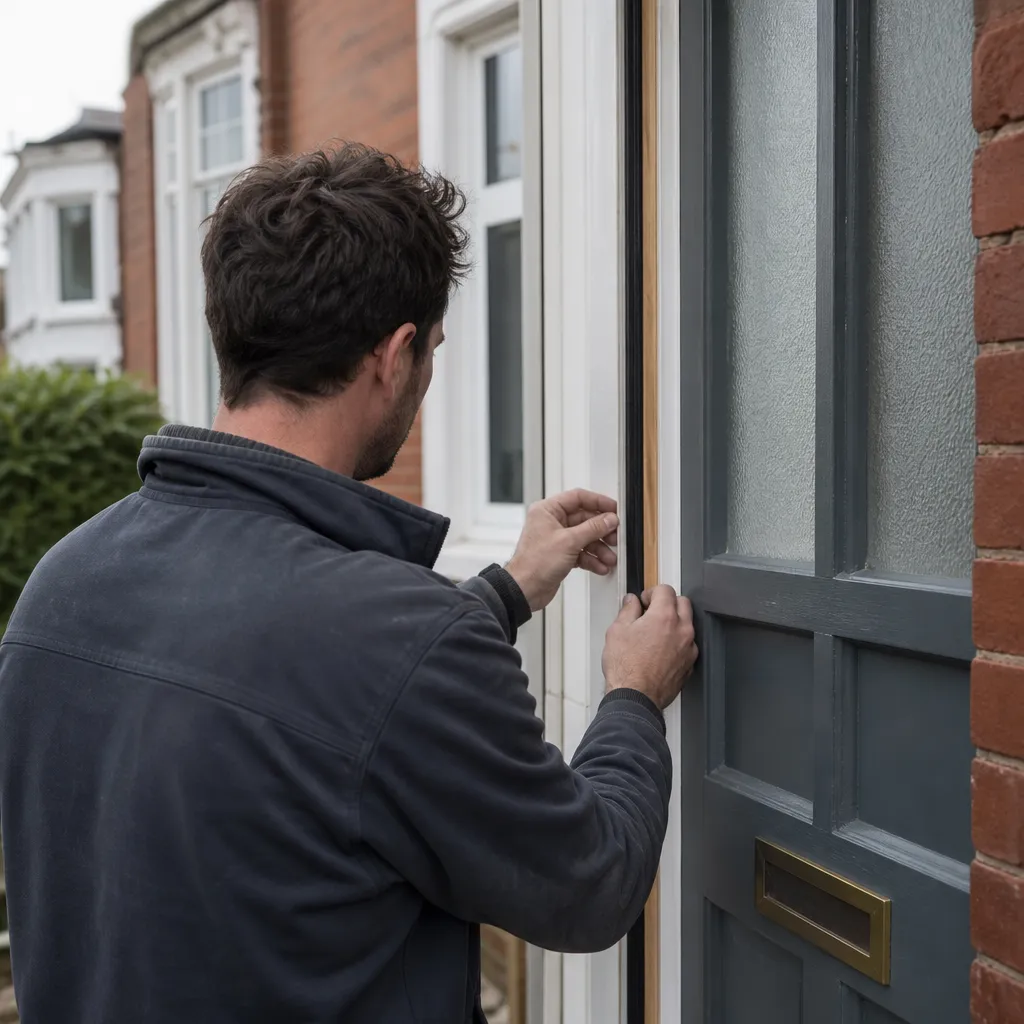
Door Weatherproofing And Sealing: Window And Door Contractors
Door weatherproofing involves fitting draught seals, threshold strips, letterbox brushes, and door sweeps to stop cold air and rain entering around the frame and threshold.
 Improvement & Build
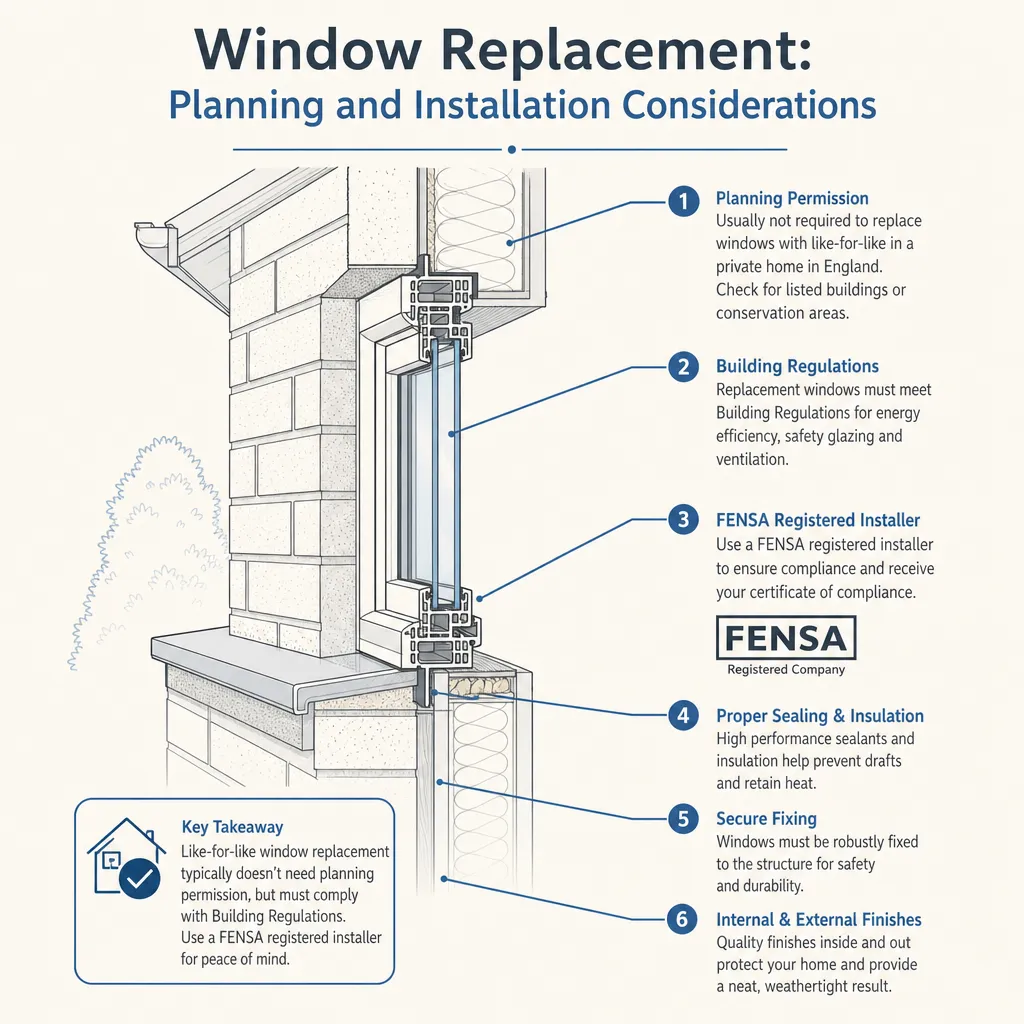
Window Replacement: Planning and Installation Considerations
Most window replacements in England fall under permitted development and do not need planning permission, though listed buildings, flats, and conservation areas are exceptions.
 Improvement & Build
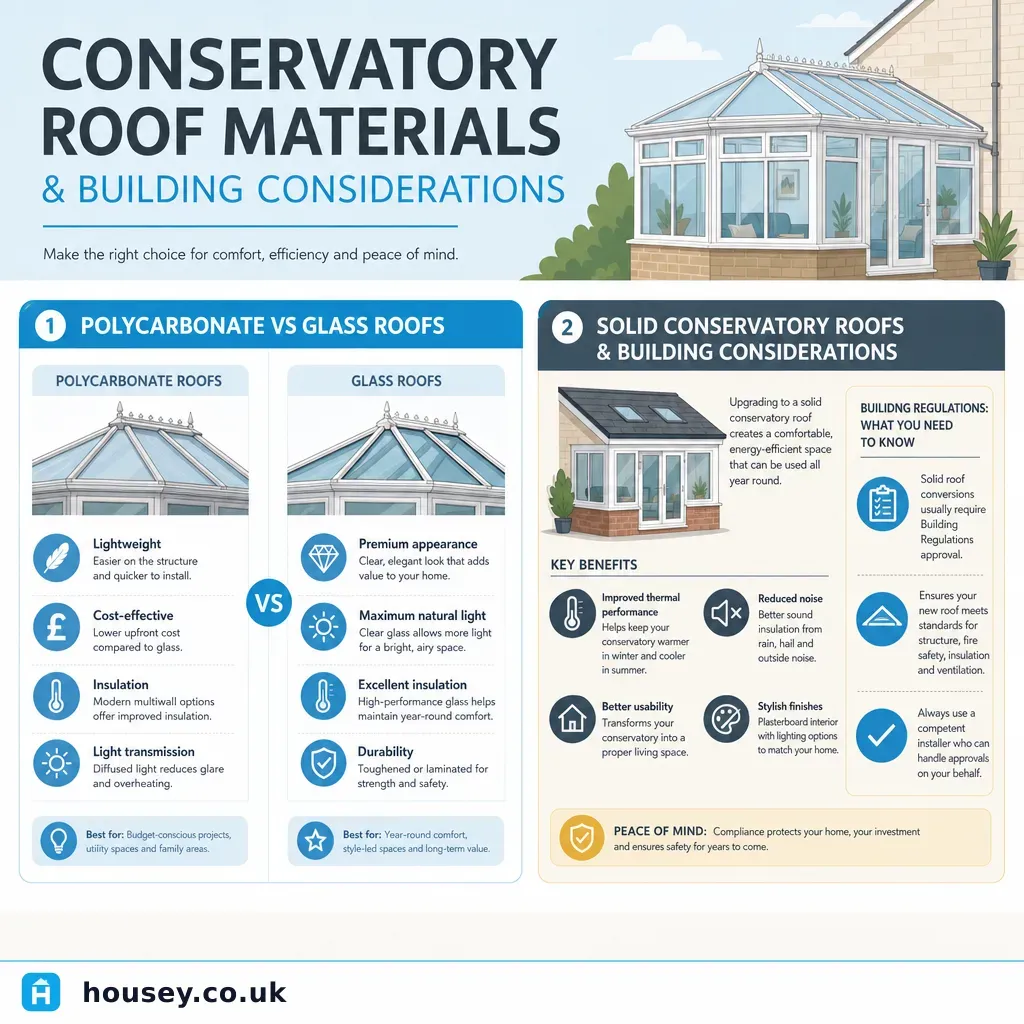
Conservatory Roof Materials and Building Considerations
The main conservatory roof materials are polycarbonate, glass, and solid insulated panels.
 Improvement & Build
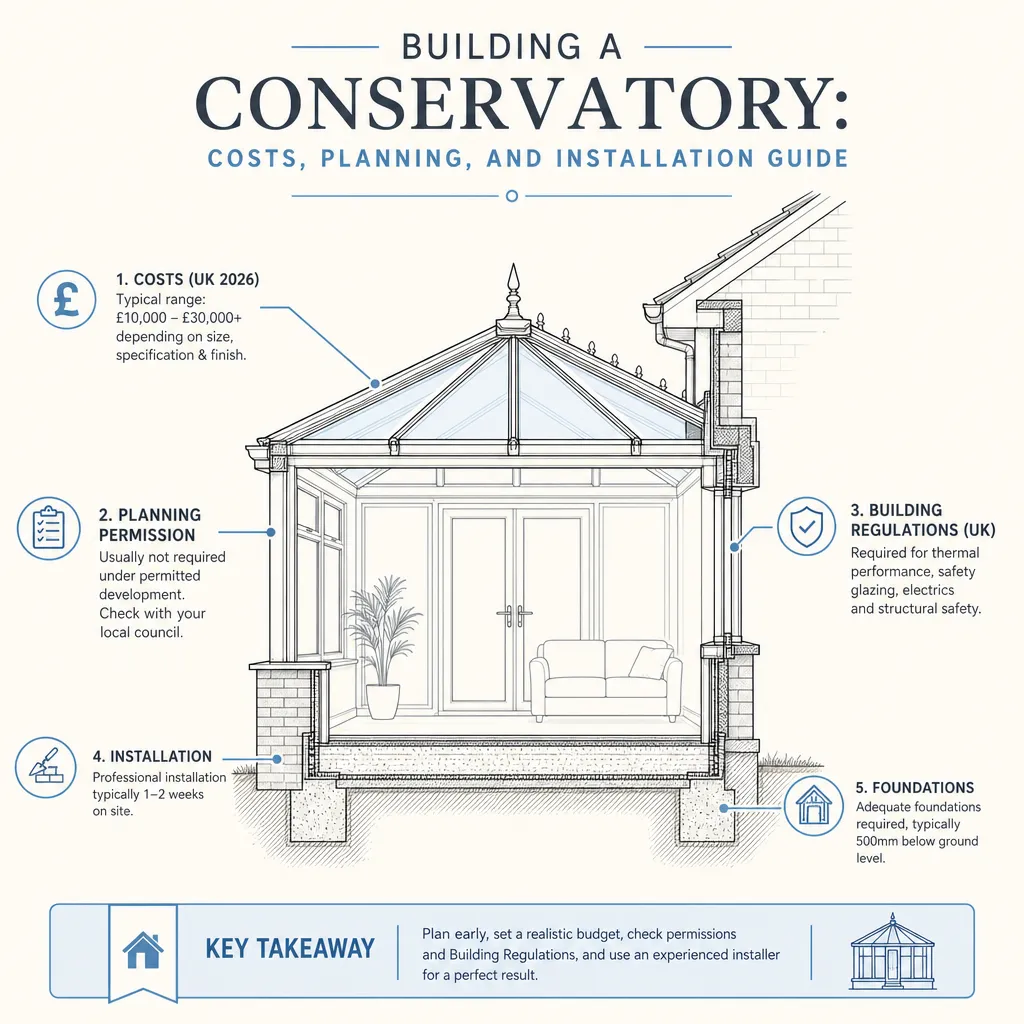
Building a Conservatory: Costs, Planning, and Installation Guide
Most UK conservatories qualify as permitted development and do not need a planning application, provided they meet the size, height, and location conditions in the Town and Country Planning (General Permitted Development) (England) Order 2015.
 Improvement & Build
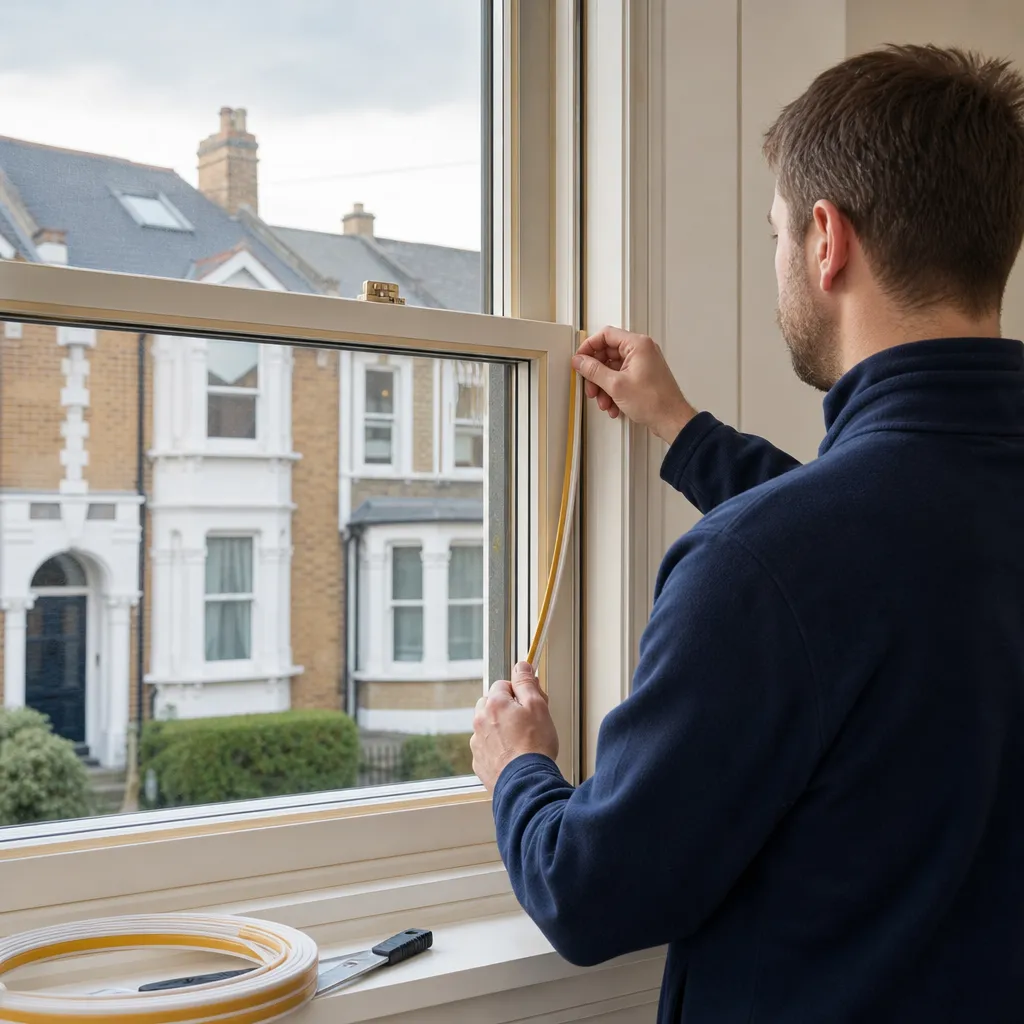
Eliminating Draughts from Windows: Weatherproofing and Energy Efficiency Solutions
Window draughts are caused by gaps at frame perimeters, meeting rails, or deteriorated seals and account for a significant share of heat loss in older UK homes.