Upgrading from a Traditional Boiler to a Heat Pump System
By Housey · Last reviewed 6th of May 2026
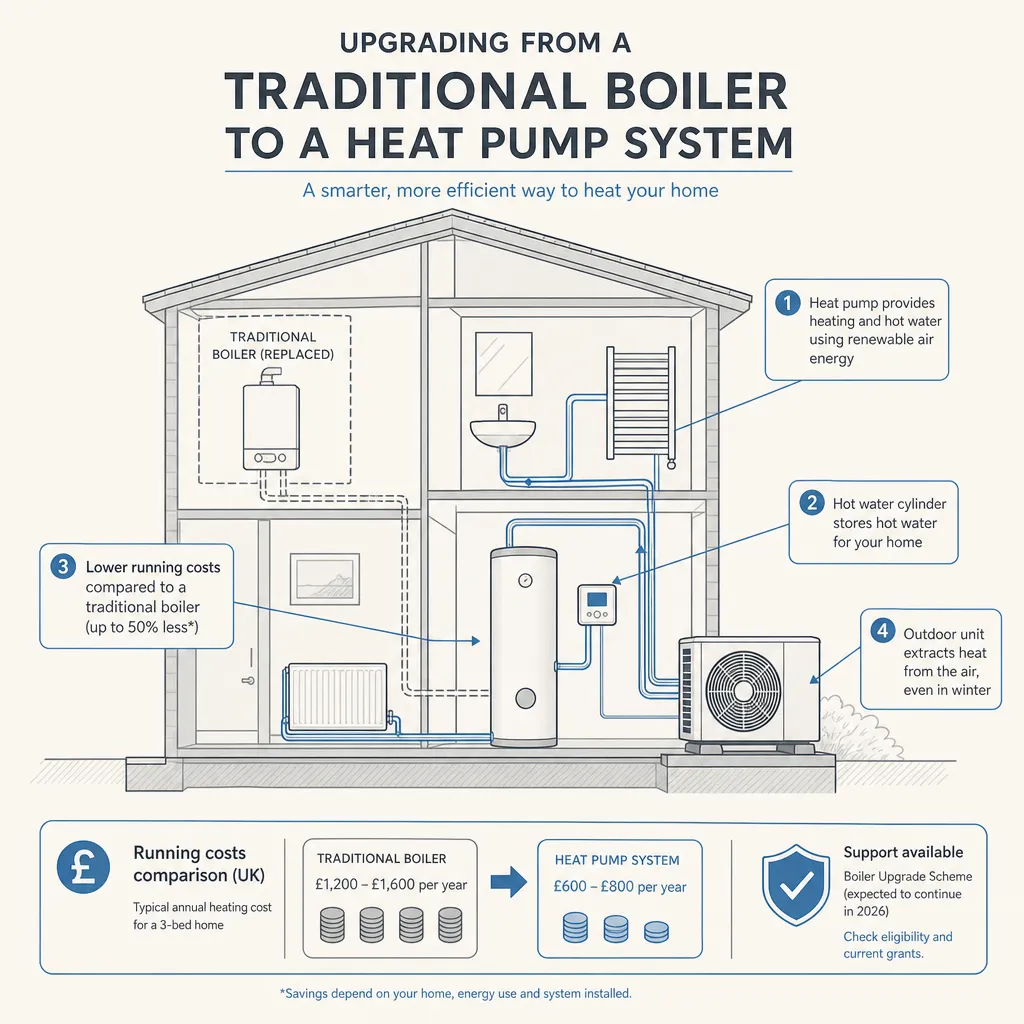
Upgrading from a Traditional Boiler to a Heat Pump System
Thousands of UK homeowners are weighing up the switch from a gas or oil boiler to a heat pump, whether prompted by an ageing appliance, rising fuel bills, or awareness of the Boiler Upgrade Scheme grant. The decision involves more than swapping one heating unit for another — heat pumps work differently from boilers, require compatible distribution systems, and perform best in homes that have been properly assessed. Getting the sizing and preparation right matters both for comfort and for the long-term economics of low-carbon heating.
Key points
- The Boiler Upgrade Scheme (BUS) offers a £7,500 grant for air source and ground source heat pumps in England and Wales, administered by Ofgem, subject to eligibility.
- MCS (Microgeneration Certification Scheme) certification is required for both the installer and the product for a BUS grant to be claimed.
- A heat loss calculation carried out to BS EN 12831 is the technical foundation of any properly sized heat pump installation; installers must complete this before specifying equipment.
- Heat pumps typically operate at flow temperatures of 35–55°C — lower than the 70–80°C common in older boiler systems — so radiators may need upsizing to deliver sufficient heat output.
- PAS 2035 retrofit principles apply where a heat pump installation forms part of a broader fabric-first retrofit programme for a domestic property.
How a heat pump differs from a gas boiler
A gas boiler burns fuel to produce heat directly; a heat pump moves heat from outside air (or the ground) into your home using a refrigerant cycle, consuming electricity to do so. This has practical consequences:
- Flow temperatures are lower. Most heat pumps run most efficiently at 35–45°C flow temperatures rather than the 70–80°C typical of older systems.
- Heat pumps run longer, lower-intensity cycles. Rather than short blasts of high heat, they tend to operate for extended periods at lower output — which suits well-insulated homes better than draughty ones.
- Performance is measured by Coefficient of Performance (CoP). A CoP of 3 means the heat pump produces 3 units of heat for every 1 unit of electricity consumed. The Seasonal Coefficient of Performance (SCoP) reflects real-world annual performance across varying outdoor temperatures.
This matters because it affects whether your existing emitters — radiators or underfloor heating circuits — are large enough to deliver sufficient heat at those lower flow temperatures.
Is your home ready for a heat pump?
No two UK homes are identical, but there are established indicators that affect suitability. A qualified MCS-certified installer must carry out a full heat loss calculation before specifying equipment. An independent heat pump survey can provide an unbiased view before you commit to any contractor.
Home characteristic | Likely impact on heat pump suitability |
|---|---|
Pre-1980s solid-wall construction with no wall insulation | Heat loss likely high; fabric improvements may be needed first |
Post-1990s cavity-wall home with loft insulation | Generally well-suited; heat loss calculation still required |
Existing underfloor heating throughout | Ideal — UFH naturally operates at lower flow temperatures |
Large radiators (oversized relative to boiler output) | Often compatible; smaller radiators may need upsizing |
Oil-fired boiler with pressurised hot water cylinder | Often a good candidate; existing pipework and cylinder may be reusable |
Listed building or solid-wall with limited insulation options | Requires specialist assessment; may suit a higher-flow heat pump model |
The Boiler Upgrade Scheme: what you need to know
The Boiler Upgrade Scheme (BUS) is administered by Ofgem and currently provides:
- £7,500 for air source heat pumps (ASHP)
- £7,500 for ground source or water source heat pumps (GSHP/WSHP)
To qualify:
- The property must be in England or Wales.
- You must have a valid Energy Performance Certificate (EPC) with no outstanding recommendations for loft or cavity-wall insulation (or evidence those measures are inapplicable or already in place).
- The installer must hold MCS certification.
- The heat pump product must be listed on the MCS product register.
- The grant is applied as a reduction on your installation invoice — you do not claim it directly.
The scheme is subject to annual funding allocations; check the current position on GOV.UK before making assumptions about availability. Scotland has separate schemes administered through Home Energy Scotland.
What to expect from the installation process
A typical air source heat pump installation for a medium-sized UK semi-detached house involves:
- Heat loss assessment and system design — completed before any equipment is ordered, to BS EN 12831.
- Emitter check — confirming whether existing radiators or underfloor heating circuits are adequate at lower flow temperatures, or whether upgrades are needed.
- Hot water cylinder installation or replacement — most heat pumps require an unvented or vented hot water cylinder; combi configurations are uncommon with heat pumps.
- Outdoor unit positioning — heat pumps generally fall under permitted development rights in England unless the property is listed or in certain designated areas. Check with your local planning authority.
- Electrical supply check — heat pumps require a dedicated electrical circuit; the existing consumer unit and supply may need upgrading.
- Installation and commissioning — typically two to five days depending on complexity.
- MCS commissioning certificate — required for the BUS grant claim and good practice regardless.
Running costs and tariffs
Heat pumps use electricity, which costs more per kWh than gas under most current UK domestic tariffs. However, heat pumps produce significantly more heat per unit of energy consumed than direct electric heating.
Indicative UK energy costs (last reviewed 2026-05-06, subject to Ofgem price cap changes):
- Gas: approximately 6–7p per kWh
- Electricity: approximately 22–25p per kWh
A heat pump achieving a seasonal CoP of 3 would deliver heat at an effective cost of around 7–8p per kWh — broadly comparable to gas at current rates. Time-of-use tariffs optimised for heat pumps (such as those offering off-peak overnight rates) can reduce running costs further for households able to shift some consumption.
An energy-efficiency consultant can model your property's likely running costs before you make any commitment.
Decision guide: should you switch now?
- Switch now if your boiler is at end of life, your home has good or improvable insulation, you have or plan underfloor heating, and you want to benefit from the current BUS grant level.
- Improve fabric first if your home has uninsulated solid walls or significant draughtiness — a heat pump installed before fabric improvements will be less efficient and may struggle to heat the home adequately in cold weather.
- Wait and assess if your boiler is recently replaced and still in good condition, you are planning significant structural works, or you are in a flat with limited outdoor space for a unit.
- Seek specialist advice if your home is listed, has non-standard construction, or you are uncertain about permitted development rights or local planning restrictions.
Important limitations
This article provides general information about heat pump installations in UK homes. Heat pump sizing, system design, and compatibility assessments are technical matters that depend on your specific property, its construction, existing heating distribution, insulation levels, and local planning context. Nothing in this article constitutes professional heating design advice. Rules, grants, and energy tariffs can change; always verify current scheme details on GOV.UK and with Ofgem.
Incorrect heat pump sizing or installation in a property with inadequate fabric performance can result in higher running costs, comfort problems, and potential moisture or condensation risks. A qualified, MCS-certified installer is a legal requirement for Boiler Upgrade Scheme grant claims and is strongly advisable for any heat pump installation regardless of grant eligibility.
What to ask a qualified professional
Before instructing an MCS-certified heat pump installer, consider asking:
- Will you carry out a formal heat loss calculation to BS EN 12831, and can I see the output before you specify equipment?
- Are my existing radiators adequate for the design flow temperature, or will any need upsizing?
- Does my hot water cylinder need replacing, and what capacity do you recommend?
- What seasonal CoP are you projecting, and what assumptions is that figure based on?
- Is my electrical supply and consumer unit adequate, or will additional electrical work be needed?
- Do I need to notify or seek approval from my local planning authority?
- Will the installation comply with PAS 2035 if it forms part of a wider retrofit programme?
- How will the Boiler Upgrade Scheme grant be applied to my invoice, and what is your process if the grant is unavailable?
- What warranty does the heat pump product carry, and what warranty do you offer on the installation?
- Are you registered with TrustMark as well as MCS?
When to get professional help
A heat pump installation should always be carried out by a qualified, MCS-certified engineer. Seek additional professional input if:
- Your home has never had a formal energy assessment — a retrofit and energy compliance review can identify the right sequencing of measures before you commit to any heating change
- You are unsure whether your property is suitable — an independent heat pump survey can assess this before you approach installers
- Your home is listed or in a conservation area, where permitted development rights may not apply
- You have experienced damp, condensation, or mould — these problems can worsen in a poorly designed low-temperature heating system
- Your home has solid walls, unusual construction, or previous DIY insulation work that may trap moisture
How Housey can help
Housey connects UK homeowners with qualified professionals for heat pump assessments and installations. If you are at the early stage, an independent heat pump survey gives you an unbiased view of your home's suitability before you speak to any installer. For a broader picture of your home's energy performance, running costs, and the best sequencing of retrofit measures, an energy-efficiency consultant can model the options and help you make an informed decision.
Frequently asked questions
Can I keep my existing radiators when switching to a heat pump?
You may be able to keep some or all existing radiators, depending on their size relative to the heat pump's design flow temperature. Larger radiators — particularly those oversized when originally fitted — often perform adequately at 45–50°C. A heat loss calculation and emitter check, carried out as part of the design process, will identify whether any radiators need upsizing or replacing before the system is commissioned.
How much does a heat pump installation cost in the UK?
Indicative UK costs (last reviewed 2026-05-06): an air source heat pump typically costs £8,000–£15,000 before the £7,500 Boiler Upgrade Scheme grant, depending on property size, system complexity, emitter upgrades, and whether a new hot water cylinder is needed. Ground source systems are typically £15,000–£30,000 or more. Always obtain at least three detailed quotes from MCS-certified installers and confirm grant eligibility before accepting any quote.
Does my home need to be well-insulated before installing a heat pump?
Not necessarily, but insulation significantly affects performance and running costs. The Boiler Upgrade Scheme requires that any outstanding loft or cavity-wall insulation recommendations on your EPC are addressed first, unless genuinely inapplicable. For solid-wall homes, insulation is strongly advisable but not always a hard grant requirement. Your installer should advise based on the heat loss calculation results for your specific property.
How long does a heat pump installation take?
A straightforward air source heat pump installation in a typical UK semi-detached house usually takes two to four days once equipment has been delivered. More complex installations — including emitter upgrades, a new hot water cylinder, electrical work, or groundworks for a ground source system — may take one to two weeks. Your installer should provide a programme before work starts so you can plan accordingly.
Is a heat pump noisy?
Modern air source heat pumps produce noise broadly comparable to an air conditioning unit — typically 40–55 dB(A) at one metre. MCS installation standards include guidance on noise and positioning. Units should not be sited directly below a bedroom window or close to a neighbouring boundary, and some local planning authorities attach noise conditions to permitted development rights for heat pumps. Confirm the proposed position with your installer before finalising the design.
Sources and further reading
- Boiler Upgrade Scheme — GOV.UK
- Heat pumps: how do they work? — Energy Saving Trust
- MCS heat pump certification standards — Microgeneration Certification Scheme
- Heat pumps and energy efficiency — Ofgem
- PAS 2035:2023 retrofit standard — BSI / TrustMark
Useful next reads
 Energy & Retrofit
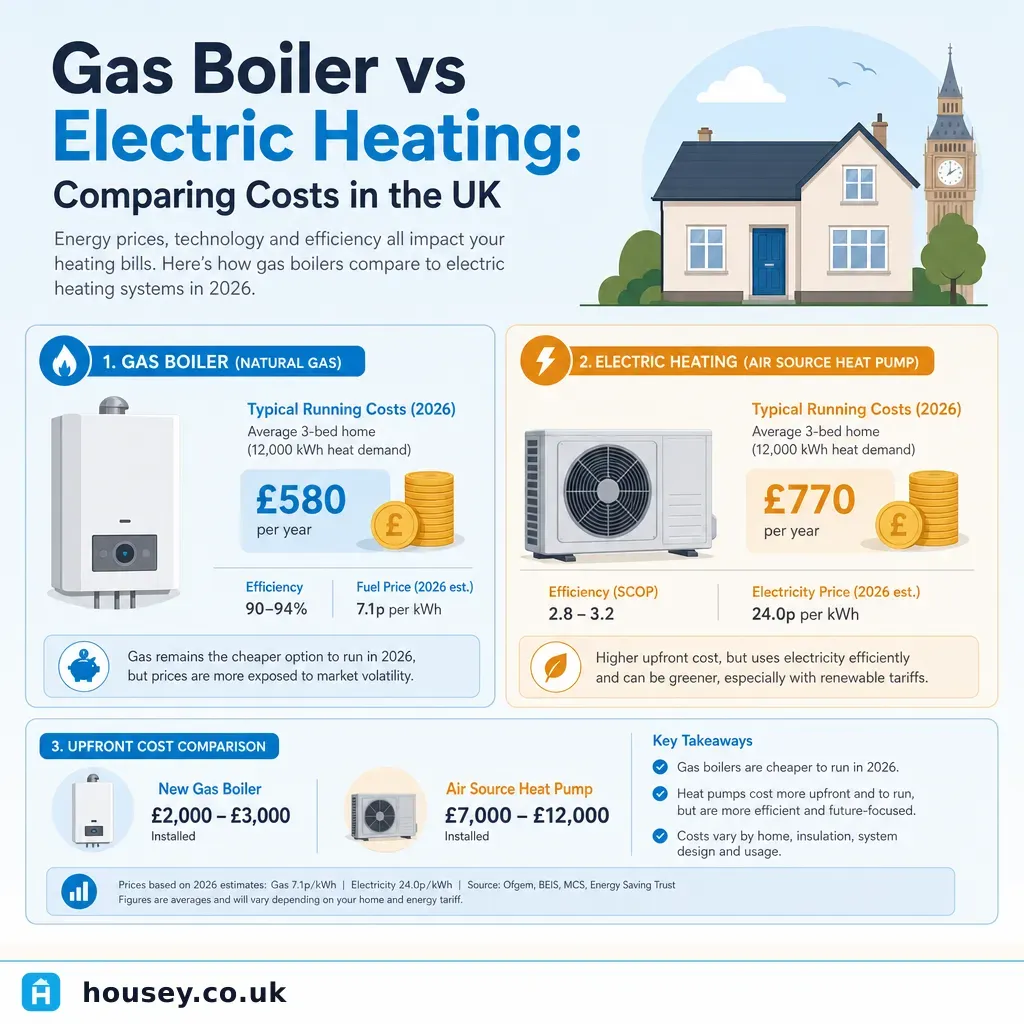
Gas Boiler vs Electric Heating: Comparing Costs in the UK
Gas boilers currently cost around 6.
 Energy & Retrofit
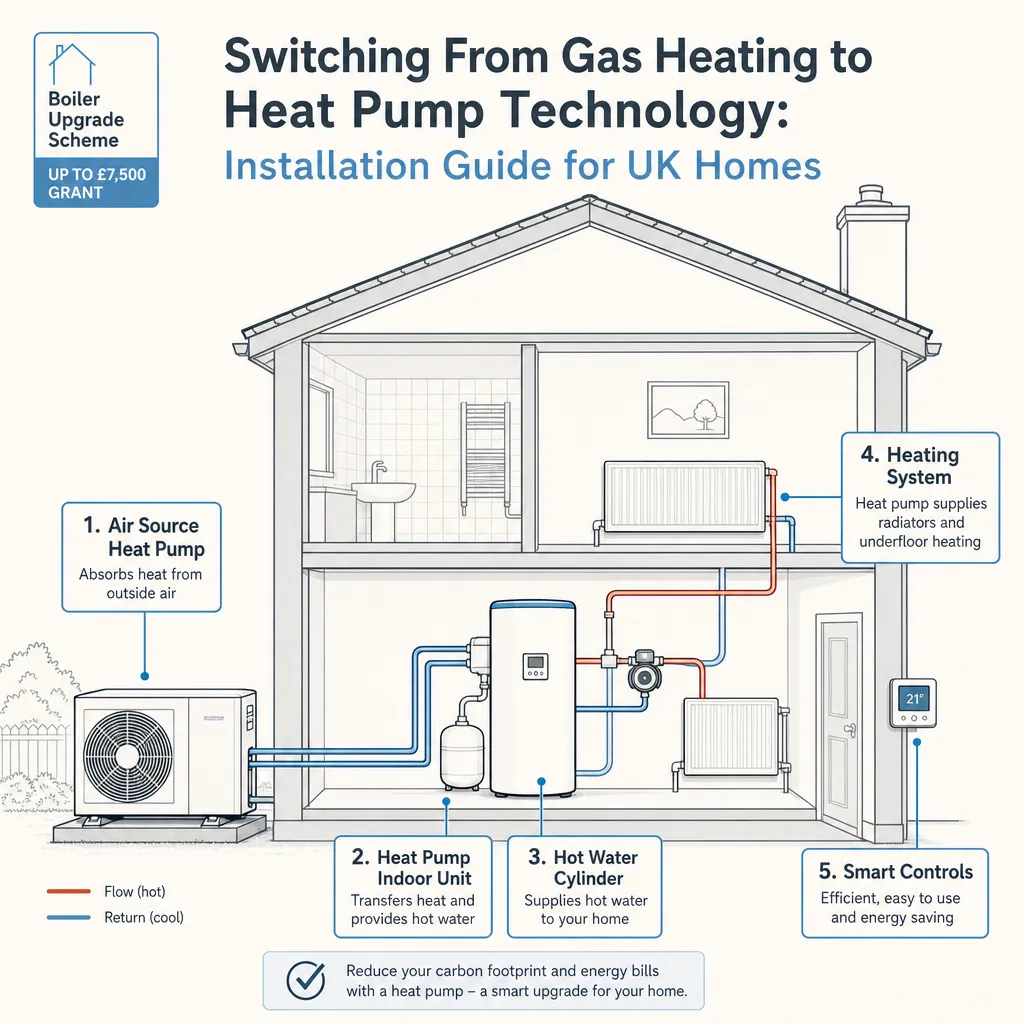
Switching From Gas Heating to Heat Pump Technology: Installation Guide
Switching from gas to a heat pump requires a heat loss calculation, correctly sized equipment, and often radiator upgrades before installation.
 Energy & Retrofit
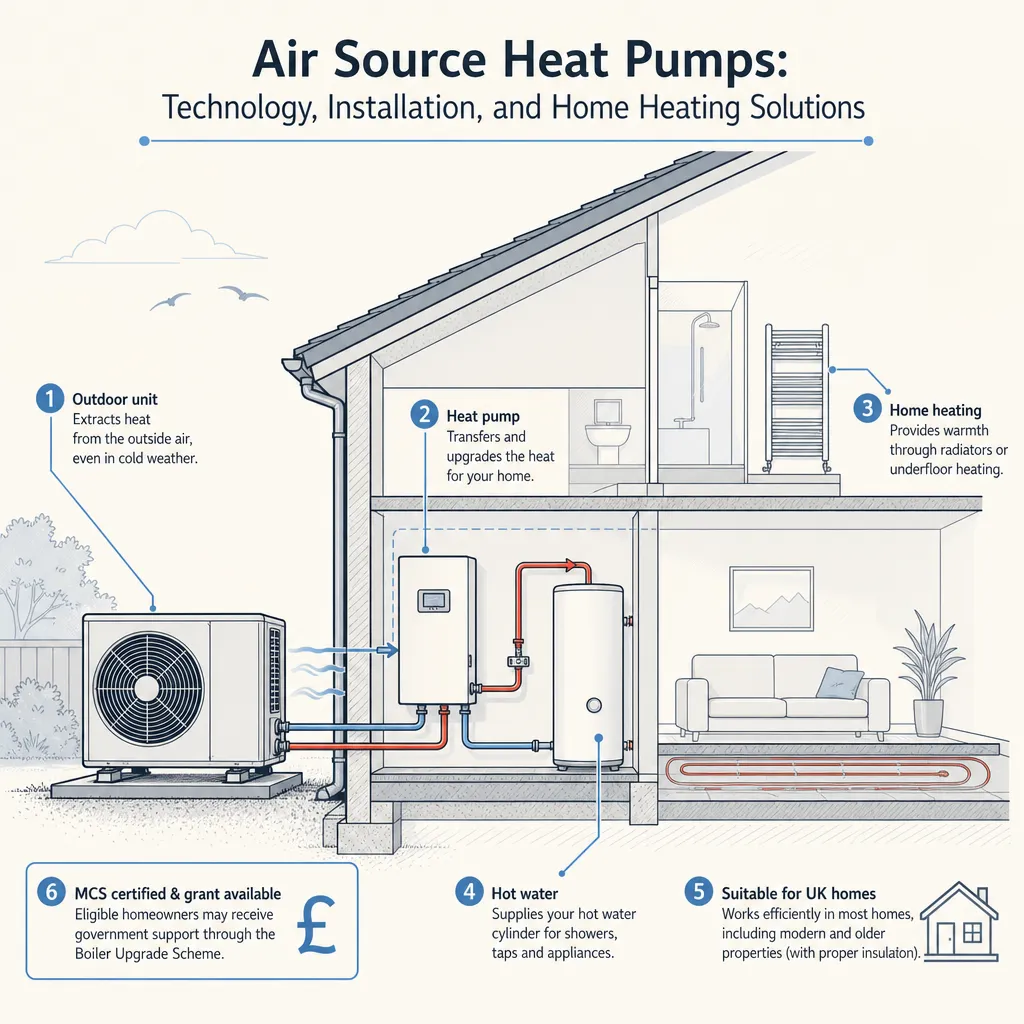
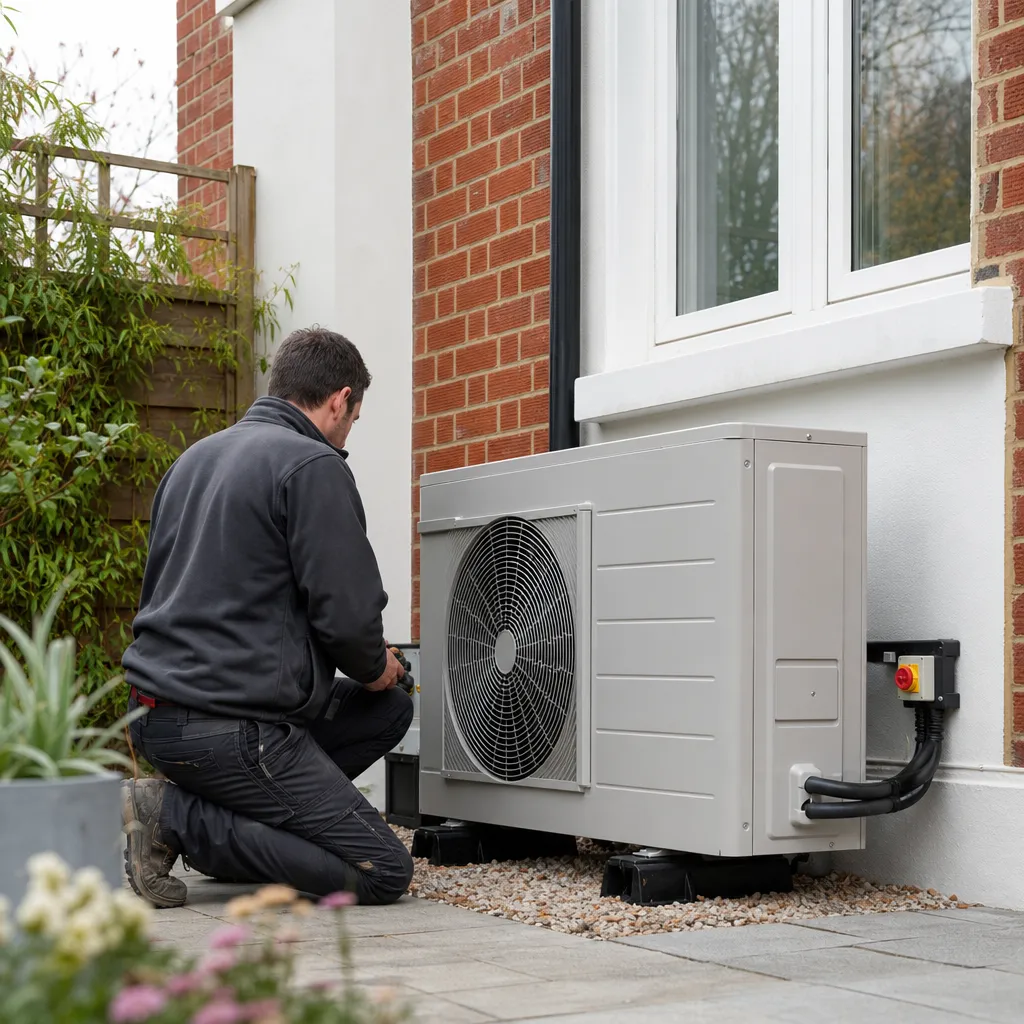
Air Source Heat Pumps: Technology, Installation, and Home Heating Solutions
An air source heat pump extracts heat from outdoor air and transfers it indoors via a refrigerant cycle, typically delivering 2.
 Energy & Retrofit
Government Heat Pump Grants: What Property Owners Need to Know
The Boiler Upgrade Scheme (BUS) provides a £7,500 voucher towards installing an air source or ground source heat pump in England and Wales.
 Energy & Retrofit
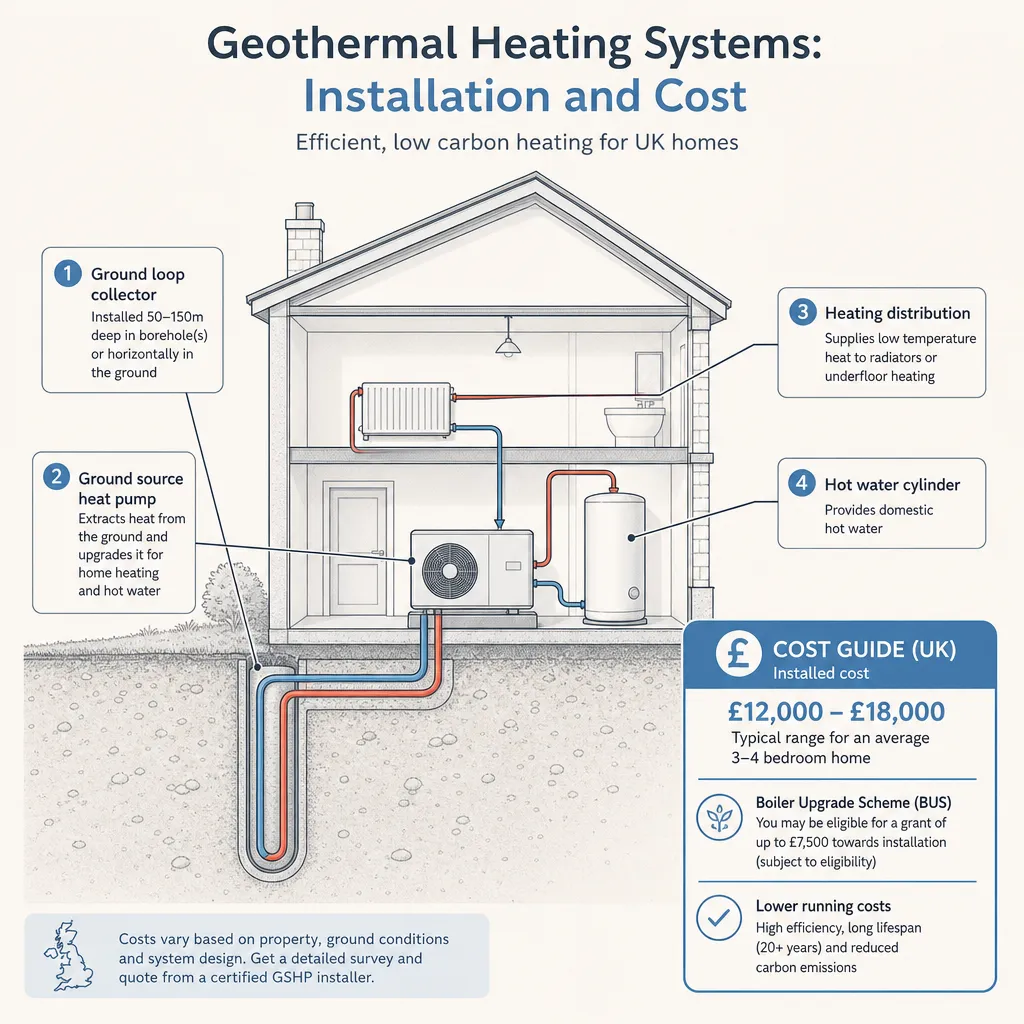
Geothermal Heating Systems: Installation and Cost
Ground source heat pumps extract stored solar energy from the earth via buried ground loops and convert it to usable heat for radiators and hot water.