uPVC and Steel Doors Compared: Performance, Cost, and Aesthetics
By Housey · Last reviewed 12th of May 2026
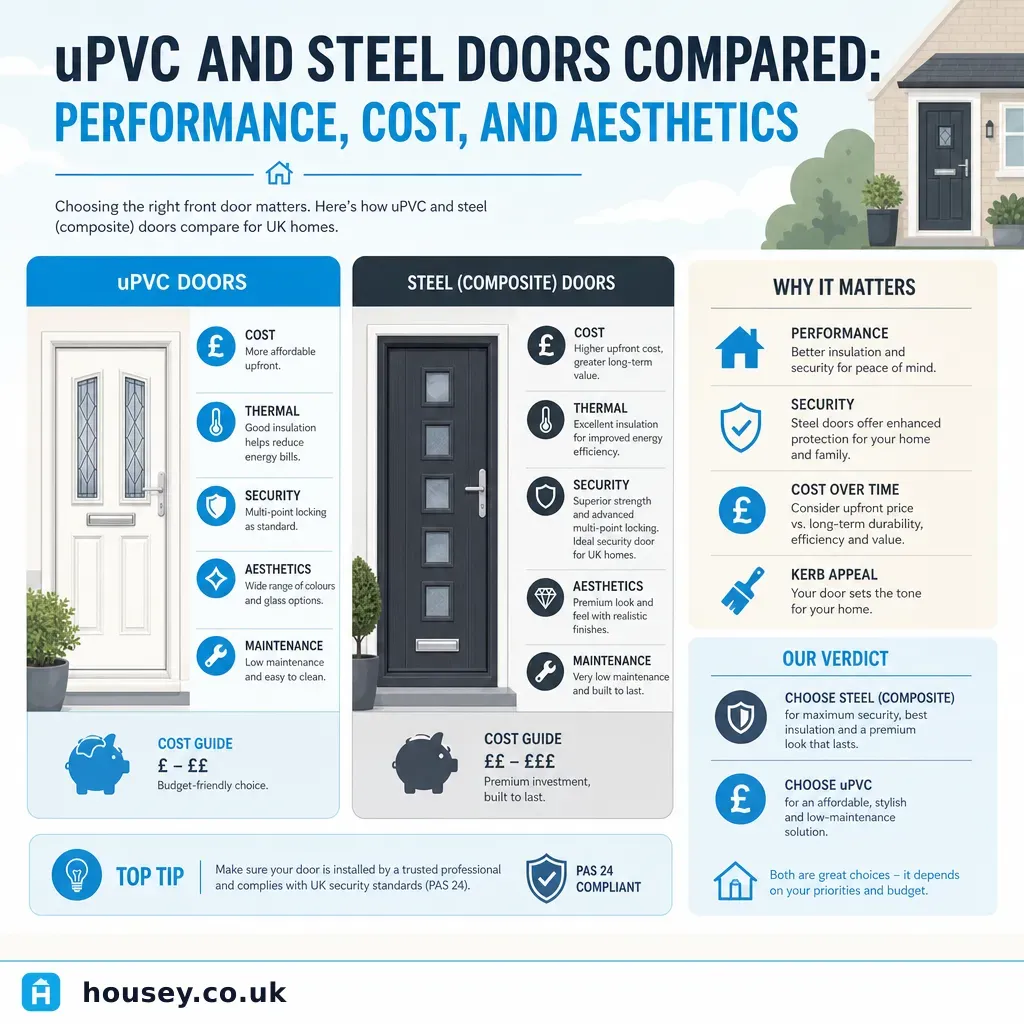
uPVC and Steel Doors Compared: Performance, Cost, and Aesthetics
When replacing an external door in a UK home, the choice most often comes down to uPVC, GRP composite, or — increasingly — steel composite. Steel doors have grown from a niche security product into a broader residential option, but the market terminology can be confusing: not all steel doors are the same, and uPVC has evolved considerably from its origins in the 1980s. This comparison sets out the practical differences so you can match a door to your property's actual needs.
Key points
- The term steel door in UK residential contexts usually means a folded-steel-skin composite door (foam core), not a full security steel doorset — these perform very differently and suit different applications.
- uPVC doors account for the majority of UK residential door replacements; installer expertise and supply chains are mature, which generally keeps costs and lead times competitive.
- Both uPVC and steel composite doorsets can achieve PAS 24:2022 security certification — performance depends on the whole doorset specification (frame, hinges, locks, keeps), not the skin material alone.
- Steel is vulnerable to surface corrosion where protective coatings are chipped or scratched; uPVC is inherently corrosion-resistant but can yellow or become brittle under UV if the profile grade is low.
- Both materials can achieve doorset U-values of 1.4 W/m²K or below, meeting the Building Regulations Part L replacement threshold for existing English dwellings, subject to correct specification.
Understanding what steel door means in UK residential practice
The term covers a wide range of products:
- Folded-steel composite doors: a steel outer skin (typically 0.7–1.2 mm gauge) over a foam-filled core, usually with a uPVC or steel inner skin. These behave similarly to GRP composite doors, offer moderate security uplift over basic uPVC, and are available in a wide range of styles. This is the most common type encountered in residential retail.
- Full steel security doorsets: solid steel construction, typically with a 1.5 mm or heavier steel skin, reinforced frame, and a multipoint lock with anti-lever and anti-drill features. These are found in apartment blocks, HMO entrances, social housing, and high-security residential applications. They are heavier, require a structurally sound reveal, and cost significantly more than composite alternatives.
- Aluminium-steel hybrid doors: less common in residential use; often found in commercial-residential settings.
For this comparison, steel door refers to folded-steel composite doors unless otherwise stated, as these are the variant most homeowners are actually considering.
Side-by-side comparison
Feature | uPVC door | Steel composite door |
|---|---|---|
Typical supply-and-fit cost | £700–£1,800 depending on spec | £1,200–£3,000+ depending on spec |
Security (PAS 24:2022 available?) | Yes — mid-range and above | Yes — standard on most steel composite ranges |
Doorset U-value | 1.2–1.6 W/m²K | 1.1–1.5 W/m²K |
Corrosion resistance | Excellent — will not rust | Good — vulnerable if coating is chipped |
UV and weathering resistance | Moderate — low-grade uPVC may yellow | Good — steel skin resists UV deformation |
Acoustic performance | Moderate | Moderate to good (greater mass) |
Weight | Light (10–25 kg typical) | Heavier (20–45 kg typical) |
Maintenance | Low — wipe clean; lubricate locks annually | Low — inspect coating annually; touch up chips promptly |
Expected lifespan | 20–35 years | 25–40 years |
Aesthetic range | Wide — foils, woodgrain, smooth, many colours | Wide — flush styles particularly well-suited to steel |
Installer availability | Very high — most door companies | More specialist — fewer independent fitters |
Indicative UK costs, last reviewed 2026-05-12. Actual prices vary by supplier, opening size, configuration, and region — always obtain multiple itemised quotes.
Security: what actually matters
A common assumption is that a steel door is inherently more secure than uPVC. The reality is more nuanced.
Forced-entry resistance depends primarily on:
- The multipoint locking mechanism and the number and type of lock points (hooks, rollers, deadbolts).
- The quality of the keeps — steel keeps set into the masonry significantly outperform lightweight keeps fixed only to the frame.
- The Euro cylinder specification: anti-snap, anti-pick, anti-drill (TS007:2014 3-star or PAS 24:2022).
- The hinge type and whether hinge bolts or non-removable hinge pins are specified.
- The depth and method of frame-to-reveal fixings.
A well-specified uPVC doorset with PAS 24:2022 certification, an anti-snap cylinder, and correctly installed steel keeps will significantly outperform a steel composite door with a basic cylinder and shallow fixings.
That said, steel composite doors with reinforced frames do offer additional resistance to physical deformation — the forceful kick-in attack — where the steel skin provides a genuine advantage over a uPVC or GRP panel.
Thermal and acoustic performance
Modern uPVC multi-chamber profiles (70 mm+, 6 or 7 chambers) with foam-filled cores achieve doorset U-values comparable to equivalent steel composites. Neither material has an inherent thermal advantage at the doorset level — it comes down to the core insulation, the glazing specification where fitted, and the quality of the threshold seal.
For acoustic performance, mass is the relevant variable. A heavier steel composite door will generally perform marginally better than a lighter uPVC door at the same specification level, though the practical difference in most domestic settings is small unless the property faces a very busy road or the occupant has specific noise-sensitivity requirements.
Aesthetics: style and finish
uPVC doors are manufactured in a wide range of foil finishes — woodgrain, smooth, dual colour (different inside and outside faces) — and can closely approximate the look of painted timber. However, the uPVC profile rebates are visible at the door edge, which some homeowners find limiting on period properties.
Steel composite doors are particularly associated with the flush or Monza-style aesthetic — a flat-faced door with no visible external beadings — which has become very popular in contemporary UK residential design. This look is also available in some uPVC and GRP composite ranges, but the flush-panel form is most naturally achieved in steel.
For properties in conservation areas or subject to an Article 4 direction, the appearance of a replacement door may require approval regardless of material. In listed building contexts, both uPVC and steel composite are likely to require listed building consent; check with the local planning authority's conservation officer before ordering.
A worked UK property scenario
Property: 1930s semi-detached house in Greater Manchester. The existing front door is a mid-1990s white uPVC door that is draughty, poorly aligning, and aesthetically dated. The homeowner wants to improve thermal performance, upgrade security, and refresh the appearance without an obviously modern aesthetic.
Option A — uPVC replacement: A 70 mm 7-chamber uPVC doorset in anthracite grey woodgrain foil, PAS 24:2022 certified, with an anti-snap TS007 3-star cylinder and 7-point multipoint lock. Estimated doorset U-value: ~1.3 W/m²K. Available from most FENSA-registered local installers.
Option B — Steel composite replacement: A folded-steel composite door in anthracite grey flush panel, PAS 24:2022 certified, same lock and cylinder specification as Option A. Estimated doorset U-value: ~1.2 W/m²K. Likely requires a specialist composite door installer.
Outcome: Both options deliver equivalent security at the doorset level and broadly similar thermal performance. The steel composite achieves a cleaner flush aesthetic if that is preferred; the uPVC option is likely available at lower cost with a wider pool of local installers. Neither choice is wrong — the decision turns on aesthetics, budget, and installer availability. The 1930s setting does not impose any planning constraint on this example (no conservation area or Article 4 direction).
What not to assume
- Don't assume steel means more secure. A PAS 24:2022-certified uPVC door and a PAS 24:2022-certified steel composite door have passed the same tested security performance standard. The whole doorset specification matters more than the skin material.
- Don't assume uPVC is always the cheapest option. Lower-end steel composite doors overlap with mid-range uPVC on price, and installation costs can be similar once like-for-like specifications are compared.
- Don't assume steel doors are maintenance-free. Any chip or scratch in the steel coating should be touched up promptly with a compatible paint or coating to prevent surface rust, particularly at the bottom edge and around fixings.
- Don't assume a composite door has a steel skin. Most composite doors sold in the UK residential market use a GRP (glass-reinforced plastic) skin, not steel. If a steel skin is specifically important, confirm the construction material with the manufacturer's product datasheet.
- Don't assume either material is suitable for a listed building without checking. Both are likely to require listed building consent in most listed property contexts; consult your local planning authority's conservation officer before ordering.
When to get professional help
Both uPVC and steel composite doors should be installed by a FENSA- or CERTASS-registered installer to ensure building regulations compliance and to receive a compliance certificate. If you are considering a full steel security doorset rather than a composite, ask the installer for relevant experience references and confirm they understand the structural fixing requirements for a heavier door.
Seek professional advice before proceeding if:
- The existing frame or surrounding masonry is in poor condition, damp, or showing signs of movement.
- The property is listed or in a conservation area.
- The door is on a fire-protected escape route — fire door regulations apply and must be maintained.
- The property is a rental and relevant housing standards require specific door performance.
How Housey can help
Comparing prices and specifications across multiple door types is far easier when you receive like-for-like quotes from accredited, local companies. Housey connects homeowners with window and door installers who can advise on both uPVC and steel composite options and provide itemised quotes for straightforward comparison.
Frequently asked questions
Are steel composite doors worth the extra cost over uPVC?
For most standard UK residential properties, the additional cost of a steel composite door is primarily justified by aesthetics — particularly the flush panel look — and a marginal increase in resistance to physical deformation. If security and thermal performance are the main drivers, a well-specified uPVC doorset at PAS 24:2022 standard delivers comparable outcomes at a lower price point.
Can a steel composite door rust?
Steel composite doors with undamaged factory coatings resist surface corrosion effectively. However, if the coating is chipped or scratched — especially on the bottom edge or around fixings — surface rust can develop. Annual inspection and prompt touching up of any damage with a compatible coating is the standard maintenance advice.
How long do uPVC doors last compared to steel composite?
A well-maintained uPVC door typically lasts 20–35 years. Steel composite doors are generally expected to last 25–40 years, though mechanisms and glazing units within both types may need replacement before the door itself reaches end of life. Maintenance quality affects both figures significantly.
Is a steel composite door heavier to open and close?
A steel composite door is heavier than a uPVC door of the same size — typically by 10–20 kg — but quality hinges and a well-adjusted multipoint mechanism make the operational feel similar in practice. Some users find a heavier door feels more solid; others, including older residents, may prefer the lighter action of uPVC.
Do steel composite doors require a special frame?
Standard folded-steel composite doors can usually be installed into standard masonry or uPVC subframe openings, similar to uPVC doorsets. Full steel security doorsets — a different category used in HMOs and apartment blocks — require a structurally sound reveal and specialist installation, and should not be confused with residential composite doors.
Sources and further reading
- Approved Document L: Conservation of fuel and power — GOV.UK
- Approved Document Q: Security — GOV.UK
- PAS 24:2022 enhanced security performance requirements for doorsets — BSI
- Secured by Design — residential door guidance — Police CPI / Secured by Design
- FENSA — registered installer database — FENSA
- BFRC energy ratings for windows and doors — British Fenestration Rating Council
Useful next reads
 Improvement & Build
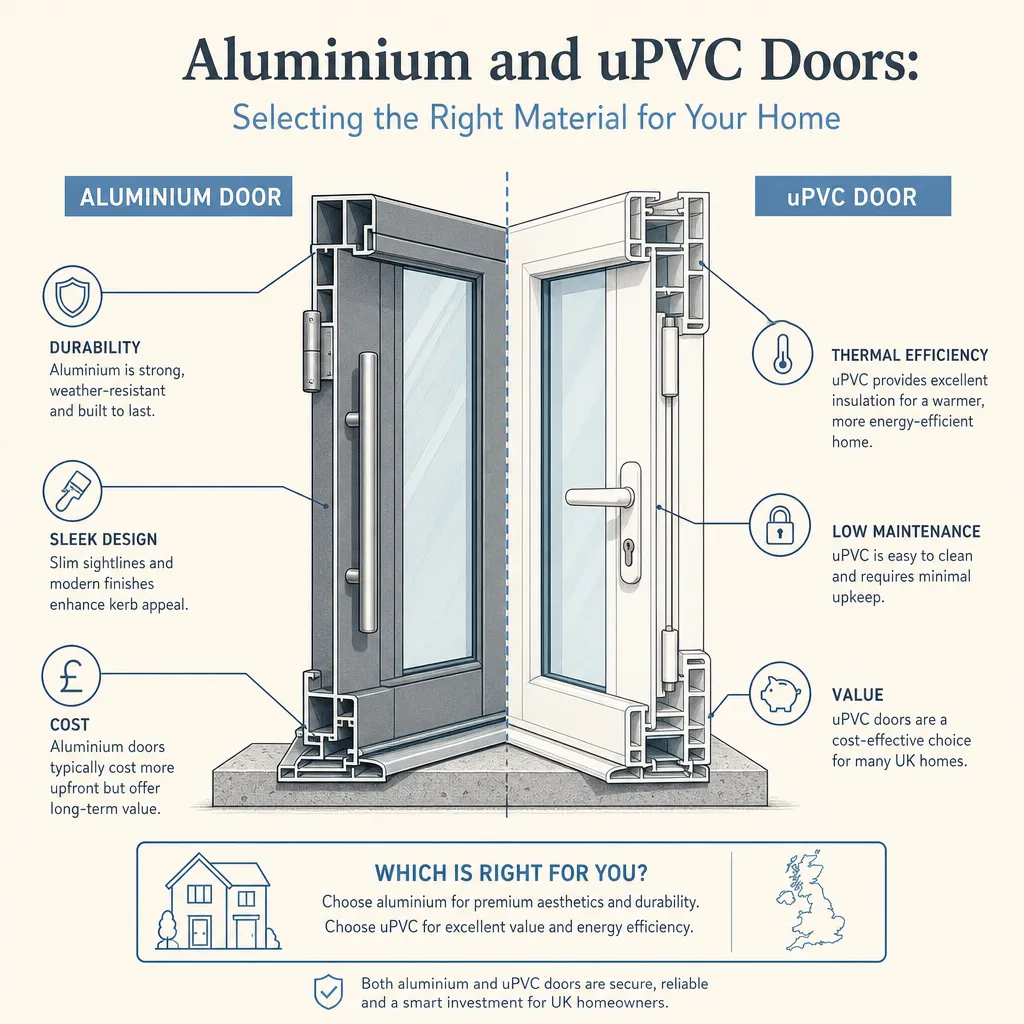
Aluminium and uPVC Doors: Selecting the Right Material for Your Home
uPVC doors are lower-cost and low-maintenance, making them a practical choice for most UK homes.
 Improvement & Build
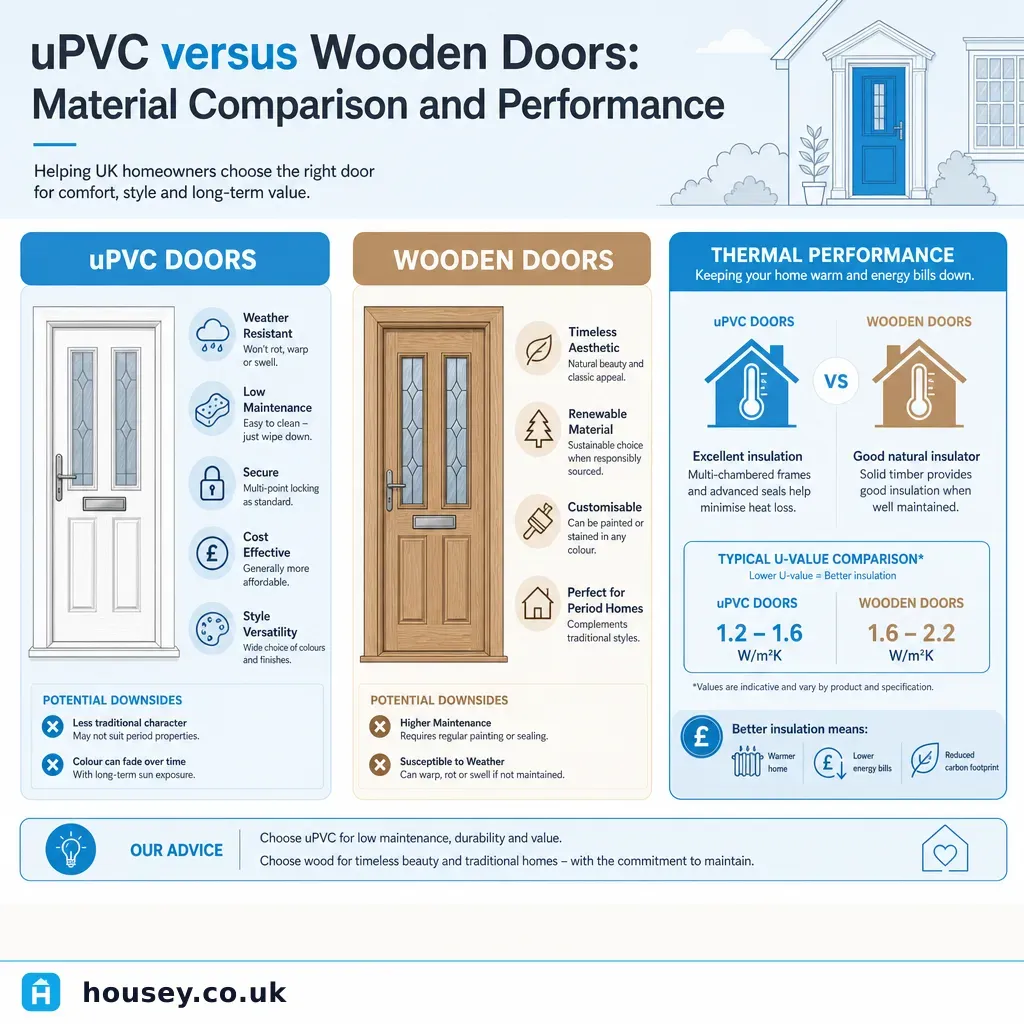
uPVC versus Wooden Doors: Material Comparison and Performance
uPVC doors are generally lower maintenance, better draught-sealed from the factory, and cheaper to install than timber doors.
 Improvement & Build
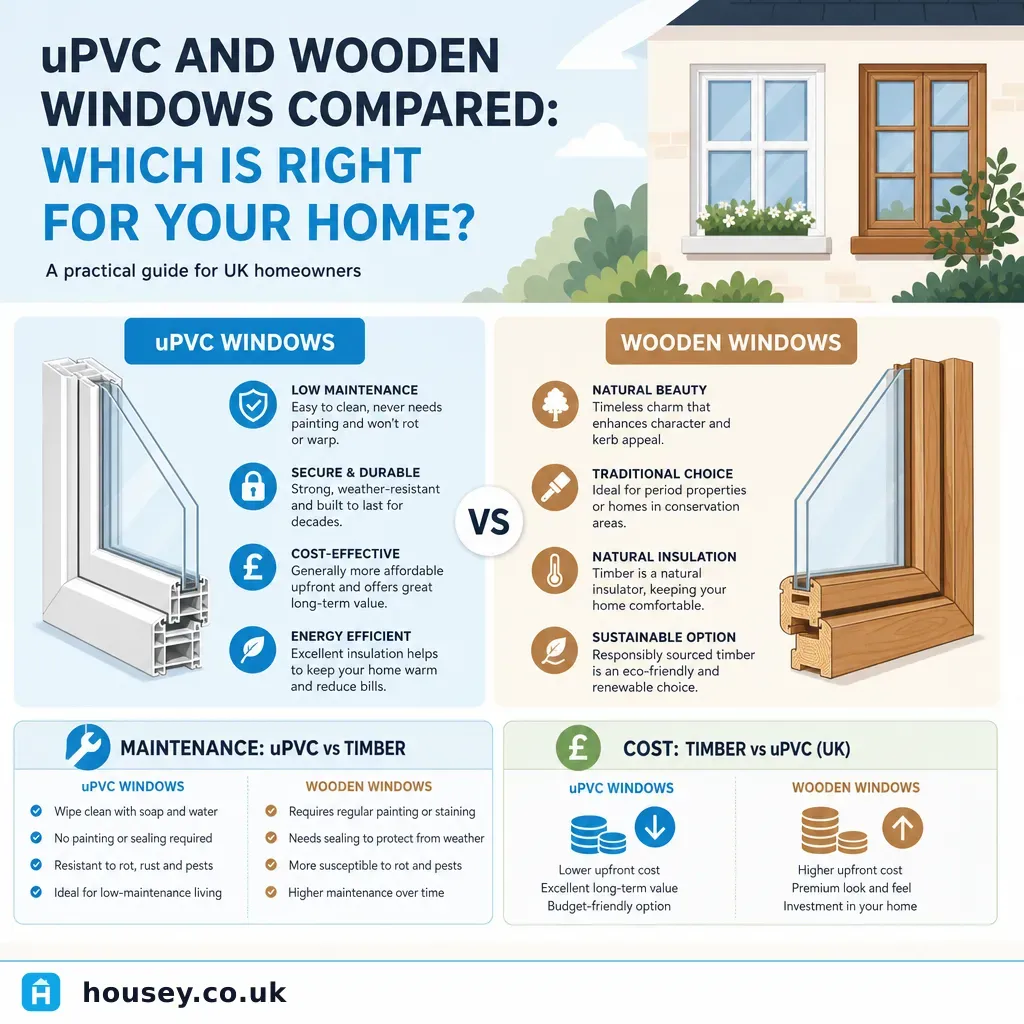
uPVC and Wooden Windows Compared: Which Is Right for Your Home
uPVC and timber windows both meet Building Regulations when properly specified.
 Improvement & Build
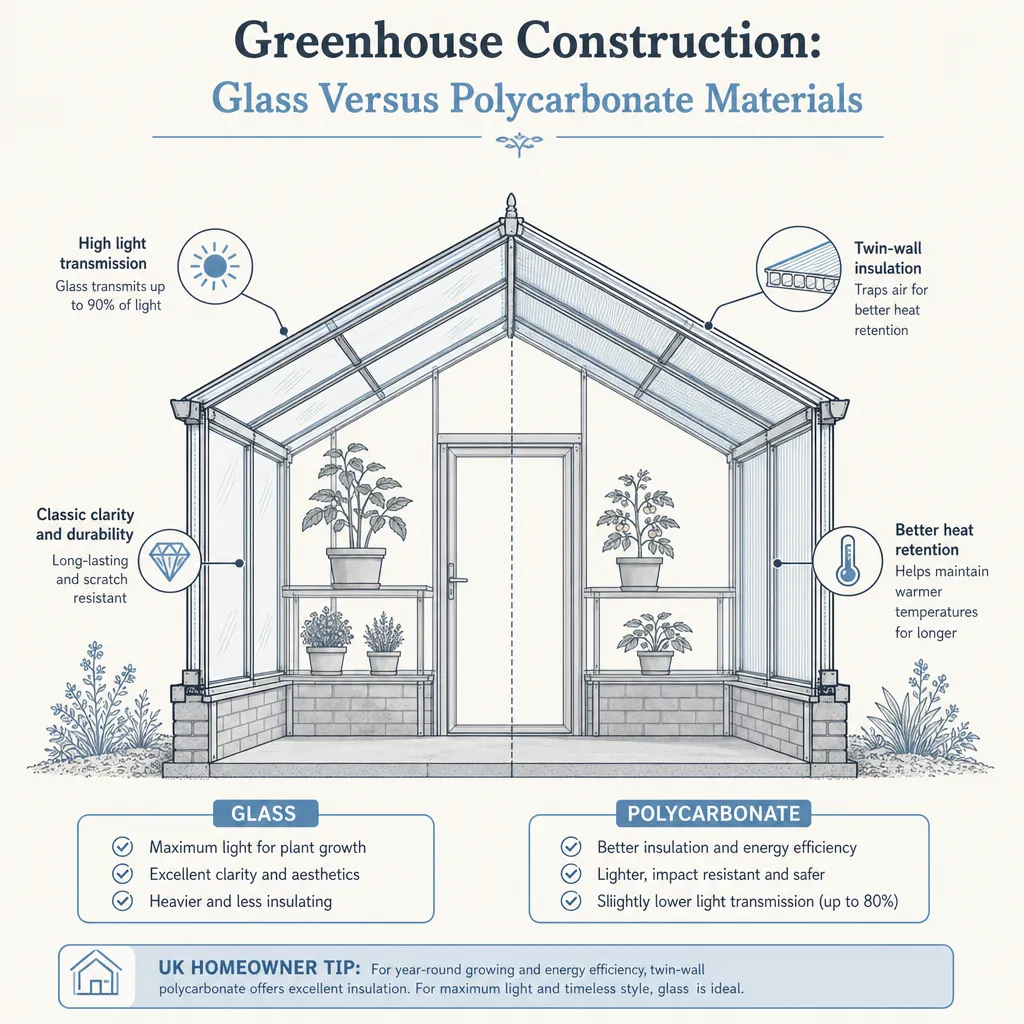
Greenhouse Construction: Glass Versus Polycarbonate Materials
Glass transmits around 90% of available light and lasts indefinitely if unbroken, but insulates poorly and shatters into sharp fragments.
 Improvement & Build
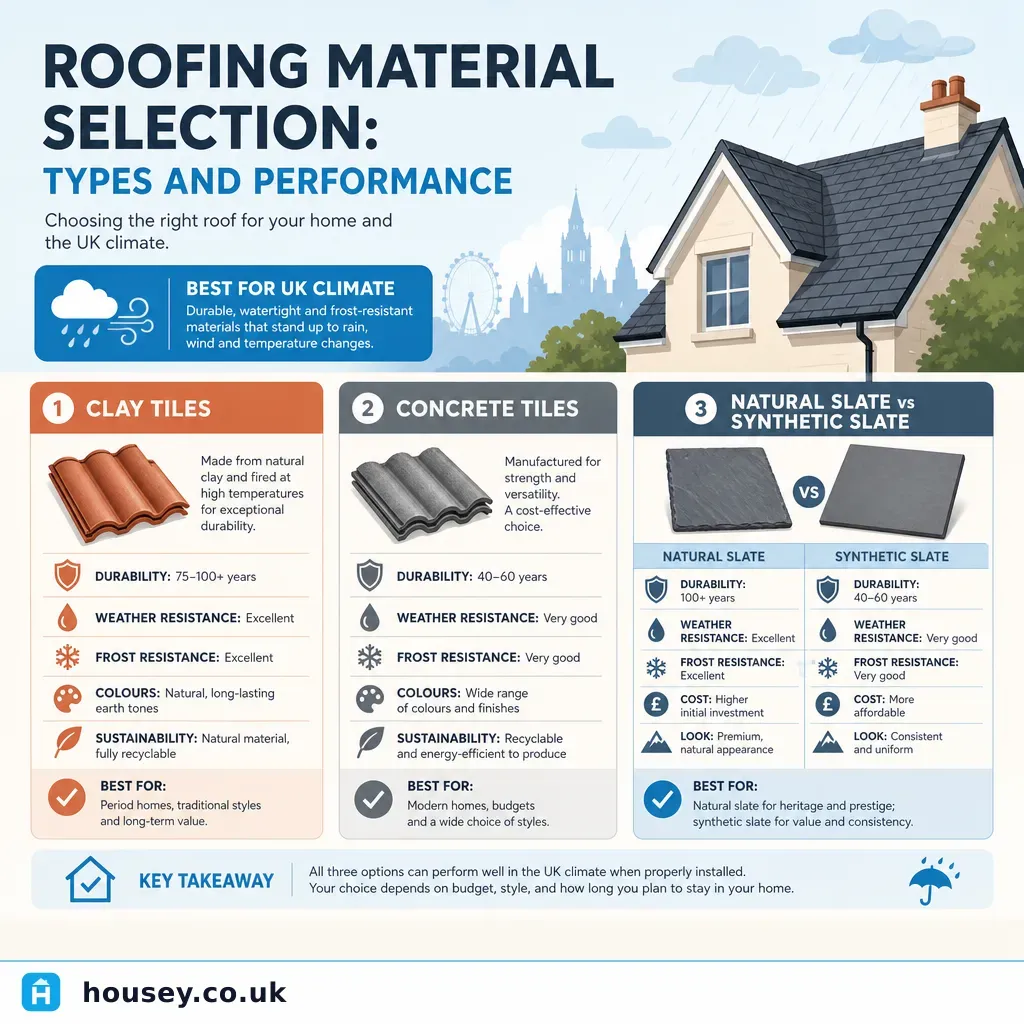
Roofing Material Selection: Types and Performance
The right roofing material depends on your roof pitch, property type, local planning requirements, and budget.