UPVC Sash Window Installation Costs
By Housey · Last reviewed 11th of May 2026
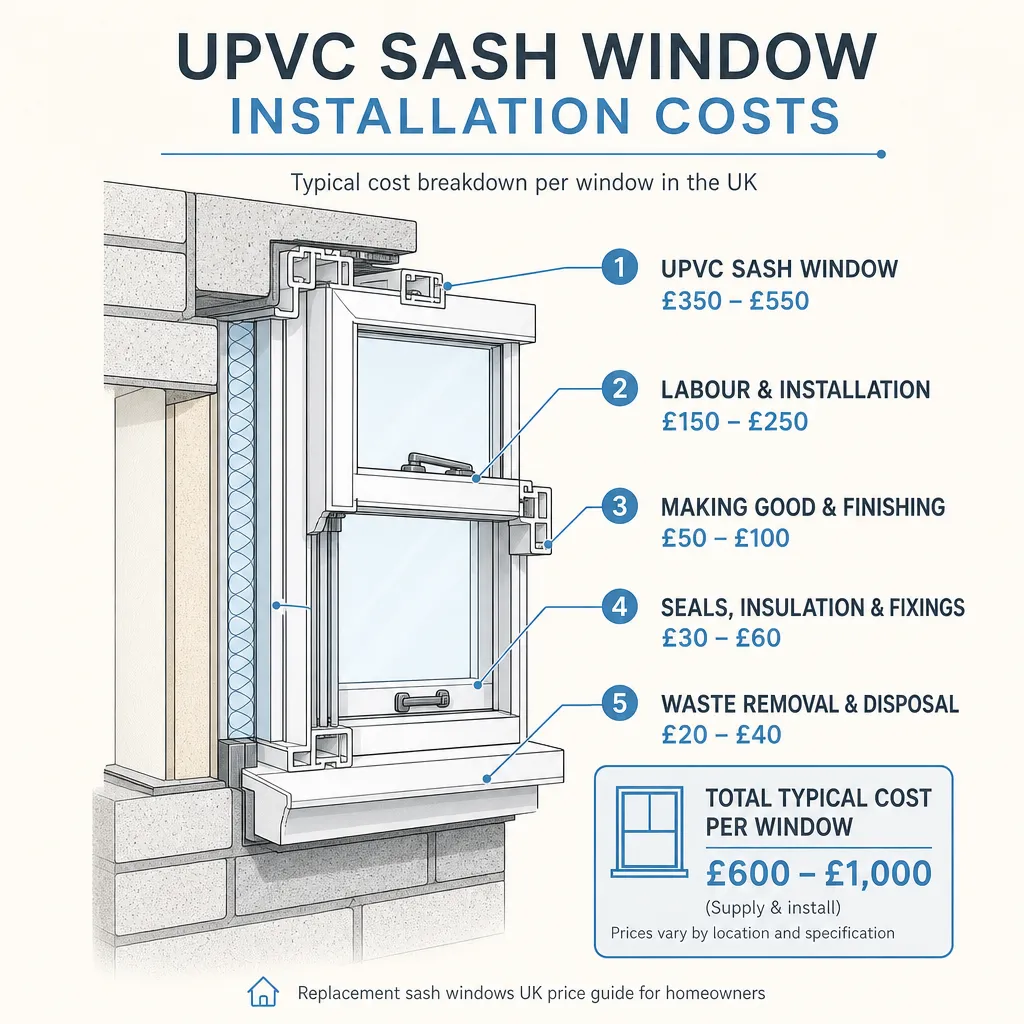
UPVC Sash Window Installation Costs
Replacing windows in a period or traditionally styled home raises questions that casement windows rarely do: how do you keep the look while gaining modern thermal performance, and what will it actually cost? UPVC sash windows have become a mainstream choice for Victorian terraces, Edwardian semis, and 1930s properties across the UK — but prices vary considerably depending on size, glazing specification, and how many windows you are replacing at once.
Key points
- Installed UPVC sash windows typically cost between £400 and £1,200 per window in the UK, depending on size and glazing specification (Indicative UK costs, last reviewed 2026-05-11).
- Replacement window installations must meet Building Regulations Part L, which sets a minimum centre-pane U-value of 1.4 W/m²K for windows in existing dwellings in England.
- All replacement window installers must be registered with a competent person scheme such as FENSA or CERTASS, or the installation must be signed off by local authority building control.
- Conservation areas and Article 4 Direction properties often restrict or refuse UPVC windows — check with your local planning authority before ordering.
- UPVC sash windows are available in a range of colours and woodgrain foil finishes, including dual-colour frames, that can closely replicate painted timber.
What does a UPVC sash window cost in the UK?
Costs depend on the number of windows, their size, the glazing package chosen, and access difficulty. The figures below are indicative only — always get at least three like-for-like written quotes before committing.
Window size | Indicative supply-and-fit cost (double glazed) |
|---|---|
Small (600 × 900 mm) | £400–£650 |
Standard (900 × 1,200 mm) | £600–£900 |
Large (1,200 × 1,500 mm) | £800–£1,200+ |
Indicative UK costs, last reviewed 2026-05-11. Prices exclude VAT unless stated and will vary by region, installer, and specification.
For a typical Victorian terrace with four sash windows, total installed costs commonly range from £2,500 to £5,000. Replacing all windows in one visit usually reduces the per-window cost compared with one-off replacements.
What affects the price?
Several factors push the cost up or down:
- Size and weight. Larger sashes require heavier frames and more complex counterbalance systems.
- Glazing specification. Standard A-rated double glazing is usually included in a base quote. Upgrading to triple glazing or acoustic glass adds cost.
- Colour and finish. White UPVC is the lowest-cost option. Woodgrain foils or dual-colour frames — white inside, darker outside — typically add 15–25% to the frame cost.
- Access. Ground-floor windows are straightforward. Upper-storey windows that require scaffolding add to the labour cost.
- Number of windows. Most installers offer a per-window discount when replacing several units in one visit.
- Location. Labour rates in London and the South East are generally higher than elsewhere in the UK.
- Existing frame condition. If lintels, sills, or reveals need remedial work, this will add to the final price.
UPVC vs timber sash windows
Both materials can replicate the traditional sliding sash aesthetic, but they differ considerably on maintenance, lifespan, and upfront cost.
Factor | UPVC sash | Timber sash |
|---|---|---|
Typical installed cost | £400–£1,200 per window | £800–£2,500+ per window |
Maintenance | Low — occasional clean, no painting | Higher — periodic painting, putty and seal checks |
Lifespan | 20–30 years typically | 50–100+ years with good maintenance |
Thermal performance | Good (A-rated double glazing standard) | Good if double-glazed; draught seals degrade faster |
Conservation area suitability | Restricted or refused in many areas | Generally acceptable; sometimes required |
Repairability | Difficult — usually full-unit replacement | Good — individual components can often be repaired |
Appearance | Closely replicates timber; less authentic close up | Authentic; preferred by many planning authorities |
Best for UPVC: homeowners in non-designated areas wanting low-maintenance traditional styling.
Conservation areas and planning restrictions
In a conservation area or on a listed building, replacing original timber sash windows with UPVC is often refused by the local planning authority. Many councils require like-for-like timber replacements, or at minimum timber-effect aluminium or slimline double-glazed timber units.
Before ordering UPVC sash windows, check:
- Whether your property is in a conservation area or subject to an Article 4 Direction.
- Whether your property is listed (Grade I, II*, or II).
- Your local planning authority's supplementary planning document on windows — policies vary considerably between councils.
The Planning Portal provides initial guidance, but direct pre-application advice from your local planning authority is the most reliable route before spending money on window quotes.
Worked example: a Victorian terrace in Bristol
A homeowner replacing four original timber sash windows on a Victorian end-of-terrace outside the conservation area boundary receives three quotes:
- Quote A: £3,200 installed — white UPVC, A-rated double glazing, FENSA registered.
- Quote B: £4,100 installed — woodgrain foil finish, A-rated double glazing, scaffold included for first-floor windows, FENSA registered.
- Quote C: £2,800 installed — white UPVC, access method not specified.
The homeowner asks each installer to clarify whether VAT is included, what FENSA certificate they receive, how upper-storey access is handled, and what happens if reveals need remedial work. Quote B proves the clearest in scope. After negotiating a 5% multi-window discount, the homeowner agrees £3,895 all-in.
Installation and certification: what to expect
All replacement window installers in England must either be registered with a competent person scheme — FENSA and CERTASS are the main schemes for windows — or use local authority building control to sign off the work. You should receive a certificate on completion. Keep it with your property documents, as it will be requested when you sell.
Homeowner checklist before installation day
When to get professional help
UPVC sash window installation is a specialist trade job and should not be undertaken as a DIY task. Structural reveals must be correctly assessed before old frames are removed, certification requires a registered competent person, and incorrect installation can cause draughts, condensation, water ingress, and warranty voidance.
Seek professional advice or flag a concern before exchange of contracts if:
- The installer cannot provide a FENSA or CERTASS registration number.
- The quote does not mention Building Regulations compliance or certification.
- There is visible cracking, damp, or settlement around existing window openings — a structural assessment may be needed before windows are removed.
- The property is in a conservation area and the installer has not discussed planning permission.
How Housey can help
Housey connects you with vetted, FENSA-registered window and door installers who can provide like-for-like written quotes for UPVC sash window supply and installation across the UK. Submit your window details once and compare up to four quotes from local installers.
Frequently asked questions
Do UPVC sash windows need planning permission?
In most cases, replacing windows is permitted development and does not need planning permission. However, this right is removed in conservation areas, on listed buildings, and in areas covered by an Article 4 Direction. Always check with your local planning authority before ordering.
How long do UPVC sash windows last?
Most manufacturers and installers quote 20 to 30 years for UPVC window systems. Performance depends on specification, installation quality, and maintenance. Seals and hardware may need attention before the frame itself fails, and early-generation UPVC can discolour or become brittle after 20 or more years.
Is VAT included in window installation quotes?
Window installation is subject to standard-rate VAT at 20%. Some installers quote prices exclusive of VAT. Always confirm whether VAT is included before comparing quotes — a quote that appears lower may exclude tax and end up higher once it is added.
What U-value do replacement windows need to meet?
Under Building Regulations Part L (Approved Document L1B for existing dwellings in England), replacement windows must achieve a window energy rating of band C or better, or a centre-pane U-value of 1.4 W/m²K or less. Your installer should confirm compliance in the written specification.
Can I get grants for replacing windows in the UK?
Window replacement is not currently funded under the main government grant schemes such as ECO4 or the Great British Insulation Scheme, which focus on insulation and heating systems. Check the Energy Saving Trust website and your local council for any regional funding that may be available.
Sources and further reading
- Approved Document L: Conservation of fuel and power — GOV.UK
- FENSA: Window and door certification — FENSA
- CERTASS: Competent person scheme — CERTASS
- Planning Portal: Windows in a house — Planning Portal
- Energy Saving Trust: Windows and doors — Energy Saving Trust
Useful next reads
 Improvement & Build
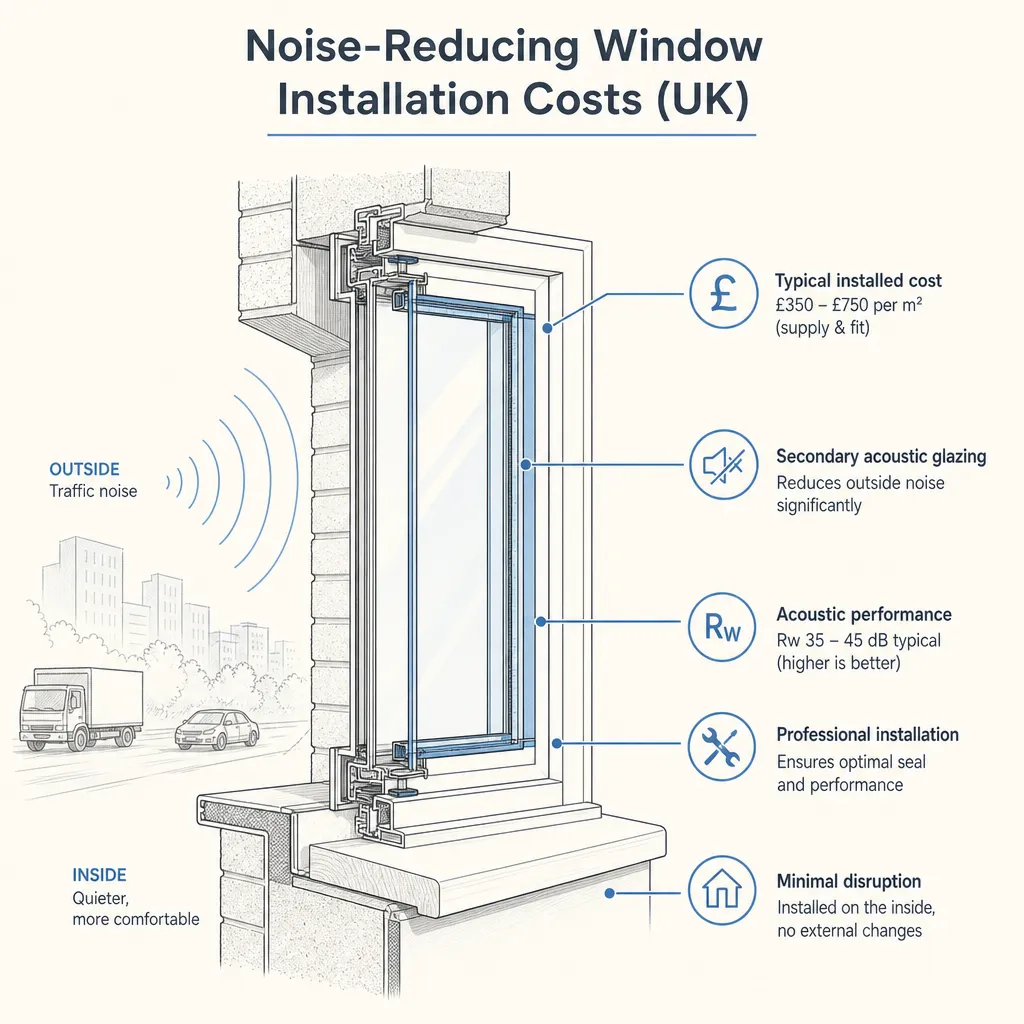
Noise-Reducing Window Installation Costs
Noise-reducing window installation in the UK typically costs £400–£1,500 per window depending on glazing specification, frame material, and property type.
 Improvement & Build
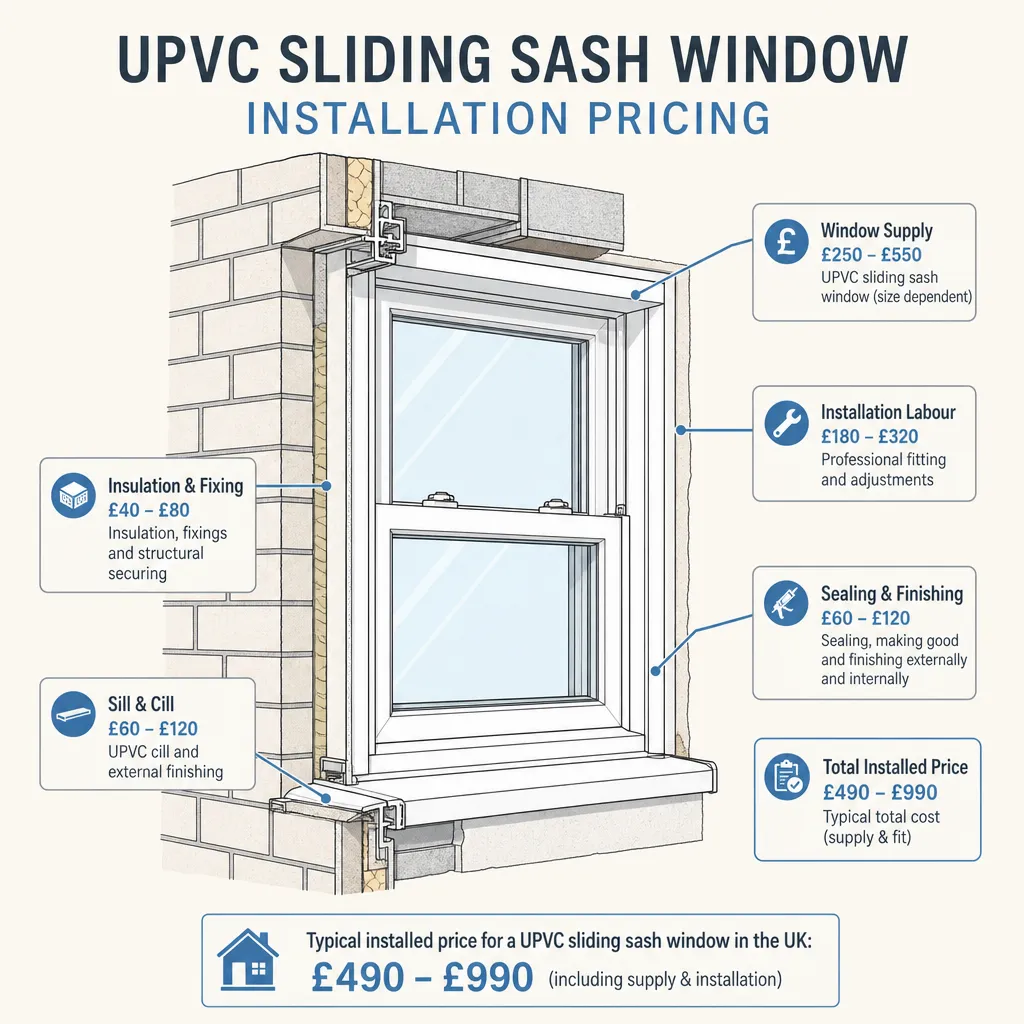
UPVC Sliding Sash Window Installation Pricing
UPVC sliding sash windows are priced by size, glazing specification, balance system, finish, and access requirements.
 Improvement & Build
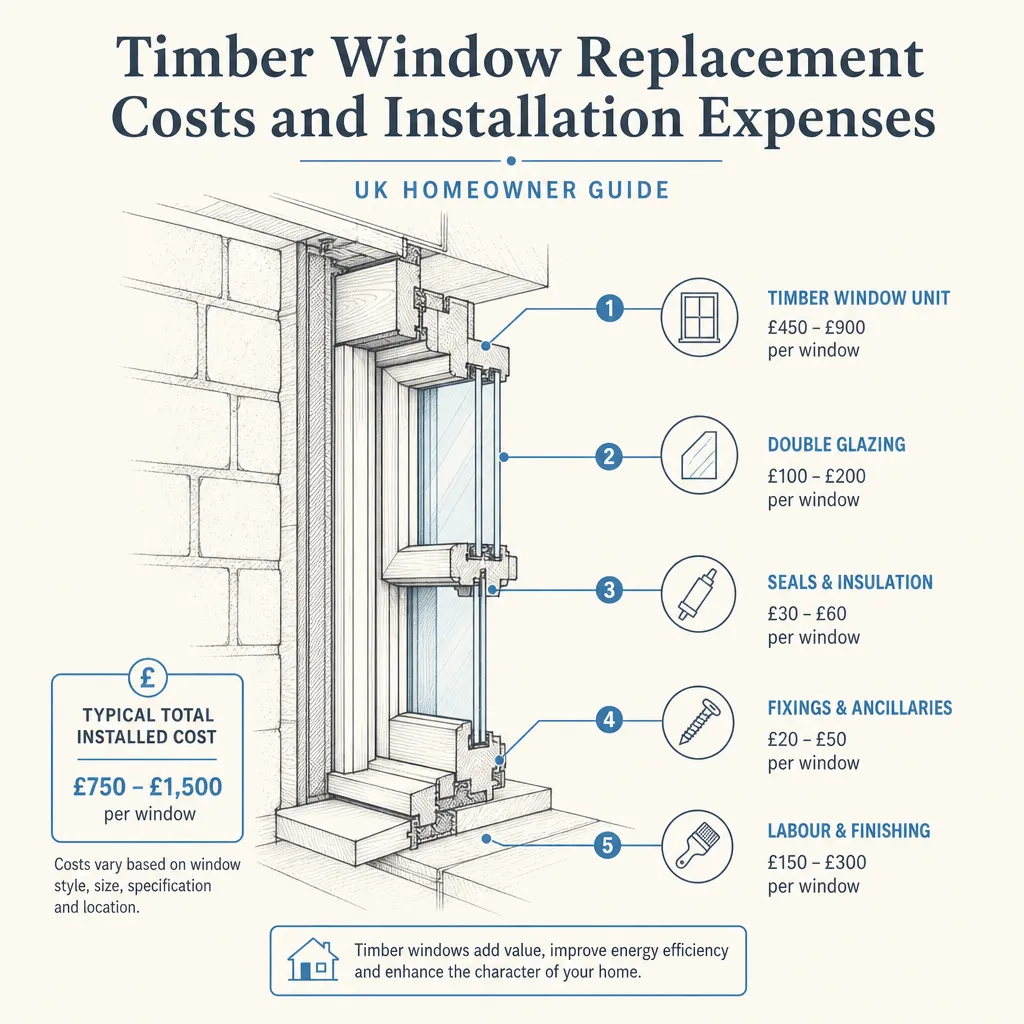
Timber Window Replacement Costs and Installation Expenses
Replacing timber windows in the UK typically costs £400 to £900 per casement window and £700 to £1,800 per sash window, including supply and installation.
 Improvement & Build
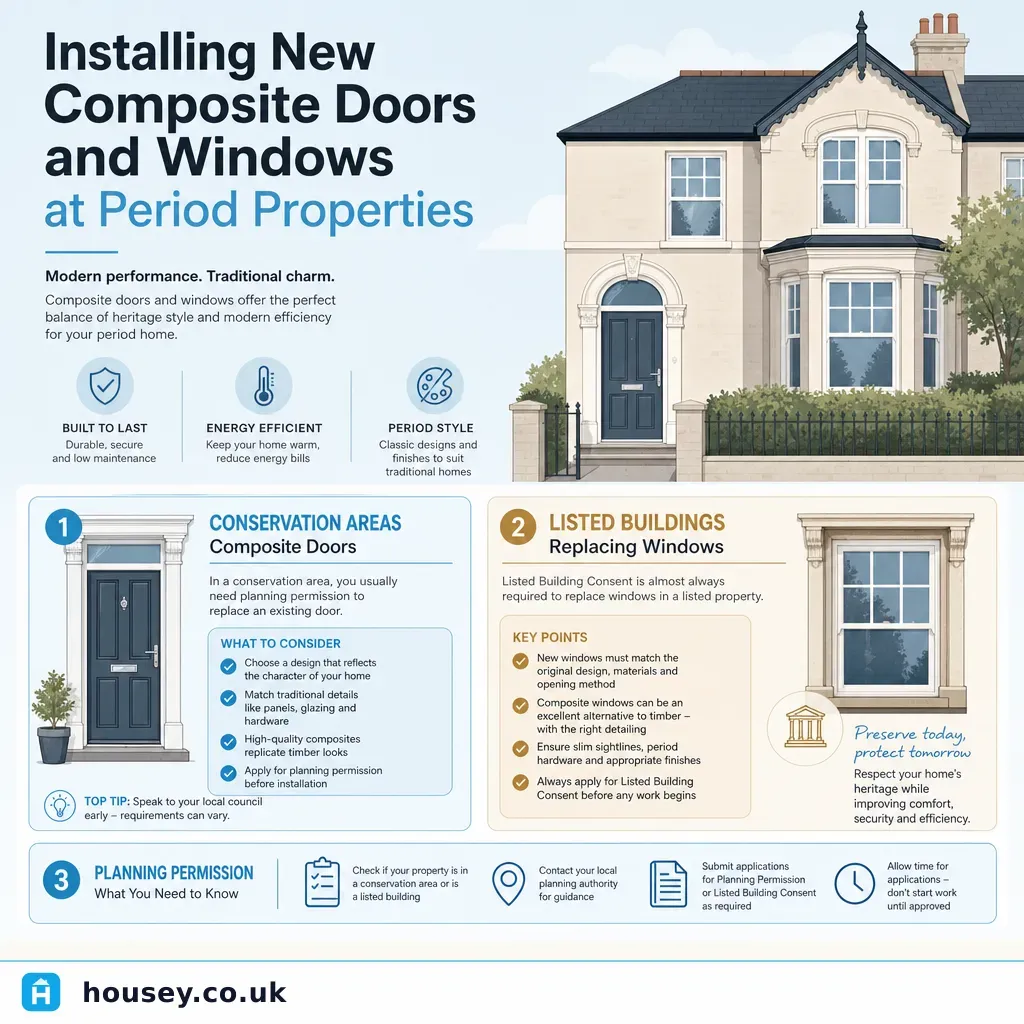
Installing New Composite Doors and Windows at Period Properties
Composite doors at period properties may need Listed Building Consent if the building is listed, or planning permission if the property is in a conservation area with an Article 4 Direction in force.
 Improvement & Build
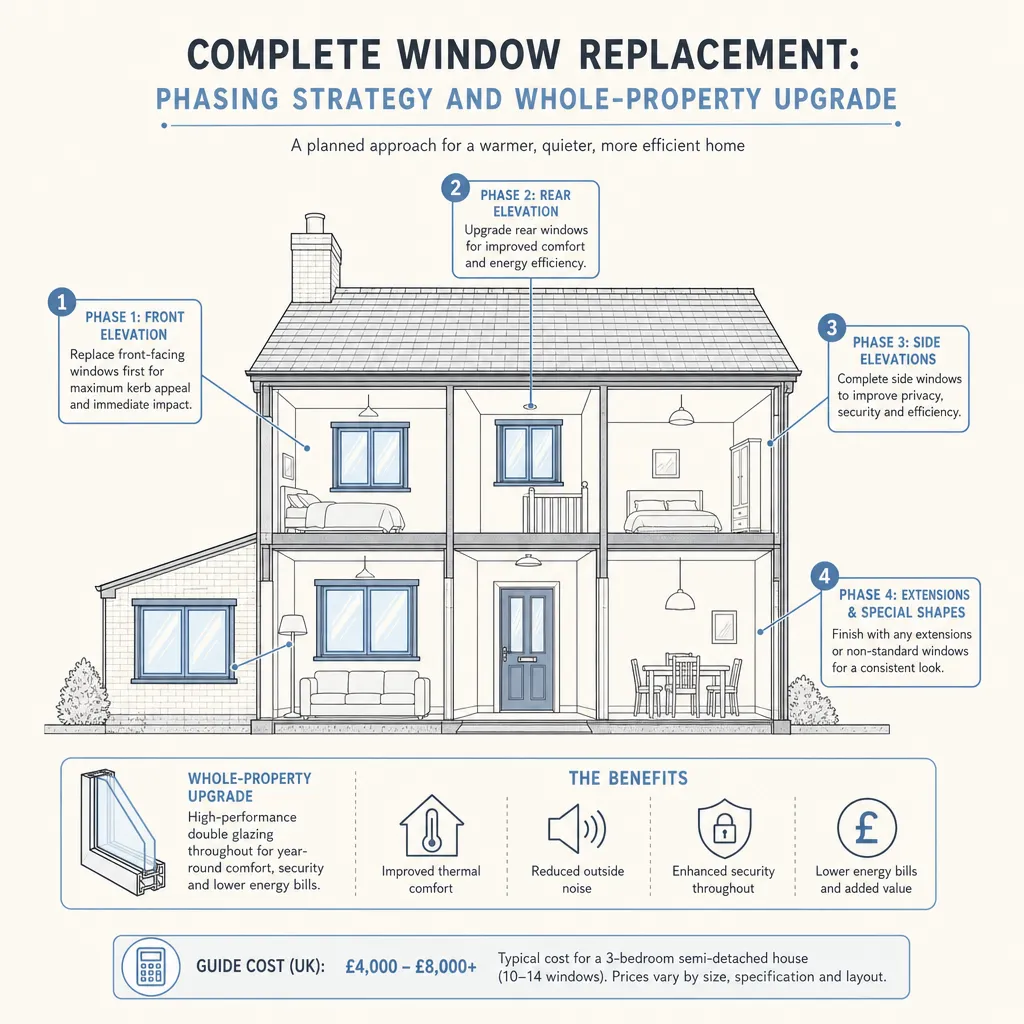
Complete Window Replacement: Phasing Strategy and Whole-Property Upgrade
Replacing all windows in a UK home requires FENSA or CERTASS-registered installers to certify compliance with Building Regulations Part L.