UPVC Window and Door Refurbishment Services
By Housey · Last reviewed 11th of May 2026
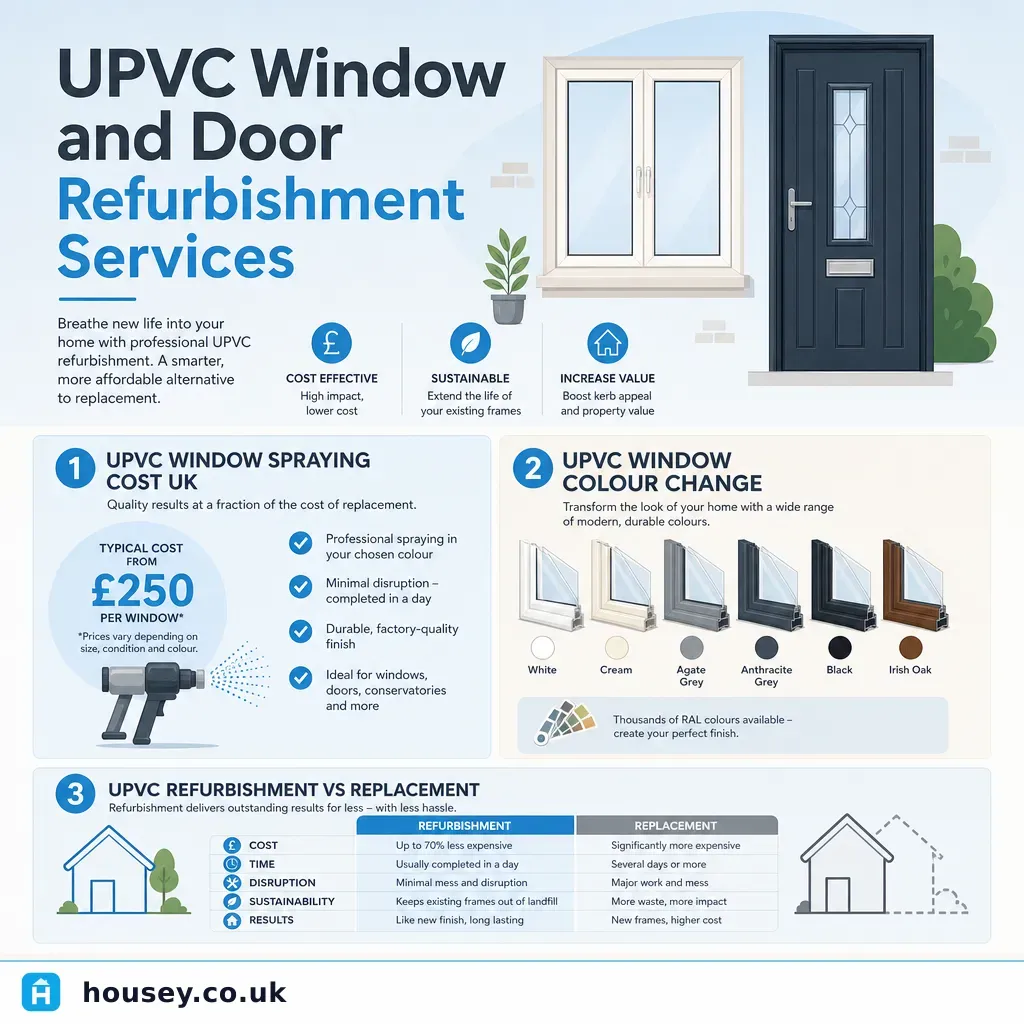
UPVC Window and Door Refurbishment Services
When UPVC windows or doors look tired, faded, or simply the wrong colour, full replacement is not always necessary. A growing number of specialist companies offer colour spraying, seal replacement, and hardware renewal that can transform existing frames at a fraction of the replacement cost — though the right approach depends on the structural condition of the frames and whether the glazing units are still performing.
Key points
- Indicative costs for professional UPVC colour spraying run from £30 to £80 per window and £100 to £300 per door; a whole-house respray typically costs £600 to £1,500 (Indicative UK costs, last reviewed 2026-05-11).
- Seal and gasket replacement typically costs £30 to £80 per window and can significantly reduce draughts and water ingress without touching the frame.
- Failed double-glazed units — identified by persistent condensation between the panes — can often be replaced individually without replacing the surrounding frame.
- UPVC coating products designed for plastics typically carry a manufacturer's claim of 10 to 15 years; surface preparation quality is the single biggest factor in durability.
- UPVC spraying is an unregulated market — unlike window installation, there is no mandatory accreditation scheme, making contractor due diligence especially important.
Should you refurbish or replace?
Choose refurbishment if:
- The UPVC frames are structurally intact — no cracks, warping, or UV-induced brittleness.
- The sealed glazing units are performing — no condensation between the panes.
- Windows and doors open, close, and lock correctly, or any fault is a repairable hardware issue.
- You want a colour change or an aesthetic refresh on a budget.
- The frames are less than 15 to 20 years old and otherwise in reasonable condition.
Choose replacement if:
- Frames are cracked, badly warped, or structurally compromised.
- Multiple sealed glazing units have failed, making individual unit replacement uneconomical.
- Thermal performance is the priority and existing frames do not achieve the current Building Regulations Part L U-value threshold of 1.4 W/m²K.
- Replacement parts for mechanisms or hardware are no longer available.
- Frames are over 25 to 30 years old and showing widespread deterioration.
Seek professional assessment if:
- You are unsure whether frames are structurally sound enough to justify refurbishment costs.
- The property is listed or in a conservation area, where a colour change may need planning consent.
What UPVC refurbishment services cover
Colour spraying
UPVC spraying applies a specialist adhesion-promoting primer followed by a topcoat formulated for plastics. This is not the same as painting with standard exterior paint — the wrong product will peel within a season. Reputable companies use coating systems specifically rated for UPVC, often backed by a manufacturer guarantee of 10 years or more.
Popular respray colours include anthracite grey (RAL 7016), cream, sage green, and heritage shades, reflecting the trend towards coloured frames on both period and contemporary homes. The work typically takes one to two days for a whole house; ironmongery is usually masked or removed to avoid overspray.
Seal and gasket replacement
Over time, rubber seals compress and crack, allowing draughts and water ingress. Replacing seals is relatively straightforward for a specialist and can make a significant difference to comfort and heating bills at modest cost. Signs that seals need replacing include visible cracking or gaps in the rubber, draughts around closed windows, or water tracking into the frame during heavy rain.
Hardware replacement
Handles, hinges, espagnolette locking strips, and restrictors wear out independently of frames. Replacing faulty hardware is usually cheaper than full window replacement. Note that older UPVC frames may use non-standard hardware that is difficult to source — ask a specialist whether matching parts are available before assuming repair is straightforward.
Failed glazing unit replacement
When the seal in a double-glazed unit fails, warm moist air enters the cavity and condenses on the cold glass, creating a persistent misty appearance. In many cases the sealed unit can be extracted from the frame and a replacement fitted, avoiding the need for full window replacement.
Refurbish vs replace: cost comparison
Service | Indicative cost | When it makes sense |
|---|---|---|
UPVC colour respray (per window) | £30–£80 | Frames sound; aesthetic refresh or colour change wanted |
UPVC colour respray (whole house, 10+ units) | £600–£1,500 | Whole-property colour change |
Seal replacement (per window) | £30–£80 | Draughts or water ingress; frame otherwise good |
Hardware replacement (handle or hinge) | £20–£80 per item | Faulty mechanism; compatible parts available |
Failed glazing unit replacement (per unit) | £80–£200 | Condensation between panes; frame intact |
Full UPVC window replacement (per window) | £400–£1,200 | Frame damaged or aged; thermal upgrade needed |
Indicative UK costs, last reviewed 2026-05-11. Prices exclude VAT and vary by region, contractor, and property.
Choosing a UPVC refurbishment company
UPVC spraying is an unregulated market — unlike window installation, which requires FENSA or CERTASS registration for Building Regulations self-certification, there is no mandatory accreditation for spraying, seal work, or hardware replacement. This makes contractor due diligence particularly important.
Homeowner checklist for UPVC refurbishment
When to get professional help
UPVC refurbishment is generally a straightforward trade service, but seek professional advice if:
- Frames show structural cracking, UV degradation (chalking, whitening, or significant brittleness), or notable warping — these conditions suggest replacement is more appropriate than refurbishment.
- You are in a conservation area or your property is listed and you are unsure whether a colour change requires consent — check with your local planning authority before any work begins.
- Door mechanisms or multi-point locking systems are failing — a locksmith or specialist window and door company should assess the situation before any cosmetic work is undertaken.
How Housey can help
Housey connects you with experienced window and door installers who can assess whether your existing UPVC is suitable for refurbishment or whether replacement offers better long-term value. Describe your windows and doors once and receive up to four quotes to compare.
Frequently asked questions
How long does professionally sprayed UPVC last?
Most specialist UPVC coating companies claim 10 to 15 years for a professionally applied system using products designed for plastics. Preparation quality — cleaning, degreasing, and priming — is the biggest determinant of longevity. DIY approaches using standard exterior paint typically last two to five years before peeling or fading becomes apparent.
Does changing the colour of UPVC windows need planning permission?
In most cases, changing the colour of UPVC windows or doors does not require planning permission. However, if your property is listed or in a conservation area, any alteration to the external appearance may need consent. Check with your local planning authority before any work begins.
Can very dark colours be applied to UPVC frames?
Most RAL and BS colours can be matched, including popular shades such as anthracite grey. However, very dark colours absorb more heat and can increase thermal expansion stress on UPVC frames, particularly on south-facing aspects. Ask the coating company whether the intended colour is suitable for your specific frame type before committing.
Is respraying UPVC worth doing before selling a home?
A fresh respray in a neutral or on-trend colour can improve kerb appeal and may support the asking price, particularly on period properties or homes where the current colour looks dated. However, the return on investment varies — consider the age and condition of the frames and whether buyers are likely to replace windows regardless.
Can I spray UPVC windows myself?
Specialist UPVC-rated primers and topcoats are available from some trade and DIY outlets, but achieving a durable, professional finish requires thorough surface preparation and spray equipment. Brush or roller application tends to leave visible marks and edges. For external windows and doors, professional application is strongly recommended.
Sources and further reading
- Approved Document L: Conservation of fuel and power — GOV.UK
- FENSA: Competent person scheme for windows — FENSA
- Planning Portal: Listed buildings and conservation areas — Planning Portal
- Energy Saving Trust: Windows and doors — Energy Saving Trust
Useful next reads
 Improvement & Build
Leaded Window Repair and Restoration Costs
Leaded window repair in the UK typically costs £150–£600 for minor re-soldering or resealing, rising to £800–£2,500+ for full panel removal and restoration.
 Improvement & Build
Guide to Replacing Timber Sash Windows with Authentic Restoration
Restoring a timber sash window typically costs £150–£400 per window; full replacement costs £800–£2,500.
 Improvement & Build
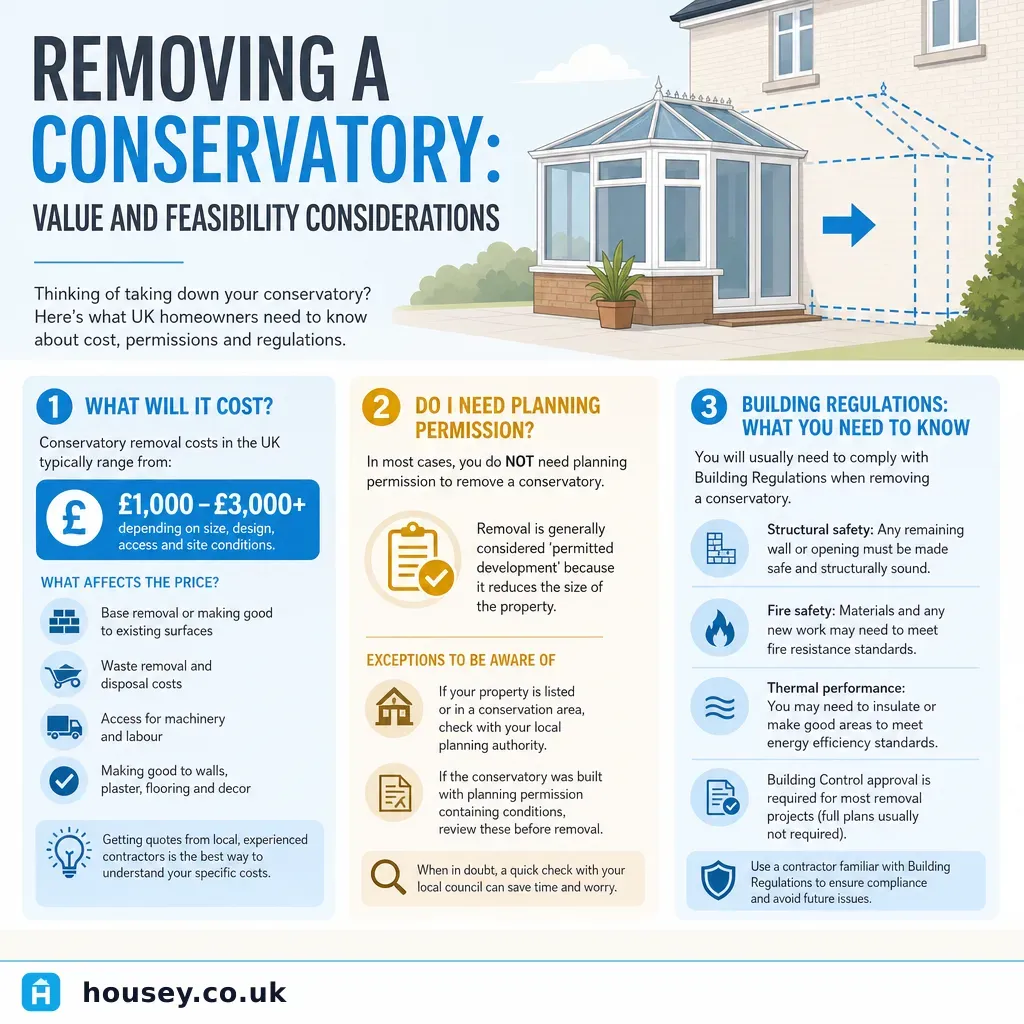
Removing a Conservatory: Value and Feasibility Considerations
Removing a conservatory in England usually does not need planning permission if the original structure was permitted development, but reinstating the original wall almost always requires a building regulations application covering structural, thermal, and moisture elements.
 Improvement & Build
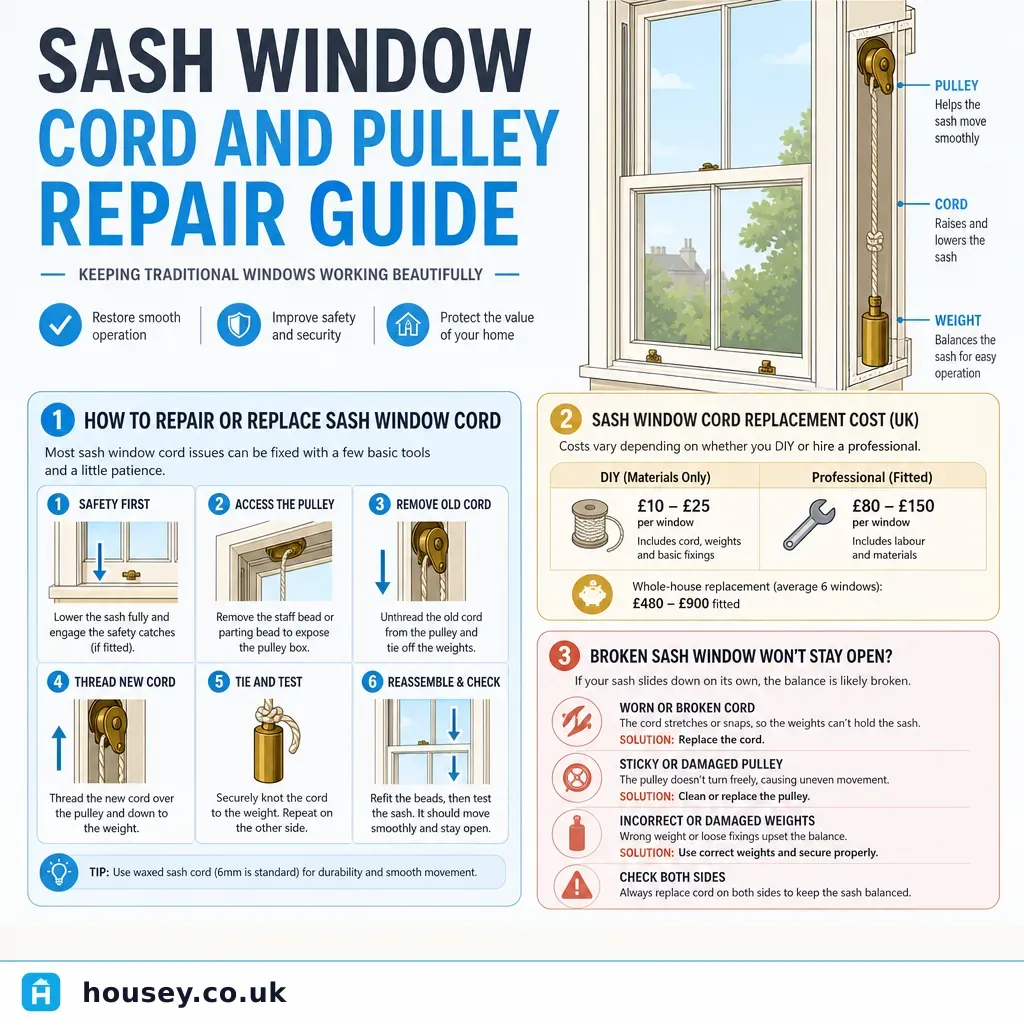
Sash Window Cord and Pulley Repair Guide
Repairing a broken sash window cord involves removing the staff bead, lifting out the lower sash, threading new wax-coated cord through the pulley, and tying it securely to the sash weight.
 Improvement & Build
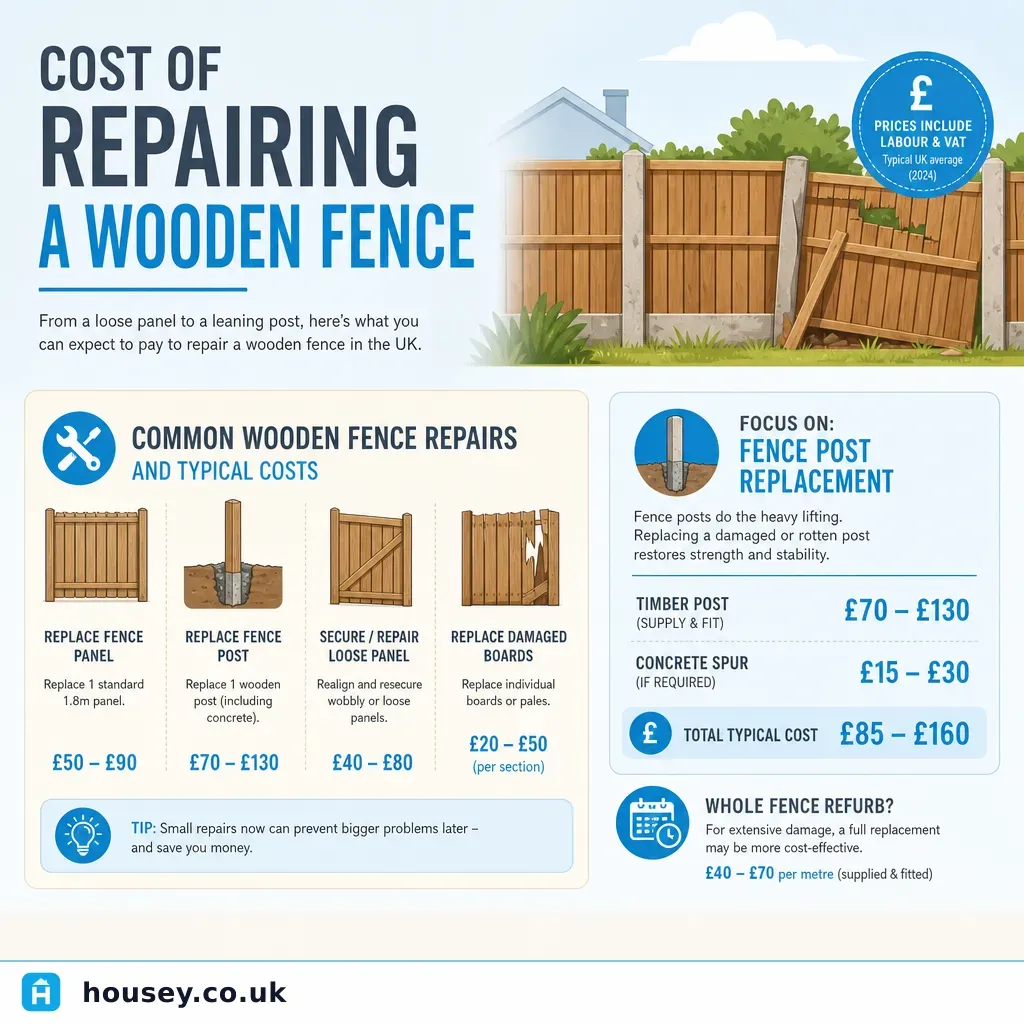
Cost of repairing a wooden fence
Repairing a wooden fence in the UK typically costs £100–£400 for minor work such as replacing boards or refixing panels, rising to £500–£1,500 for more extensive repairs including post replacement.